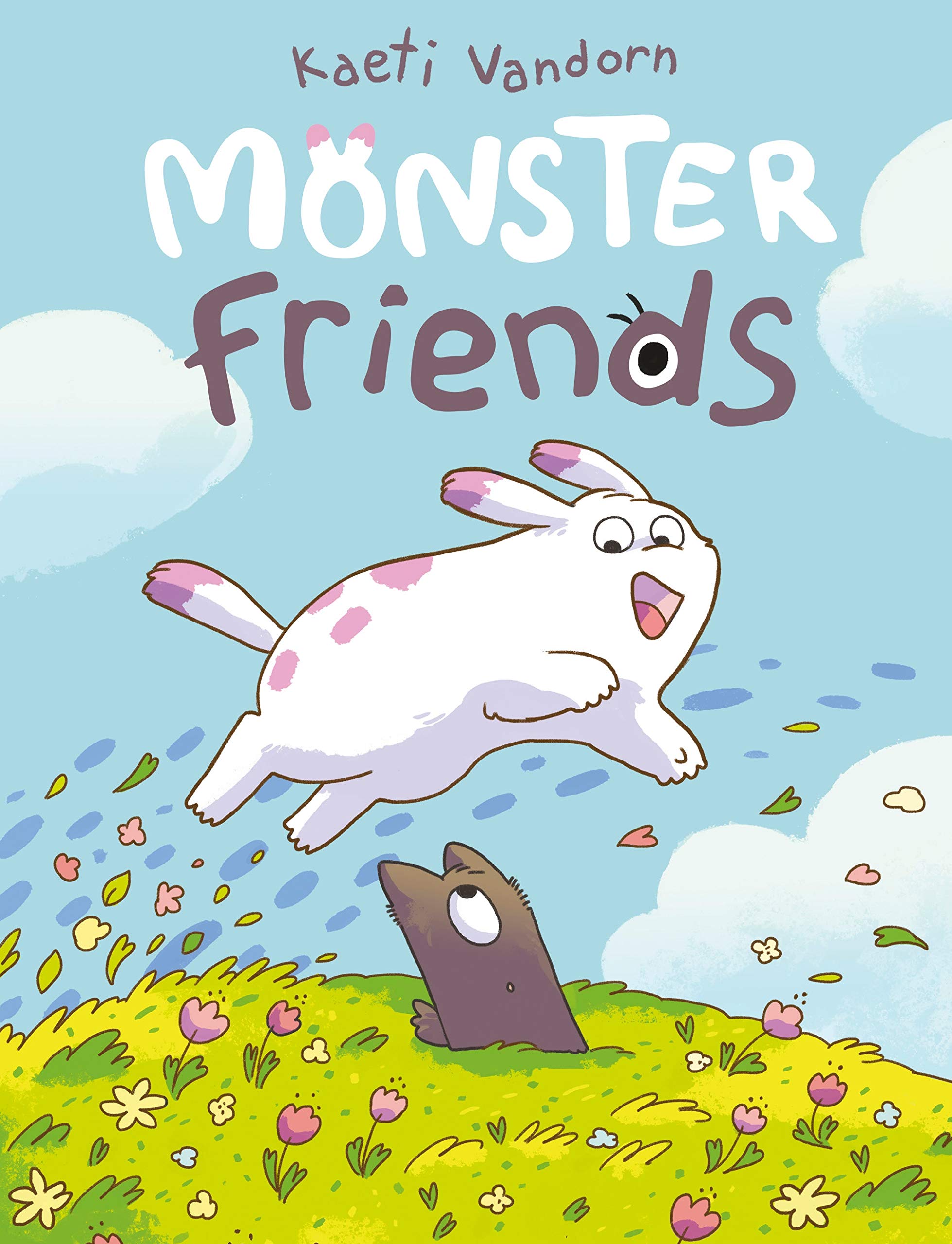
Monster Friends by Kaeti Vandorn

Published by Random House Graphics
Monster Friends: (A Graphic Novel): Vandorn, Kaeti: 9781984896827:  Amazon.com: Books

Monster Friends: (A Graphic Novel): Vandorn, Kaeti: 9781984896827:  Amazon.com: Books

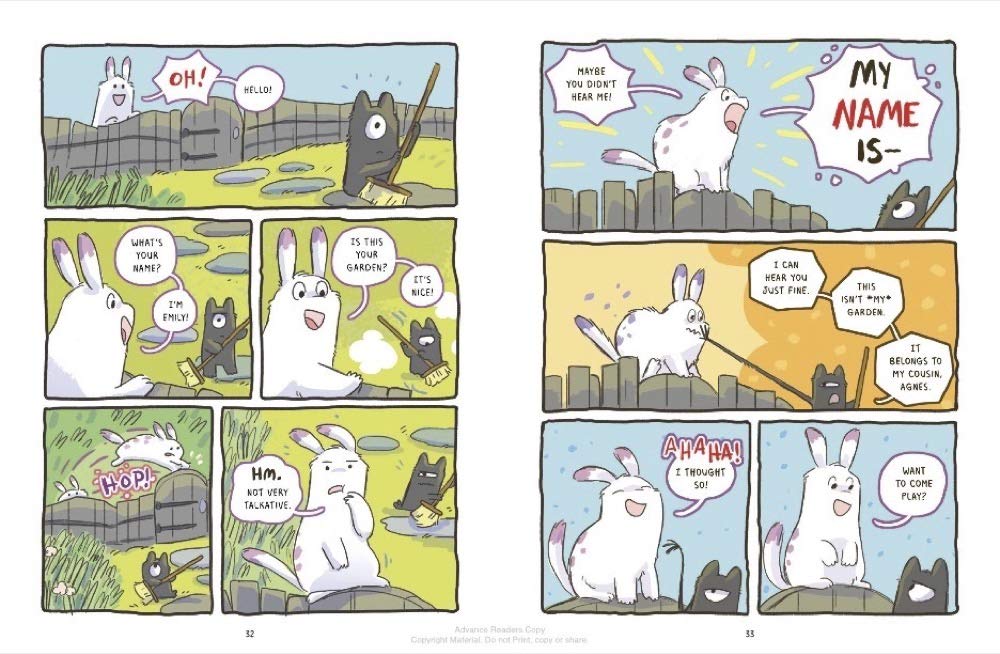
Summary:  Reggie is spending his summer house sitting for relatives, living by himself after what seems to have been some unsettling events in his recent past.  He seems torn between enjoying his solitude and feeling lonely.  When gregarious Emily the rabbit shows up, he has a good time hanging out with her.  Emily’s got her own troubles with four sisters, one of whom makes fun of her for her vivid imagination.  As the summer progresses, Reggie starts to make more connections and to accept that he may not be as adventurous as the best friend he left behind.  By the end of the summer, he and Emily are good friends and he has decided on a new life path for himself.  272 pages; grades 1-5.

Pros:  Younger graphic novel fans will love Reggie and his friends, all of them monsters with some surprising abilities.  The illustrations are adorable and the “be true to yourself” message that Reggie learns is a good one.

Cons:  I found the first chapter confusing.
All of Us by Kathryn Erskine, illustrated by Alexandra Boiger

Published by Philomel Books

All of Us by Kathryn Erskine: 9780593204696 | PenguinRandomHouse.com: Books

All of Us: Erskine, Kathryn, Boiger, Alexandra: 9780593204696: Amazon.com:  Books

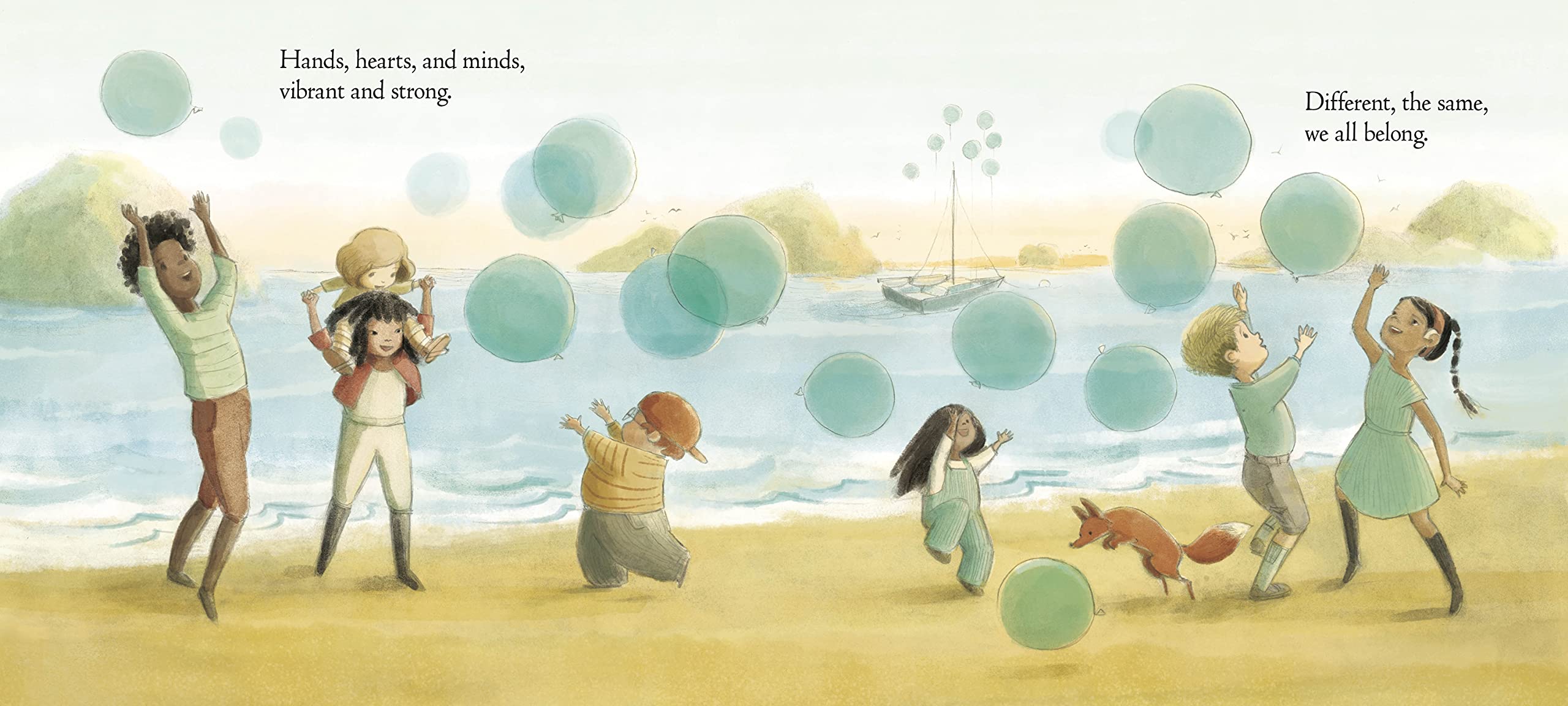
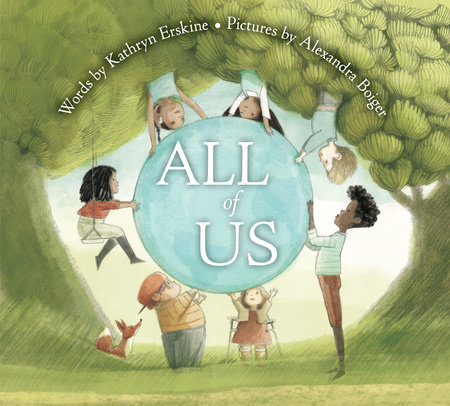
Summary:  “Me…can be we. You…can come, too. They…can be ‘Hey!’ It’s all of us.”  This affirming book shows kids of different races and with a variety of physical attributes all playing together.  From hopscotch with the names of the continents in the boxes to sailing on a sea of words in various languages, differences and similarities are embraced and celebrated.  Religious practices and a variety of vocations are also touched upon.  The text circles back at the end: “All kinds of kids, thoughtful and free.  Sometimes in groups, sometimes…just me.”  32 pages; ages 2-8.

Pros:  An affirming book that celebrates all kinds of kids through both text and pictures.  It’s a quick read, but could engender longer discussions, and would make a good welcoming book at the beginning of any sort of kids’ gathering.

Cons:  Far be it from me to utter a disparaging word about such a rosy view of the world.


I Is for Immigrants by Selina Alko

Published by Henry Holt and Co.

I Is for Immigrants: Alko, Selina, Alko, Selina: 9781250237866: Amazon.com:  Books

I Is for Immigrants | Selina Alko | Macmillan

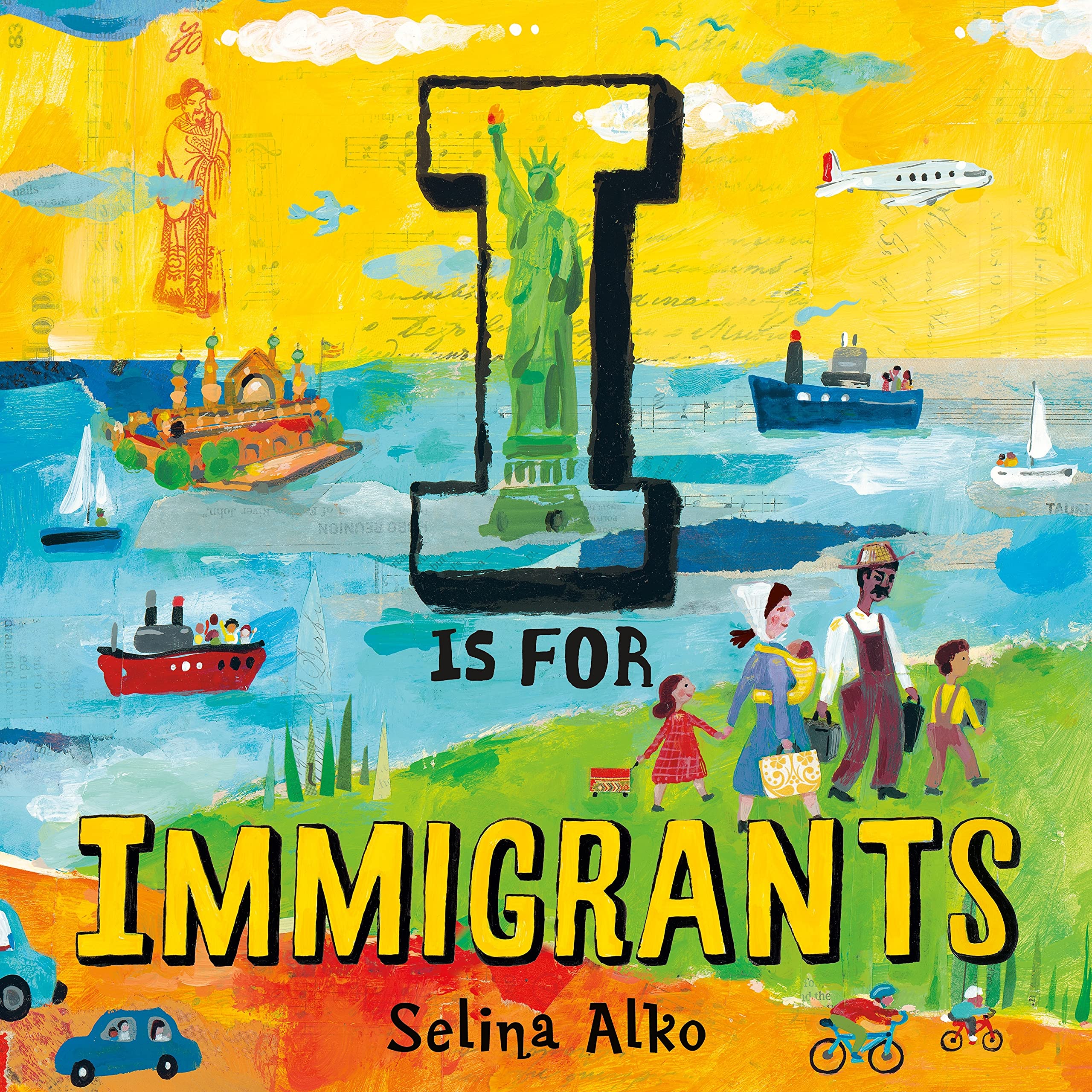
Summary:  Each page of this alphabet book is a collage of immigration-related words that begin with the featured letter.  For instance, A is for ancestors, African dance, Abuelita, ambition, and aspire; the Z page shows zest, a ziti dinner, Zen, a zither, and a sleeping mother and child (“Zzzzzzzzz”).  An author’s note tells of her own immigrant experience.  40 pages; grades K-4.

Pros:  This would make an excellent introduction to immigration, whether it’s for a preschool class or the start of a third- or fourth-grade social studies unit.  The colorful collage illustrations and words will get readers thinking about all the contributions immigrants have made to American culture.  Students could make their own collages as an extension activity.

Cons:  There’s not much context for the individual words, and younger kids will undoubtedly need some help with understanding some of them.

Amber and Clay by Laura Amy Schlitz, illustrated by Julia Iredale

Published by Candlewick

Amazon.com: Amber and Clay (9781536201222): Schlitz, Laura Amy, Iredale,  Julia: Books

Amber and Clay by Laura Amy Schlitz, Julia Iredale, Hardcover | Barnes &  Noble®

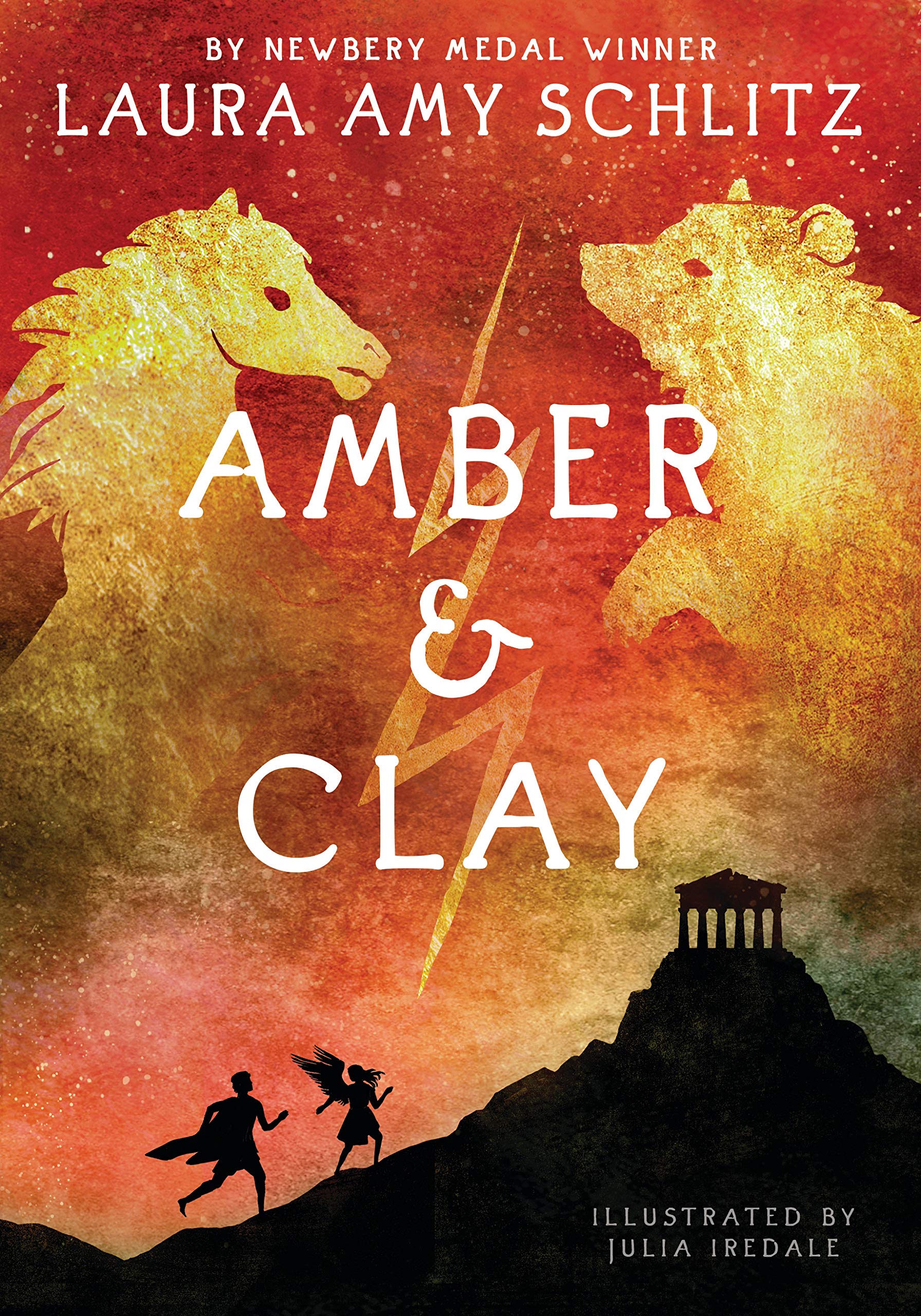
Summary:  Rhaskos is a slave in ancient Greece, separated from his mother at an early age.  His mother is taken away to live in a household that includes Melisto, a girl whose wealthy father loves her, but whose mother despises her.  When Melisto joins a group of young girls serving the goddess Artemis, her life takes an unexpected turn and becomes entwined with Rhaskos’s.  Rhaskos’s mother finds a way for Melisto to obtain Rhaskos’s freedom…but it will take years and many strange turns that involve gods, goddesses, and the great philosopher Sokrates.  Includes exhibits of ancient Greek artifacts with museum-type descriptions interspersed throughout the book; each of these plays a role in the story.  Also, an author’s note with additional information about Greek words, verse, and history; and an extensive bibliography.  545 pages; grades 5-8.  ó

Pros and Cons:  I honestly don’t know where to begin with this book.  It truly is a masterpiece, written mostly in verse, but with some sections in prose, and an incredible attention to historical detail.  I can’t even fathom the research that must have gone into writing it, and I can’t imagine any other publisher besides Candlewick producing this.

Having said that, I feel like this is a book with very, very limited appeal.  Looking back over my 21 years of being a school librarian, I can think of two middle school girls who might have been interested in this book.  I had to really push myself to read it (it’s over 500 pages!), although it was pretty absorbing once I started.

Will this book receive Newbery consideration?  Absolutely, and there is no question that the writing and research of that caliber.  Do I hope it wins?  To be honest, no. Call me a simpleton, but I would rather see a book win that is going to appeal to a much greater audience of young readers.

Dear Librarian by Lydia M. Sigwarth, illustrated by Romina Galotta

Published by Farrar, Straus and Giroux

Dear Librarian: Sigwarth, Lydia M., Galotta, Romina: 9780374313906:  Amazon.com: Books

Dear Librarian | Lydia M. Sigwarth | Macmillan

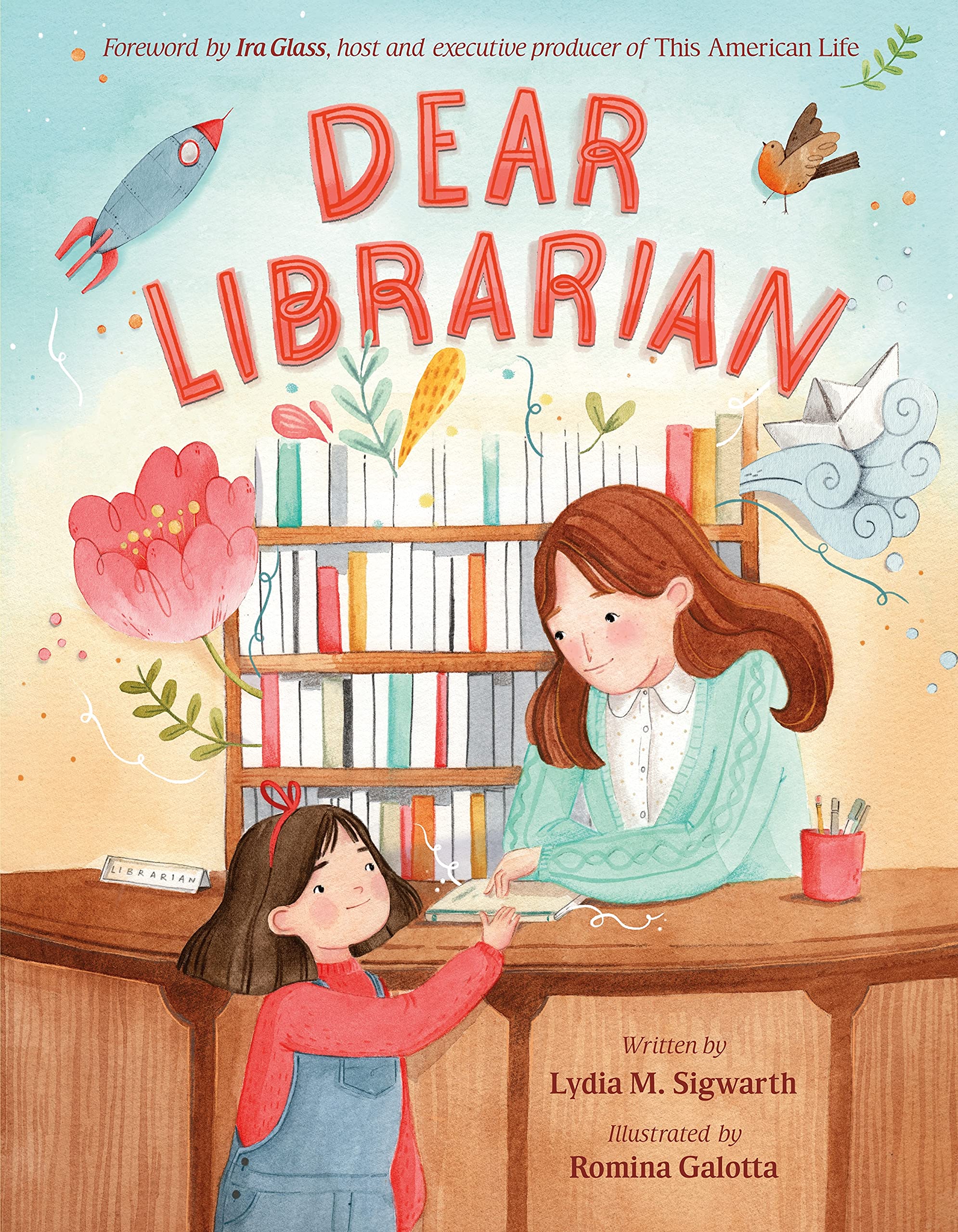
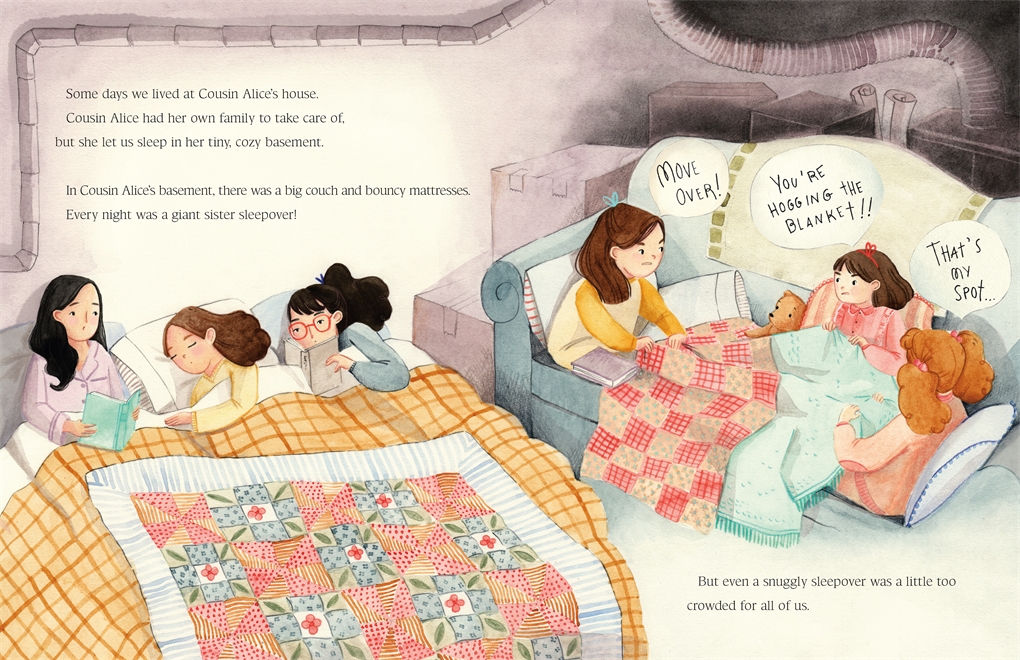
Summary:  Lydia’s story is told in the form of a letter that begins “Dear Librarian”.  At the age of 5, she and her parents and six siblings left Colorado to move to Iowa.  Her dad was in search of a new job, and the family needed a new home.  For six months, they lived in different family members’ homes, which were too small, crowded, or full of beautiful objects not to be touched by the seven children.  During this time, Lydia discovered the public library, which became a haven, and the librarian, who always greeted her with a hug and made her feel welcome.  After six months, the family got their own home, but Lydia never forgot how the library made her feel, and she grew up to become a librarian herself.  Includes a letter from Lydia to the reader that recounts how she reunited with her librarian friend in 2018 on the NPR show This American Life, and photos of Lydia at age 5 and in 2018 with “her” librarian, Deb Stephenson.  40 pages; ages 4-8.

Pros:  A heartwarming and inspiring true story that would make a great first-day-of-school read for school librarians.

Cons:  I would have liked to see more back matter on the issue of homelessness.

No More Plastic! by Alma Fullerton

Published by Pajama Press

No More Plastic: Fullerton, Alma, Fullerton, Alma: 9781772781137:  Amazon.com: Books

No More Plastic | Pajama Press

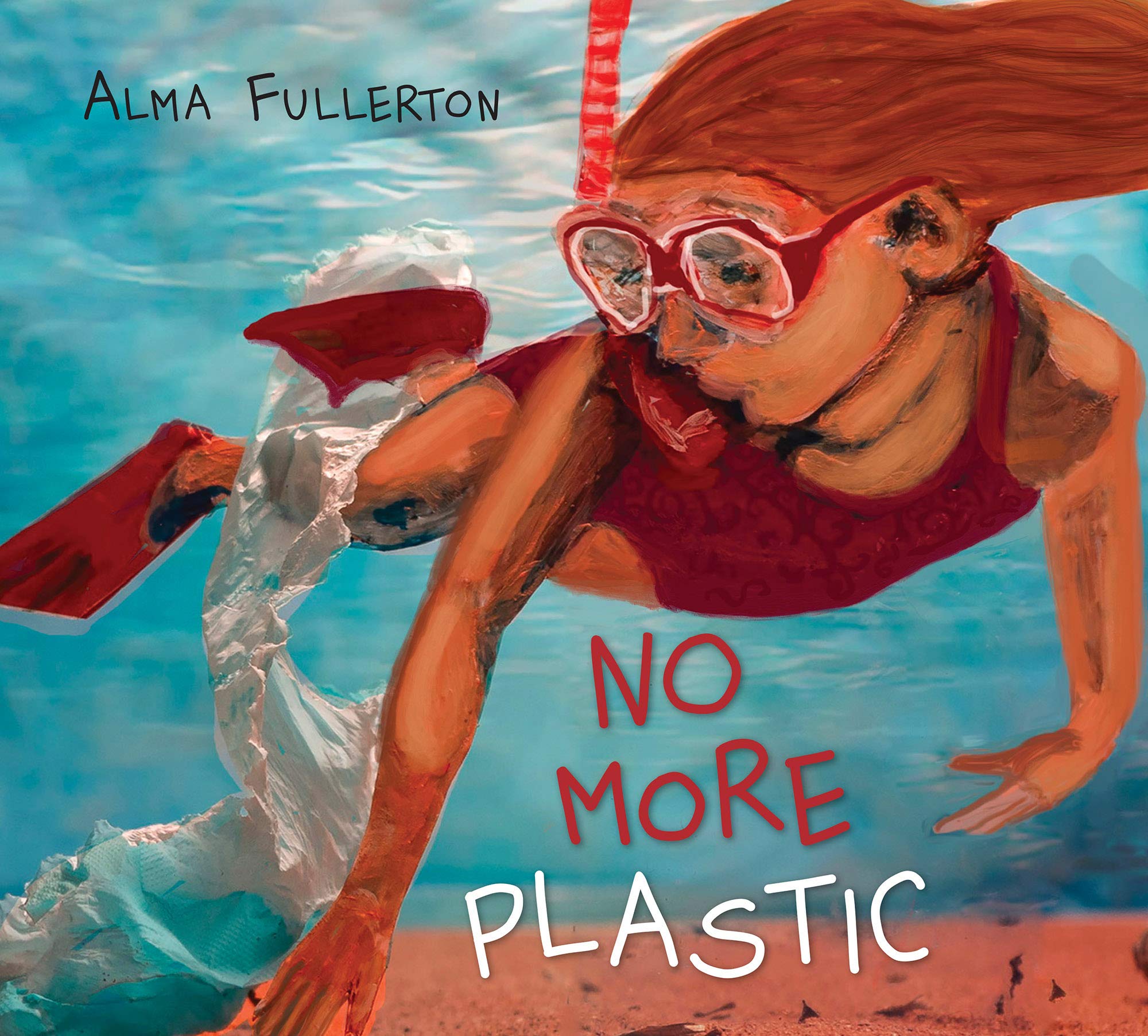
Summary:  Isley loves everything about the ocean near her home until one day when a dead whale washes up on the beach.  When she learns that the whale starved to death because its stomach was filled with plastic, she becomes angry.  Turning her anger into action, Isley begins a campaign in her community to stop using plastic bags, straws, and other products.  At first people are enthusiastic, but eventually the convenience of plastic causes them to backslide.  Isley begins collecting the plastic she finds on the beach and uses it to create a giant whale sculpture.  The whale serves as a reminder to people in the community, who begin to make bigger changes like banning plastic grocery bags and installing filling stations for water bottles.  Includes an author’s note and a list of ideas for reducing plastics, both locally and globally.  32 pages; ages 4-8.

Pros:  An empowering story about a girl who finds a way to make a difference in her community, with information that may inspire kids to take action themselves.

Cons:  The writing felt a little stilted.

Horse Power: How Horses Change the World by Jennifer Thermes

Published by Harry N. Abrams

Horse Power: How Horses Changed the World: Thermes, Jennifer:  9781419749452: Amazon.com: Books

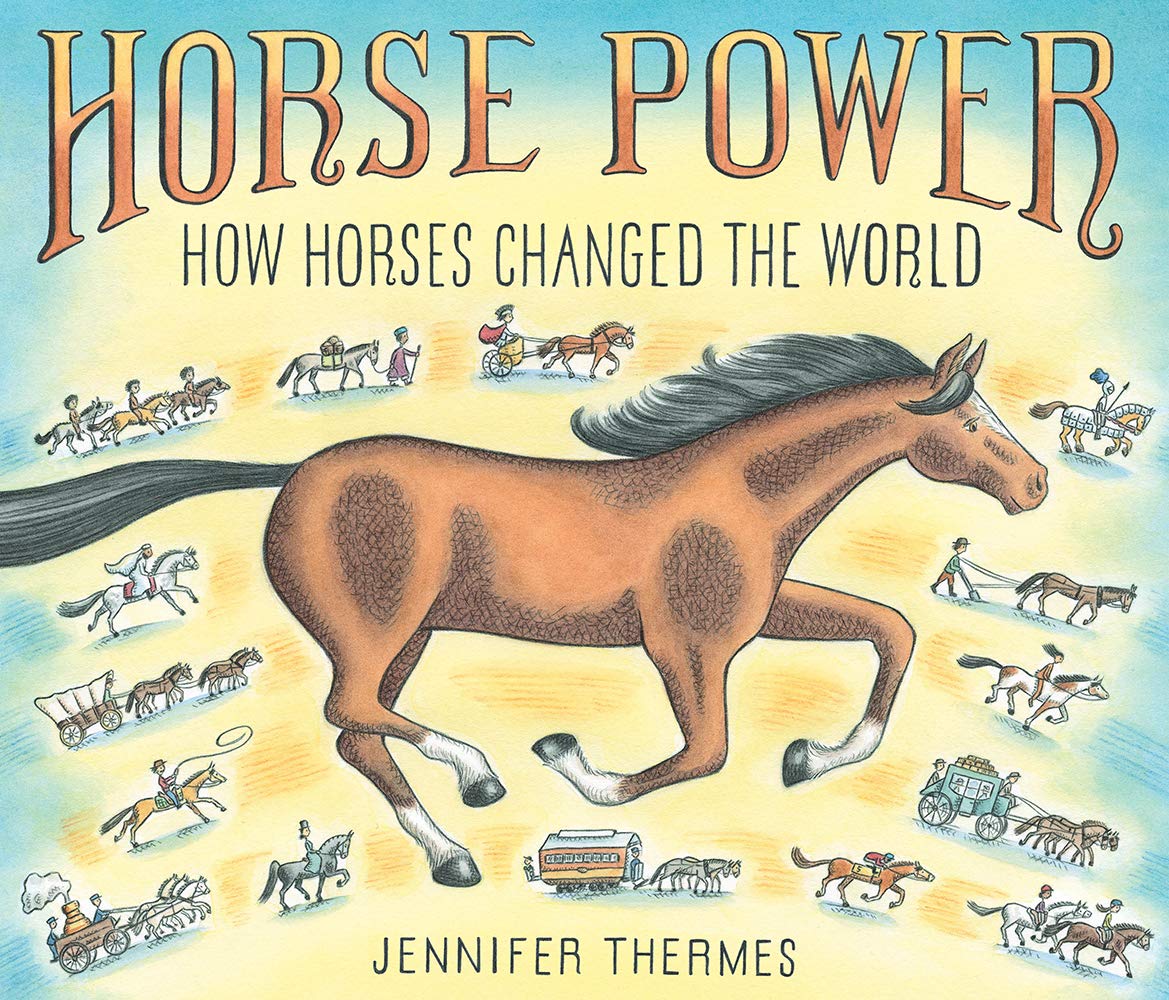
Summary:  Horses first appeared on Earth fifty-six million years ago, and although the earliest ones lived in North America, they eventually died out.  They survived in Europe and Asia, though, and their domestication revolutionized societies there.  Eventually, horses found their way back to North America in Spanish ships, and became part of life for both European settlers and indigenous people.  Horses allowed people to travel faster and work harder, and were a key part of the Industrial Revolution.  At the end of the 19th century, though, they began to be replaced by cars, and today are used by humans mostly for sports, fun, and entertainment.  Includes an author’s note timeline, and list of sources.  48 pages; grades 2-7.  

Pros:  Anyone who has enjoyed a Jennifer Thermes book knows that maps are a key part of her illustrations, and this one is no exception.  Her maps and diagrams help show horses in local settings as well as how they have traveled around the world.  Horse lovers everywhere will enjoy this book and undoubtedly learn a lot from the text and illustrations.

Cons:  As with any nonfiction picture book that covers a huge topic and span of time, this one is necessarily a little brief on the details.  It’s a good introduction, but kids seeking more information will need to delve into other sources.

Best Day Ever! by Marilyn Singer, illustrated by Leah Nixon

Published by Clarion Books

Amazon.com: Best Day Ever! eBook: Singer, Marilyn, Nixon, Leah: Kindle Store

Summary:  A dog narrates her best day ever: hanging out with her best friend (a boy in a wheelchair), digging, chasing a cat, and swimming.  But after she rolls in a dead fish, her boy tells her she stinks, they head home for a bath, and suddenly the day is not the best ever.  When she runs around after the bath and breaks a lamp, her boy yells at her, and it becomes the worst day ever.  But an evening apology and a game of fetch with her friend quickly restores the status back to best.  32 pages; ages 4-8.

Pros:  A dog’s live-for-the moment joy is beautifully captured here, and it’s nice to see a kid in a wheelchair being a part of a story that is not about disabilities.

Cons:  Rolling in a dead fish.

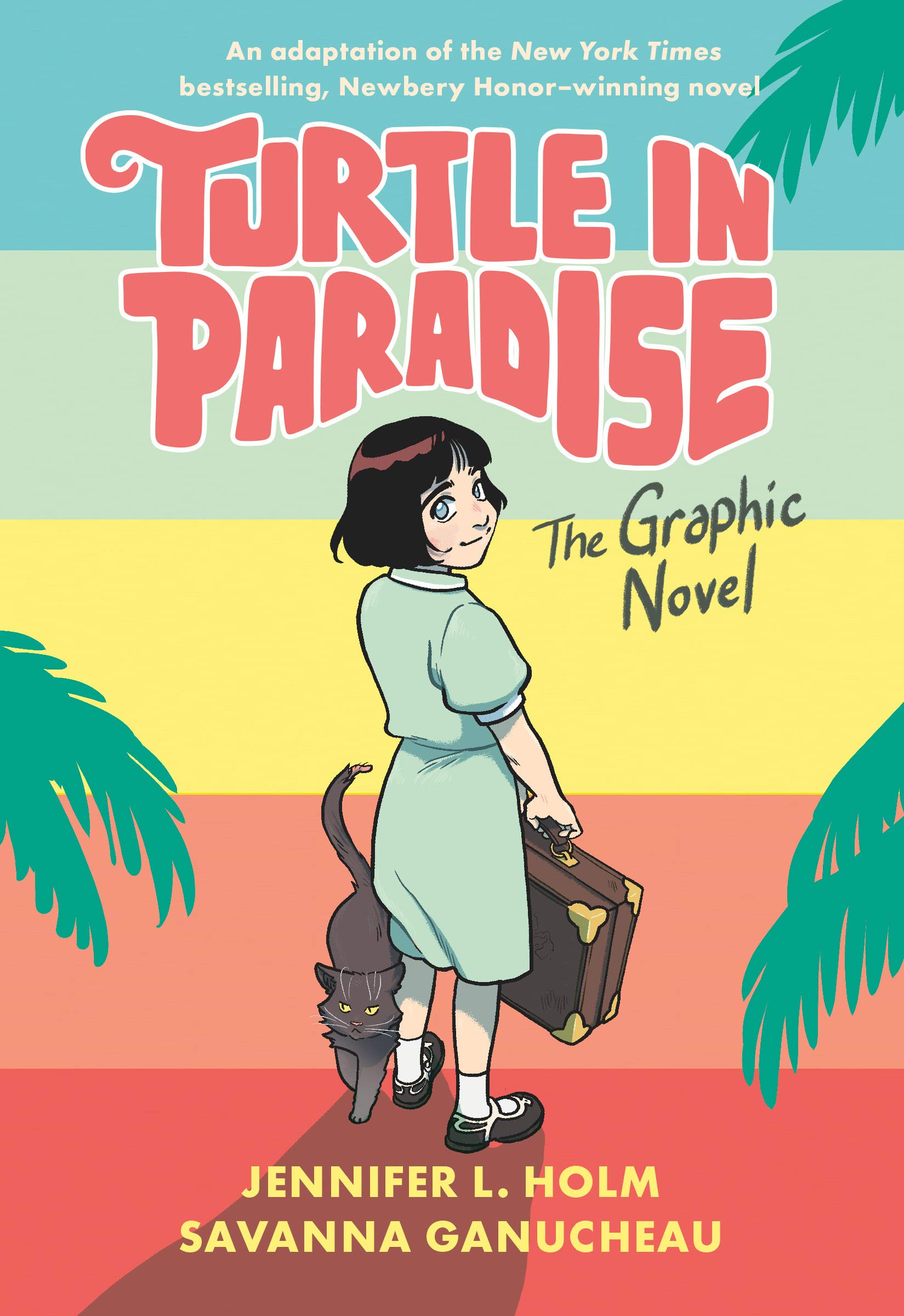
Turtle in Paradise: The Graphic Novel by Jennifer L. Holm and Savanna Ganucheau

Published by Random House Graphic

Amazon.com: Turtle in Paradise: The Graphic Novel (9780593126318): Holm,  Jennifer L., Ganucheau, Savanna: Books

Amazon.com: Turtle in Paradise: The Graphic Novel (9780593126318): Holm,  Jennifer L., Ganucheau, Savanna: Books

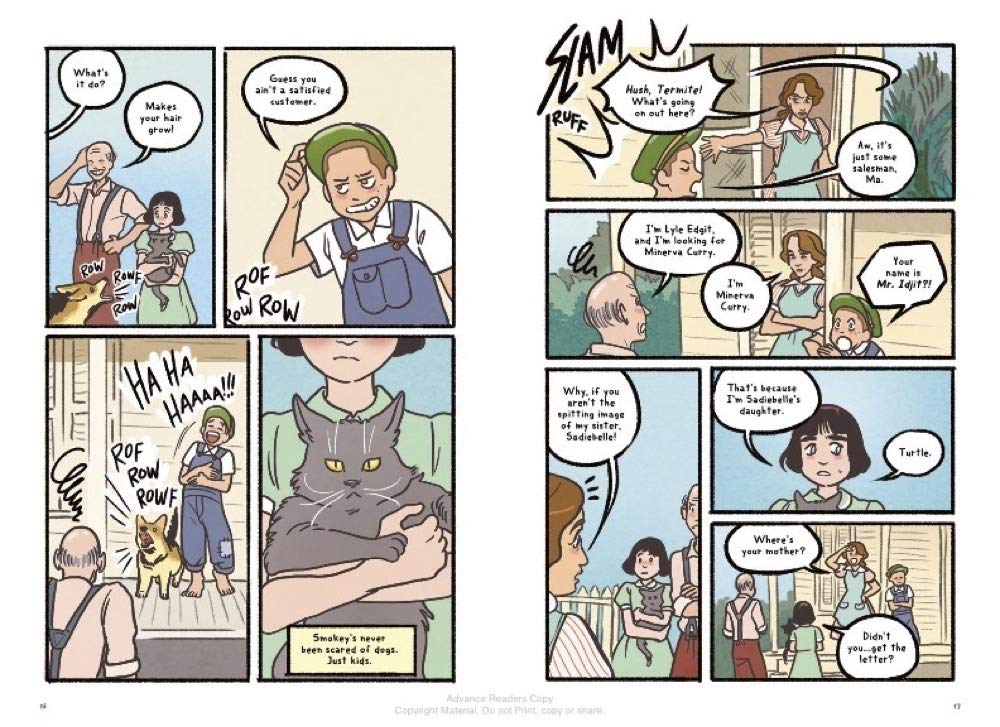
Summary:  Turtle’s gotten her nickname from being hard-shelled, but a new friend guesses that she also has a soft underbelly.  This proves to be the case when her mother sends her to live with her aunt in Depression-era Key West, Florida.  Her overworked aunt wasn’t expecting her, and Turtle finds herself spending her days with her boy cousins and their friends, a group that calls themselves the Diaper Gang because of their abilities to calm babies and cure diaper rash.  An unusual friendship with Turtle’s newly-discovered grandmother leads Turtle to a discovery that results in near-tragedy, but ultimately triumph (and treasure!).  Just when Turtle thinks she’s on her way to a home and family with her mother, another unexpected twist destroys their plans.  But in the final few pages, Turtle and her mother learn the value of their Key West family, and it looks like they have found a home after all.  256 pages; grades 3-7.

Pros:  Based on the 2010 Newbery honor book by Jennifer Holm, this graphic novel is told in vignettes which I assume are similar to the original (which I haven’t read).  The story and artwork are engaging, providing a look at the impoverished Key West before it became a tourist destination.  Fans of Raina Telgemier, Victoria Jamieson, and Holm’s other graphic novels are sure to want to read this one.

Cons:  Like I said, I haven’t read the original, but I did read the prequel Full of Beans, and I felt like some of the interesting historical details were lost in the transition to a graphic format. 

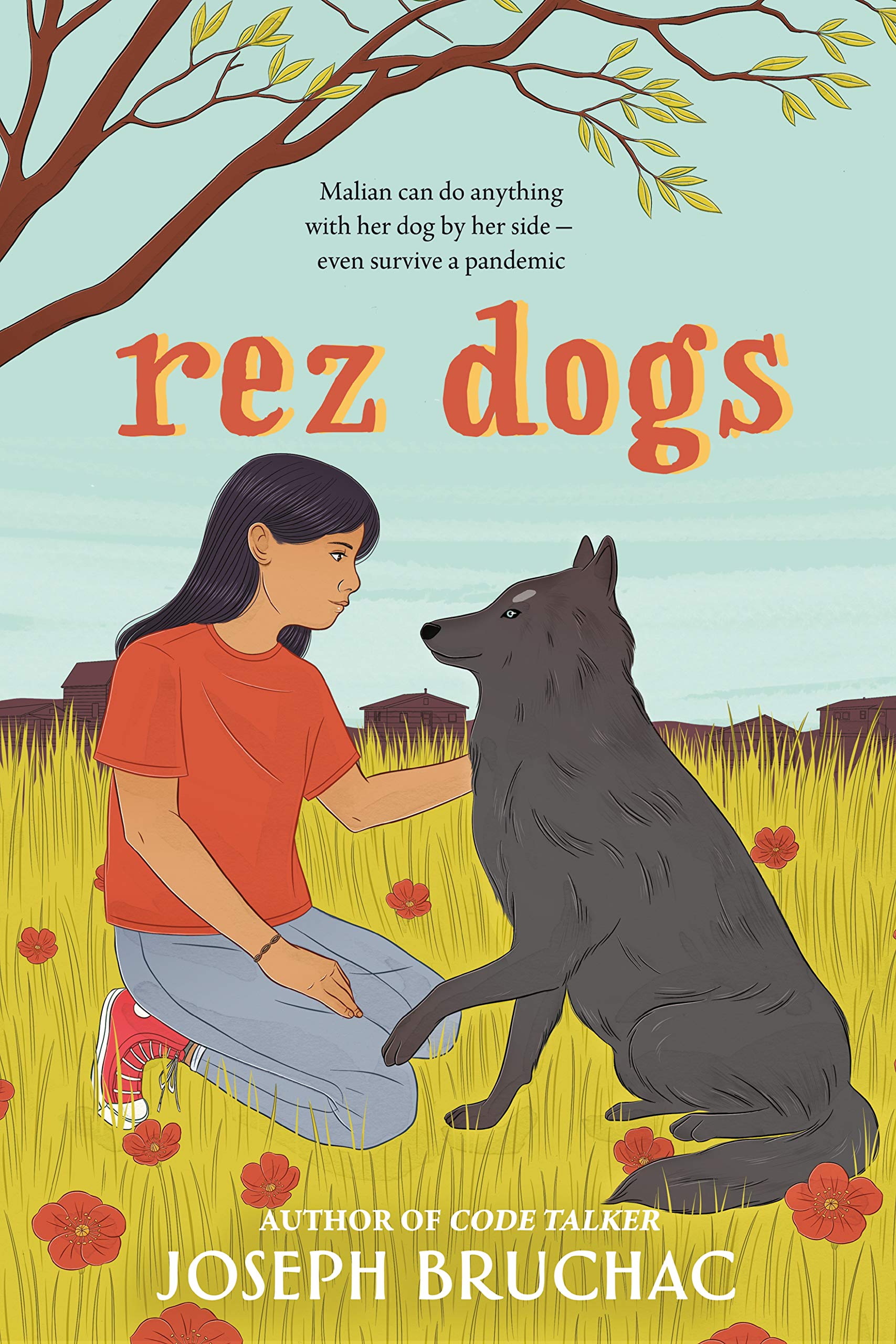
Rez Dogs by Joseph Bruchac

Published by Dial Books

Rez Dogs: Bruchac, Joseph: 9780593326213: Amazon.com: Books

Summary:  Malian has been visiting her grandparents on a Wabanaki reservation when Covid hits, and she can’t go back home to Boston.  She loves her grandparents and the reservation, but sometimes gets bored, lonely, and frustrated by the spotty Wi-Fi.  When a rez dog appears one morning, Malian names him Malsum (meaning wolf), and welcomes his company.  Malsum never comes into the house, but his presence brings joy to Malian and her grandparents as they go about their daily lives.  In between school, gardening, cooking, and Star Trek episodes, Malian and her grandparents share stories: folklore, and tales of her grandfather’s time at an Indian boarding school, and how her mother was taken away from her parents and put into foster care as a child.  By the time summer comes and Malian can return to Boston, she has learned how much her Wabanaki heritage is a part of her.  While she’s sad to say goodbye to Malsum, she knows she’ll be back.  “Just like us, you’re a rez dog, too,” her grandmother tells her.  192 pages; grades 3-7.

Pros:  This timely novel-in-verse introduces readers to contemporary life on a reservation while beautifully weaving in folktales and indigenous history.  

Cons:  I am curious about the Wabanaki reservation; I am guessing it’s in Maine (or somewhere in New England), and I would have liked to have learned more about it, maybe in an author’s note.