National Book Award longlist

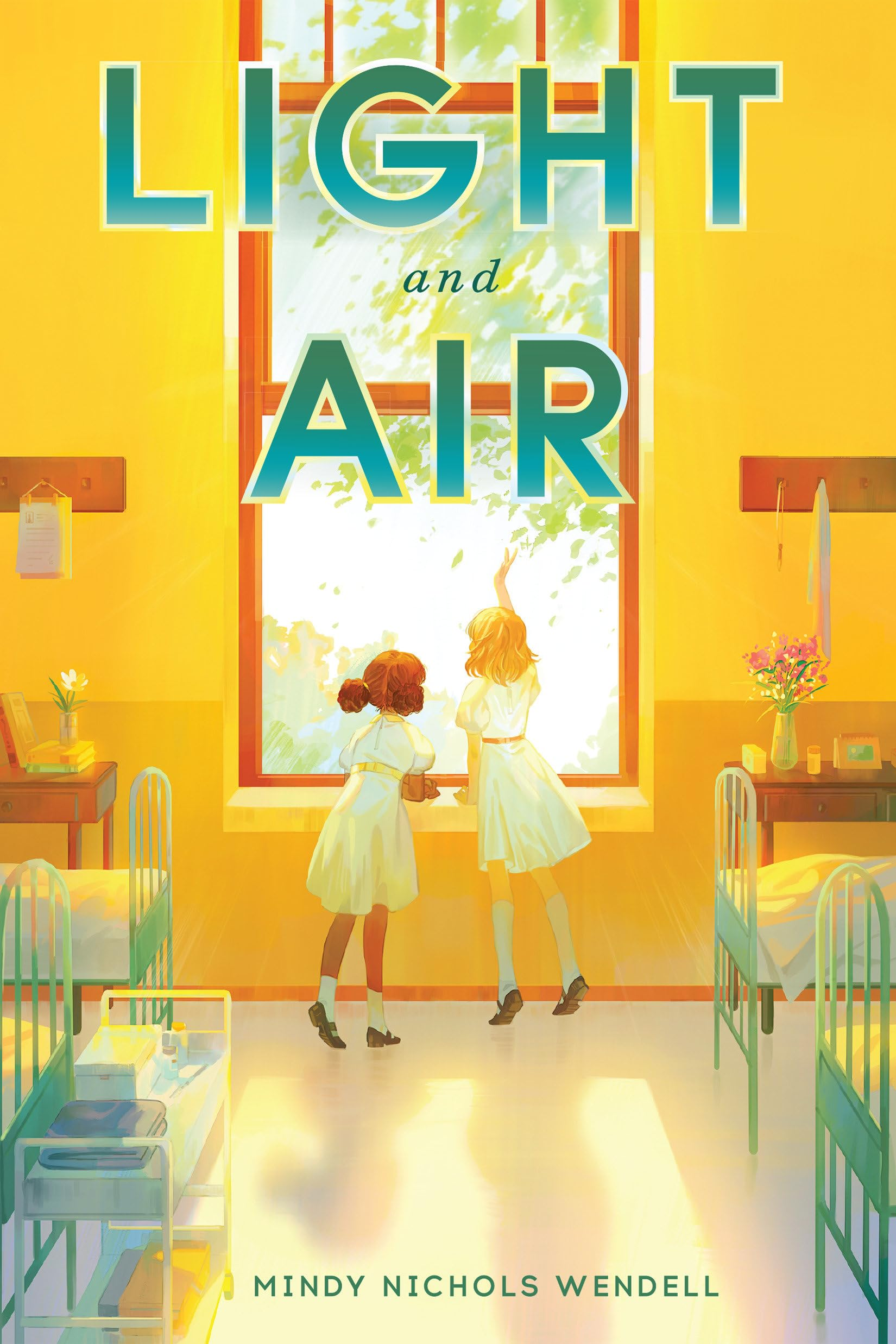
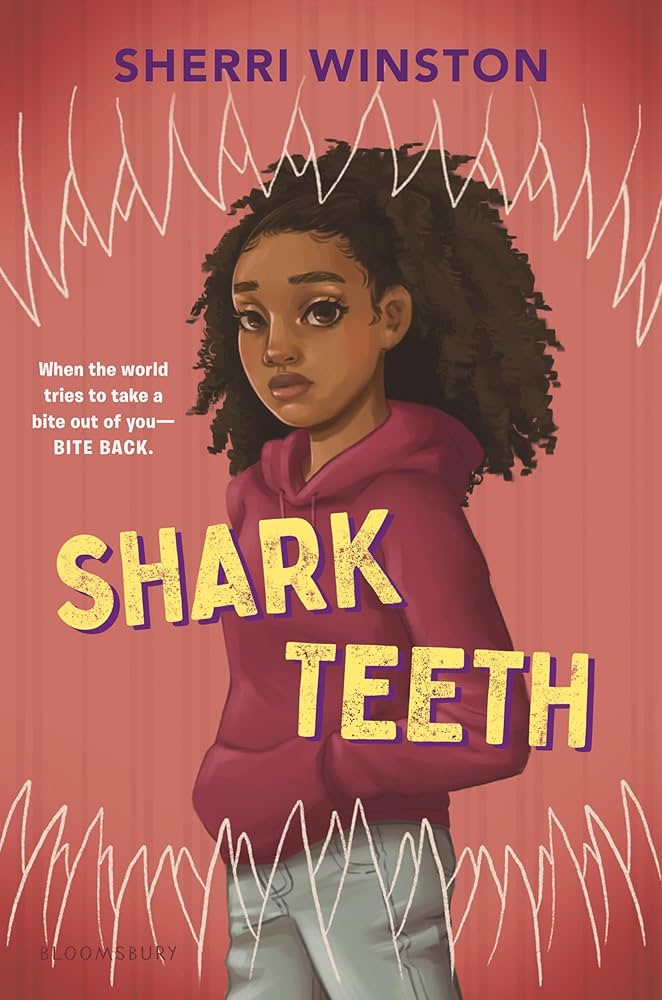
I’m nerdy enough to eagerly await the announcement of the National Book Award longlist, which this year happened on September 10 for young people’s literature. I read three of the books on the list and offer you my assessment of them here.

Kareem Between by Shifa Saltagi Safadi (G. P. Putnam’s Sons Books, 336 pages, grades 5-8). When this novel in verse opens, Kareem’s biggest concern is with making the middle school football team. He’s willing to cheat on homework and shun a new boy who’s a refugee from Syria in order to befriend the football coach’s son Austin. But when Kareem’s mother returns to Syria to help her ailing father, Kareem begins to question his actions. The 2017 Muslim ban throws Kareem’s life into chaos, and his issues with Austin start to feel petty. Kareem has to look deep within himself to do the right thing and start to make amends with some of the people he’s hurt. Like many immigrant kids, he has a foot in two different worlds, and by the end of the story, Kareem has learned to embrace his dual heritage.

I well remember Trump’s Muslim ban, but this book really made me understand the horrific effects it had on those who were directly impacted by it. The characters were well developed, and I liked that Kareem made some pretty bad–and quintessentially middle school–decisions, but that he was able to acknowledge them, working to make things right and growing over the course of the story. The book was so compelling that once I got about halfway through, I had to keep reading to find out how Kareem’s story turned out.

Free Period by Ali Terese (Scholastic Press, 272 pages, grades 5-8). Helen and Gracie alternate telling the story of how a prank gone wrong lands them in the principal’s office, where they’re sentenced to join the Community Action Club. At the first meeting, they learn about a project to get maxi pads in all the school bathrooms, something that club president and mean girl Madison wants to do as the final touch to her glittering middle school resume. After Helen has a period catastrophe, she becomes a huge advocate, leading the club in all kinds of pranks and civil disobedience to get the school board to fund the project. Helen’s a bit of an evil genius, while Gracie’s more of a quirky, artsy type, and while the two of them have been best friends and partners in crime for years, the period project shows them that they are developing their own identities and outside friendships. Combining their talents, they become an unstoppable force that brings the whole club–even Madison–together to get the job done.

It is a bit confounding to me why this book garnered NBA recognition. To me, it read like a run-of-the-mill Scholastic tween/teen story, albeit one that focuses and educates about an important topic that’s often not discussed. Helen and Gracie seemed so similar at the beginning of the story that it actually took me a couple of chapters to notice that they were alternating the narration. Their nonstop witty banter, confidence, and disregard of any kind of authority felt a bit unrealistic for middle school.

Mid-Air by Alicia D. Williams (Atheneum/Caitlyn Dlouhy Books, 320 pages, grades 5-8). Alicia Williams’ sophomore novel focuses on Isaiah, a Black eighth-grade boy whose two best friends are Drew and Darius. Together, they try to set world records and egg each other on to attempt daredevil stunts. When one of those stunts goes wrong and Darius is killed by a car, Isaiah blames himself. Both he and Drew withdraw into their separate grief at a time when they need each other the most. Isaiah’s attempt to find some healing by revisiting the scene of Darius’s death results in racial violence toward Isaiah that leaves him barely able to function. His worried parents send him to relatives in North Carolina where he basks in the easygoing warmth of his aunt and uncle’s home and develops his first crush on a girl who accepts all the things Isaiah has always tried to hide: his love of rock music, his fondness for painting his nails, and his fear of many of the stunts Drew and Darius pushed him to do. By the time summer’s over, Isaiah is starting to heal and is ready to start high school, and he and Drew finally find a way to begin to communicate.

Another novel in verse that could easily be a contender for a Newbery or Printz award. Like she did in Genesis Begins Again, Alicia Williams creates a memorable character who’s often afraid to let his true nature shine, slowly learning to be himself as the narrative unfolds. Both of the novels in verse would make excellent middle school book club books.

Since I started working on this post, the National Book Awards finalists have been named, and only one of these books made it. Which one? I will leave it to you to read all about it here (hint: it was my personal favorite). The winners will be named November 20, and yes, I have it on my calendar.

Dragon into Monday morning

Bakery Dragon by Devin Elle Kurtz (Knopf Books for Young Readers, 48 pages, ages 4-8). Ember loves gold, but he’s too small to terrorize villagers into giving it to him like the other dragons do. He’s excited when he sees a glimmer of gold in the distance until it turns out to be street lamp. Discouraged, he falls asleep, but when a raging storm hits, a kind baker invites him inside. Ember proves a natural at kneading dough and shaping loaves, and the baker rewards him with a sack of fresh bread. Back home, the other dragons can’t believe how good bread tastes and offer Ember a share of their gold if he can get them more. The whole group of them show up at the baker’s door, led by Ember, and pour out a bag filled with their stolen gold. Before long, dragons and humans are happily living side by side, with everyone having enough gold AND bread.

This is some good old-fashioned storytelling with enchanting illustrations that feature an adorable little dragon and mouth-watering pictures of bread. I can’t wait to share this with kids; it would make a great gift or addition to any library. I did feel like the baker was overlooking a sustainable source of energy to bake her bread with dozens of fire-breathing dragons showing up on her doorstep.

Dragon for Hanukkah by Sarah Mlynowski, illustrated by Ariel Landy (Orchard Books, 40 pages, ages 4-8). Hannah tells readers about the gifts she’s gotten so far for Hanukkah: a dragon named Nerry from her parents on the first night, a rainbow from Bubbie on the second night, a full treasure chest from her aunt on the the third. Now it’s the eighth night and time to clean up for the guests who will soon be arriving. As Hannah tidies up her room, readers can see that the dragon is stuffed, the rainbow was created with markers, and the treasure chest is full of Hanukkah gelt. Cleaning up produces some toys to donate to others, all part of the eighth night–the most magical night–of Hanukkah. The last two pages have Nerry asking questions that Hannah answers to give readers more information about the holiday.

A fun Hanukkah read-aloud just right for younger kids, who will enjoy seeing the ordinary objects in the illustrations that Hannah has created magical stories about. The additional information at the end is an enjoyable way to learn more about Hanukkah.

Some creatures that are great…and small

Towed by Toad by Jashar Awan (Tundra Books, 48 pages, ages 3-7). Toad loves to help others as he drives around in his tow truck, helping animals who are having car troubles. He’s so busy that he doesn’t have time to eat the breakfast or lunch that Pop makes for him. But when Toad’s own truck has a breakdown, Toad realizes something: he needs to ask for help. And Pop is only too happy to come to the rescue with his own truck. “Everyone needs help sometimes. Even the helpers.”

From the clever play on words in the title to the satisfying message at the end, this little book is a winner that will be enjoyed by young readers everywhere. There’s lots of humor in the illustrations, with funny animal names and various car-related situations that are sure to bring a laugh.

How to Draw a Brave Chicken by Ethan T. Berlin, illustrated by Jimbo Matison (Hippo Park, 40 pages, ages 4-9). After the narrator draws a chicken, he decides the chicken looks scared. Drawing her some friends, including a knight, makes her braver, but when a dragon is drawn, she gets nervous again. Drawing a rocket sends her to the moon, but she and her friends eventually decide they prefer life on Earth. A hand-drawn waterslide sends everyone back home again, where they celebrate with a party full of scary creatures…all drawn by you, of course!

This hilariously zany story is interspersed with step-by-step drawing instructions that will keep readers busy for hours. For more fun, get the first book, How to Draw A Happy Cat (2022)

How to Staycation Like a Snail by Naseem Hrab, illustrated by Kelly Collier (Owlkids, 40 pages, ages 4-7). Snail has tried traveling and decided he prefers to stay home. He and his friend Stump (a tree stump) decide to have a stay-at-home vacation…a staycation! They notice with a greater appreciation the sights and sounds around them. Just as they’re starting to think they’ve seen and heard it all, a couple of fluffy traveling seeds drop in. Snail and Stump enjoy sharing the sights with their new friends, convincing the seeds to put down roots and join them.

This is another second in a series; I missed How to Party Like a Snail (2022), and I’m glad I caught up with Snail for his staycation. The story is cute, with gentle humor and cartoon bubble dialogue, and it could serve as a prompt for kids to write about what they could do on their own staycations.

Stories of food and family

The Table by Winsome Bingham and Wiley Blevins, illustrated by Jason Griffin (Neal Porter Books, 56 pages, ages 4-8). A child tells the story of their family as they gather around the table to eat, dye eggs, and sew a dress. The narrator reads to Meemaw, who can’t read but is an excellent cook. When Papa loses his job in the mines, the family is forced to move to a place that’s too small to fit the table. Left by the side of the road, the table gets a new home when another family drives by. Daddy is a carpenter, so he’s able to fix it up. As they sit down to dinner, the narrator tries to imagine the stories that their new-old table could tell.

A poignant story about two families–one White and one Black–who share the mundane but loving details of their lives. It would make a good book to share around Thanksgiving, with its emphasis on food and family. I loved the illustrations, which only portray the hands of the characters as they gather around the table, but readers may need some inferencing skills to understand what is going on.

Noodles on a Bicycle by Kyo Maclear, illustrated by Gracey Zhang (Random House Studio, 40 pages, ages 4-8). The team that brought us The Big Bath House has created another story from Japan, this time about kids watching the amazing deliverymen who work for the noodle shops, carrying trays stacked high with china bowls full of steaming noodles. Zipping through traffic, they never lose their balance, setting up friendly rivals between deliverymen from different shops. The kids try to emulate them, stacking trays with bowls full of water, but inevitably suffer spills. At the end of the day, Mama calls the noodle shop, and a few minutes later the doorbell rings–Papa! Turns out he is one of the deliverymen, and he’s ready for a soak in a hot tub before wearily tucking in the kids and heading for bed. Includes an author’s note and photos on the front and back endpapers of Tokyo deliverymen in 1937 and 1959.

This slice-of-life story from the mid-twentieth century celebrates the workers who adroitly performed the hot, hard work of delivering noodles to the hungry residents of Tokyo. I’m glad they included two photos to help readers really appreciate the skill involved. The author’s note captures it perfectly when she says, “Of course, there are practices worth improving, but there are also things worth remembering and celebrating.”

Hair-raising stories

Crowning Glory: A Celebration of Black Hair by Carole Boston Weatherford, illustrated by Ekua Holmes (Candlewick, 32 pages, ages 4-8). Starting with “five queens” (five Black women, who, in 2019, won the titles of Miss America, Miss USA, Miss World, Miss Universe, and Miss Teen USA ), the rhyming text and vibrant illustrations celebrate Black hair. Cornrows, ‘fros, locs, puffs, ponytails, and more–all get their moment to shine. “To heed beliefs or cheer gray days,” women cover their hair with hijabs, geles, headwraps, and hats. “A ritual of hand and heart,/each stunning head a work of art./Each royal coil coaxed by kin./Each strand a story without end.” Includes a glossary.

I hope this beautiful book will be considered for both Coretta Scott King and Caldecott awards. I always love Ekua Holmes collage illustrations, and these are gorgeous. The focus is on female hair, so this could make a good companion to read with Crown: An Ode to the Fresh Cut by Derrick Barnes, which features a barbershop.

My Hair Is a Book by Maisha Oso, illustrated by London Ladd (HarperCollins, 32 pages, ages 4-8). This book looks similar to Crowning Glory, and it has gotten at least two starred reviews. I’ve had it on hold at the library for weeks now, but I haven’t been able to get a copy. Now that I’m finally giving up, it will probably be on its way to me tomorrow!

Knots by Colleen Frakes (HarperAlley, 240 pages, grades 4-7). Nervous about starting at a new school, Norah tries to give herself a new look by first bleaching her hair, then dyeing it blue. It turns out surprisingly well, and school gets off to a good start. But a few weeks in, a boy shares with the class that he is mostly responsible for his two younger sisters because his parents aren’t home much. Norah and some of the other kids get pulled out of class by the police as witnesses, and the boy and his sisters end up getting sent to live at their grandparents’ house. When Norah’s mom and younger sister move across the state for a new job, Norah finds herself feeling neglected by both parents and worries that something similar will happen in her family. Another attempt to change her hair turns out to be disastrous, and her disheveled appearance makes a caring teacher start questioning Norah’s home life. When the family is reunited for the holidays, they finally start communicating about what’s going on, and, while things are still far from perfect, some changes are made that help get them back on track. Includes an author’s note about incidents from her own life that inspired the story and the evolution of the book.

Raina Telgemeier fans will enjoy this fictionalized graphic novel memoir that explores family issues, as well as school and friendship concerns. The hair dyeing is somewhat symbolic of the changes Norah and her family are going through, but also includes a reassuring message that with hair and life, there are always chances for a do-over. The scene with the police pulling the kids out of class as witnesses was kind of jarring; yes, teachers are mandated reporters, but hopefully such methods are not used to find out what’s going on at kids’ homes.

A ballplayer who dared, a poet who cared, and a sanitation worker who repaired

Call Me Roberto! Roberto Clemente Goes to Bat for Latinos by Nathalie Alonso, illustrated by Rudy Gutierrez (Calkins Creek, 40 pages, grades 2-5). Roberto Clemente loved playing baseball as a boy in Puerto Rico and was thrilled to be scouted by the MLB. After a disappointing season in Montreal, he joined the Pittsburgh Pirates, where he became an All-Star and helped lead his team to the World Series in 1960 and 1971. He won twelve Gold Gloves, was the 1966 National League MVP, and the 1971 World Series MVP. Despite his success, Roberto often faced racism and discrimination. He corrected those who tried to call him Bob and spoke out against the segregation he endured during spring training in Florida. On September 30, 1972, Roberto became the 11th MLB player and the first Latino one to reach 3,000 hits. Includes notes from the author and illustrator, glossary, photos, bibliography, and timeline that tells about Roberto’s death in a plane crash on his way to deliver humanitarian aid to Nicaragua in December of 1972.

I’m ashamed to say that I thought Roberto Clemente was Dominican and that the only thing I knew about him was his death in a plane crash. This biography emphasizes his greatness in baseball, making clear the discrimination he faced and how he fought for justice for himself and other Black and Latino players. The illustrations by Caldecott honoree Rudy Gutierrez are beautiful and deserve a look from this year’s Caldecott committee. The author’s note adds a personal story, since she is a Cuban American sportswriter who has faced some of the same issues Roberto Clemente did.

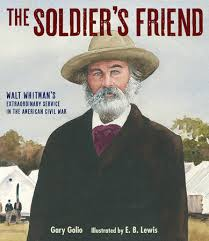
The Soldier’s Friend: Walt Whitman’s Extraordinary Service in the American Civil War by Gary Golio, illustrated by E. B. Lewis (Calkins Creek, 40 pages, grades 2-5). A look at a lesser-known part of Walt Whitman’s life, when he served as a volunteer nurse in the Civil War. After his brother was wounded, Walt traveled from New York to Virginia to visit him in the hospital. He was so moved by the soldiers he saw that he decided to move to Washington, DC to devote himself to caring for them. Most of what he did was simple: bringing treats, helping men write letters, talking with them, or just listening. Although he was a fervent supporter of the Union cause, he cared equally for soldiers from both sides. Lines from Whitman’s “Leaves of Grass” are woven into the story. Includes photos and additional information about Walt Whitman and his Civil War experiences, along with a list of resources.

This touching story of Walt Whitman’s kindness and caring seems particularly relevant in today’s world when it’s easy to feel like it’s necessary to take sides or that one person can’t make a difference. The author notes at the end that Whitman may have visited as many as 25,000 soldiers, and while he couldn’t influence the outcome of the war, he found a way to express caring and kindness. Except for the lines from “Leaves of Grass,” there’s almost no mention of Walt Whitman’s poetry; it would have been nice to acknowledge his literary contributions in the story or back matter.

Gifts from the Garbage Truck: A True Story About the Things We (Don’t) Throw Away by Andrew Larsen, foreword by Nelson Molina, illustrated by Oriol Vidal (Sourcebooks Explorer, 40 pages, grades 1-4). Nelson Molina was always a collector. His mostly Puerto Rican neighborhood in East Harlem yielded all kinds of treasures. His mom showed him how to turn scrap wood into birdhouses, and Nelson enjoyed fixing up cast-off toys for his younger siblings. As an adult, Nelson became a New York City Sanitation Worker, where he continued to find and fix up things that he found in the trash. He started displaying them in the locker room of the sanitation garage, eventually expanding into other parts of the building. Since retirement, Nelson has opened a museum where he can display his treasures, showing the huge amount of stuff that we put into the trash. Includes tips for reducing, reusing, recycling, and rethinking, as well as photos of Nelson with some of the exhibits from his museum.

Kids will be inspired to look at trash differently, maybe thinking twice before they throw something away. I loved the scene at Christmas where young Nelson happily gives his siblings the toys he’s fixed up for them. Being something of a minimalist, though, the photos of his cluttered museum convinced me that his way of life is not for me.

Read at your own risk!

The Secret Dead Club by Karen Strong (Simon and Schuster Books for Young Readers, 240 pages, grades 4-7). Wednesday has always been able to see ghosts, a power she inherited from her mother, grandmother, and great-grandmother. When an encounter with a wicked ghost almost kills her, Wednesday and her mother end their extended RV trip and return to her great-grandmother’s house in Georgia. There, Wednesday finds herself drawn to two girls who have formed a secret Dead Club for those who can either see ghosts or believe that they exist. A third girl has left the club under somewhat mysterious circumstances, and a fourth member died the previous year and starts appearing to Wednesday as a ghost. Most of the women in her family have lost their ability to see ghosts when they hit puberty, so Wednesday isn’t sure how much longer she’ll hold onto her powers. When the girls in the club need her help to resolve a potentially dangerous ghostly mystery, Wednesday has to decide how much she is willing to trust them, herself, and the ghosts to try to set things right.

Full disclosure: this is the only book in this post that I actually read from start to finish. Although there was some creepy ghost stuff–including a prologue in which a grieving father becomes possessed by an evil spirit and kills his two children–a lot of the focus is on the changing nature of middle school friendships and the emotions that accompany those transitions. I saw a review that called this book the Baby-Sitters Club meets Stranger Things, and I feel like that is an apt description.

Give Me Something Good to Eat by D. W. Gillespie (Delacorte Press, 272 pages, grades 4-7). Every year, the town of Pearl, North Carolina celebrates Halloween with a big blowout, but before the night is over, a child disappears, and all the residents’ memories of that kid are wiped clear. All of them, that is, except for seventh grader Mason, who still recalls the time five years ago that his best friend Marcus vanished, and even his own mother forgot that he had ever existed. When Mason’s younger sister Meg goes missing, it’s up to him and his three friends, Serge, Becca, and Mari, to discover the town’s dark underside and rescue Meg. UnderPearl is filled with monsters, giant spiders, and a horrifying witch who controls everything and has no intention of letting Meg escape.

I started reading this book just before bed, and after two nights of bad dreams, I finally decided it was not for me. Horror fans will undoubtedly love the monsters and frightening situations the kids find themselves in, but be warned that this is a genuinely scary book that may not be for everyone.

Once They See You: 13 Stories to Shiver and Shock by Josh Allen, illustrations by Sarah Coleman (Holiday House, 192 pages, grades 4-7). Holiday House sent me a copy of this book recently. I was delighted, since Josh Allen’s other other short story collections, Only if You Dare and Out to Get You are extremely popular in my library. Fans of Alvin Schwartz’s classic Scary Stories collections will also enjoy these.

Election Day, part two

We Shall Not Be Denied: A Timeline of Voting Rights and Suppression in America by Cayla Bellanger DeGroat and Cicely Lewis (Lerner Publications, 48 pages, grades 4-8). Beginning with a present-day example of laws being passed to limit voting by mail, the authors trace the history of groups of Americans whose right to vote has been suppressed. A timeline at the bottom of each page keeps track of important years in voting rights history, while the text and illustrations give more details about those events. Although there have been backwards steps, the trajectory has slowly inched forward to give women, Indigenous people, Asian Americans, and Black citizens voting rights, and voting has become more accessible through absentee ballots and the repeal of poll taxes and other discriminatory practices. There is still work to do, and the final pages suggest actions readers can take, as well as offering reflection questions, a glossary, and index, and a reading list.

Readers will learn that voting, which should be a right, has too often been a privilege reserved for certain groups based on race, gender, and class. Although it contains a fairly brief, straightforward narrative, the book offers a lot of food for thought and discussion and would make an excellent resource to begin an investigation into the history of voting rights and the state of those rights today.

With Election Day just weeks away, teachers and librarians will undoubtedly be looking for resources to share with students. Here’s an Election Day and voting rights book list to help you out.

Indigenous history

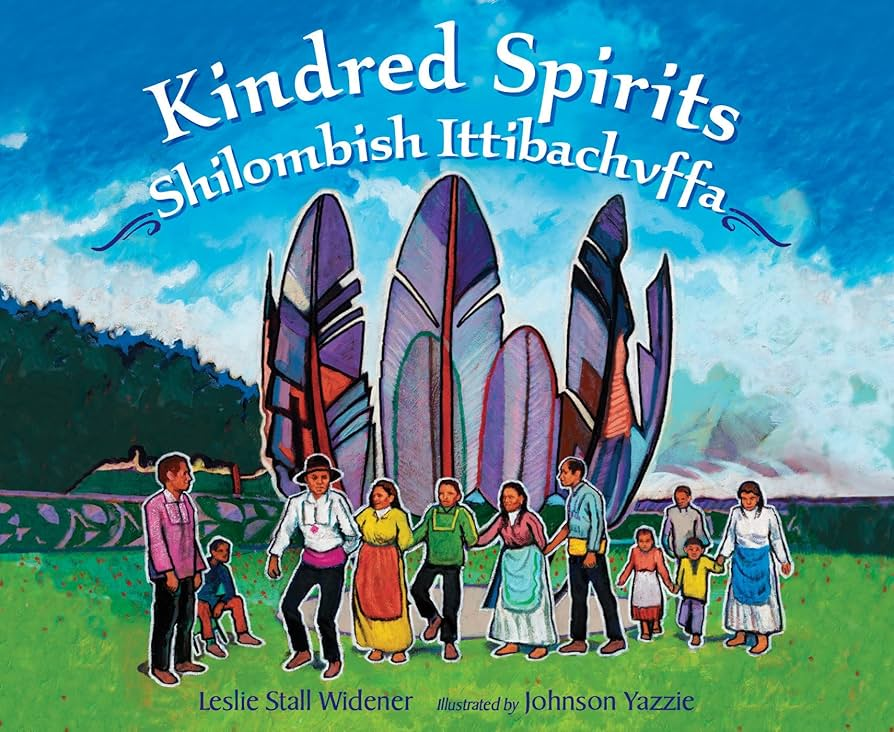
Stealing Little Moon: The Legacy of the American Indian Boarding Schools by Dan SaSuWeh Jones (Scholastic Focus, 304 Pages, grades 5-8). Dan SaSuWeh Jones tells the story of his family’s history with the Chilocco Indian Agricultural (boarding) School, beginning with the forcible capture of his grandmother Little Moon There Are No Stars from the Ponca reservation in 1885 at the age of four. The Chilocco school, run by Quakers, did not condone the physical abuse found at other Indian boarding schools, but it did use strict, military-inspired practices to force the students to assimilate to white culture. Little Moon There Are No Stars, renamed Elizabeth, stayed on for several years after her graduation to work as a school matron, and sent her own daughter there as well. By the time the author’s sister attended the school in the 1950’s, there had been many changes, becoming a vocational school that provided a positive experience for many (although certainly not all) of the students. The 1960’s and 1970’s saw political movements that helped the school and its students embrace their various cultures and languages. While the author didn’t attend the school, he worked there after it closed in 1985 as part of a maintenance crew trying to preserve the buildings and grounds. In his final chapter, he writes of the appropriateness that those buildings have crumbled, leaving the land to its natural state, a metaphor for the enduring nature of Indigenous cultures that have survived so much trauma yet still continue to live on. Includes an introduction by Denise K. Lajimodiere (Turtle Mountain Band, Chippewa), photos throughout the text, and a long list of additional resources.

Reading this book caused me to reflect on how much this blog has educated me and changed my views on American history. I’m not sure I knew anything about Indian boarding schools ten years ago, but I’ve learned from children’s books over the years, and this one added a lot to that knowledge. It’s masterfully written, weaving together a personal family memoir and the history of boarding schools in North America. The author writes unflinchingly about a multitude of abuses and deaths of children at many different schools, while at the same time acknowledging that some students had positive experiences and learned to embrace their heritage, particularly in the later years of the schools’ histories. The final chapters give hope that some of the many, many crimes and trauma committed against indigenous people are finally being at least brought to light and possibly, in some cases, addressed and healed. There are some horrific descriptions of child abuse, so be aware of that element when sharing this book with kids. I hope this book will be considered for awards, especially by the Sibert committee.

This Land: A History of the Land We’re On by Ashley Fairbanks, illustrated by Bridget George (Crown Books for Young Readers, 40 pages, ages 4-8). “This is my house. I live here with my family,” the narrator begins. “Before us, another family lived here.” Other families lived there, too, but further back in time, a whole community lived on the land before they were forced off by Europeans, something that happened all across the country. The narrator has a friend who is Anishinaabe (like the author and illustrator), and he and his grandma remind the boy of the Indigenous people who once lived there: their food, their songs, and mostly, the way they considered the land to be sacred. Now, as he travels around the U.S. with his family, the boy learns about different Indigenous groups who lived in those places and remembers how they once honored the land they were on. Includes additional information about land acknowledgement, discussion questions, and ideas for learning more about local Native people.

This straightforward story reminds readers to learn about the history of the land they now call home and recall that it once belonged to people who were forced to leave their homes. I really liked how the book acknowledges those who lived on the land of well-known sites like Mount Rushmore and New York City. I read in a review that the title calls to mind the controversy around the song “This Land Is Your Land,” a song that is considered problematic by many Indigenous people. I wasn’t aware of this and was reminded once again of how much I have learned from reading books for this blog.

Picture books to share

Mr. Fox’s Game of “No!” by David LaRochelle, illustrated by Mike Wohnoutka (Candlewick, 40 pages, ages 4-8). Here’s how Mr. Fox’s game works: every time he asks a question, you have to say “no,” or you will be sent back to the beginning of the book. Ready to play? Better not say yes! Do you want a taste of Mr. Fox’s scrumptious-looking sundae? A free trip to Hawaii with a million billion dollars thrown in? If you’re still in the game, how about this: are you stronger than a baby? Are you wearing underwear? What do the letters Y-E-S spell? If you make it all the way to the end of the book, there’s a final question: have you ever read a funnier, better written, more beautifully illustrated book than this one?

I’ve just been delighting first graders by reading them David LaRochelle and Mike Wohnoutka’s book, See the Cat: Three Stories About a Dog, and I look forward to trying this one out on them. It’s such a clever idea, and just the right humor for kids. I’m not sure about going back to the beginning of the book if they make a mistake…I might just make it a game where Mr. Fox gets points for the wrong answer.

First Day, Hooray! A Book of School Day Feelings by June Sobel, illustrated by Nabila Adani (Clarion Books, 40 pages, ages 4-8). Kids run into school on their first day with “backpacks filled with school supplies, but something else hides in disguise.” What’s hiding? Big feelings, shown with colored fonts in the text and colorful creatures surrounding different kids. Whether you’re feeling happy, scared, angry, or brave, it helps to name the feeling and to take a deep breath when needed. At the end of the day, kids pack up their backpacks–and their feelings–and head home with one more emotion: hooray! Includes a note from Yale early childhood professor Craig S. Bailey about ways to use this book to help kids explore their emotions.

I’m taking this book to school with me on Monday to share with our school counselors. It’s a simple but effective exploration of different emotions children (and adults) may experience, helping them to handle them better by identifying them. The illustrations of a diverse student body and fun magical creatures associated with the different feelings will appeal to kids as well.