Laundry Day by Jessixa Bagley

Published by Roaring Brook Press

Summary:  Badgers Tic and Tac are bored.  They reject several ideas from their mother, until she suggests they help her hang the laundry on the clothesline.  She leaves them to the job while she heads to the market.  When the laundry basket has been emptied, the boys are still enjoying their new activity.  They move on to the winter clothes and blankets, then pillows, lampshades, and even the toaster, adding twine as they run out of clothesline.  When Ma Badger returns, the reader gets an aerial view of what she sees, lines running all through the yard with every imaginable object hanging from them.  Calmly, she informs them that they forgot a couple of things.  The final page shows Tic and Tac hanging from the seats of their pants with clothespins, complaining once again that they are bored.  32 pages; ages 3-6.

Pros:  A funny story brought to life by Bagley’s detailed, colorful illustrations.

Cons:  I knew right away that trip to the market was going to be a bad idea.
Becoming Bach by Tom Leonard

Published by Roaring Brook Press

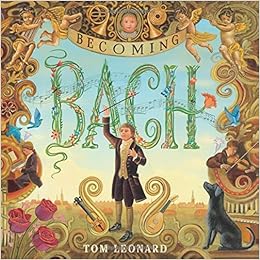
Summary:  From the time he was born, Johann Sebastian Bach was surrounded by music (and also, apparently, by people named Johann).  His whole family–many of whom, incidentally, were named Johann–made music, so much so that in his part of Germany, musicians were called bachs.  His parents died when he was young, and he went to live with his oldest brother, Johann Christoph (traveling with another brother, Johann Jacob).  There, he learned by copying music and playing a great variety of instruments, until he was able to express his many deep emotions through his own compositions.  The final two pages of the book show the music coming from his organ as beautifully colored floating designs, traveling through time to contemporary listeners.  An author’s note gives additional biographical information.  40 pages; grades 1-5.

Pros:  Spare text, told in Bach’s voice, is gorgeously accompanied by illustrations which also convey information about his life.

Cons:  Too many characters named Johann.

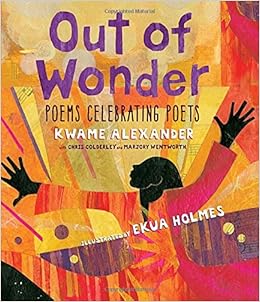
Out of Wonder: Poems Celebrating Poets by Kwame Alexander, illustrated by Ekua Holmes

Published by Candlewick

Summary:  If you’ve read Kwame Alexander’s Booked or The Crossover, it will come as no surprise that both of his parents loved words and books.  He writes in his preface of being raised on a steady diet of poetry, and he pays homage to his favorite poets in this book.  The 20 poems, written by Alexander and fellow poets Chris Colderley and Marjory Wentworth celebrate poets and their poetry from Emily Dickinson to Langston Hughes to Rumi.  The last six pages give quite a bit of additional information about each poet.  56 pages; grades 3-7.

Pros:  A wonderfully diverse collection of writers and poems, brought to life with color collages by Caldecott honoree Ekua Holmes.  The second paragraph of Kwame Alexander’s preface would make a perfect introduction to a study of poetry, and the entire book could be used as a curriculum guide to introduce students to 20 different poets.

Cons:  Readers unfamiliar with the poets and their works may not appreciate these poems on their own.

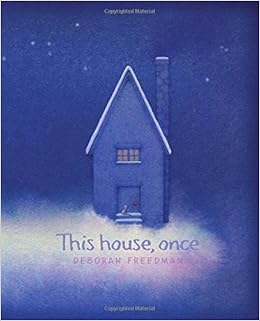
This House, Once by Deborah Freedman

Published by Atheneum Books for Young Readers

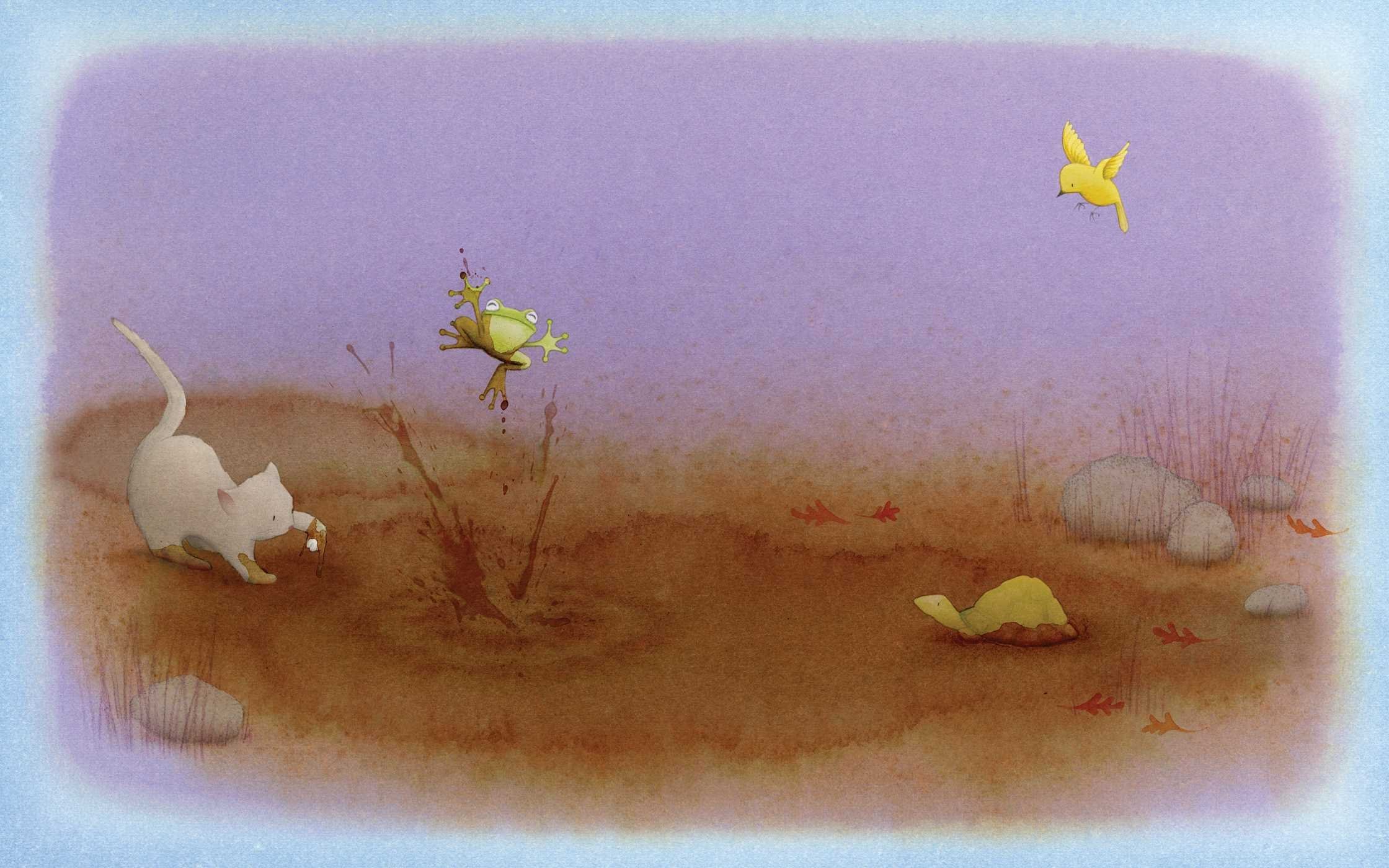
Summary:  The door was once a huge oak tree.  The stones were once underground.  The window was once sand that melted into glass.  A page of text and an illustration briefly explain where different parts of a house came from.  Each is followed by a two-page spread showing the materials in their original natural form.  A cat explores this outside world, meeting up with a bird, frog, turtle, and squirrel before coming back inside the cozy house.  The author’s note to readers tells about her New England home and asks, “Where do you live?  What was your home, once?”  40 pages; ages 4-8.

Pros:  The dreamy illustrations will get readers thinking about the building materials of their houses and how they connect to the natural world.

Cons:  Seemed like a cold night for the cat to be out of the house.

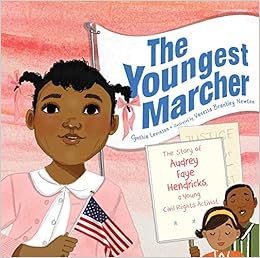
The Youngest Marcher: The Story of Audrey Faye Hendricks, A Young Civil Rights Activist by Cynthia Levinson, illustrated by Vanessa Brantley Newton

Published by Atheneum Books for Young Readers

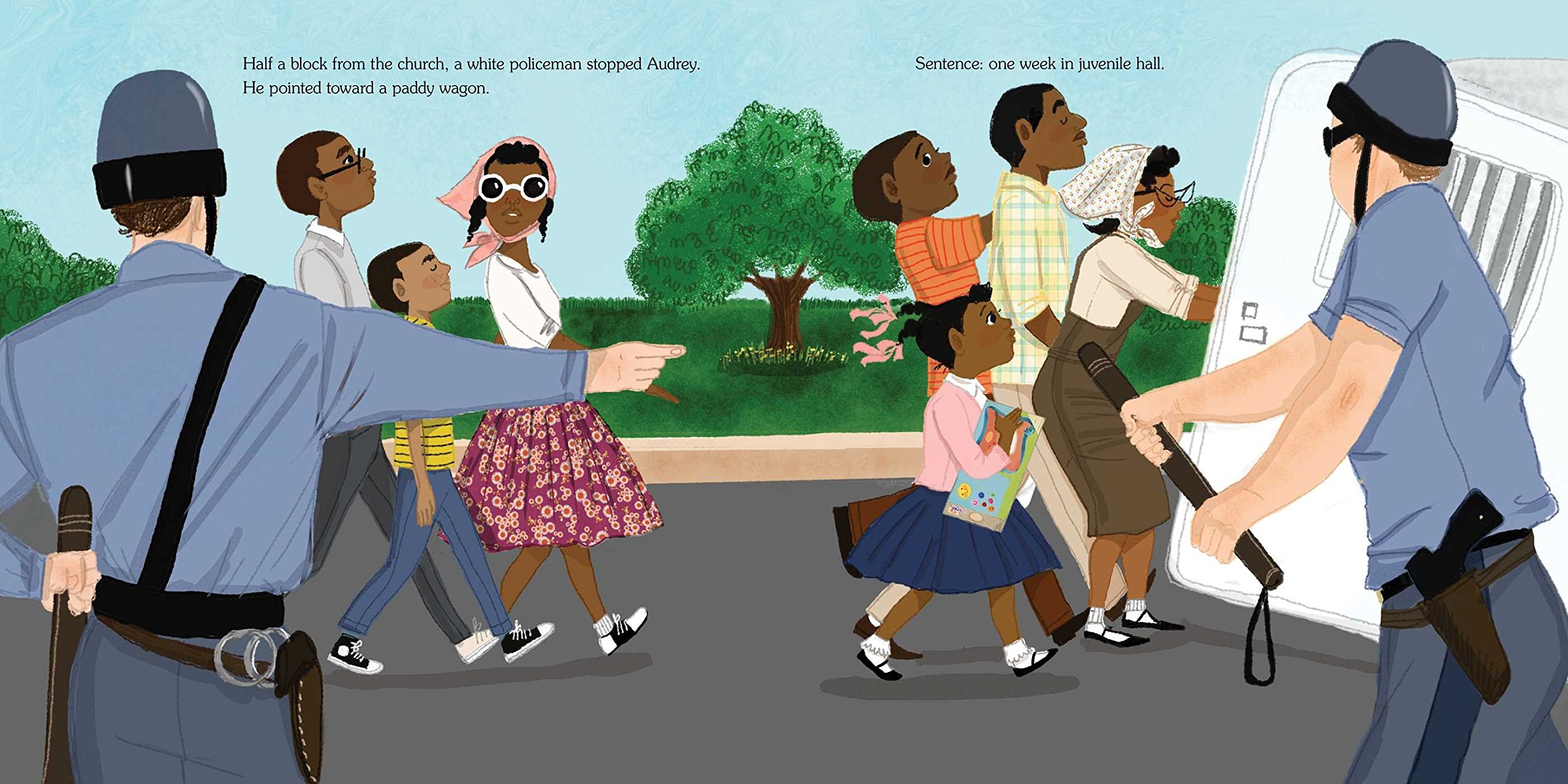
Summary:  Growing up in Birmingham, Alabama, nine-year-old Audrey Hendricks heard talk of civil rights marches from dinner guests Martin Luther King, Jr., Frederick Shuttlesworth, and James Bevel.  Audrey was eager to get involved, feeling the unfairness of having to use a dirty water fountain, getting worn-out books at school, and riding the freight elevator at the department store.  When Jim Bevel called on young people to “fill the jails” by protesting, Audrey eagerly signed up.  The youngest member of the march, she was quickly arrested with other kids and teens, and put in jail, where she stayed for a week.  With bad food, an uncomfortable bed, and mean guards, it was a tough time for Audrey, but she was proud when, on the fifth day, she learned there was no more room in the jail.  Their mission was accomplished, Audrey and the others were released, and two months later, Birmingham removed segregation laws from the books. Includes an author’s note giving more information about Audre, a timeline, and a recipe for the “hot rolls baptized with butter” that Audrey enjoyed for her first meal out of jail.  40 pages; grades 1-5.

Pros:  Cynthia Levinson draws on her research from We’ve Got a Job, her longer book on the Birmingham Children’s March, to tell this fascinating story for younger readers.  Kids will connect with Audrey and be inspired by her courage and positive attitude.

Cons: It’s pretty unbelievable that a nine-year-old spent a week in jail in 20th-century America.

Family Game Night and Other Catastrophes by Mary E. Lambert

Published by Scholastic Press

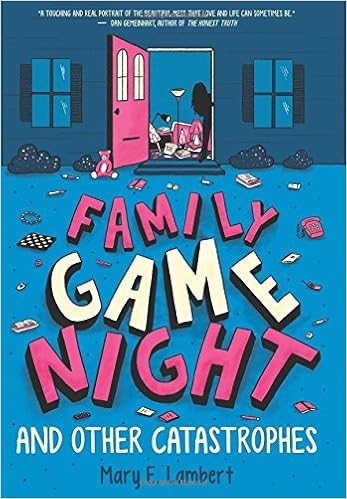
Summary:  When Annabelle was ten years old, she threw almost everything in the bedroom out the window.  Her mother’s hoarding had taken over every inch of space, and she couldn’t stand it any longer.  Now, three years later, the rest of the house is worse than ever, but Annabelle’s room is almost empty.  She checks it every day to make sure her mother doesn’t start stashing one of her collections in it again.  It’s her way of coping with a family spinning out of control, like her older brother Chad, who spends as much time as he can out of the house, and her younger sister Leslie, who tries to keep everyone else happy but is plagued by nightmares. Normally, her father escapes into his work, but when he discovers a Leslie’s folder of articles about hoarders who have been killed by their possessions, he leaves early on a business trip, warning that he won’t return until housecleaning is underway.  The family is more in crisis than ever, and Annabelle realizes she can’t keep hiding her feelings and pretending to her friends that everything is fine.  There are no easy answers, but by the end of the book, the family is taking their first cautious steps toward getting some help.  256 pages; grades 4-7.

Pros:  The author tackles a serious subject with a light touch.  Annabelle’s voice is funny and strong, and her family is loving despite their dysfunction.  Realistic fiction fans will find this hard to put down.

Cons: As something of an anti-hoarder, I was pained by the description of the house.

Chee-Kee: A Panda in Bearland by Sujean Rim

Published by Little, Brown Books for Young Readers

Summary:  Chee-Kee worries about fitting in on Bearland when he and his family move there from the Island of Coney.  There are all different types of bears in Bearland, but no pandas.  Chee-Kee’s kite looks different, his hat looks different, and in all his bamboo-chewing life, he has never seen a fork.  One day, while Chee-Kee is watching some other bears play soccer, he sees their ball get stuck up in a tree.  He knows just what to do: using string from his box-shaped kite, he ties together several sticks of bamboo, and pole-vaults to the top of the tree.  The last two-page spread shows an idyllic scene in Bearland with the pandas wearing sunglasses and skateboarding, and some of the other bears flying a box-shaped kite and fishing with bamboo poles.  An author’s note tells of her own struggles as the daughter of Korean immigrants, trying to fit into American society.  40 pages; ages 4-8.

Pros:  What a great–and timely–message about the contributions of all cultures to a diverse society.  Told in simple language with cute illustrations (they’re pandas, for heaven’s sake, of course they’re cute), this story will appeal to the youngest readers, but provides opportunities for discussions with older ones.

Cons: Once again, key information–in this case, the author’s note–was printed on the back cover, partially covered by the taped-down library book jacket.

Undefeated: Jim Thorpe and the Carlisle Indian School Football Team by Steve Sheinkin

Published by Roaring Brook Press

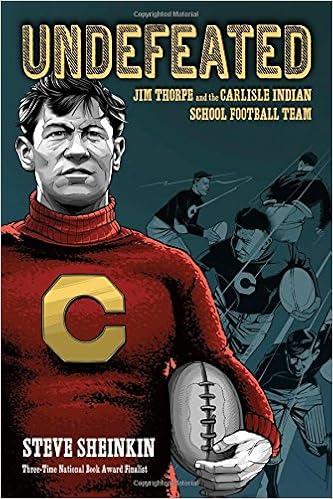
Summary:  Which American sporting event drew the biggest crowd in 1911?  The World Series?  An Olympic event? (Wait, there weren’t even any Olympic games in 1911).  The Harvard-Yale football game?  Well, you’re half right; it was the football match between Harvard and the Carlisle Indian School football team, starring Olympian Jim Thorpe.  Final score: 18-15, Carlisle.  You might know Carlisle Indian School as a place where Native American children were sent, often unwillingly, to be taught to assimilate into white culture.  But it also had an amazing football team, coached by Pop Warner, that pretty much reinvented the modern game of college football.  You might know Jim Thorpe as the Olympian who had to return his medals when he was discovered to have played professional baseball.  But there is much, much more to his story, including an amazing football career at Carlisle that spanned seven years, and was capped by a win at West Point, playing against a team that included Dwight D. Eisenhower and Omar Bradley.  The symbolism of the soldiers versus the Indians was not lost on anyone, and the story of Thorpe and the Carlisle school is also the tragic story of racism that Native Americans are still experiencing today.  Includes 33 pages of source notes and works cited.  288 pages; grades 5-10.

Pros: The stories of Thorpe, the Carlisle School, Pop Warner, and the game of football are all told in an engaging style that captures the reader’s attention from beginning to end.  I bet we’ll see this book on the Sibert Award list, if not the Newbery.

Cons:  Although I attended every football game through high school and college as a member of the marching band, I am still too clueless to understand even the simplest schematic illustrating some of the plays described in the book.

What Will Grow? By Jennifer Ward, illustrated by Susie Ghahremani

Published by Bloomsbury USA Children’s

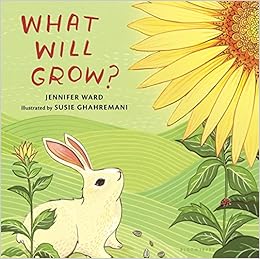
Summary:  A dozen seeds are introduced with rhyming couplets and illustrations (“Shiny, brown.  Bumpy crown.  What will grow?  Oak tree.”)  Most of the seeds have the rhyme on the left-hand page with the plant shown on the right, but four have pages the fold out, up, or down to reveal the plant.  The final couplet is, “Dark, deep, fast asleep.  What will grow?” showing hibernating animals under the snow, followed by, “My garden!” over two pages of a colorful collection of plants blooming under a rainbow.  All 12 seeds are shown at the end, along with the time to sow them, steps for planting, and when it will grow.  The final two pages show four stages from seed to plant.  40 pages; ages 3-6.

Pros:  This follow-up to What Will Hatch? is a perfect springtime introduction to gardening for young readers.

Cons:  This seems like it could be a fun, interactive guessing game, except that eight of the plants are shown on the same page as the question.

Trudy’s Big Swim: How Gertrude Ederle Swam the English Channel and Took the World by Storm by Sue Macy, illustrated by Matt Collins

Published by Holiday House

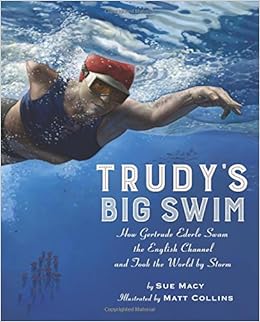
Summary:  When Gertrude “Trudy” Ederle emerged from the water on August 6, 1926, she became both the first woman to swim the English Channel and the fastest person, shaving almost two hours off the previous record.  Admittedly, she was a superstar swimmer, having won three Olympic medals and set 29 records in events ranging from 50 yards to half a mile.  But she was also a product of her time, riding the wave of women’s increased participation in sports and freedom that allowed her to wear a two-piece bathing suit very different from the head-to-toe coverage women swimmers had to put up with just a generation earlier.  Trudy’s swim made her a celebrity, and the final illustration shows her resting on her hotel bed, surrounded by the four ham sandwiches she ate after her swim, with newspapers carrying her story pressed against the windows.  An afterword gives more details about the swim and Trudy’s life afterward (she completely lost her hearing by age 22, taught swimming to deaf children for many years, and lived to the age of 98), and there are plenty of additional resources listed.  40 pages; grades 1-5.

Pros:  As someone who has read America’s Champion Swimmer by David S. Adler to many classes, I thought there was little need for another picture book biography of Gertrude Ederle.  But veteran sportswriter Sue Macy has brought the story to life magnificently, placing it in the historical context of American women, propelled by getting the right to vote, enjoying greater freedoms and opportunities.  The illustrations have a you-are-there boldness that add a lot to the text.

Cons:  Endpapers giving a timeline of 1920’s sports history will be covered by the taped-down dust jacket of library books.