Published by Scholastic Press
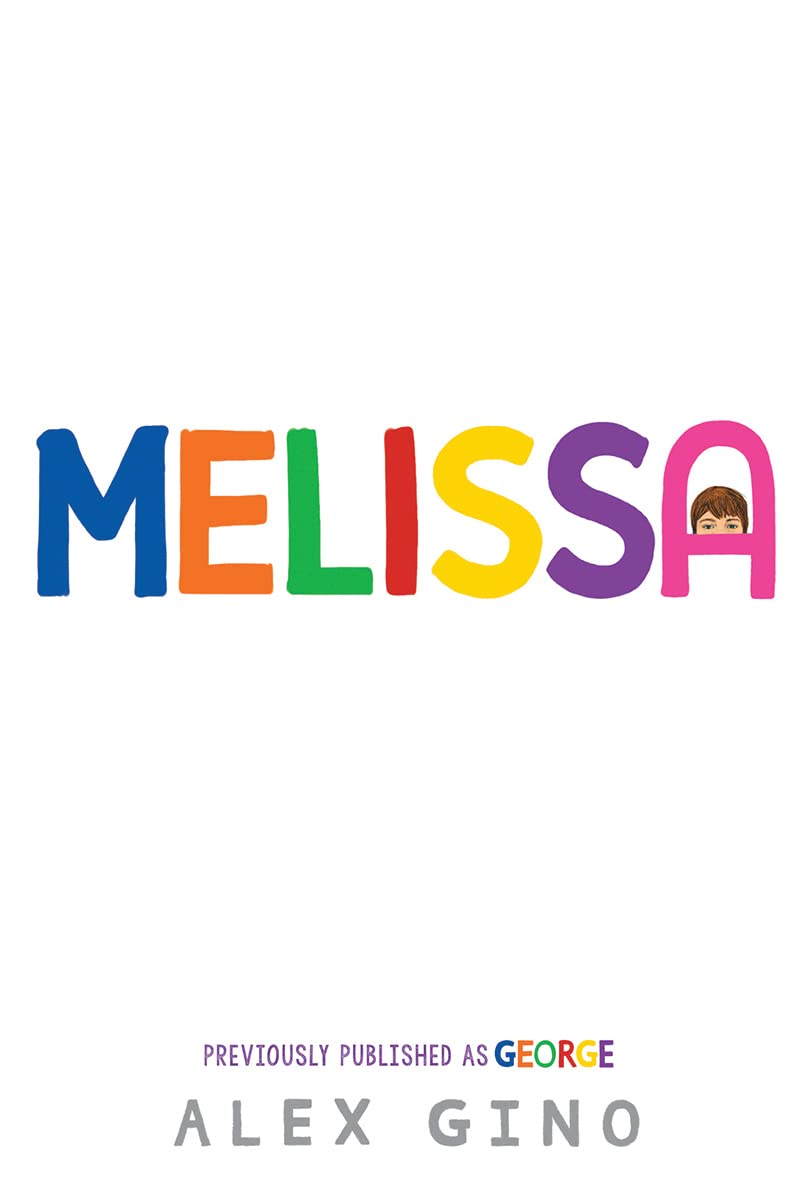
Summary: George has a boy’s body, but she’s always felt she is a girl. She has a secret stash of magazines like Seventeen that she pores over to learn more about girls’ clothes, makeup, and lifestyles. Her fourth grade class is doing a play of Charlotte’s Web, and more than anything, George wants the part of Charlotte. Coached by her best friend Kelly, George decides to try out for Charlotte, but her teacher takes her audition as a joke and instead gives the part to Kelly. As a result of this painful experience, George finally comes out to Kelly, who hatches a plan to allow George to be Charlotte in one of the performances. Reactions to George in this clearly feminine role are mixed, but strong, and ultimately lead to a greater understanding of George by her mother and older brother. While there are no easy answers for George, the book ends on a hopeful note. Grades 4-7.
Pros: Whatever a reader’s views on transgender kids, this book makes a powerful statement about the importance of gender to personal identity, and how narrow society’s definition is on what is masculine and feminine. George would make an interesting read for educators trying to create schools that are safe and comfortable for all students.
Cons: George addresses a controversial topic, and there will undoubtedly be those who feel it doesn’t belong in an elementary classroom or library.


 Troy “Trombone Shorty” Andrews tells how he started his musical career as a young child in New Orleans. He and his friends made their own instruments from castoffs, and he got his big break when he started playing along at a jazz festival. Beautifully illustrated by Caldecott medalist Collier.
 Can’t help falling in love with the story of how a poor boy from Mississippi became the king of rock and roll.
 The inspiring story of the all-female, almost all African-American jazz band that traveled around the United States and Europe in the 1940’s. Breaking racial and gender boundaries, the group was a true sisterhood of talented musicians.
 Another barrier-breaking musician, Millo Castro Zaldarriaga, became a drummer in Cuba when girls and women weren’t allowed to play drums. More than one blogger has picked this book as a potential Caldecott winner.
 Once upon a time, there were four boys growing up in postwar Liverpool named John, Paul, George, and Richard. This book looks at the stories of those four, and how they intersected and eventually connected to become the Beatles.


