Sadie and the Silver Shoes by Jane Godwin, illustrated by Anna Walker

Published by Candlewick
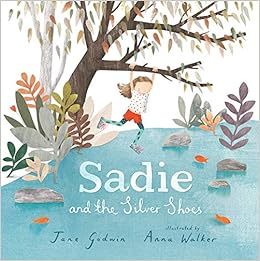
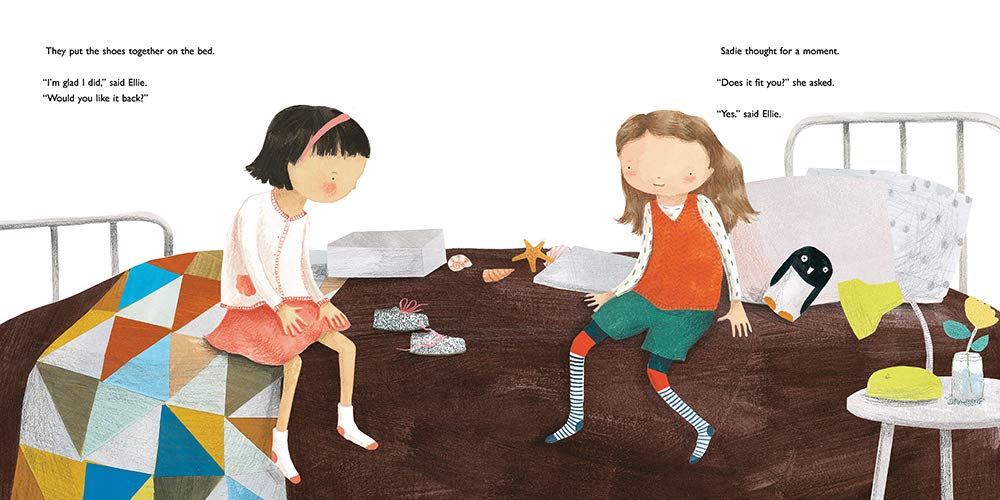
Image result for sadie and the silver shoes amazon

Image result for sadie and the silver shoes ledyard

Summary:  Sadie has three older brothers, and consequently wears a lot of hand-me-downs.  The only new clothes she gets are underwear and shoes, so she is very careful about picking out her shoes.  She loves her new sparkly silver shoes, and wears them everywhere, even, unfortunately, on a family picnic. Although her mom warns her that they’ll get dirty, Sadie doesn’t care, and wears them to play in the creek with her brothers.  One shoe comes off and is washed away, leaving Sadie heartbroken. She still insists on wearing the remaining shoe (paired with another one) wherever she goes. When a new girl comes to school, she notices Sadie’s silver shoe, and says she has one just like it that she found on the beach.  Yup, it’s Sadie’s missing footwear! The girls become friends, and take turns wearing the shoes…or sometimes each wearing one. 32 pages; ages 4-8.

Pros:  Sadie is a winning protagonist, and the friendship story is heartwarming.  This would make a great read-aloud.

Cons:  Mom’s reaction to Sadie losing her beloved shoe–”Maybe you should have worn old shoes today”–is predictable.  Yes, Mom, we’ve all been there, but bite your tongue and show some compassion.
If you would like to buy this book on Amazon, click here.

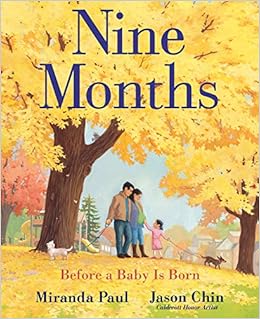
Nine Months: Before a Baby Is Born by Miranda Paul, illustrated by Jason Chin

Published by Neal Porter Books

Image result for nine months miranda paul amazon

Image result for nine months miranda paul

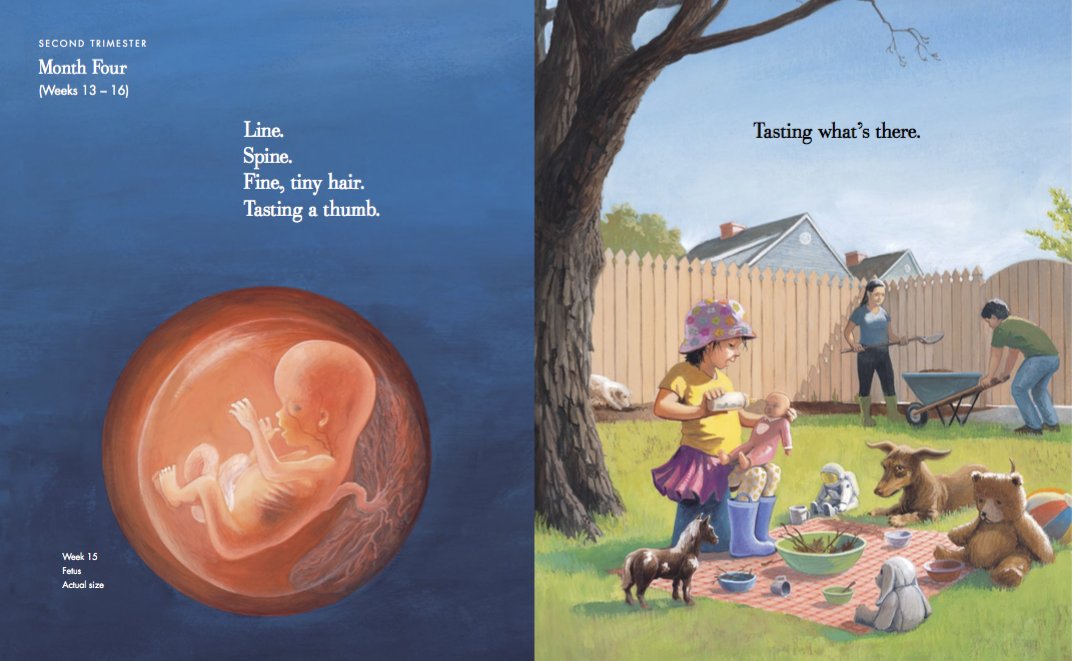
Summary:  On the right-hand pages of this book a family of a mother, father, and little girl prepare for a new baby.  The seasons change from winter to spring to summer to fall, as Mom’s belly slowly gets bigger. The left-hand pages show what’s going on with the new baby, starting from a fertilized egg and going all the way to the new baby in the hospital.  The big sister is part of the process, reading books about new babies, practicing giving a doll a bottle, watching the screen at the ultrasound, feeling the baby’s kicks, and finally, meeting her new little sister in the hospital. Includes more information on a baby’s development; the gestation periods of different animals; and some answers to what if questions that include information on twins, premature births, and miscarriages. 32 pages; ages 4-8.

Pros:  What an amazing resource for families expecting a new baby!  The simple rhyming text would make a quick read to a preschooler, but he or she will want to spend lots of time on Jason Chin’s awesome illustrations, many of which show the actual size of the developing fetus.  There’s just enough information for young kids without getting into too much birds-and-bees stuff.

Cons:  The whole process looks so easy, and the little girl seems 100% thrilled to be getting a younger sibling, which may not be entirely realistic.

If you would like to buy this book on Amazon, click here.

Brute-Cake (The Binder of Doom book 1) by Troy Cummings

Published by Scholastic

Image result for binder of doom brute cake

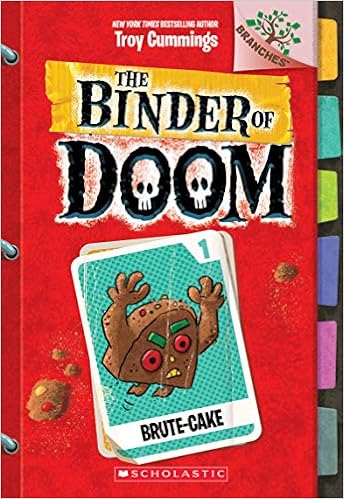
Summary:  Alexander Bopp, hero of The Notebook of Doom series, is feeling at loose ends as summer begins.  The Super Secret Monster Patrol (S.S.M.P.) has succeeded in clearing the monsters out of Stermont, and consequently, Alexander and his pals Rip and Nikki have drifted apart.  But when his dad signs him up for the Stermont Summer Maker Program (hey, that’s also S.S.M.P.!), he runs into Nikki again. Mysterious monster cards start appearing, and Alexander begins to suspect that a monster or two may have crept back into town.  Nikki and Alexander find Rip; they use their free binders from the new club to get organized; and just like that, the original S.S.M.P. is back in business. Includes a page of questions and activities. 96 pages; grades 1-3.

Pros:  Second and third graders everywhere will rejoice that the Notebook of Doom team is back for another series.

Cons:  Personally, one of these books was enough for me, but there are those who have read (and loved) all 13 of the original series.

If you would like to buy this book on Amazon, click here.


Operatic by Kyo Maclear, illustrated by Byron Eggenschwiler

Published by Groundwood Books

Image result for operatic amazon

Image result for operatic kyo maclear

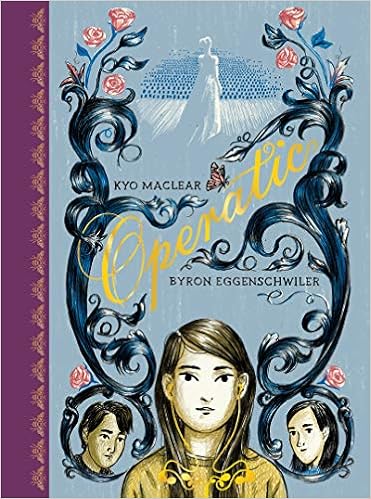
Summary:  Charlie is finishing up eighth grade; Mr. K., her favorite teacher, assigns everyone in the class to perform a favorite song for the end of the year.  As Charlie tries to figure out what her song will be, she reflects on changes that have taken place during the year. Specifically, she can’t forget a boy named Luka who refused to conform to middle school expectations, and was bullied until he left school.  Both Luka and Charlie have had crushes on the same boy, Emile. As the weeks go by, Mr. K. introduces the class to different types of music. Nothing resonates with Charlie until they get to opera. She finds herself drawn to Maria Callas, and connects with some of the details of her early life and singing career.  Maria’s ability to always go her own way inspires Charlie to reach out to Luka, and she is able to help him find his way back to school. Charlie, Luka, Emile, and another friend find the courage to perform a band called Freaks of Feeling; at the end the band gives Charlie tickets to the opera as a birthday gift. 160 pages; grades 5-8.

Pros:  This book really captures adolescence, and the tension between conforming and being yourself.  Music fans will enjoy Charlie’s insights about how kids find connections based on the kind of music they enjoy.

Cons:  I didn’t entirely understand the whole Charlie-Emile-Luka dynamic.

If you would like to buy this book on Amazon, click here.

Clackety Track: Poems About Trains by Skila Brown, illustrated by Jamey Christoph

Published by Candlewick

Image result for clackety track poems amazon

Image result for clackety track poems amazon

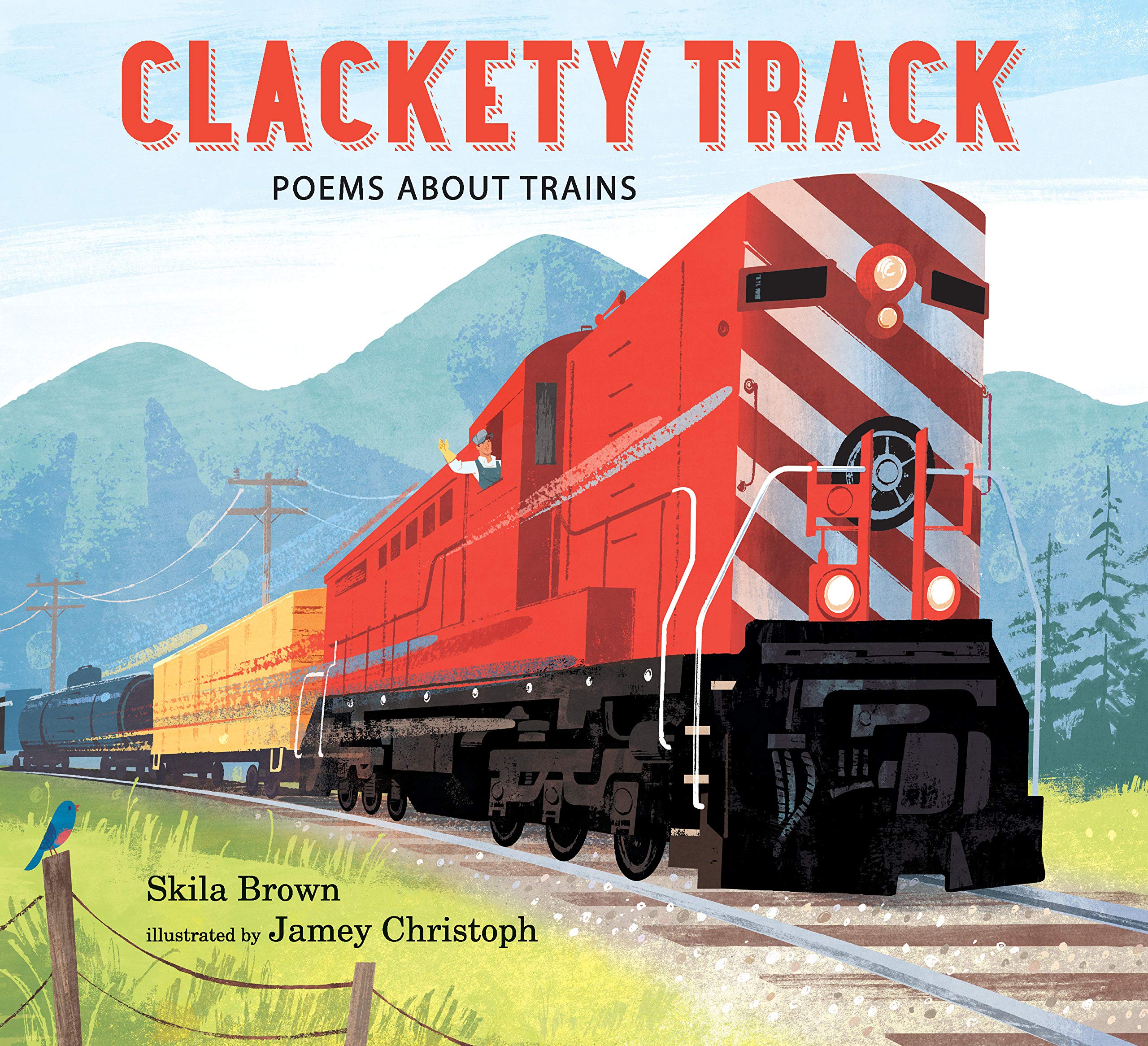
Summary:  Thirteen poems take the reader from “Morning in the Yard” to “Sleeper Train”.  The poems take different forms, including a few concrete ones like “Tracks” in the shape of railroad tracks, and “Shoulder Ballast Cleaner” with the words interwoven in the illustration.  Each poem gets its own two-page spread, complete with a vivid, colorful illustration. Includes a dozen facts about trains, shown on railroad cars on the final two pages. 32 pages; grades K-3.

Pros:  The simple poems and bright, colorful illustrations make this an excellent introduction to poetry for primary grades; the subject is sure to be popular as well.

Cons:  I liked how Skila Brown included shark facts on every page of her book of shark poems, Slickety Quick, and wish she had done that with facts about the different trains here.

If you would like to buy this book on Amazon, click here.

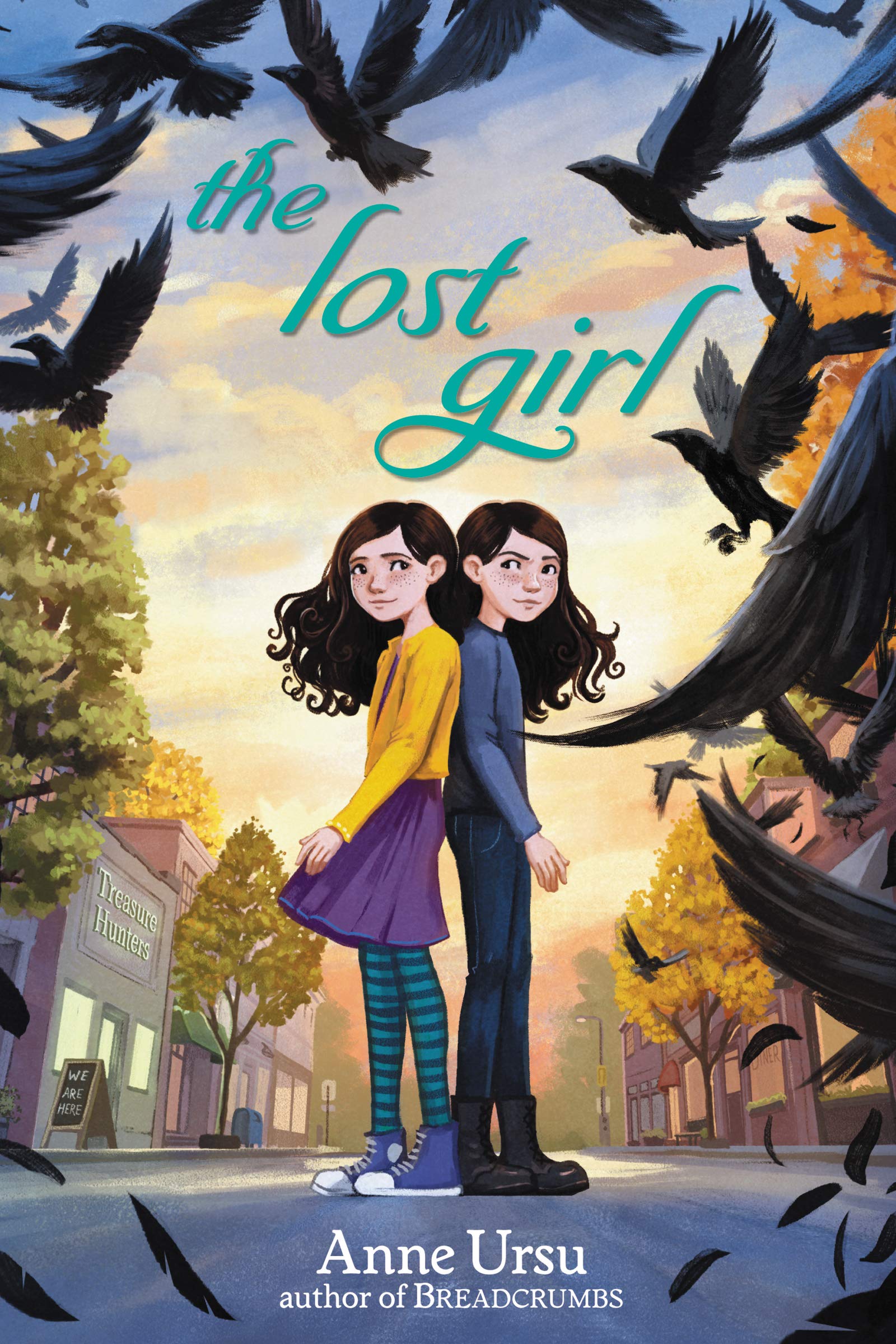
The Lost Girl by Anne Ursu

Published by Walden Pond Press

Image result for lost girl ursu amazon

Summary:  Identical twins Iris and Lark look the same, but they are very different people.  Lark is artistic and dreamy, always spinning fantastic stories from everyday items and happenings.  Iris sees herself as Lark’s protector, fiercely taking on anyone who tries to make fun of her. When their parents decide to put them into two different fifth grade classes, both girls are sure they’re in for a disaster.  As time goes on, it seems to Iris that they are right, as Lark has to deal with a teacher she calls “the ogre” who makes her do oral presentations and stressful math drills. Iris starts looking for answers at a mysterious new store in town called Treasure Hunters, whose strange proprietor seems to know more about her and Lark than he should.  An occasional first-person narrator also appears to have some unusual insights into the two girls, and slowly the reader sees that there is magic at play…and some of it is pretty dark. When Iris gets in over her head, it’s up to Lark and some awesome new friends to step in and save the day. 368 pages; grades 4-7.

Pros:  An enchanting mix of realism and fantasy, with a pretty blurry line between the two.  The themes of love and hate are explored in a unique and engaging way. This may make it on to some Newbery lists.

Cons:  I didn’t love this book as much as I felt like I should have.  Although I could appreciate the beautiful writing, it seemed slow to get going, and I could see kids abandoning it before the end.

If you would like to buy this book on Amazon, click here.

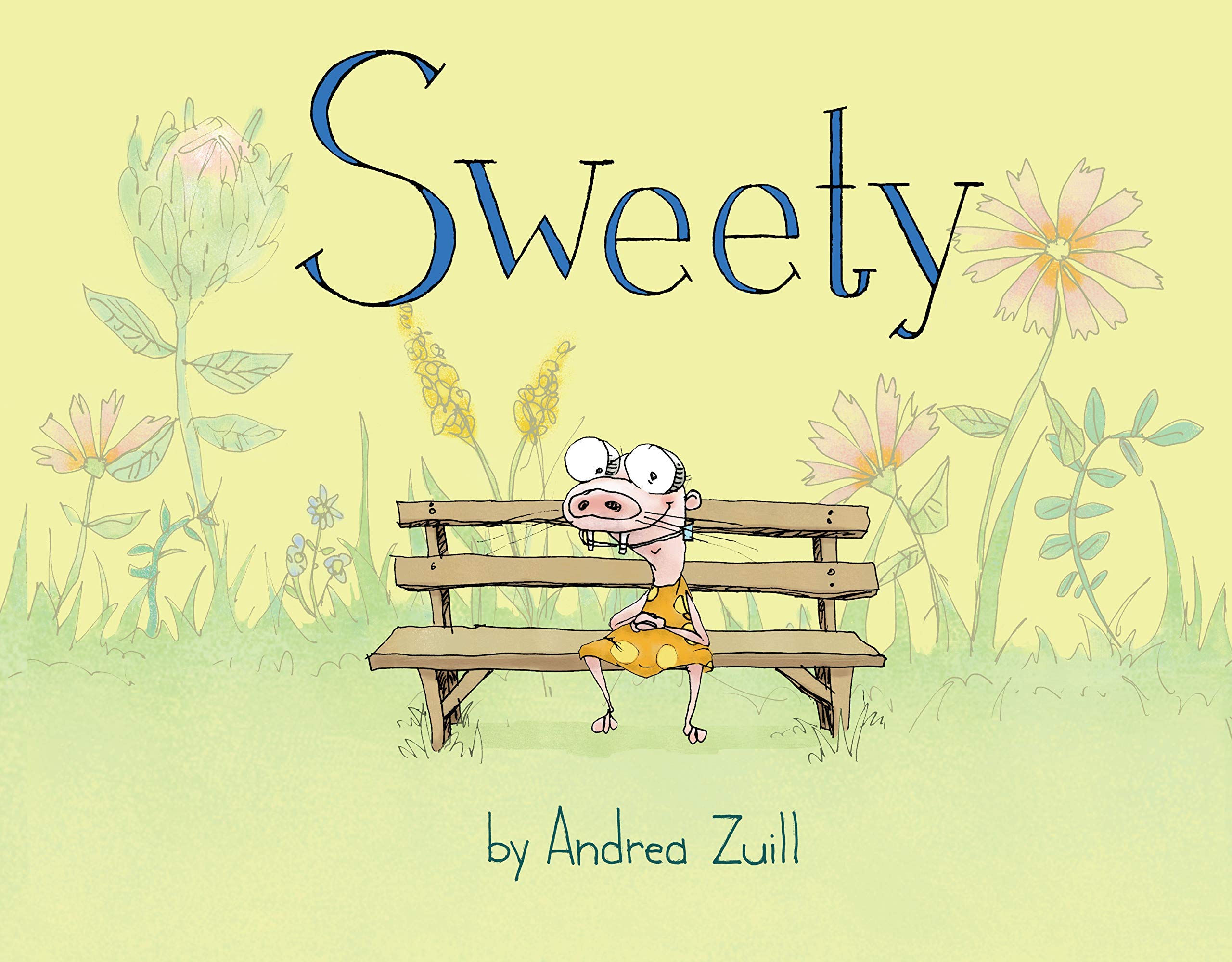
Sweety by Andrea Zuill

Published by Schwartz & Wade

Image result for sweety andrea zuill amazon

Image result for sweety andrea zuill amazon

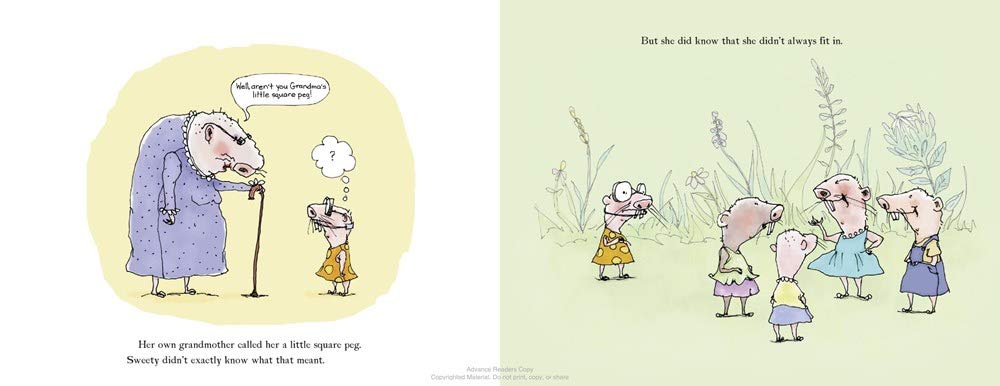
Summary:  Sweety is a young naked mole rat described by her grandmother as “a square peg”.  Sporting thick glasses and orthodontic headgear, she has a passion for collecting and identifying mushrooms and presenting her school reports using interpretive dance.  She can see she doesn’t fit in, but doesn’t know how to change. Fortunately, there’s Aunt Ruth, also a square peg, who assures Sweety that it’s okay to be herself.  They page through some photo albums together, where Sweety sees her mom and aunt as children and as mohawk-sporting teens, giving a few clues as to where Sweety may get her outside-the-box personality.  In the end, she decides to go her own way, and is rewarded by meeting another mole rat who seems to share some of her interests. 32 pages; ages 3-8.

Pros:  The “be yourself” message is delivered in a humorous fashion; all the naked mole rates may look a little unusual to the human readers, pointing out the ridiculousness of what makes one more “popular” than another.  The illustrations provide a light touch that saves the story from getting too bogged down in its message.

Cons:  The expression “square peg” is never explained.

If you would like to buy this book on Amazon, click here.


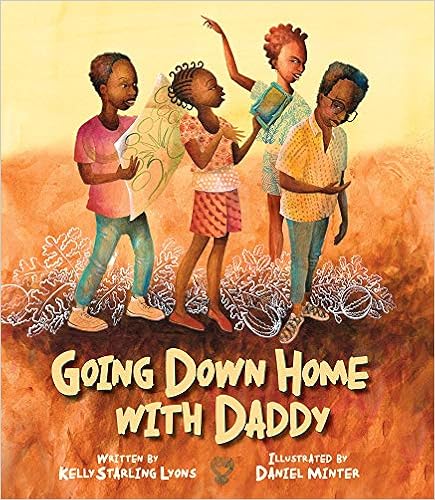
Going Down Home With Daddy by Kelly Starling Lyons, illustrated by Daniel Minter

Published by Peachtree Publishing Company

Summary:  Lil Alan is excited to be leaving before dawn for a family reunion down south.  The whole clan is gathering at his father’s mother’s house. Aunts, uncles, and cousins join in a weekend celebration of their family.  There’s lots of playing with cousins and eating delicious food, but there are also serious talks about their history–how their ancestors came from Africa in chains, but they fought for freedom until “a farmer and a teacher” bought the land where Granny now lives and grows cotton.  Lil Alan worries all weekend about having a contribution to the traditional Sunday evening ceremony, but when the time comes he has thought of something to say that perfectly captures his family’s history. 32 pages: ages 4-8.

Pros:  This would be an excellent mentor text for teaching narrative writing.  The muted watercolor illustrations deserve some Caldecott consideration.

Cons:  I wasn’t quite clear about who bought the land…was it Granny and her husband, or someone in the generation before her?

If you would like to buy this book on Amazon, click here.

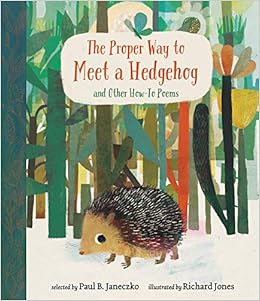
The Proper Way to Meet a Hedgehog and Other How-To Poems selected by Paul B. Janeczko, illustrated by Richard Jones

Published by Candlewick

Image result for proper way to meet a hedgehog amazon

Image result for proper way to meet a hedgehog richard jones

Summary:  Thirty three poems that explain how to do something are collected here.  Starting with “How to Build a Poem” by Charles Ghigna, they cover such diverse topics as “Mix a Pancake” (Christina Rossetti), “How to Tell Goblins from Elves” (Monica Shannon), and “How to be a Tree in Winter” (Irene Latham).  “A Lesson from the Deaf” (Nikki Grimes) beautifully and concisely describes how to sign “Thank you”, with “How to Read Braille (Steven Withrow) appearing on the facing page. Other poets include Marilyn Singer, Kwame Alexander, Robert Louis Stevenson, and many more.  48 pages; grades 1-5.

Pros:  The concrete nature of these poems will broaden their appeal to younger readers, while older kids might be inspired to try writing some of their own.  The somewhat abstract illustrations add nice subtle touches to the poetry.

Cons:  I learned in the process of writing this review that Paul Janeczko passed away on February 19.

If you would like to buy this book on Amazon, click here.


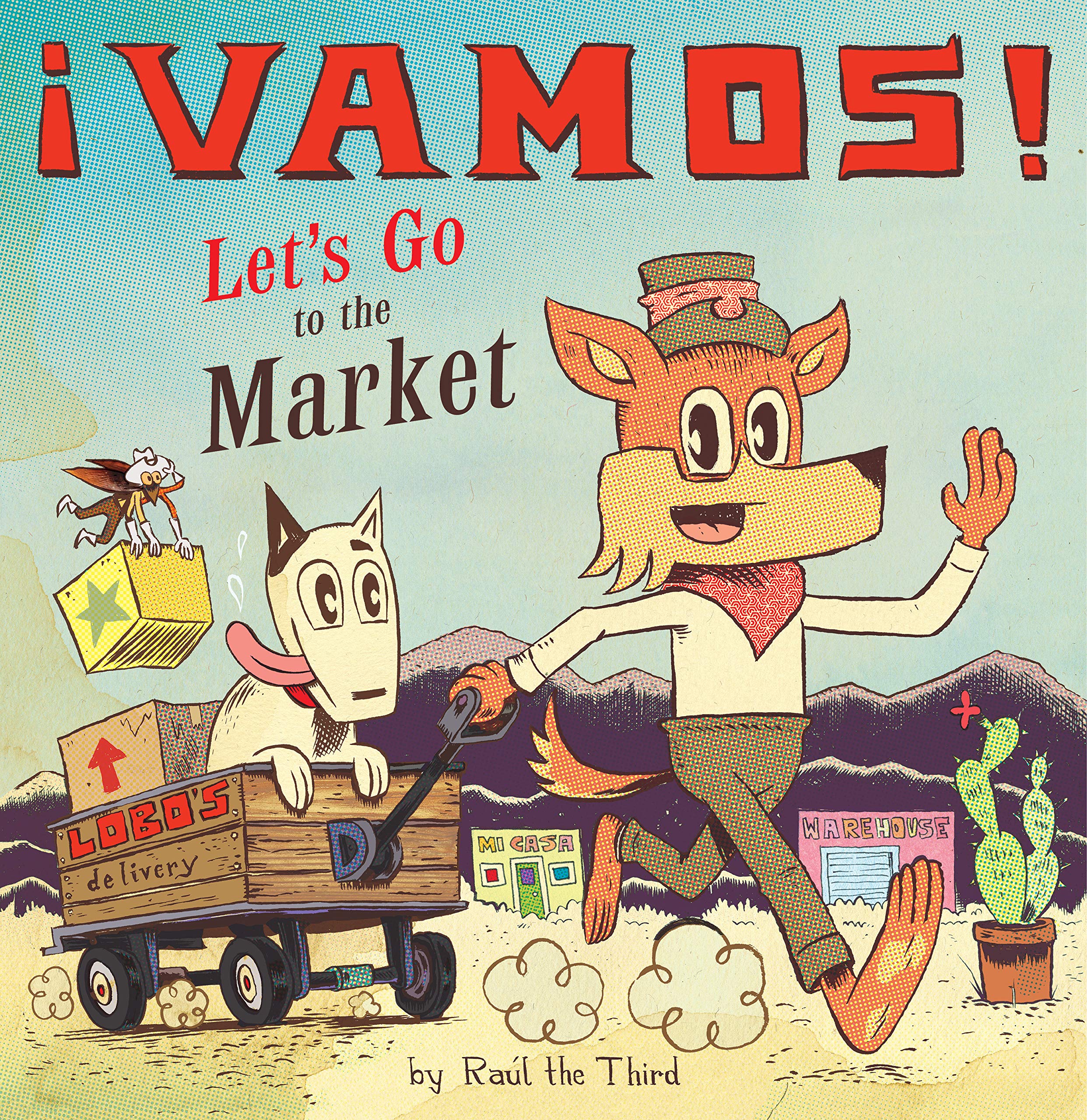
¡Vamos! Let’s Go to the Market by Raúl the Third

Published by Versify

Image result for vamos let's go to the market

Image result for vamos let's go to the market

Summary:  Little Lobo and his dog Bernabé have a big day in store as they load up the wagon to make deliveries to various people at the Mercado.  There are all kinds of interesting characters, both human and animal, to be seen as they travel. Finally, they arrive and start delivering their goods.  Little Lobo has many friends at the Mercado, and between their gifts and his own purchases, his wagon is almost as full at the end of his delivery run as it was at the beginning.  His last stop is at the local Lucha Libre place, where he not only meets his favorite wrestler, El Toro, but gets to give him a ride home in his wagon. The day ends with Lobo and Bernabé getting into bed, ready for sleep after a busy day.  Includes a glossary of all the Spanish words used in the text. 48 pages; ages 4-8.

Pros:  Richard Scarry meets Diego Rivera in this dizzying, magnificent tour of Lobo’s Mexican (I think–it’s not specified) town.  There are so many fascinating characters performing all sorts of interesting jobs in illustrations that could keep readers absorbed for hours.  Many Spanish words and phrases woven into the story combined with the glossary at the end makes this a good introduction to the language.

Cons:  The illustrations were almost too busy, and occasionally overwhelmed the more modest text.

If you would like to buy this book on Amazon, click here.