Animal friendships

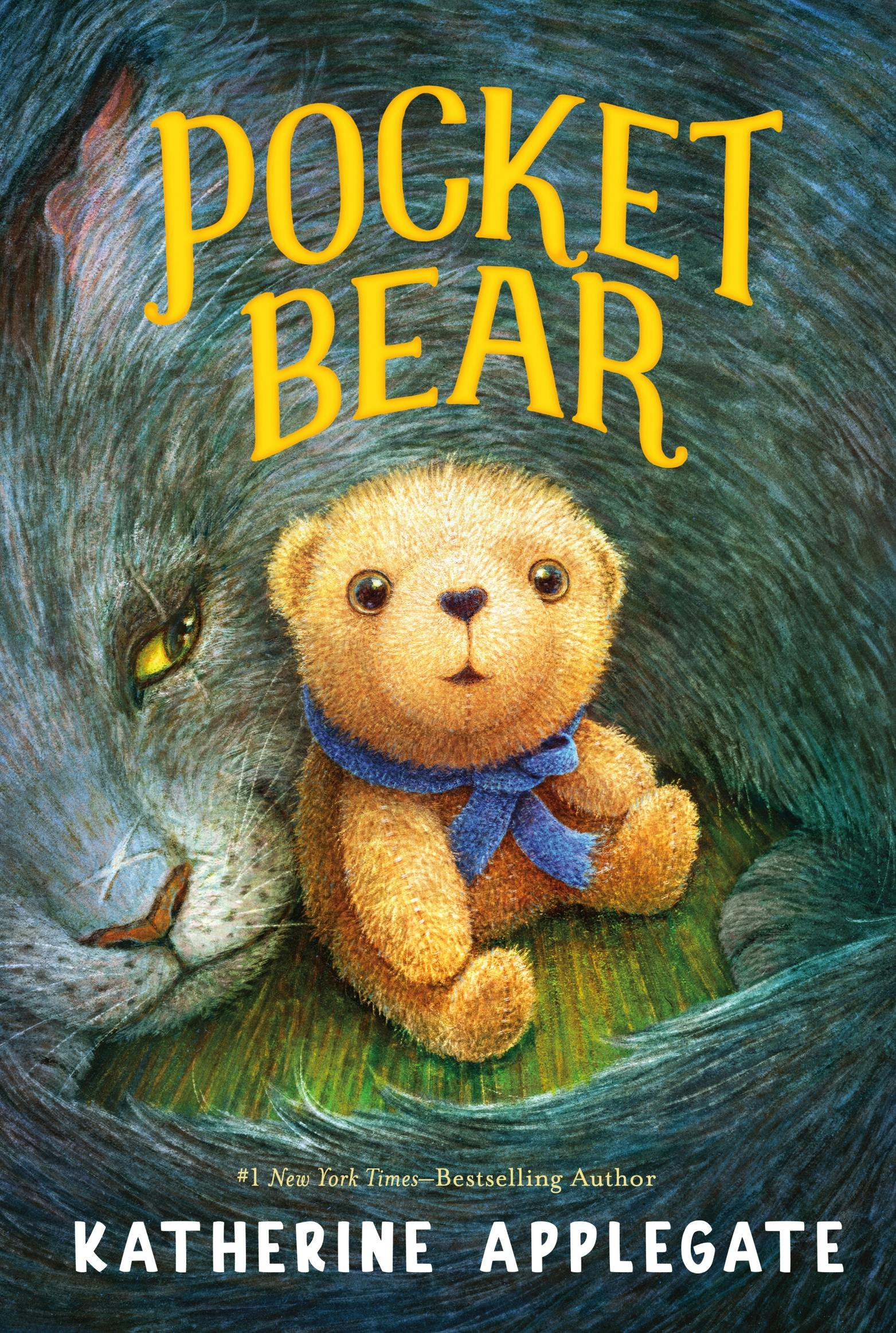
Pocket Bear by Katherine Applegate, illustrated by Charles Santoso (Feiwel and Friends, 272 pages, grades 3-7). Zephrynia is a cat who likes to “rescue” (some would say steal) items that she finds, bringing them to her owner Elizaveta and her daughter Dasha. She always seeks counsel about her treasures from Pocket Bear, a small stuffed bear who traveled in the pocket of a World War I soldier before winding up as a castoff that Dasha found. Dasha was injured and lost her father before she and her mom immigrated to the U.S. from Ukraine, and she has a soft spot for the stuffed animals that Zephrynia brings her, so much so that she cleans them up and offers them a new home through her Second Chances store. When Zephrynia finds an unusual old bear in a dumpster, Dasha works her magic, preparing Berwon to find a new home. But his history makes him the target of an unscrupulous antiques dealer, and Zephrynia finds herself acting unselfishly for the first time to rescue Berwon and bring about a happy ending for him, Pocket Bear, Elizaveta, and Dasha. Includes an author’s note about her inspiration for this story, a little bit of the history of teddy bears, and the soft spot she has for stuffies.

As I was considering books to offer my four fourth-grade reading clubs this fall, I found myself leaning heavily on Katherine Applegate’s books. And why not? The stories are full of heart, memorable characters, interesting plots, and timely messages, yet have short chapters and enough illustrations to make them good choices for those who haven’t read a lot of chapter books. This one will go into the rotation, as it has all the elements mentioned above. And in case you are wondering, one of my groups voted for Wishtree, while another chose Dogtown. (Non-Applegate choices were The Wild Robot and The Guardian Test.)
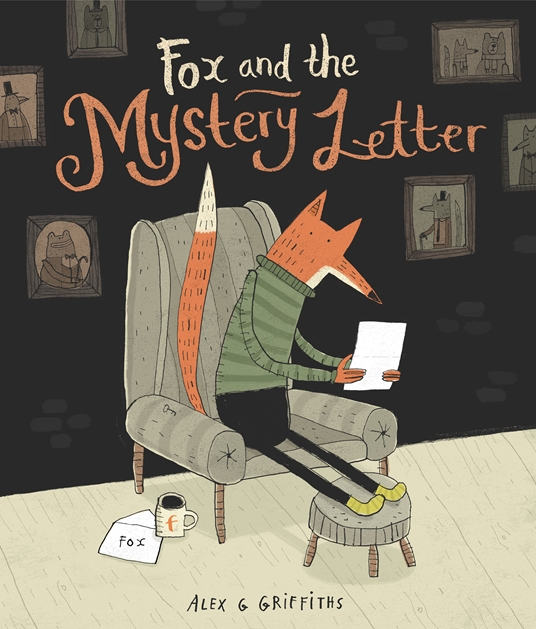
Fox and the Mystery Letter by Alex G. Griffiths (Frances Lincoln Children’s Books, 40 pages, grades K-3). Fox lives in a cottage in the middle of a dense woods. “He lived alone–usually that was just the way he liked it.” But one morning, a large bird delivers a letter that reminds Fox of–oh, never mind. The letter is the beginning of a puzzle that Fox must solve, and with every step, readers get hints that Fox may have had a dear friend in the past with whom he quarreled and parted ways. The hunt takes him through the woods, up a tree, and across the ocean until finally the puzzle is solved and the friendship is repaired.

This is a charming animal story, and who doesn’t enjoy a good scavenger hunt? It’s a great mentor text for making predictions as clues are dropped throughout the story about Fox’s friend and what happened to their friendship. It seemed a bit risky on the part of the friend to trust that Fox would persevere through such a complicated hunt, but he does, and it’s a happy ending for everyone.
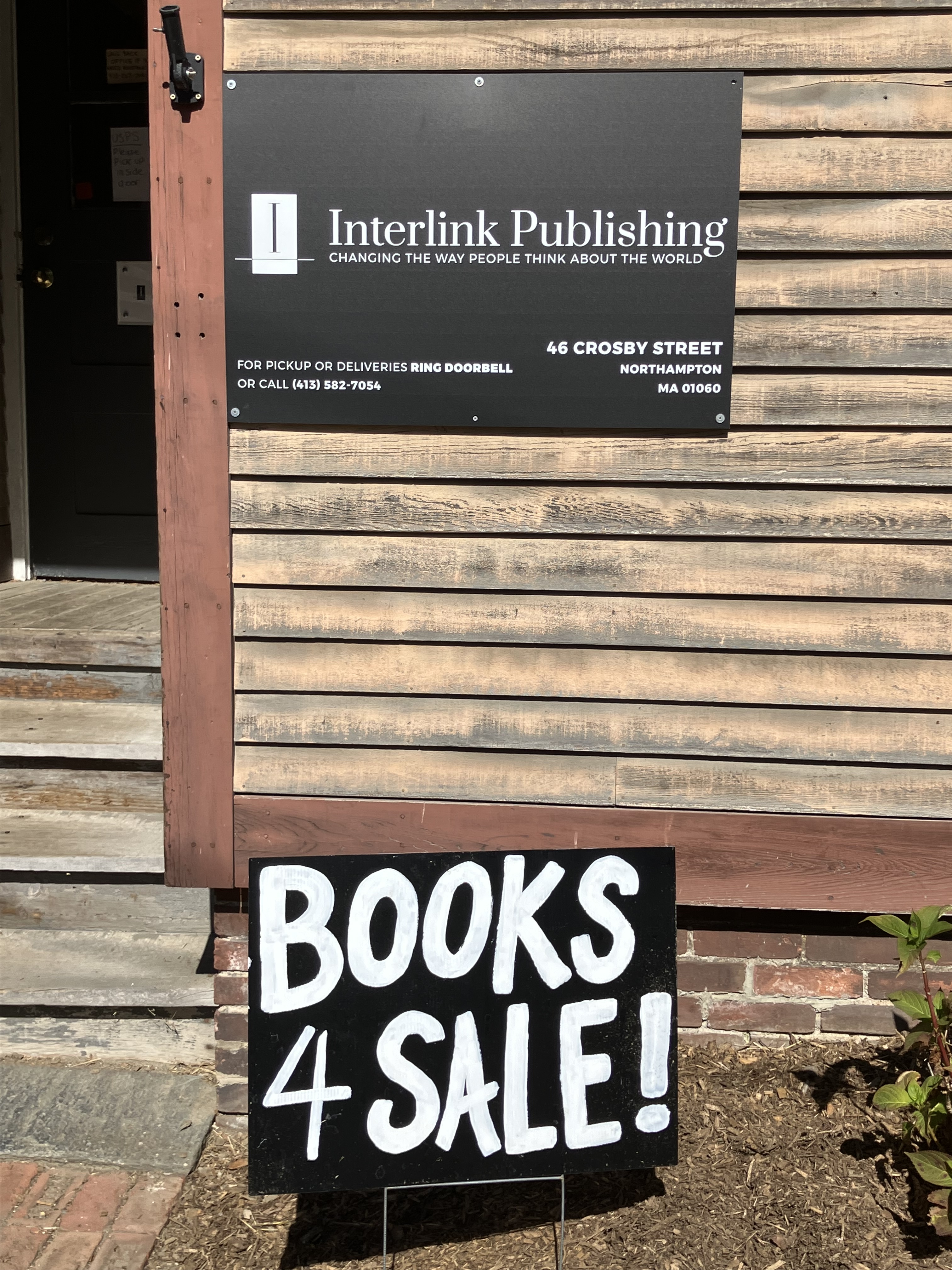
Interlink Publishing and books about Palestine

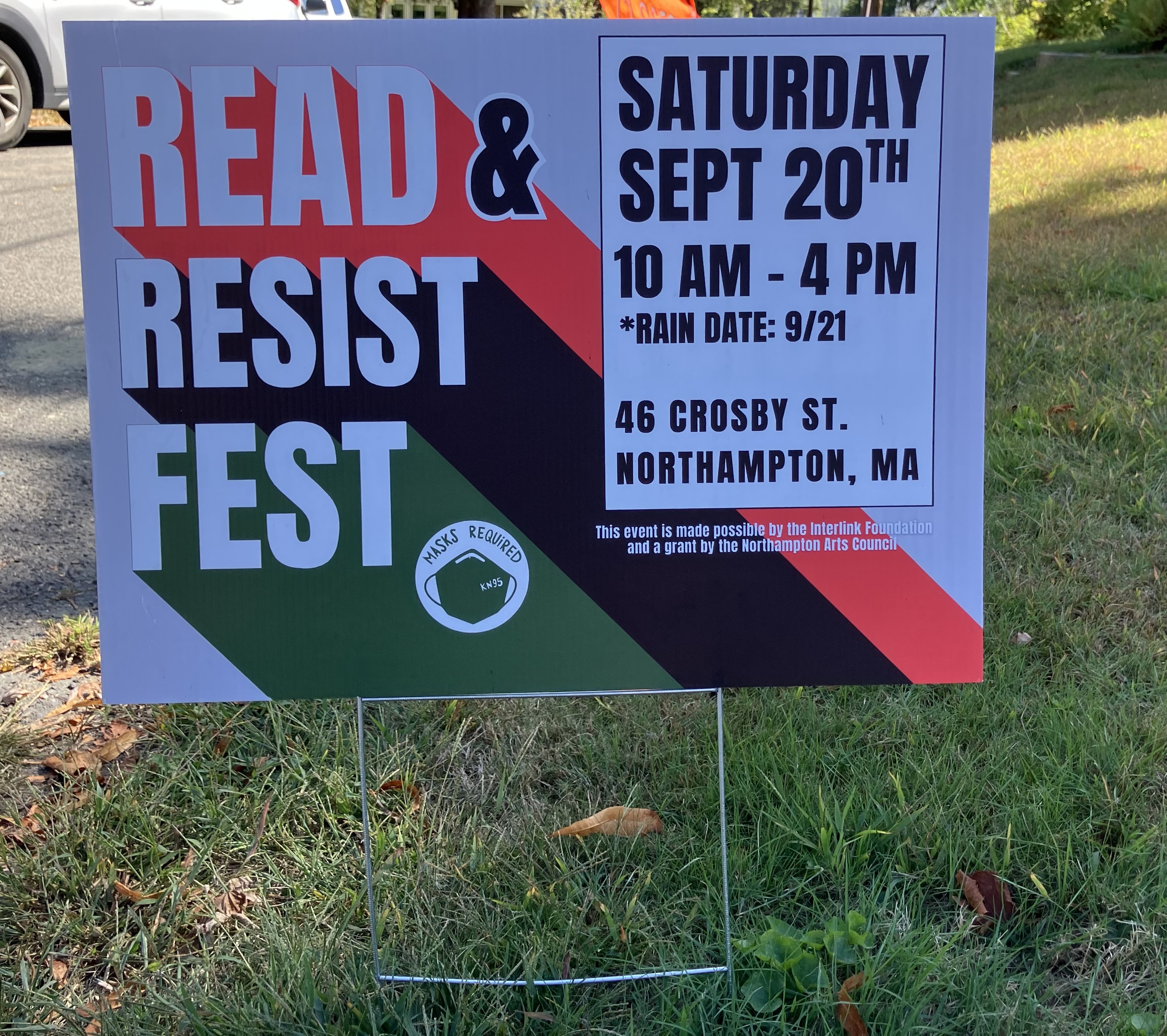
Last weekend, I headed into Northampton, Massachusetts for the Read and Resist Fest at Interlink Publishing. Described as a “social justice and literary festival dedicated to collective liberation,” this event featured booths from vendors and organizations around the Pioneer Valley of western Massachusetts as well as teach-ins and kids’ activities, including a storytime with Hannah Moushabeck reading Homeland: My Father Dreams of Palestine.

Turns out Hannah Moushabeck is one of the owners of Interlink, along with her two sisters and brother-in-law. The publishing company was founded by her father, Michel Moushabeck back in 1987. After emigrating to the U.S. from Lebanon, he couldn’t find a publisher for a book he had written, so he decided to start his own company.  Since then, Interlink has become known for publishing translated literature as well as cookbooks, travel guides, and children’s books.

As the only Palestinian-owned publisher in the United States, Interlink has published a number of books about Palestine for children and young adults under the imprint Crocodile Books. As near as I can tell, there were almost no children’s books about Palestine or Palestinians until just a few years ago, so the book list I’ve put together on the subject is pretty short. Thankfully, Interlink is leading the way in producing high-quality books to help kids learn about the country of Palestine and to empathize with those affected by the injustices and genocide that of course continues today. Here are a few of their recent books for different ages.

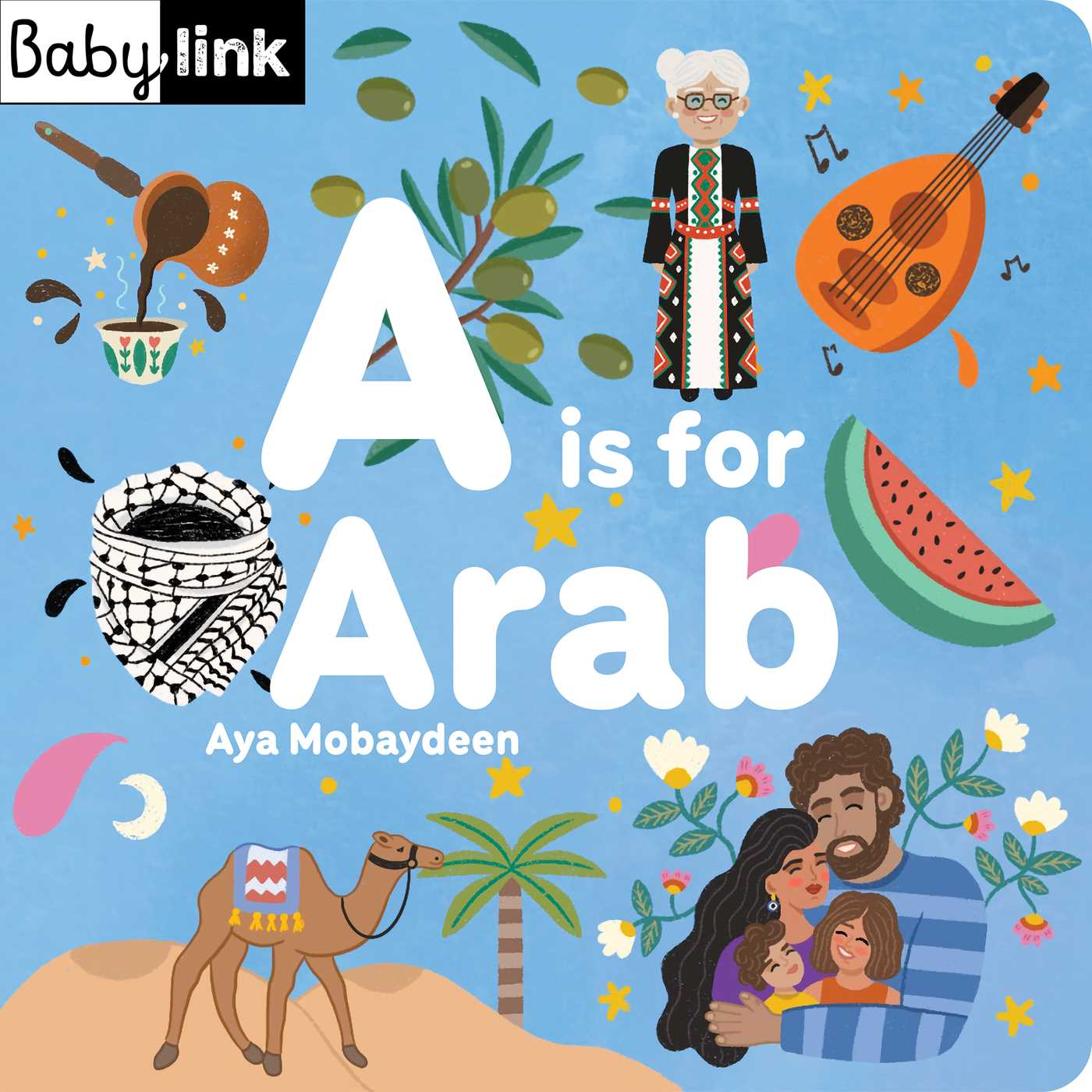
A Is for Arab by Aya Mobaydeen (Crocodile Books, 2025, 16 pages, ages 0-3). From Arab to Zeitoun, this alphabet book offers words and pictures from the Arab world. Most of the pages contain a few words, but P is for Palestine, at the center of the book, stands alone. There were quite a few words I wasn’t familiar with, so this could also serve as a good starting point for non Arabs to learn more about Arab culture.

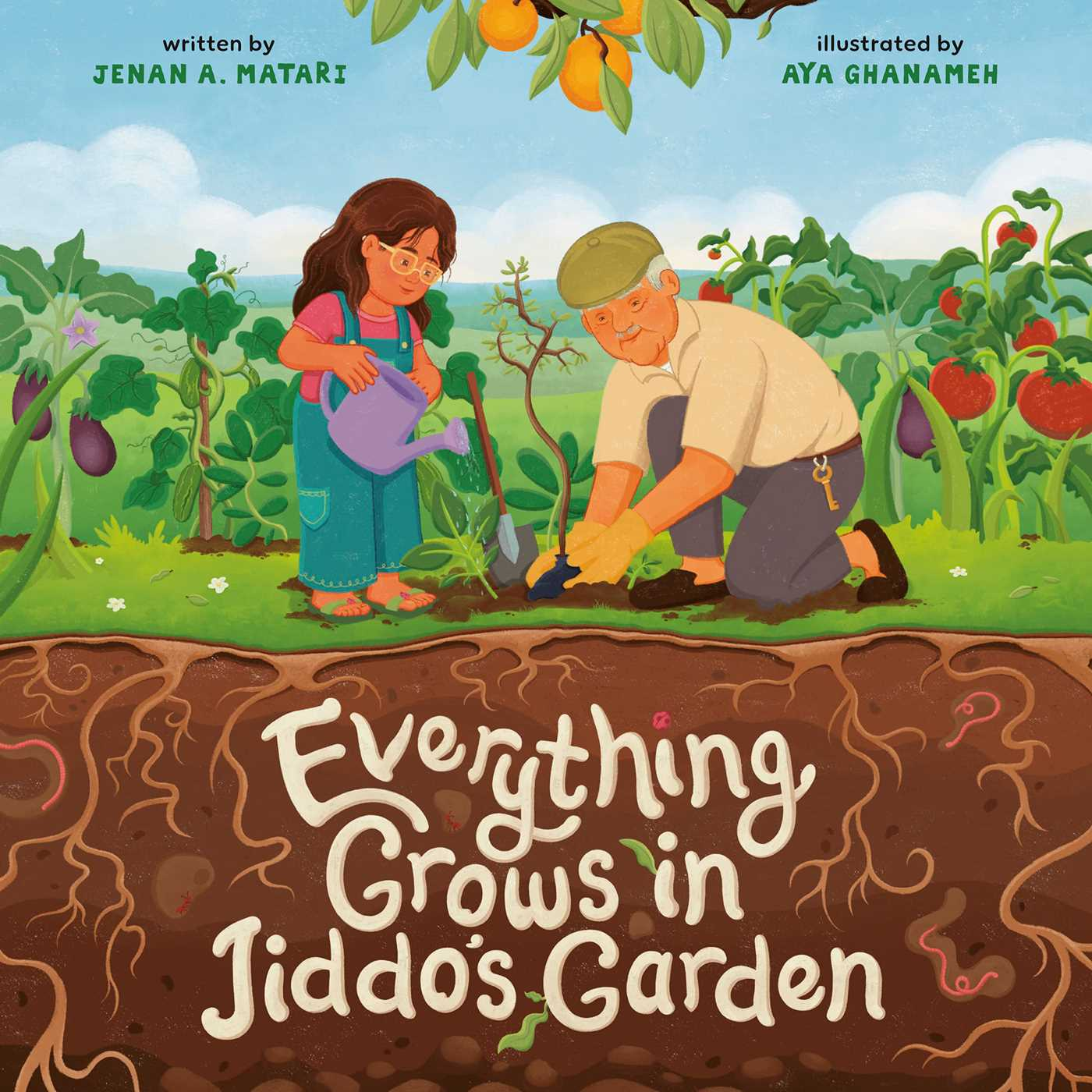
Everything Grows in Jiddo’s Garden by Jenan A. Matari, illustrated by Aya Ghanameh (Crocodile Books, 2025, 32 pages, ages 4-8). In rhyming text, the narrator learns about her family’s home in Palestine through Jiddo’s (grandfather’s) garden. Sometimes Jiddo gets sad remembering his home and his family’s forced departure, but the garden reminds them all of the hope and love they have. Includes an author’s note about her own grandparents and how her Jiddo’s garden saved the family when they were under siege in Jordan.

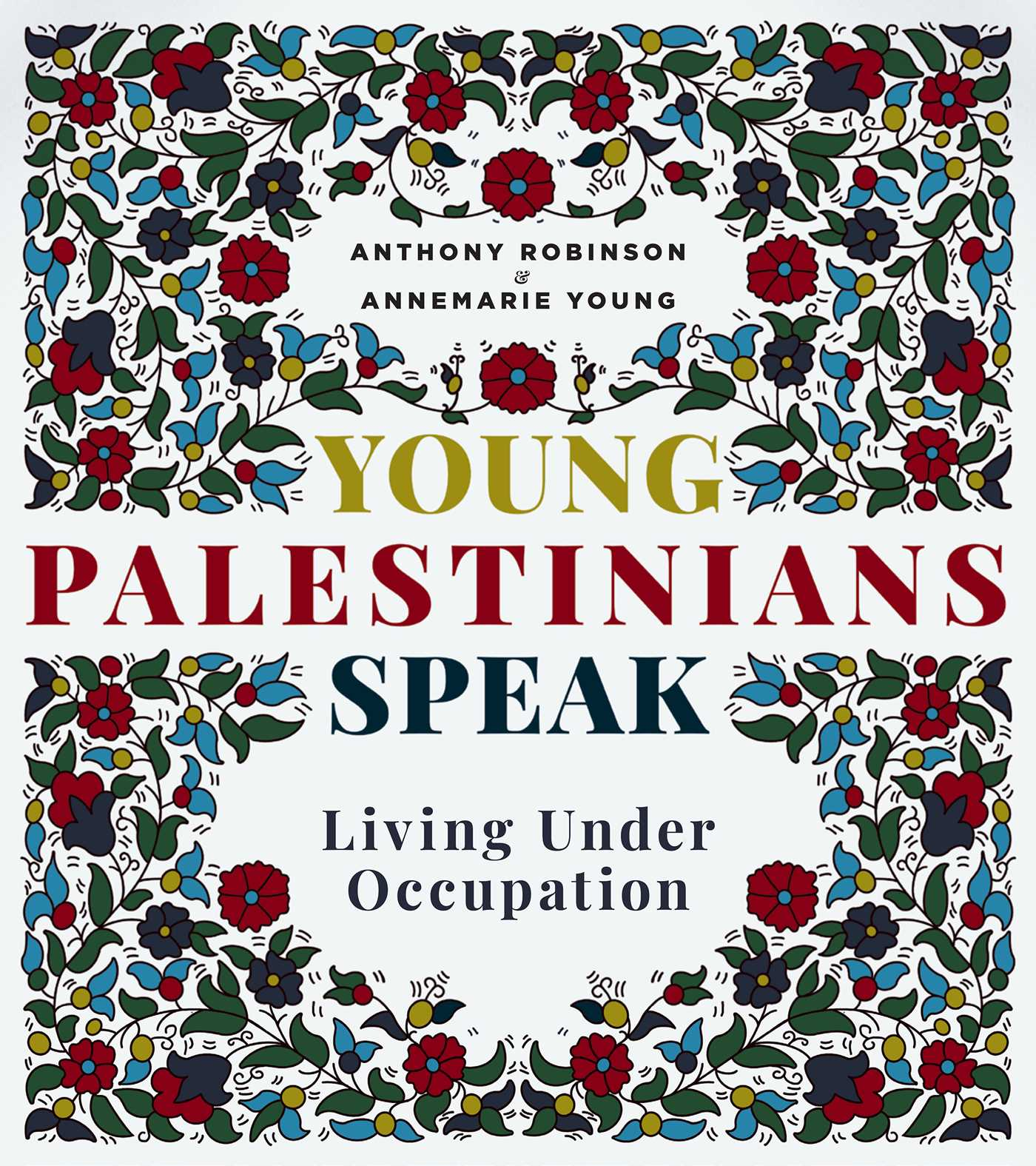
Young Palestinians Speak: Living Under Occupation by Anthony Robinson and Annemarie Young (Interlink Books, 2024 (updated edition), 118 pages, grades 5 and up). I’ve only seen the original 2017 version of this book, but it should be required reading for all Americans, starting with Congress. The authors interviewed young people living in both Gaza and the West Bank about their dreams, fears, and the difficulties of living in an occupied country. Gaza is described repeatedly as “a prison” by the children living there, yet despite their bleak lives, the kids interviewed try to hang onto their hopes and dreams. Equally poignant are the conversations with adults trying to help the kids deal with the many stresses of occupation to preserve some semblance of a childhood.

Courageous women of World War II

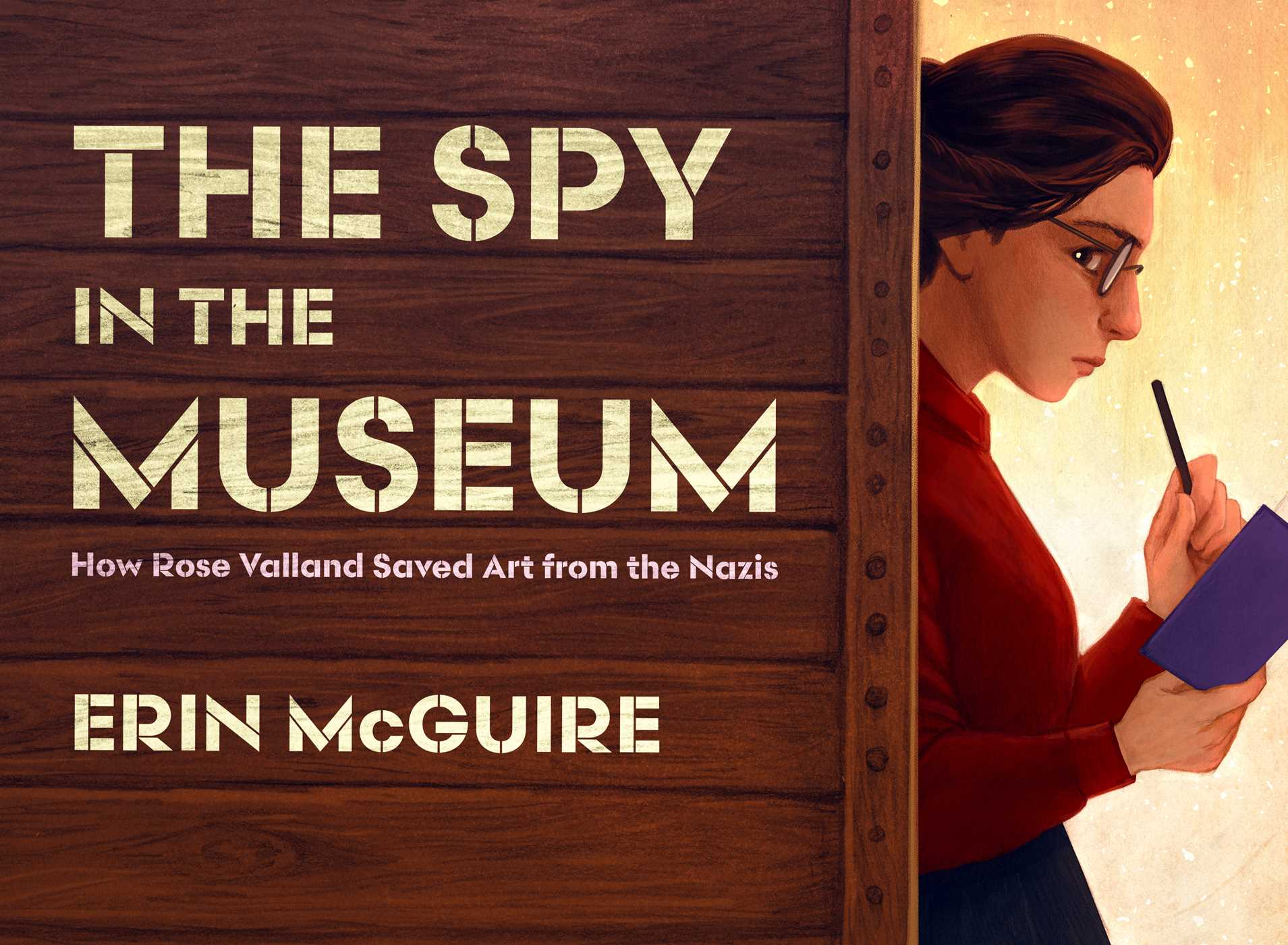
The Spy in the Museum: How Rose Valland Saved Art from the Nazis by Erin McGuire (Beach Lane Books, 40 pages, grades 2-5). Rose Valland loved art. As curator of Paris’s Jeu de Paume Museum, she appreciated all kinds of art: ancient, classical, or modern. Adolf Hitler hated modern art. When Nazis took over Rose’s museum, they fired all the staff except Rose, who was kept on as manager. As they started to steal the art, selling it to fund the war, Rose secretly listened to their conversations and made notes about where the art was going. The soldiers didn’t know she spoke German, but they still became suspicious of her, which put her in grave danger. Towards the end of the war, as the Nazis fled Paris, Rose worked with the French Resistance to stop their final train, loaded with valuable artworks, from leaving the country. For much of the rest of her life, she used her notes to help restore the stolen artworks from around the world. Includes additional information about Rose Valland and the art she worked to save, as well as a list of sources.

This inspiring story is supplemented with interesting and timely questions in the author’s note: why does protecting art matter, and why did the Nazis want to destroy it? The illustrations, many including famous artworks, add to the story and the conversation.

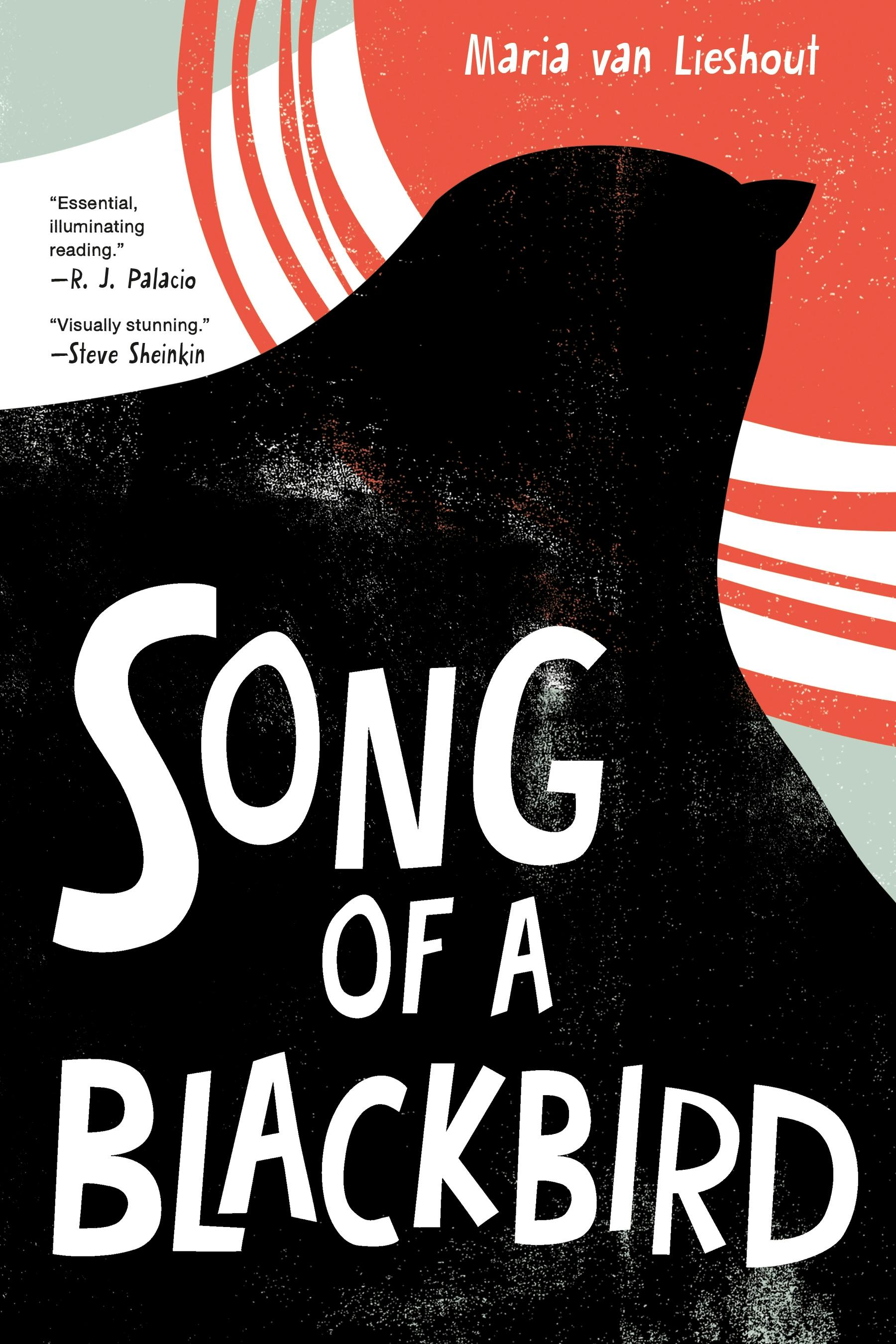
Song of a Blackbird by Maria van Lieshout (First Second, 256 pages, grades 8 and up). The narrative of this graphic novel alternates between 2011 and 1943 Amsterdam. In 2011, Annick is trying to find help for her Oma’s leukemia. When bone marrow tests reveal she was adopted, the two turn to a set of prints from her childhood, each signed by “Emma B.” to try to learn more about her past. Emma is the 1943 protagonist, an artist and student whose education is interrupted by the Nazi invasion of the Netherlands. She uses her talents to aid the Resistance, helping to create false documents and working to rescue children whose parents are being sent to concentration camps. A blackbird that represents art and creativity narrates, showing how his gifts help those in the darkest of circumstances. The two stories eventually meet, and the reader learns the fate of all the characters in a moving epilogue. Includes extensive back matter about the buildings pictured in Oma’s prints and the real-life people on whom Maria van Lieshout based her story.

I learned about this book when the National Book Award Longlist was announced a couple of weeks ago, and it absolutely blew me away. I truly can’t imagine creating this impeccably researched historical fiction, with its two riveting narratives, each one portrayed in its own color palette. Usually I’m rooting for a middle grade win over YA, but this is a compelling choice for sure. Although both books take place over 80 years ago, their stories speak to the timeless power of art and will surely inspire those fighting to create a brighter world.

Two (or more) of a kind

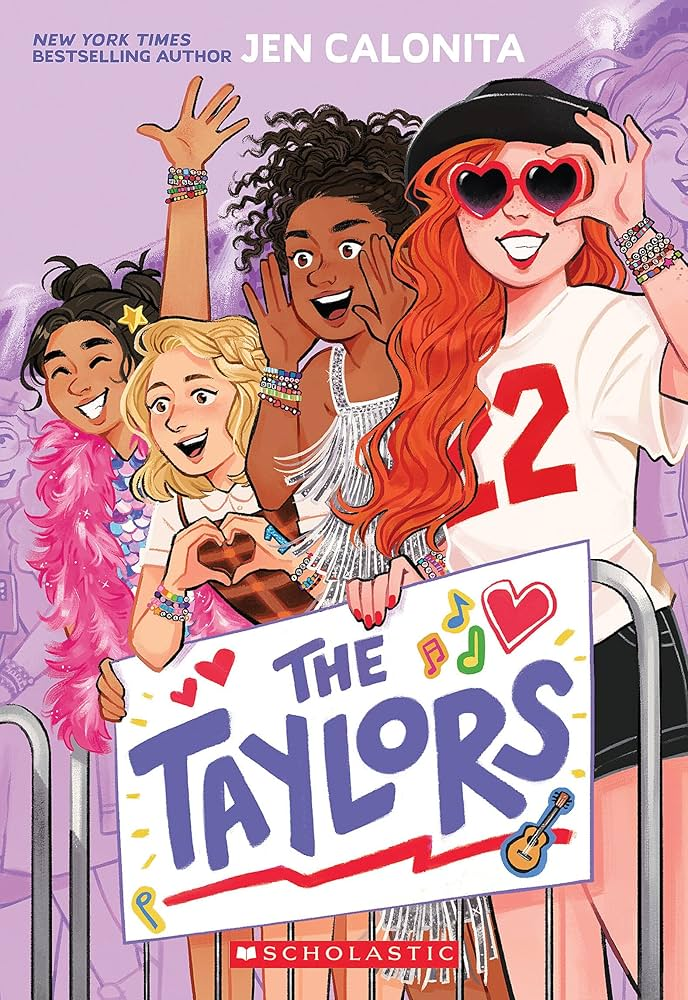
The Taylors by Jen Calonita (Scholastic, 224 pages, grades 3-6). Taylor, a.k.a. Teffy, is nervous about starting fifth grade, which is at the middle school. She’s surprised and delighted to discover three other girls named Taylor in her class, each one named, as she is, for Taylor Swift. The pop superstar’s Eras Tour is coming to their hometown of Indianapolis, and all four are desperate to get tickets. They come up with different strategies, most notably selling friendship bracelets to try to raise the exorbitant sums the tickets are fetching online. When not pursuing their Swiftie passions, the four try out for cheerleading and navigate the occasionally bumpy roads of fifth grade, including dealing with mean girl Hannah and some misunderstandings among themselves. Although they’re not able to realize their dream of buying tickets, they decide to attend the Tay-gating party next to the stadium, where their loyal friendship pays rich dividends in the form of a surprise truly worthy of Taylor Swift.

Although this story already feels slightly dated (the Eras Tour ended almost a year ago), the friendship of Teffy, Tay-Tay, TS, and Taylor is truly an inspiring one, showing four girls whose loyalty and integrity helps them achieve their lofty goals. Although it’s technically a middle school story, I like that the girls are in fifth grade, making this a great choice for elementary readers. 

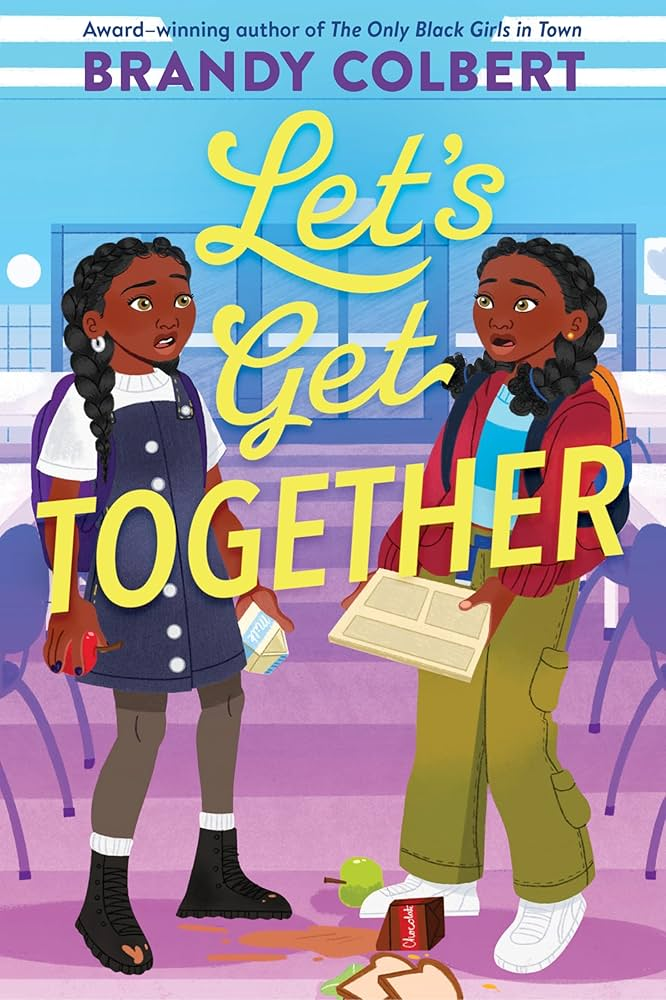
Let’s Get Together by Brandy Colbert (Clarion Books, 304 pages, grades 4-7).  In alternating chapters, Kenya and Liberty tell their story of sixth grade. Liberty’s been in the foster system most of her life and has finally landed in a good home with a woman named Joey. She’s nervous about her first day of middle school, but doesn’t expect the surprise that meets her there: a popular girl named Kenya who looks exactly like her. There’s tension between the two girls from the start, and a big fight at the sixth-grade mixer lands them both in the principal’s office, where Kenya’s father realizes he’s finally found his long lost daughter–Kenya’s twin. As the girls learn about their past, they slowly become good friends and decide there’s only one way to a happy ending: get Kenya’s dad and Joey to fall in love and get married. The author’s note tells of her love of the original Parent Trap movie that inspired this story as well as additional information about children in the U.S. foster care system.

Those who have watched either of the Parent Trap movies will appreciate the parallels in this take-off, although Liberty’s story of being taken by her mom, who struggled with mental illness and drug abuse, has a more serious tone, and also provides a more realistic reason why parents would separate their twins. Despite that, the story is fun and the alternating chapters gives readers a chance to get to know each twin equally well.

Hopeful books for difficult times

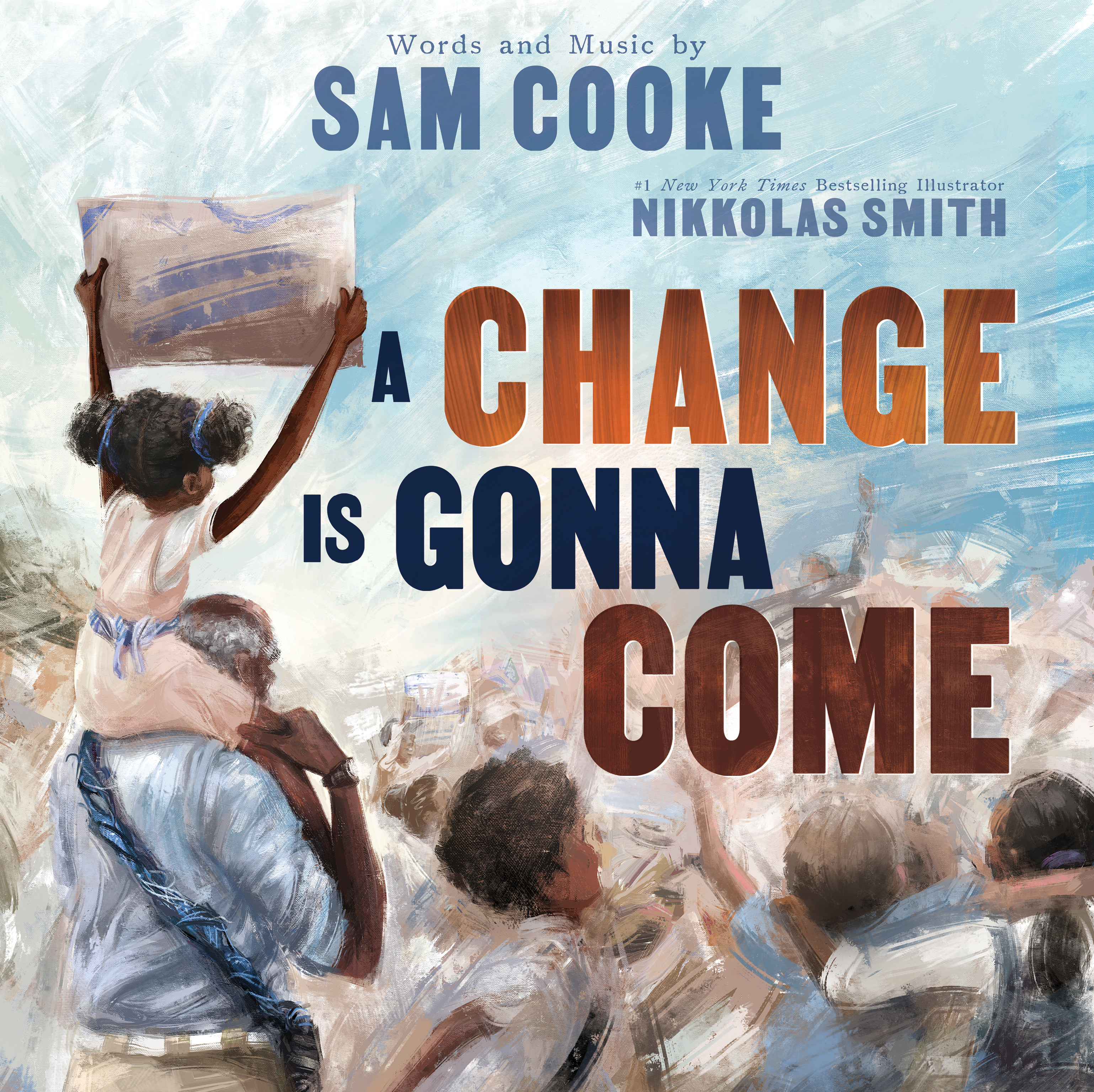
A Change Is Gonna Come words and music by Sam Cooke, illustrated by Nikkolas Smith (little bee books, 32 pages, all ages). Nikkolas Smith provides an illustrated version of the classic Sam Cooke song, with images of famous people and places from the civil rights movement. In the first few pages a boy, identified in the back matter as photographer Gordon Parks, finds a camera, which he later uses to photograph history. The pictures capture the song’s juxtaposition of despair and hope, with portrayals of Jim Crow laws in action and Medgar Evans’ funeral alongside those showing the March on Washington and the signing of the Civil Rights Act. Includes notes from the estate of Sam Cooke and from Nikkolas Smith, two pages of additional information about the people and events pictured, and a QR code that allows readers to hear the song.

Just like the song, this book packs a powerful punch, and made me think of Smith’s book The Artivist in which the narrator says, “I want to hold up a mirror to the world and show everyone what isn’t working right.” You’ll need multiple readings, including the back matter, to really get the full impact of this book, which I hope will be considered for both Caldecott and Coretta Scott King recognition. 

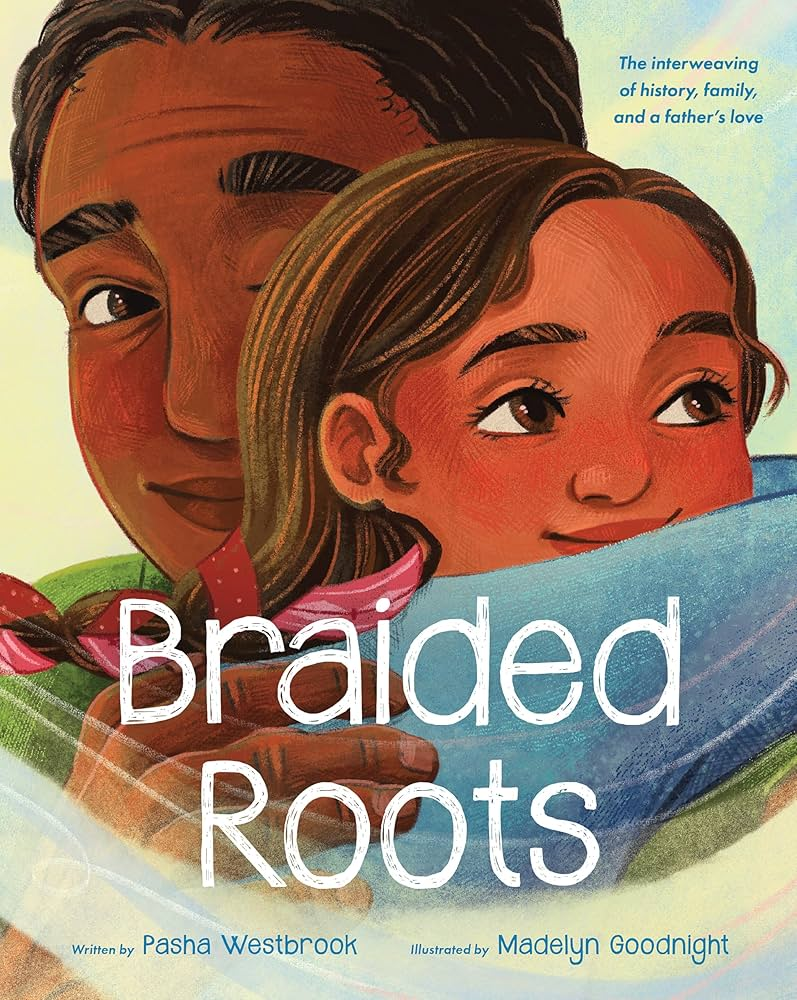
Braided Roots by Pasha Westbrook, illustrated by Madelyn Goodnight (Orchard Books, released November 4, 40 pages, ages 4-8). As her father braids her hair, a girl reflects on her family’s heritage, comparing the strands of her braid to DNA. Her ancestors include both enslaved people and those who walked the Trail of Tears. As Daddy finishes the braid, he tells her to be careful, because with such a strong braid, “You just might change the world.” Includes an author’s note about her inspirations from her own family, which included ancestors who were enslaved, mixed-race Black, Chicksaw, and Choctaw, and her single father who raised her and her three brothers, as well as an illustrator’s note.

This lovely family story reminded me of Hair Love by Matthew A. Cherry, which also features a father doing his daughter’s hair and My Powerful Hair by Carole Lindstrom, which explores the belief of Indigenous Americans that hair is a source of strength and memories. Kids may need some additional information to understand part of the story about the narrator’s ancestors, but this would be a good book to read to inspire them to investigate their own heritages.

Christmas fact and Christmas fiction

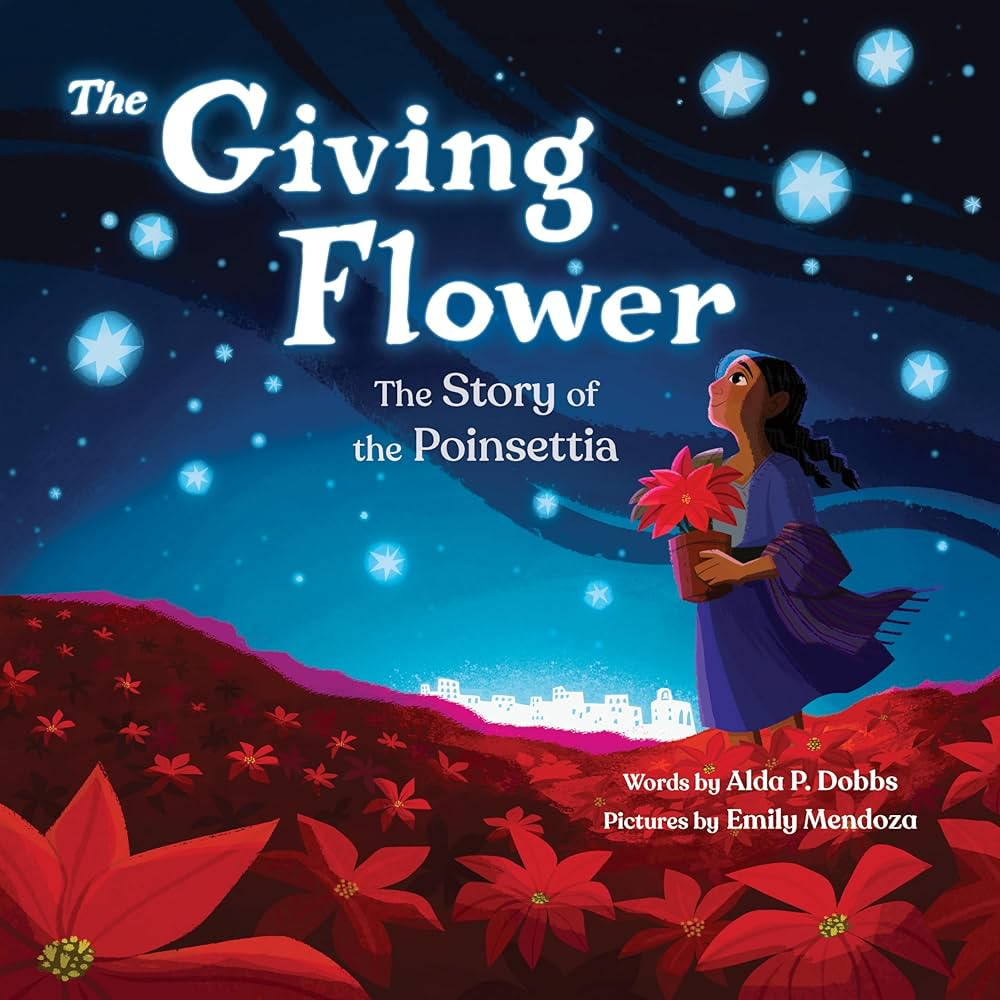
The Giving Flower: The Story of the Poinsettia by Alda P. Dobbs, illustrated by Emily Mendoza (Sourcebooks Jabberwocky, 40 pages, grades K-3, published simultaneously in Spanish as La flor generosa: la historia de la flor de nochebuena). Did you know that the red parts of the poinsettia plant are actually leaves, with the tiny yellow flowers nestled in the center? Read on to learn other interesting facts about this plant that we often associate with the Christmas season. Indigenous Mexican people used it for medicines and dyes. Spanish friars made up a story about a poor girl named Pepita bringing the flower known in Mexico as la flor de nochebuena as a gift to baby Jesus. In the 19th century, amateur botanist and ambassador to the newly independent Mexico Joel Roberts Poinsett brought the flower to the U.S. where it got a new name inspired by Poinsett. 100 years later, a man named Paul Ecke figured out how to make the plants hardier and smaller. Ecke’s son started a marketing campaign to get pots of poinsettias on TV shows and into the White House, and by the mid 20th century, they started to be known as the Christmas flower, a tradition that continues today. Includes a history and timeline of the poinsettia.

This is a fascinating history of the poinsettia plant, which weaves in a lot of the history of Mexico as well.  I had no idea that those big red flowers aren’t flowers at all, and I also didn’t realize that the connection with Christmas was so recent, nor did I know that it was the result of a well-orchestrated marketing campaign! This would make a great read-aloud and a nice way to fit a little nonfiction into the holiday book offerings.

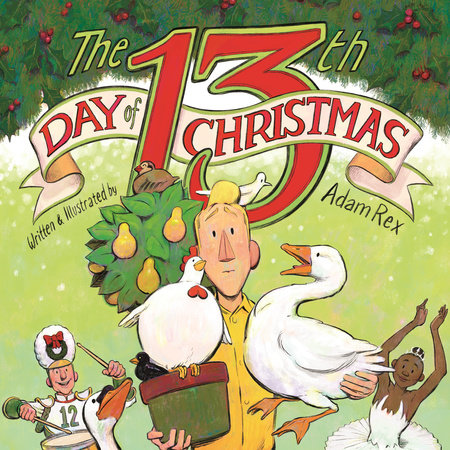
The 13th Day of Christmas by Adam Rex (Neal Porter Books, 48 pages, grades K-4).  The narrator’s feeling lonely at Christmas because his true love is visiting her parents. So he’s happy when she sends him a pear tree. He’s not as thrilled with the partridge that comes with it, though, and when another pear tree with three more birds appears the next day, he’s even less excited. Before long his house is crammed with drummers, pipers, maids, cows, and lots of birds. He visits his mom to see if she has any advice (she doesn’t), and on the way home an impromptu parade forms with all his new friends. When a kid watching the parade mentions that his school could use some new books, everyone springs into action the next day and puts together a bake sale (there’s no shortage of milk and eggs).  The man enjoys helping the school so much, he begins to suspect his true love, Trudy, wanted him to learn the joy of giving to others. When she finally gets home, it turns out that the whole thing was an Internet glitch in Trudy’s pear tree order. Trudy proposes marriage, and the new friends go home, leaving the couple as happy as two turtledoves.

It’s hard to really do justice to this hilarious book in a review, but trust me when I say that anyone familiar with The Twelve Days Of Christmas will find this a riot, both the story and the illustrations. To be honest, I think anyone would enjoy it, but knowing the song makes it that much better, not only seeing all the verses come to life, but also appreciating a few countdowns in the story that are riffs on the original.

A ghostly vacation and a creepy operation

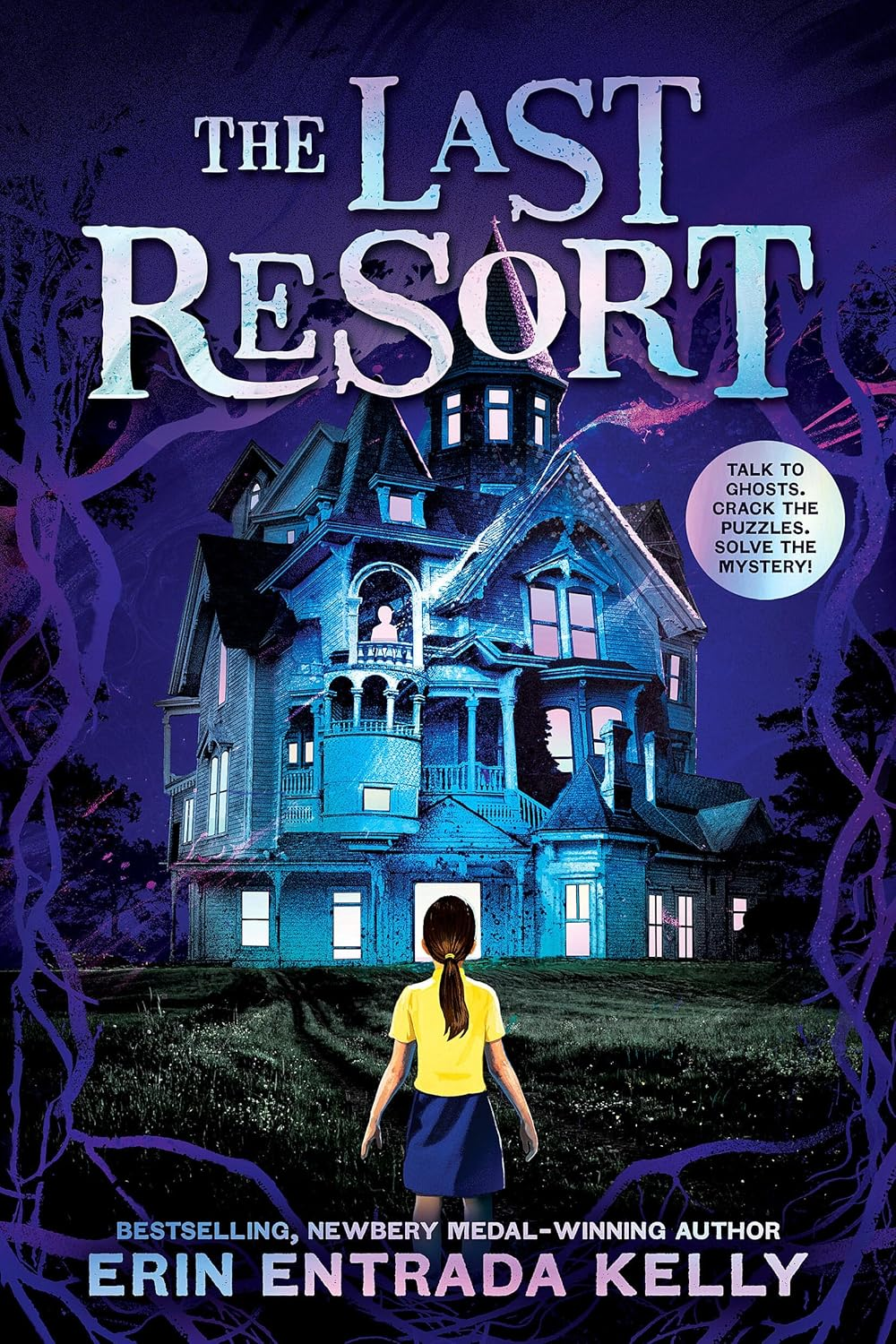
The Last Resort by Erin Entrada Kelly (Scholastic Press, 240 pages, grades 4-7). When Lila’s Grandpa Clem dies, leaving an old inn to her father, the whole family has to leave their home in Phoenix to spend the summer at the inn in Ohio, sorting out the estate. Lila’s despondent about the trip, fearing it will further estrange her from her two former best friends, who have started accusing her of being overdramatic and leaving her out of things. The inn is pretty creepy, and Lila begins seeing strange people appear and disappear, including her late grandfather who she never met. When he tells her he was murdered, Lila is determined to figure out what happened to him and teams up with her neighbor Teddy and her brother Caleb to solve the mystery. As the people around her start having nightmares that reflect their worst fears, the situation becomes increasingly desperate, and Lila finds that the personality traits she’s often been criticized for having are an asset when it comes to dealing with ghosts and haunted mansions. Thanks to Scholastic for providing me with a free copy of this book.

This is a classic Scholastic series: a bunch of popular authors each write a book in a series, combined with a gimmick that will have kids clamoring for the latest installment at their book fairs or Scholastic flyers (think 39 Clues or Horizon) In this case, a few of the illustrations have QR codes that lead readers to a site where the ghosts tell their stories and allow readers to solve mysteries. While this method of storytelling is unlikely to showcase Newbery winners like Kelly (and book 2’s Jasmine Warga) at their creative best, this is a fun ghost story with an engaging protagonist who learns that what she’s been told is “too much” is actually her own imaginative and courageous personality.

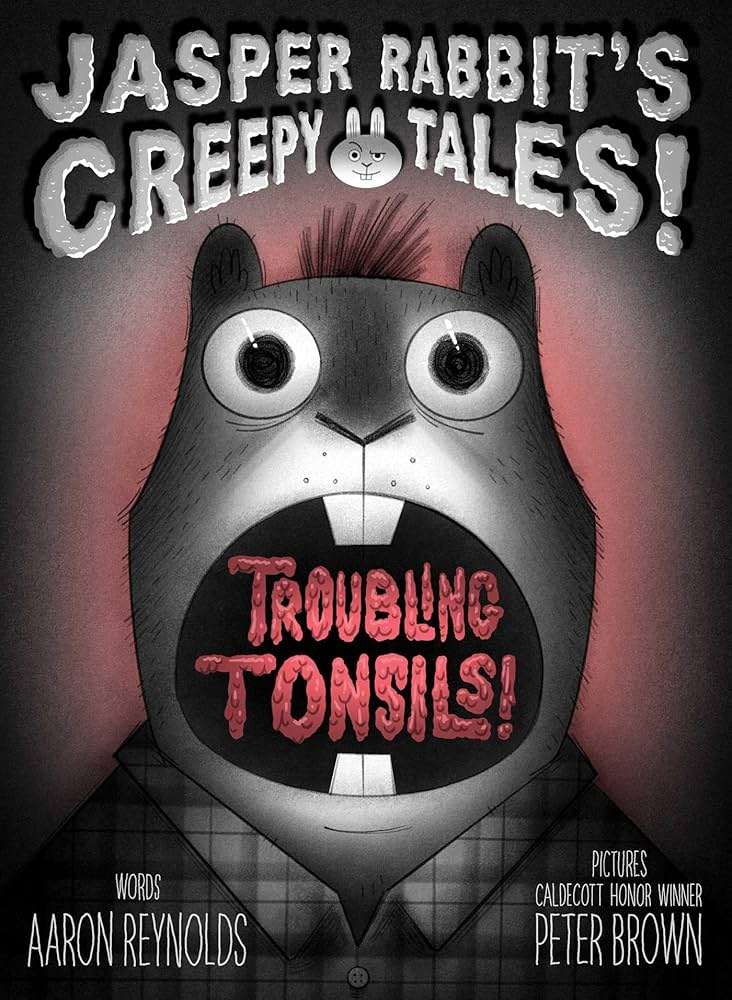
Troubling Tonsils! (Jasper Rabbit’s Creepy Tales) by Aaron Reynolds, illustrated by Peter Brown (Simon and Schuster Books for Young Readers, 88 pages, grade 1-4). Our old Creepy Carrots/Crayon/Pair of Underwear friend Jasper Rabbit introduces main character Charlie Marmot and his tonsils, then the tale begins innocently enough with Charlie coming down with a sore throat. A trip to the doctor reveals tonsillitis, and an operation is scheduled for a few days hence. Charlie’s actually excited, asking the doctor if he can put the tonsils in a jar to bring in for show-and-tell. By the time surgery day arrives, Charlie’s throat feels better, and the doctor is shocked when he does a quick pre-op check and discovers that the tonsils are gone! No one can explain this, but Charlie is sent home, where he starts to experience strange sights and sounds in the middle of the night. Finally, exhausted, he falls into a deep sleep one night, only to discover upon waking that he….

Well, now, I guess you’ll just have to read this short chapter book to find out, won’t you? To be honest, the Creepy books aren’t my favorites, but kids can’t get enough of them, and I trot them out every Halloween to universal joy. Fans will be delighted to see this new chapter book series, perfect for those who are just moving up to that level. The story is a perfect blend of funny and creepy, with an ending worthy of The Twilight Zone. Look for book 2, Unsettling Salad, in February, 2026.

Early chapter books

Sweet Magic (Witchycakes #1) by Kara LaReau, illustrated by Ariane Moreira (Random House Books for Young Readers, 80 pages, grades 1-4). Young witch Blue is still working on their magical powers, but they love being involved of all aspects of their mother’s bakery. When they’re sent out on a delivery mission, accompanied by their seagull familiar Gully, they encounter a series of opportunities to practice magic. For the most part, the magic fails, but Blue is able to help people anyway, using their own natural instincts to figure out what’s needed in each situation. Returning home, Blue’s mother assures them that imagination and kindness are just as important and magic, and that Blue is on their way to becoming a great witch. Includes a recipe for Mama Moon’s Beach Crumble.

This enchanting early chapter book by the author of The Infamous Ratsos portrays a cozy beach town and an enchanting cast of characters that will have readers heading right for book 2. Just like with the Ratsos, LaReau weaves an uplifting message into a fun story.

Hut! Hut! Hike! (Sports Zone! #1) by Andrew Maraniss, illustrated by Aishwarya Tandon (Scholastic, 96 pages, grades 1-4). Jasper and his two best friends Mo and Ruby decide to try out for their town’s flag football team. Jasper is a dedicated fan of the game and is confident that he’ll not only make the team but be one of the best players. Tryouts go pretty well, but Jasper makes a few mistakes, and he realizes that he still has a lot to learn. The three kids are thrilled to make the team, which names themselves the Frogs. The Frogs look forward to their first game against the Beagles, but when the big day arrives, the kids learn they still need some lessons in teamwork to be able to pull out a win.

The newest addition to Scholastic’s branches series is a pretty straightforward sports story interspersed with sidebars giving additional information about topics like the game of football, the specifics of flag football, and some of the greatest players from the NFL. With plenty of illustrations, including a few comic book style panels, and a fast-paced story, this is a good choice for early chapter book readers. Having said that, I still think Branches does best with fantasy books like The Last Firehawk, Dragon Masters, and Kwame’s Magic Quest. Thanks to Scholastic for providing me with a free review copy of this book.

Surviving tough times

The Library in the Woods by Calvin Alexander Ramsey, illustrated by R. Gregory Christie (Carolrhoda Books, 32 pages, grades 1-5). When a hailstorm destroys their crops, Junior and his family are forced to leave their farm and move to the city. City living feels strange, with indoor plumbing, cars driving up and down the roads, and the need for shoes all the time. But Junior is thrilled when some new friends introduce him to a public library just for Black people. He borrows three books for himself and his parents and excitedly gives his mom a book of poetry by Phillis Wheatley and his dad a book about George Washington Carver. Every night for two weeks, Dad sits out on the porch with his book, until Junior finally learns from his mother that his father can’t read. When Junior gently takes the book and starts to read it out loud, he sees tears of joy in his dad’s eyes. Includes an author’s note about his childhood, the library on which this book is based, and the ways his community and family supported education for themselves and their children.

Junior tells his story with hope and determination, showing a family doing their best to make better lives despite hard times and racism, and emphasizes the importance of books and education. The illustrations place the story in the mid-twentieth century (the author’s note reveals he first visited the library in 1959) and do an excellent job portraying the family and their North Carolina surroundings.

A Place for Us: A Story in Pictures by James E. Ransome (Nancy Paulsen Books, 32 pages, grades 1-5). The author’s note at the beginning challenges readers to think about this question: In a country of vast resources, what is our responsibility to those without access to the basic necessities? The story begins with a woman walking across a city street. Soon we see that she’s picking up her son from school. They go to a fast food restaurant where, after saying grace, they eat their dinner. From there, they head to the library, where she reads a book (Finding Langston by the author’s wife Lesa Cline-Ransome, if I’m not mistaken). When the library closes, they head for a park bench where the boy sleeps with his head in his mother’s lap, covered by her jacket, while she sits up all night. After changing his shirt and washing up at a park fountain, the boy and his mom walk back to school.

This is a powerful story, all the more so for being wordless, leading to greater reflection as you study the pictures. The falling brown leaves made me think winter is coming and wonder what these two will do. Watching them get ready in the morning raised the question of where they do their laundry and how they can live out of two backpacks. The author’s note at the front sets the tone for the story, which will undoubtedly fuel many thoughtful conversations.

Science and nature

Sunflower Seeds by Ellen Heck (Levine Querido, 48 pages, ages 4-8). A boy tells of his adventures growing sunflowers, starting when his kindergarten teacher reads a book about them near the end of the year. Each student gets three seeds: one for the birds, one for the rain, and one to grow. On the last day of school the kids take their seedlings home in paper cups. The boy puts his cups outside, and sure enough, one gets knocked over in a rainstorm and never recovers. His parents help him plant the remaining two plants in the ground. One gets nibbled on by a deer, but the last one soars to a height over the heads of the tallest humans he knows. Everyone enjoys the big yellow flowers for a few weeks until they start to droop. The family cuts them off and counts the seeds inside–over 1,000! As the boy looks forward to sharing his sunflower stories in first grade, he visits the library, and opens a new book. What will he learn about next?

I’m putting this on my list of books to read to preschoolers and kindergartners in the spring. Not only is there a lot of information, told in a story that kids will connect with, but the oil paintings of sunflowers are amazingly detailed, as you can see from the cover. I also like the message that books are gateways into learning about all sorts of interesting things. I wish there had been a little back matter with some additional information about sunflowers.

Dear Acorn (Love, Oak) by Joyce Sidman, illustrated by Melissa Sweet (Clarion Books, 40 pages, grades 1-4). In eight pairs of poems, two objects address each other, showing their relationship to each other while highlighting each one’s unique perspective. There’s the acorn and oak pairing of the title, as well as bubble/sky, cloud/droplets, pebble/river, brick/school, button/coat, toes/child, and sea turtle/ocean. Each letter poem is pretty short–no more than a few stanzas of brief lines–and each is accompanied by a colorful collage drawing. The final pages includes simple, specific guidelines to help kids write their own letter poems.

Two masters of their crafts–Newbery honor winner Joyce Sidman and Caldecott honor winner Melissa Sweet–team up to create an engaging set of poems written in a format that invites kids to think about writing their own pairs of letters. The poems are simple and brief to read to primary grades yet interesting enough for older kids, and the beautiful collage illustrations could also be used as a starting point to encourage creativity.