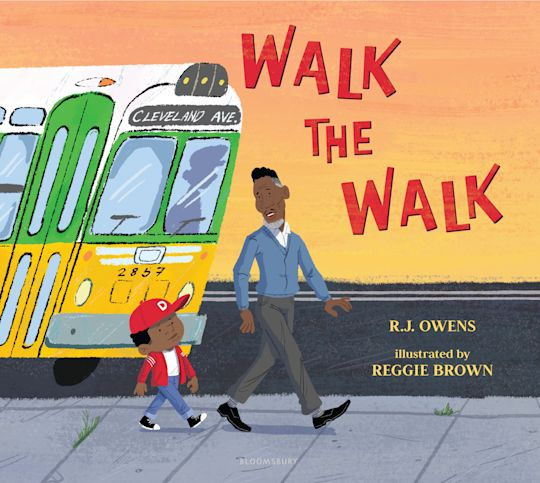
Walk the Walk by R. J. Owens, illustrated by Reggie Brown (Bloomsbury Children’s Books, 40 pages, ages 4-8). Dex and Papa are walking to his piano lesson, a walk that seems to Dexter to take forever. But Papa tells him, “If we’re going to talk the talk, we’ve got to walk the walk.” This means supporting the Montgomery Bus Boycott, just like other Black people are doing all over the city. Along the way, Dex and Papa see signs reminding people not to ride the bus and giving information about how to get a ride if they need one. They’re hassled by police and people riding in a truck with a Confederate flag in the back. When Dex has to pee, they can’t go in a restaurant with a “Whites Only” sign out front. At last, the two of them walk past a church where people are outside celebrating. The boycott is over, and they can ride on any seat in the bus! Even though the piano teacher is only a few blocks away, they hop on a bus and choose a front seat, each one wiping away tears of joy. The last page shows a grown-up Dex and an older Papa crossing the Edmund Pettus Bridge with a crowd of protesters. “And sure enough, as the years rolled on by, Papa and I just kept on walking, together.” Includes an author’s note, a Montgomery Bus Boycott timeline, and lists of sources and further reading.
This is a great introduction to an important chapter in the civil rights movement, with Dex serving as a generally cheerful but occasionally whiny kid narrator, and Papa keeping his spirits up with his refrain of “walk the walk.” The text and illustrations work together to show features of the boycott, including the racism the participants encountered. Although readers may need a preliminary introduction to the boycott’s history before reading the book, it’s a story that would work well with kids as young as preschool or kindergarten.
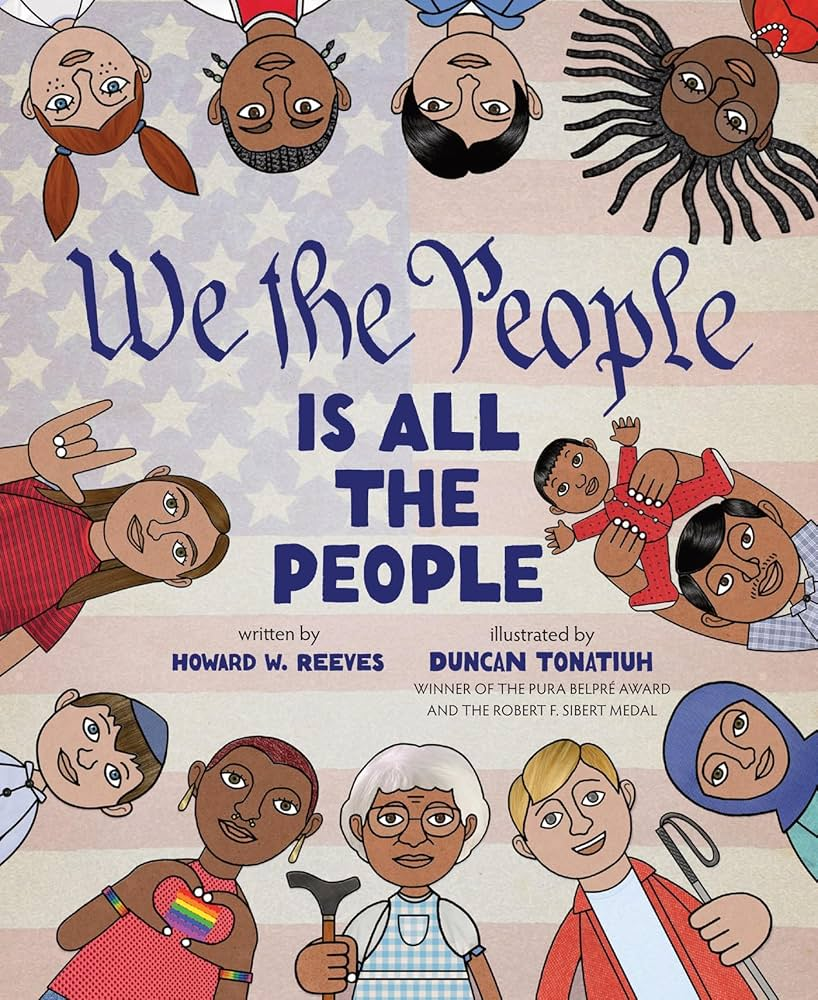
We the People Is All the People by Howard W. Reeves, illustrated by Duncan Tonatiuh (Harry N. Abrams, 40 pages, grades 1-5). Starting with the Preamble to the Constitution, the narrative states, “We the people is all the people,” then goes on to celebrate the huge diversity of people living in the United States: different religions, cultures, occupations, sexualities, physical abilities, and homes. The illustrations bring this diversity to life, showing all kinds of people in a variety of American settings. One particularly memorable one shows a Native woman with outstretched braids and arms that hold people from history, like a Chinese-American railroad worker laboring up one braid, and a white man leading two enslaved people in chains up one of her arms. The author’s note talks about both the revolutionary nature of the U.S. Constitution and its shortcomings, with references to unnamed people in power who seek to undo it and a sobering but realistic look at the work still needed to ensure that “all the people” are served by it. Also includes an illustrator’s note.
This timely book is a thought-provoking meditation on the diversity of people who are (or should be) served and protected by the U.S. Constitution. Along with the author’s note, it’s an excellent springboard for learning about and discussing the Constitution and the freedoms it outlines that are currently under threat. Duncan Tonatiuh’s illustrations are truly spectacular, and, in my opinion, should receive Caldecott consideration.

