Eat Bugs (Project Startup, book 1) by Heather Alexander, with Laura D’Asaro and Rose Wang, illustrated by Vanessa Flores

Published by Penguin Workshop
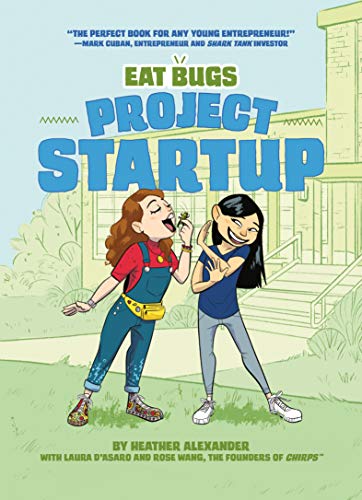
Project Startup #1 (Eat Bugs) - Kindle edition by D'Asaro, Laura, Wang,  Rose, Alexander, Heather, Flores, Vanessa. Children Kindle eBooks @ Amazon .com.

Summary:  When Hallie and Jaye get assigned to be partners in a business class startup project, it doesn’t exactly seem like a match made in heaven.  Hallie is outgoing and doesn’t care what anyone thinks about her outspokenness and unique fashion sense, while Jaye is shy and constantly trying to figure out how to fit in and avoid the spotlight.  After sampling a cricket on a class trip, Hallie wants to start a bugs-as-food business, while Jaye prefers the idea of a social media app that would bring everyone in their school together.  When a pair of boys steals Jaye’s idea, she’s forced to agree to go the insect route.  As the two navigate the terrain of pitches and market testing, they discover traits in each other that they admire, and a friendship is born.  Their business plan isn’t quite enough to snag the top prize at the startups competition, but their partnership is cemented, and the future looks bright for Chirps Chips.  Includes an interview with Laura and Rose, founders of the real-life Chirps Chips.  224 pages; grades 3-6.

Pros:  Told in alternating voices, this breezy illustrated story introduces readers to some of what’s involved in starting a business, emphasizing the be-yourself message for both entrepreneurship and middle school.

Cons:  Flashbacks to The Apprentice.
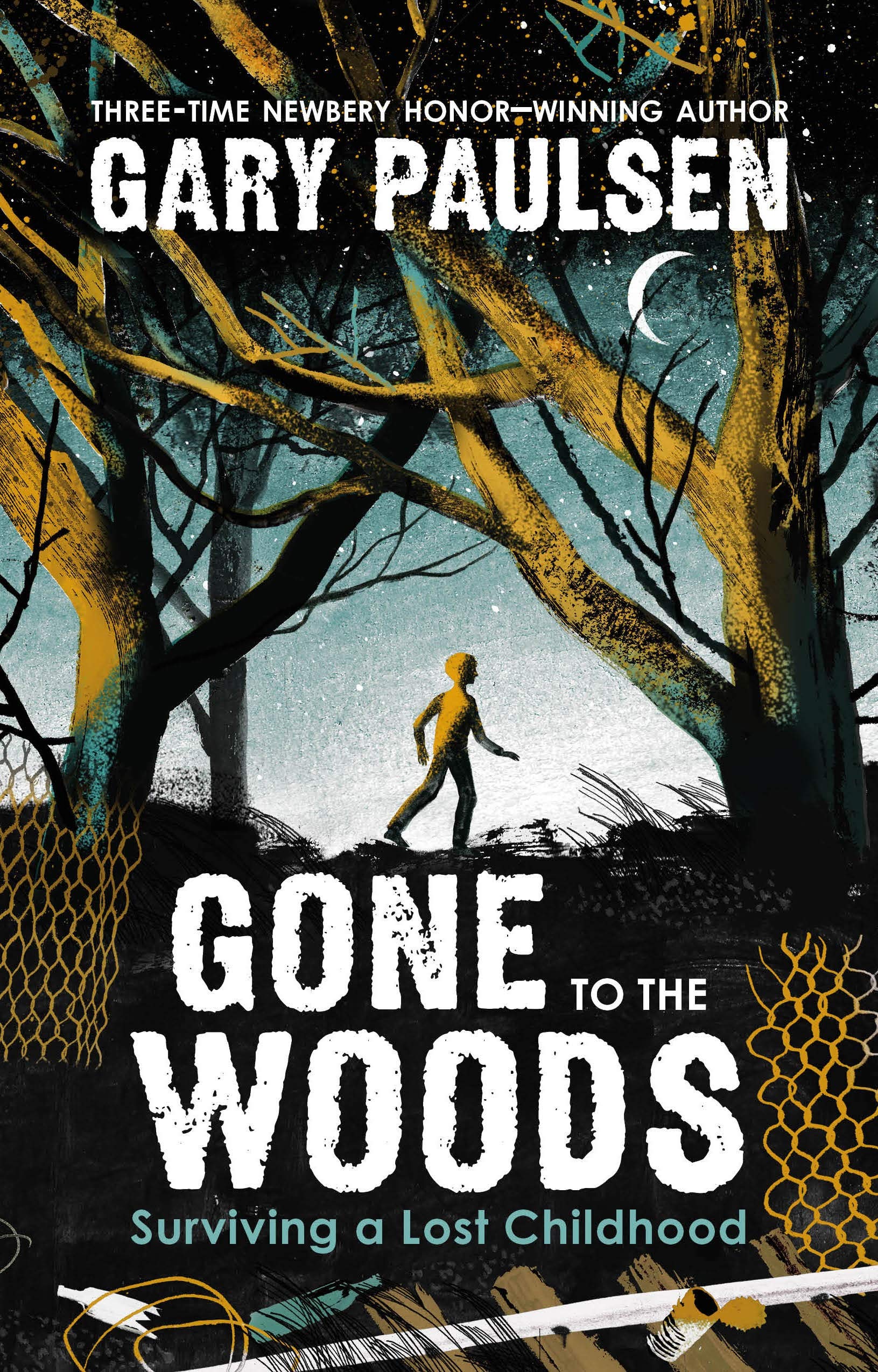
Gone to the Woods: Surviving a Lost Childhood by Gary Paulsen

Published by Farrar Straus Giroux

Gone to the Woods: Surviving a Lost Childhood: Paulsen, Gary:  9780374314156: Amazon.com: Books

Summary:  Beloved author Gary Paulsen writes of his “lost childhood” in five sections, beginning in 1944 when, at the age of 5, his grandmother took him from his alcoholic mother and sent him to live on a remote farm with his aunt and uncle.  Although the work there was hard, he felt happy and secure until his mother unexpectedly showed up and took him to the Philippines to live with his father for the first time.  The horrific ship ride there and his time in Manila make up the second and third parts of the book, then he moves on to age 13, back in the U.S.  His parents drank and fought constantly, and he was pretty much on his own, running away regularly to work on farms and at a carnival.  The final chapter tells of his time in the army, winding up with his decision to make more of himself than the other men he saw there.  On the last page, at the age of 80, he finds a notebook that a beloved librarian gave him, and thinks, “What the hell.  Might as well write something down.”  368 pages; grades 5-8.

Pros:  I zipped through this compelling memoir in just a couple of days, both mesmerized and horrified by Paulsen’s stories of his incredibly difficult childhood and adolescence.  Written in third person (he refers to himself as “the boy”), this story will be appreciated by fans of other Paulsen books, and will help readers understand the experiences that have influenced his work (although you might want to preview it before handing to some wide-eyed fourth-grade Hatchet fan).

Cons:  This is more of a memoir than an autobiography, and readers will only learn certain episodes from Paulsen’s youth rather than all that happened to him in those years. 

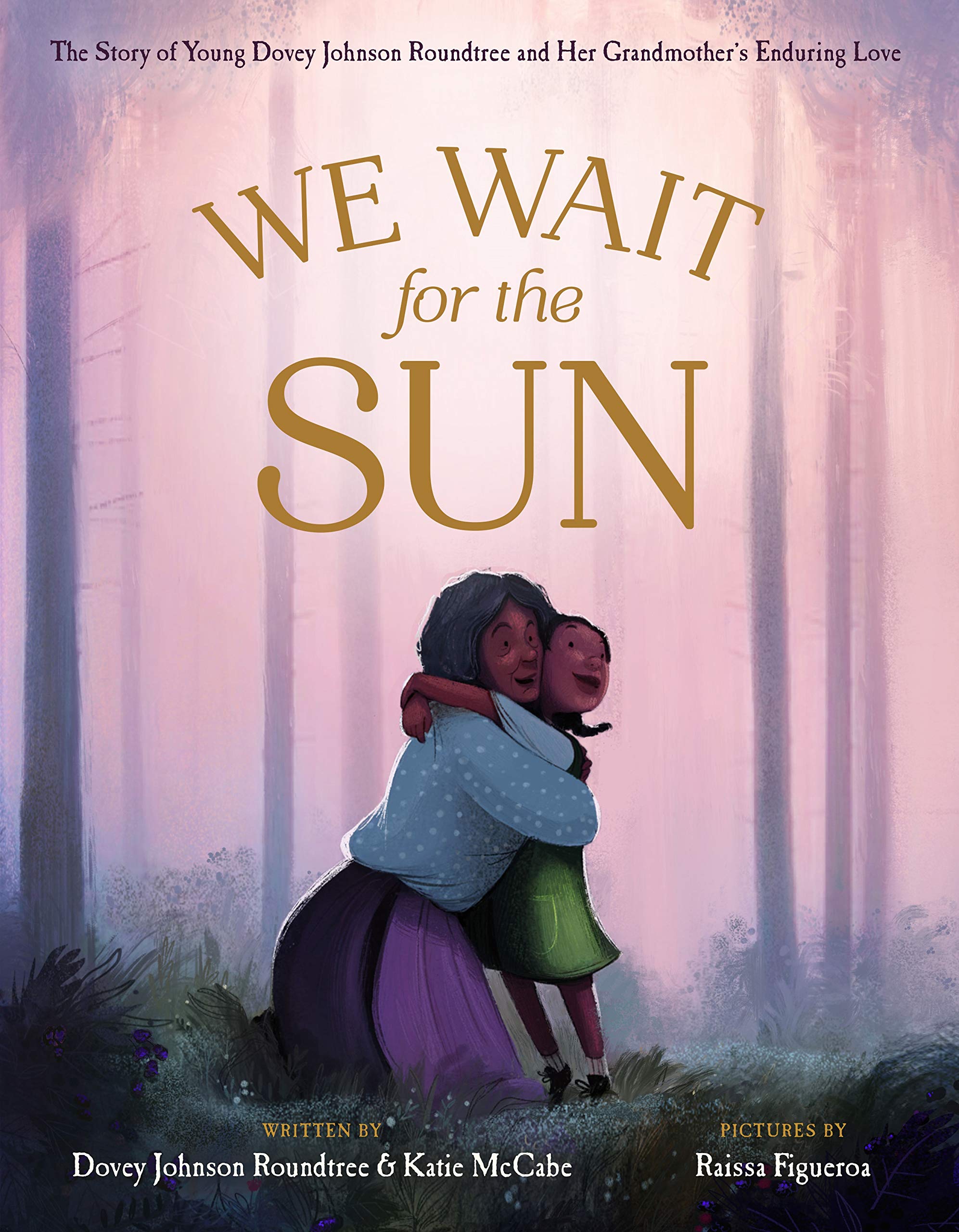
We Wait for the Sun by Dovey Johnson Roundtree and Kate McCabe, illustrated by Raissa Figueroa

Published by Roaring Brook Press

We Wait for the Sun: McCabe, Katie, Figueroa, Raissa: 9781250229021: Amazon.com:  Books
We Wait for the Sun | Katie McCabe | Macmillan

Summary:  Young Dovey follows her grandmother and other neighborhood women into the dark woods to pick berries before dawn.  Her grandmother reassures her when she’s scared of the dark, and before long everyone is filling their pails with berries.  Suddenly, Grandma stops and tells Dovey to look.  The sky turns from black to pink to gold, and as the new day begins, they head back home again.  Includes a four-page author’s note and additional information about civil rights leader Dovey Mae Johnson Roundtree and her grandmother Rachel Millis Bryant Graham; photos; a timeline; and a bibliography.  40 pages; grades K-6.

Pros:  This would make a great mentor text for personal narratives, complete with the beautiful illustrations that show the changing light as the night gradually gives way to daytime.  The extensive back matter makes this an excellent research resource that could be used well into middle school.

Cons:  The back matter is quite long, written in a single-spaced small font; while I appreciated all the information, it would have been nice to have something more accessible for the story’s audience.

The Comeback by E. L. Shen

Published by Farrar, Straus and Giroux

The Comeback | E. L. Shen | Macmillan

Summary:  Maxine has Olympic dreams as she prepares for competition at her Lake Placid ice skating rink.  She’s pretty sure she can beat out most of the other girls in her age group until superstar Hollie shows up at the rink.  Meanwhile, Maxine is dealing with a lot at school: her ex best friend has a crush on Alex, a boy who has been making racist comments to Maxine about her Chinese heritage.  Maxine needs to make a comeback, both at school and on the ice, and will need all the confidence she can find within herself and from the people around her.  272 pages; grades 3-7.

Pros:  Ice skating fans will enjoy this inside look at what it takes to train for national competition.  The friendship, school, and bullying lines add a lot to the story and would make it a good springboard for discussions.

Cons:  Maxine seemed like someone who would have a lot of friends at school, but other than her ex friend Victoria (whose friendship seems to have been based on the fact that their mothers were friends) she seems pretty alone.

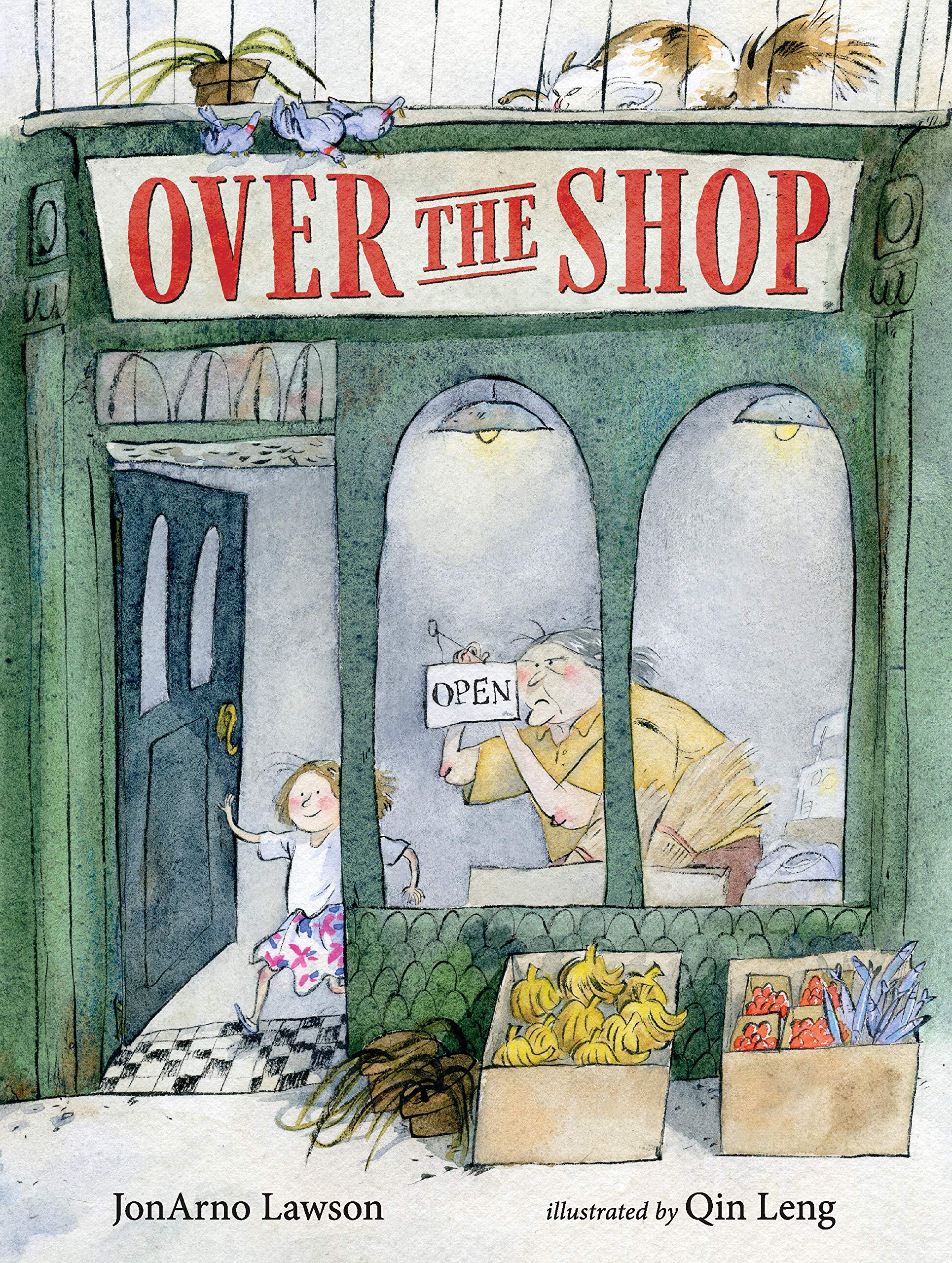
Over the Shop by JonArno Lawson, illustrated by Qin Leng

Published by Candlewick

Over the Shop: Lawson, Jonarno, Leng, Qin: 9781536201475: Amazon.com: Books

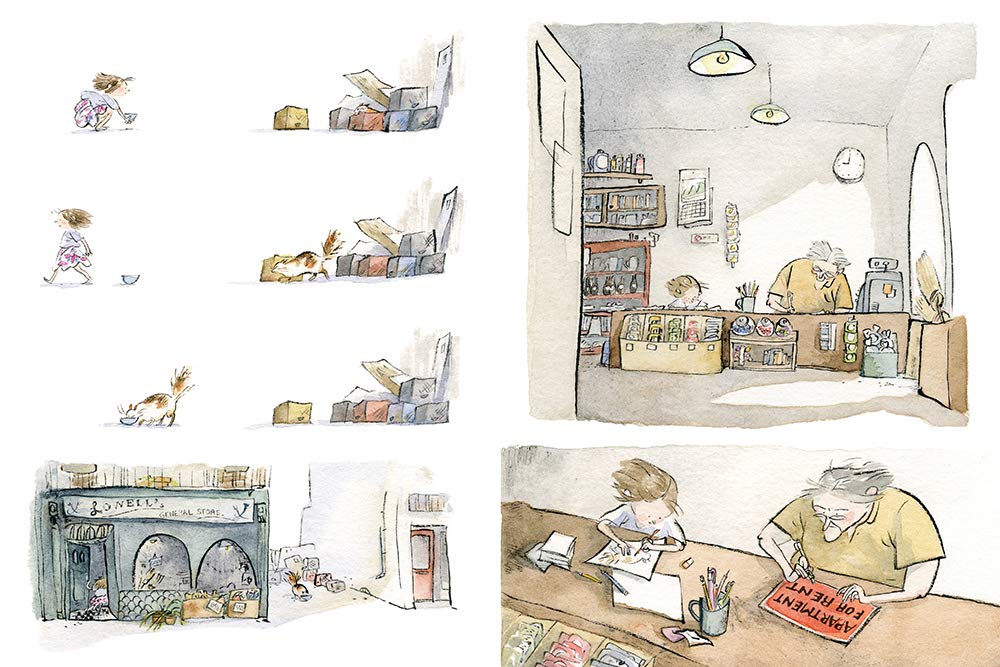
Summary: In this wordless picture book, a girl and her grandparent run Lowell’s General Store.  Over their shop is an apartment.  When the grandparent puts an “Apartment for Rent” sign in the window, a number of prospective tenants take a look, but are put off by dirty walls, cracked tiles, broken cabinets, and old furniture.  Finally, a friendly couple rents the place, immediately rolling up their sleeves to clean and fix it up.  Not only that, but they help out with the store, becoming friends with the owner and the girl.  The girl lures a stray cat up to the apartment to become a pet.  By the end, there’s a new sign on the store: “Lowell & Friends General Store”, accompanied by a rainbow flag.  48 pages; ages 4-8.

Pros:  The author of Sidewalk Flowers has created another beautiful wordless story that celebrates community and friendship in the midst of an impoverished neighborhood.  The dedication, “For trans activists of all ages”, the rainbow flag, and several possibly transgender or nonbinary characters make this an outstanding addition to LGBTQ+ collections as well.

Cons:  A review I read mentioned a rainbow belt and hat in the illustrations as well, but I have yet to discover them.  This isn’t a con, but the illustrations are so richly detailed that readers will want to go back over and over again to discover all the details.

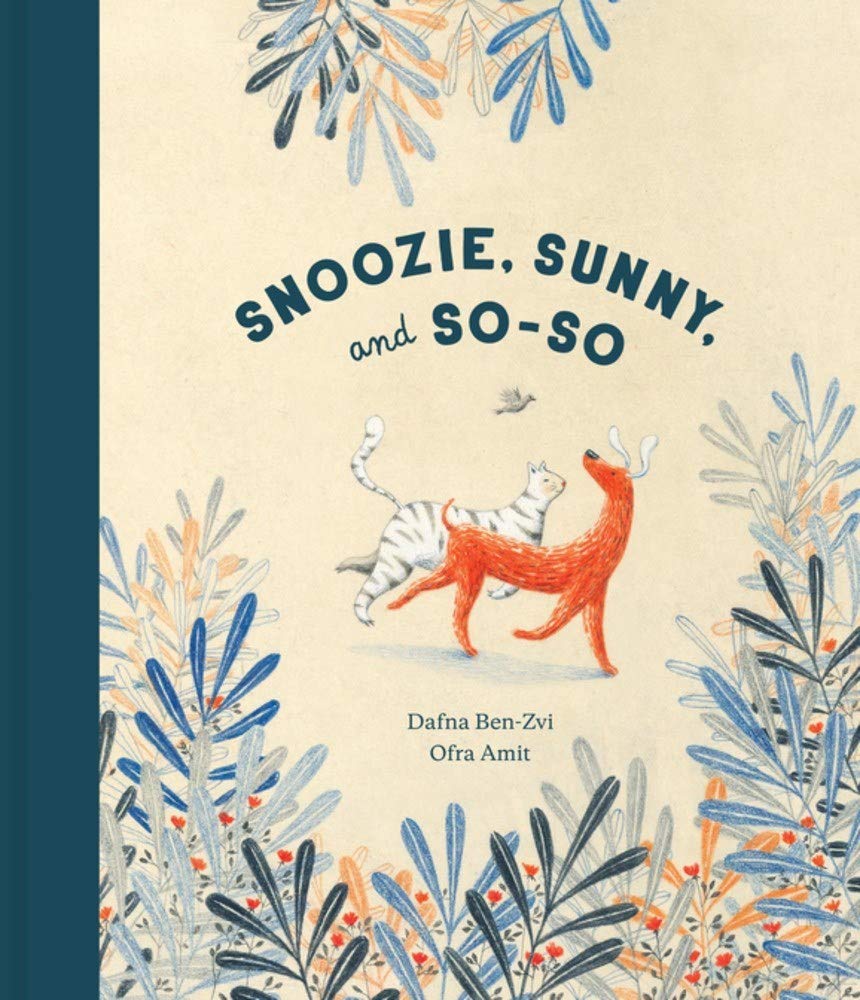
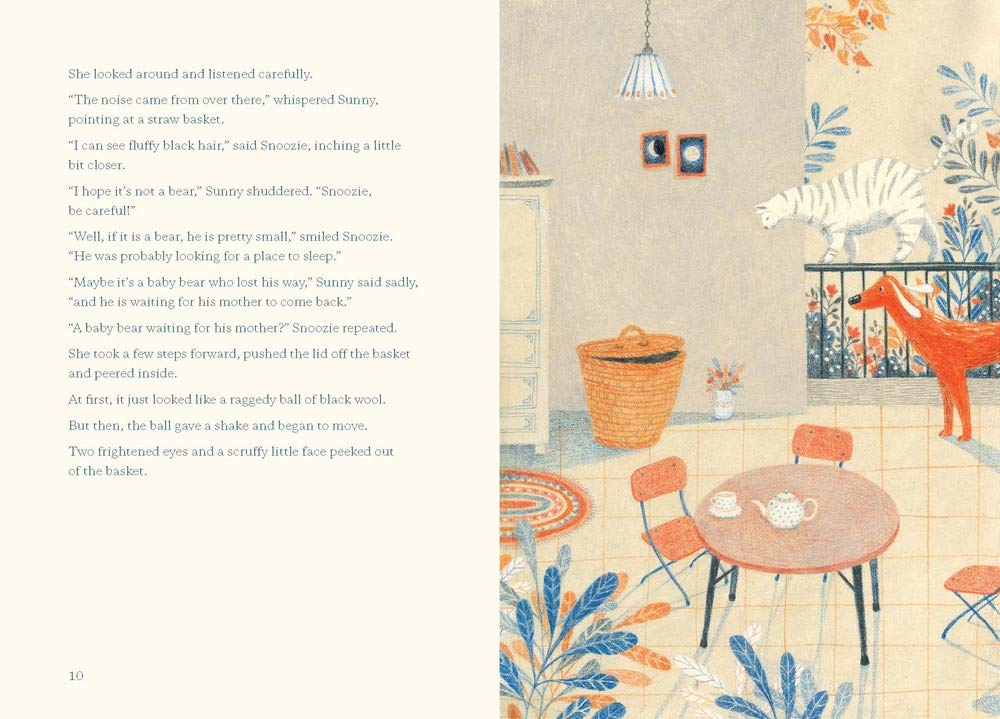
Snoozie, Sunny, and So-So by Dafna Ben-Zvi, illustrated by Ofra Amit, translated from Hebrew by Annette Appel

Published by Enchanted Lion Books

Snoozie, Sunny, and So-So: Ben-Zvi, Dafna, Amit, Ofra, Appel, Annette:  9781592702824: Amazon.com: Books

Summary:  Snoozie is a cat who likes to, well, snooze, and Sunny is her playful dog friend.  On a walk one day, they discover So-So, a small black dog whose only friend has gone “to the other side of the world”.  So-So is extremely timid, but the other two entice her to play with them and invite her to Snoozie’s birthday party the next day.  So-So is apprehensive about going, but when Sunny comes to pick her up, she has no choice.  The party turns out to be great fun, and So-So gives Snoozie a birthday poem she wrote to celebrate their new friendship.  40 pages; grades K-3.

Pros:  Written by Israeli poet Dafna Ben-Zvi, this early chapter book is sure to enchant readers with both the story and the charming illustrations.  Despite its brevity, the story doesn’t talk down to kids, and anyone who has experienced social anxiety or been grateful for a new friendship is sure to appreciate it.

Cons:  After reading the book, I realized it was originally published in 2016, with the English language version released in December 2020.  So it doesn’t meet my usually strict criteria of being published in the current year; I was so charmed by the story, though, that I am making an exception.

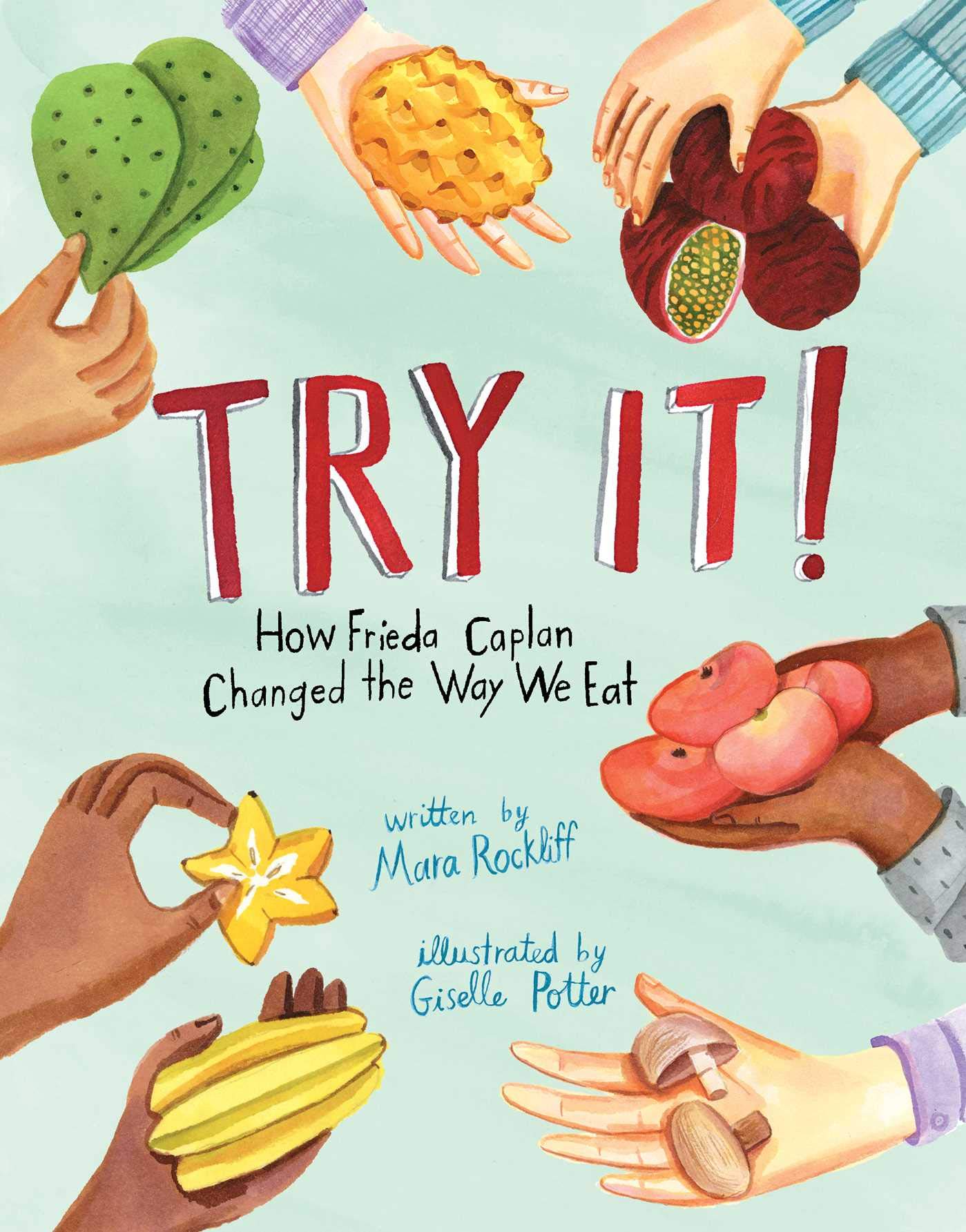
Try It! How Frieda Caplan Changed the Way We Eat by Mara Rockliff, illustrated by Giselle Porter

Published by Beach Lane Books

Try It!: How Frieda Caplan Changed the Way We Eat: Rockliff, Mara, Potter,  Giselle: 9781534460072: Amazon.com: Books
Try It! | Book by Mara Rockliff, Giselle Potter | Official Publisher Page |  Simon & Schuster

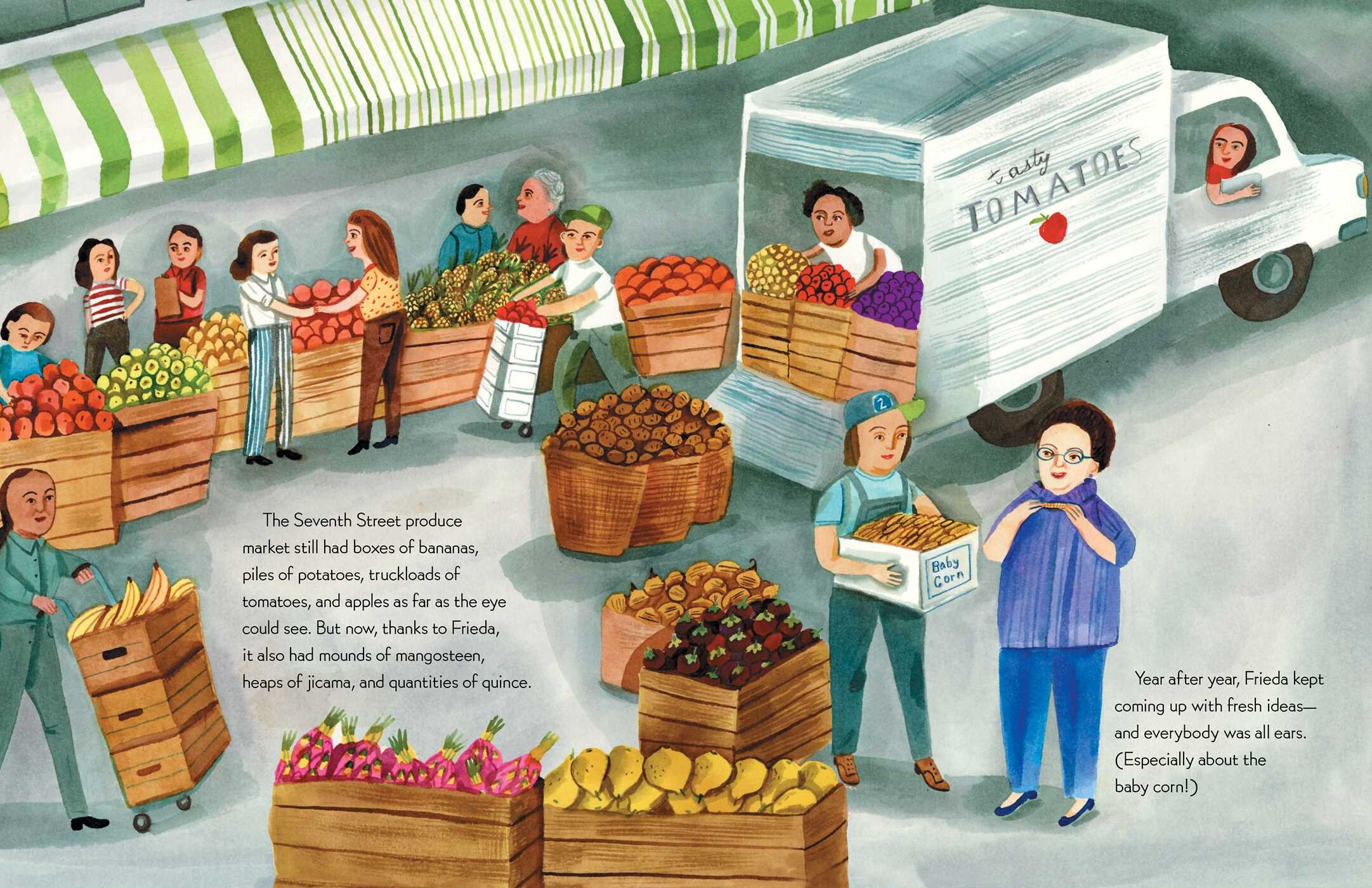
Summary:  When Frieda Caplan started working at the Seventh Street Produce Market, she saw piles of bananas, potatoes, apples, and tomatoes.  Hoping to introduce a bit more variety, she started selling mushrooms.  It took some convincing, but before long people began to buy them.  Frieda went on to start her own produce company, where she loved trying new fruits and vegetables.  Kiwis, jicama, blood oranges…Frieda would get a funny feeling in her elbows when she tried something that she thought others would enjoy.  Thanks in part to Frieda and the produce company her daughters and granddaughters now run, there are more than ten times as many varieties of fruits and vegetables in supermarkets than there were in the 1960’s.  Includes an author’s note giving more information about Frieda and her company.  32 pages; ages 4-8.

Pros:  The energetic writing and colorful illustrations of a great variety of fruits and vegetables capture Frieda’s enthusiasm for her work and may entice picky eaters to be a bit more adventurous.

Cons:  I was hoping for a bit more information in the author’s note about the funny feeling in the elbows, but alas, there was no further explanation.

Little Claws (Animal Rescue Agency, book 1) by Eliot Schrefer, illustrated by Daniel Duncan

Published by Katherine Tegen Books

Case File: Little Claws by Eliot Schrefer

Summary:  When a polar bear cub gets stranded on an ice floe, his anguished mother contacts the Animal Rescue Agency: the unlikely duo of Esquire Fox and her rooster partner Mr. Pepper.  The two head up to the Arctic, where they are pursued by a villainous man in a white hat and barely survive a series of narrow escapes.  With the help of various polar animals, they manage to outwit this man, rescuing the cub and reuniting him with his mother.  Back home in Colorado, Esquire posts the man’s picture on the wall of villains, surrounded by question marks that seem to indicate there will be other villains…and other books in the series.  Includes information about climate change and its threat to polar bears and a recipe for the mushroom jerky Esquire eats to curb her appetite for chickens.  176 pages; grades 2-5.

Pros:  Like Eliot Schrefer’s books for older readers, this one mixes humor, adventure, and information about animals and the threats humans pose to them.  With plenty of illustrations, animal characters, and bantering dialog, this is sure to be a popular series with elementary readers.

Cons:  Obviously, it’s for a different audience, but I missed the awesome world building of Schrefer’s The Lost Rainforest series.

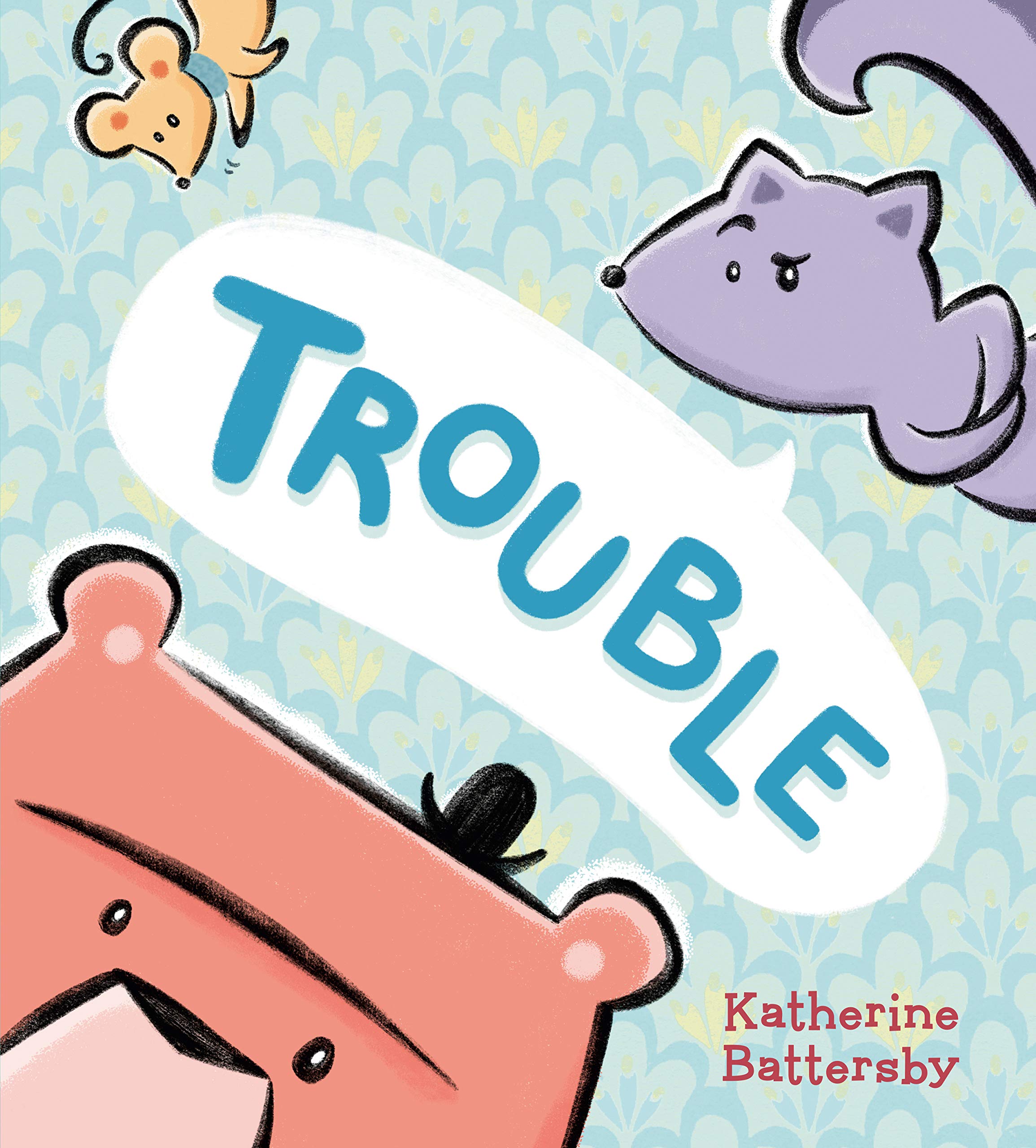
Trouble by Katherine Battersby

Published by Viking Books for Young Readers

Trouble: Battersby, Katherine: 9780593114049: Amazon.com: Books

Summary:  Squirrel is sure Trouble has arrived when a bear moves in next door.  She imagines all kinds of terrible things about Trouble as she sees him working in the yard and hears noises through their shared wall.  But when her beloved pet mouse Chamomile disappears, she assumes the worst, and, armed with a teapot, rushes to Trouble’s door.  When she discovers them knitting and eating cookies, she realizes she has been wrong to think she’s known about Trouble.  Moral: like tea and cookies, friends can be different and still bring out the best in each other.  40 pages; ages 3-7.

Pros:  The illustrations do much of the storytelling here, and they are a lot of fun, delivering an important message for kids without hitting them over the head with it.

Cons:  Not sure why the mouse meows.

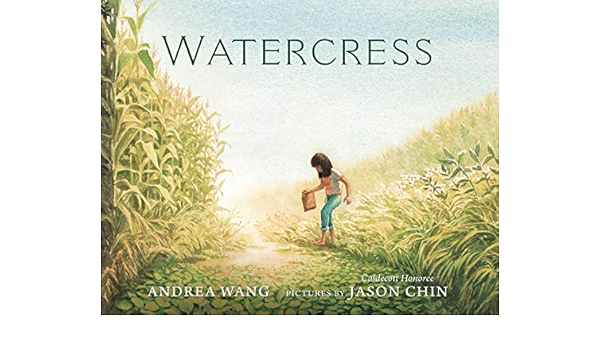
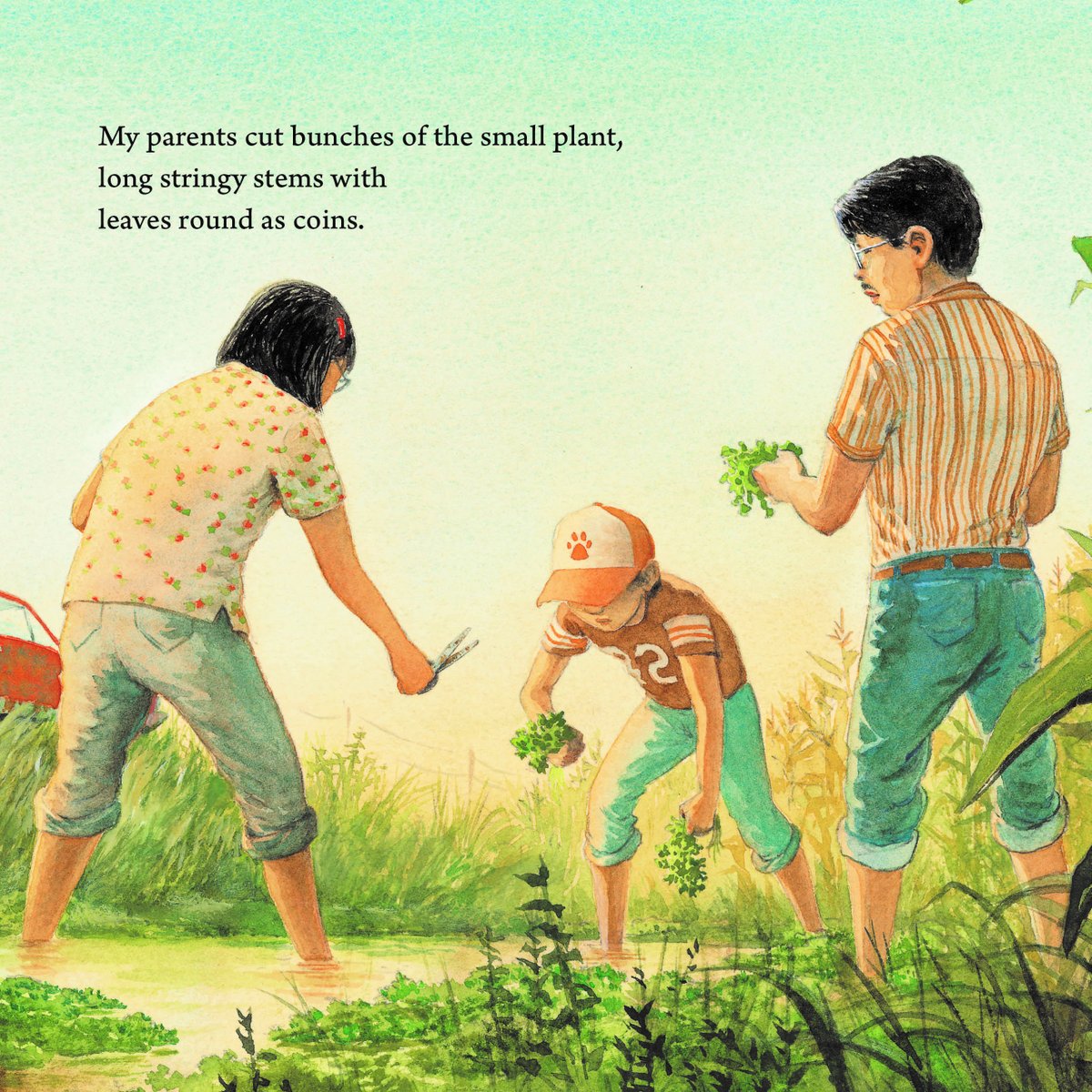
Watercress by Andrea Wang, illustrated by Jason Chin (Released March 30)

Published by Neal Porter Books

Watercress: Wang, Andrea, Chin, Jason: 9780823446247: Amazon.com: Books
Andrea Wang - preorder WATERCRESS now! on Twitter: "Thank you, Angela! ❤️… "

Summary:  The narrator is angry when her parents stop the car to gather watercress by the side of the road.  It’s wet and muddy, and she’s afraid someone she knows will see her.  Back home, she refuses to eat the watercress at dinnertime.  Her mom goes to her room and gets a photo of her family in China: her as a young girl with her parents and younger brother.  “During the Great Famine, we ate anything we could find, but it was still not enough.”  The facing page shows the family again, only this time the younger brother is gone.  The girl tries the watercress, and discovers it is “delicate and slightly bitter. Like Mom’s memories of home.”  Notes from the author and illustrator explain the challenges of growing up as the child of immigrants, and how sometimes a parent’s difficult memories can make it hard for children to understand them.  32 pages; grades K-4.

Pros:  Andrea Wang captures many layers of memories with her spare text, illuminated by Jason Chin’s beautiful watercolors (his illustrator’s note provides an even greater appreciation for his art).  This would be an excellent mentor text for teaching narrative fiction.

Cons:  Readers will have to make some inferences about what happened to the mom’s younger brother, which could be a bit challenging for younger kids.