At the Mountain’s Base by Traci Sorell, illustrated by Weshoyot Alvitre

Published by Kokila

Image result for at the mountains base traci sorell

Image result for at the mountains base traci sorell

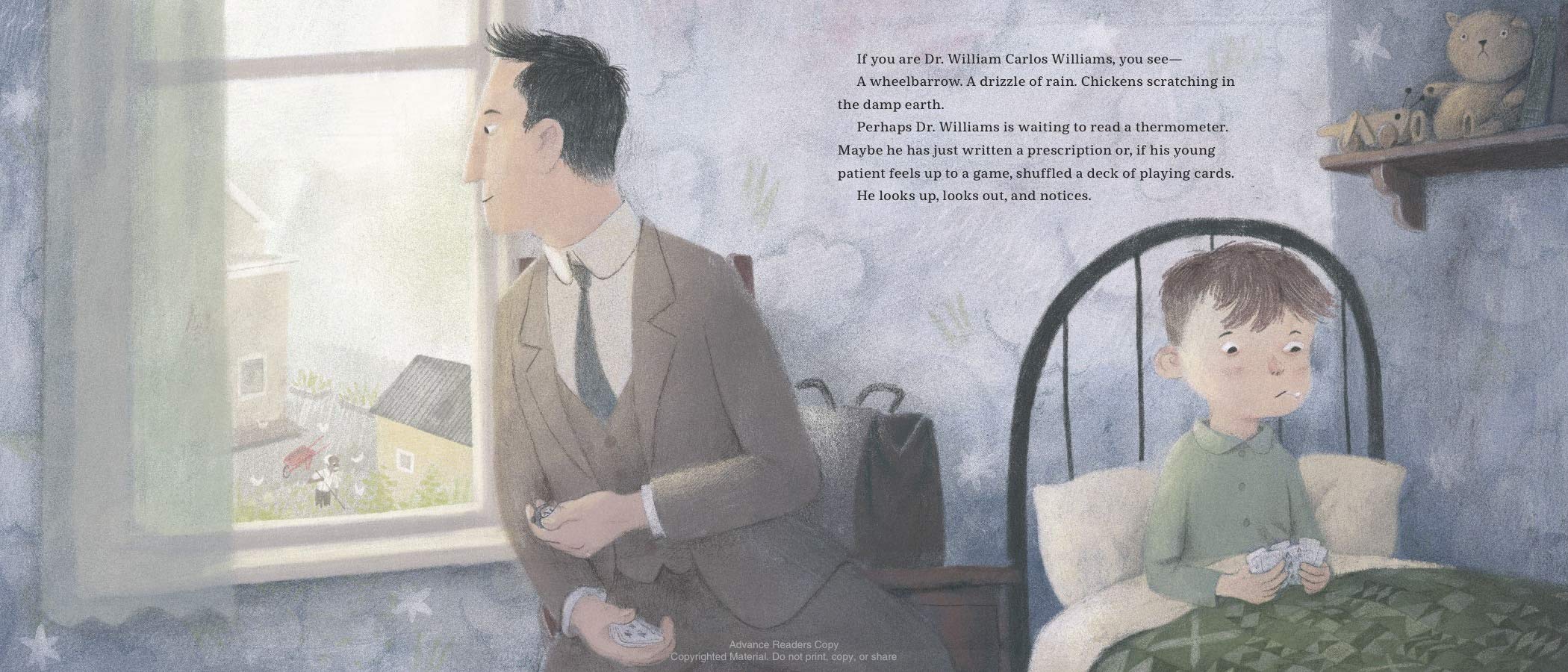
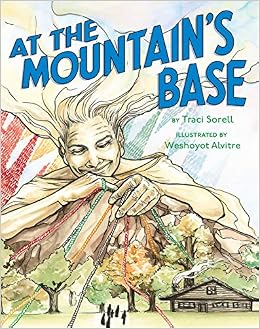
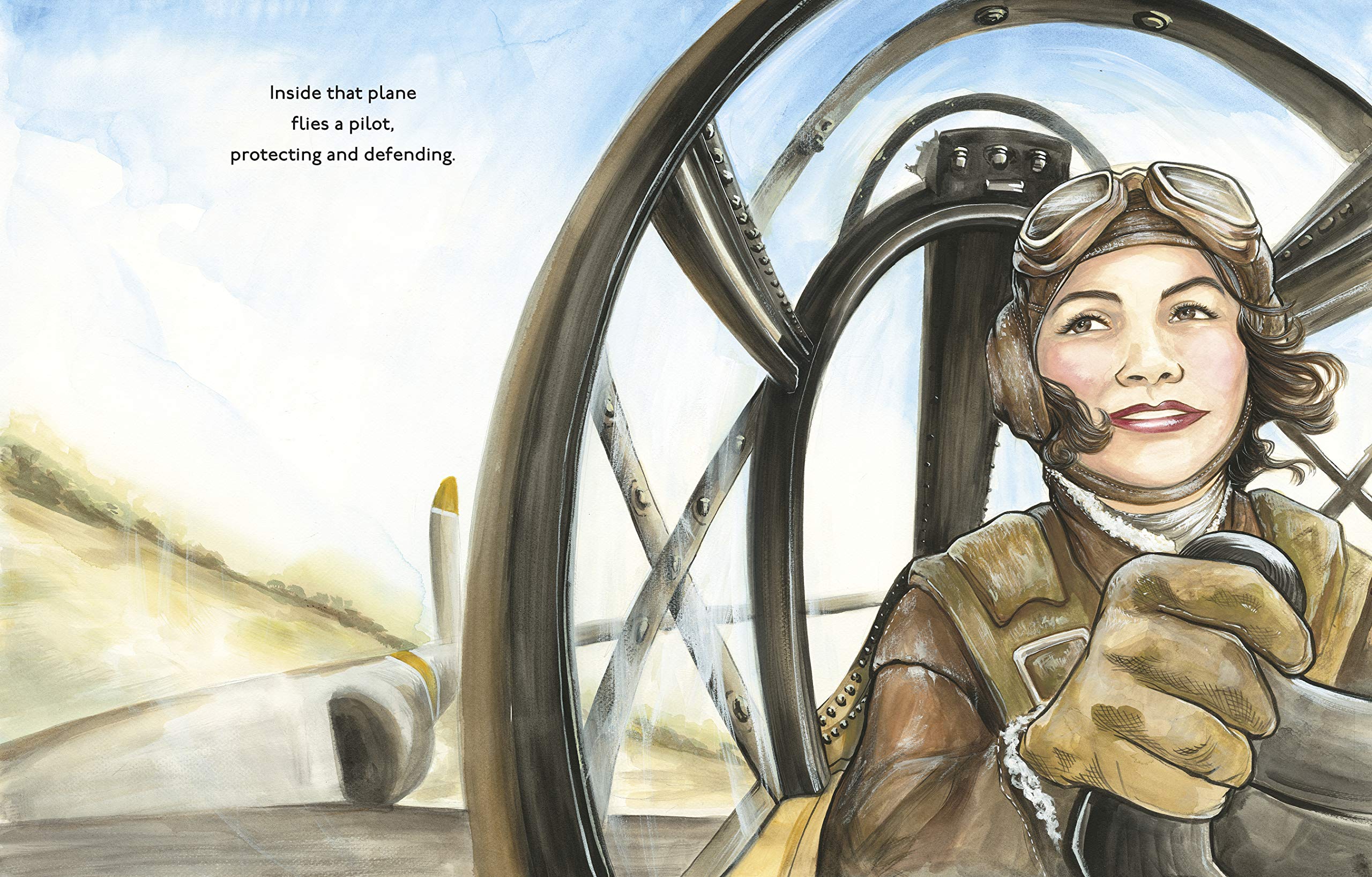
Summary:  “At the mountain’s base grows a hickory tree.  Beneath this sits a cabin. In that cabin lies a cozy kitchen, where a stove’s fire warms.”  Around that stove, a family gathers and sings. They’re thinking of another woman in their family who is a pilot, away at war, but praying for peace.  Includes an author’s note about American Indian and Alaska Native women who have served in wars. One pilot in particular is profiled, Ola Mildred Rexroat, who was the only Native woman among 1074 Women Airforce Service Pilots (WASPs) in World War II.  32 pages; ages 4-8.

Pros:  A brief, but beautiful poem celebrating Native women pilots and the families who support them.  Traci Sorell’s first book We Are Grateful: Otsaliheliga was a Sibert honor book last year.

Cons:  Although the poem is lovely, I didn’t really understand it until after I read the author’s note.

If you would like to buy this book on Amazon, click here.

Unicorns 101 by Cale Atkinson

Published by Doubleday Books for Young Readers

Image result for unicorns 101

Image result for unicorns 101

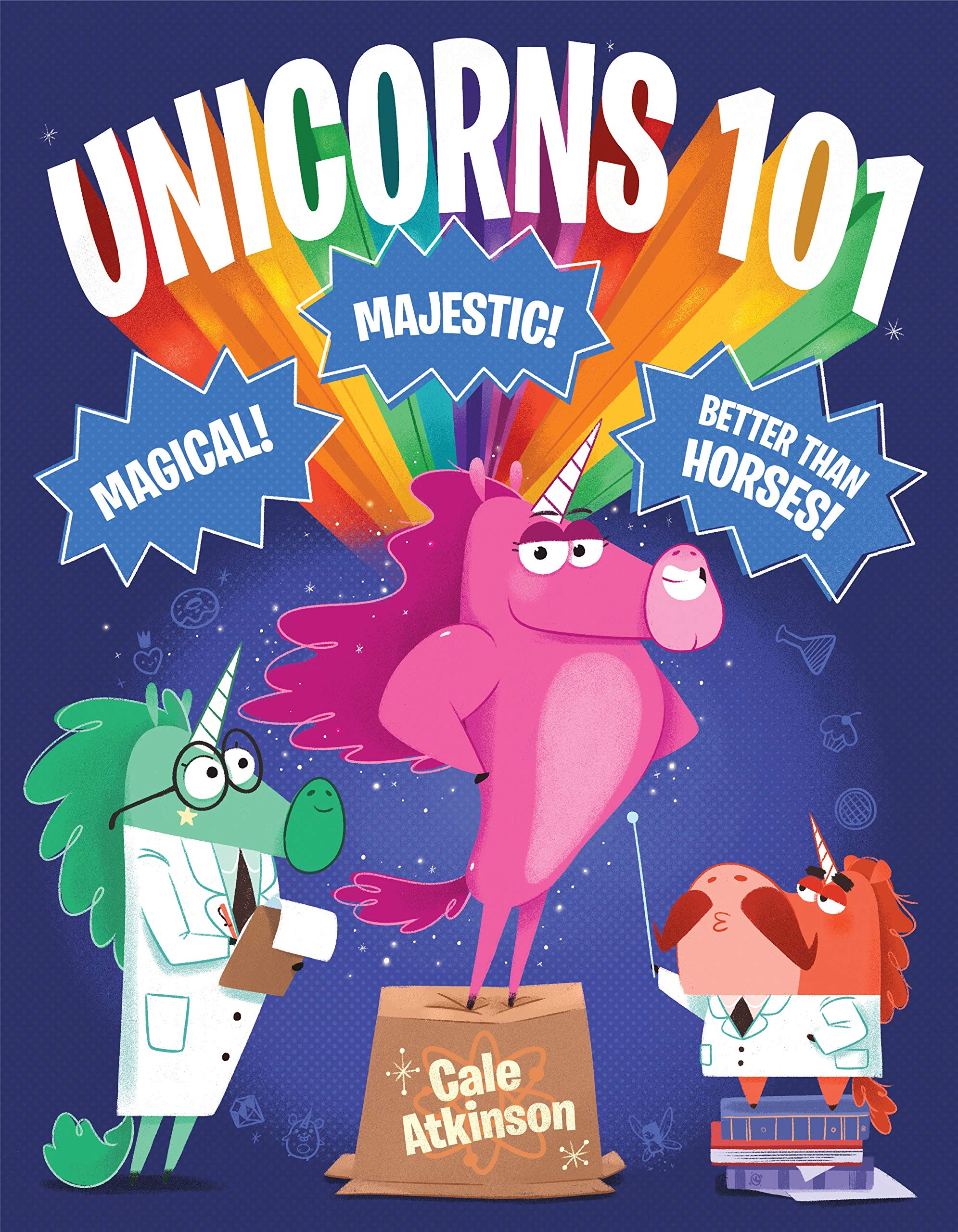
Summary:  Everything you’ve ever wanted to know about unicorns is presented in the style of a nonfiction science book.  Their scientific name is Betterthan horsicus, they weigh 40,000 gummy bears, and they poop cupcakes–which is why you’ll never see a unicorn at a bake sale.  In fact, it’s pretty rare to see one anywhere, because unicorns are masters of disguise. Readers get a few challenges to see if they can spot the unicorn in different illustrations.  They’ll also learn some unicorn history, different types of unicorns, and what the horn is made of (50% magic, 45% mystery, and 5% sugar). The reward comes on the last page, with the Unicornius Scientificus Diploma, showing complete knowledge of unicorn science.  32 pages; ages 4-8.

Pros:  Any unicorn fan will love getting a chance to learn more about this magical creature.  The illustrations are colorful and eye-poppingly busy. There’s plenty of humor in both the text and pictures.  This could be a great writing prompt for kids to create their own “scientific” descriptions of other mythological animals.

Cons:  Although this could be a good way to introduce nonfiction text features, it could be confusing to kids trying to sort out the differences between fiction and nonfiction.

If you would like to buy this book on Amazon, click here.

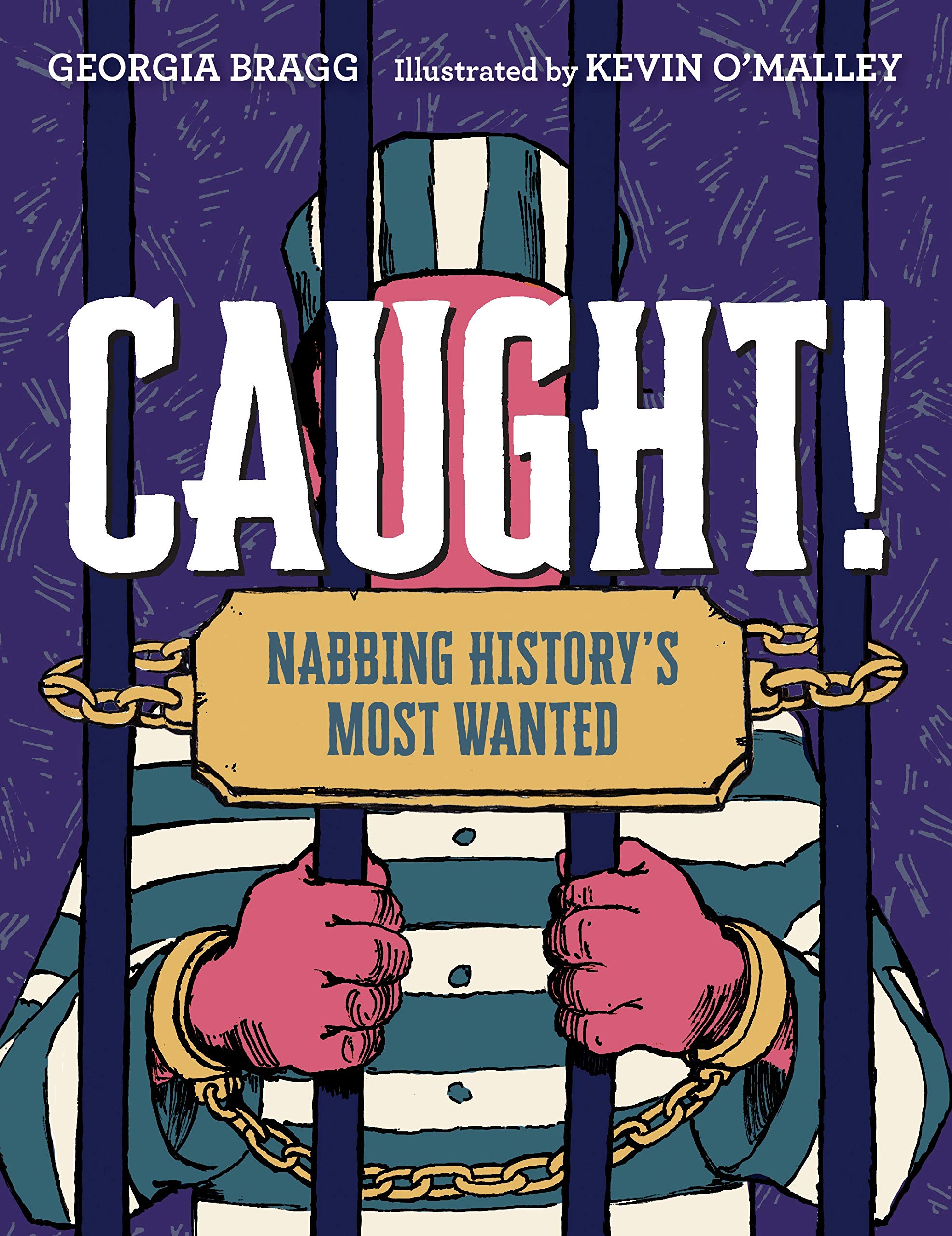
Caught! Nabbing History’s Most Wanted by Georgia Bragg, illustrated by Kevin O’Malley

Published by Crown Books for Young Readers

Image result for caught nabbing history's most wanted

Summary:  From the team that brought you How They Croaked: The Awful Ends of the Awfully Famous and How They Choked: Failures, Flops, and Flaws of the Awfully Famous comes this collection of 14 profiles of interesting criminals.  Some will be known by just about everyone (John Wilkes Booth, Joan of Arc), while others are less famous…or infamous (Vincenzo Peruggia, Bernard Otto Kuehn).  Each profile is several pages long, with two additional pages of “Facts and Stats”. Black and white illustrations throughout match the humorous, irreverent tone of the text.  Includes separate bibliographies of print and online sources for each person as well as an index. 224 pages; grades 4-8.

Pros:  History buffs and reluctant readers alike will enjoy these funny, breezy profiles of notorious criminals from all ages.  The author does a good job of adding some historical context which often makes the dastardly deeds a bit more understandable.  The extensive back matter could lead to a lot more research on any one of them.

Cons:  The most recent subject is Al Capone, born in 1899.  We can hope that a sequel is in the works for more recent criminals.  

If you would like to buy this book on Amazon, click here.

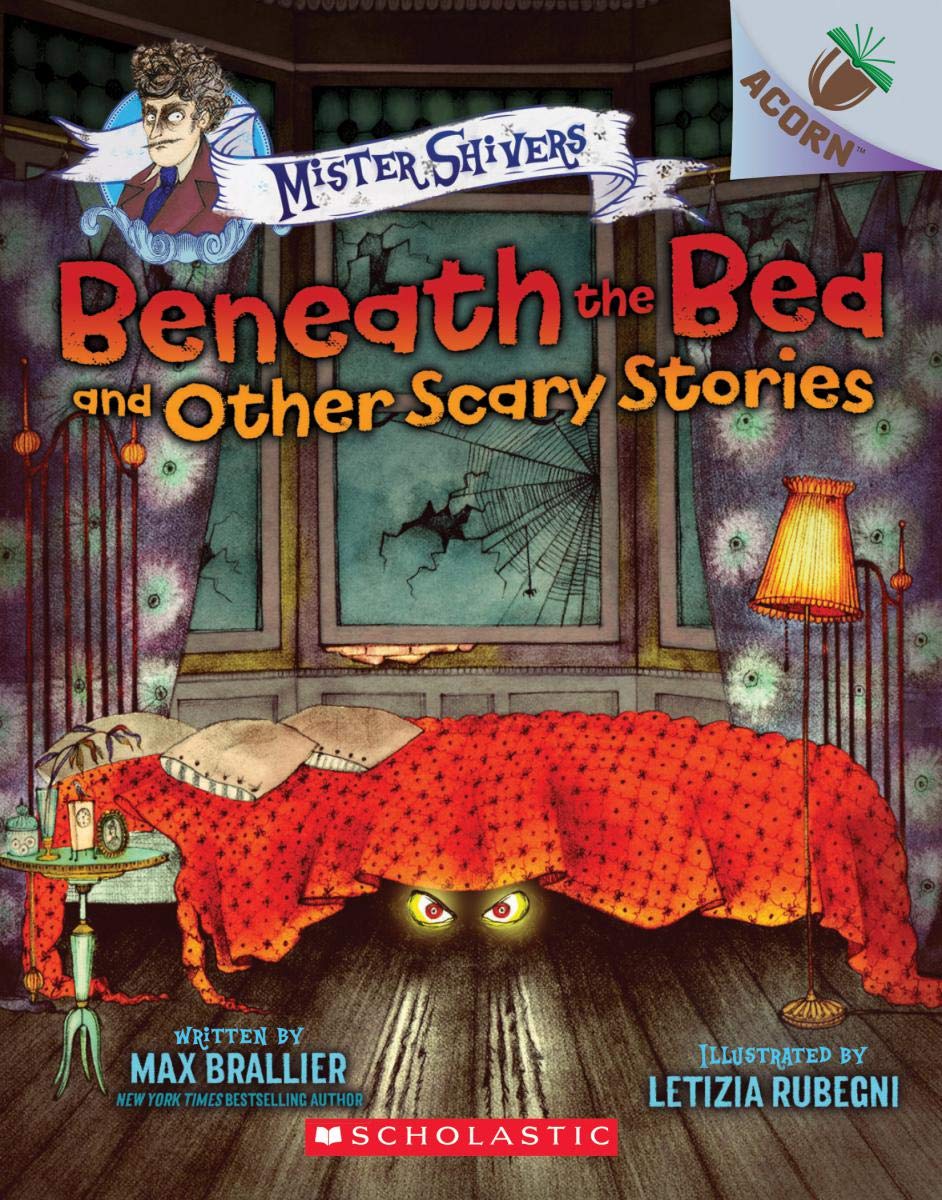
Beneath the Bed and Other Scary Stories (Mister Shivers book 1) by Max Brallier, illustrated by Letizia Rubegni

Published by Scholastic

Image result for mister shivers brallier amazon

Image result for mister shivers rubegni

Summary:  Mister Shivers begins his book with a letter to the reader, relating how he found a box on his doorstep that contained a tree branch, a doll’s eye, a piece of an old quilt, and a toy’s rusty head.  Beside the box was a dead mouse. He is sharing the five stories that were in that box. A brother and sister go into a house and find a creepy doll…that talks. A girl is annoyed with a long hair in the back of her throat…until the doctor grabs it and pulls out a dead mouse.  A boy’s mother buys a creep statue that always has to be wrapped in a quilt. When Oliver forgets to bring his toys inside, the unhappy toys seek revenge. Finally, a girl is told that the nighttime scraping sounds he hears is caused by a branch, but she wakes up to find her window scratched on the inside.  Includes instructions for drawing Buddy [the creepy] Bear. 64 pages; grades K-2.

Pros:  Most scary story collections for this age group are silly, but some of these tales are genuinely creepy.  I confess that those vengeful toys freaked me out a bit, and the endings of that and the scratched window one were certainly unsettling.  The dark, somewhat gothic illustrations channel Edward Gorey, adding to the spooky fun. I can almost guarantee this series will be a huge hit with newly independent readers.  Book 2 is due out July 2020.

Cons:  While many will love this book, some kids may be truly scared by these stories.  Proceed with caution!

If you would like to buy this book on Amazon, click here.


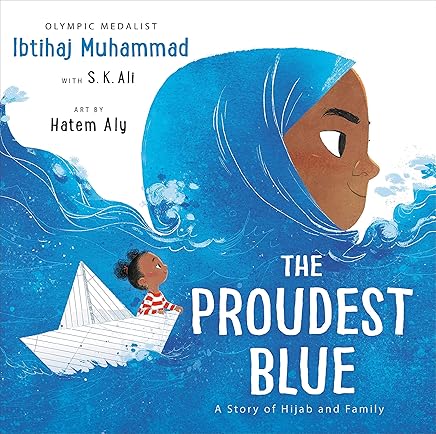
The Proudest Blue: A Story of Hijab and Family by Ibtihaj Muhammad with S. K. Ali, illustrated by Hatem Aly

Published by Little, Brown Books for Young Readers

Image result for proudest blue amazon

Image result for proudest blue hatem

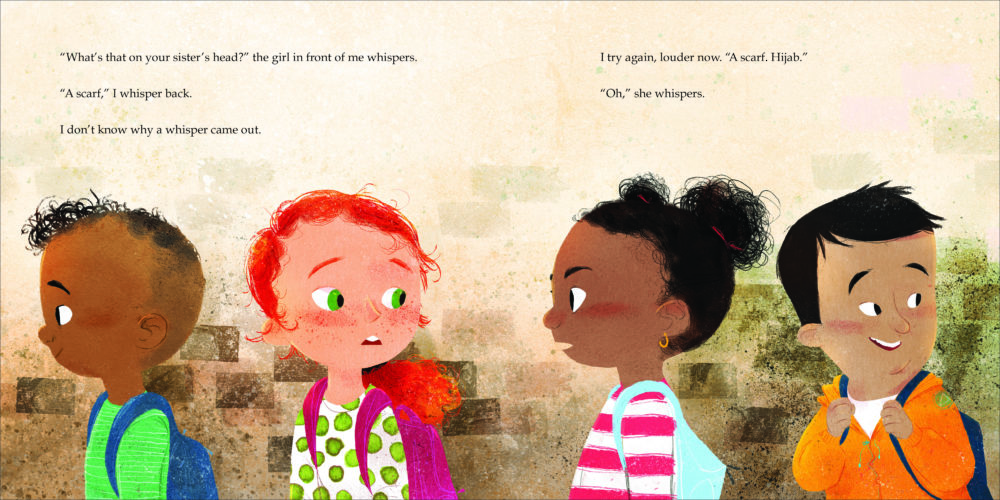
Summary:  Faizah is excited about her first day of school.  She has a new backpack and light-up shoes. But most exciting of all is that her older sister Asiya is starting sixth grade and wearing hijab for the first time.  Her scarf is blue, just like the sky and ocean. When the girls get to school, they go their separate ways, but Asiya is on Faizah’s mind throughout the day. She draws a picture of two girls in hijab having a picnic.  Later, she sees her sister on the playground at recess and hears a boy say, “I’m going to pull that tablecloth off your head.” Asiyah runs off with her friends, and Faizah remembers their mother’s advice, “Don’t carry around the hurtful words that others say.  Drop them. They are not yours to keep. They belong only to those who said them.” At the end of the day, the two sisters walk home hand in hand. Includes author’s notes about her own experiences that inspired this story with characters named for two of her sisters.  40 pages; ages 4-8.

Pros:  This beautifully illustrated story celebrates wearing hijab while at the same time showing the reality that girls face when they make this transition.  Readers interested in learning more about Ibtihaj Muhammad can read her excellent memoir Proud: Living My American Dream.

Cons:  There’s always that one bully.

If you would like to buy this book on Amazon, click here.

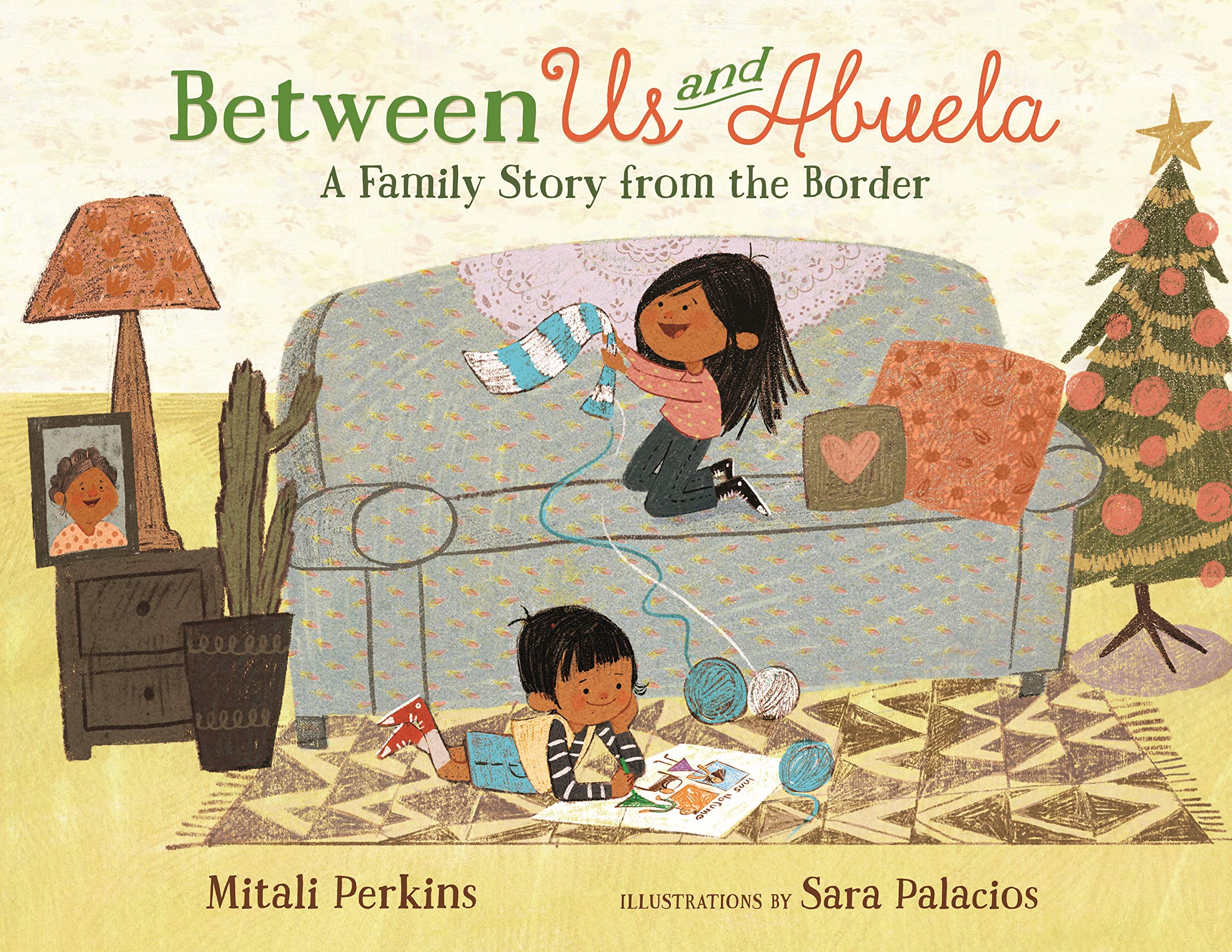
Between Us and Abuela: A Family Story from the Border by Mitali Perkins, illustrated by Sara Palacios

Published by Farrar, Straus, and Giroux

Image result for between us and abuelaImage result for between us and abuelaSummary:  A little girl tells the story of her family’s trip to the border to visit her abuela who lives in Mexico.  It’s a special day near Christmas called La Posada Sin Fronteras when the people of San Diego and Tijuana work to gather people from both sides of the wall that separates the two countries.  It’s exciting to visit abuela, whom they haven’t seen in five years.  The girl has brought a scarf she made, but the guards won’t let her pass it through the fence.  Her little brother has drawn a large picture of Mary and Joseph, but the fence’s holes are too small for him to give it to abuela.  When he starts to cry, his sister has an idea.  Using knitting needles and yarn, she turns the picture into a kite that flies over the wall to the cheers of spectators on both sides.  Abuela picks up the picture, and then starts the trip back to her home while the girl and her family head back to theirs.  Includes an author’s note with additional information about La Posada Sin Fronteras. 40 pages; ages 4-8.

Pros:  A heartwarming story that would make a unique Christmas read-aloud and could lead to some interesting conversations.

Cons:  The whole event looks like a fun party, and the sadness that the family can’t be together isn’t really touched upon.

If you would like to buy this book on Amazon, click here.

Free Lunch by Rex Ogle

Published by Norton Young Readers
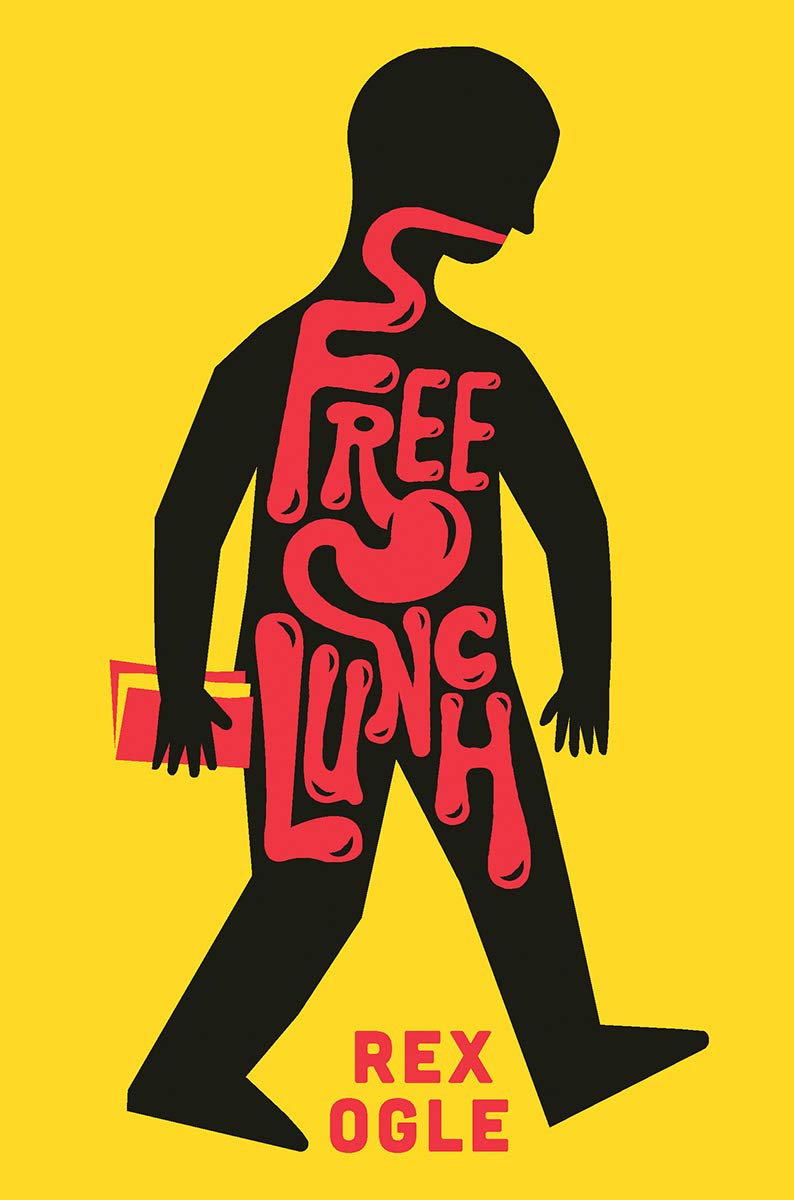
Image result for free lunch rex ogle

Summary:  Rex Ogle’s memoir recounts the first half of his sixth grade year.  The problems of the average middle schooler–mean teachers, lockers, changing friendships–are dwarfed by his problems at home.  Both his mother and stepfather are out of work, debts are mounting, and they tend to take out their frustrations on Rex and his two-year-old brother.  The greatest burden falls on Rex, who tries to help out by cooking, babysitting, and balancing the family checkbook, but somehow it’s never enough for his parents, who regularly beat and verbally abuse him.  Rex is afraid of his own anger, but tries to see the good in those around him. A caring grandmother and a new friend help him, but ultimately he has to find his own way. He often feels alone, surrounded by kids who appear to be better off than he is, and ashamed when he has to tell the lunch lady each day that he’s on the free lunch program.  By the time the holidays roll around, both parents have found work, and Rex is feeling optimistic about the second half of sixth grade–even though the reader suspects he still has a lot of difficult years ahead. Includes an author’s note encouraging kids in similar situations to be strong and not feel ashamed of their circumstances. 208 pages; grades 6-9.

Pros:  This is a powerful and disturbing memoir that will open many eyes to what kids may be going through when they come to school each day.  Kudos to Rex Ogle for so honestly sharing what couldn’t have been an easy story to write. Many kids will benefit from reading this, including those who may be going through experiences similar to Rex’s.

Cons:  The scenes of abuse make this more of a middle school book, although I’m sure there are elementary kids who would benefit from reading it.

If you would like to buy this book on Amazon, click here.


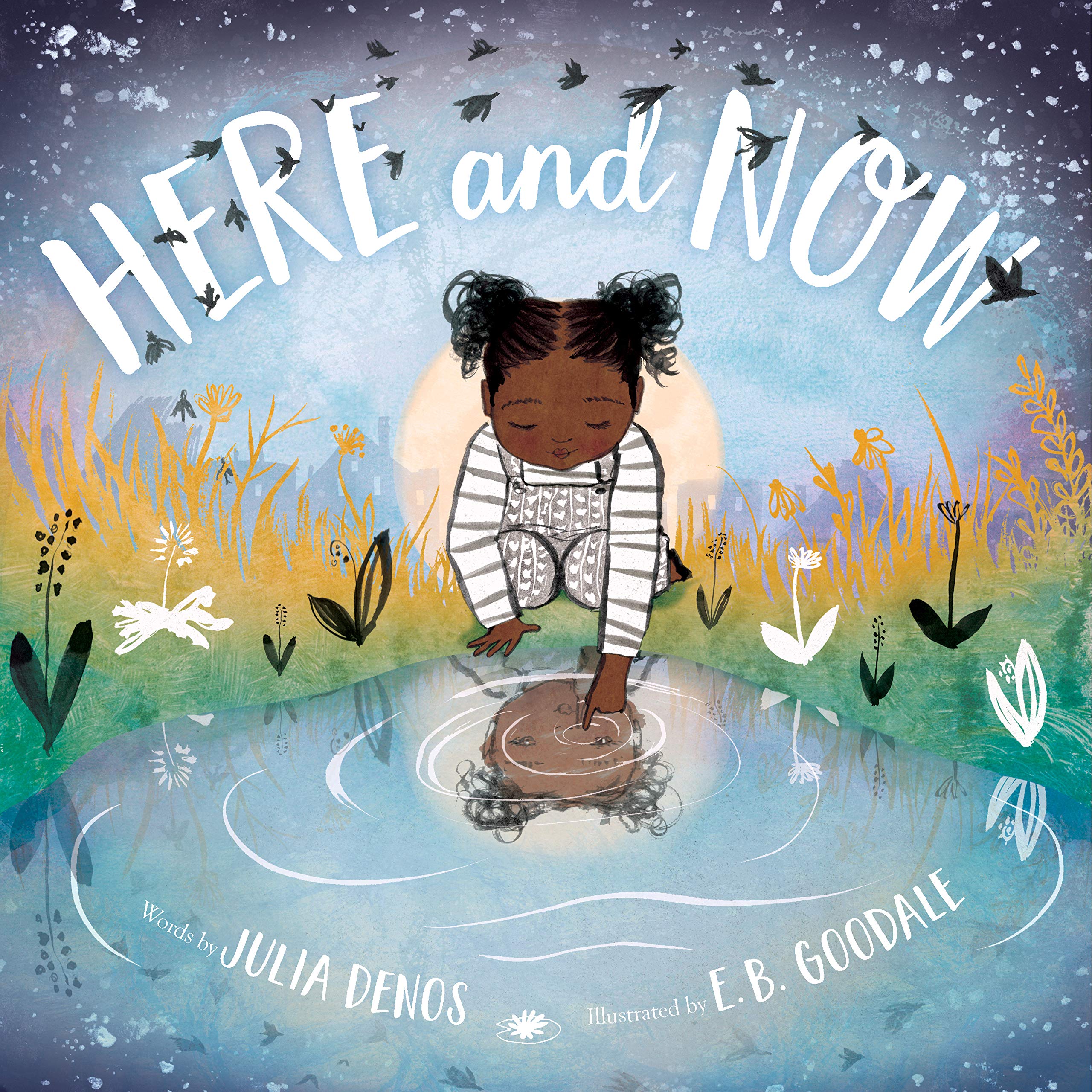
Here and Now by Julia Denos, illustrated by E. B. Goodale

Published by HMH Books for Young Readers

Image result for here and now amazon denos

Summary:  Readers are invited to notice where they are as they are reading the book.  While they focus on their bodies (“You are sitting, or you are standing, or you are wrapped up in a bed. Under your bum, under your feet, is a seat, a floor…”), there are countless activities going on around them.  Underground there are earthworms and fossils. Earth is spinning through space, and so are you. People and animals are all around, working, playing, eating, healing, and having ideas. And all the while, “right here, right now, YOU are becoming.  Isn’t it wonderful?” Includes an author’s note about meditation and how she came to write this book. 40 pages; ages 4-10.

Pros:  A great read for any kind of mindfulness activities, or to help a restless group of kids center and calm down.  The illustrations feature a recurring, multicultural cast of characters doing things that most kids will recognize from their everyday lives.  There could be all kinds of follow-up activities as kids notice themselves and the world around them.

Cons:  Some additional resources on mindfulness and/or meditation for kids would have been helpful.

If you would like to buy this book on Amazon, click here.


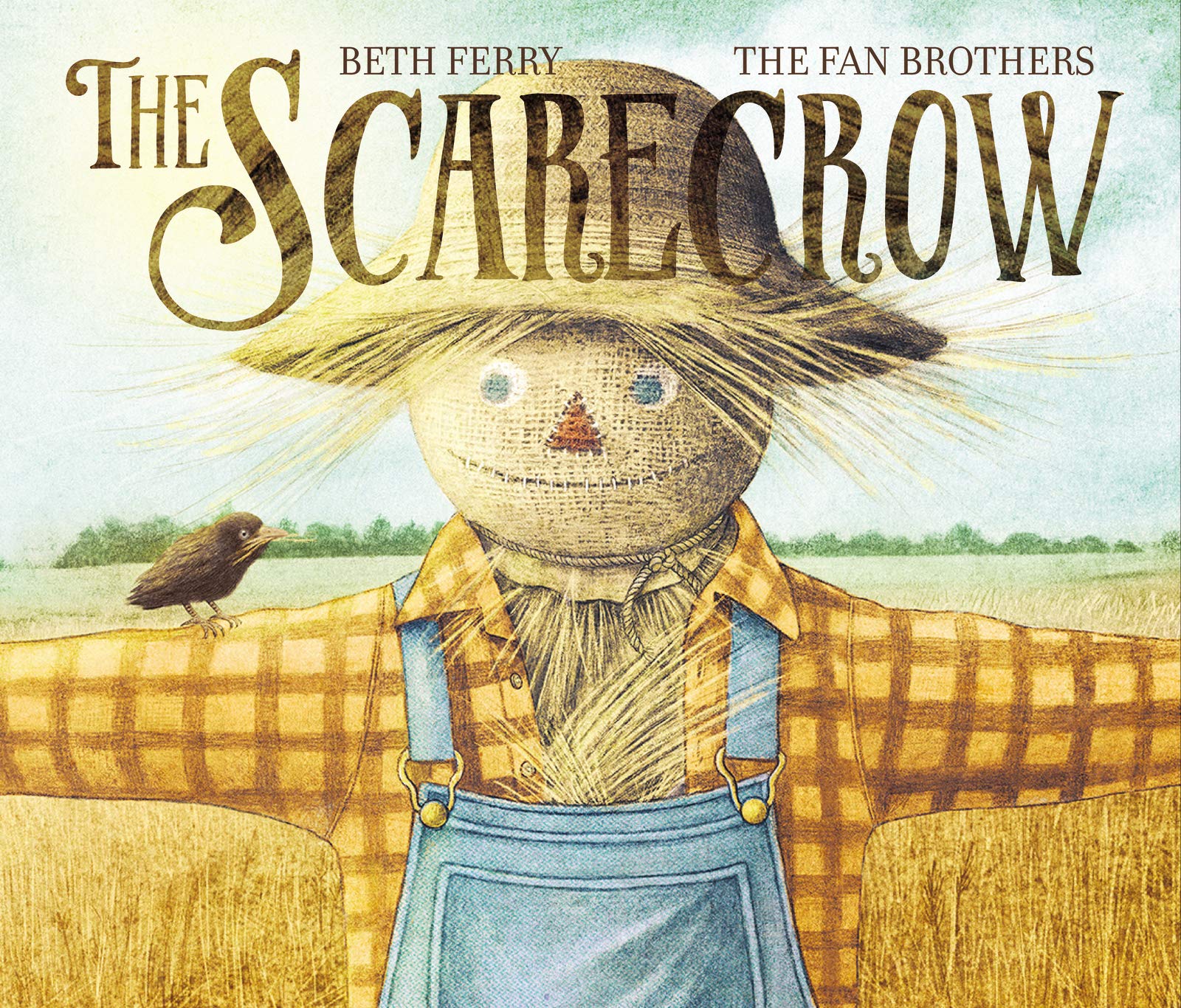
The Scarecrow by Beth Ferry, illustrated by the Fan Brothers

Published by HarperCollins

Image result for scarecrow beth ferry

Summary:  Scarecrow is good at his job, which means none of the animals come near. He has no friends until one spring when a baby crow falls nearby.  Scarecrow picks up the crow and makes a nest for him in the bib of his overalls. The two become friends until the bird grows up and flies away.  Scarecrow’s heart is broken as he stands in the field through the long fall and winter. But the next spring, an adult crow is back, this time with a mate.  Before long there’s a new nest of babies inside Scarecrow’s overalls. The last wordless page shows Scarecrow surrounded by not only crows, but some of the other animals as well.  40 pages; ages 3-8.

Pros:  The rhyming text tells a poignant story about opening up your heart to others; the illustrations are Fan Brothers perfection and should be considered for a Caldecott.

Cons:  I still am not clear on whether the Fan Brothers can win a Caldecott.  They appear to have grown up in the U.S., but live in Canada now, with dual U.S./Canadian citizenship.  And the Caldecott criteria is that the award goes to a citizen or resident of the U.S.  It seems like splitting hairs to say they’re ineligible, but I think I’ve read that that’s the case. 

If you would like to buy this book on Amazon, click here.
An early collaboration by the Fan Brothers.

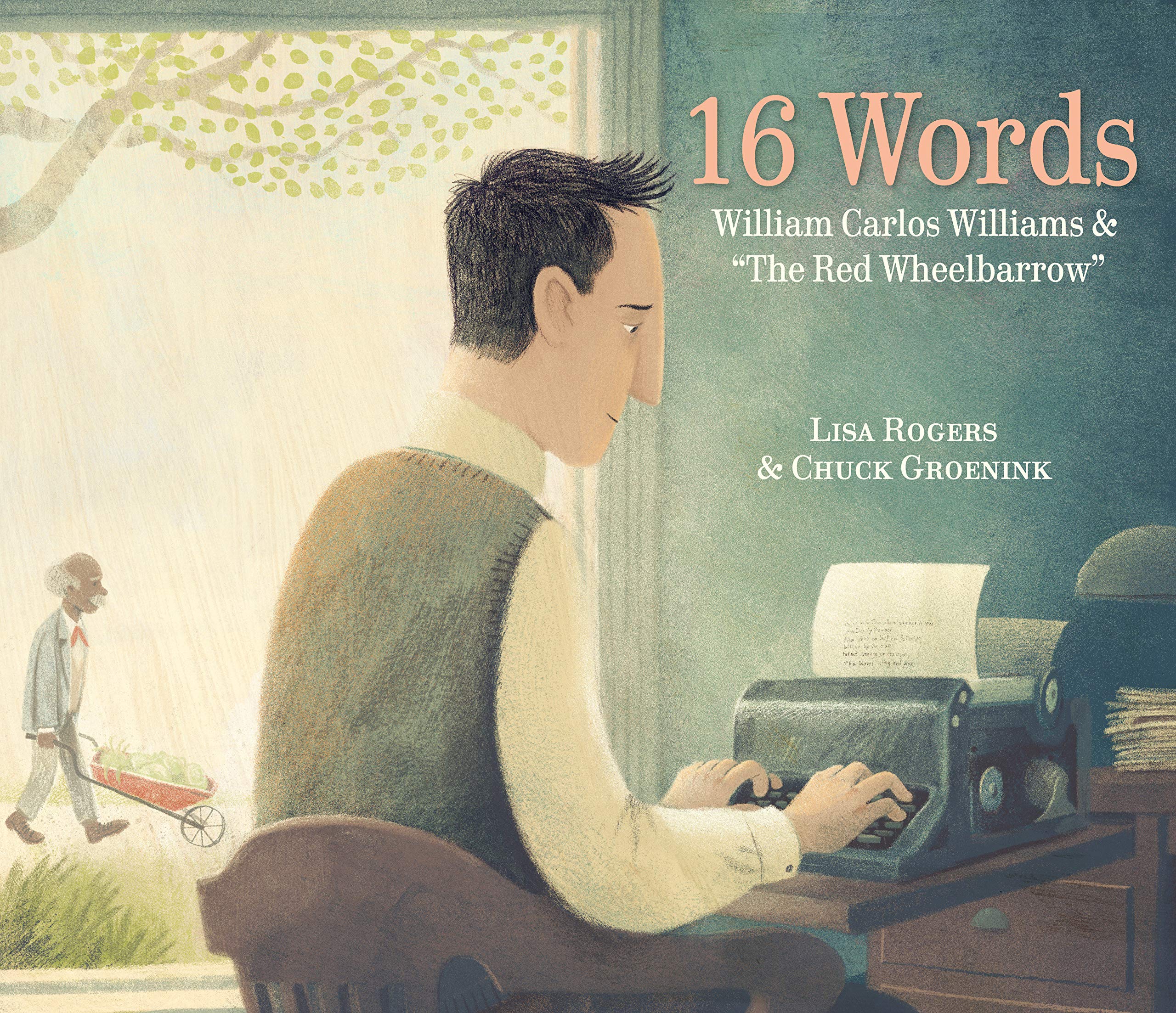
16 Words: William Carlos Williams and “The Red Wheelbarrow” by Lisa Rogers, illustrated by Chuck Groenink

Published by Schwartz and Wade

Image result for 16 words william carlos williams and the red wheelbarrow

Image result for 16 words william carlos williams and the red wheelbarrow

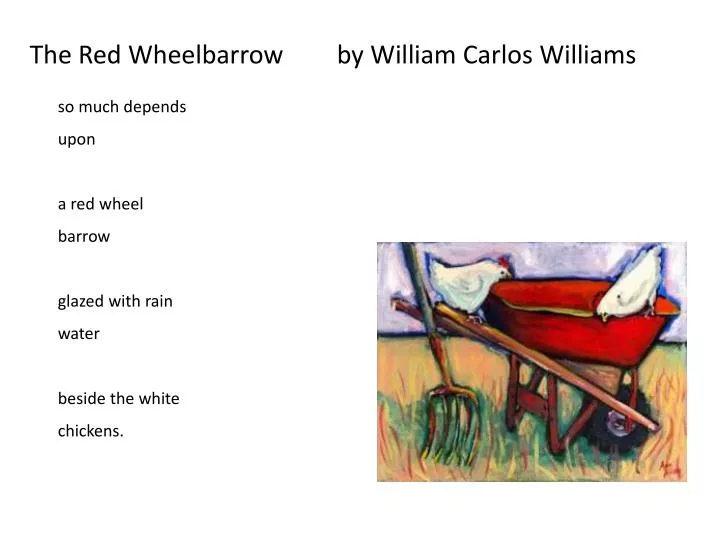
Summary:  “Look out the window. What do you see?” After this invitation to the reader, the author tells the story of Dr. William Carlos Williams, a physician who enjoyed scribbling poems on his prescription pad or as notes to his wife.  When he looked out the window of his New Jersey office, he saw his neighbor, Thaddeus Marshall, working in his garden or carrying his vegetables to market in a red wheelbarrow. Williams wrote about what he saw in the poem “The Red Wheelbarrow”.  “Those sixteen words do not describe Mr. Marshall’s chicken coop, or the train rattling nearby. They do not describe Mr. Marshall hefting that wheelbarrow, or the aches and pains he suffers from stooping to care for his plants. They do not describe Mr. Marshall’s life of work or caring or love.  But somehow they say just that.” Includes an author’s note, bibliography, and a list of six other poems by Williams. 40 pages; grades 2-6.

Pros:  I wasn’t super excited at the prospect of reading a picture book about William Carlos Williams, but this tells a gentle, beautiful (and beautifully illustrated) story that also shows how an ordinary man fit poetry into his everyday life.  It makes his poetry accessible to even early elementary students. This would be a perfect read-aloud in conjunction with Sharon Creech’s Love That Dog, which includes “The Red Wheelbarrow” as one of the poems the class studies.

Cons:  No photos of either Williams or Marshall. 

If you would like to buy this book on Amazon, click here.
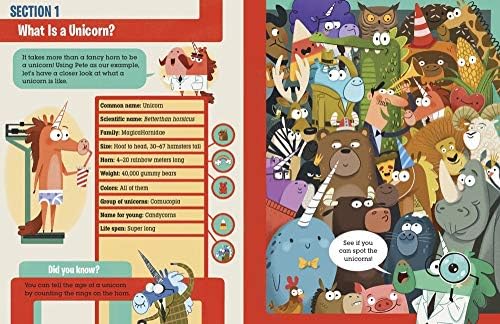
Image result for red wheelbarrow william carlos williams