Fish Girl by Donna Jo Napoli and David Wiesner, pictures by David Wiesner

Published by Clarion Books
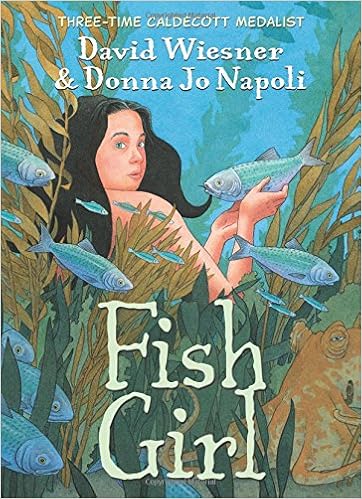
Summary:  Neptune welcomes you to Ocean Wonders, a three-story building that houses a giant aquarium.  Along with the octopus, shark, and fish, there lives a mermaid whom you just might catch a glimpse of if you are patient.  After hours, Neptune tells the fish girl the story of how he rescued her when fishermen and sharks killed off all the other mermaids.  Now he protects her, and in return she hides among the sea flora and fauna, revealing just enough of herself to lure humans into Ocean Wonders.  One day, though, she makes a connection with a girl her own age, who names the fish girl Mira.  The two become friends, and Mira’s world begins to change.  She learns that Neptune is really just an ex-fisherman, who creates his “magic” world with machines.  One night she manages to leave the tank, and learns that her tail becomes legs on dry land of water.  Mira sees her chance to escape, but will she be able to leave behind the aquarium world she has known all her life?  192 pages; grades 5-8.

Pros:  Triple Caldecott medalist David Wiesner creates a fairy-tale world reminiscent of his book Flotsam.  Middle school readers will relate to Mira’s struggle to figure out who she is and where her place in the world is.

Cons:  The relationship between Neptune and Mira borders on creepy.
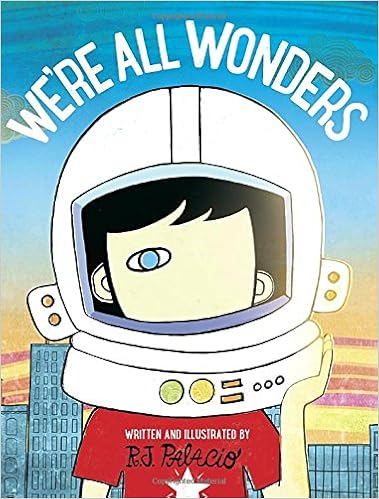
We’re All Wonders written and illustrated by R. J. Palacio

Published by Knopf Books for Young Readers

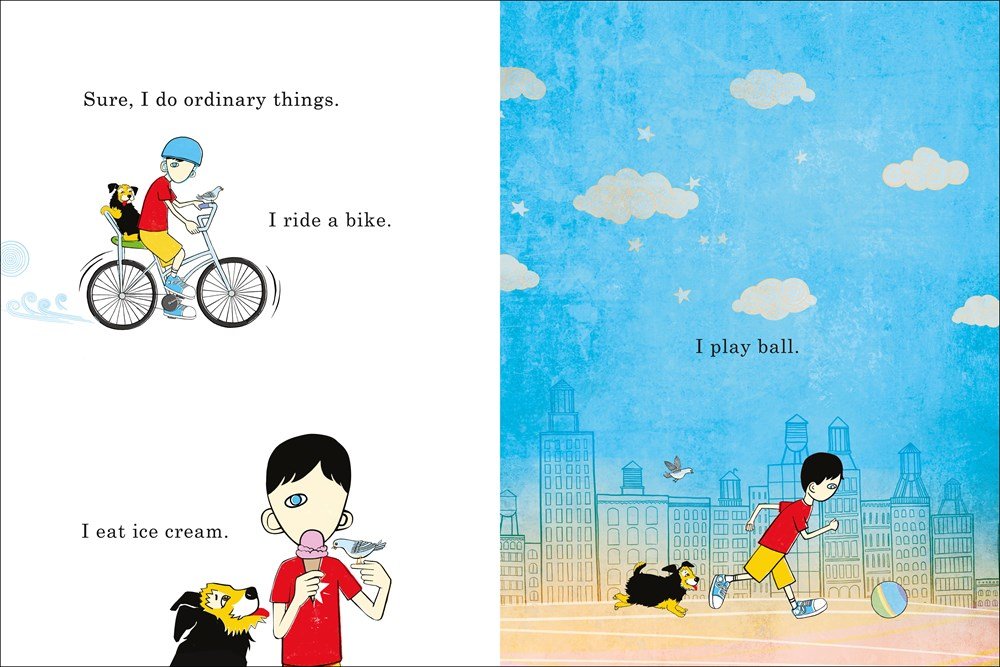
Summary:  Auggie, the protagonist of Palacio’s Wonder, narrates this book, explaining that he is different from other kids.  Even though he does ordinary things like ride a bike and eat ice cream, the way he looks sets him apart and sometimes makes him a target for cruelty.  His mom tells him he’s a wonder, and he’s sure his dog Daisy thinks that he is, too.  When life gets too difficult, Auggie and Daisy pretend to blast off into space and hang out with the aliens on Pluto.  He concludes by stating that if people could see differently, they would realize that he and everyone else in the world are all wonders.  The final illustration shows Auggie making a new friend.  32 pages; ages 4-8.

Pros:  A good introduction to the themes introduced in the longer book. Lots of appeal for younger audiences, particularly with the movie of Wonder coming out in the fall.

Cons:  Will R. J. Palacio eventually write a new story, or will she just have one hit, Wonder? (See what I did there?)

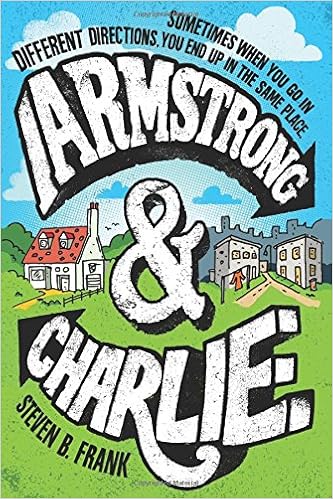
Armstrong & Charlie by Steven B. Frank

Published by HMH Books for Young Readers

Summary:  When “Opportunity Busing” comes to Charlie’s neighborhood school in 1970’s southern California, many of his friends’ parents opt for other schools.  But Charlie’s parents, who have experienced some prejudice against their Jewish faith, choose to keep Charlie at Wonderland.  Some 15 miles away, Armstrong’s parents decide to take advantage of the opportunity, and send their reluctant son to sixth grade at Wonderland.  Told in the alternating voices of the two boys, the story shows the two-steps-forward-one-step-backwards progress of school segregation.  Gradually, the two boys go from sworn enemies to a tentative truce to a close friendship.  Charlie, still hurting from the death of his older brother the previous year, eventually shares his pain with Armstrong, who in turn gives Charlie a taste of what his life in the projects is like.  By the end of sixth grade, they are almost like brothers, unsure if they will see each other again as separate junior high schools loom in their futures.  304 pages; grades 5-8.

Pros:  Both funny and poignant, Armstrong & Charlie grabs the reader immediately with two distinct voices switching off every page or two. With lots of 1970’s era details (how could I have forgotten about click-clacks?), kids will get a taste of what school segregation was and how it affected ordinary kids of both races.

Cons:  While many fifth graders would enjoy this book, be aware that there is quite a bit of profanity, plus detailed discussions of French kissing and spying on naked women, before recommending it to them.

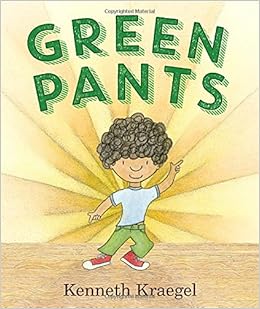
Green Pants by Kenneth Kraegel

Published by Candlewick

Summary:  Jameson refuses to wear anything but green pants, going so far as to wear them exclusively for swimming.  Any attempts by others to foist red or blue pants on him result in blue pants in a tree or red pants on the dog.  Jameson believes he can do anything, as long as he’s wearing his green pants.  So he can’t make up his mind when Uncle Armando and his beautiful fiance Jo invite Jameson to be in their wedding.  He really wants to do it, but one of the requirements is wearing a tuxedo–with black pants.  His indecision persists until moments before the big event.  Finally, with a little help from Jo, he’s able to be in the wedding but still find a way to express himself.  40 pages; ages 3-7.

Pros:  An empowering story for kids who have definite ideas about their likes and dislikes.  The illustrations are funny and pretty cute.

Cons: I’m no fashion expert, but has anyone actually worn green pants since Mr. Green Jeans hung out with Captain Kangaroo?

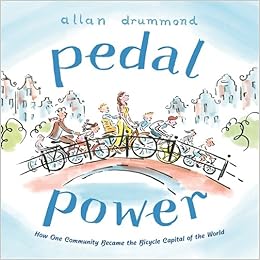
Pedal Power: How One Community Became the Bicycle Capital of the World by Allen Drummond

Published by Farrar, Straus, and Giroux

Summary:  Forty years ago, the Dutch city of Amsterdam had streets clogged with traffic, dangerous to anyone attempting to ride a bicycle.  How did it become the capital city of bicyclists, home to more bikes than cars?  Back in the 1970’s a young mother named Maartje Rutten watched beautiful old buildings being destroyed to make room for more highways, roads that were dangerous for her and friends who wanted to bicycle with their kids.  She began organizing protests, blocking the roads with demonstrations and even parties.  The fun turned serious when she met Vic Langenhoff, a reporter whose young daughter was killed by a car while biking to school.  The two joined forces, and their steady pressure on the government resulted in fewer cars, more bicycles, and safer streets.  Amsterdam has served as a model for making streets bike-friendly in other cities around the world like Tokyo and New York.  An author’s note tells more about Maartje Rutten and her campaign and gives a brief bibliography.  Great cyclists from around the world are shown on the endpapers.  40 pages; ages 4-10.

Pros:  Just in time for Earth Day, another inspiring environmental story from Allen Drummond, nicely illustrated with his cartoon-style watercolors.

Cons:  Kids may have to be led to this book, as the subject matter might not grab them right away.

Wild Cards by Jeff Szpirglas, illustrated by Dave Whamond

Published by Orca

Summary:  Matt loves Monster Zap cards and plays with them every day at recess.  But when the cards lead to problems on the playground, Principal Leon bans them.  Matt and his friends try to get around the ban by making their own cards, even getting encouragement from their cool teacher Miss Casey.  But when bad boys Mark and Steve make cards portraying Mr. Leon as a monster, it looks like there will be even more trouble.  It’s up to Matt to find a solution that will work for everyone in the school…and maybe even bring back the real Monster Zap cards.  88 pages; grades 1-4.

Pros:  A fun slice-of-life school story for kids ready to move up to chapter books.

Cons:  Clearly, Miss Casey is not adhering to the Common Core curriculum.

Hello, Universe by Erin Entrada Kelly

Published by Greenwillow Books

Summary:  Four kids from the same neighborhood share the story of an early summer day.  Valencia, whose voice is the only first person one, loves spending time observing the natural world, but sometimes feels cut off from other kids because she is deaf.  Virgil is the only quiet member of a loud, boisterous family and struggles at school, both academically and socially.  Kaori believes herself to have psychic powers and uses them to try to help Virgil.  Chet is a bully who picks on Virgil.  When he throws Virgil’s backpack in an old dry well, Virgil climbs down to rescue his guinea pig who is in the pack and can’t get back out.  Meanwhile, Valencia and Kaori have met for the first time, on a day Virgil had an appointment with Kaori.  When he doesn’t show up, they suspect something is wrong, and the wheels are set in motion for all four characters to come together.  Their lives intersect in the woods, where a dramatic rescue sets the stage for a happy ending.  320 pages; grades 3-7.

Pros:  Kelly does a masterful job of creating fully developed characters through the dialogue, actions, of memories of each child.  Even the bully becomes more understandable as the story unfolds.  Virgil’s plight is enough to keep the pages turning to the end.

Cons:  There’s (possibly) a bit of magic for Virgil in the well that might be confusing to younger readers.


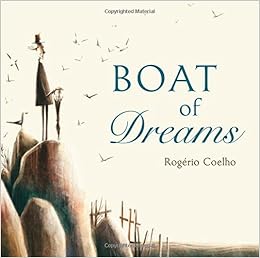
Boat of Dreams by Rogerio Coelho

Published by Tilbury House Publishers

Summary:  An old man wakes up in his house on an island.  He sees a bottle bobbing in the sea with a piece of paper inside.  Removing the paper, he begins to draw, creating a picture of a magical-looking flying ship.  He puts the picture back in the bottle and returns it to the ocean.  A boy walks to his home in the city, where he finds an envelope outside the door.  Inside is the old man’s picture.  He draws himself and his cat in the ship, then goes to bed.  Next, he and the cat are on the ship flying toward the island.  When they get there, he and the man embrace, then the boy gives him the picture with his additions.  The man waves as they fly away.  The man gazes at the picture of the boy as his candle slowly goes out.  In the morning, the boy awakens to a new day.  80 pages; grades 2+

Pros:  Wow!  What does it mean? This lengthy wordless picture book could be interpreted in many different ways.  Kids and adults alike will enjoy puzzling over the illustrations to create their own stories.

Cons:  It looks like a picture book, but this will be appreciated more by an older audience.

Amina’s Voice by Hena Khan

Published by Salaam Reads/Simon and Schuster Books for Young Readers

Summary:  Amina is a shy sixth grader.  She has a beautiful singing voice, but prefers to stay out of the spotlight.  Middle school is proving challenging, as her best friend Soojin is thinking of changing her Korean name to Susan and has started hanging out with Emily, a former enemy of both girls.  In addition to these universal problems, Amina struggles with her Pakistani immigrant parents who don’t always understand the American culture she and her brother live in.  When a conservative uncle comes for a visit from Pakistan and the Islamic Center is severely vandalized, Amina realizes she must overcome her shyness and learn to express who she truly is.  208 pages; grades 3-7.

Pros:  A moving story about a contemporary immigrant family and the struggles each member faces.  Readers will relate to Amina and her older brother Mustafa, while learning more about Pakistani culture and Islam.

Cons:  Kids may need some guidance in reading about the hate crime against the Islamic Center.

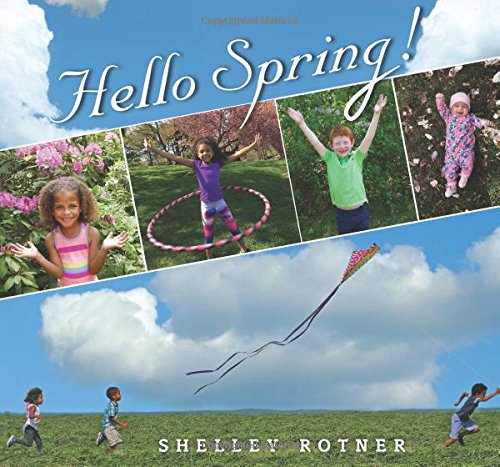
Hello Spring! by Shelley Rotner

Published by Holiday House

Summary:  Lots of colorful photographs provide an introduction to spring.  The focus is all on flora and fauna as a diverse group of kids discover flowers and other plants and hold baby farm animals.  Wild animals are also mentioned, particularly those who are waking up after a long winter’s sleep.  The text is brief, with some rhyming words and plenty of action verbs (“Frogs hop.  Earthworms creep.  Turtles crawl.”).  The final page announces the longest day of the year, which means the season changes again, to summer.  Includes a brief glossary.

Pros:  Young readers will enjoy familiar springtime sights and will learn to be on the lookout for signs of spring.  The photos are large, colorful, and appealing.

Cons:  It would have been nice to include signs of spring in the city, along with all the suburban/rural photos.