Zonia’s Rain Forest by Juana Martinez-Neal (released March 30)

Published by Candlewick
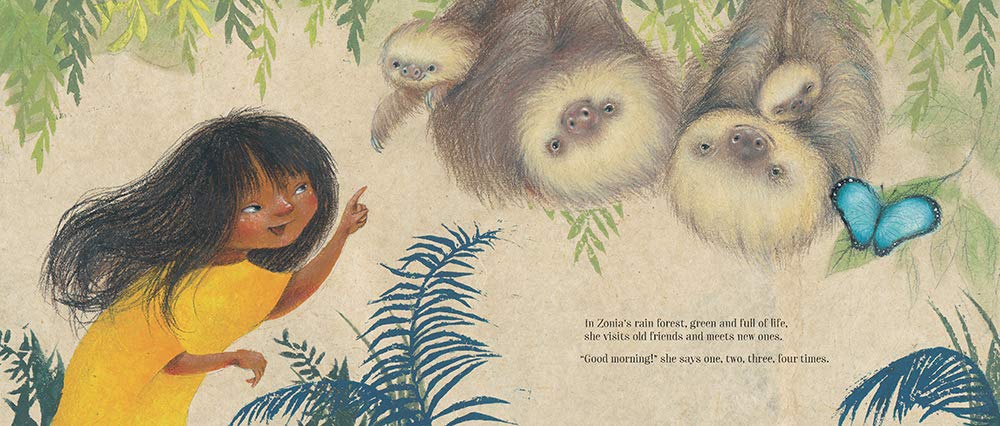
Zonia's Rain Forest: Martinez-Neal, Juana, Martinez-Neal, Juana:  9781536208450: Amazon.com: Books

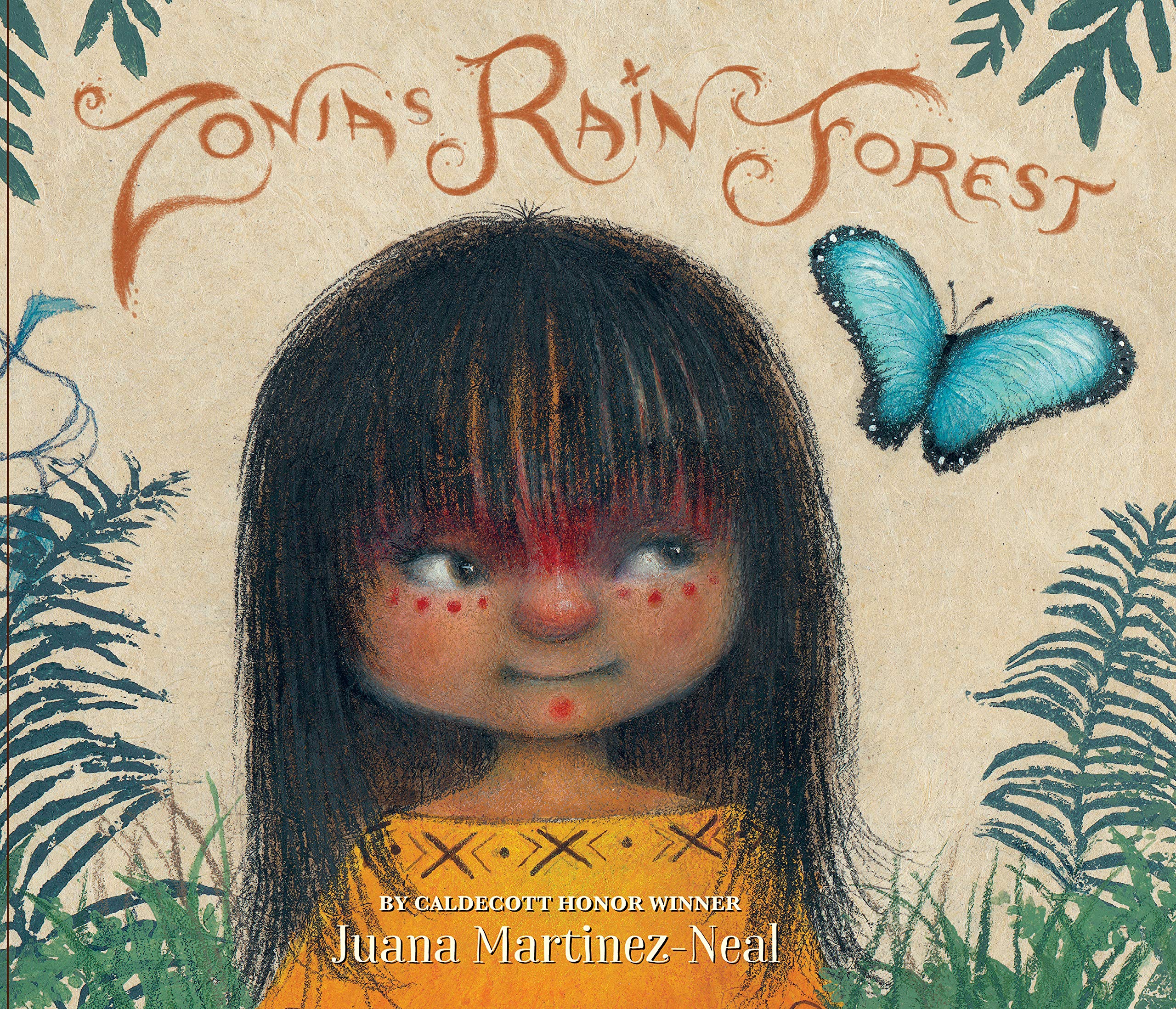
Summary:  “Every morning the rain forest calls to Zonia.”  Off she goes with her animal friends: playing hide-and-seek, running races, and lying quiet and still.  After a day with the animals, she’s ready to return to her parents and baby brother.  On the way home, though, she stumbles upon something she’s never seen before: the severed stumps of trees that have been cut down.  She tells her mother that the forest needs help, and her mother says it is calling to her.  “‘Then I will answer,’ says Zonia, ‘as I always do.’”  Includes additional information about the Asháninka, the largest indigenous group living in the Peruvian rain forest; a few facts about the Amazon; threats to the Amazon; and Zonia’s animal friends in order of appearance.  Spanish version also available: La Selva de Zonia. 40 pages; ages 4-8.

Pros:  This is sure to be a hit with any child who loves animals.  Zonia’s life in the rain forest looks like a lot of fun, and the animals are beautifully rendered.  The environmental message is delivered delicately, then reinforced with the excellent back matter.  Another Caldecott contender!

Cons:  I hate to mention it with all the excellent back matter, but I would have liked to have seen a map.
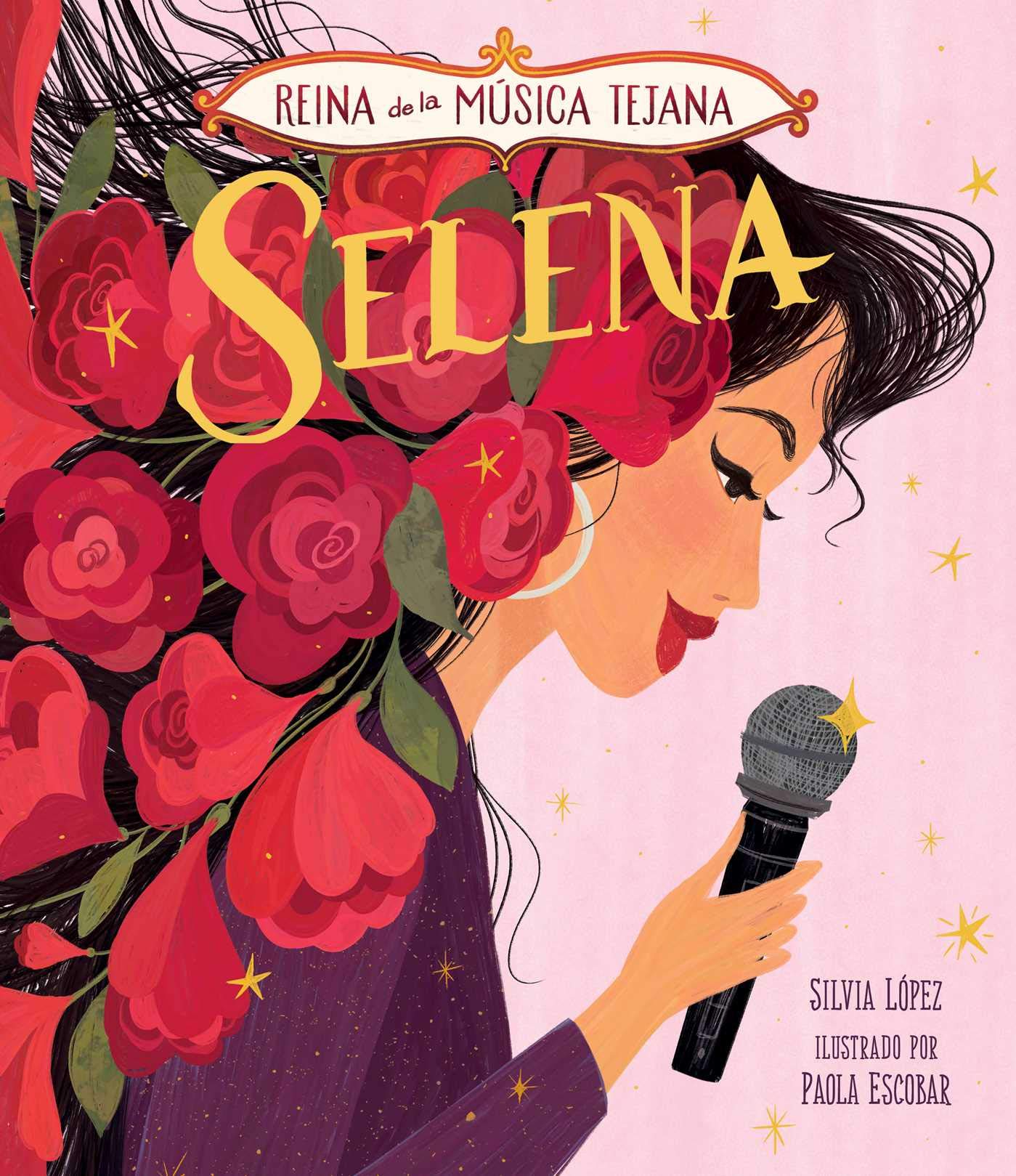
Selena: Queen of Tejano Music by Silvia López, illustrated by Paola Escobar

Published by little bee books

Amazon.com: Selena, reina de la música tejana (9781499811438): López, Silvia,  Escobar, Paola: Books
Amazon.com: Queen of Tejano Music: Selena (9781499809770): López, Silvia,  Escobar, Paola: Books

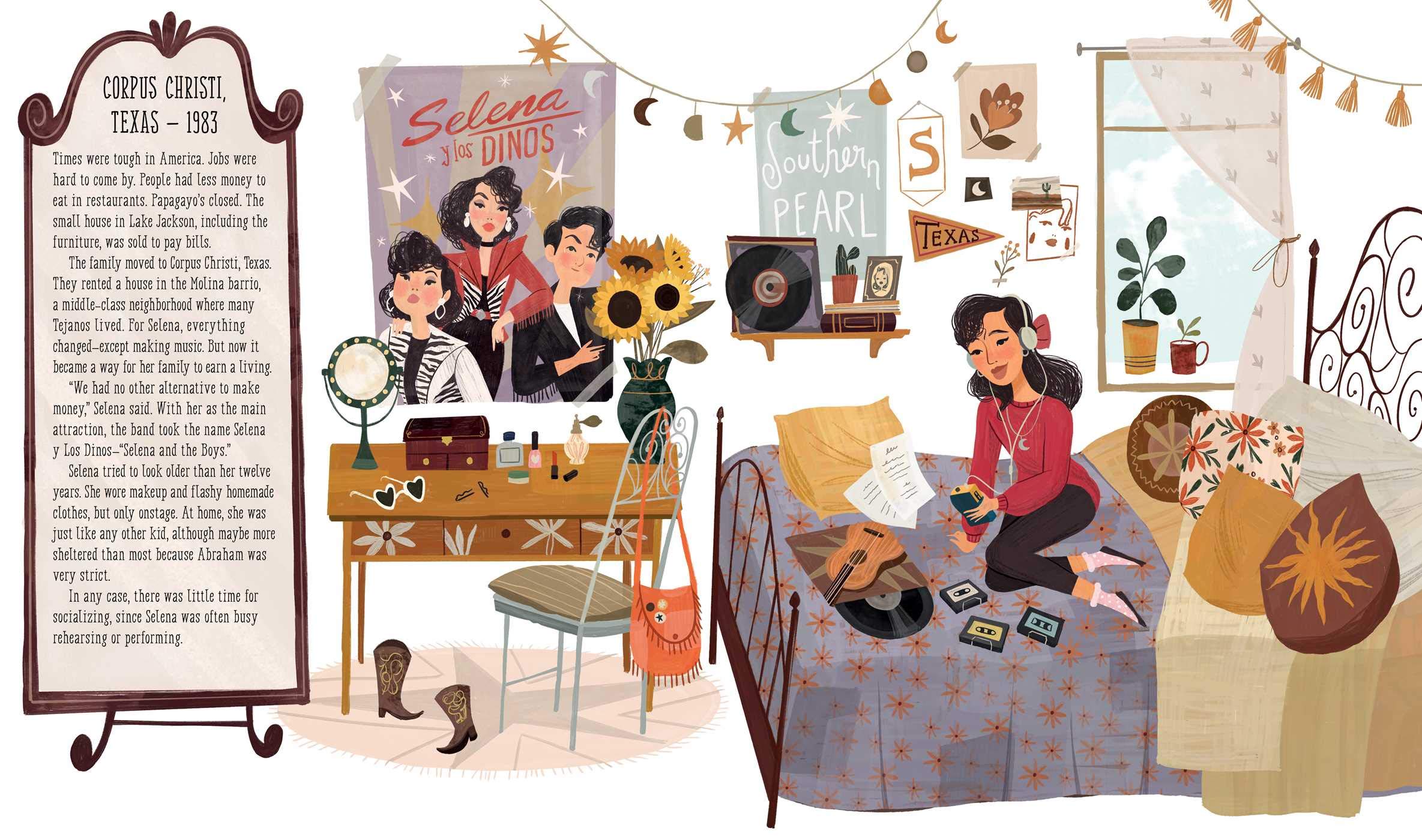
Summary:  Growing up in Texas, Selena Quintanilla was surrounded by music from an early age.  Her father taught her older siblings to play guitar and drums, and Selena soon proved herself to be a natural performer, singing and dancing to their music.  By the time she was nine years old, they were performing regularly in her father’s restaurant.  A few years later, the restaurant went out of business and the family fell on hard times.  Touring and making music seemed like the only way to make a living.  There was a demand for Tejano music, so Selena learned Spanish to perform the popular songs.  By the time she was in her late teens, Selena was an award-winning star, loved in both Mexico and the U.S.  She also was a popular celebrity, treating both her fans and co-workers with kindness and respect.  The final page memorializes Selena as a trailblazer and role model.  Includes several pages of additional information about Selena and her music, ending with a few paragraphs about her murder at the age of 23. A Spanish-language version of this book, Selena: Reina de la Música Tejana is also available. 48 pages; grades 2-5.

Pros:  Here’s another book I’ve been anticipating for several months, as my music-loving daughter has gotten me interested in learning more about Selena.  As I imagine is true for many others, I only knew about her death, so I’m glad this book has been written to celebrate her life and legacy.  There’s a lot of text, but the story is so engaging it doesn’t feel like a lot to plow through, and the illustrations really capture Selena’s spirit.  I was even inspired to watch the official video of “Bidi Bidi Bom Bom”, which is an incredibly catchy tune.  Sadly, as the book concludes, quoting Selena biographer Joe Nick Patoski: “The debate will never cease as to what could have been.”

Cons:  This book seems to be getting recommended for the 6-9 age group, but I think older kids will appreciate it more, due to both the text-heavy story and the tragic ending.

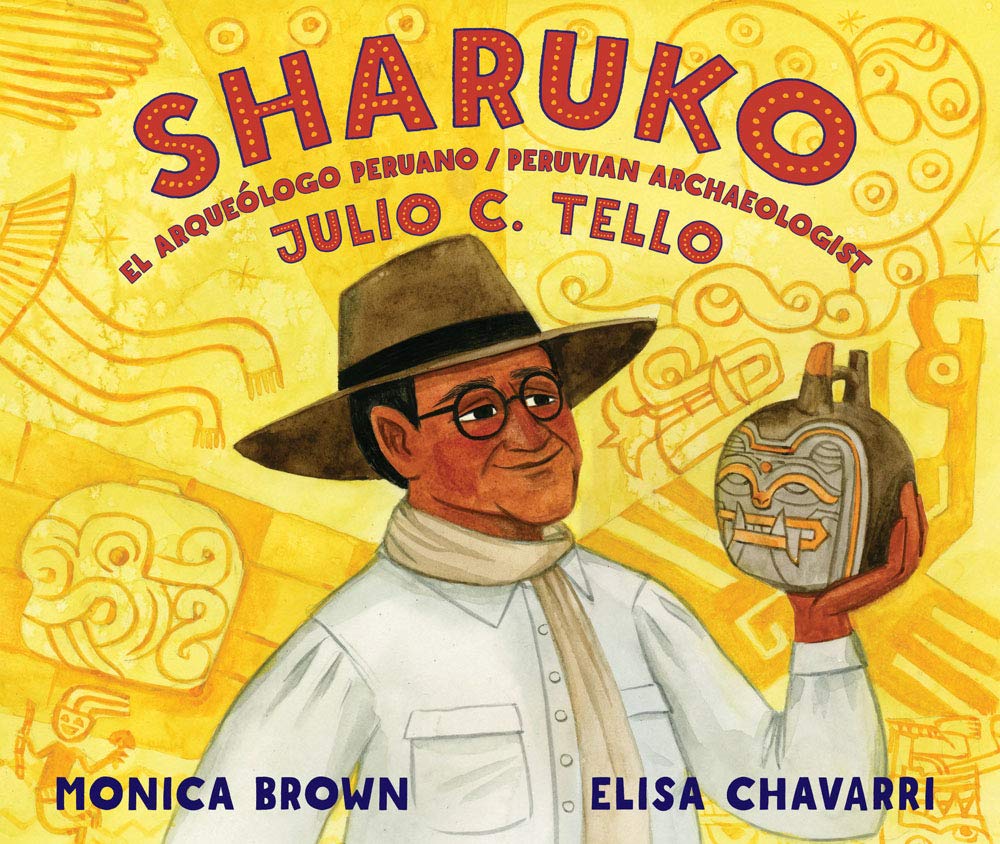
Sharuko: El Arqueólogo Peruano Julio C. Tello/Peruvian Archaeologist Julio C. Tello by Monica Brown, illustrated by Elisa Chavarri

Published by Children’s Book Press (Released August 18)

Sharuko: El Arqueólogo Peruano Julio C. Tello / Peruvian ...

Summary:  Born in Peru in 1880, Julio Tello grew up in an indigenous community, speaking Quecha, the language of the Inca Empire.  His adventurous nature earned him the Quecha nickname Sharuko, meaning “brave”.  He and his brother discovered bones, pottery, and even some human skulls as they explored the foothills of the Andes.  At 12, he went to live with his aunt and study in Lima, eventually graduating from medical school.  After getting a degree in anthropology and archaeology from Harvard, he worked as an archaeologist at the Museum of Natural History in Lima.  His archaeological discoveries showed that indigenous cultures had existed in Peru more than 3,000 years ago, refuting the theories that these cultures originated in Mexico or Central America.  He became director of the new Museum of Anthropology, where he was able to share his discoveries with Peruvians, transforming their understanding of their history.  Includes maps; an afterword, illustrator’s note, and list of sources.  40 pages; grades 2-6.

Pros:  Written in both Spanish and English, this story shines a light on Peruvian history and a man who single-handedly helped rewrite it.  The colorful illustrations feature some of the art and artifacts Tello helped discover.

Cons:  Readers will need some background knowledge to appreciate the story; although the format is a picture book, this will probably appeal more to older elementary and even middle school kids.

If you would like to buy this book on Amazon, click here.

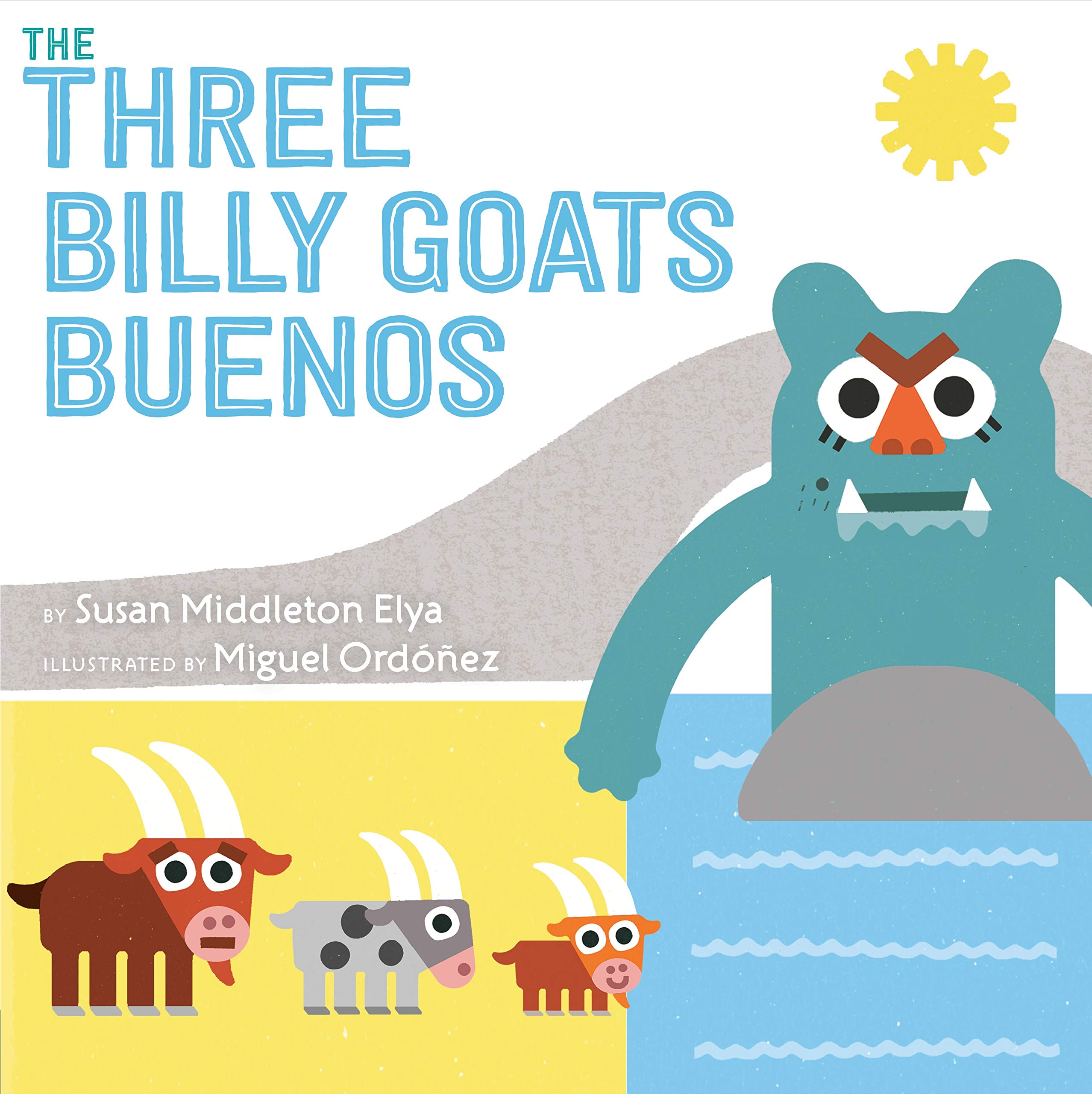
Three Billy Goats Buenos by Susan Middleton Elya, illustrated by Miguel Ordóñez

Published by G. P. Putnam’s Sons Books for Young Readers

Image result for three billy goats buenos

Image result for three billy goats buenos

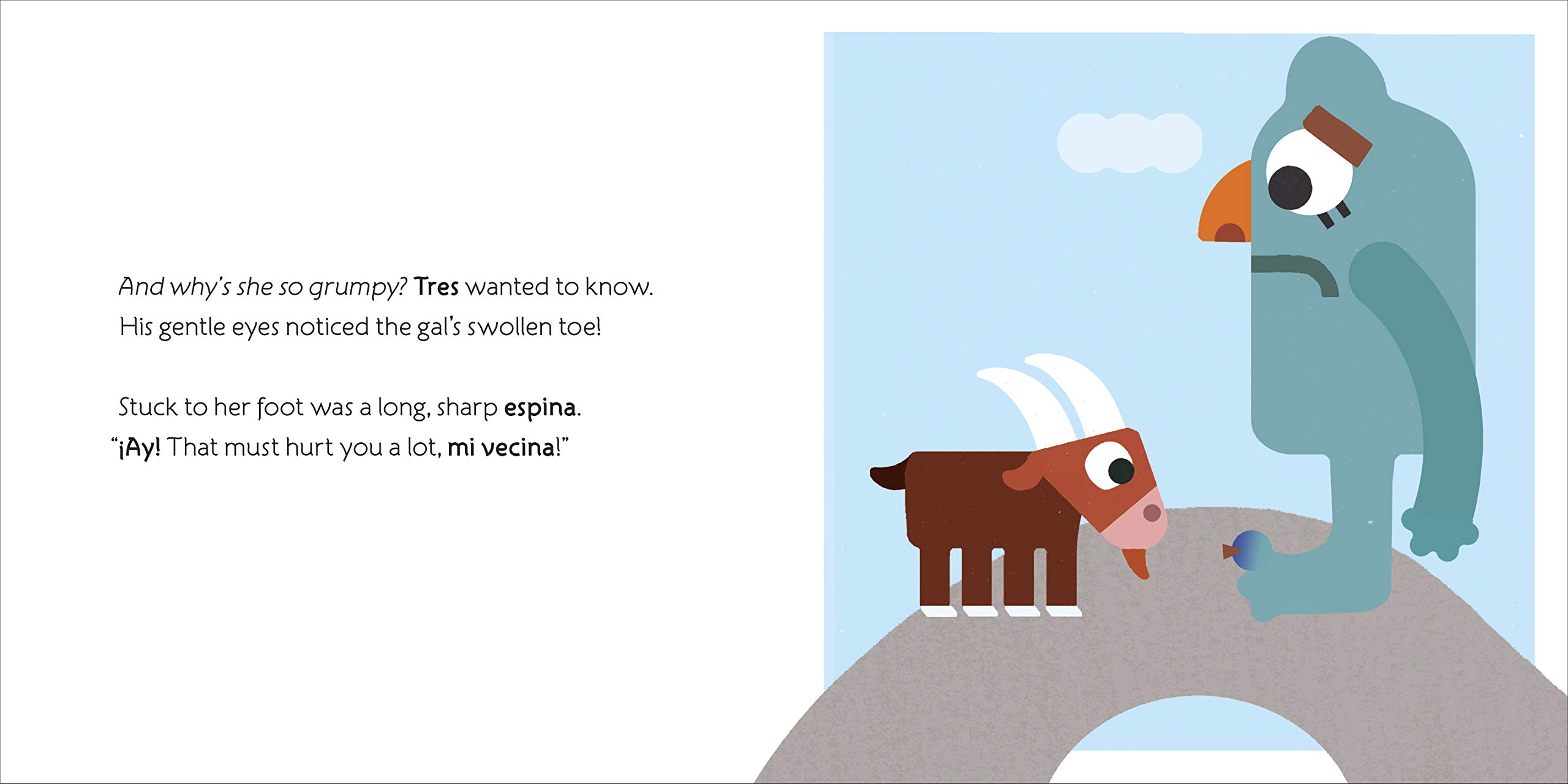
Summary:  The familiar story of the three billy goats gruff is told in rhyming text with a few dozen Spanish words incorporated into the story.  A glossary of the Spanish words appears at the beginning of the book so readers can refer back to it. The story is simple, but includes a twist when the biggest goat discovers the troll has a thorn stuck in her toe.  His sympathy brings a few tears to the troll’s eyes, and the goats work together to remove the thorn and apply some soothing herbs. There’s a happy ending for all four of the new amigos.  32 pages; ages 3-8.

Pros:  Susan Middleton Elya has produced another winning retelling of a familiar folktale that incorporates Spanish words and culture.  The rhyming text and simple, geometrical illustrations will make this an appealing choice for even the youngest readers.

Cons:  I didn’t care for the illustrations as much Juana Martinez-Neal’s in La Princesa and the Pea.

If you would like to buy this book on Amazon, click here.

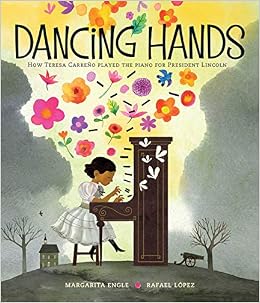
Dancing Hands: How Teresa Carreño Played the Piano for President Lincoln by Margarita Engle, illustrated by Rafael López

Published by Atheneum Books for Young Readers 

Image result for dancing hands how teresa carreño played the piano for president lincoln

Image result for dancing hands how teresa carreño played the piano for president lincoln

Summary:  Teresa Carreño had a gift for piano from the time she was a little girl in Venezuela.  War drove her family from their home and to the United States, where another war was raging–the Civil War.  Teresa found that music offered her a refuge from the sadness and suffering, and by the time she was ten years old, she was known as Piano Girl, performing all over the country.  She was amazed to get an invitation from President Abraham LIncoln to play at the White House, and nervous about accepting it. When the big day arrived, she found that the White House piano was poorly tuned, and didn’t know if she’d be able to perform.  But Lincoln asked her to play his favorite song, “Listen to the Mockingbird”, and once again music provided magical healing powers. An author’s note gives a bit more information about Carreño and her later musical career. 40 pages; grades K-4.  

Pros:  Acclaimed poet Margarita Engle and illustrator Rafael Lopez team up once again to create a beautiful story about a little-known episode in musical history.  Kids will be inspired to learn of the hard work and fame of this 10-year-old girl.

Cons:  I was expecting something bigger from the final scene in the White House.

If you would like to buy this book on Amazon, click here.

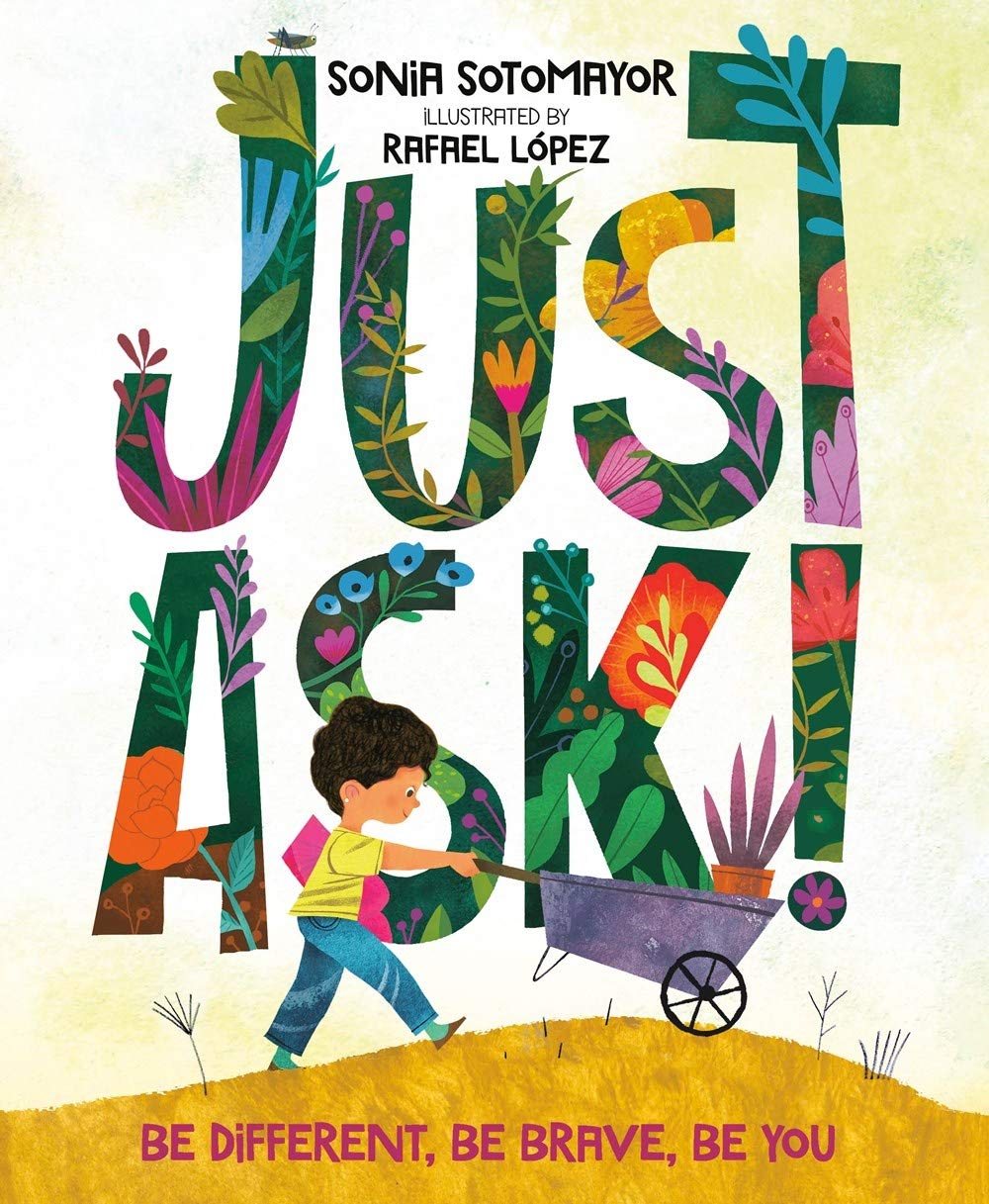
Just Ask! Be Different, Be Brave, Be You by Sonia Sotomayor, illustrated by Rafael López

Published by Philomel Books

Image result for just ask be different be brave be you

Image result for just ask be different be brave be you

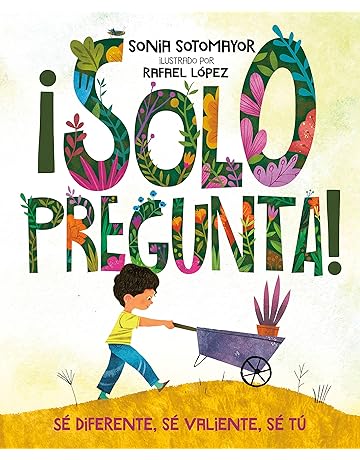
Summary:  Supreme Court Justice Sonia Sotomayor begins the book by telling her own story, how she was diagnosed with juvenile diabetes at the age of 7.  She sometimes felt self-conscious when she had to give herself insulin injections around others. Although she felt like other kids were curious, no one ever asked her about what she was doing.  She encourages readers to ask questions if they want to know about something they don’t understand. The book then looks at kids planting a garden; just like the plants in the garden, each child is different in some way: one is blind, one is in a wheelchair, two have different forms of autism, and so on.  Each child tells a little about himself or herself, then asks a question like, “Do you ever take medicine to be healthy?” or “How do you use your senses?” Sonia finishes up by celebrating everyone’s abilities, and how all the differences make the world a more interesting place. Her final question is, “What will you do with your powers?”  Also available in a Spanish-language edition, ¡Solo Pregunta! 32 pages; ages 4-8.

Pros:  This is a great introduction to a wide range of conditions that affect many different kids.  The tone is accepting and celebrating, and it’s a nice way to encourage children to talk to each other about differences in a respectful way.  The illustrations are gorgeous, showing a diverse group of children frolicking around a beautiful garden.

Cons:  I wish there had been more specifics about how a child (or adult) should ask someone about a physical difference.

Image result for solo pregunta sotomayor

If you would like to buy the English edition on Amazon, click here.

If you would like to buy the Spanish edition on Amazon, click here.

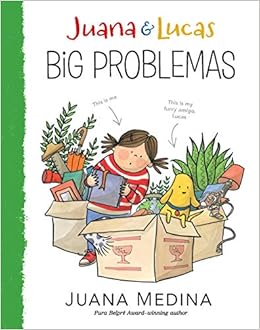
Juana & Lucas: Big Problemas by Juana Medina

Published by Candlewick

Image result for juana lucas big

Image result for juana lucas big

Summary:  Juana and her dog Lucas are back for another adventure.  Coming to you from Bogotá, Colombia, Juana does a quick review of all the good things in her life for those who may have missed them the first time in Juana and Lucas.  But then she launches into her big problema:  her beloved Mami has a new friend Luis, and it looks like things are starting to get serious.  Much to Juana’s chagrin, the two get engaged and start planning a wedding. Juana is not excited, and is adamant that she won’t be a flower girl.  She wishes she could meet her father, who, we learn, died in a fire when she was a baby. But Luis is pretty nice, and gradually Juana gets used to the idea of him joining the family and moving to a new casa.  By the last few pages, she is planning where to hang the wedding photos of her new extended family in her new bedroom.  96 pages; grades K-3.

Pros:  Fans of the first book (which won a Belpré Award in 2017) will enjoy the new one just as much.  The large, colorful illustrations are adorable, and fans of Junie B. Jones and Judy Moody will recognize a kindred spirit in Juana.  The Spanish words are given context clues for non-Spanish speakers, and the glimpses of Bogotá make it look like a fun place to visit or live.  Thank you to Candlewick for sending me an advance reading copy of this book.

Cons:  Just like with the first book, I found myself wishing for a list of Spanish words with English translations at the end.

If you would like to buy this book on Amazon, click here.


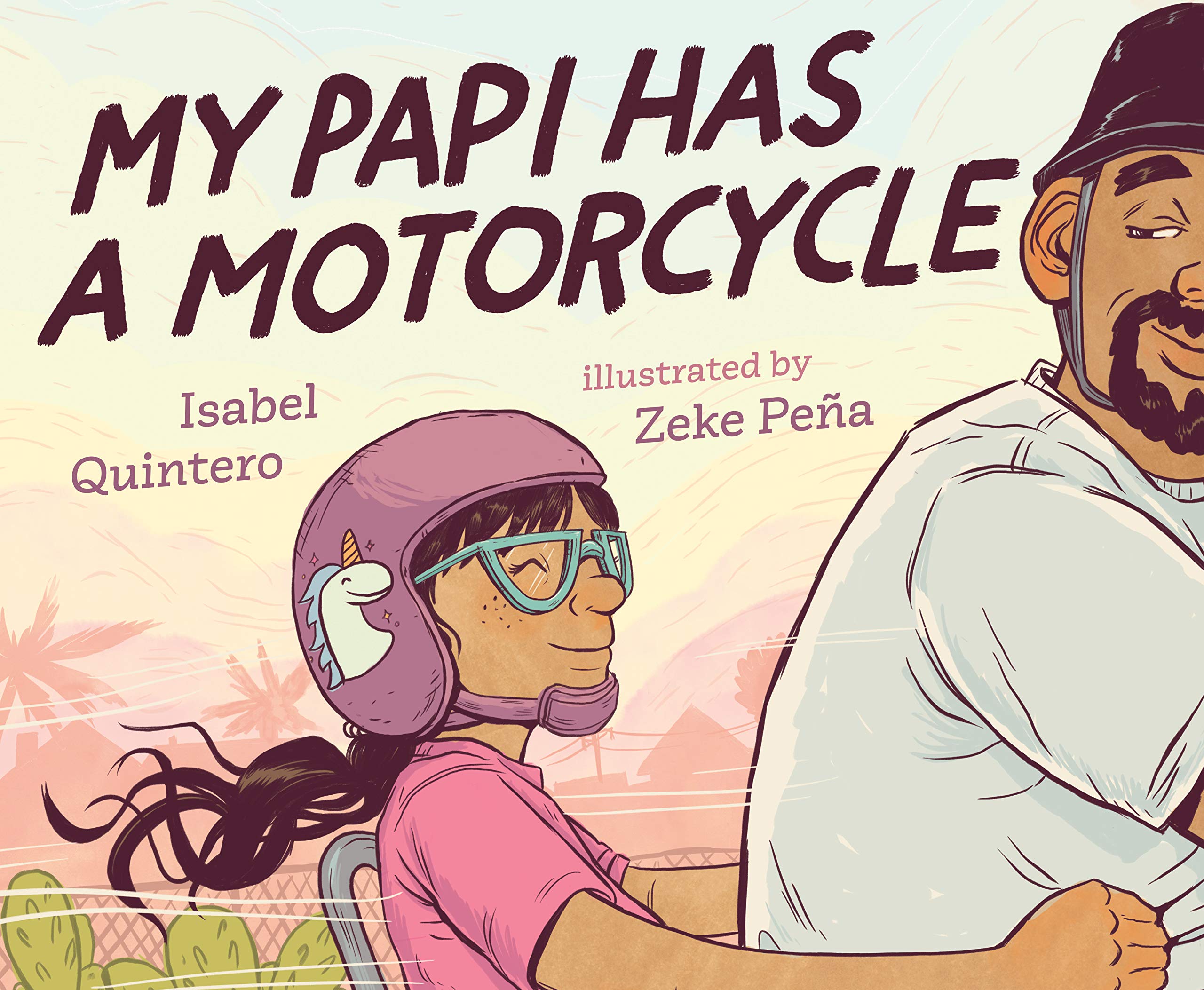
My Papi Has a Motorcycle by Isabel Quintero, illustrated by Zeke Peña

Published by Kokila

Image result for my papi has a motorcycle

Image result for my papi has a motorcycle

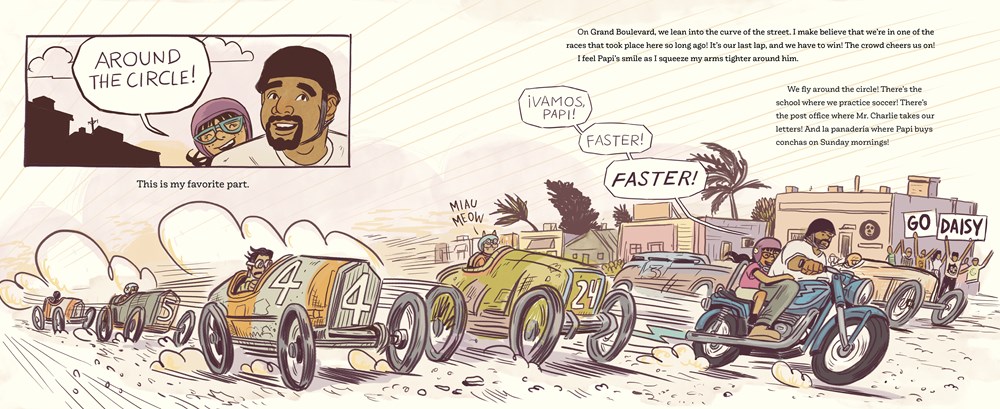
Summary:  When Papi comes home from work, his daughter rushes to greet him, two helmets in her hand.  It’s time for them to climb on Papi’s bright blue motorcycle and go for a ride. Together, they zoom through the streets of their city, noticing what’s new with familiar landmarks, waving to friends and family, and outrunning chasing dogs.  There are a couple stops along the way–at Don Rudy’s Raspados, which is unfortunately closed and at the construction site where Papi works to see the new houses going up–but mostly they stay in motion. At the end, they come back home again, and are rewarded with a visit from Don Rudy, who has taken his raspados on the road. Includes an author’s note about her own experiences riding behind her father in Corona, California. Simultaneously published in Spanish as Mi Papi Tiene Una Mota. 40 pages; ages 4-8.

Pros:  Part family story, part love letter to Corona, California, kids who loved wheeled vehicles will enjoy reading about Daisy’s tour of the city.

Cons:  It would have been nice to have a Spanish/English list of the Spanish words that are included in the text.

If you would like to buy the English version of this book on Amazon, click here.

If you would like to buy the Spanish version of this book on Amazon, click here.

¡Vamos! Let’s Go to the Market by Raúl the Third

Published by Versify

Image result for vamos let's go to the market

Image result for vamos let's go to the market

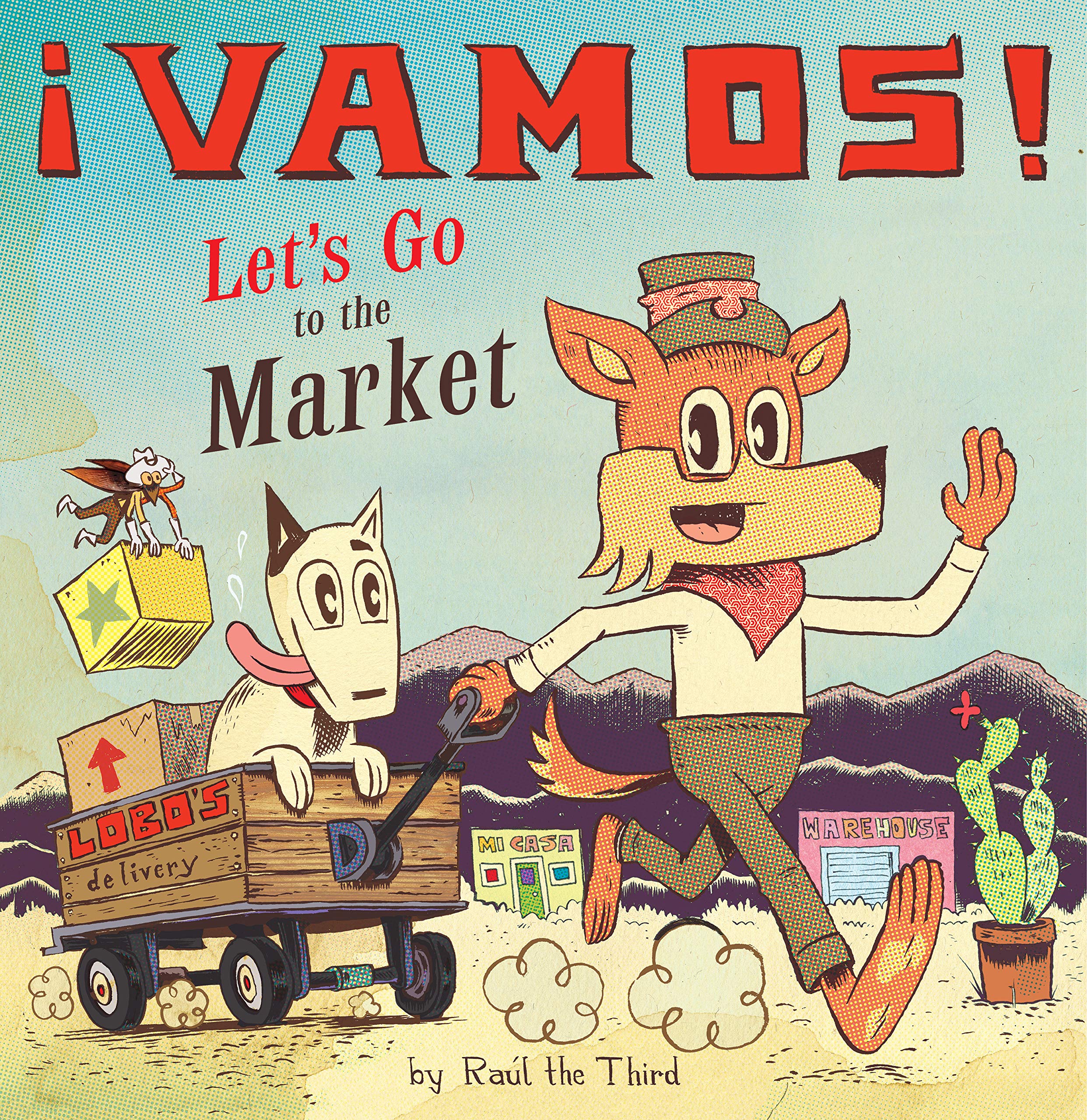
Summary:  Little Lobo and his dog Bernabé have a big day in store as they load up the wagon to make deliveries to various people at the Mercado.  There are all kinds of interesting characters, both human and animal, to be seen as they travel. Finally, they arrive and start delivering their goods.  Little Lobo has many friends at the Mercado, and between their gifts and his own purchases, his wagon is almost as full at the end of his delivery run as it was at the beginning.  His last stop is at the local Lucha Libre place, where he not only meets his favorite wrestler, El Toro, but gets to give him a ride home in his wagon. The day ends with Lobo and Bernabé getting into bed, ready for sleep after a busy day.  Includes a glossary of all the Spanish words used in the text. 48 pages; ages 4-8.

Pros:  Richard Scarry meets Diego Rivera in this dizzying, magnificent tour of Lobo’s Mexican (I think–it’s not specified) town.  There are so many fascinating characters performing all sorts of interesting jobs in illustrations that could keep readers absorbed for hours.  Many Spanish words and phrases woven into the story combined with the glossary at the end makes this a good introduction to the language.

Cons:  The illustrations were almost too busy, and occasionally overwhelmed the more modest text.

If you would like to buy this book on Amazon, click here.

Planting Stories: The Life of Librarian and Storyteller Pura Belpré by Anika Aldamuy Denise, illustrated by Paola Escobar

Published by HarperCollins

Image result for planting stories escobar amazon

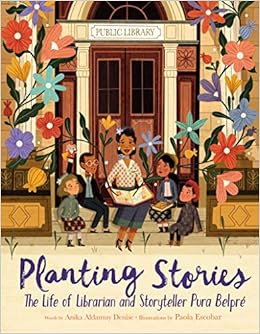
Summary:  Pura Belpré wasn’t planning to stay in New York City when she visited from Puerto Rico in 1921, but before long she had found a job at the New York Public Library.  She discovered the children’s room didn’t have any of the Puerto Rican folktales she had grown up with, and began sharing her stories with kids who visited the library.  Later, she found other ways to tell these tales, through puppets she created and books she wrote.  Her legacy lives on through the Pura Belpré award, given each year to Latinx authors and illustrators. Includes author’s note, additional resources (books, archival collections, articles, films, and a list of Pura Belpré’s stories mentioned in the book). A Spanish version of this book, Sembrando Historias, was published simultaneously with the English one.  40 pages; grades K-3.

Pros:  A beautifully written and illustrated book about a woman whose work with books and libraries continues to have an influence today.  Spanish words and phrases are scattered throughout the story, but with enough context to be understandable.

Cons:  Books about “celebrity librarians” can be a hard sell with the elementary crowd.

If you would like to buy the English version of this book on Amazon, click here.

If you would like to buy the Spanish version of this book, click here.