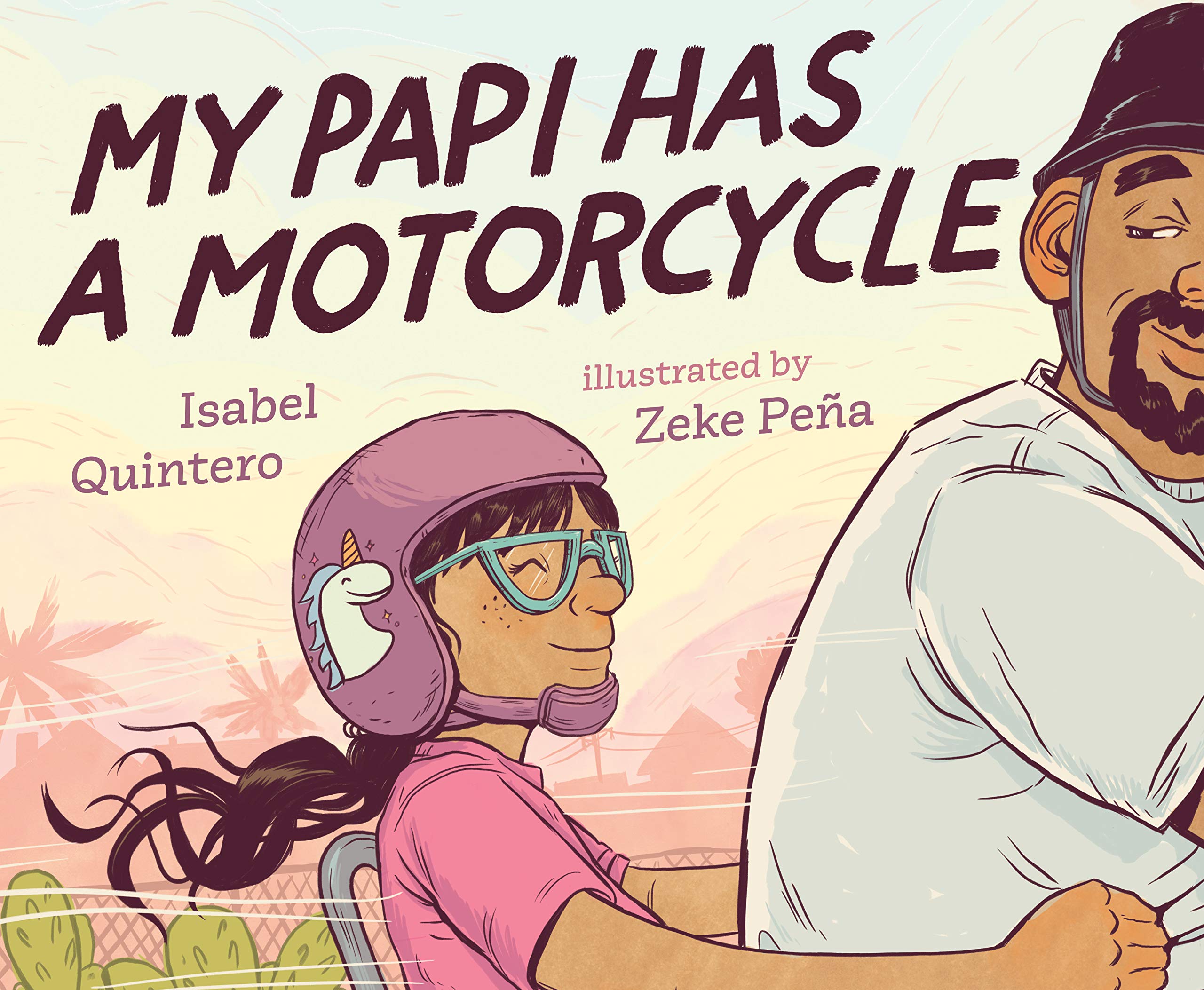
My Papi Has a Motorcycle by Isabel Quintero, illustrated by Zeke Peña

Published by Kokila

Image result for my papi has a motorcycle

Image result for my papi has a motorcycle

Summary:  When Papi comes home from work, his daughter rushes to greet him, two helmets in her hand.  It’s time for them to climb on Papi’s bright blue motorcycle and go for a ride. Together, they zoom through the streets of their city, noticing what’s new with familiar landmarks, waving to friends and family, and outrunning chasing dogs.  There are a couple stops along the way–at Don Rudy’s Raspados, which is unfortunately closed and at the construction site where Papi works to see the new houses going up–but mostly they stay in motion. At the end, they come back home again, and are rewarded with a visit from Don Rudy, who has taken his raspados on the road. Includes an author’s note about her own experiences riding behind her father in Corona, California. Simultaneously published in Spanish as Mi Papi Tiene Una Mota. 40 pages; ages 4-8.

Pros:  Part family story, part love letter to Corona, California, kids who loved wheeled vehicles will enjoy reading about Daisy’s tour of the city.

Cons:  It would have been nice to have a Spanish/English list of the Spanish words that are included in the text.

If you would like to buy the English version of this book on Amazon, click here.

If you would like to buy the Spanish version of this book on Amazon, click here.
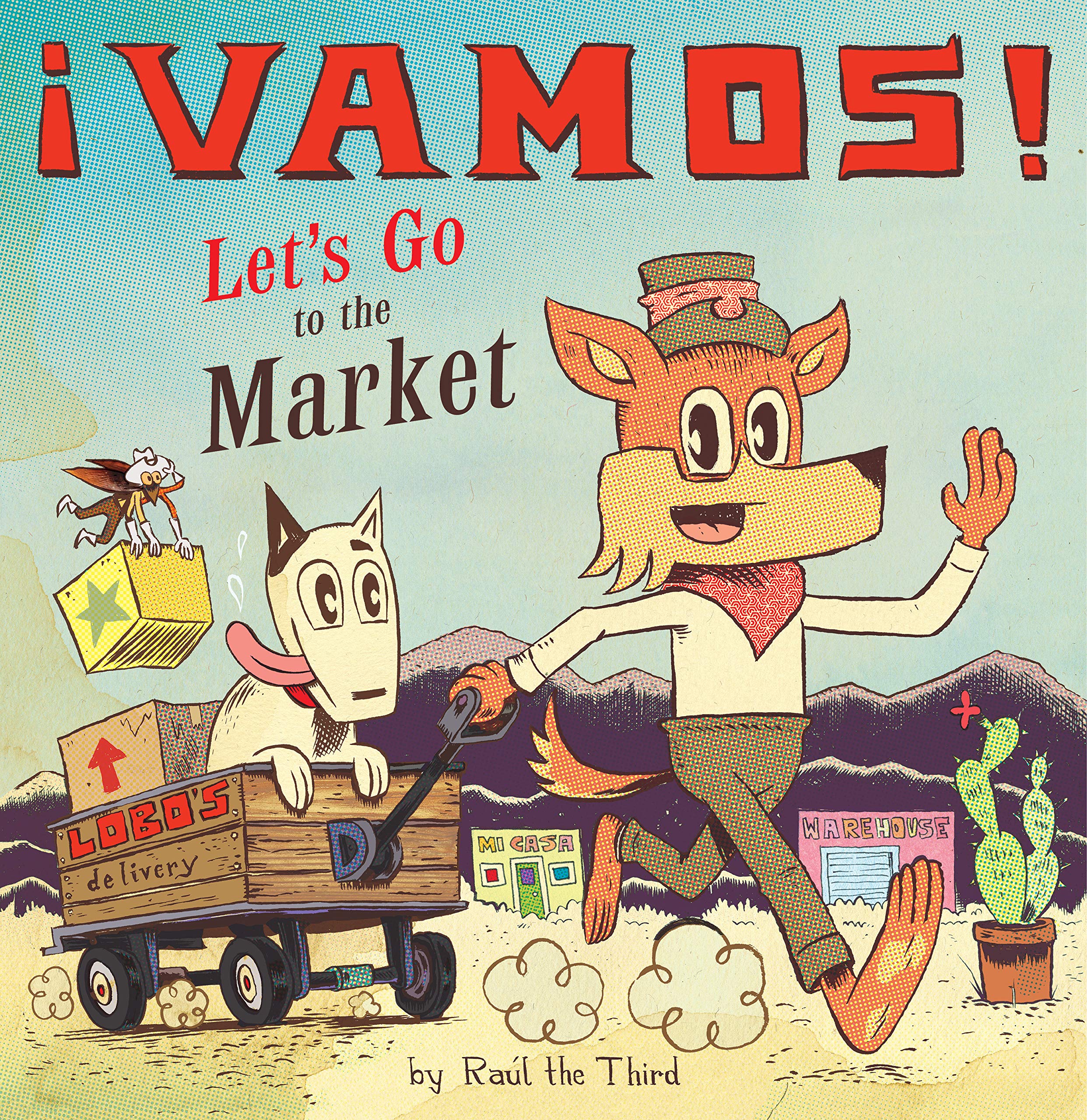
¡Vamos! Let’s Go to the Market by Raúl the Third

Published by Versify

Image result for vamos let's go to the market

Image result for vamos let's go to the market

Summary:  Little Lobo and his dog Bernabé have a big day in store as they load up the wagon to make deliveries to various people at the Mercado.  There are all kinds of interesting characters, both human and animal, to be seen as they travel. Finally, they arrive and start delivering their goods.  Little Lobo has many friends at the Mercado, and between their gifts and his own purchases, his wagon is almost as full at the end of his delivery run as it was at the beginning.  His last stop is at the local Lucha Libre place, where he not only meets his favorite wrestler, El Toro, but gets to give him a ride home in his wagon. The day ends with Lobo and Bernabé getting into bed, ready for sleep after a busy day.  Includes a glossary of all the Spanish words used in the text. 48 pages; ages 4-8.

Pros:  Richard Scarry meets Diego Rivera in this dizzying, magnificent tour of Lobo’s Mexican (I think–it’s not specified) town.  There are so many fascinating characters performing all sorts of interesting jobs in illustrations that could keep readers absorbed for hours.  Many Spanish words and phrases woven into the story combined with the glossary at the end makes this a good introduction to the language.

Cons:  The illustrations were almost too busy, and occasionally overwhelmed the more modest text.

If you would like to buy this book on Amazon, click here.

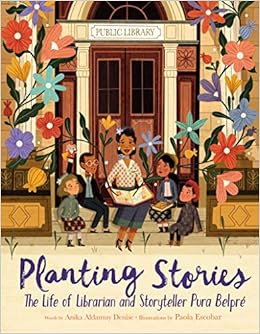
Planting Stories: The Life of Librarian and Storyteller Pura Belpré by Anika Aldamuy Denise, illustrated by Paola Escobar

Published by HarperCollins

Image result for planting stories escobar amazon

Summary:  Pura Belpré wasn’t planning to stay in New York City when she visited from Puerto Rico in 1921, but before long she had found a job at the New York Public Library.  She discovered the children’s room didn’t have any of the Puerto Rican folktales she had grown up with, and began sharing her stories with kids who visited the library.  Later, she found other ways to tell these tales, through puppets she created and books she wrote.  Her legacy lives on through the Pura Belpré award, given each year to Latinx authors and illustrators. Includes author’s note, additional resources (books, archival collections, articles, films, and a list of Pura Belpré’s stories mentioned in the book). A Spanish version of this book, Sembrando Historias, was published simultaneously with the English one.  40 pages; grades K-3.

Pros:  A beautifully written and illustrated book about a woman whose work with books and libraries continues to have an influence today.  Spanish words and phrases are scattered throughout the story, but with enough context to be understandable.

Cons:  Books about “celebrity librarians” can be a hard sell with the elementary crowd.

If you would like to buy the English version of this book on Amazon, click here.

If you would like to buy the Spanish version of this book, click here.

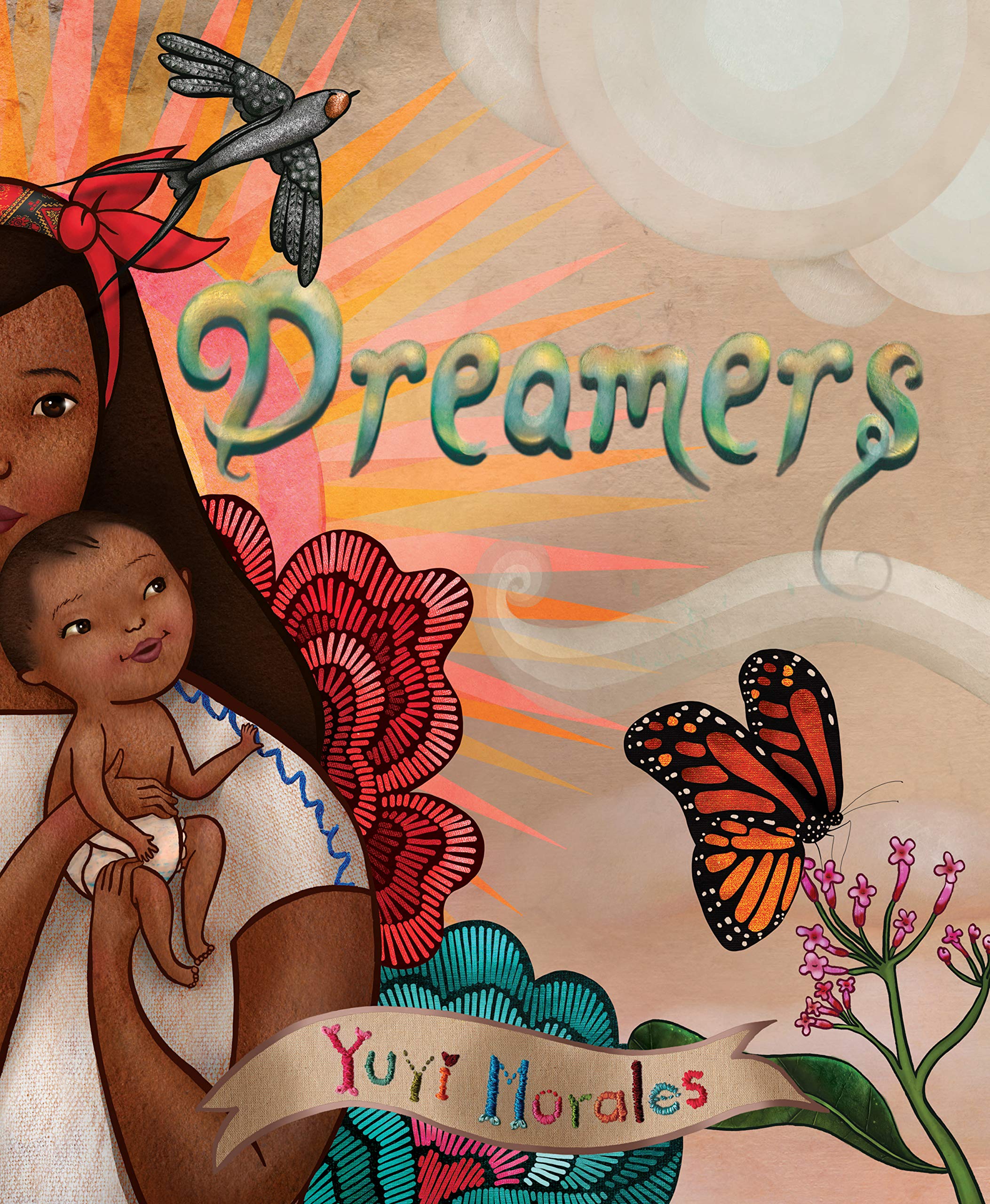
Dreamers by Yuyi Morales

Published by Neal Porter Books

Image result for dreamers yuyi amazon

Summary:  “I dreamed of you,/then you appeared./Together we became/Resplendent life, you and I.”  So begins Yuyi Morales’s book addressed to her son, whom she carried across a bridge into a new country when he was a baby.  Together they explore their new home, confused by the language and often making mistakes (demonstrated by the picture of her playing with her young son in a public fountain, while a police officer stands by with his hands on his hips).  One day they discover a miraculous place: the public library. “Suspicious. Improbable. Unbelieving. Surprising. Unimaginable.” Slowly, she learns about the library, and picture books open up a new world to her and her son, teaching them to read, write, and speak.  “We are stories./We are two languages./We are lucha./We are resilience./We are hope./We are dreamers, sonadores of the world./We are Love Amor Love.” Includes “My Story”, a two-page note from Morales about her journey from Mexico to the U.S. and how the public library helped her and her son Kelly pursue their dreams in their new country; also books that have inspired her.  Simultaneously released with Soñadores, the Spanish language version. 40 pages; ages 4-8.

Pros:  Yuyi Morales hasn’t really been on my radar as an illustrator, but this beautiful book made me go back and look at what other books she has done (her best known is probably Viva Frida which won both the Belpre Medal and a Caldecott honor).  Her note on how she created the pictures reveals that they are a blend of acrylics and ink, along with a long list of items that she photographed and scanned.  This makes for bright, colorful, textured illustrations. Kids will enjoy finding books that they recognize in the pictures from the library. The brief, poetic text beautifully expresses the hopes and dreams of those immigrating to the U.S.  Look for this title during awards season.

Cons:  Young kids may need some help in understanding what is going on in the story.

If you would like to buy this book on Amazon, click here.
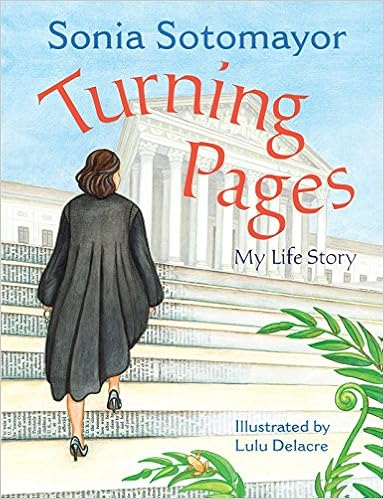
Turning Pages: My Life Story by Sonia Sotomayor, illustrated by Lulu Delacre

Published by Philomel Books

Image result for turning pages sonia sotomayor amazon

Summary:  Supreme Court Justice Sonia Sotomayor tells the story of her life, with an emphasis on how words and books have shaped it.  Starting as a young girl listening to her grandmother quote poetry from Puerto Rico, Sonia realized the power of words. Later, books helped her when she was diagnosed with diabetes at age 7, and after her father died when she was 9.  In high school, reading Lord of the Flies made her understand how important laws are to a society, and stories about Jesus in her religion class showed her not to judge other people for mistakes they have made.  She emphasizes the importance of books in helping her to create her own story, and invites readers to do the same. Includes a timeline and photos on the endpapers; a Spanish version of this book, Pasando Páginas: La Historia de mi Vida was released simultaneously.  40 pages; grades 2-5.

Pros:  An inspiring story of a successful woman who used books and libraries to educate herself.  It’s enough to make any librarian happy.

Cons:  Some of the photos on the endpapers were covered by the taped-down dustjacket of my library copy.

If you would like to buy this book on Amazon, click here.
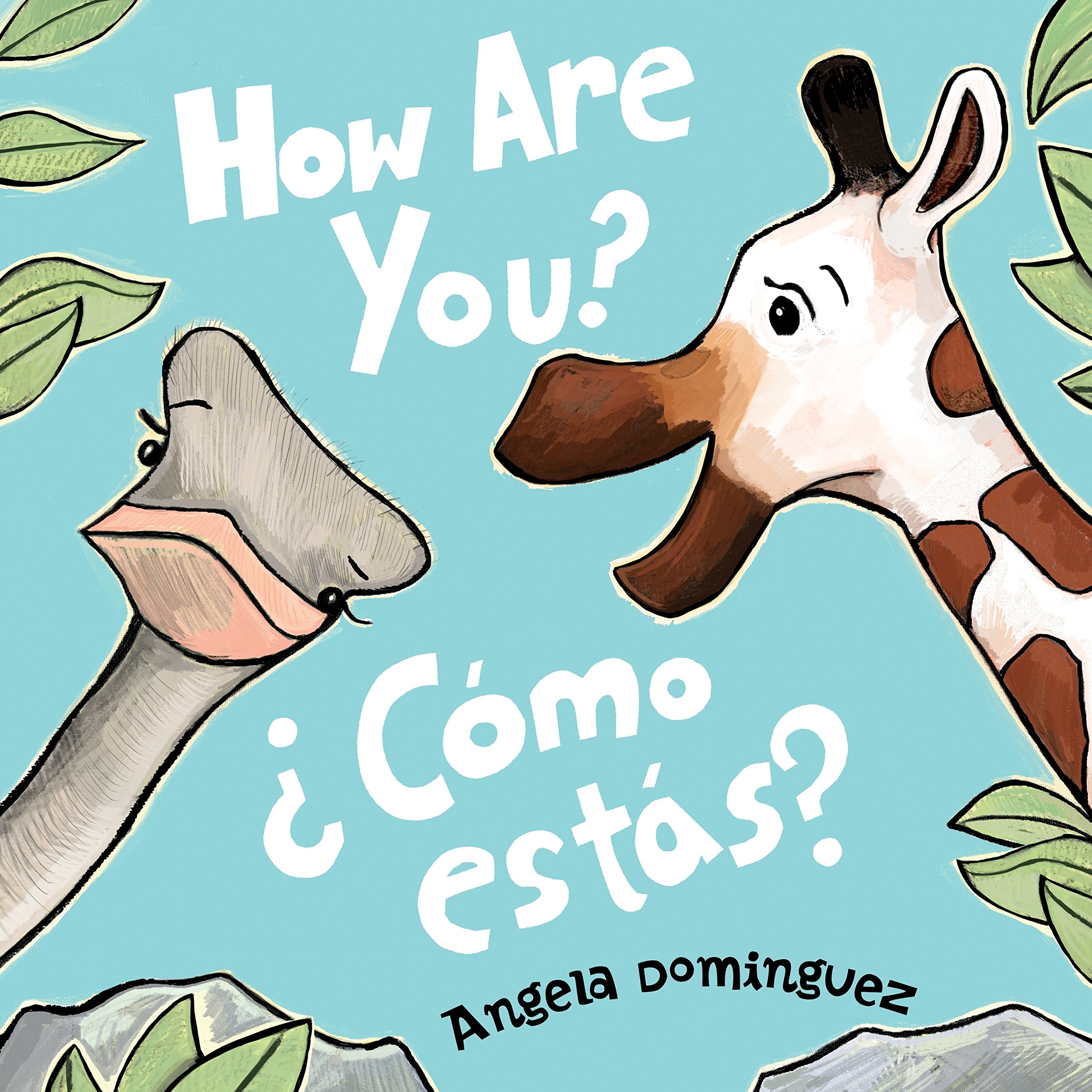
How Are You? Como Estas? by Angela Dominguez

Published by Henry Holt and Co.

Image result for how are you como estas dominguez amazon

Summary:  In this follow up to How Do You Say? Como Se Dice?*, Angela Dominguez’s two giraffes meet up with an ostrich.  They immediately start asking questions in English and Spanish: How are you? Are you shy? Are you hungry? The ostrich answers no to everything. Finally, she reveals how she is feeling:  She is excited because she has two new amigos! *(If anyone knows how to do accents or upside down question marks in Google Docs, please email me!)  32 pages; ages 3-7.

Pros:  The cute animals will appeal to the very youngest readers, and older kids will have fun learning some Spanish (or reading it for their friends if they already speak it).  

Cons:  A list of all the phrases or words from the book in both languages would have been a nice addition at the end.

If you would like to buy this book on Amazon, click here.

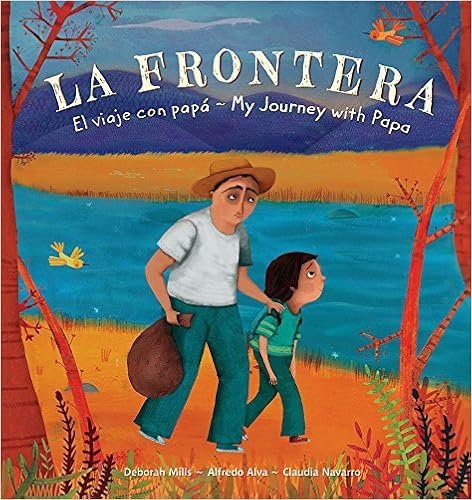
La Frontera/The Border: El Viaje Con Papa/My Journey With Papa by Deborah Mills and Alfredo Alva, illustrated by Claudia Navarro

Published by Barefoot Books

Image result for la frontera deborah mills amazon

Image result for la frontera claudia navarro

Summary:  Alfredo tells the story of his life in Mexico, how his father was no longer able to support the family, and his parents’ decided to send him and papa north to the United States.  A coyote led the two of them to the Rio Grande, gave them an inner tube to float across, then disappeared with their money.  After a grueling week of traveling on foot, they found a shack to sleep in, and a friend of Alfredo’s grandfather picked them up and drove them to Texas.  They settled in to the Embassy, a collection of broken-down vehicles parked behind a factory.  When Alfredo started school, his father gave him a $100 bill to buy a bus ticket back home if he was picked up by immigration officials and sent back to Mexico.  After a difficult transition, Alfredo enjoyed school.  President Reagan granted amnesty to immigrants, and Alfredo and his father were able to start the path to citizenship.  Best of all, four years later, the rest of the family was able to come to the United States.  Includes photos of Alfredo and his family, and extensive information on Alfredo’s story, borders and culture, and immigration.  In English and Spanish.  48 pages; grades 1-5.

Pros:  A grittily realistic story of a family seeking a way out of desperate poverty in the United States.  Although it takes place more than 30 years ago, the story is more relevant than ever to readers today.  Putting a face on “illegal immigrants” will help students have greater empathy for others in a similar situation, and those who have experienced a journey like Alfredo’s will feel a connection to him and his father.

Cons:   Too bad certain government officials in Washington, D.C. aren’t reading this.

If you would like to buy this book on Amazon, click here.
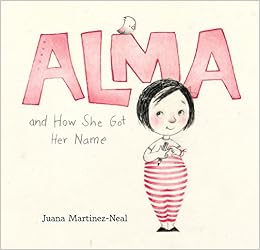
 

Alma and How She Got Her Name by Juana Martinez-Neal

Published by Candlewick

Image result for alma martinez-neal amazon

Image result for alma martinez-neal amazon

Summary:  When Alma Sofia Esperanza Jose Pura Candela complains that her name is too long, her father tells five stories about the different family members for whom she is named.  Each one connects to her in a special way.  Her sixth name, Alma, is just for her.  “You are the one and only Alma,” her father tells her.  “You will make your own story.”  The author’s note tells the story of her own full name, Juana Carlota Martinez Pizarro, and how it reminds her of her roots in Peru.  Also available in a Spanish edition, Alma y Como Obtuvo su Nombre.  32 pages; ages 4-8.

Pros:  A lovely story by award-winning illustrator Juana Martinez-Neal that invites readers to learn and tell the stories of their own names.

Cons:  Alma may struggle with all those names when filling out online forms.

Click to buy on Amazon:  the English edition or the Spanish edition

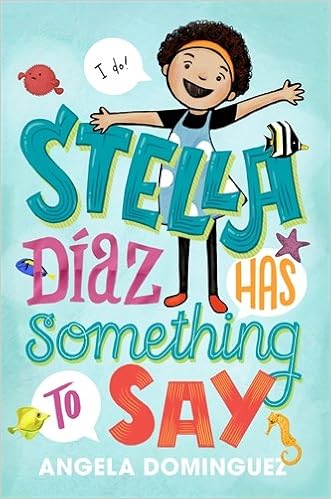
Stella Diaz Has Something to Say! By Angela Dominguez

Published by Roaring Brook Press

Summary:  Stella Diaz has something to say, but she often has trouble saying it.  She’s shy, and sometimes she stumbles over English words.  Her family moved from Mexico to Chicago when she was a baby, making her feel somewhat disconnected from the extended family that sometimes visits.  Her father has moved to Colorado and only occasionally gets in touch, but her mom and older brother Nick more than make up for his absence.  As Stella moves through third grade, she experiences successes that helps her confidence to slowly build.  She makes new friends, speaks up for herself to the mean girl, and participates in a spelling bee in front of the whole class.  By the end of the story, she’s even made friends with a boy, and he and her other friends have helped her to put together an amazing presentation about her favorite topic, undersea animals.  The end of the year sees Stella excited about spending the summer with family and friends and more than ready to move on to fourth grade.  208 pages; grades 2-4.

Pros:  Fans of Junie B. and Clementine, especially more introverted ones, will enjoy Stella’s story and will cheer her on as she finds the courage to try new experiences.  Readers who are bilingual or new to the United States will connect with Stella’s struggles to fit in.

Cons:  Nick occasionally seems too good to be true for a 14-year-old older brother.

If you would like to buy this book on Amazon, click here.

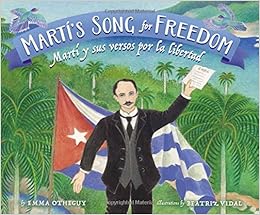
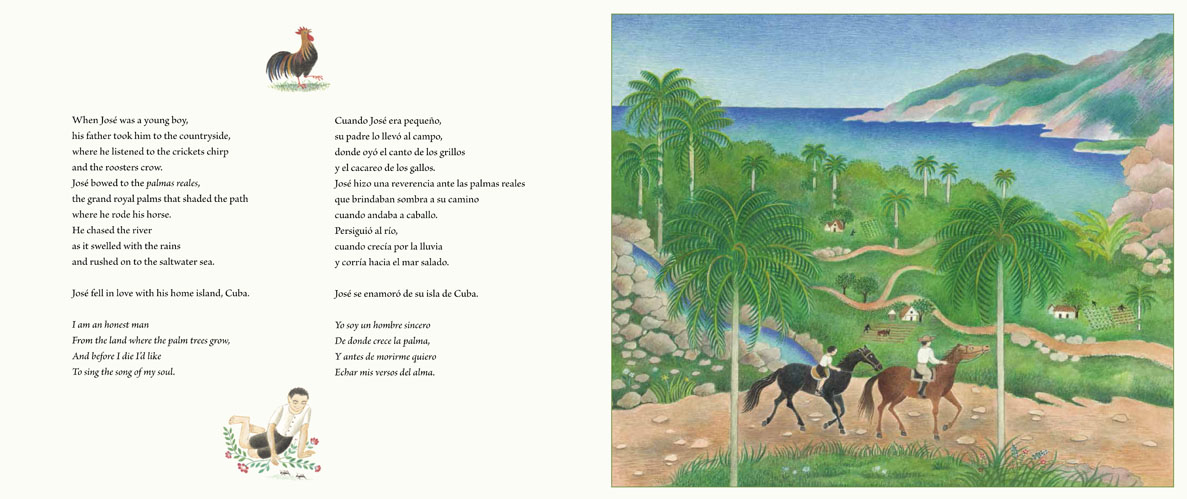
Marti’s Song for Freedom/Marti y Sus Versos por la Libertad by Emma Otheguy, illustrated by Beatriz Vidal

Published by Children’s Book Press

Summary:  Growing up in Cuba, Jose Marti was outraged that some of his fellow countrymen were slaves.  As he grew older, he learned that the key to ending slavery was Cuba’s independence from Spain.  In 1868, the Cuban people started a war for independence.  Marti’s newspaper articles and pamphlets about it landed him in jail.  At age 17, he was released by the Spanish government on the condition that he leave Cuba forever.  He traveled around the world, advocating for Cuban independence, and finally settled in New York.  He loved the city, but sometimes found it oppressive.  He would retreat to the Catskills, where he wrote poetry and stories for children that are still read today. In 1895, Jose went back to Cuba, where he died a few weeks later in a battle for independence.  Seven  years later, in 1902, Cuba finally gained independence from Spain.  32 pages; grades 2-6.

Pros:  Told in both English and Spanish, this is an inspiring biography of a man who never stopped fighting against the injustices he saw.  The illustrations may make it a Caldecott contender.

Cons:  Why is New York consistently referred to as Nuevo York in the English version of the story?

If you would like to buy this book on Amazon, click here.