Kate’s Light: Kate Walker at Robbins Reef Lighthouse by Elizabeth Spires, illustrated by Emily Arnold McCully

Published by Margaret Ferguson Books
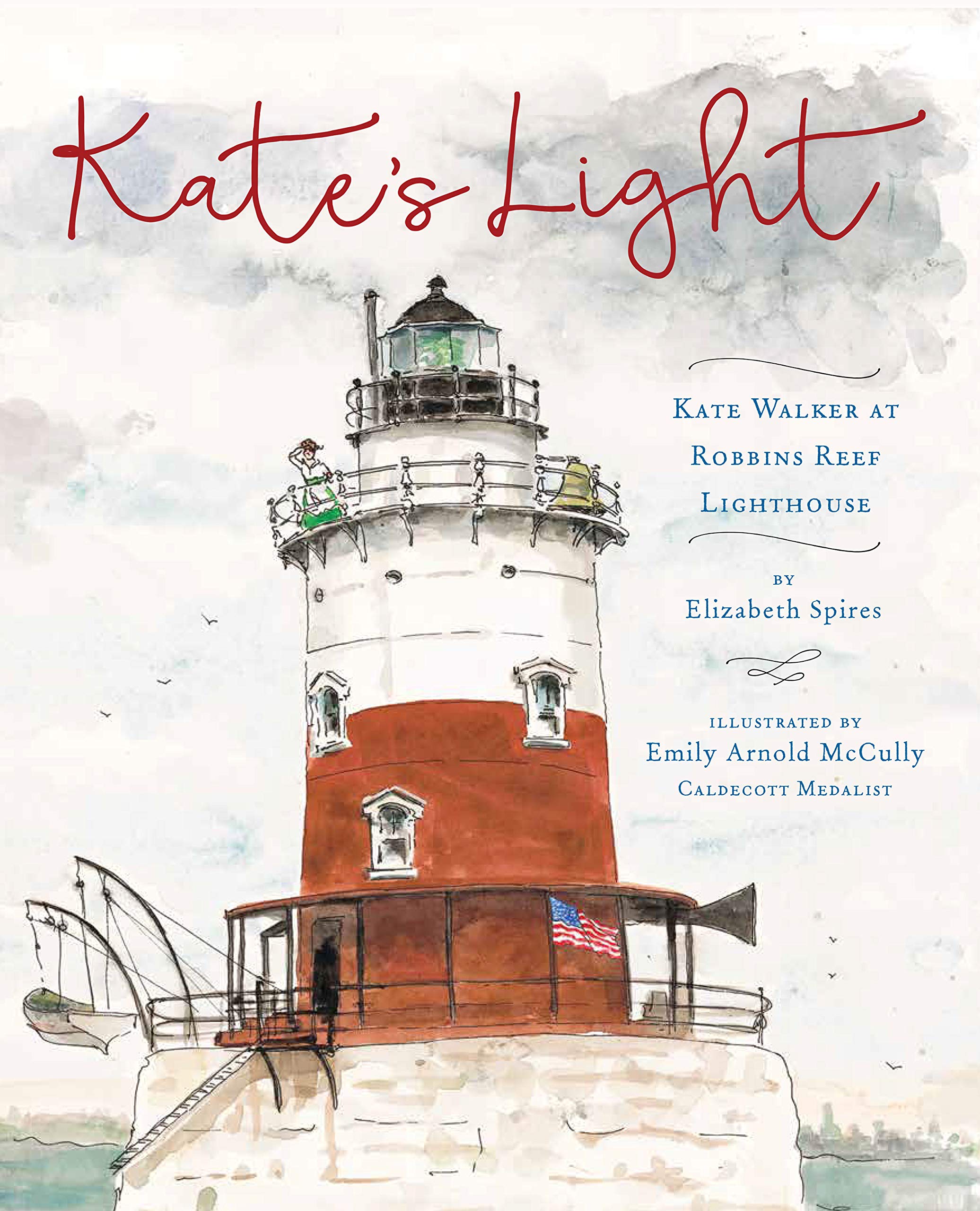
Kate's Light: Kate Walker at Robbins Reef Lighthouse: Spires, Elizabeth,  McCully, Emily Arnold: 9780823443482: Amazon.com: Books

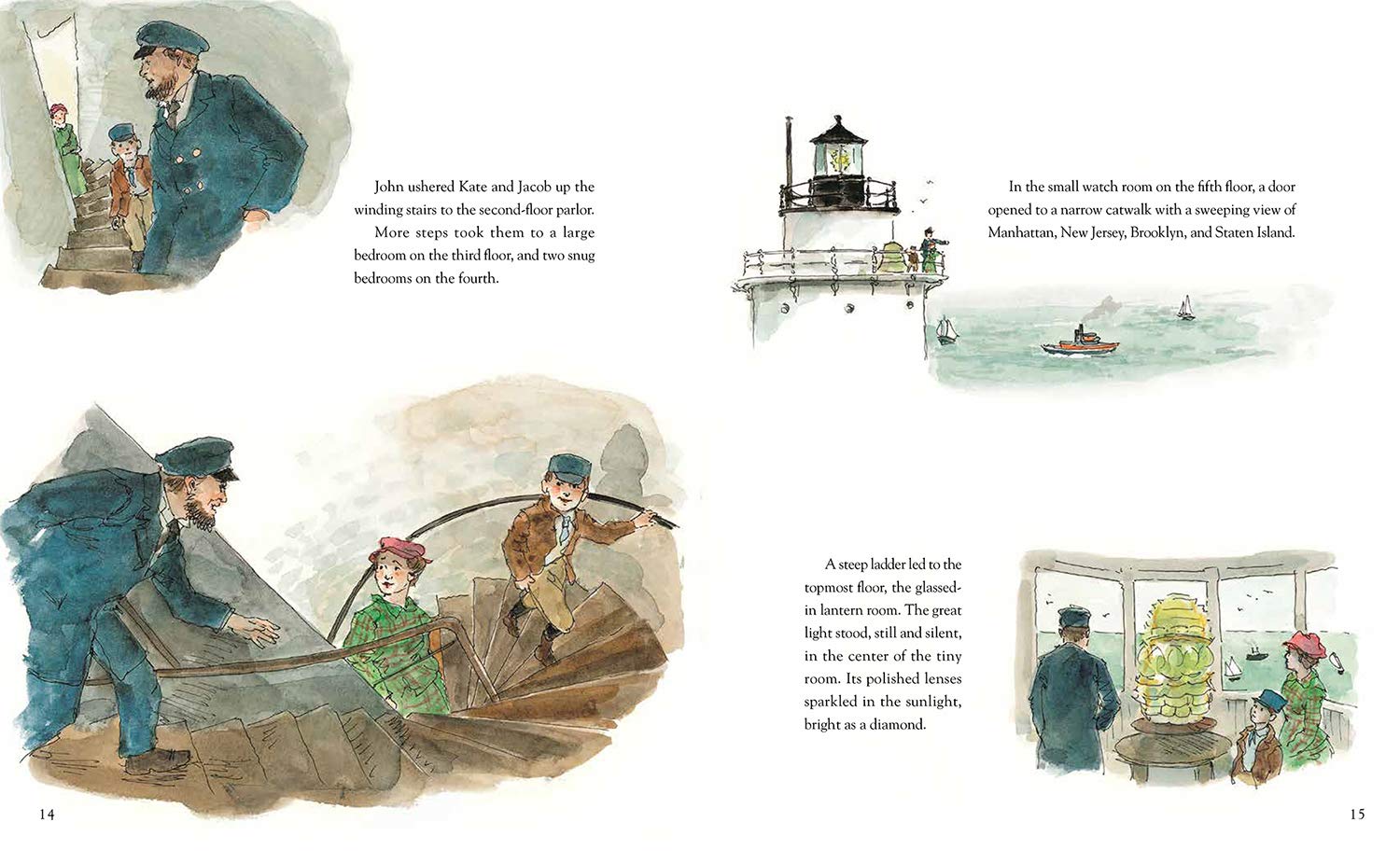
Summary:  When Kate Kaird left Germany for America with her young son Jacob, she couldn’t have imagined what lay in store for her.  She soon married John Walker, the keeper of the Sandy Hook Lighthouse, and within a year they moved into the lighthouse to live.  She spent the next 33 years there, taking over all the duties after John died when their daughter was only three years old.  It took four years for her to get the title and salary of permanent lighthouse keeper, securing the job after two men passed it up as being too lonely.  Kate kept the light clean and polished, rowed back and forth to Staten Island for visits and supplies, and rescued more than fifty people during her long career.  Includes additional information with a photo and a list of sources; endpapers include a map of the lighthouse and the surrounding area.  40 pages; grades 1-5.

Pros:  Another great choice for Women’s History Month, this would also pair well with Sophie Blackall’s Hello, Lighthouse!  The lengthy story gives plenty of details which are supplemented further with the author’s note.  As always, Emily Arnold McCully’s illustrations are excellent and really capture the different seasons and types of weather experienced by the lighthouse dwellers.

Cons:  The story is long enough that younger readers might get antsy during a read-aloud.

A Plan for the People: Nelson Mandela’s Hope for His Nation by Lindsey McDivitt, illustrated by Charly Palmer (Released March 30)

Published by Eerdman’s Books for Young Readers

A Plan for the People - Lindsey G Mcdivitt, Charly Palmer : Eerdmans

Summary:  This biography of Nelson Mandela covers his early life in the first few pages, focusing primarily on his imprisonment from 1963 until 1990.  Mandela studied and taught others while in prison, reaching out to both white guards and black prisoners.  His isolation gradually decreased as reforms slowly came to South Africa, and on February 2, 1991, he was released from prison.  Three years later, he voted for the first time in his life–and was elected president of South Africa.  Includes extensive back matter:  lengthy author’s and illustrator’s notes; additional information on apartheid, the ANC, and Mandela’s imprisonment; a timeline of Mandela’s life and South Africa’s journey to democracy; and lists of books, videos, and websites with additional information (but, surprisingly, no photos).  48 pages; grades 3-6.

Pros:  An inspiring look at Nelson Mandela’s life, with beautiful, brilliant acrylic paintings to illustrate it, and lots of material to support further research.

Cons:  I wish this book had been edited more; the text is lengthy, and some of Mandela’s story could have been more effectively shown rather than told. 

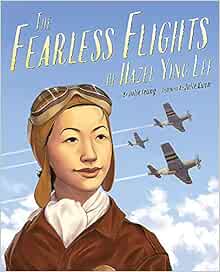
The Fearless Flights of Hazel Ying Lee by Julie Leung, illustrated by Julie Kwon

Published by Little, Brown Books for Young Readers

The Fearless Flights of Hazel Ying Lee: Leung, Julie, Kwon, Julie:  9780759554955: Amazon.com: Books

Summary:  Growing up in Portland, Oregon, Hazel Ying Lee was a fearless girl who loved running races with her brothers.  She fell in love with flying as a teenager, taking a job as an elevator operator (one of the few jobs open to Chinese Americans) to fund her flying lessons.  When World War II began, she signed up for the Women Airforce Service Pilots (WASPs), and became one of the few women to fly high-powered fighter jets.  In 1944, a radio tower miscommunication resulted in a collision between Hazel’s plane and another, and she died two days later from her injuries.  Her family had to appeal all the way to the White House for permission to bury her in the whites-only cemetery of their choice.  An author’s note gives additional information, including the facts that WASPs finally received veteran status from Jimmy Carter in 1977 and Barack Obama awarded them the Congressional Gold Medal in 2009; also includes a list of additional resources.  48 pages; grades 1-5.

Pros:  Just in time for Women’s History Month (or at least the last ten days of it), this excellent picture book biography tells the story of a courageous young woman who overcame many obstacles to pursue her dream.  The additional resources make it a great starting point for more research.

Cons:  No photos in the book, so here you go.

Meet Hazel Ying Lee, The First Chinese American Woman to Be a Pilot in the  U.S. Military During WWII

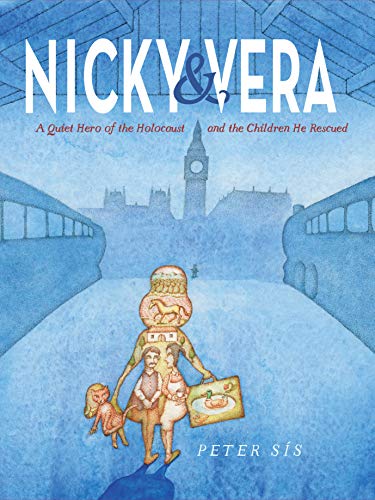
Nicky & Vera: A Quiet Hero of the Holocaust by Peter Sis

Published by Norton Young Readers

Nicky & Vera: A Quiet Hero of the Holocaust and the Children He Rescued -  Kindle edition by Sís, Peter. Children Kindle eBooks @ Amazon.com.
Illustrator Peter Sís shares hard stories with children – The Forward

Summary:  Nicholas Winton was a young man living in England when Germany invaded Czechoslovakia in 1938, and a friend asked him to come to Prague to help.  England was accepting refugees under the age of 17 if they had families to take them in.  Nicky set up an office in Prague and began collecting names and photos of children.  One of those children was Vera, a 10-year-old girl whose Czech parents wanted to send her to England.  A few months later, Nicky returned to London to recruit families to take the children.  He eventually got almost 700 children (including Vera) on eight trains out of Czechoslovakia.  A ninth train with 250 children never made it out after the borders were closed, and only two children on that train survived the war.  After the war, Vera returned home, but her entire family had perished, so she moved permanently to England.  Nicky never told anyone what he had done until his wife discovered his lists in 1989 and arranged a TV reunion with many of the people he rescued.  Nicky never thought of himself as a hero.  “I only saw what needed to be done.”  Includes a long author’s note with additional information and a photo of a young Nicholas Winton.  64 pages; grades 2-6.

Pros:  Peter Sis uses spare, understated text and folk art-style illustrations to tell this amazing story of a quiet hero and the girl whose life he saved (among many others).  Keep a Kleenex handy as you read this compelling story which is sure to engage readers well into middle school and may be considered for a few awards next year. And while you have the tissues out, watch this YouTube clip of Nicholas and Vera’s 1988 reunion on British television.

Cons:  I wish there had been a few more photos.

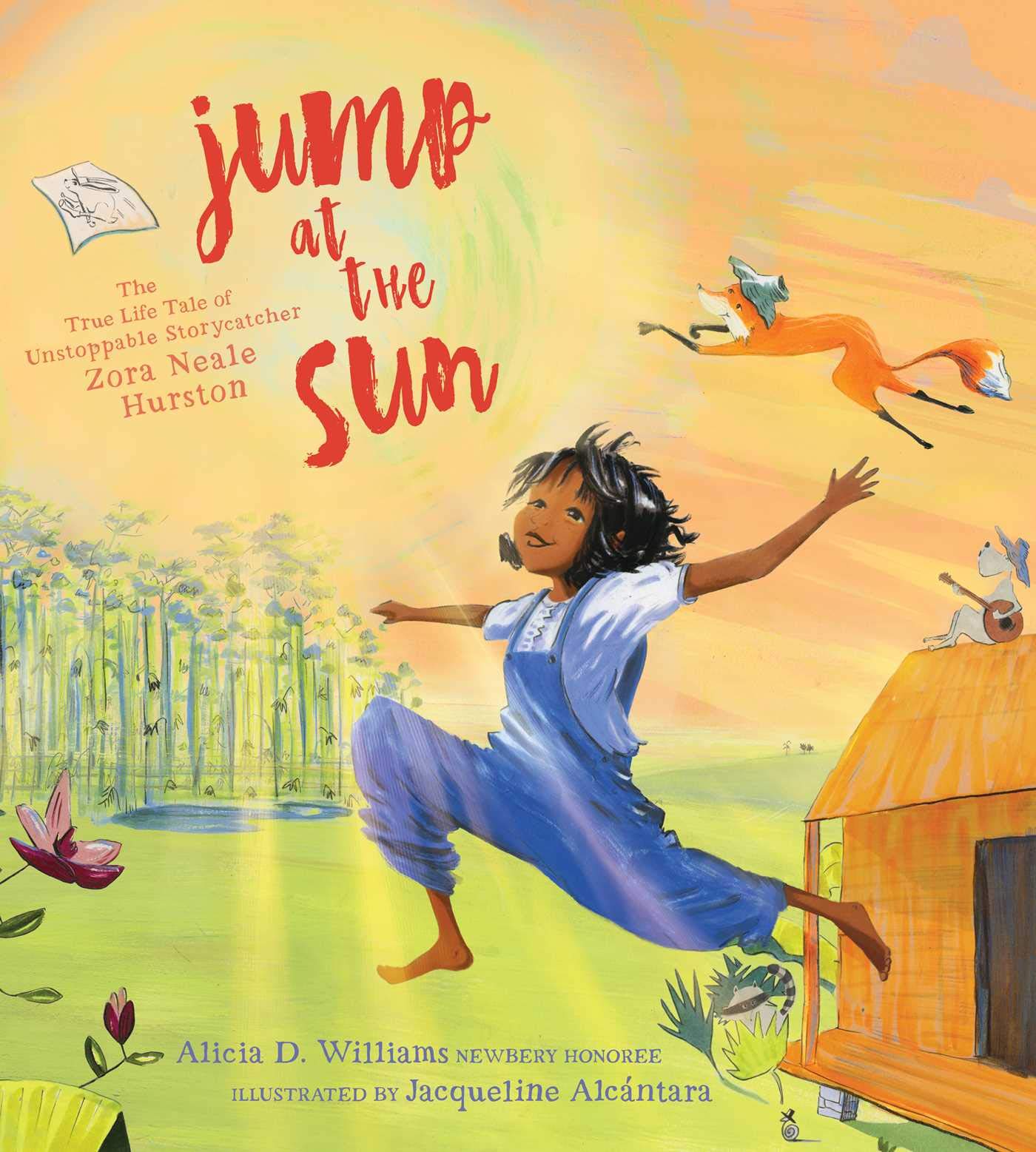
Jump at the Sun: The True Life Tale of Unstoppable Storycatcher Zora Neale Hurston by Alicia D. Williams, illustrated by Jacqueline Alcántara

Published by Atheneum/Caitlyn Dlouhy Books

Jump at the Sun: The True Life Tale of Unstoppable Storycatcher Zora Neale  Hurston: Williams, Alicia D., Alcántara, Jacqueline: 9781534419131:  Amazon.com: Books

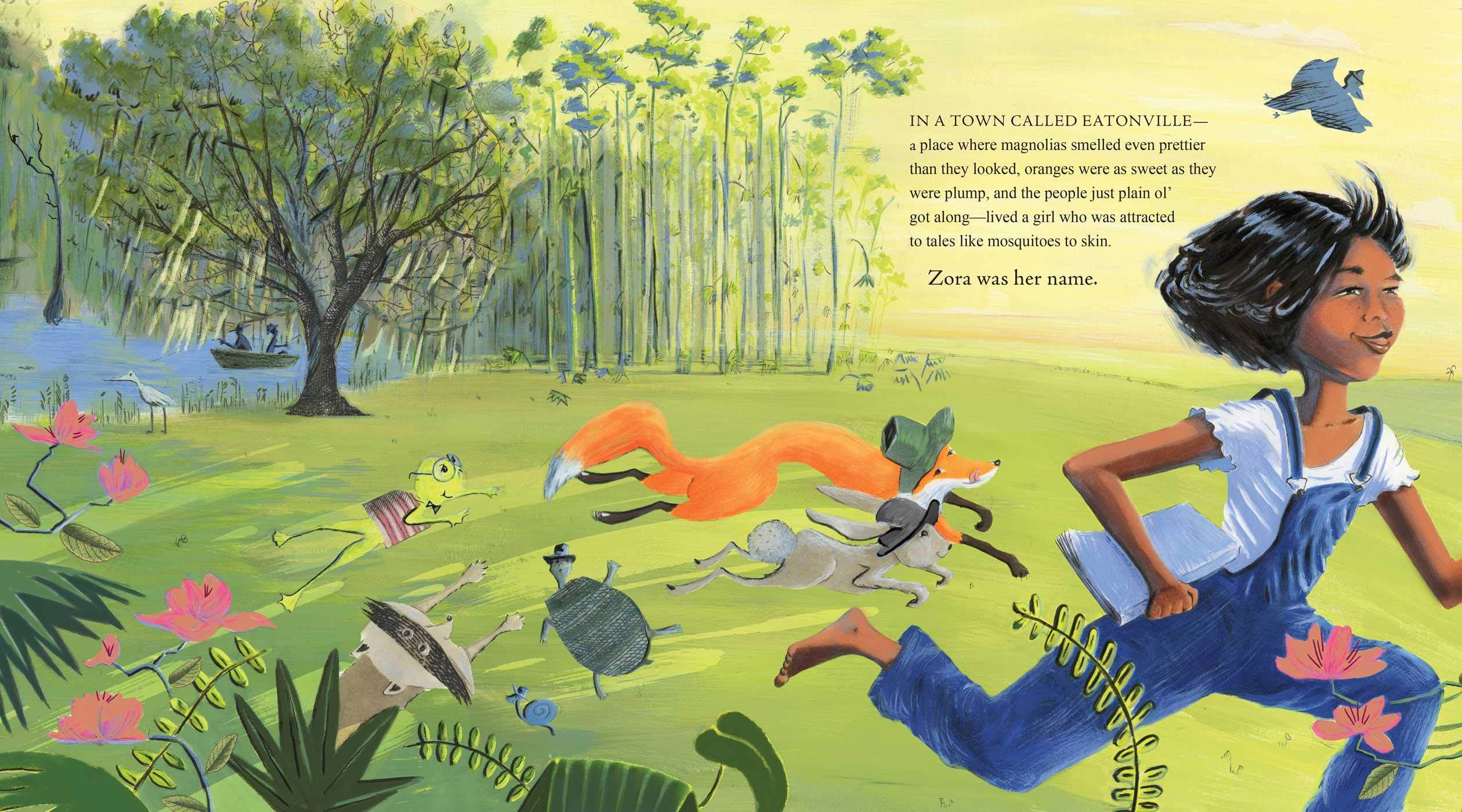
Summary:  Growing up in Eatonville, Florida, Zora loved any kind of storytelling, and would hang around the general store to hear the townsfolk swapping stories.  Her father and grandmother didn’t approve, but her mother encouraged her to “jump at de sun.  You might not land on de sun, but at least you’ll get off de ground.”  Sadly, Zora’s mother died when she was 13 years old, and her stepmother didn’t encourage her dreams.  Zora was on her own at the age of 14, and she went to school as much as she could, graduating high school in her late 20’s.  A college anthropology professor encouraged her to collect Negro folklore.  She started the project in Eatonville, then moved on to other states, Haiti, and the Bahamas.  Zora spent the rest of her life back in Eatonville, typing up those stories and writing her own as well.  Includes an author’s note with additional information; a few Hurston stories recommended for children; and a list of sources.  48 pages; grades 1-5.

Pros:  The story of Zora Neale Hurston is told with plenty of energy in the voice of the stories she loved by Newbery honoree Alicia D. Williams.  The illustrations complement the story, with cartoon bubbles that includes snippets of those stories.  

Cons:  For such a long picture book biography, which would make a great starting point for research, there was surprisingly little back matter.

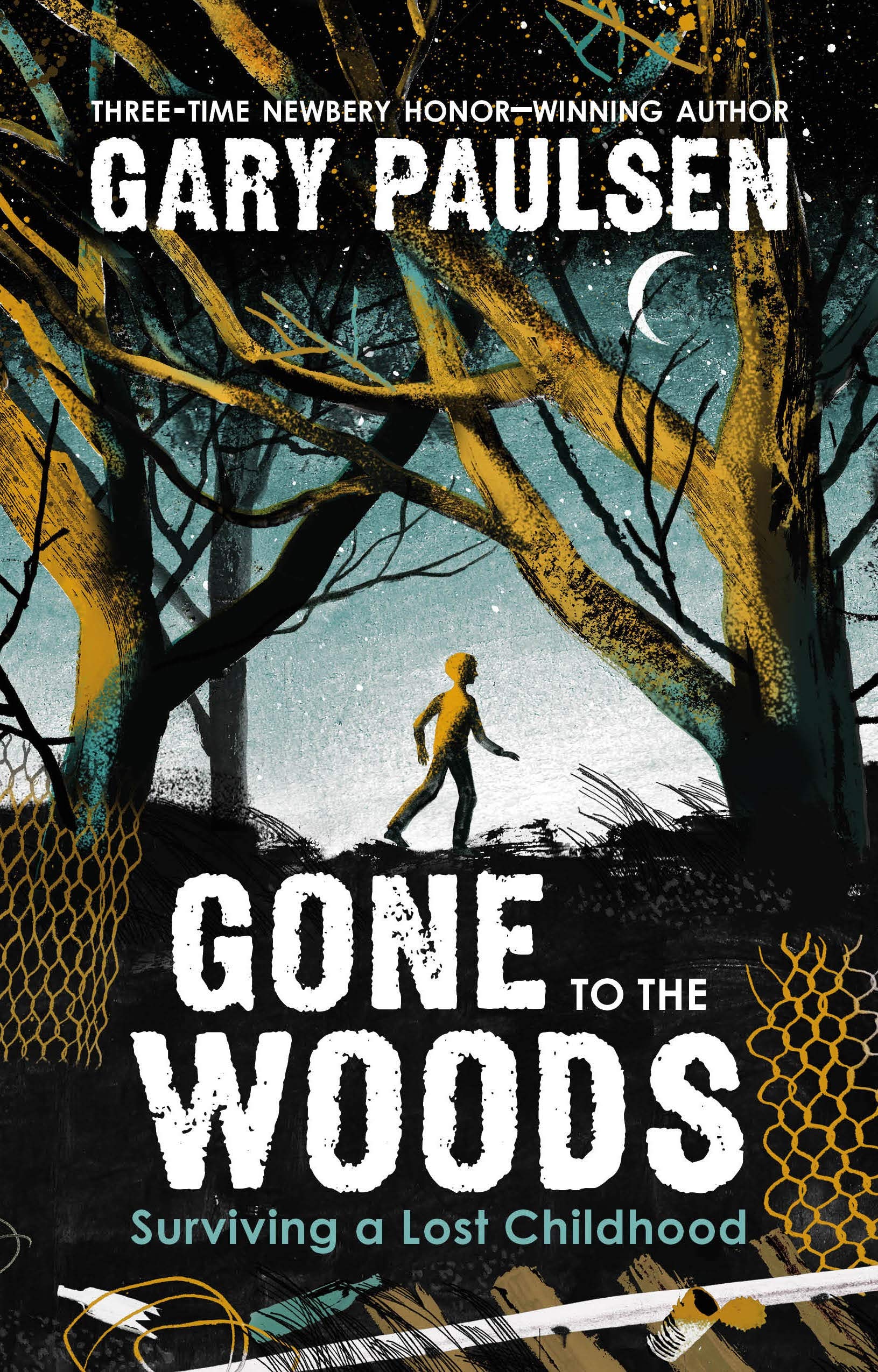
Gone to the Woods: Surviving a Lost Childhood by Gary Paulsen

Published by Farrar Straus Giroux

Gone to the Woods: Surviving a Lost Childhood: Paulsen, Gary:  9780374314156: Amazon.com: Books

Summary:  Beloved author Gary Paulsen writes of his “lost childhood” in five sections, beginning in 1944 when, at the age of 5, his grandmother took him from his alcoholic mother and sent him to live on a remote farm with his aunt and uncle.  Although the work there was hard, he felt happy and secure until his mother unexpectedly showed up and took him to the Philippines to live with his father for the first time.  The horrific ship ride there and his time in Manila make up the second and third parts of the book, then he moves on to age 13, back in the U.S.  His parents drank and fought constantly, and he was pretty much on his own, running away regularly to work on farms and at a carnival.  The final chapter tells of his time in the army, winding up with his decision to make more of himself than the other men he saw there.  On the last page, at the age of 80, he finds a notebook that a beloved librarian gave him, and thinks, “What the hell.  Might as well write something down.”  368 pages; grades 5-8.

Pros:  I zipped through this compelling memoir in just a couple of days, both mesmerized and horrified by Paulsen’s stories of his incredibly difficult childhood and adolescence.  Written in third person (he refers to himself as “the boy”), this story will be appreciated by fans of other Paulsen books, and will help readers understand the experiences that have influenced his work (although you might want to preview it before handing to some wide-eyed fourth-grade Hatchet fan).

Cons:  This is more of a memoir than an autobiography, and readers will only learn certain episodes from Paulsen’s youth rather than all that happened to him in those years. 

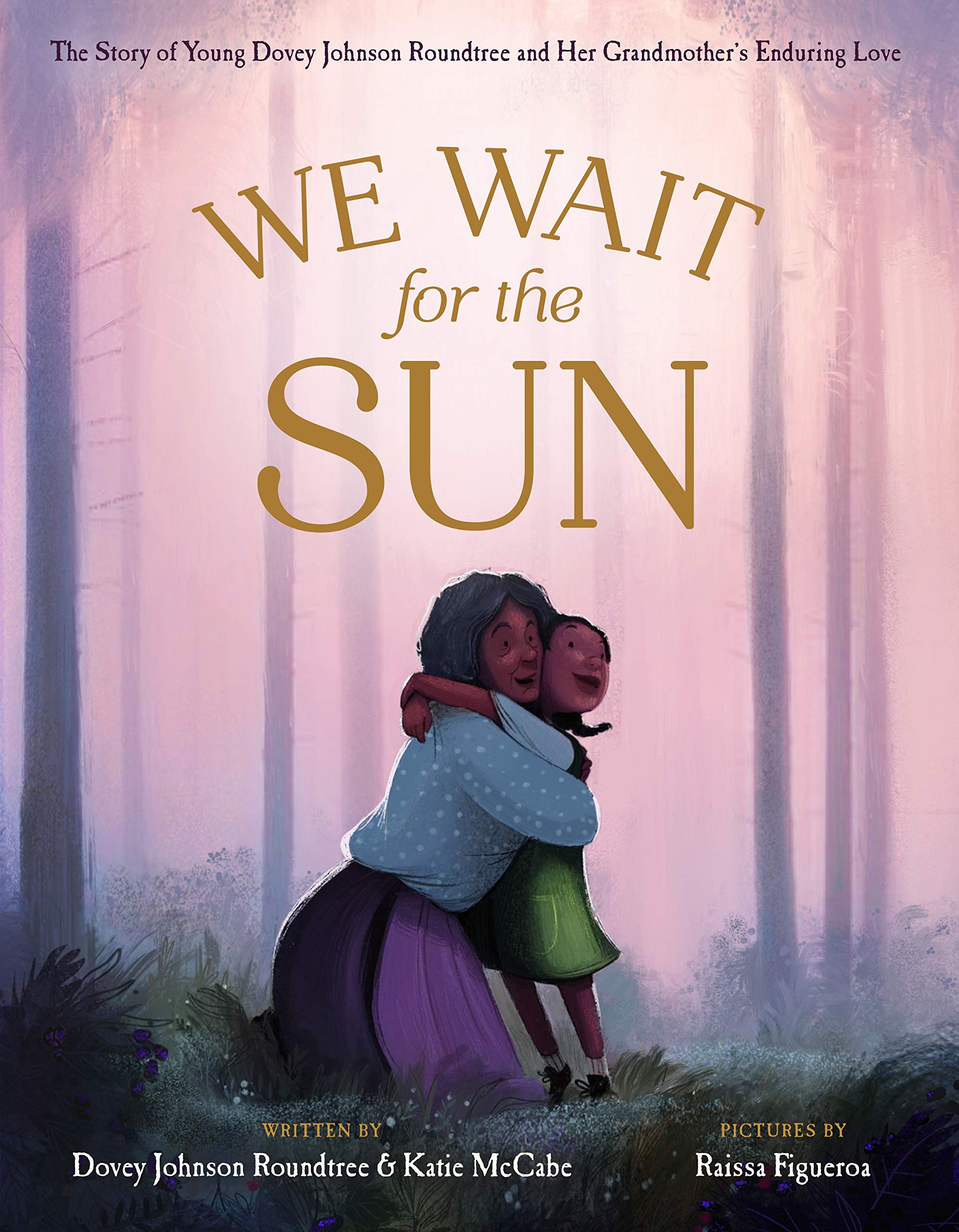
We Wait for the Sun by Dovey Johnson Roundtree and Kate McCabe, illustrated by Raissa Figueroa

Published by Roaring Brook Press

We Wait for the Sun: McCabe, Katie, Figueroa, Raissa: 9781250229021: Amazon.com:  Books
We Wait for the Sun | Katie McCabe | Macmillan

Summary:  Young Dovey follows her grandmother and other neighborhood women into the dark woods to pick berries before dawn.  Her grandmother reassures her when she’s scared of the dark, and before long everyone is filling their pails with berries.  Suddenly, Grandma stops and tells Dovey to look.  The sky turns from black to pink to gold, and as the new day begins, they head back home again.  Includes a four-page author’s note and additional information about civil rights leader Dovey Mae Johnson Roundtree and her grandmother Rachel Millis Bryant Graham; photos; a timeline; and a bibliography.  40 pages; grades K-6.

Pros:  This would make a great mentor text for personal narratives, complete with the beautiful illustrations that show the changing light as the night gradually gives way to daytime.  The extensive back matter makes this an excellent research resource that could be used well into middle school.

Cons:  The back matter is quite long, written in a single-spaced small font; while I appreciated all the information, it would have been nice to have something more accessible for the story’s audience.

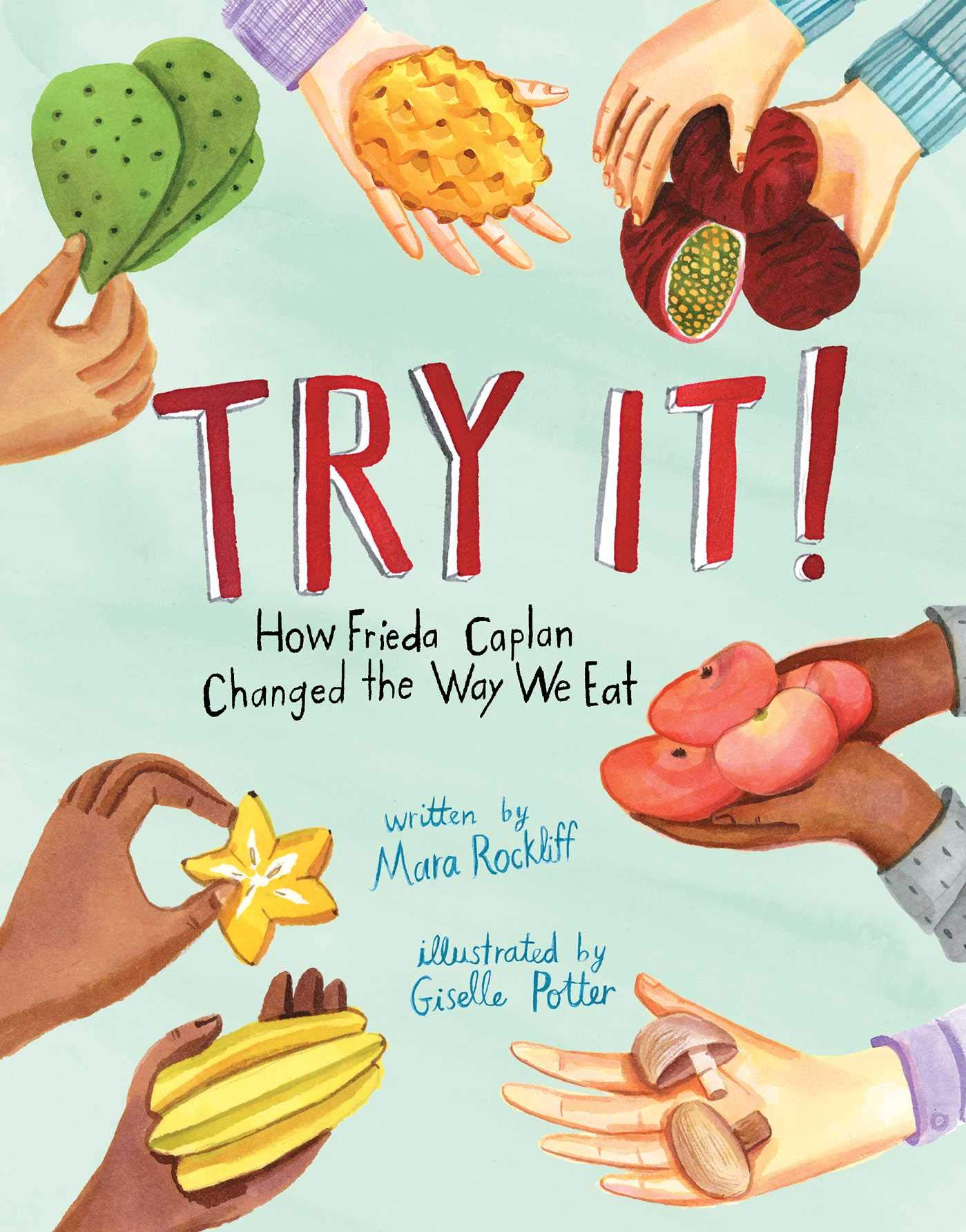
Try It! How Frieda Caplan Changed the Way We Eat by Mara Rockliff, illustrated by Giselle Porter

Published by Beach Lane Books

Try It!: How Frieda Caplan Changed the Way We Eat: Rockliff, Mara, Potter,  Giselle: 9781534460072: Amazon.com: Books
Try It! | Book by Mara Rockliff, Giselle Potter | Official Publisher Page |  Simon & Schuster

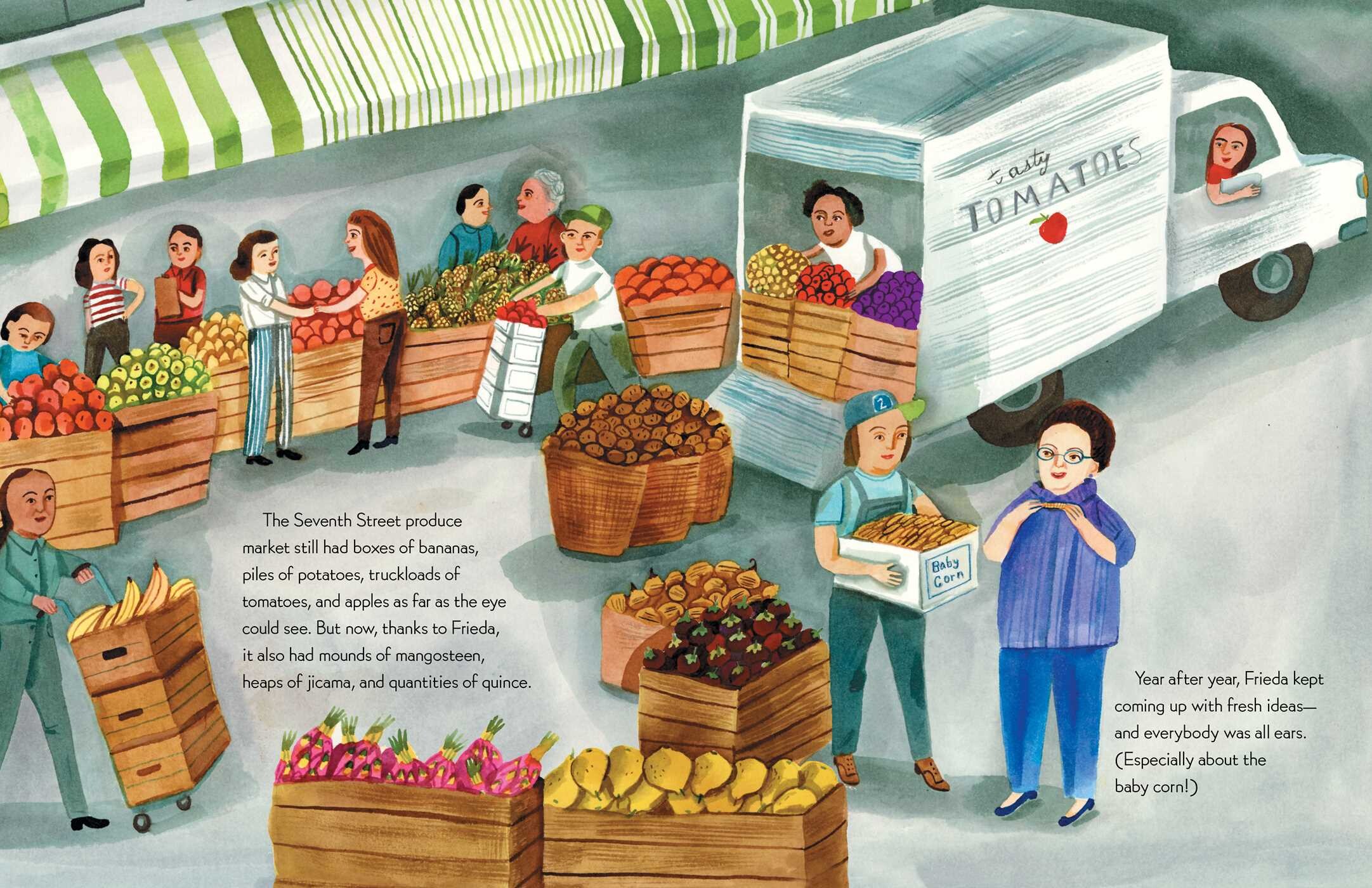
Summary:  When Frieda Caplan started working at the Seventh Street Produce Market, she saw piles of bananas, potatoes, apples, and tomatoes.  Hoping to introduce a bit more variety, she started selling mushrooms.  It took some convincing, but before long people began to buy them.  Frieda went on to start her own produce company, where she loved trying new fruits and vegetables.  Kiwis, jicama, blood oranges…Frieda would get a funny feeling in her elbows when she tried something that she thought others would enjoy.  Thanks in part to Frieda and the produce company her daughters and granddaughters now run, there are more than ten times as many varieties of fruits and vegetables in supermarkets than there were in the 1960’s.  Includes an author’s note giving more information about Frieda and her company.  32 pages; ages 4-8.

Pros:  The energetic writing and colorful illustrations of a great variety of fruits and vegetables capture Frieda’s enthusiasm for her work and may entice picky eaters to be a bit more adventurous.

Cons:  I was hoping for a bit more information in the author’s note about the funny feeling in the elbows, but alas, there was no further explanation.

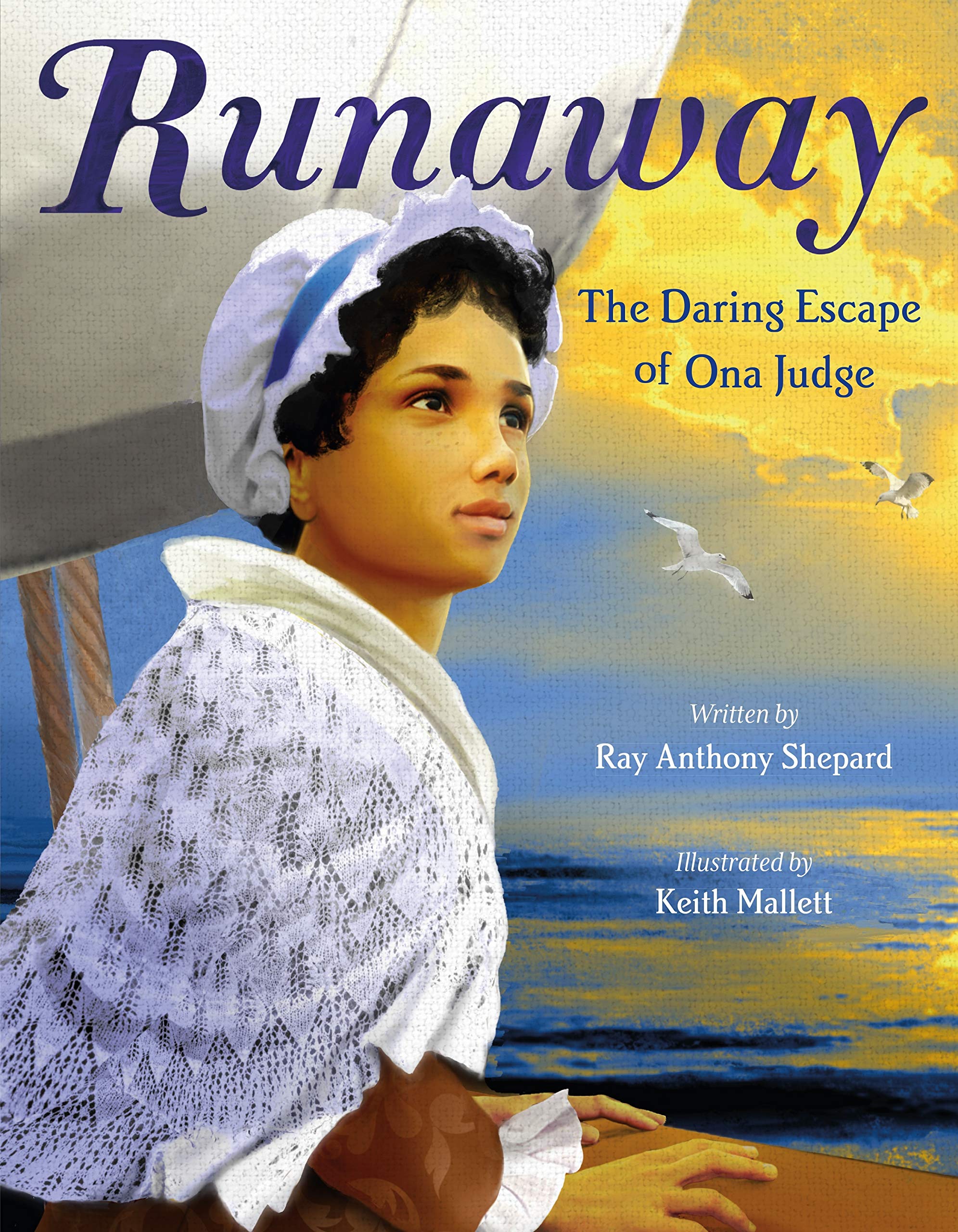
Runaway: The Daring Escape of Ona Judge by Ray Anthony Shepard, illustrated by Keith Mallet

Published by Farrar, Straus and Giroux

Image result for runaway the daring escape of ona judge

Summary:  The narrator addresses Ona Judge, asking her why she ran away from slavery in the home of George and Martha Washington.  As Martha’s personal slave, Ona had fine clothes, good food, and the chance to visit some of the best homes in New York and Philadelphia.  She also never had the chance to learn to read and write and was given as a gift to Martha’s “mean and sassy” granddaughter.  Ona left Philadelphia one night and escaped to New Hampshire, where she lived the rest of her life as a fugitive, despite George Washington’s efforts to bring her back to his family.  Includes an author’s note, timeline, bibliography, and a note on the text explaining the author’s poetic use of rhetorical questions.  40 pages; grades 1-5.

Pros:  This haunting text explores the question of why someone who had a relatively luxurious life, but was enslaved, would leave that life behind.  The excellent back matter provides additional context.  Older students may want to move from this book to Never Caught: The Story of Ona Judge by Erica Armstrong Dunbar and Kathleen Van Cleve.

Cons:  Reviews I’ve seen recommend this book for ages 3-6 or 4-8, but I think older elementary and even middle school students would find Ona’s story thought-provoking.

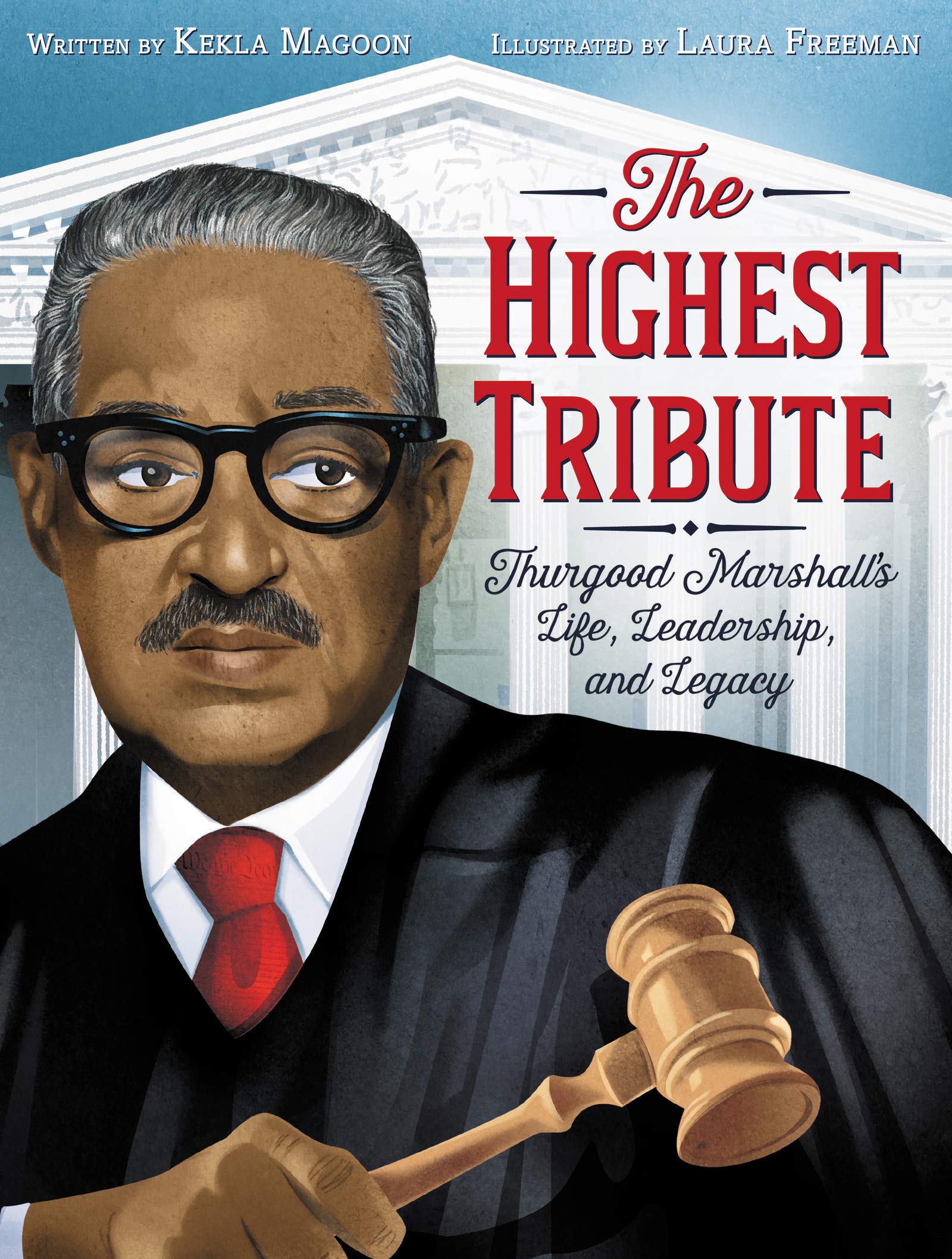
The Highest Tribute: Thurgood Marshall’s Life, Leadership, and Legacy by Kekla Magoon, illustrated by Laura Freeman

Published by Quill Tree Books

Image result for highest tribute thurgood amazon
Image result for highest tribute thurgood laura freeman

Summary:  When Thoroughgood Marshall was in second grade, he decided to change his name to Thurgood.  Growing up in Baltimore, he saw plenty of other things he wanted to change in his segregated city.  After attending college and law school, Thurgood worked for the NAACP, where he argued several cases before the Supreme Court, including Brown v. Board of Education of Topeka.  In 1967, President Lyndon Johnson nominated Marshall to the Supreme Court, where he became the first Black justice.  Includes a timeline; additional information on Thurgood Marshall’s major court cases; a list for further reading; and a bibliography.  40 pages; grades 2-5.

Pros:  It’s a tossup as to which Thurgood Marshall picture book biography I would choose…this or the Jonah Winter/Bryan Collier collaboration Thurgood (2019).  This one packs a lot of information into 40 pages and has excellent back matter, probably giving it an edge as a book for research.

Cons:  Most reviews recommend this for readers as young as 4 or 5.  If you want to try it out in a kindergarten class, more power to you, but I think it would have greater interest and impact with older kids.