Mehndi Boy by Zain Bandali, illustrated by Jani Balakumar

Published by Annick Press

Summary:  Tehzeeb loves art and fashion, so it seems like a natural fit when he learns how to do mehndi.  He practices on friends and family members and begins to get a reputation for his henna art.  His favorite uncle, Ayaz, is also an artist and has encouraged Tehzeeb’s creativity.  Tehzeeb is crushed when Ayaz Uncle expresses disapproval over his mehndi, telling him that it’s not an appropriate art form for boys.  Reluctantly, Tehzeeb stops doing mehndi until the day before his cousin’s wedding, when he and the bridal party get stuck in traffic.  Tehzeeb ends up saving the day, and Ayaz Uncle has to rethink his gender stereotypes.  Includes a glossary, additional information about mehndi and henna, and directions for drawing a paisley.  100 pages; grades 2-4.

Pros:  Tehzeeb is a great character who learns how to be true to himself, and it was refreshing to see Ayaz Uncle change his ideas and admit to his nephew that he was wrong. The story and the colorful illustrations make this an ideal book for early chapter book readers.

Cons:  I would have liked to know more about the history of this Muslim family with roots in India living in Tanzania.
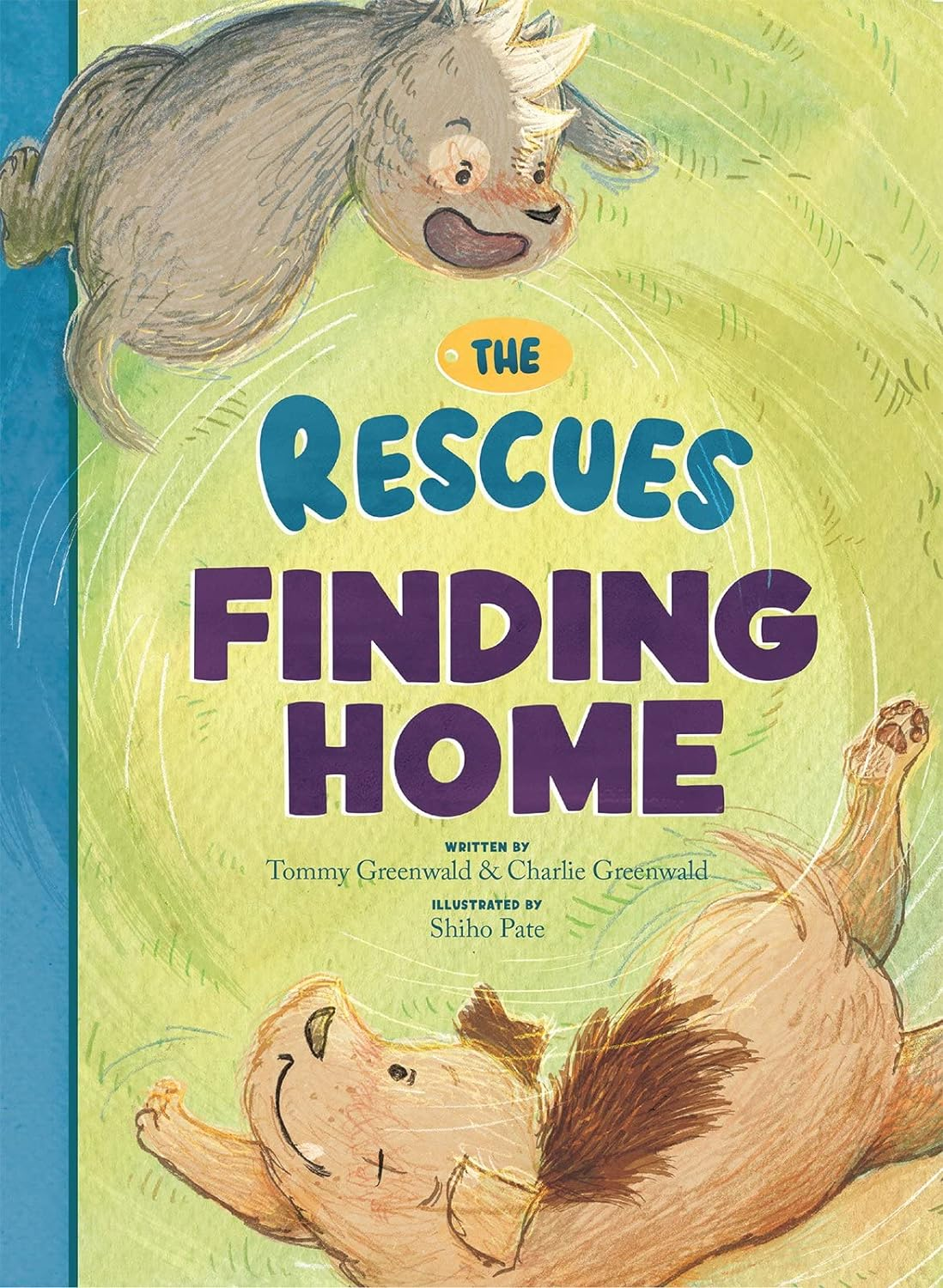
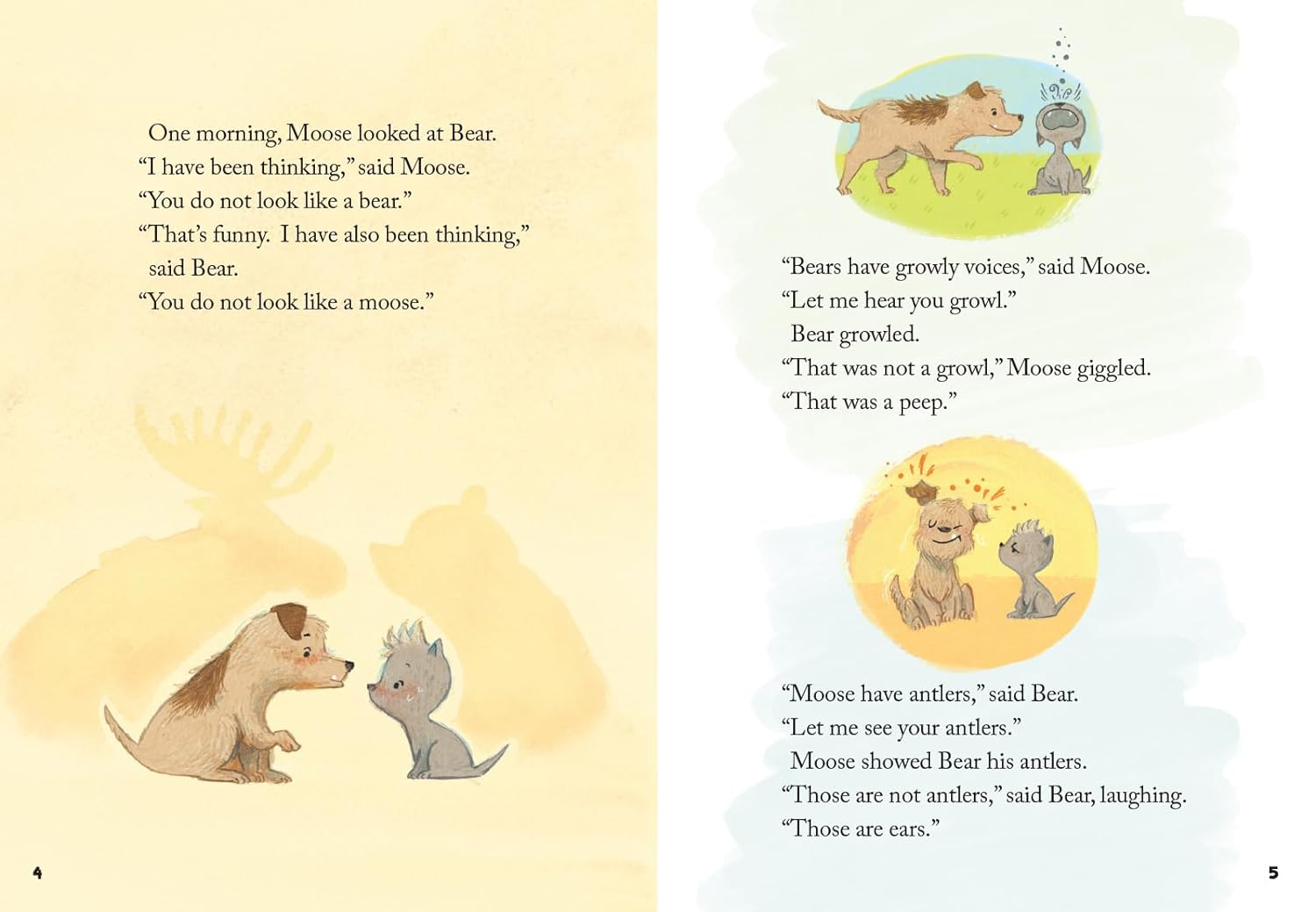
The Rescues Finding Home by Tommy Greenwald and Charlie Greenwald, illustrated by Shiho Pate

Published by Red Comet Press

Summary:  In three chapters, readers learn about one-eyed Moose and three-legged Bear, two dogs who become friends at a shelter.  A woman named Cathy adopts them at the end of the first chapter, and a stray cat named Tiger joins the family in chapter two.  In the final story, it’s bedtime for the three friends, but Tiger is too anxious to sleep in his new home.  After trying a few unsuccessful solutions, the three pets happily snuggle up together in the dogs’ bed for the night.  40 pages; grades K-2.

Pros:  I would challenge any new reader not to be completely charmed by Moose, Bear, and Tiger.  This is billed as book 1, so here’s hoping there will be more.

Cons:  The first two pages were so heart-rending that I could hardly go on.

Breaking News (Frankie and Friends, book 1) by Christine Platt, illustrated by Alea Marley

Published by Walker Books

Summary:  When Mama has to suddenly leave to cover a breaking news story, Frankie must cope with missing her mom.  Heading to her bedroom, she realizes that she has enough of her mother’s old equipment to start her own news program.  She gathers her doll and stuffed animal friends, assigning them different tasks, and they get to work.  When they hear someone crying in the house, they investigate and find Frankie’s teenage sister Raven, interviewing her to find out what’s wrong.  Frankie is proud to create her own news show and to help her big sister, and she knows Mama will be proud as well when she returns.  Includes several pages of information about the news and journalism.  80 pages; grades 1-4.

Pros:  A fun new early chapter book series that explores the process of gathering and sharing news and introduces a loving family with a hardworking young protagonist and her imaginary friends.

Cons:  Raven seemed unrealistically loving and upbeat for a young teenager interrupted from a crying session by her younger sister looking to broadcast a news story about it.

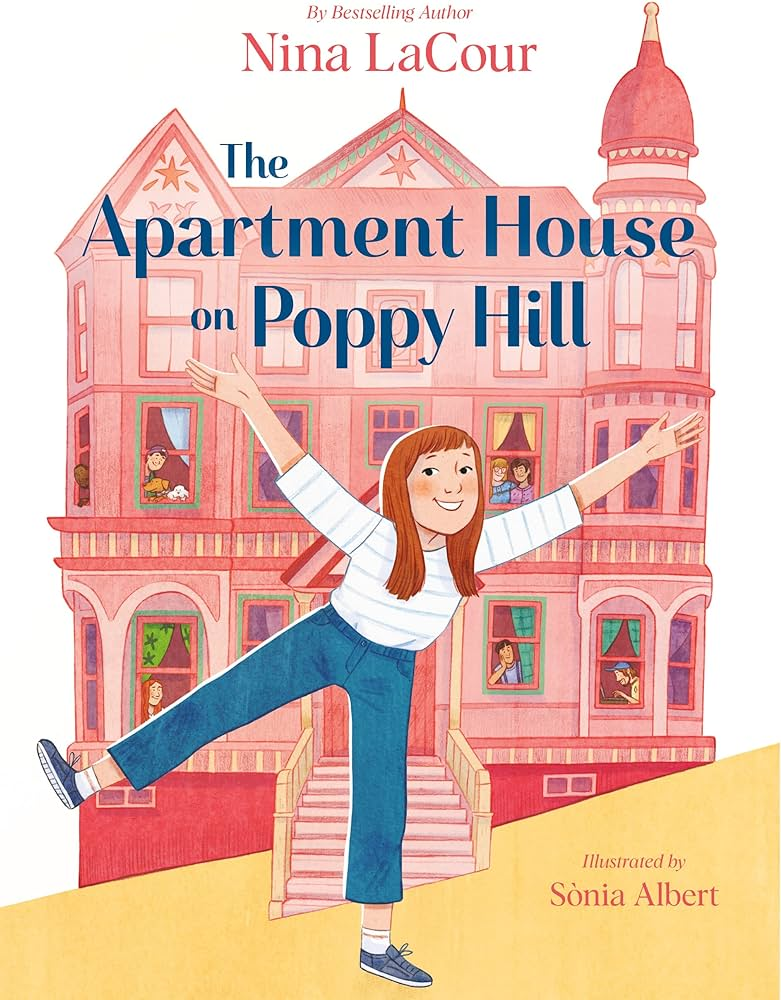
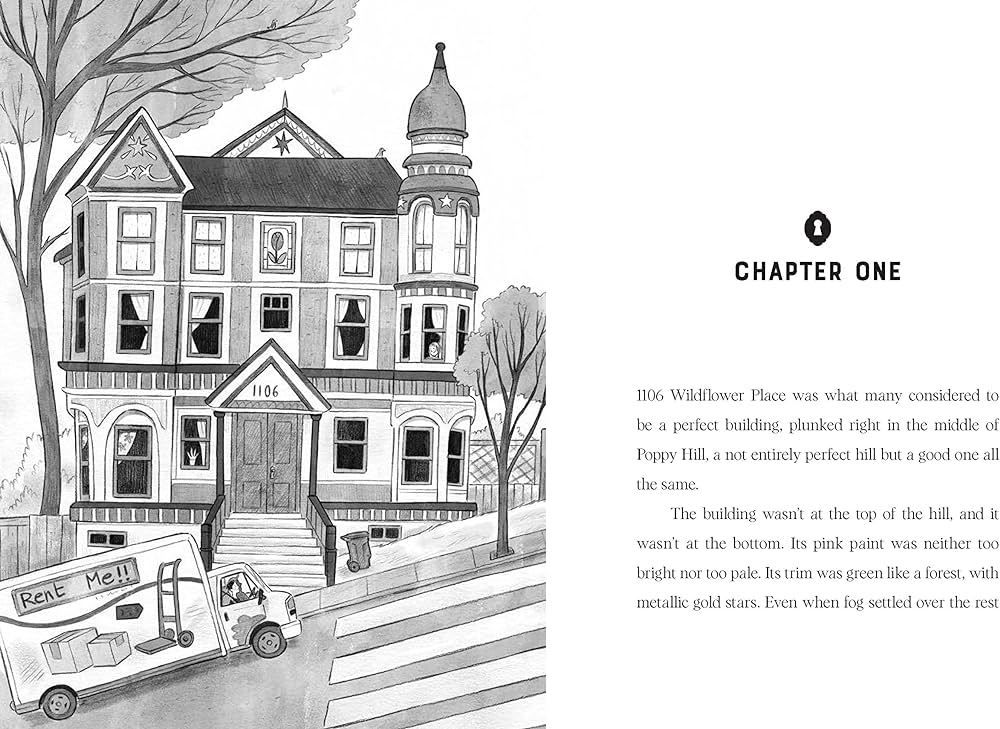
The Apartment House on Poppy Hill by Nina LaCour, illustrated by Sònia Albert

Published by Chronicle Books

Summary:  Ella and her two moms live in an apartment at 1106 Wildflower Place, a Victorian house on Poppy Hill in San Francisco.  There are four other apartments in the house, and Ella is good friends with all the residents except the mysterious and reclusive Robinsons who live on the top floor.  The book is divided into three sections: New Neighbors, in which the newest couple is welcomed into the building; Tea at Ten O’clock, where a series of interruptions delay Ella’s tea date with her neighbor Matilda; and The Greatest Mystery of All Time, which is solved when Ella finally gets to meet the Robinsons.  There’s a feel of more adventures ahead, so be on the lookout for a sequel. 132 pages; grades 2-5.

Pros:  A warm and inviting early chapter book with plenty of illustrations.  With two gay couples, two straight, a single woman, and a pretty quirky main character, the story exudes acceptance and community.

Cons:  I found Ella kind of annoyingly precocious.

The Case of the Strange Splash (Detective Duck #1) by Henry Winkler and Lin Oliver, illustrated by Dan Santat

Published by Harry N. Abrams

Summary:  Willow is a duck who’s been raised by a beaver since her egg was washed out of the nest and got stuck in a dam.  She’s curious and dreams of being a detective, so when a large black object mysteriously lands in her pond, she and her friends get to work figuring out what it is and where it came from.  Once they’ve established that it’s a car tire, they realize it’s bad for them to have it in their pond and get to work removing it.  Their teamwork results in a successful outcome, and Willow is able to convey a “recycle” message to the truck driver who left his tire behind.  80 pages; ages 6-9.

Pros:  A good beginner mystery with a nice environmental message and fun illustrations by Dan Santat (side note: I was thrilled that Santat won the National Book Award last week for A First Time for Everything).  Happily, this is billed as book 1, so we can look forward to reading more about Willow and her friends.

Cons:  Getting the tire out of the pond, billed as a mystery, seemed more like just a problem to solve.

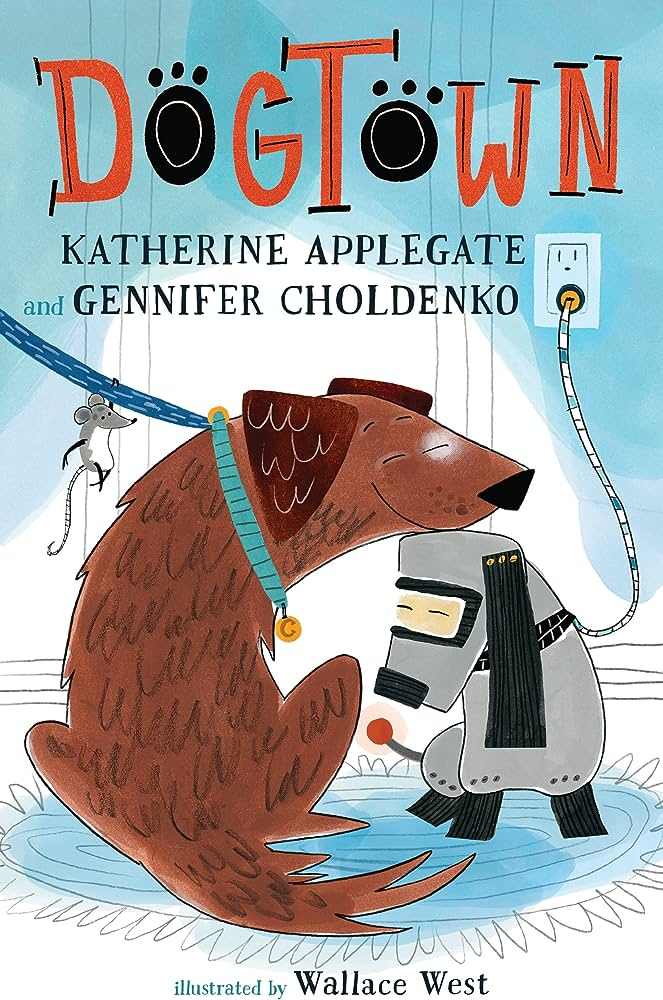
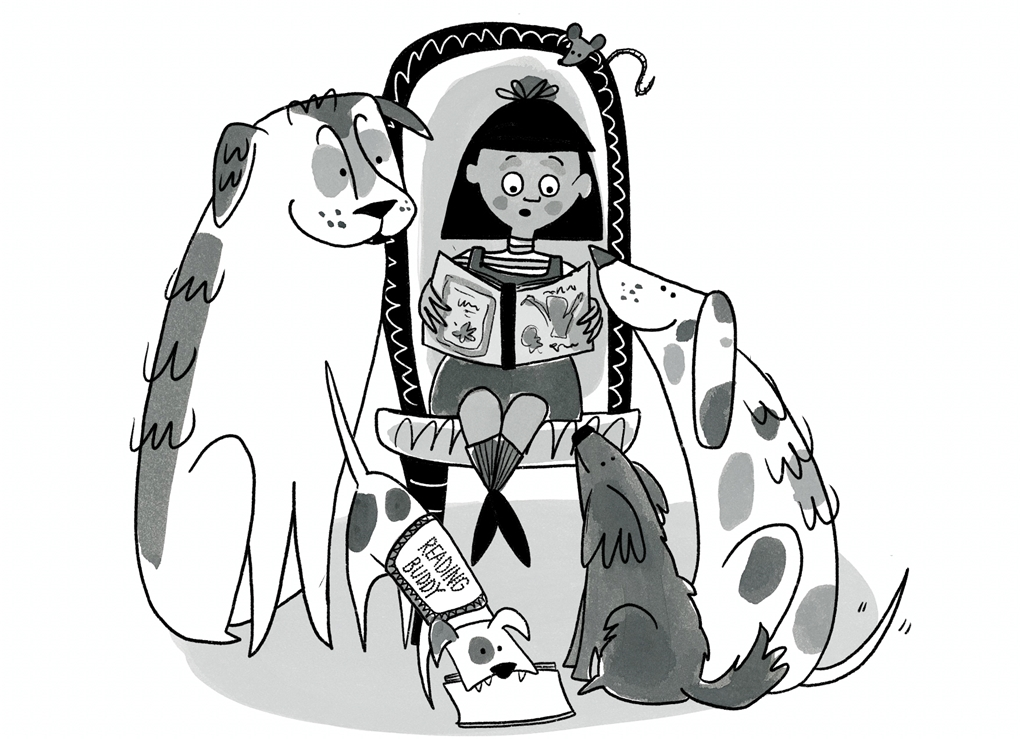
Dogtown by Katherine Applegate and Gennifer Choldenko, illustrated by Wallace West

Published by Feiwel & Friends

Summary:  Chance has had a rough year, winding up at a shelter called Dogtown minus one leg.  After the humans decide he’s a good luck charm, he gets the run of the place, eventually befriending Mouse (a mouse) and Metal Head (one of the robot dogs who also come to the shelter).  When Metal Head decides to escape and try to go back home, Chance and Mouse go along to offer help and moral support.  Metal Head’s boy, now a cool middle schooler, rejects him, and Metal Head is heartbroken.  Chance finally reveals his own story, encouraging Metal Head to focus on the future.  The three make it back to Dogtown, where Chance discovers he is on the dreaded List, meaning he will be heading for the great dog park in the sky.  His final desperate action results in a surprising happy and heartwarming ending; since this is billed as book 1, we may get to hear more of Chance’s story.  Includes a list of seven things kids can do to help shelter dogs.  352 pages; grades 3-6.

Pros:  I loved this book way more than I was expecting.  Although it’s over 300 pages, the chapters are short (some only a page), and there are plenty of illustrations, so it would make a great first “real” chapter book for an elementary reader.  It’s refreshing to see a book with both humor and heart aimed at those younger readers.

Cons:  Chance’s story just about broke me.


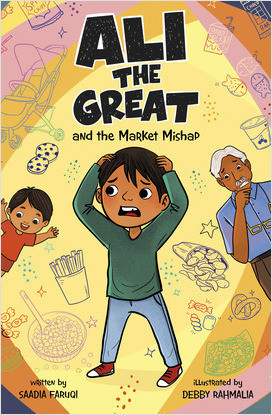
Ali the Great and the Market Mishap by Saadia Faruqi, illustrated by Debby Rahmalia

Published by Picture Window Books

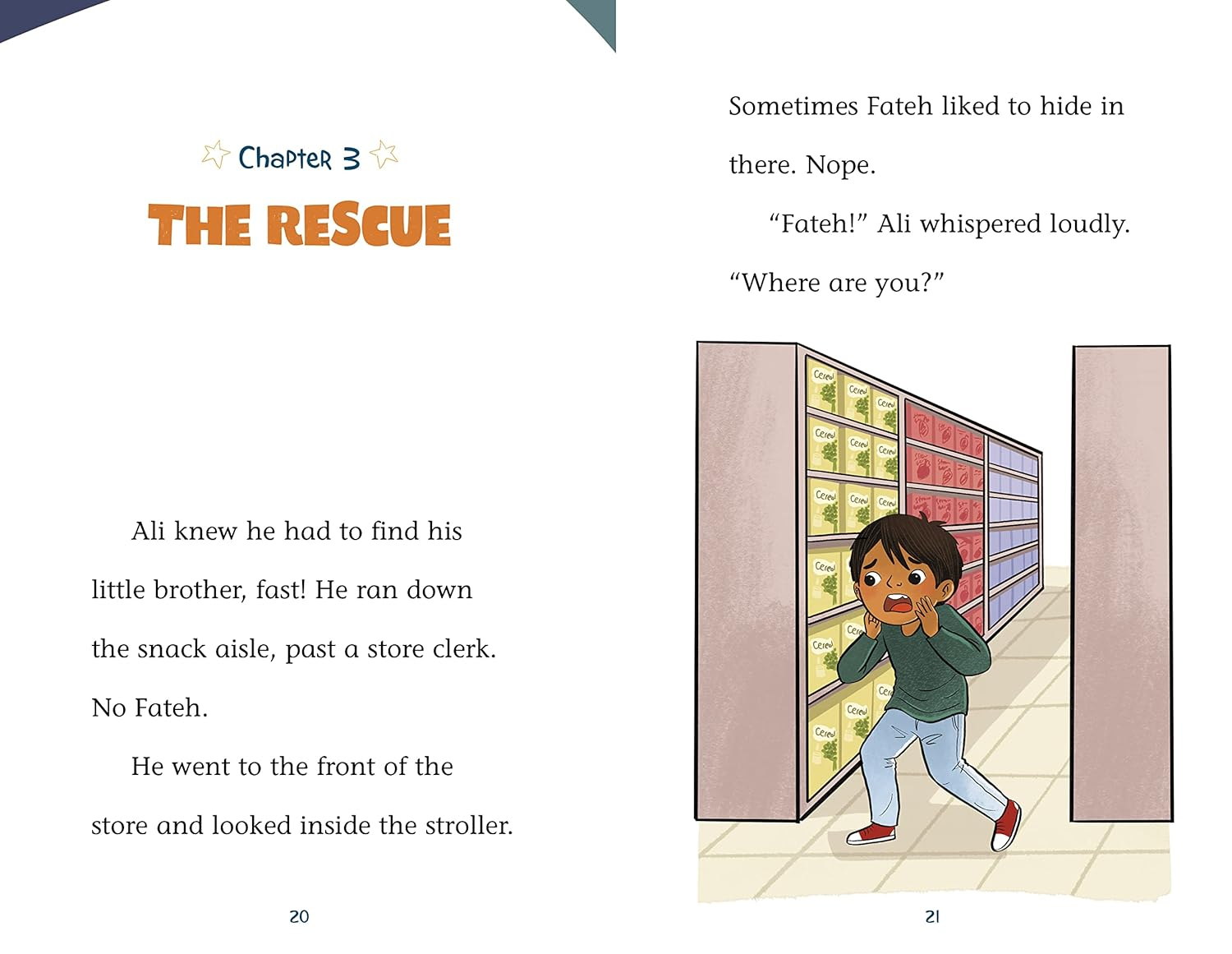
Summary:  Like Yasmin from another series by Saadia Faruqi, Ali is part of a Pakistani-American family, introduced on the first page.  When Dada, Ali’s grandfather, takes Ali and his little brother Fateh to the South Asian market to shop for snacks, Ali has his hands full keeping Fateh out of trouble.  The story unfolds in three chapters, with the three returning home safely with Dada’s favorite spicy chips by the end.  A few Urdu words are introduced with pronunciations and definitions before the story starts, and the back matter includes some jokes, a list of Dada’s favorite Pakistani snacks, and three questions/writing (and drawing) prompts about the story.  Three other books about Ali were published simultaneously.  32 pages; grades K-3.

Pros:  A cheerful early chapter book that introduces another Pakistani-American family and their everyday activities in a way that kids will connect to while learning a little bit about another culture.

Cons:  The plot was pretty mundane.

The Story of Gumluck the Wizard by Adam Rex

Published by Chronicle Books

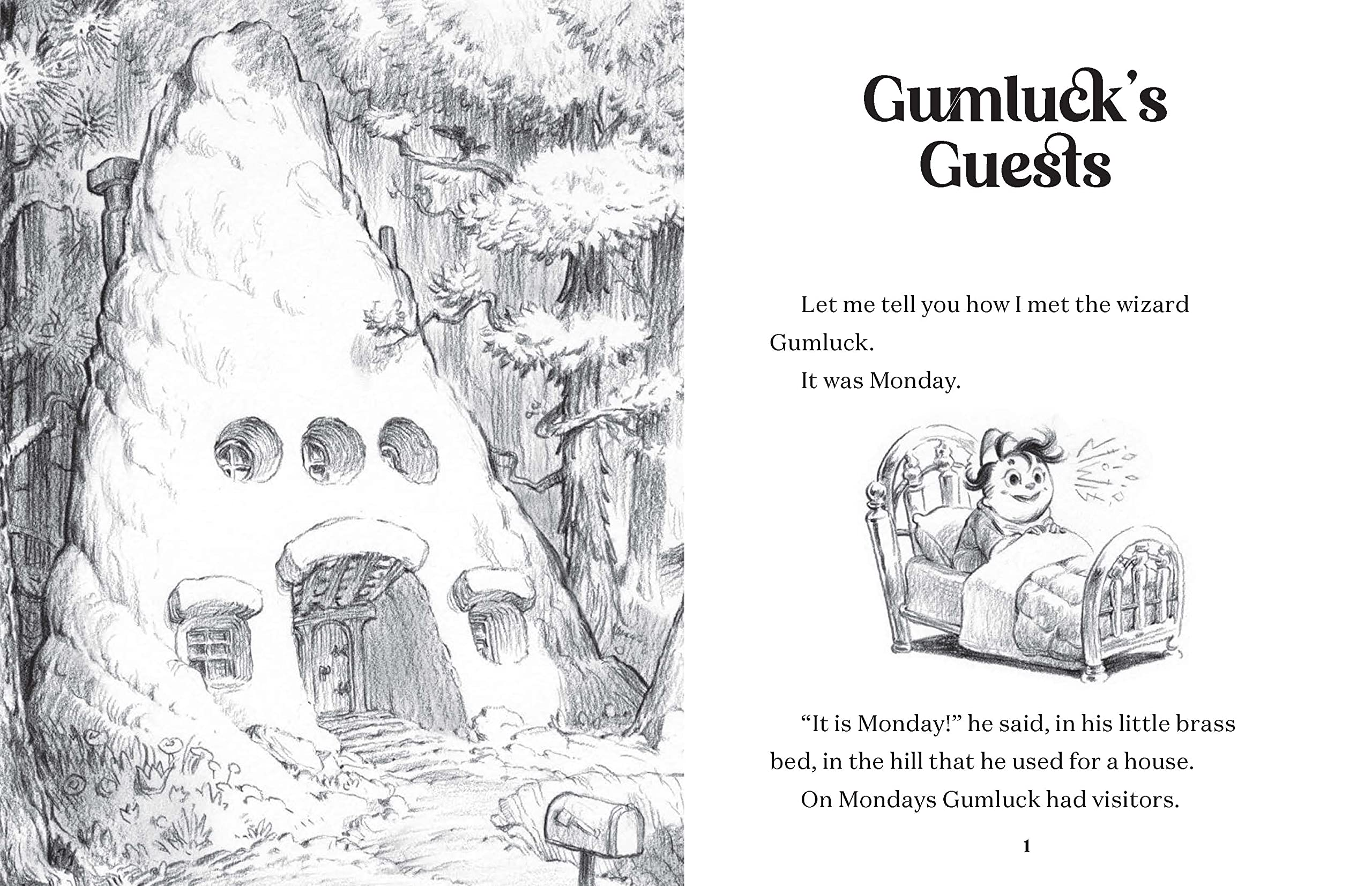
Summary:  Helvetica the raven narrates the story of his neighbor Gumluck, a little wizard who likes to help people.  Believing the best about his neighbors, Gumluck fails to notice that they are spreading unkind rumors about him behind his back.  Helvetica notices, though, and in spite of himself, he begins to befriend the wizard and try to help him out.  When the king’s greed precipitates a crisis for the town, it’s up to Gumluck and Helvetica to save everyone.  The crisis causes Gumluck to realize who his real friends are and to become a bit more discerning about how he uses his wizardly powers.  140 pages; grades 1-4.

Pros:  Adam Rex uses plenty of his trademark humor in both the story and the illustrations of what appears to be book one of a new early chapter book series.

Cons:  I think colored illustrations would have given this more kid appeal.

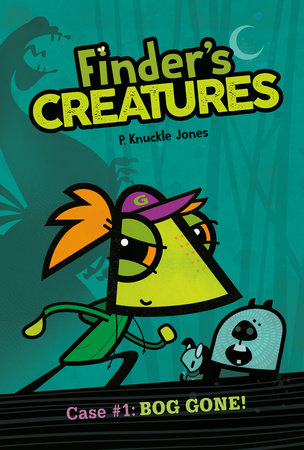
Bog Gone! (Finders Creatures, Book 1) by P. Knuckle Jones

Published by Penguin Workshop

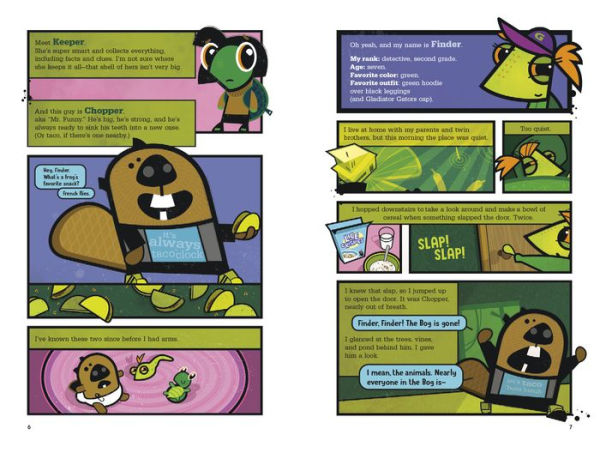
Summary:  Second grader Finder (frog) and his friends Keeper (turtle), and Chopper (Beaver) have their hands/paws full when the other animals from Belly Acre Bog disappear.  Finder’s hero is Seymour Warts, a brilliant detective based on Sherlock Holmes, who solves his own mystery during the course of the story.  A series of misadventures ensues, but both Finder and Seymour manage to crack their cases.  112 pages; grades 2-4.

Pros:  The many fans of early graphic novels like The Bad Guys, Max Meow, and The InvestiGators will enjoy this mystery, which includes plenty of madcap humor.  The word choices and color-coded speech bubbles makes this a good choice for newly independent readers.

Cons:  No sign yet of book 2.

The Skull: A Tyrolean Folktale by Jon Klassen

Published by Candlewick

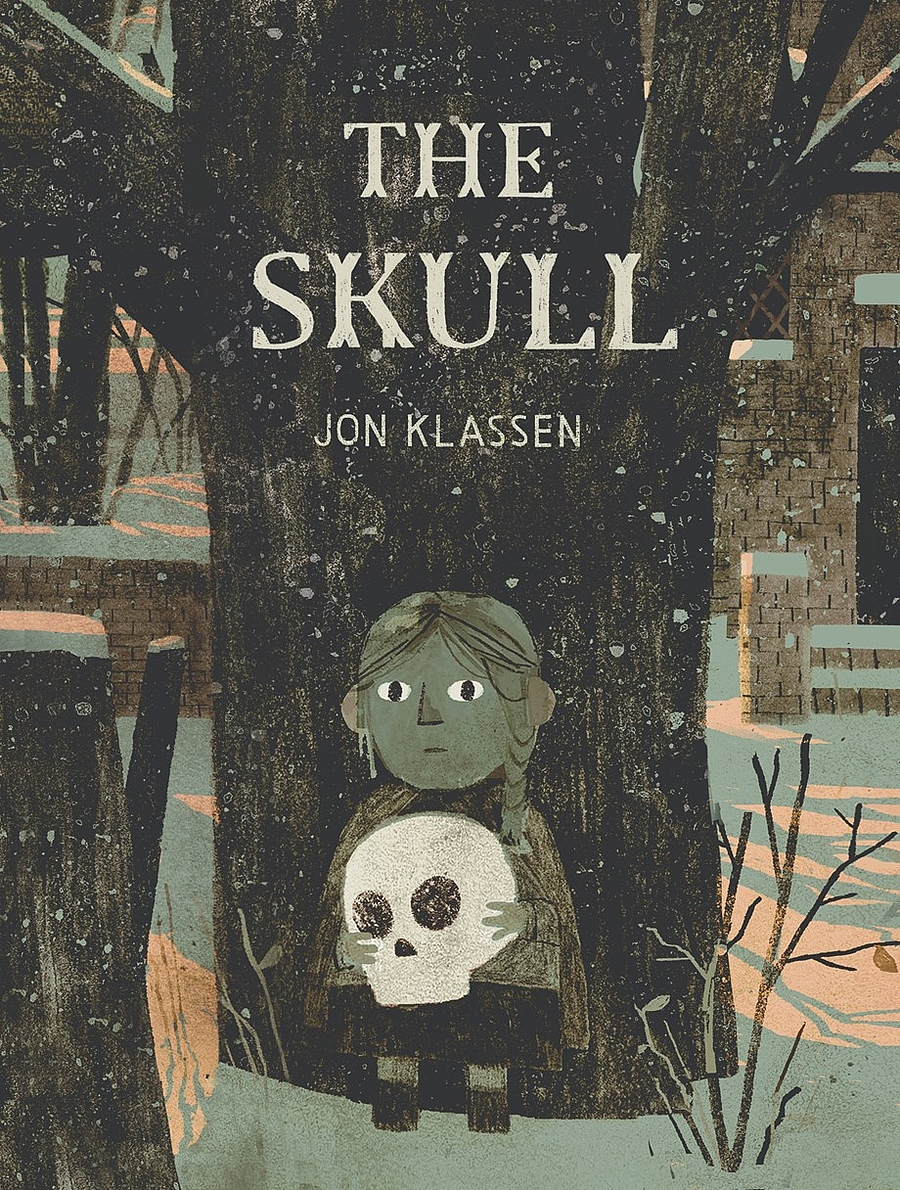
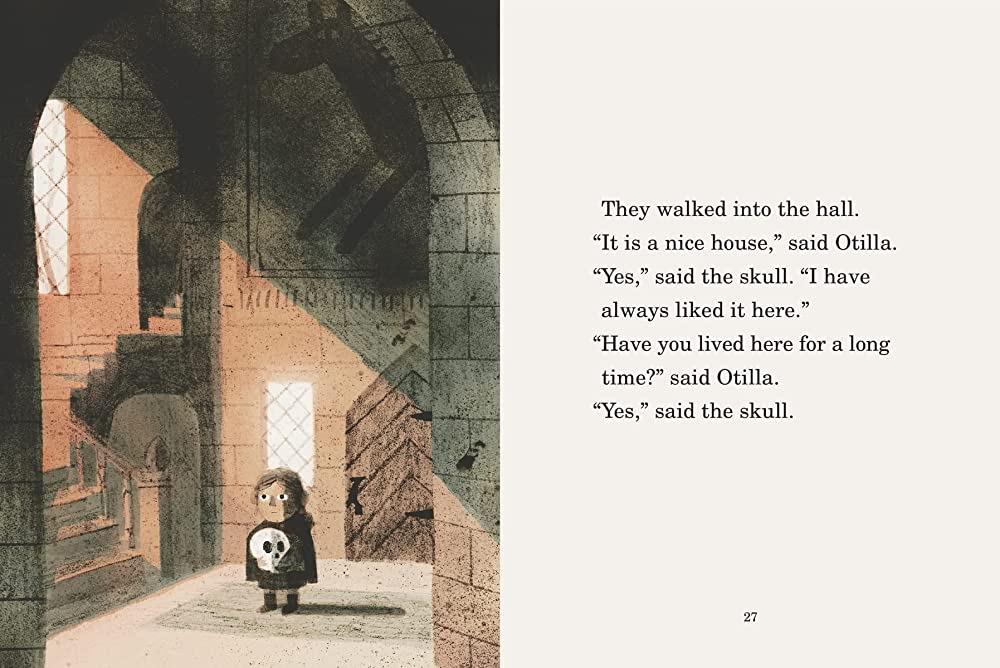
Summary:  Otilla is running away and lost in the forest.  She stumbles upon an old house that looks abandoned but turns out to be inhabited by a skull.  The skull shows her around: there are creepy masks, a dangerously high tower, and a bottomless pit.  He invites her to stay for the night but warns her of a headless skeleton that chases him every night, and “I am not as fast as I used to be.”  Sure enough, the skeleton shows up in the middle of the night, but Otilla is ready.  By the time the story ends, that skeleton will not be bothering anyone ever again, and the skull and Otilla have decided that she will stay in the house.  Includes an author’s note about how he came to write this folktale retelling which gives a pretty interesting spin on the oral tradition.  112 pages; grades 1-4.

Pros:  As usual with Jon Klassen, expect the unexpected.  This book, which looks more like a chapter book than a picture book, is told in five parts, but can probably be read in one longish sitting.  It’s creepy and funny and just dark enough to give kids the shivers.  Perfect for the Halloween season, with the distinctive Klassen illustrations that I’m sure will be considered for a Caldecott. The author’s note, featuring a wise Alaskan librarian, would make a good addition to folktale units.

Cons:  I’m always worried that Jon Klassen books are too dark and/or too weird for early elementary. Yet they never are.