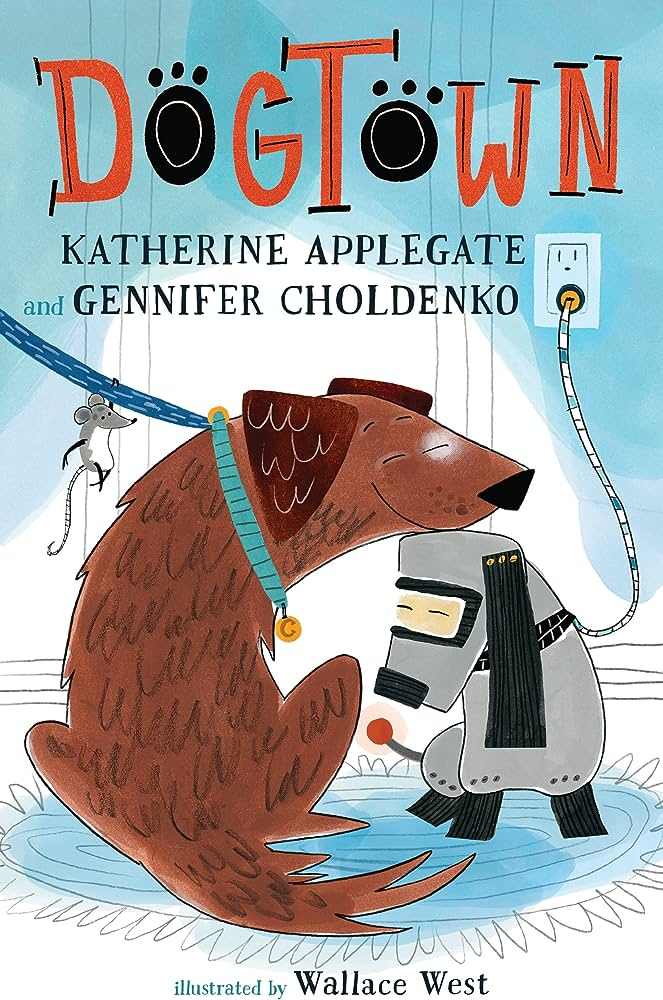
Dogtown by Katherine Applegate and Gennifer Choldenko, illustrated by Wallace West

Published by Feiwel & Friends

Summary:  Chance has had a rough year, winding up at a shelter called Dogtown minus one leg.  After the humans decide he’s a good luck charm, he gets the run of the place, eventually befriending Mouse (a mouse) and Metal Head (one of the robot dogs who also come to the shelter).  When Metal Head decides to escape and try to go back home, Chance and Mouse go along to offer help and moral support.  Metal Head’s boy, now a cool middle schooler, rejects him, and Metal Head is heartbroken.  Chance finally reveals his own story, encouraging Metal Head to focus on the future.  The three make it back to Dogtown, where Chance discovers he is on the dreaded List, meaning he will be heading for the great dog park in the sky.  His final desperate action results in a surprising happy and heartwarming ending; since this is billed as book 1, we may get to hear more of Chance’s story.  Includes a list of seven things kids can do to help shelter dogs.  352 pages; grades 3-6.

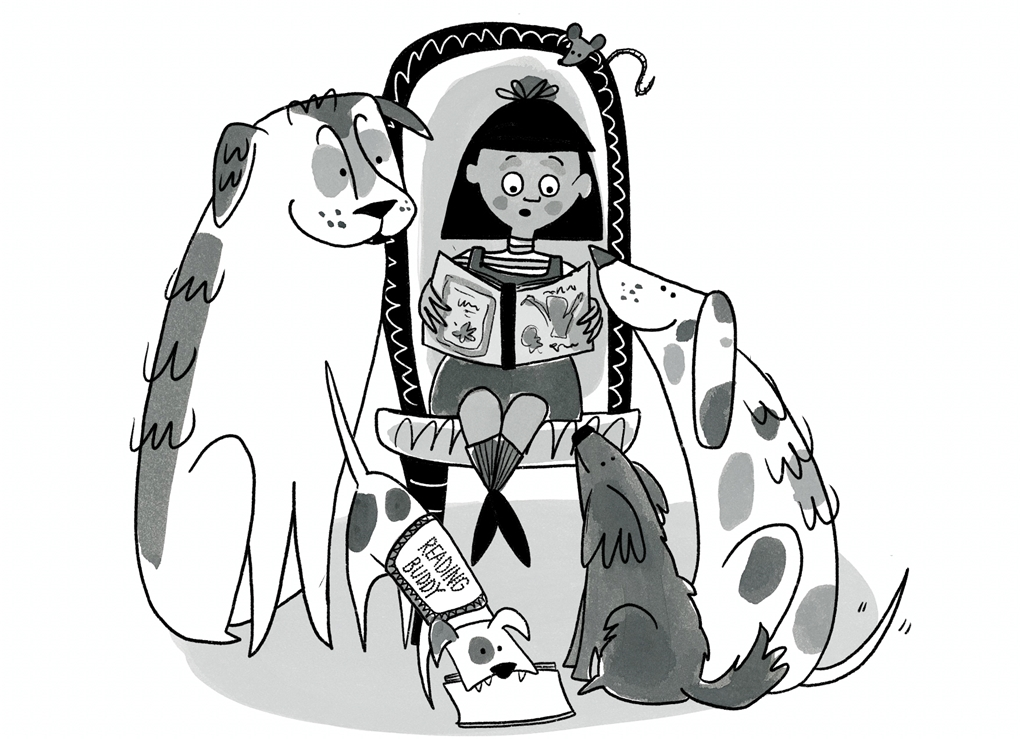
Pros:  I loved this book way more than I was expecting.  Although it’s over 300 pages, the chapters are short (some only a page), and there are plenty of illustrations, so it would make a great first “real” chapter book for an elementary reader.  It’s refreshing to see a book with both humor and heart aimed at those younger readers.

Cons:  Chance’s story just about broke me.


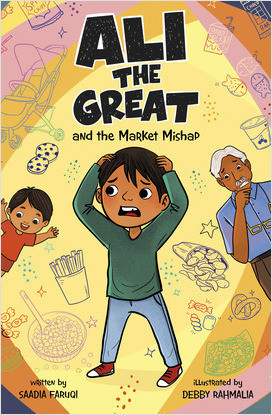
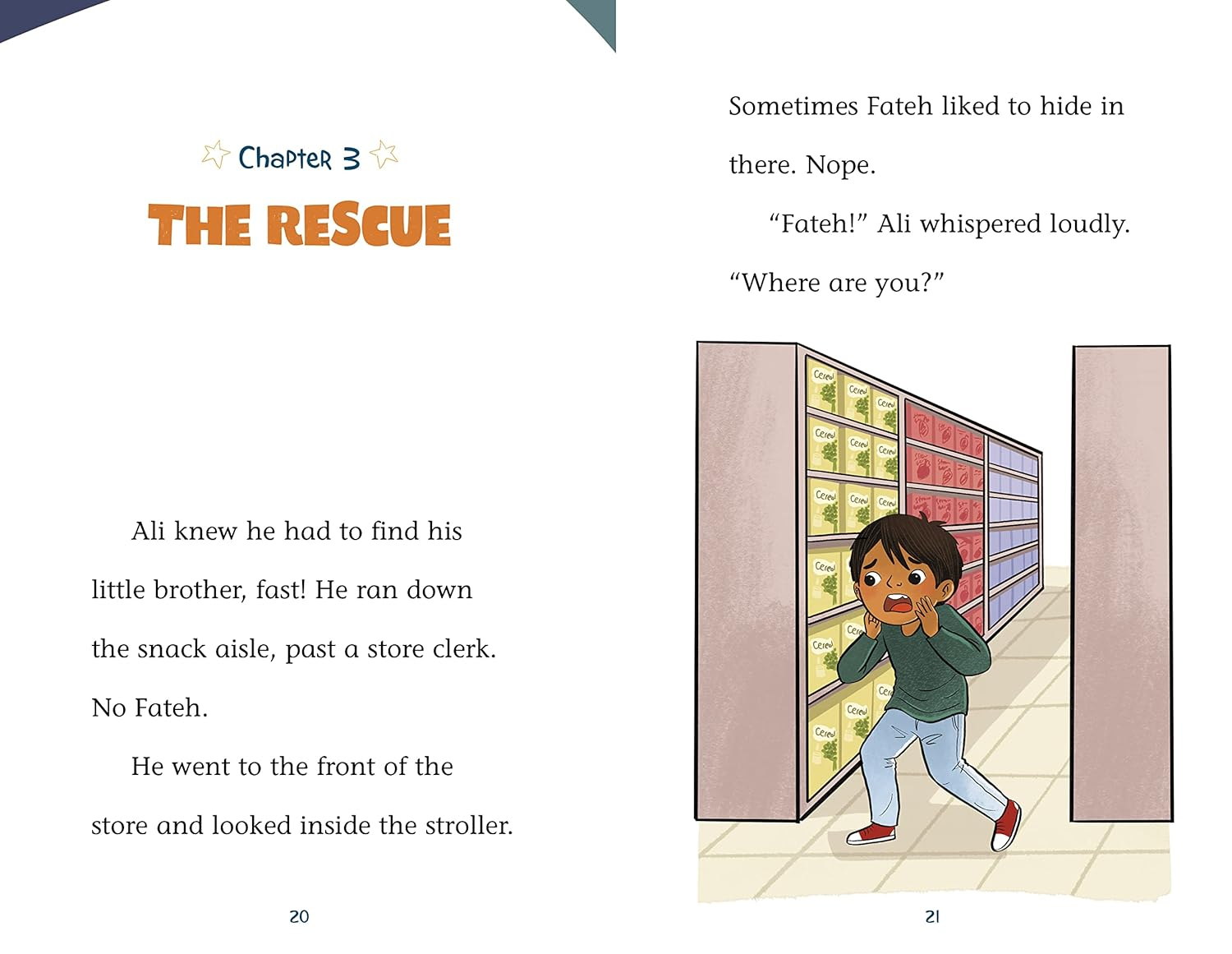
Ali the Great and the Market Mishap by Saadia Faruqi, illustrated by Debby Rahmalia

Published by Picture Window Books

Summary:  Like Yasmin from another series by Saadia Faruqi, Ali is part of a Pakistani-American family, introduced on the first page.  When Dada, Ali’s grandfather, takes Ali and his little brother Fateh to the South Asian market to shop for snacks, Ali has his hands full keeping Fateh out of trouble.  The story unfolds in three chapters, with the three returning home safely with Dada’s favorite spicy chips by the end.  A few Urdu words are introduced with pronunciations and definitions before the story starts, and the back matter includes some jokes, a list of Dada’s favorite Pakistani snacks, and three questions/writing (and drawing) prompts about the story.  Three other books about Ali were published simultaneously.  32 pages; grades K-3.

Pros:  A cheerful early chapter book that introduces another Pakistani-American family and their everyday activities in a way that kids will connect to while learning a little bit about another culture.

Cons:  The plot was pretty mundane.

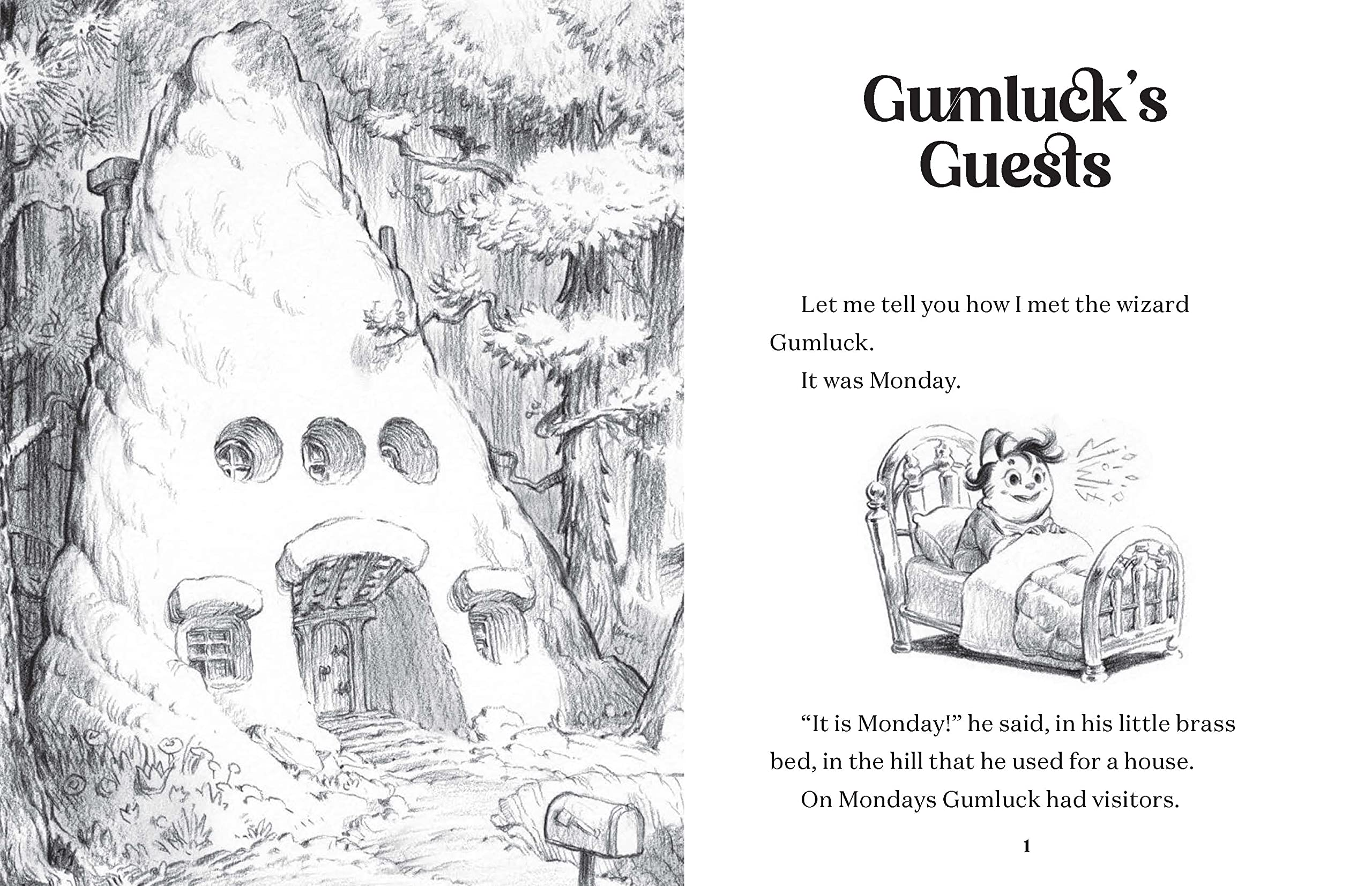
The Story of Gumluck the Wizard by Adam Rex

Published by Chronicle Books

Summary:  Helvetica the raven narrates the story of his neighbor Gumluck, a little wizard who likes to help people.  Believing the best about his neighbors, Gumluck fails to notice that they are spreading unkind rumors about him behind his back.  Helvetica notices, though, and in spite of himself, he begins to befriend the wizard and try to help him out.  When the king’s greed precipitates a crisis for the town, it’s up to Gumluck and Helvetica to save everyone.  The crisis causes Gumluck to realize who his real friends are and to become a bit more discerning about how he uses his wizardly powers.  140 pages; grades 1-4.

Pros:  Adam Rex uses plenty of his trademark humor in both the story and the illustrations of what appears to be book one of a new early chapter book series.

Cons:  I think colored illustrations would have given this more kid appeal.

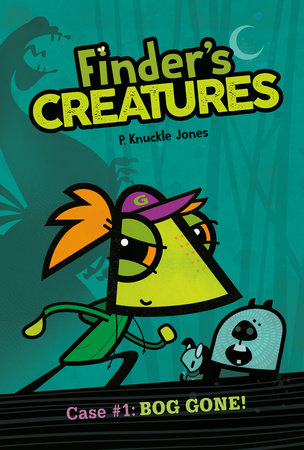
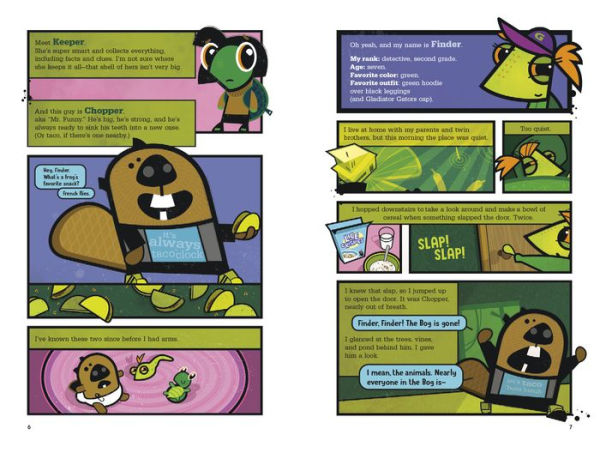
Bog Gone! (Finders Creatures, Book 1) by P. Knuckle Jones

Published by Penguin Workshop

Summary:  Second grader Finder (frog) and his friends Keeper (turtle), and Chopper (Beaver) have their hands/paws full when the other animals from Belly Acre Bog disappear.  Finder’s hero is Seymour Warts, a brilliant detective based on Sherlock Holmes, who solves his own mystery during the course of the story.  A series of misadventures ensues, but both Finder and Seymour manage to crack their cases.  112 pages; grades 2-4.

Pros:  The many fans of early graphic novels like The Bad Guys, Max Meow, and The InvestiGators will enjoy this mystery, which includes plenty of madcap humor.  The word choices and color-coded speech bubbles makes this a good choice for newly independent readers.

Cons:  No sign yet of book 2.

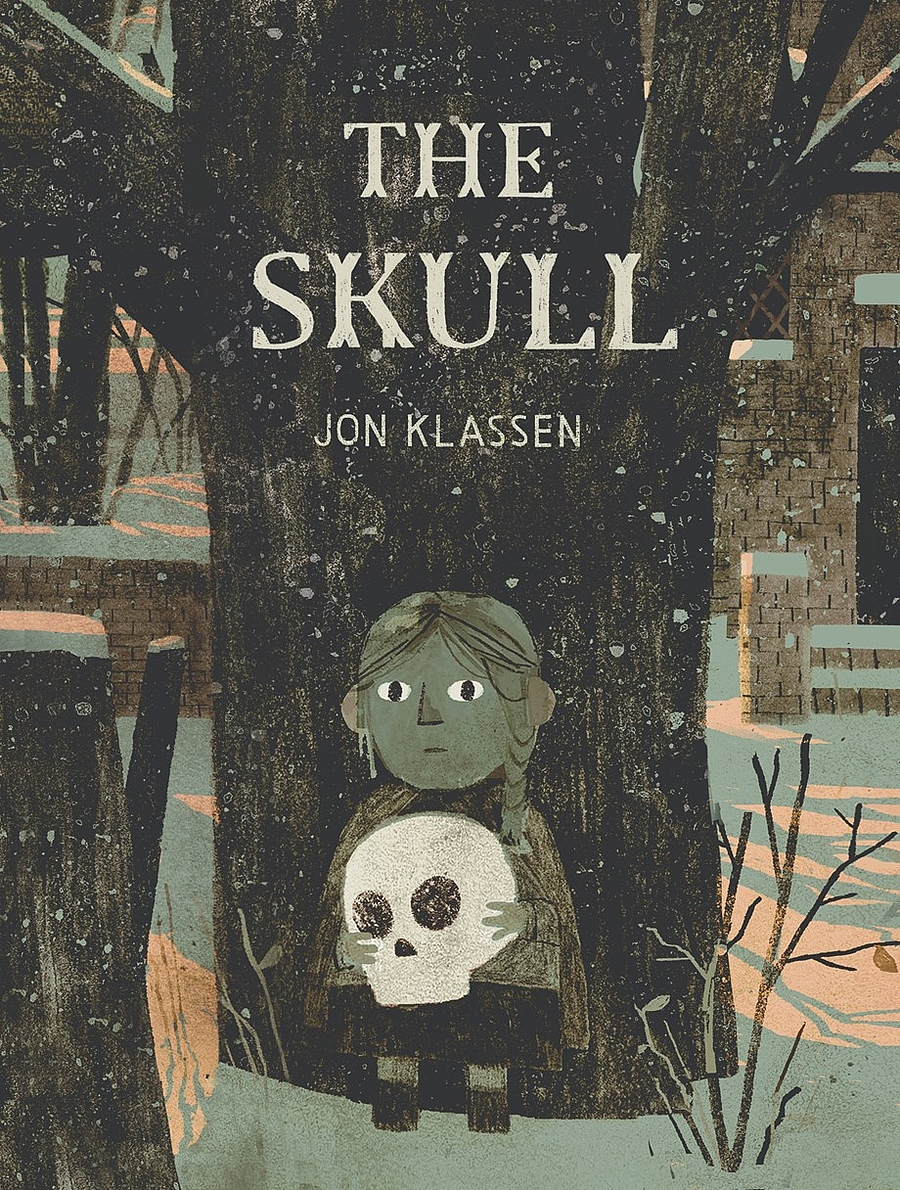
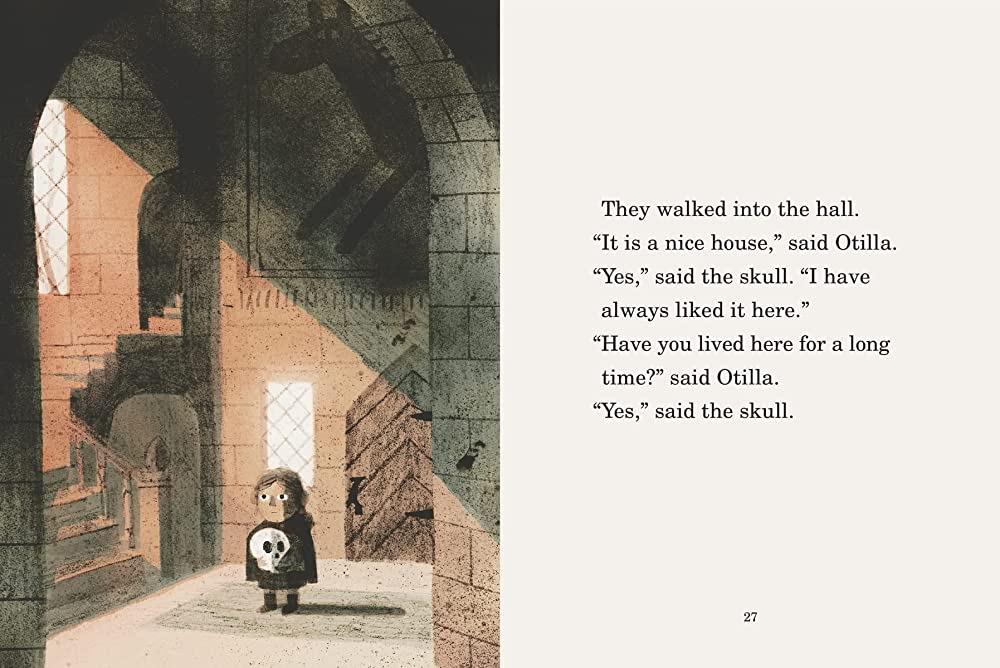
The Skull: A Tyrolean Folktale by Jon Klassen

Published by Candlewick

Summary:  Otilla is running away and lost in the forest.  She stumbles upon an old house that looks abandoned but turns out to be inhabited by a skull.  The skull shows her around: there are creepy masks, a dangerously high tower, and a bottomless pit.  He invites her to stay for the night but warns her of a headless skeleton that chases him every night, and “I am not as fast as I used to be.”  Sure enough, the skeleton shows up in the middle of the night, but Otilla is ready.  By the time the story ends, that skeleton will not be bothering anyone ever again, and the skull and Otilla have decided that she will stay in the house.  Includes an author’s note about how he came to write this folktale retelling which gives a pretty interesting spin on the oral tradition.  112 pages; grades 1-4.

Pros:  As usual with Jon Klassen, expect the unexpected.  This book, which looks more like a chapter book than a picture book, is told in five parts, but can probably be read in one longish sitting.  It’s creepy and funny and just dark enough to give kids the shivers.  Perfect for the Halloween season, with the distinctive Klassen illustrations that I’m sure will be considered for a Caldecott. The author’s note, featuring a wise Alaskan librarian, would make a good addition to folktale units.

Cons:  I’m always worried that Jon Klassen books are too dark and/or too weird for early elementary. Yet they never are.

Dazzle Makes a Wish (Book Buddies #3) by Cynthia Lord, illustrated by Stephanie Graegin

Published by Candlewick

Summary:  Dazzle the unicorn is purchased by a woman who’s expecting her first grandchild, but when she finds out the baby is a boy, she winds up selling Dazzle at a yard sale.  He’s purchased by Annie the librarian, who runs a program called Book Buddies, where kids can check stuffed animals out of the library for two weeks.  Although Dazzle’s greatest wish is to be part of a family, he finds that he enjoys visiting kids for short periods and hanging out with his library family in between.  When new girl Maya brings him home, he learns some important lessons about friendship and comes to have a greater appreciation for his new life, realizing that maybe his wish has come true in an unexpected fashion.  66 pages; grades 1-4.

Pros:  Although I am virtually positive that I read the first book in this series last year, it somehow didn’t make it onto my blog, so here’s my review of book #3.  It’s a cute illustrated early chapter book series with loveable stuffed animals who get to interact with a variety of kids and is sure to appeal to early elementary readers.

Cons:  The early days of Dazzle’s life were kind of heartbreaking.

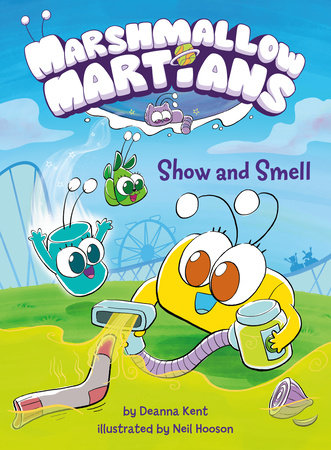
Show and Smell (Marshmallow Martians book 1) by Deanna Kent, illustrated by Neil Hooson

Published by Random House Graphic

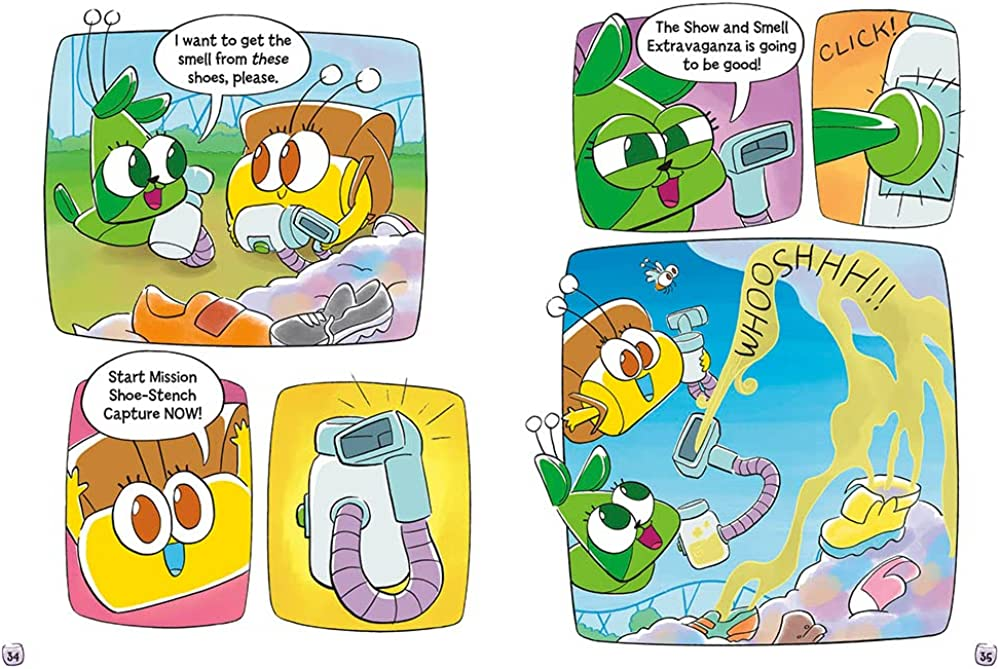
Summary:  The Marshmallow Martians’ leader, G.L.O.W. (Galactic Learning Online Wizard), introduces them to P.E.E.P. (Polite Extraordinary Earth Portal), which can transport them down to Earth.  Due to a faulty transmission, the Martians believe that the Earth phrase “show and tell” is actually “show and smell,” and they plan a show and smell session for when they return from their trip to Earth.  An amusement park is chosen as the best place to collect smells, and the marshmallows collect odors from onions, shoes, burps, and a skunk.  Back on Planet Moop, the other marshmallows enjoy the show and smell presentation.  Includes instructions for drawing one of the characters (Snug). 72 pages; grades 1-3.

Pros:  Fans of Pizza and Taco, Narwhal and Jelly, and other early comics will get a big kick out of the Marshmallow Martians’ antics.

Cons:  If the marshmallows live on Planet Moop, why are they called Martians and not Moopians?

Kittens Are Monsters! (Pets Rule! book 3) by Susan Tan, illustrated by Wendy Tan Shiau Wei

Published by Scholastic

Summary:  Ember is a chihuahua who believes he is in training to become a Dark Lord and one day rule the world.  One night a strange orange cat shows up with an assignment:  if he looks after her kittens for a week, teaching them everything he knows, she will give him an army.  Assisted by the other pets in the house and the neighborhood, Ember begins training the kittens, who turn out to have some ideas of their own.  In between those adventures, Ember is trying to figure out the perfect birthday gift for his girl, Lucy.  By the end of the week, the pets have defeated Ogre, the evil cat next door, figured out what to do for Lucy, and assembled an army…of kittens.  The final page introduces a nemesis for Ember, a pet is sure to be the centerpiece of book #4.  96 pages; grades 1-4.

Pros:  You can generally count on Scholastic Branches to produce good early chapter books, and this series is no exception.  Lots of cute animals, plenty of illustrations, and a fast-moving plot with twists at the end of every chapter make this a series that those just getting into chapter books will want to get their hands on. I missed book 1 last year, which is why I’m reviewing 2023’s book 3.

Cons:  Ember was too kind and friendly to be believable as an aspiring Dark Overlord.

Henry, Like Always by Jenn Bailey, illustrated by Mika Song

Published by Chronicle Books

Summary:  Henry, featured in the 2019 picture book A Friend for Henry, likes the routine and predictability of his classroom.  Mrs. Tanaka has a weekly schedule posted, and Henry feels comfortable when it stays the same.  When she announces a parade on Friday, pushing sharing to Thursday, Henry struggles to cope with the change.  His feelings of dread grow through the week as the class prepares for the parade.  By Friday morning, he needs to give Mrs. Tanaka his Quiet Card, which entitles him to some time alone in the big closet.  There he discovers the hat that his classmate Samuel is going to wear to lead the parade.  Samuel would rather play the tambourine that Henry has been assigned, and Henry likes the soft pressure of the hat that covers his ears and protects him from some of the noise.  A trade is made, and both boys are able to happily participate in the parade.  48 pages; grades 1-3.

Pros:  An excellent early chapter book that sympathetically portrays a character who appears to be on the autism spectrum and provides a realistic glimpse into his classroom.  Mrs. Tanaka is a kind teacher who accommodates Henry but also expects him to be part of the classroom community.  This is billed as book 1, so we can look forward to more books about Henry.

Cons:  Henry’s new hat looks like it completely covers his eyes.

Batcat by Meggie Ramm

Published by Harry N. Abrams

Summary:  Batcat is part bat, part cat, and fully annoyed by the ghost that has moved into their treehouse.  They consult a witch about how to get rid of the ghostly invader and get sent on a quest to gather the three ingredients needed for the proper spell.  Along the way, Batcat meets up with some bats and some cats who assure them that they are lacking some of the bat and cat qualities to be either animal.  Batcat gets increasingly despondent about their deficiencies until they meet up with a couple of griffins who assure them that one does not have to be one thing or the other.  After embracing their one-of-a-kind identity, Batcat returns to the witch where they slowly realize that maybe the ghost isn’t so bad after all.  The witch works her magic, and Batcat and the ghost become friends and roomies.  96 pages; grades 2-4.

Pros:  This cute and clever graphic novel has humor, spookiness, and a subtle lesson in self-acceptance that works well with both Batcat’s dual-animal identity and their nonbinary pronouns.  I’m happy to see that this is book 1 and look forward to a sequel soon.

Cons:  I could have enjoyed some how-to-draw-Batcat pages at the end.