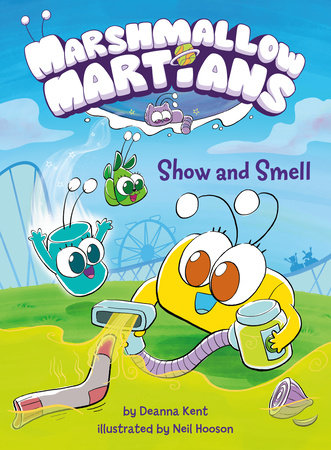
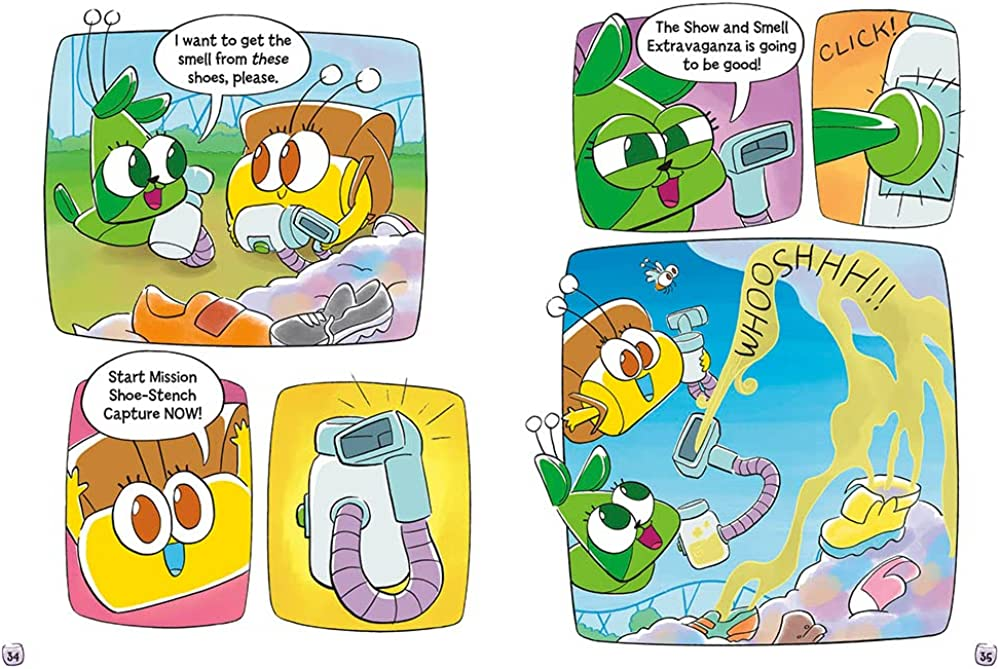
Summary: The Marshmallow Martians’ leader, G.L.O.W. (Galactic Learning Online Wizard), introduces them to P.E.E.P. (Polite Extraordinary Earth Portal), which can transport them down to Earth. Due to a faulty transmission, the Martians believe that the Earth phrase “show and tell” is actually “show and smell,” and they plan a show and smell session for when they return from their trip to Earth. An amusement park is chosen as the best place to collect smells, and the marshmallows collect odors from onions, shoes, burps, and a skunk. Back on Planet Moop, the other marshmallows enjoy the show and smell presentation. Includes instructions for drawing one of the characters (Snug). 72 pages; grades 1-3.
Pros: Fans of Pizza and Taco, Narwhal and Jelly, and other early comics will get a big kick out of the Marshmallow Martians’ antics.
Cons: If the marshmallows live on Planet Moop, why are they called Martians and not Moopians?
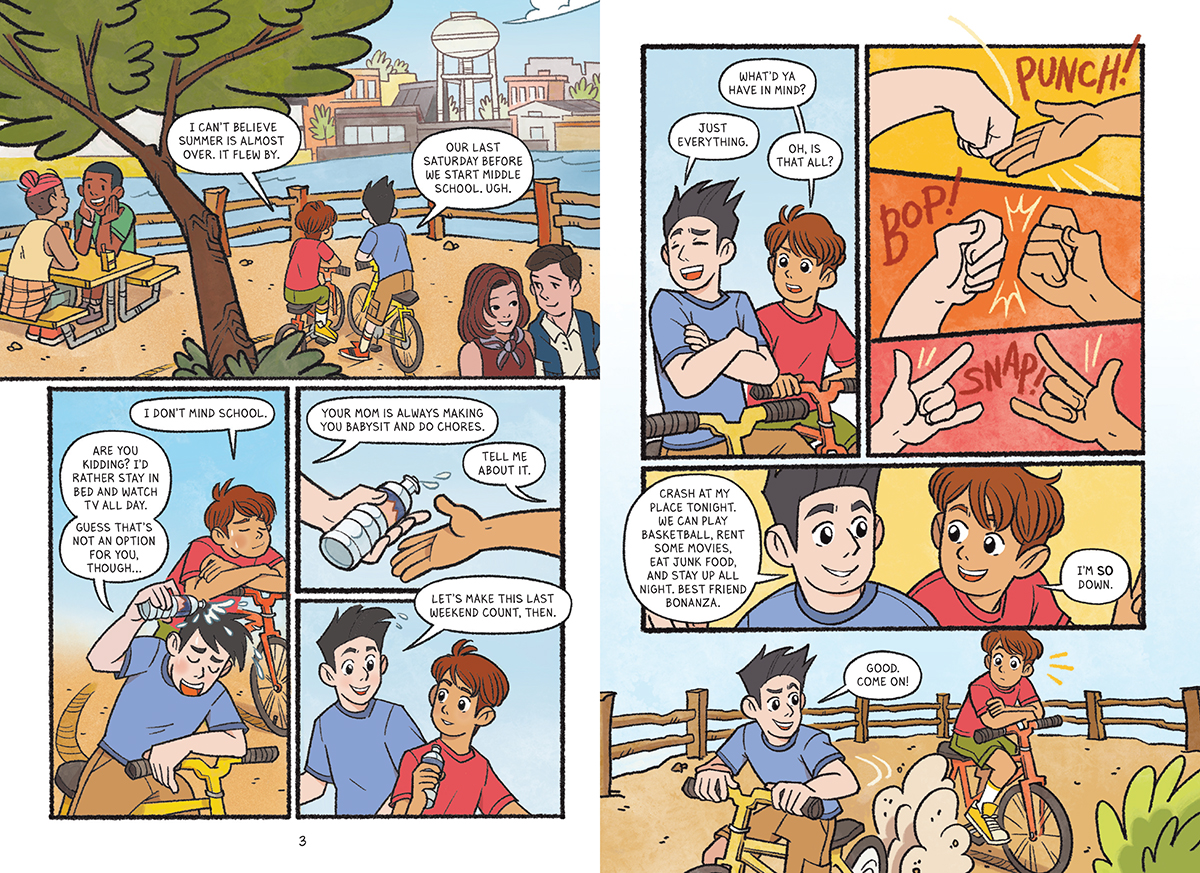
Summary: Rex’s transition to middle school is a rough one, with his best friend Drew abandoning him for the popular kids and his blurry vision giving him daily headaches and making school work tough. He finally admits to his mom what’s going on, and the diagnosis that he needs glasses is a blow to both of them. Rex worries (correctly) that the bullying at school will get worse, while his mom and stepdad can’t afford new glasses and are forced to call Rex’s real dad, who’s something of a bully himself. As the year goes on, though, Rex makes a new friend who teaches him how to stand up for himself. Sixth grade ends on a positive note, with the promise of a seventh grade sequel. 224 pages; grades 4-7.
Pros: The multitude of middle school graphic novel fans will enjoy this new entry that perfectly captures the angst of both family and friend relationships. Nice to see a boy main character in this type of book.
Cons: Having read Rex Ogle’s Free Lunch, I know that his family life was much more troubling than what is portrayed here.
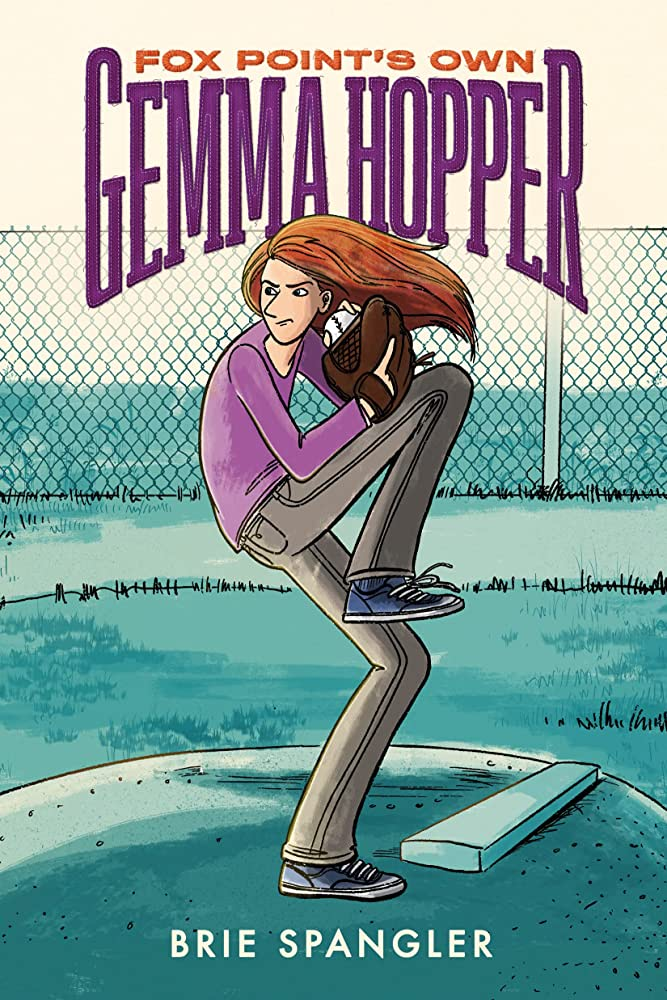
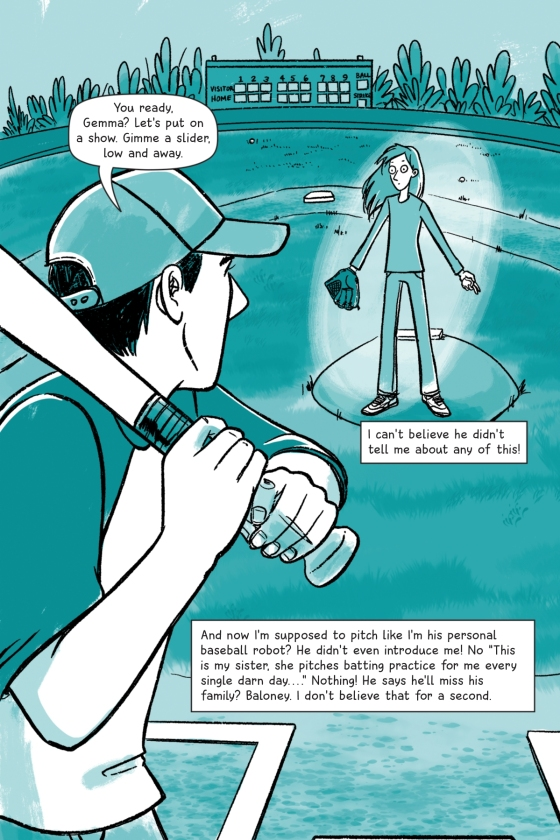
Summary: Gemma’s dealing with a lot at the beginning of seventh grade: her mom has recently abandoned the family, leaving Gemma to deal with taking care of her baseball star older brother, twin kid brothers, and her dad who spends most of his time working. At six feet tall, she can’t hide out at school, and her best friend’s attempts to get in with the popular kids make her feel like a loser. She loves baseball, but only gets to play when her brother needs batting practice. Usually, she pitches what he wants, but one day, she’s so fed up that she does her own thing. Her amazing pitches are captured on camera and go viral, catching the attention of the same scouts who discovered her brother. Suddenly Gemma is in the spotlight, and she discovers that, while it can be scary, it’s a more exciting place to be than where she’s been hiding. 272 pages; ages 4-7.
Pros: Readers will be rooting for Gemma as she deals with a family that doesn’t always appreciate her and the usual friend dramas of middle school. Accepting that her mom is gone helps her to move on, and the last few pages are completely emotionally satisfying.
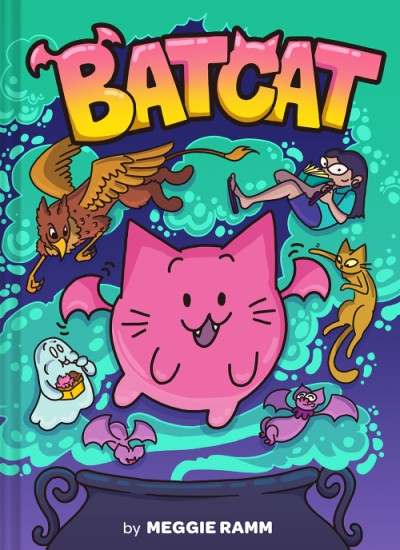
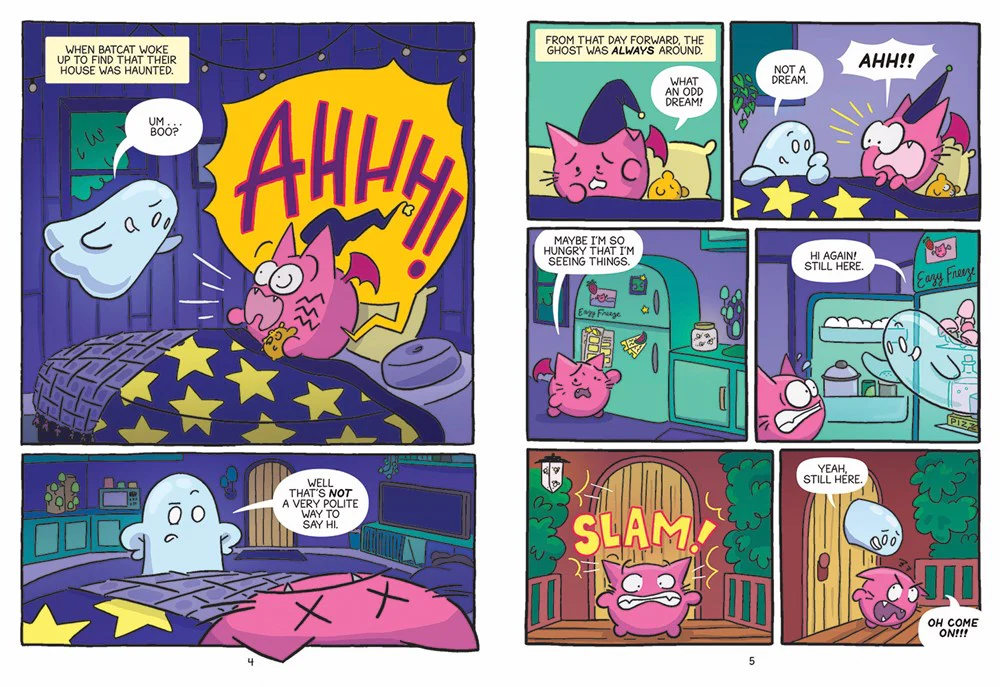
Summary: Batcat is part bat, part cat, and fully annoyed by the ghost that has moved into their treehouse. They consult a witch about how to get rid of the ghostly invader and get sent on a quest to gather the three ingredients needed for the proper spell. Along the way, Batcat meets up with some bats and some cats who assure them that they are lacking some of the bat and cat qualities to be either animal. Batcat gets increasingly despondent about their deficiencies until they meet up with a couple of griffins who assure them that one does not have to be one thing or the other. After embracing their one-of-a-kind identity, Batcat returns to the witch where they slowly realize that maybe the ghost isn’t so bad after all. The witch works her magic, and Batcat and the ghost become friends and roomies. 96 pages; grades 2-4.
Pros: This cute and clever graphic novel has humor, spookiness, and a subtle lesson in self-acceptance that works well with both Batcat’s dual-animal identity and their nonbinary pronouns. I’m happy to see that this is book 1 and look forward to a sequel soon.
Cons: I could have enjoyed some how-to-draw-Batcat pages at the end.
Summary: Jordan Banks and his friends (and frenemies) from New Kid and Class Act are back for their last hurrah before finishing up at Riverdale Academy Day School (a.k.a. RAD). The whole eighth grade gets to choose from a variety of trips including Yellowstone, Alaska, Mississippi, and, for Jordan, Paris. He’s happy to be in a group with friends like Drew, Liam, and Alexandra, less thrilled with the inclusion of class bully Andy. As the group experiences adventures and mishaps in France, they get to review some of what they’ve learned about friendship, bullying, and other relationship issues during their time in middle school. Jordan has a big decision weighing on him, having gotten into an art school for high school and trying to decide if he wants to transfer or stay at RAD. Back home, he finally figures out what he wants to do (“helped”, as always, by his mother), and it seems as though the story may be continued, or this could be the final installment. 256 pages; grades 4-8.
Pros: Jordan Banks fans will be thrilled with a new book about RAD, and the chance to get off-campus leads to plenty of humor and also many thoughtful conversations on a wide range of relevant topics that will make this a great jumping-off place for class or book club discussions.
Cons: One of my favorite things about New Kid was how deftly Jerry Craft wove discussions of racism and other social justice topics into a funny school story with lots of fun and interesting characters. While I still love the messages being imparted, in this installment, they sometimes felt a bit more heavy-handed.
Summary: Fae has been alone since her mother mysteriously disappeared, supported only by a bunny friend and a couple of mice. She dreams about her mom every night and is sure she is still alive somewhere. Her mother had a strong connection to the moon, and one night Fae decides to remove it to the sky, hoping her mom will notice and return home. The disappearance of the moon triggers some pretty unsavory animal behavior, and in a series of adventures, Fae learns that not only are a swarm of rats trying to steal the moon from her, but the “bunny” is really a power-hungry monster. Fae discovers that she has powers of her own and manages to bring about a happy ending for herself and her mother. Includes four pages showing the creation of the story and illustrations. 144 pages; grades 3-5.
Pros: Don’t be deceived by the short length of this graphic novel; it’s a pretty elaborate fantasy story that will appeal to a wide range of elementary students. Readers will be happy with the pretty strong hint at the end that there will be a book 2.
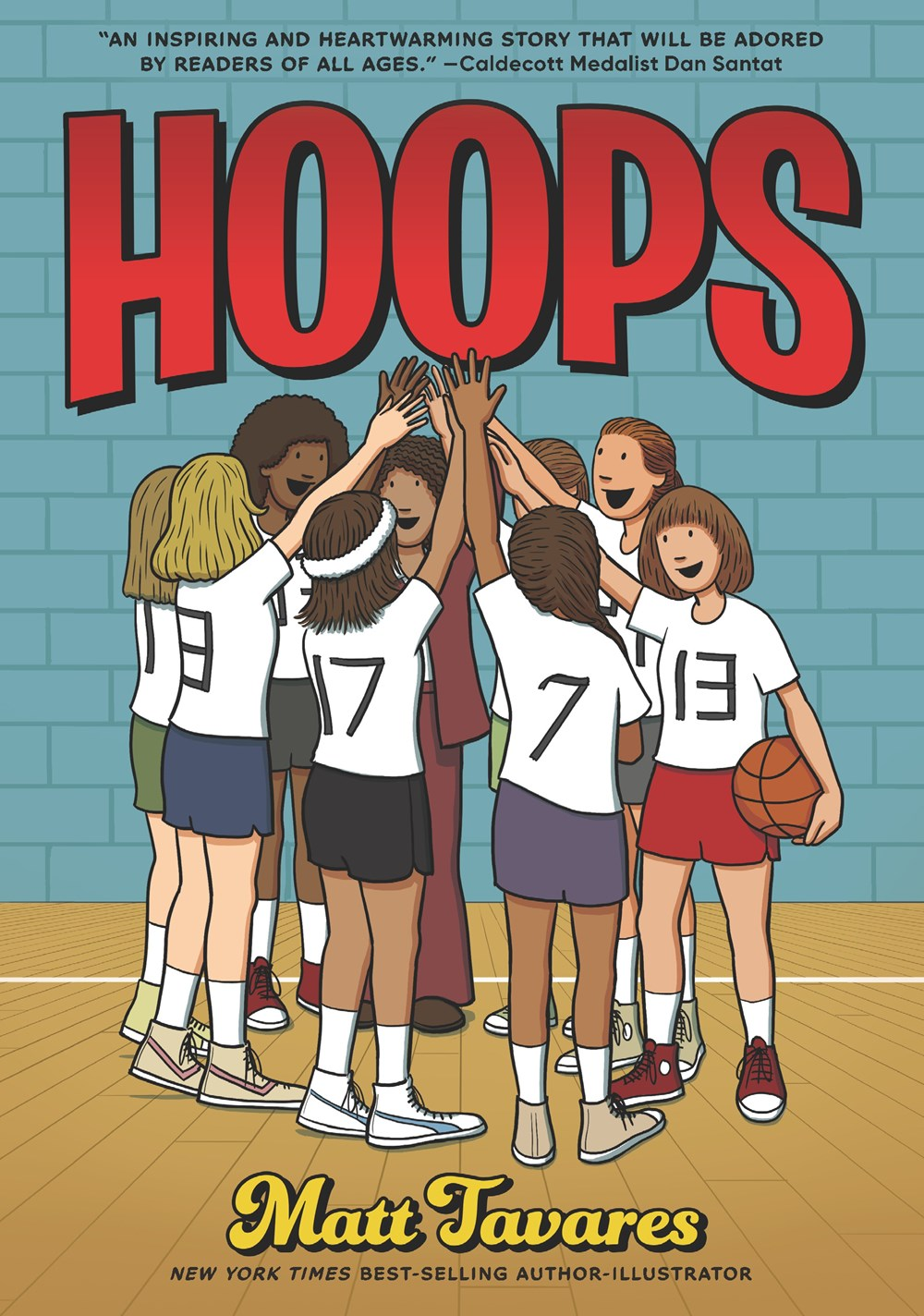
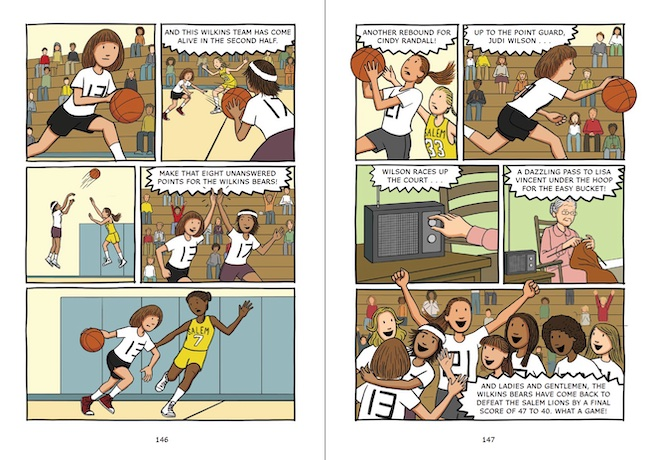
Summary: The story opens on a November evening in 1970. Judi Wilson is watching her older brother and his friends play basketball, while her friend Stacy practices cheers. When they head off to the high school game, Judi picks up the ball, dreaming of making the winning shot at a big game. Fast forward five years, and Judi and Stacy are senior co-captains of the cheerleaders, rooting on the boys’ basketball team. When Judi hears that a girls’ team is forming, she decides to try out, abandoning cheerleading and upsetting Stacy. Only eight girls show up, so they’re all part of the new team. Despite the lack of uniforms, a bus, meal money, or the use of the high school gym, the girls love playing and begin to win games. As they get better known, they’re allowed to use the gym when the boys are done with it, but they still have to wear t-shirts with their numbers taped on with electrical tape and drive to away games in their coach’s borrowed RV. Finally, when they make it to the state championship, the athletic director apologizes in front of the school for his shabby behavior, and the booster club gives them real uniforms. In the final game of the championship, the score is tied with just seconds left, and Judi gets a chance for the winning basket, bringing the story full circle to her early dream. Includes a 4-page author’s note about how he came to write this book and with additional information about Title IX. 224 pages; grades 3-7.
Pros: Based on a true story, this graphic novel is fun and fast-paced, showing the uphill battle female athletes faced in the early days of Title IX. Although it takes place in high school, the friendships and sports action will be enjoyed by elementary and middle school readers. While I love Matt Tavares’s picture books, I hope he’ll continue with graphic novels as well!
Cons: Judi’s sweatshirt on the last few pages indicates that she’s on a college basketball team, but I wish I found out for sure if she and her teammates got to play in college.
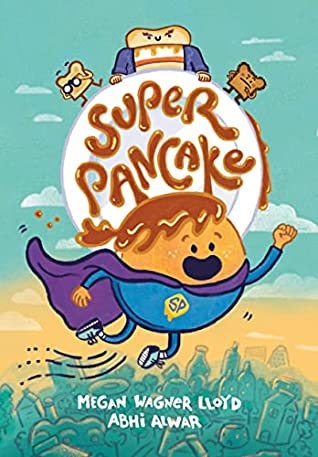
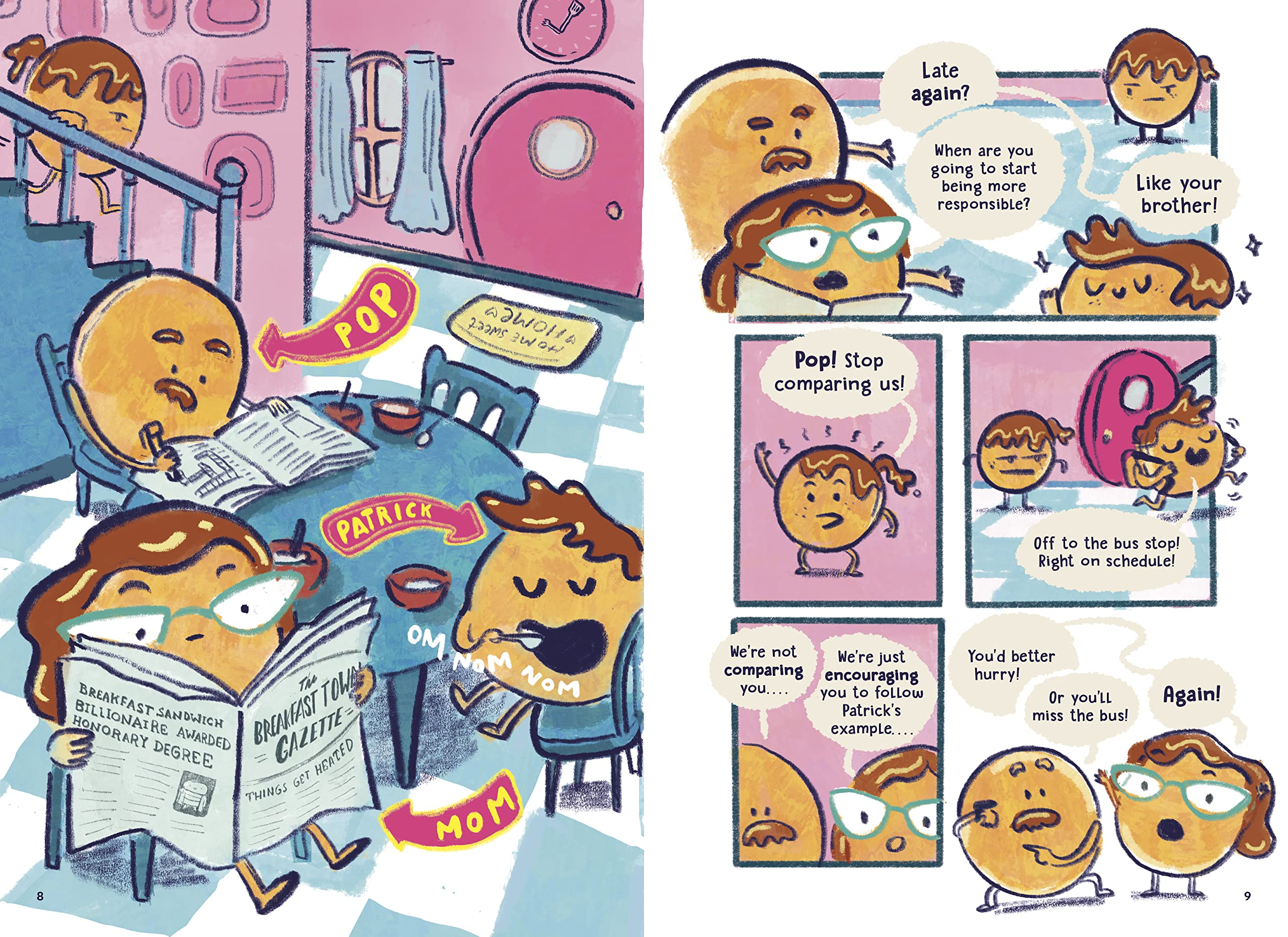
Summary: The struggle is real for Peggy Pancake, whose family who wishes she could be more like her brother Patrick, and who is struggling to find a friend at school. When she sees the new croissant, Luc, being bullied by three strips of bacon, she’s hesitant to defend him. A bacon prank gone awry causes Peggy to get some superpowers, and before long she and sidekick Luc have teamed up to fight the bullies and to defeat evil in their town. Peggy defeats the villains, but chooses to keep her powers from her family, although it looks as though Patrick may get in on the act in book 2. 176 pages; grades 2-4.
Pros: With an emphasis on goofy fun, this graphic novel is sure to be popular with those just starting to venture into chapter books. Although I can’t find any information on book 2, the last page assures us that the story is “to be continued.”
Cons: While I enjoyed this little romp, I’d rather see Megan Wagner Lloyd work on book 2 of Squished.
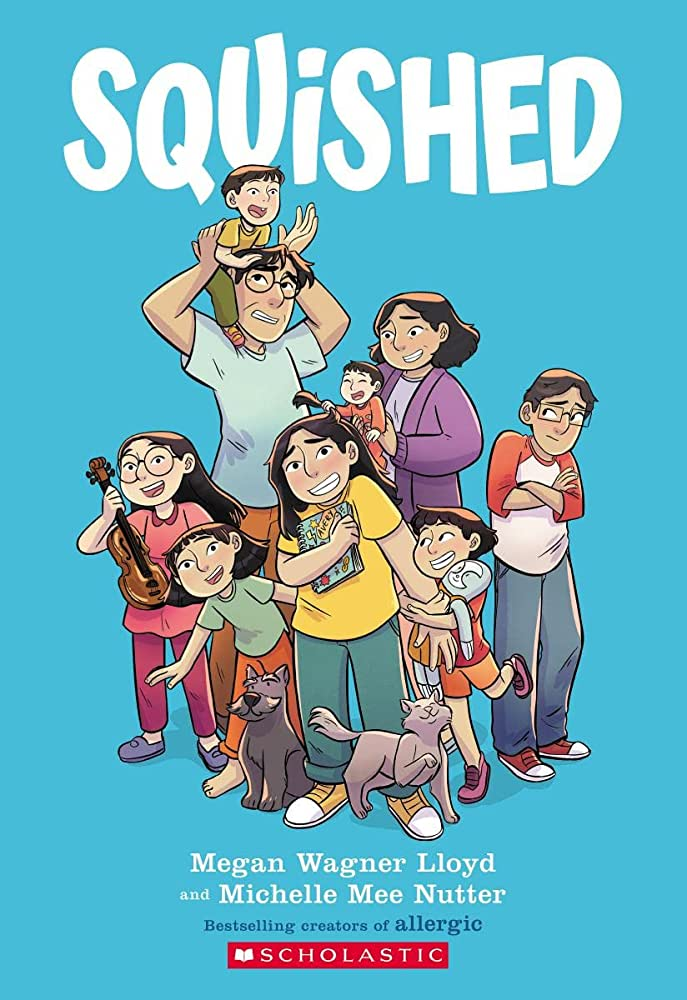
Summary: Avery Lee’s life is full of ups and downs, in large part due to her big family. She’s the second oldest of seven siblings, which makes for a lot of chaos and not much alone time to pursue the art she loves. Her older brother just got his own room, which Avery sees as totally unfair, and when her friend Cameron tells her his family is building a bedroom in the basement, Avery decides to do some fundraising to earn money for her own construction. Dog-walking and a lemonade stand each have their share of pitfalls, and before long Avery gets some news that derails all her plans…her mom has taken a new job, and the family is moving from Maryland to Oregon. Avery is heartbroken to be leaving her friends and beloved hometown, but the promise of her own room in the new house makes the move a bit sweeter. 256 pages; grades 3-7.
Pros: From the team that brought you Allergic, Squished is a complete delight, giving a sweet and realistic portrayal of life in a big family with sibling, school, and friendship issues that many readers will recognize. If you’re buying for a library, get an extra copy or two.
Cons: I struggled to keep all the kids straight; you might want to bookmark the labeled photo on page 15 for easy reference.
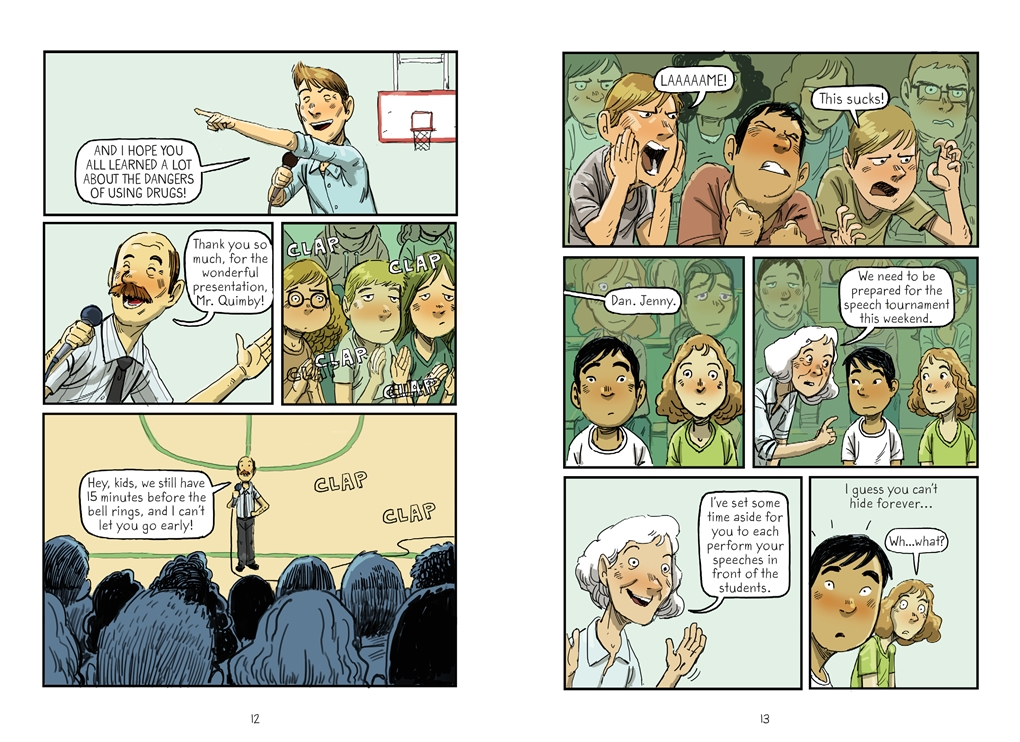
Summary: Dan Santat’s graphic memoir tells the story of his trip to Europe in 1989, the summer before he started high school. Flashbacks show difficult times in middle school that have made him lose confidence in himself and want to stay invisible. Surrounded by a supportive group of kids and an awesome teacher/chaperone, Dan flourishes in Europe, having adventures in several different countries that include sampling beer, smoking a cigarette, getting lost one night and stealing a bicycle to get home, and falling in love. By the end of the trip, he’s experienced heartbreak but also grown and become more confident, presumably leading him to a high school experience very different from middle school. Includes nine pages of photos and an author’s note that tells more about the trip and how he has kept in touch with the friends he made there. 320 pages; grades 5-9.
Pros: This highly entertaining memoir will have you packing your bags for a European vacation. Dan perfectly captures all the angst and bravado of being 13 years old, and of course his artwork is outstanding, showing many European landmarks with incredible detail.
Cons: I was definitely planning to buy this for my elementary school library, but after reading it, I think it will be appreciated more by middle school readers.





 A Kids Book A Day