Secret Engineer: How Emily Roebling Built the Brooklyn Bridge by Rachel Dougherty

Published by Roaring Brook Press
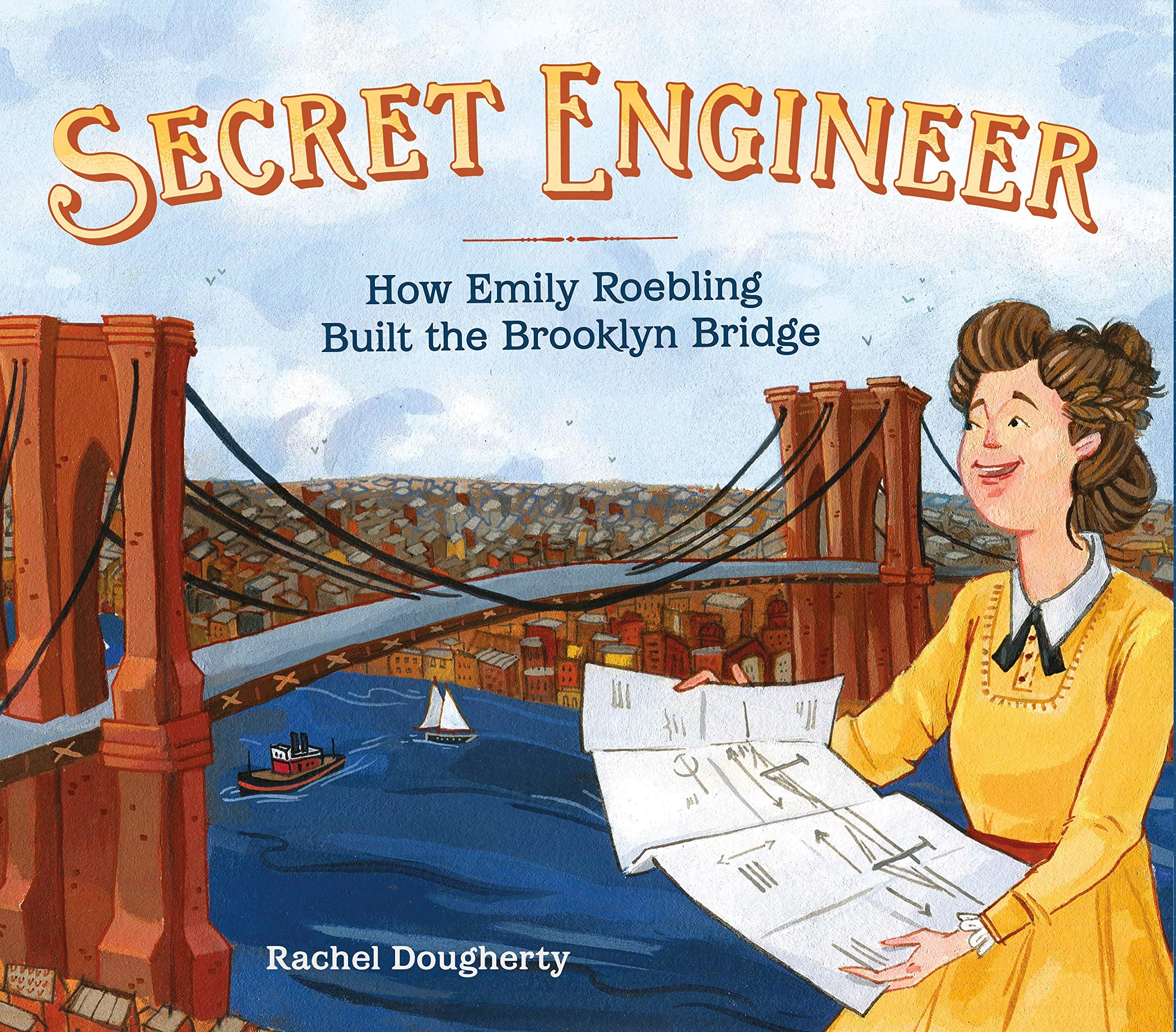
Image result for secret engineer amazon

Image result for secret engineer emily roebling

Summary:  Unlike many girls of her time, Emily Warren enjoyed studying math and science.  When she married Washington Roebling, she insisted on joining him on his travels through Europe as he sought ideas to build a bridge from Brooklyn to Manhattan.  Construction began in 1870, with caissons being sunk into the river bottom. Many workers got sick with “caisson fever” from working inside the hot, damp structure, and Washington was afflicted in 1872.  Unable to return to work, he began to rely on Emily to communicate his ideas to the construction workers at the bridge. Eventually, Emily taught herself bridge engineering and began to feel confident enough to add her own ideas.  A week before the opening of the Brooklyn Bridge in 1883, Emily assuaged people’s concerns about its stability by taking the first trip across in an open carriage. Crowds on both sides of the river celebrated the opening on May 24, “never even knowing about the contributions of an insistent woman named Emily Roebling.”  Includes additional information about Emily, a glossary, and a list of additional resources. Photos of the Brooklyn Bridge appear on the endpapers. 40 pages; grades 2-5.

Pros: An inspiring story of a little-known woman who educated herself to be able to play a key role in one of the great engineering feats of her day.

Cons:  I was curious about caisson fever and Washington’s fate, but there was no information about that.
If you would like to buy this book on Amazon, click here.

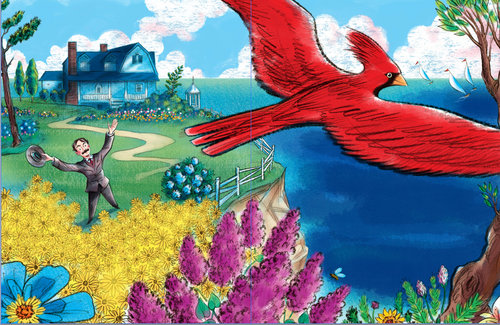
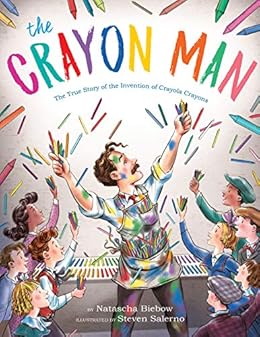
The Crayon Man: The True Story of the Invention of Crayola Crayons by Natascha Biebow, illustrated by Steven Salerno

Published by HMH Books for Young Readers

Image result for crayon man amazon

Image result for crayon man salerno

Summary:  Consider the humble crayon.  Seems like it has always been with us, but prior to the 20th century, kids were limited to dull slate pencils.  Along came Edwin Binney, an inventor who loved color. Working with his cousin, C. Harold Smith, he created gray slate pencils, white chalk, and black crayons.  But colored crayons eluded him.  At his secret lab in Pennsylvania, he melted paraffin wax, ground rocks and minerals into powders, and mixed in clay to thicken the substance.  One evening in 1903, Edwin announced that he had successfully made colored crayons. His wife Alice combined the French words craie (stick of chalk) and ola (oily…an oily stick of chalk?  hmmm) to come up with the now ubiquitous Crayola brand.  Fortuitously, crayons were created around the same time that cheap paper became available, and the rest is colorful history.  Includes two pages of photos showing how Crayola crayons are made today (at the Binney-Smith factory in Easton, PA, where I did an internship while attending Lafayette College many moons ago); more information on Edwin Binney; and a bibliography of primary and secondary sources.  48 pages; grades 1-4.

Pros:  Kids will be fascinated to learn how their crayons were invented.  The illustrations of workers covered in color after laboring over pigments all day are fun, and Edwin Binney’s perseverance is a good lesson in not giving up.

Cons:  The origin of the “Burnt Sienna” color name is not revealed.

If you would like to buy this book on Amazon, click here.

Image result for crayon man This also appears if you do a Google Images search for “Crayon Man”
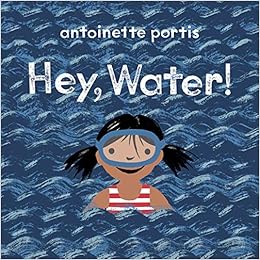
Hey, Water! by Antoinette Portis

Published by Neal Porter Books

Image result for hey water portis

Summary:  A little girl addresses water as she experiences it in many different forms: “Hey, water, I know you!  You’re all around. You spray up. And down,” she says, as the illustrations show a faucet, sprinkler, and shower.  Each page has a single word on it, as well as the picture and line(s) of text. Although the text is spare, the book explores different states of matter, bodies of water like lakes and rivers, properties of water, and its importance in our everyday lives.  “Hey, water, thank you!” the narrator concludes; the pages following that have information on water forms, the water cycle, and conserving water, as well as additional resources. 48 pages; ages 4-8.

Pros:  For such a short and entertaining read, this book packs a pretty good educational punch, providing an excellent and engaging introduction to many aspects of water.

Cons:  While the section on conserving water emphasizes the importance of doing so, it doesn’t give any practical tips.

If you would like to buy this book on Amazon, click here.

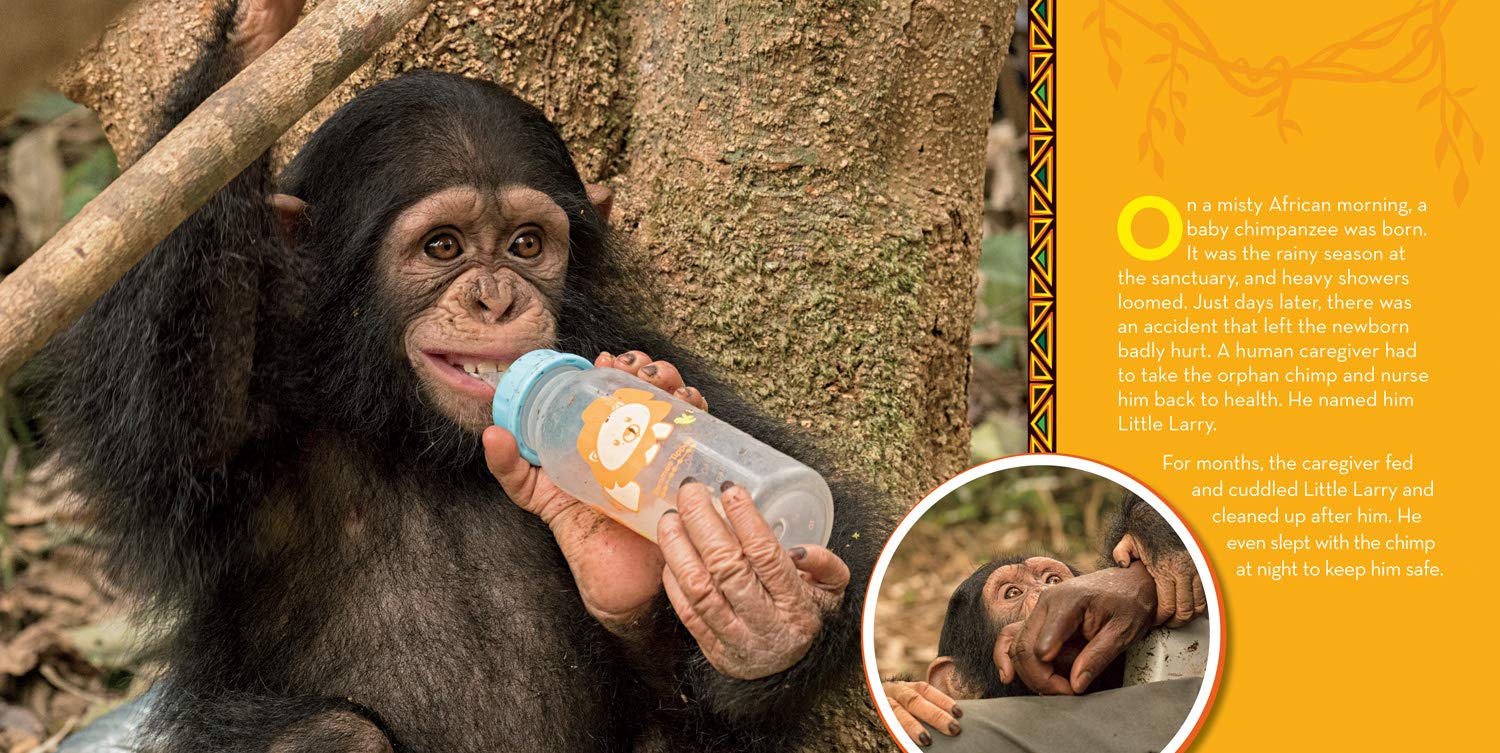
Little Larry Goes to School: The True Story of a Timid Chimpanzee Who Learned to Reach New Heights by Gerry Ellis with Mary Rand Hess

Published by National Geographic Children’s Books

Image result for little larry goes to school amazon

Image result for little larry goes to school mary rand hess

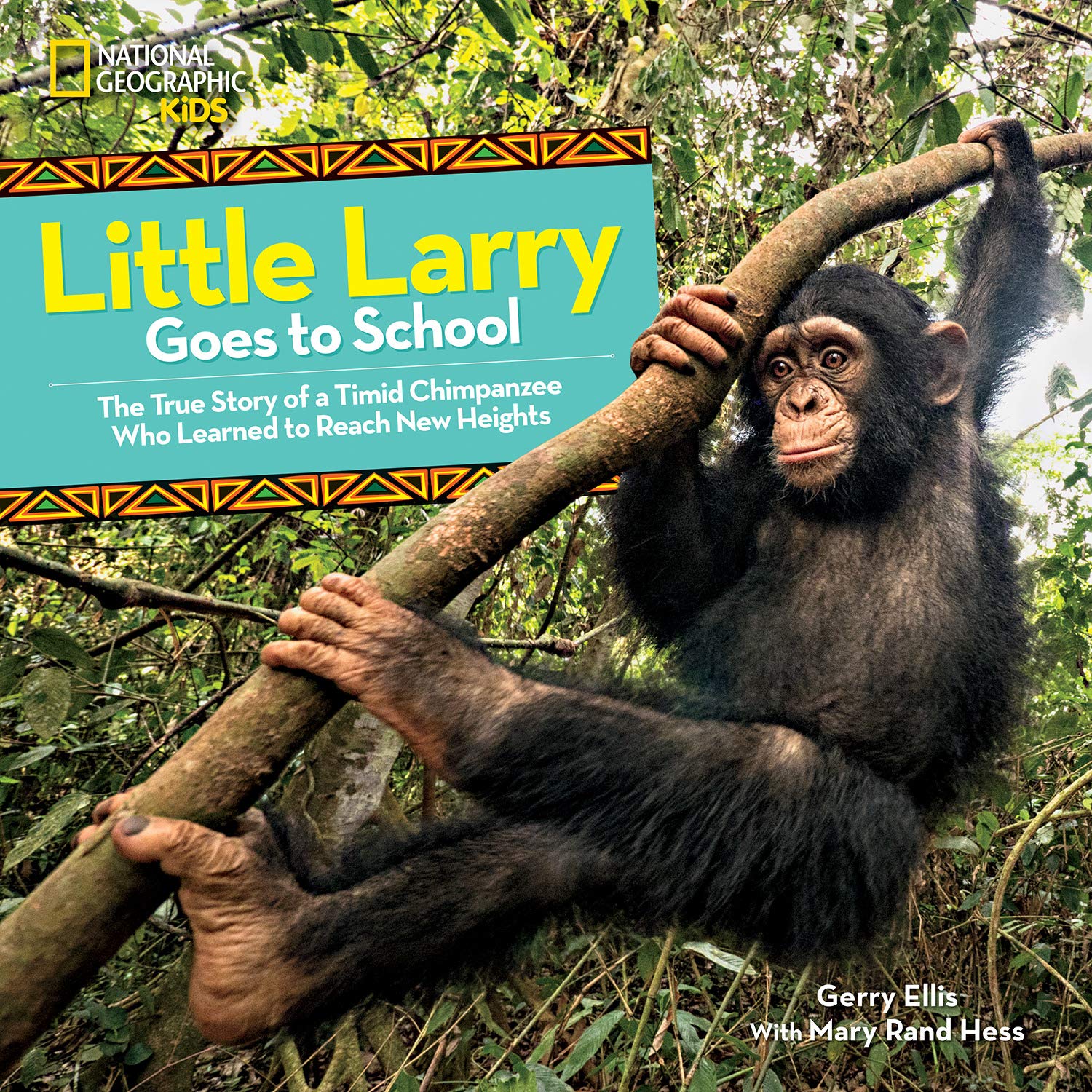
Summary:  Shortly after his birth, Little Larry was injured in an accident and rescued by humans.  His caregivers taught him some rudimentary chimpanzee skills, but he didn’t hang out with other chimps until he was eight months old.  He got along well with his playmates, but seemed to be afraid to climb trees. After months of watching the others climb, Larry slowly started to explore, first on vines close to the ground, then eventually high into the trees.  After graduating from his forest school, Larry was released into a chimpanzee sanctuary in Cameroon where he still lives today. Includes tips on speaking chimpanzee, sources of more information, additional facts; and an author’s note about the endangered status of chimpanzees.  32 pages; ages 4-8.

Pros:  Larry’s story is short and simple, but the photographs of him and his playmates are irresistible.  Facts about chimps’ diet, behavior, and communication are woven into the narrative, and the information at the end provides lots of other places to go for more research.

Cons:  There was very little information on Larry’s caregivers or the sanctuary where he lived.

If you would like to buy this book on Amazon, click here.

A Computer Called Katherine: How Katherine Johnson Helped Put America On the Moon by Suzanne Slade, illustrated by Veronica Miller Jamison

Published by Little, Brown Books for Young Readers

Image result for computer called katherine amazon

Image result for computer called suzanne slade

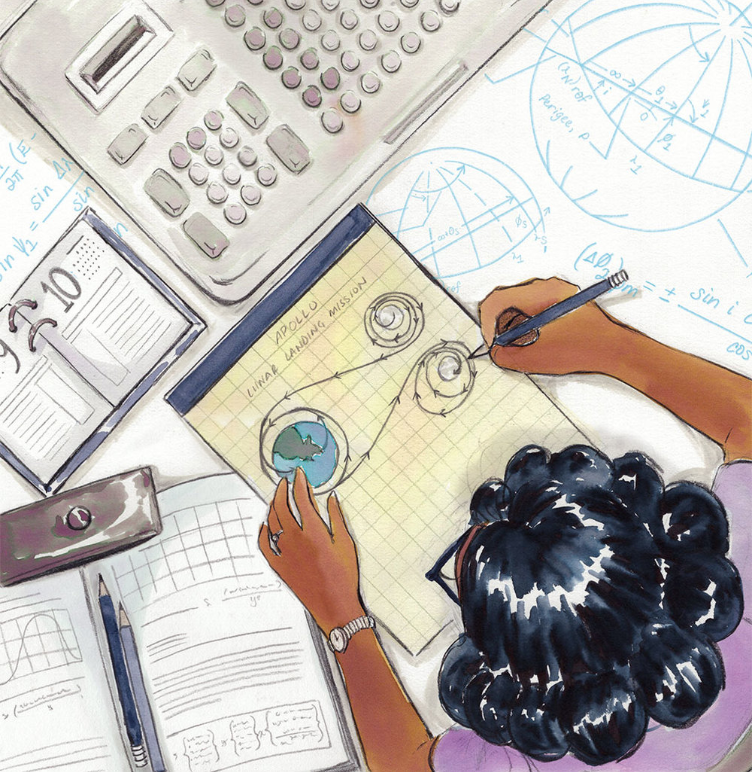
Summary:  Similar to last year’s Counting on Katherine, this picture book biography tells the story of Katherine Johnson’s life, beginning with her early fascination with math that eventually led her to a career at NASA.  Her brilliance was finally recognized there as she broke down the barriers that had kept women and blacks from the higher-level positions. This story focuses on her contributions to Apollo 11, the mission that included the first walk on the moon.  Katherine was instrumental in helping to calculate the flight plan that took the three astronauts to the moon and brought them safely back home again. Includes photos of Katherine and some of the documents she worked on at NASA, a time line, and author’s and illustrator’s notes.  40 pages; ages 4-8.

Pros:  Katherine Johnson’s story is brought to life in a way that is accessible for younger readers.  There’s an emphasis on her love of counting from an early age, and a fun incorporation of incorrect math facts (segregated schools seemed as wrong as 5+5=12; Katherine being excluded from NASA meetings was as wrong as 5×5=20).

Cons:  The story is light on dates and places, and there’s no list of further resources, so this wouldn’t be the best book for research or reports.

If you would like to buy this book on Amazon, click here.

Magic Ramen: The Story of Momofuko Ando by Andrea Wang, illustrated by Kana Urbanowicz

Published by little bee books

Image result for magic ramen

Image result for magic ramen urbanowicz

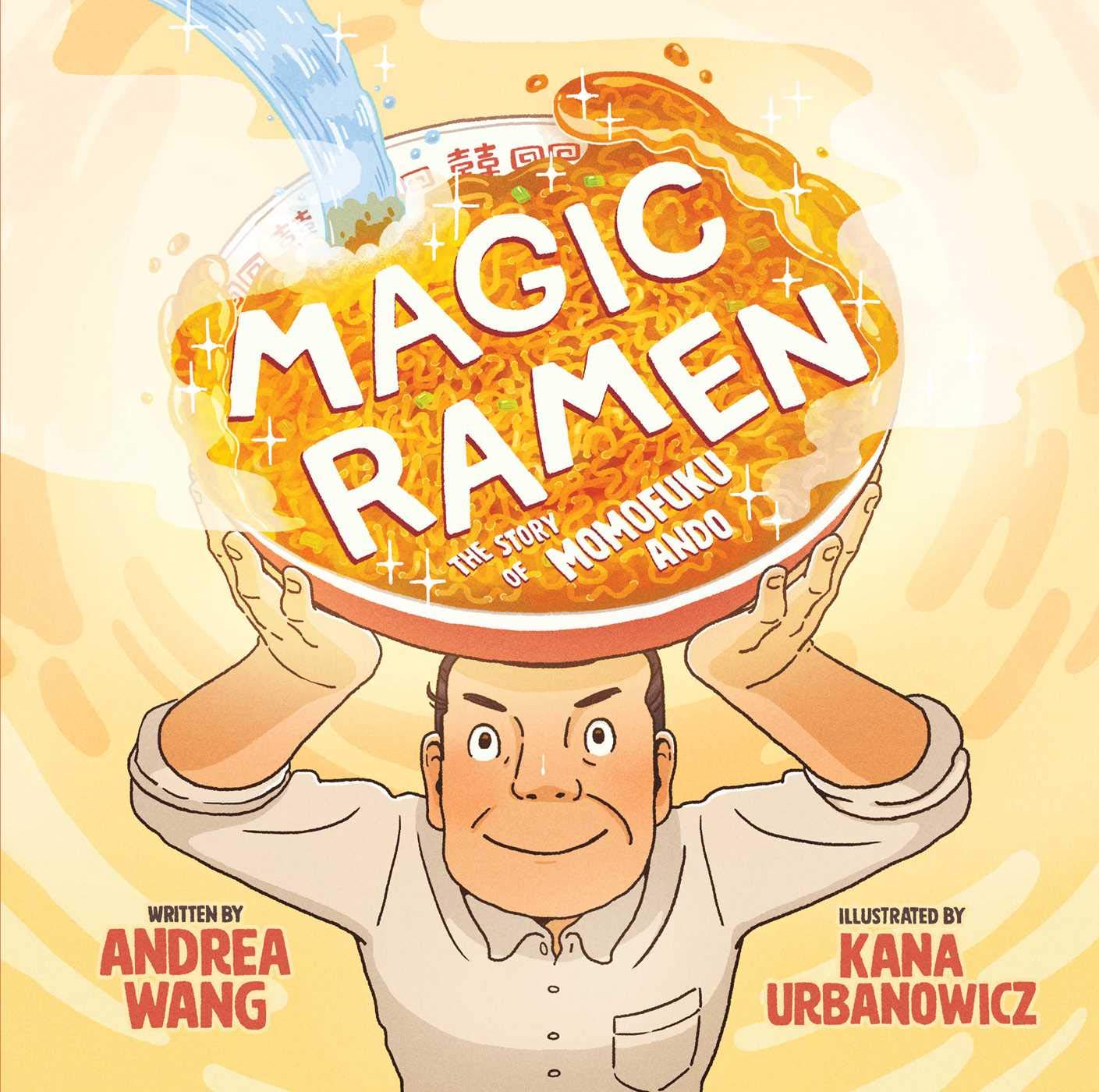
Summary:  Walking around postwar Japan in the late 1940’s, Momofuko Ando was saddened to see hungry people waiting in long lines to get a bowl of soup with noodles…if they were lucky enough to have money and not to be eating grass and bark or scrounging through the trash.  He believed that peace was only possible if people had enough to eat, and set out to make a cheap, easy, and nutritious food. After many, many failed attempts, he learned to make noodles in chicken soup that could be cooked by adding boiling water. He and his family started a business making and selling ramen, a passion he continued to work on into his 90’s.  Includes an afterword with more information about Ando and the Nissin Foods company. 40 pages; grades K-5.

Pros:  This beautifully illustrated picture book demonstrates Momofuko Ando’s perseverance through many failed attempts to create a food that has helped millions in all kinds of conditions throughout the world.  

Cons:  I’ve never actually eaten ramen.

Image result for magic ramen andrea wang

If you would like to buy this book on Amazon, click here.

A Green Place to Be: The Creation of Central Park by Ashley Benham Yazdani

Published by Candlewick

Image result for green place to be amazon

Image result for green place to be yazdani

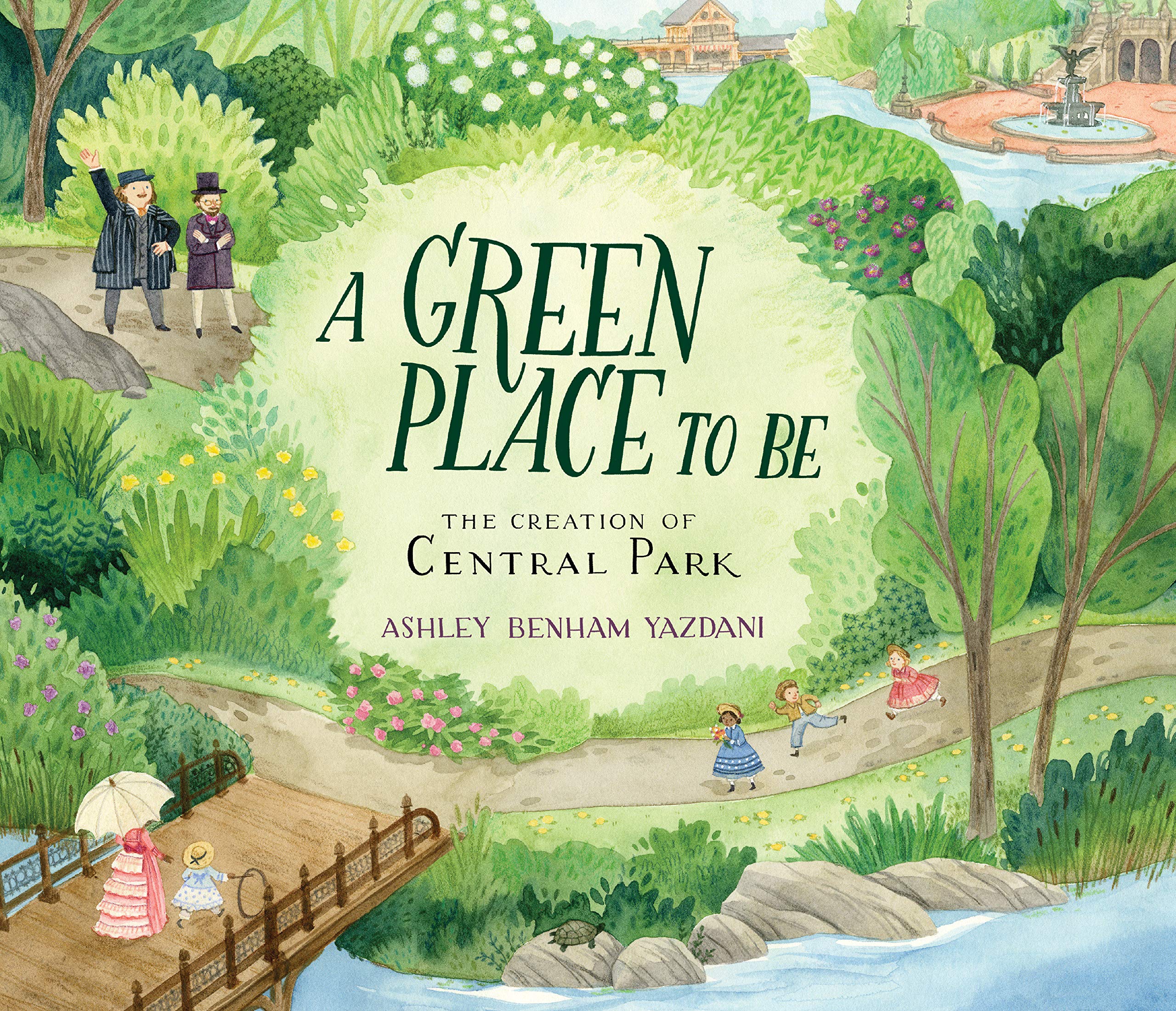
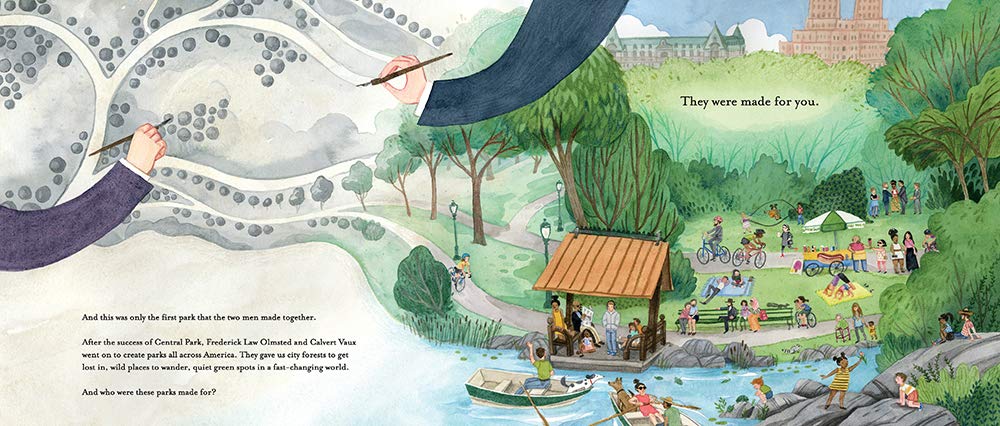
Summary:  The opening spread shows a busy day in Central Park; turn the page to see the swampy, rocky landscape of the early 19th century.  How did this transformation take place? Architect Calvert Vaux and park superintendent Frederick Law Olmsted teamed up to create the winning entry in New York City’s contest to design a new park.  Their scale-model drawing was ten feet long and so detailed that they almost missed the deadline.  The first part of the park, the lake, opened in 1858. From there, they moved on to paths, bridges, and a children’s area.  Olmstead worked carefully to select and plant trees, keeping in mind what they would look like for the next century. After their success creating Central Park, Vaux and Olmsted moved on to design many more green spaces throughout America. Includes additional information about these two men; questions and answers that provide more tidbits about the park; an author’s note, and a bibliography.  40 pages; grades 2-5.

Pros:  Ashley Benham Yazdani’s debut picture book is packed with fascinating information and beautifully illustrated with detailed ink and watercolor pictures.

Cons:  I was wishing for a list of the parks Calvert Vaux and Frederick Law Olmsted created.

If you would like to buy this book on Amazon, click here.

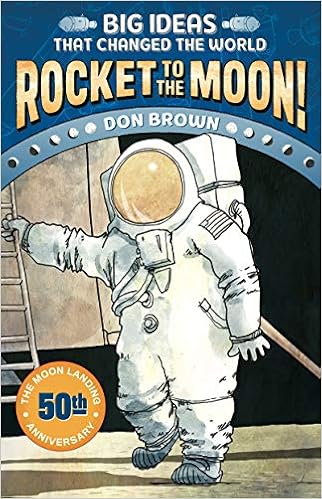
Rocket to the Moon by Don Brown

Published by Harry N. Abrams

Image result for rocket to the moon brown amazon

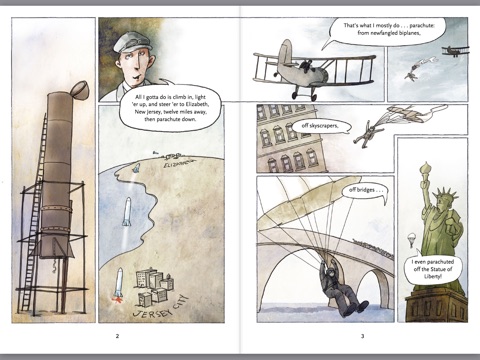
Image result for rocket to the moon don brown

Summary:  Rodman Law, an early 20th-century stuntman, narrates the story of America’s space exploration.  Starting with a quick history of rockets, the narrative goes into more details with Werner von Braun, Robert Goddard, and the dawn of the U.S.-U.S.S.R. space race.  About half of the book is devoted to the Apollo missions, with the bulk of that describing Apollo 11 and the historic moonwalk by Neil Armstrong and Buzz Aldrin. It ends with Apollo 17, the final mission to reach the moon.  Includes a timeline, notes, and a lengthy bibliography. 136 pages; grades 3-7.

Pros:  Don’t be fooled by the graphic novel format, and Rodman Law’s light tone–there is lots of information here, and the extensive back matter provides plenty of additional research avenues.

Cons:  While this is billed as book 1 of a series called Big Ideas That Changed the World, I couldn’t find any information on any more upcoming books.

If you would like to buy this book on Amazon, click here.

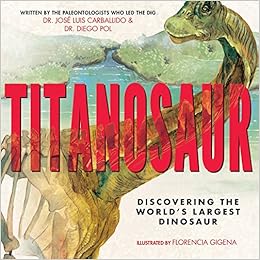
Titanosaur: Discovering the World’s Largest Dinosaur by Dr. Jose Luis Carballido and Dr. Diego Pol, illustrated by Florencia Gigena

Published by Scholastic Press

Image result for titanosaur gigena amazon

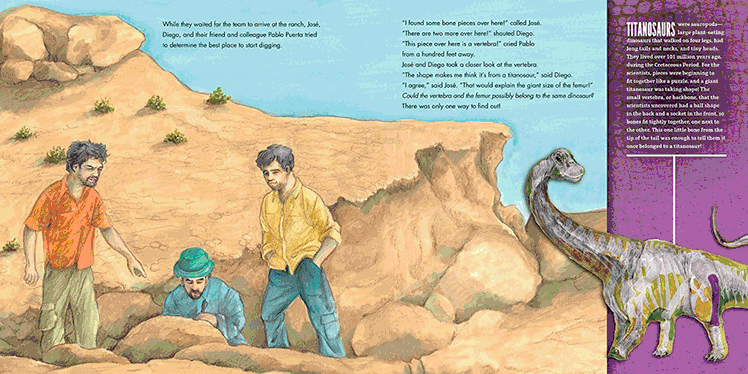
Image result for titanosaur gigena

Summary:  When an Argentinian gaucho told museum staff that he had found a dinosaur bone much larger than the one they had on display, paleontologists Jose Luis Carballido and Diego Pol wanted to investigate.  They visited the ranch and found out the gaucho was right–he had discovered a dinosaur bone bigger than any previously discovered. The two paleontologists assembled a team and began excavating the fossils.  They eventually were able to estimate the size of the dinosaur, which would have weighed in at seventy tons. Over 100 bones were found, belonging to several dinosaurs.  The team had to work around the clock to uncover them all before cold weather set in, which could damage the fossils. When the titanosaur’s skeleton was finally assembled, it was 122 feet long and almost 26.5 feet tall, making it the largest ever found…for now.  40 pages; grades 1-4.

Pros:  Dinosaur enthusiasts will be blown away by this gigantic dinosaur, and the work it took to dig up and assemble.  The illustrations and photographs add a lot of information, and make a paleontology career look like a very fun adventure.

Cons:  Some back matter would have added a lot; for instance, I couldn’t find any dates for when the expedition took place or the name of the museum where the skeleton is now on display.

If you would like to buy this book on Amazon, click here.

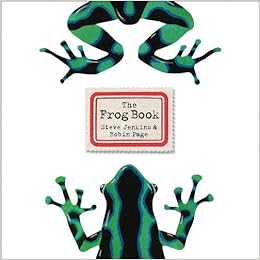
The Frog Book by Steve Jenkins and Robin Page

Published by HMH Books for Young Readers

Image result for frog book jenkins amazon

Image result for frog book steve jenkins

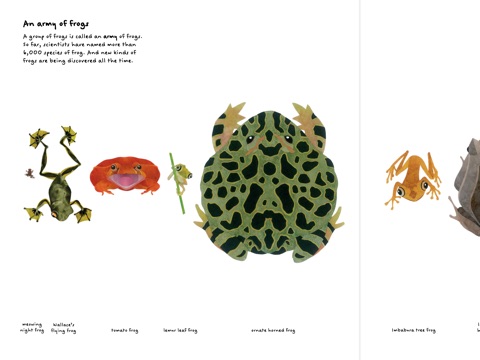
Summary:  Similar in format to Steve Jenkins’ The Beetle Book, this book provides information on frogs’ diets, habitats, defenses, and reproduction.  There’s a page about extreme frogs (smallest, largest, most poisonous, etc.), and another on the endangered status of frogs around the world.  You can also learn the differences between a frog and a toad and a little bit about other amphibians. The last two pages have a table showing all the frogs in the book, with their body lengths, diets, and where in the world they can be found.  Includes lists of books and websites for further information. 40 pages; grades 1-5.

Pros:  There’s a wealth of information that would come in handy for any kind of frog research or report-writing.  The format is inviting, with beautiful cut paper illustrations, and small sections of text with the kinds of interesting facts kids love.

Cons:  I wasn’t a huge fan of the tiny font.  Also, a table of contents or list of the sections in the book would have been helpful.

If you would like to buy this book on Amazon, click here.