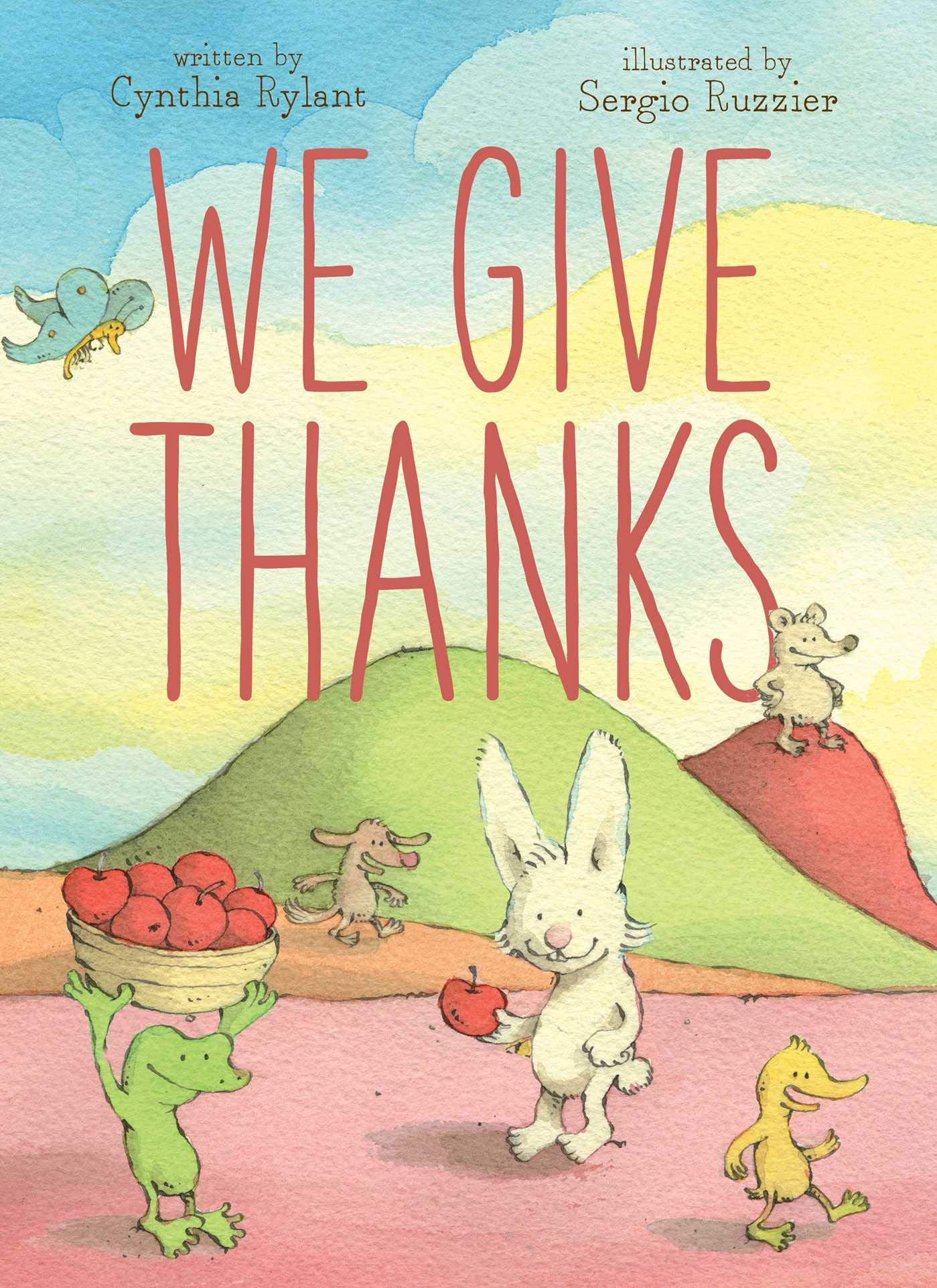
We Give Thanks by Cynthia Rylant, illustrated by Sergio Ruzzier

Published by Beach Lane Books
Amazon.com: We Give Thanks: 9781442465077: Rylant, Cynthia, Ruzzier,  Sergio: Books

Amazon.com: We Give Thanks: 9781442465077: Rylant, Cynthia, Ruzzier,  Sergio: Books

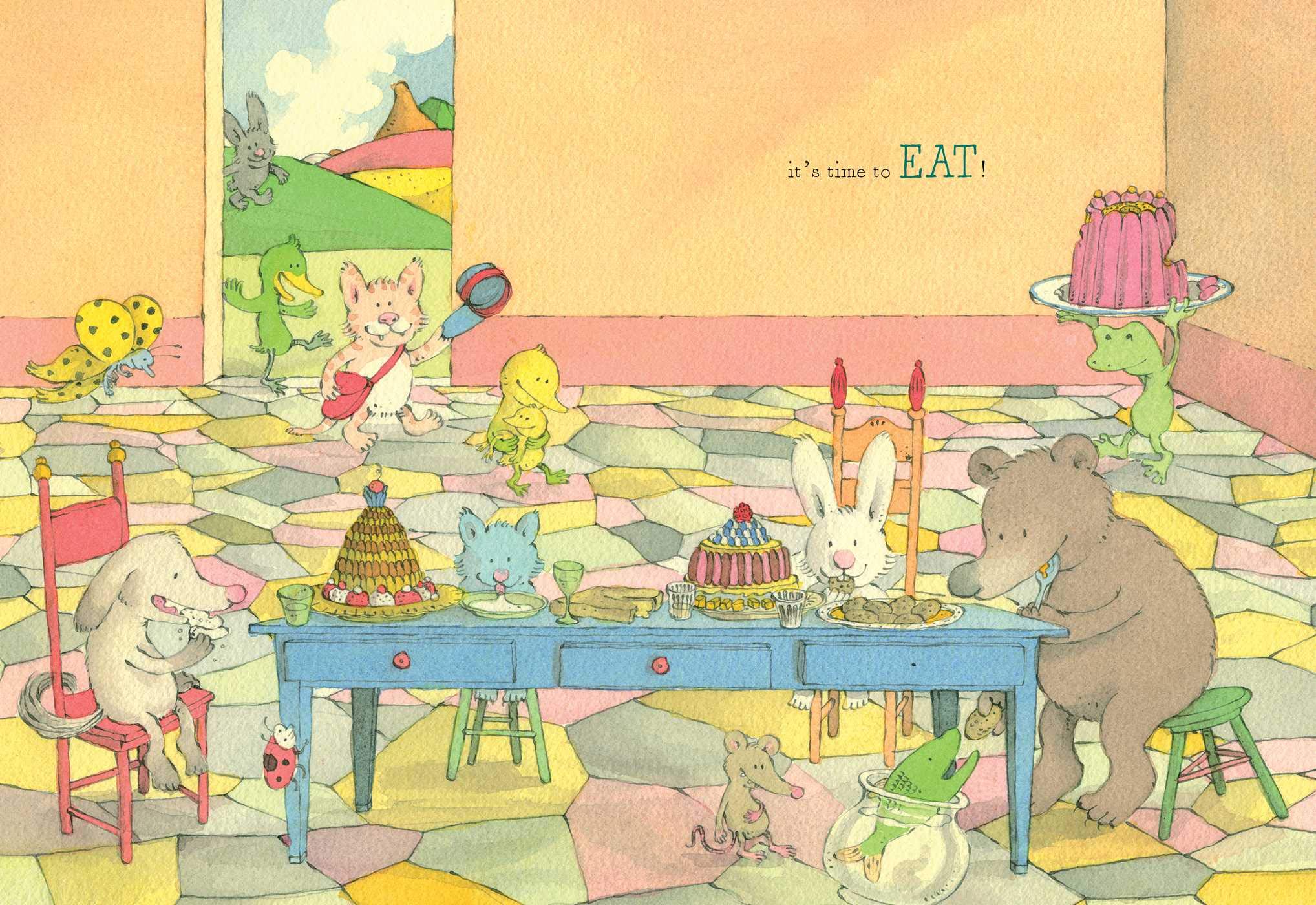
Summary:  “We give thanks for mittens and for coats and boots and hats.  We give thanks for yellow dogs and yellow kitty cats.”  A frog and a rabbit show their gratitude for different aspects of their lives, like food, family, and nature.  They travel around their neighborhood, then end up back at home where they prepare a feast as friends and relatives start to arrive.  “Bless our nights and bless our days and bless all those we meet.  We give thanks for everything, and now…it’s time to EAT!”  32 pages; ages 3-7.

Pros:  With many of those Pilgrim and Indian Thanksgiving books feeling more problematic each year, I am thankful for books like these that focus on gratitude and make perfect Thanksgiving read-alouds.  Cynthia Rylant’s rhyme is bouncy and fun, and Sergio Ruzzier (who is quickly becoming one of my favorite illustrators) has done an outstanding job creating an animal world to complement the text.

Cons:  The Thanksgiving feast seems to be a little light on vegetables (although some may consider that a pro, not a con). 
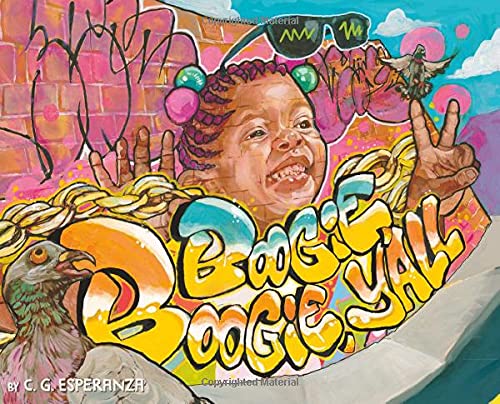
Boogie, Boogie, Y’All by C. G. Esperanza

Published by Katherine Tegen Books

Amazon.com: Boogie Boogie, Y'all: 9780062976222: Esperanza, C. G.,  Esperanza, C. G.: Books
Boogie Boogie, Y'all: Esperanza, C. G., Esperanza, C. G.: 9780062976222:  Amazon.com: Books

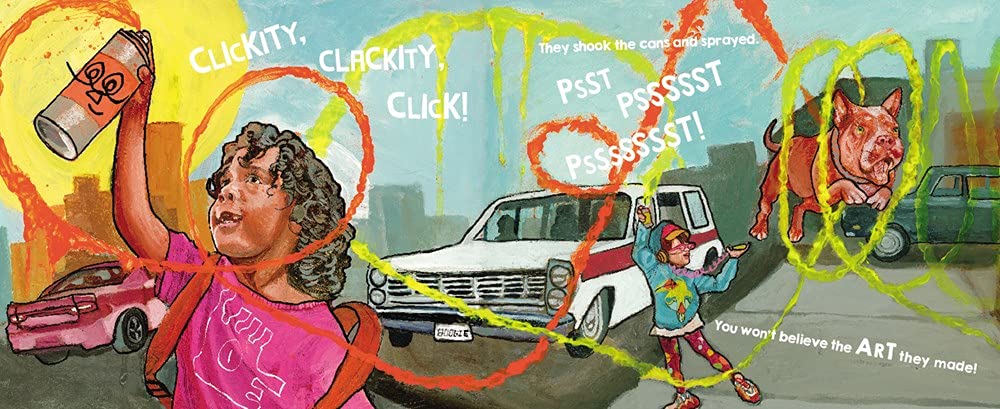
Summary:  Although not everyone in her neighborhood loves graffiti, this girl sees it as beautiful art decorating the walls and trains of her community.  Some people complain about it, while others are too busy to notice it.  In the park, there’s a big block party, and suddenly the art comes to life and joins in the celebration.  Everyone boogies away except the girl, a friend, and their dog, who shake up some cans of spray paint and get busy creating art.  40 pages; ages 3-8.

Pros:  A rollicking rhyming book that celebrates the art and life of an urban neighborhood.

Cons:  I didn’t really understand the ending.

Child of the Flower-Song People: Luz Jiménez, Daughter of the Nahua by Gloria Amescua, illustrated by Duncan Tonatiuh

Published by Harry N. Abrams

Child of the Flower-Song People: Luz Jiménez, Daughter of the Nahua:  Amescua, Gloria: 9781419740206: Amazon.com: Books
Child of the Flower-Song People – Perfect Picture Book Friday – Jilanne  Hoffmann

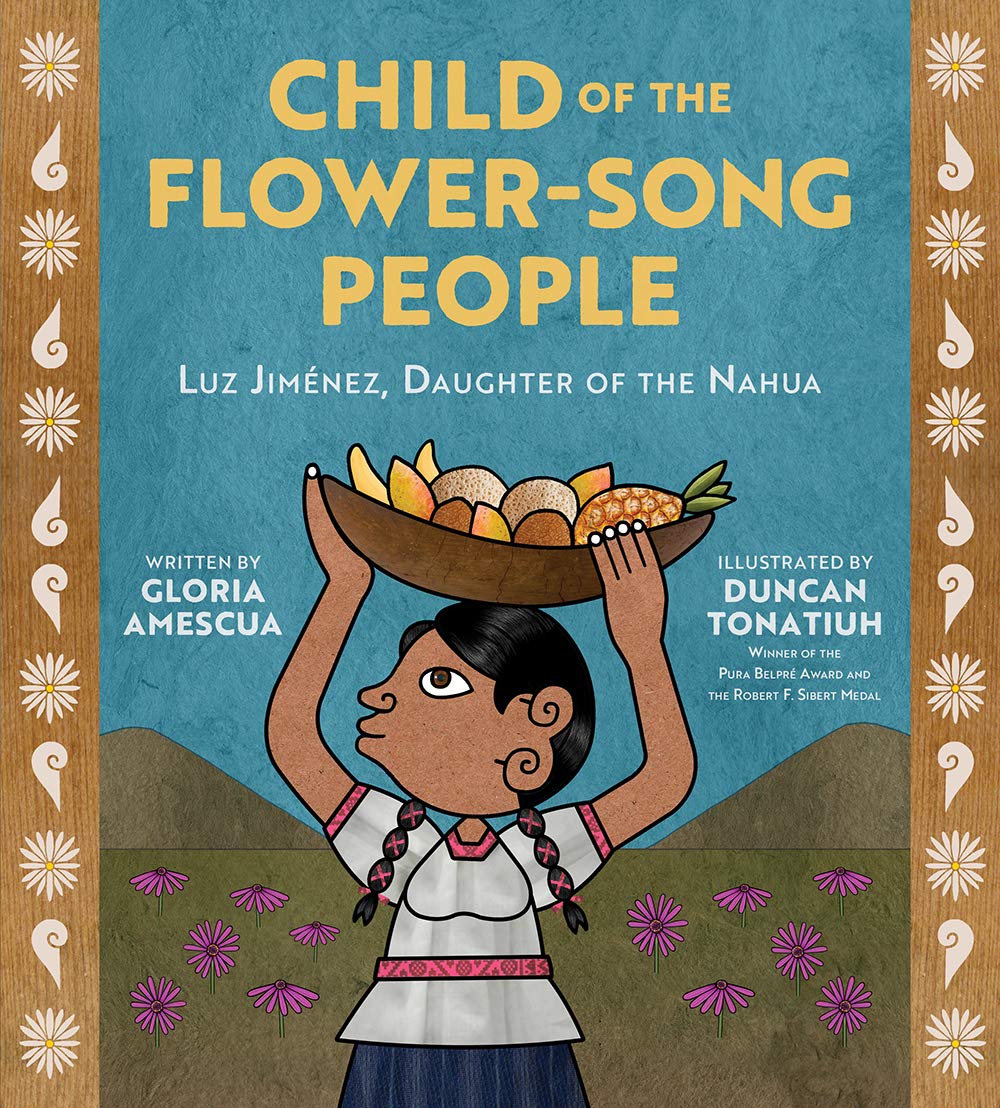
Summary:  Growing up in Mexico, Luz Jiménez learned the language and culture of her people, the Nahua.  Although she dreamed of reading and becoming a teacher, this proved to be difficult. When she was young, indigenous children weren’t allowed to go to school; later the law changed, and they were required to go to Spanish-speaking schools, forbidden from speaking their native languages.  When the Mexican Revolution came to her home, most of the men in Luz’s community were killed, including her father.  She and her mother and sister moved to Mexico City, where Luz became an artist’s model.  20th-century artists were interested in portraying native people instead of the traditional light-skinned Spanish subjects.  Through her work as a model, Luz also became a teacher, sharing her language and culture with others and becoming known as “the spirit of Mexico”.  Includes notes from the author and artist, including a photograph and a list of illustrations that were inspired by other artists’ work who had painted Luz.  Also a timeline, glossary, notes, and a bibliography.  48 pages; grades 1-5.

Pros:  Another excellent addition to the growing list of 2021 books about indigenous people.  Despite Luz’s many difficulties, she maintained a positive spirit and contributed in many ways to Mexico’s history.  Sure to receive some Pura Belpré consideration.

Cons:  The illustrations that were inspired by other artists’ work were listed with page numbers; since there were no page numbers in the book, I wasn’t sure which page was being referenced.

The Fastest Girl on Earth: Meet Kitty O’Neil, Daredevil Driver! By Dean Robbins, illustrated by Elizabeth Baddeley

Published by Knopf Books for Young Readers

The Fastest Girl on Earth!: Meet Kitty O'Neil, Daredevil Driver!: Robbins,  Dean, Baddeley, Elizabeth: 9780593125717: Amazon.com: Books

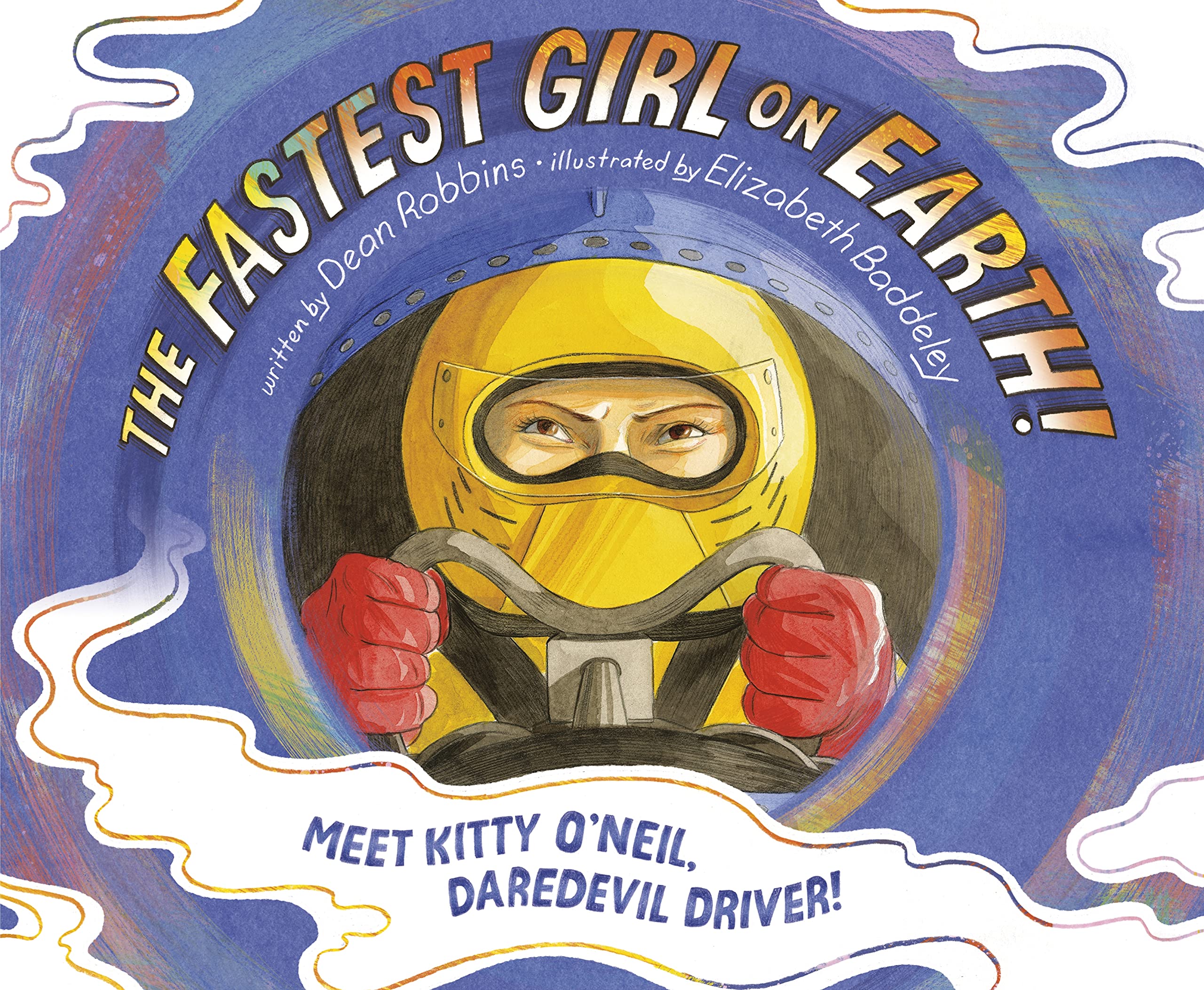
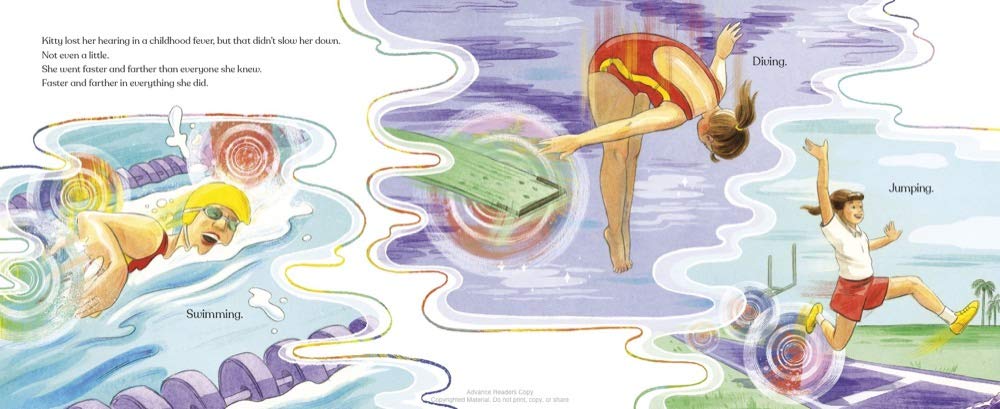
Summary:  Kitty O’Neil may have lost her hearing as a baby, but she never let it stop her from doing the most daring deeds she could find.  From movie stunts to speed records for water skiing and boat racing, Kitty embraced any challenge.  Her biggest goal was to break the women’s land-speed record of 308 miles per hour in the Motivator, her rocket-powered car.  On December 6, 1976, Kitty drove across the Oregon desert, reaching a speed of 618 miles per hour.  Her fans cheered wildly: “Kitty could not hear their cheering, but she could feel it in her bones.”  Includes an author’s note with additional information about Kitty and her car; a list of her world records; and additional resources.  40 pages; ages 4-8.

Pros:  Focusing mostly on Kitty’s record-breaking drive, the story is exciting and incorporates facts about her early life.  The author’s note provides additional context.  This belongs on any list of books featuring people with disabilities.

Cons:  It seems unfair that Kitty had to average two drives for the world record, so the official speed is 512 mph.

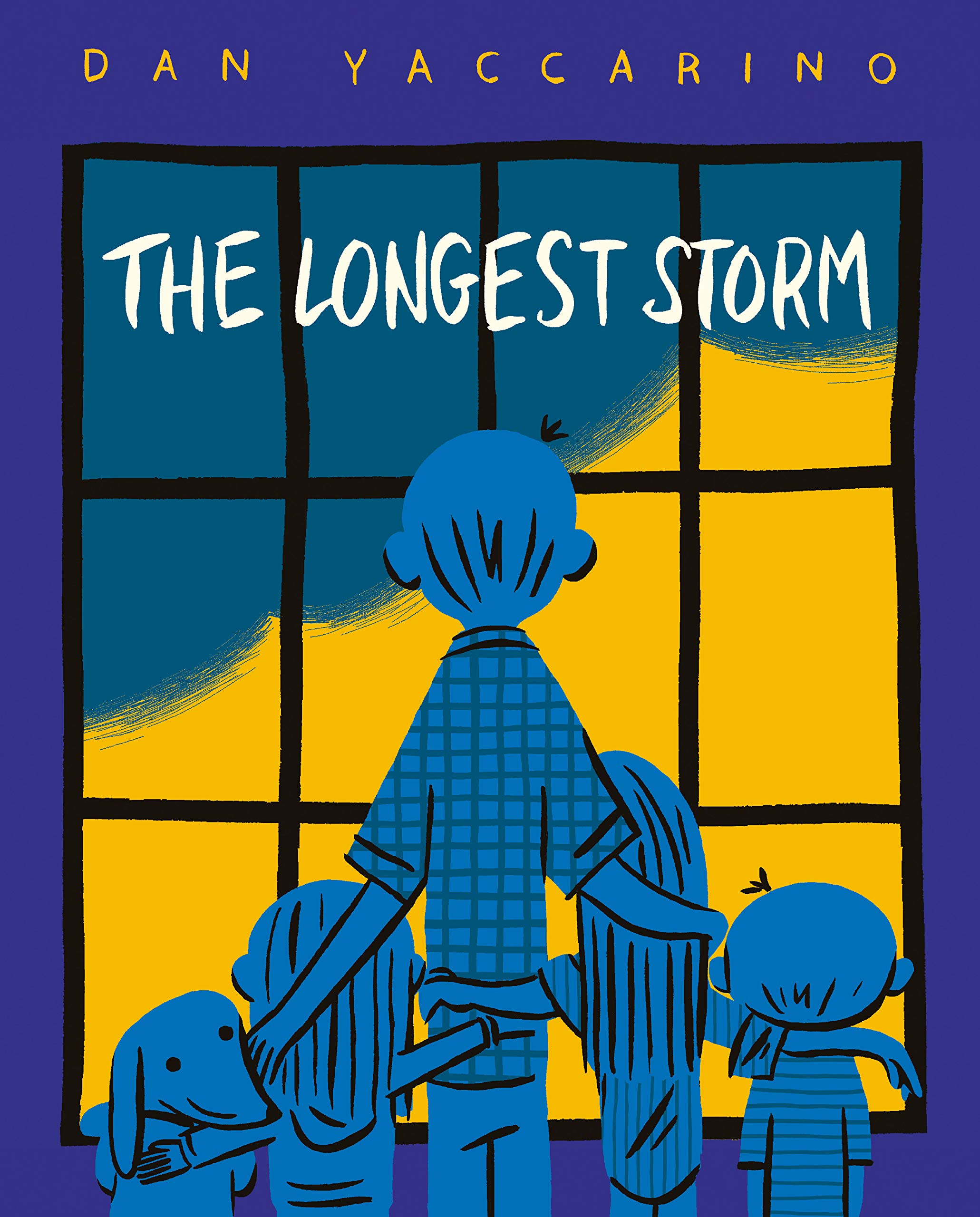
The Longest Storm by Dan Yaccarino

Published by mineditionUS

The Longest Storm: Yaccarino, Dan: 9781662650475: Amazon.com: Books
Weathering the Storm Together by Dan Yaccarino | Nerdy Book Club

Summary:  A storm comes to town that is unlike any that has ever been seen before, and a family is forced to stay inside.  It feels strange to be indoors together for so long and soon tempers flare.  Everyone is mad at each other and just wants to be alone.  One night, though, a violent thunderstorm and power outage bring them all back together again, and after that things start to get better.  There are still occasional fights, but each day the family bond gets stronger, until one day the storm is gone and the sun is shining again.  When they head outside, there’s a lot of storm damage, but it’s clear from the last picture that the family will be working together to clean it up.  40 pages; ages 4-8.

Pros:  While this story seems clearly to have been inspired by the pandemic lockdown, it could also be used to show how a family moves through different stages during any sort of difficult time.  The family’s resilience in overcoming anger and learning to pull together during a tough time make this an excellent story for social and emotional learning.  

Cons:  The ending felt a little abrupt.

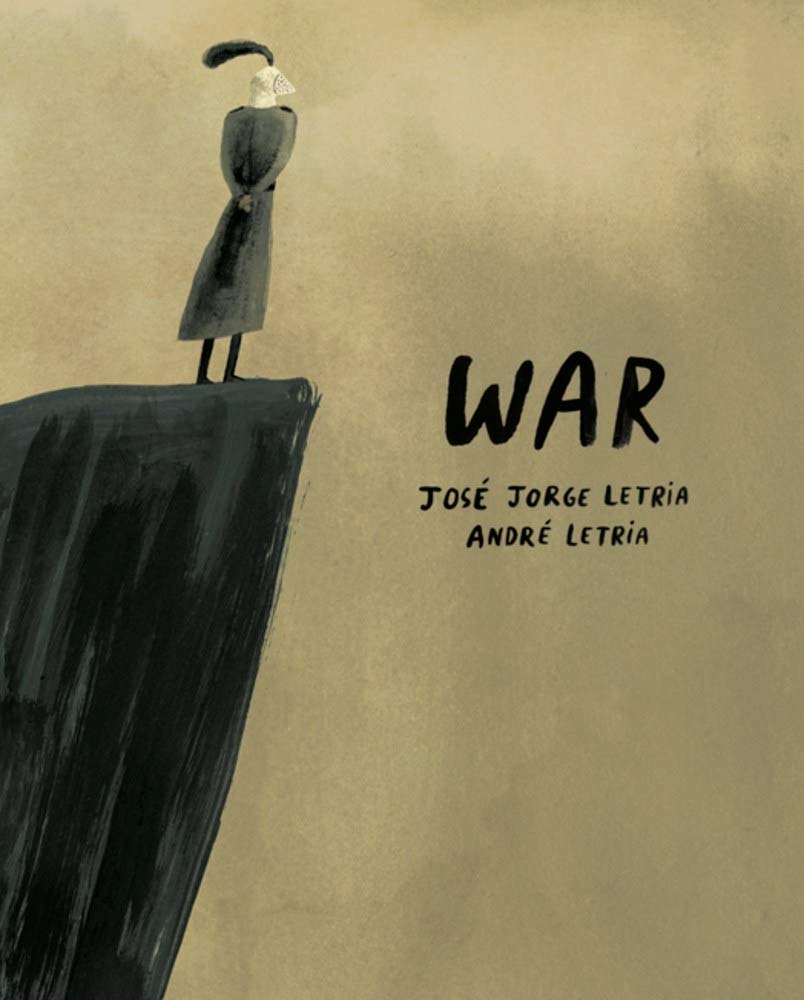
War by José Jorge Letria

Published by Greystone Kids

War: Letria, Jose Jorge, Letria, André: 9781771647267: Amazon.com: Books
War – Greystone Books Ltd.

Summary:  “War spreads through the day like a whispered, swift disease.”  The opening pages of this book show spiders, snakes, and a large black bird traveling through a landscape until they land on a uniformed man, alone in a room, studying a large map and selecting a knight’s helmet before he throws a torch on a huge pile of books.  Planes and soldiers gather in armies before bombs are dropped on cities and tanks roll in.  The final pages show a destroyed city and large spiders moving in with the sentence, “War is silence.”  Originally published in Portugal. 64 pages; grades 4 and up.

Pros:  The watercolor illustrations done grays, blacks, and military drabs provide haunting images of the hatred and destruction of war.  Combined with spare but powerful text, this would be an effective way to begin a discussion of war at the upper elementary, middle school or even high school level.

Cons:  I will definitely not be putting this in the picture book section of my library.  It looks like a picture book, but I kept imagining some kindergartener bringing it home to be read as a bedtime story.

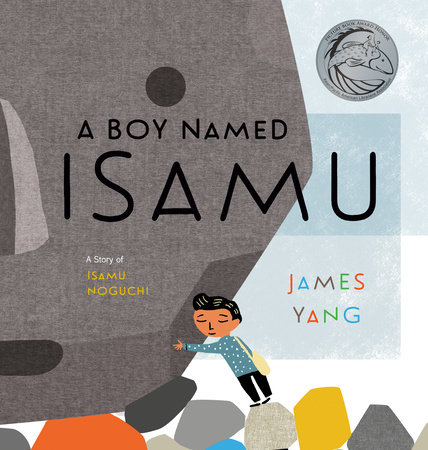
A Boy Named Isamu: A Story of Isamu Noguchi by James Yang

Published by Viking Books for Young Readers

A Boy Named Isamu by James Yang: 9780593203446 | PenguinRandomHouse.com:  Books

Amazon.fr - A Boy Named Isamu: A Story of Isamu Noguchi - Yang, James -  Livres

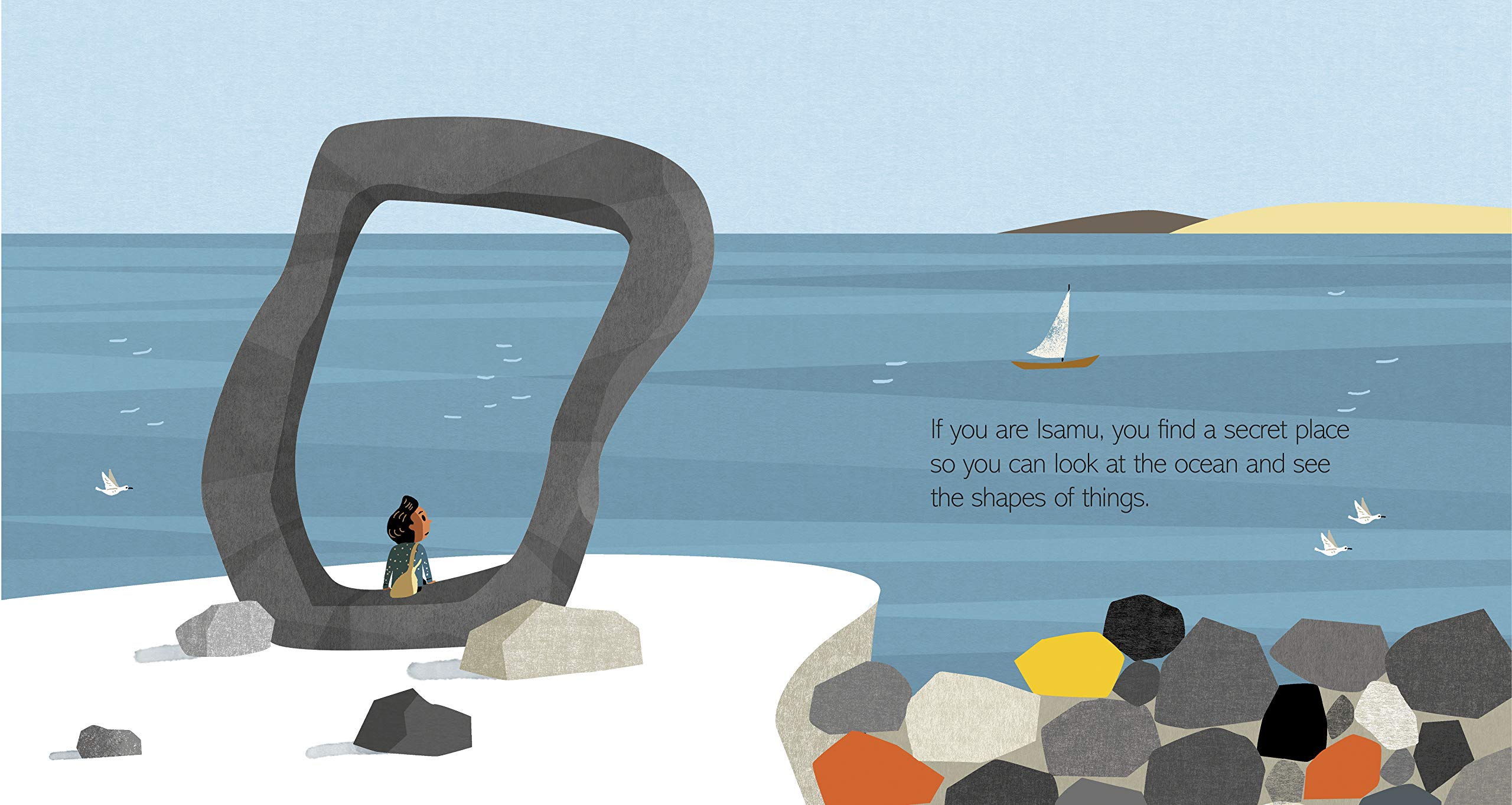
Summary:  “If you are a boy named Isamu…at the market with your mother, it can be a crowded and noisy place.  Maybe there is a quiet space that feels more like you.”  Isamu prefers to observe the world by himself, wondering about everything he sees around him: the colors of the fruit at the market, the light through the paper lanterns near his home, the leaves that he finds in the forest.  In the evening, his mother asks him how his day was.  Isamu thinks how he was alone but not lonely, and how the forest and beach were like friends giving him gifts like sticks, pebbles and shells.  Includes an author’s note with additional information about Japanese American artist Isamu Noguchi and two photos of Isamu as a child and as an adult with one of his sculptures.  40 pages; ages 4-8.

Pros:  Introspective children will find a kindred spirit in Isamu Noguchi, and all readers can embrace Isamu’s wonder and appreciation for the natural world.

Cons:  There aren’t many details about Isamu Noguchi or his art, nor are there any additional resources given.

Seen and Unseen: Noguchi's Gateways - The Noguchi Museum

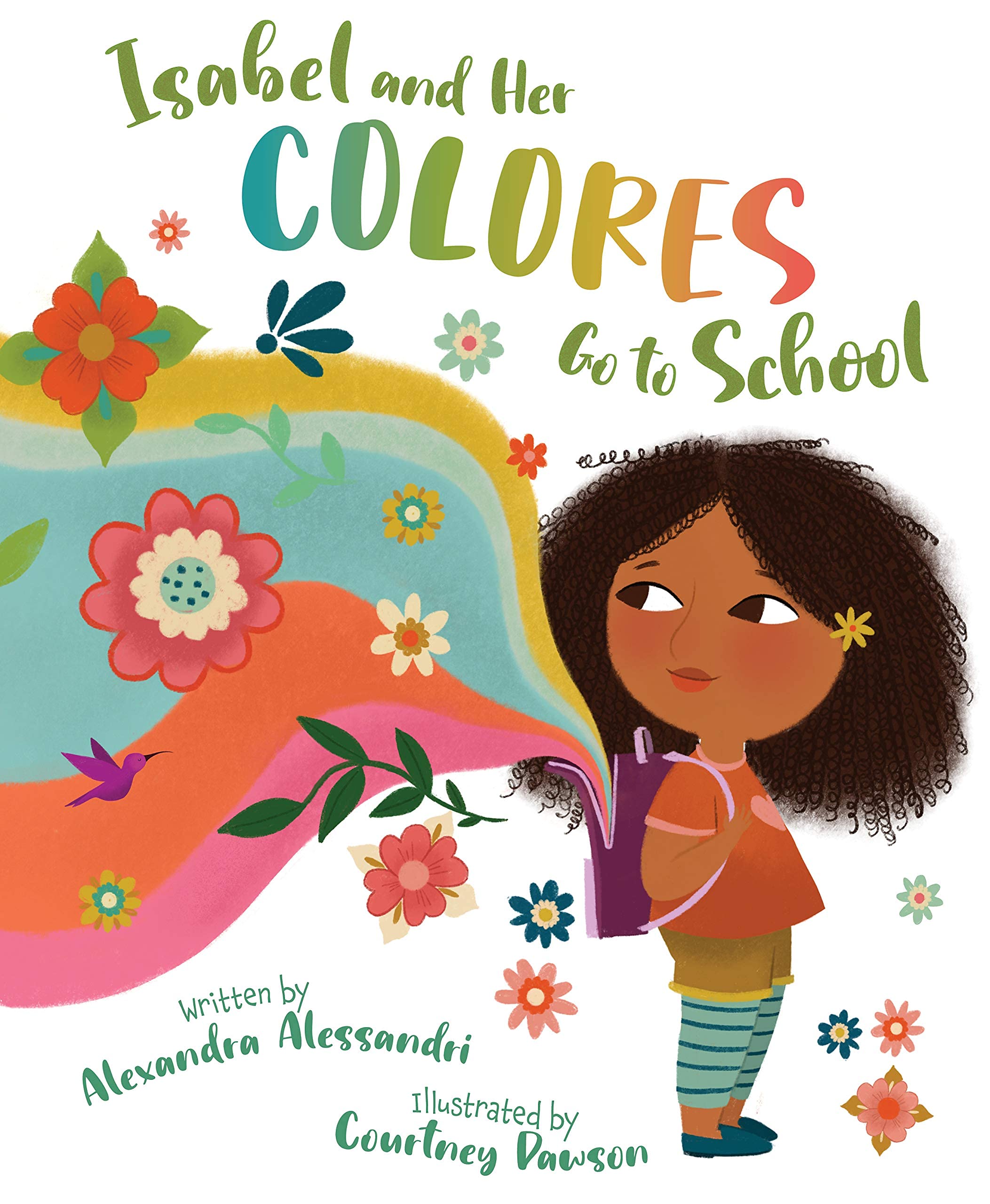
Isabel and Her Colores Go to School by Alexandra Alessandri, illustrated by Courtney Dawson

Published by Sleeping Bear Press

Isabel and her Colores Go to School (English and Spanish Edition):  Alessandri, Alexandra, Dawson, Courtney: 9781534110632: Amazon.com: Books

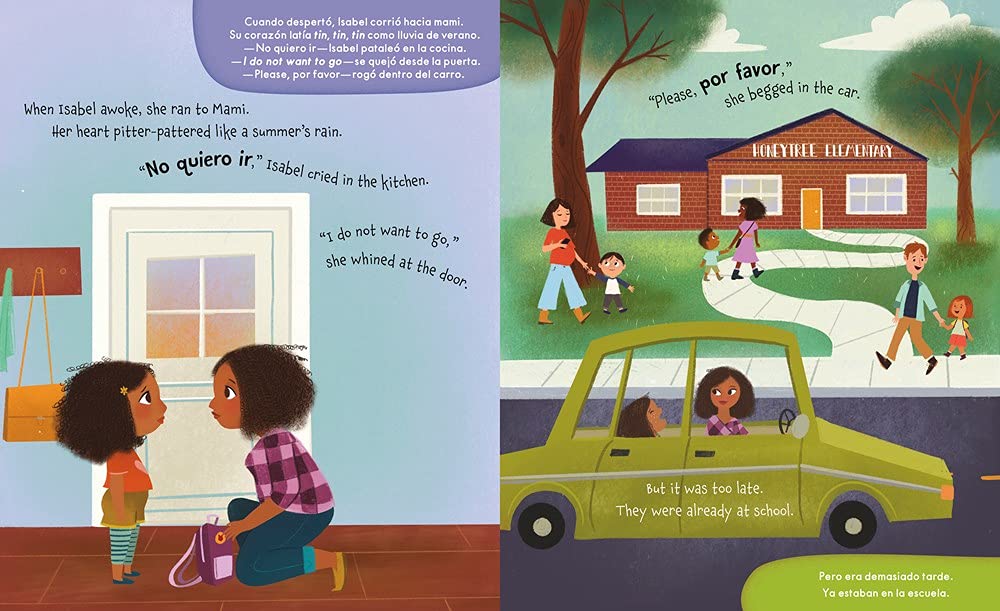
Summary:  Isabel’s got the typical first-day-of-school jitters, but she has an additional worry: she doesn’t speak much English.  She begs not to go; her mother is understanding but insistent, offering her this advice: “Al mal tiempo, buena cara.  To bad times, a good face.”  Things are tough at first, and when a girl named Sarah offers to be her friend, Isabel doesn’t understand and shakes her head.  In the afternoon, though, there’s time to draw, and Isabel loves using all the colors.  Remembering Mami’s advice, she draws two faces and shows them to Sarah, along with the word “Amigas”.  The rest of the class enthusiastically admires Isabel’s picture, and Isabel ends up thinking that maybe school won’t be so bad after all.  The story is told in both English and Spanish and includes two pages of Spanish to English translations for the words used in the story.  40 pages; ages 4-8.

Pros:  A perfect back-to-school book for ELL students, particularly those who speak Spanish.  The story captures the worries of learning a new language and fitting in, with a realistically hopeful ending.

Cons:  I hope Isabel can get some good ELL services at school.

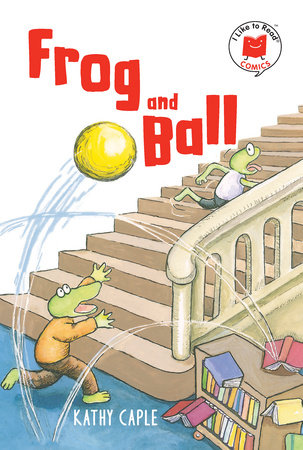
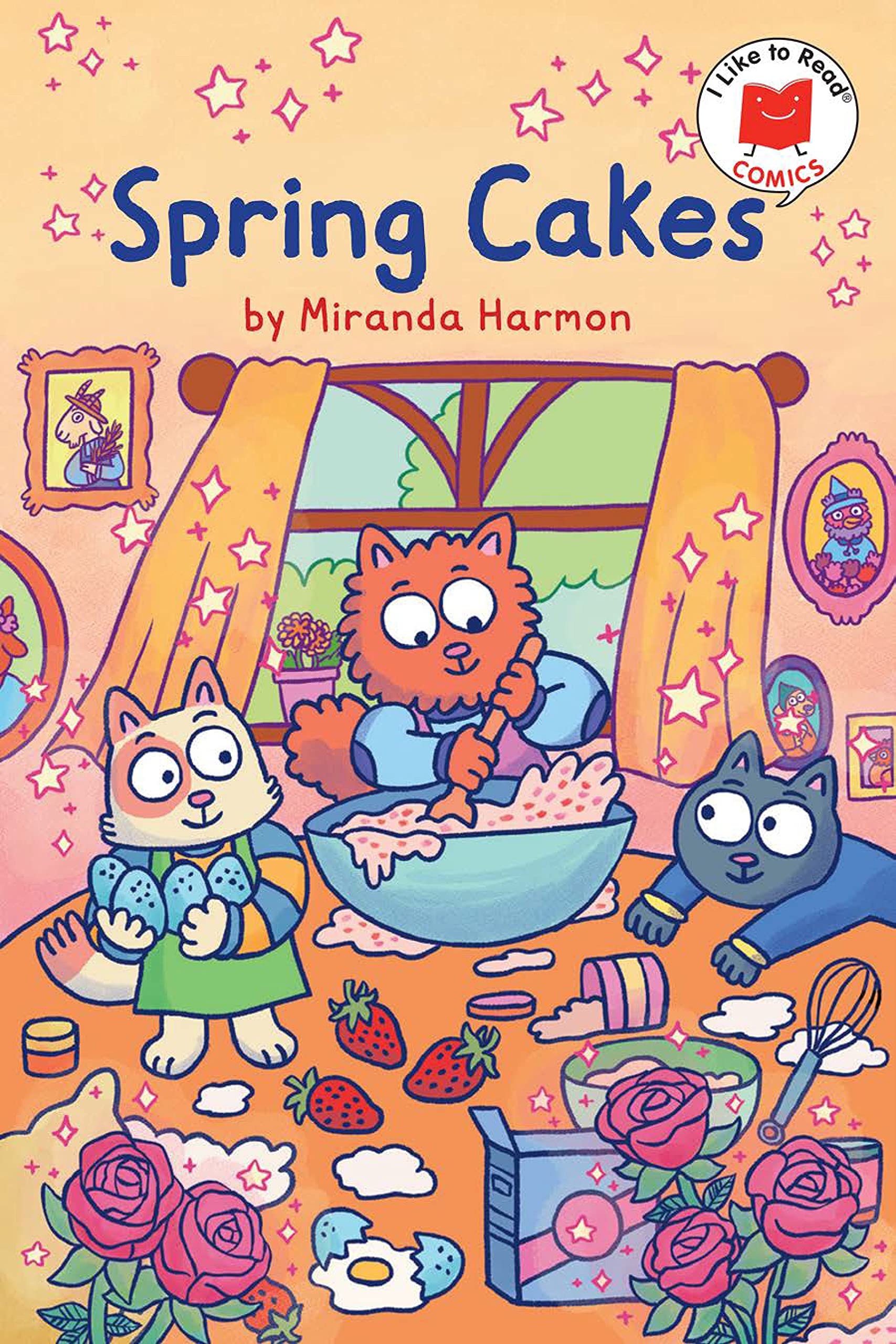
Frog and Ball by Kathy Caple and Spring Cakes by Miranda Harmon (I Like to Read Comics series)

Published by Holiday House

Frog and Ball by Kathy Caple: 9780823443413 | PenguinRandomHouse.com: Books
Bound To Stay Bound Books, Inc. - Bookstore
Amazon.com: Spring Cakes (I Like to Read Comics): 9780823449354: Harmon,  Miranda: Books

Summary:  In Frog and Ball, Frog checks out a book about magic from the library.  On the way home, he comes across a deflated ball, and decides to try out the book to bring the ball back to life.  His magic works a little too well when the ball really does come to life and starts chasing him all over town, including a chaotic return to the library.  Frog finally manages to subdue the ball back into deflated submission, but when Rabbit comes along, it looks like things are going to start up again.

A family of cats has big cooking plans in Spring Cakes, but first they have to gather the ingredients: flour, honey, eggs, strawberries, and some magic roses.  Each item requires going to the source, so the kitties get a series of adventures, including a visit to the witch who has the roses.  Finally, it’s time to bake, and everyone who helped out gets to enjoy a picnic with some spring cakes.  Both books are 40 pages; ages 4-8.

Pros:  I’ve long been a fan of the I Like to Read books, and was excited to hear that there was a new comic series (and grateful to Holiday House for the free copies!).  These are sure to be a hit with kids learning to read: the comic format is, of course, hugely popular and the stories are well-crafted with cute illustrations.

Cons:  One of the things I love about the I Like to Read series is that it includes books that look like “real books” (not like early readers) that are written at the earliest Fountas and Pinnell levels (A, B, C).  These comic books are at a higher F&P level (Frog and Ball is I and Spring Cakes is L).  I’m hoping Holiday House will come out with some that are for those earlier levels.

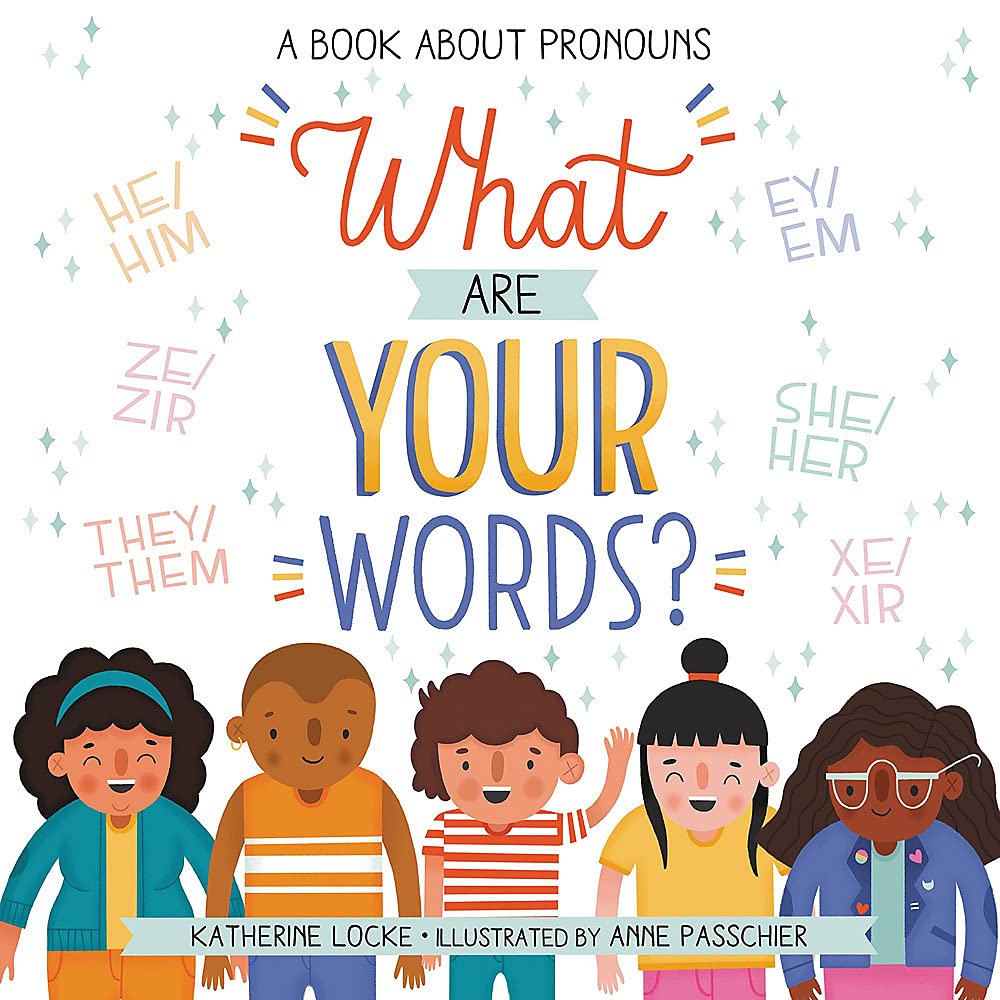
What Are Your Words? A Book About Pronouns by Katherine Locke, illustrated by Anne Passchier

Published by Little, Brown Books for Young Readers

What Are Your Words?: A Book About Pronouns: Locke, Katherine, Passchier,  Anne: 9780316542067: Amazon.com: Books
Andy Passchier Illustrates Children's Book 'What Are Your Words?' | Arts &  Culture | Ideastream Public Media

Summary:  Ari is excited that Uncle Lior is coming for a visit.  Uncle Lior uses they/them pronouns, and they always ask Ari, “What are your words?”  Usually Ari knows right away; it may be “Happy! Creative! Funny! He/him” or “Thoughtful! Athletic! Silly! She/her.”  Today, though, nothing quite seems to fit.  Ari worries about it as the day progresses, with more introductions (including pronouns) around the neighborhood, finishing up with a barbecue and fireworks.  As the first ones burst across the sky, Ari suddenly discovers the words for today: “Impatient! Excited! Colorful! They/them.”  Uncle Lior tells them, “That’s definitely you, Ari.”  40 pages; ages 4-8.

Pros:  This book will be a valuable resource to anyone working with transgender, nonbinary, or gender fluid kids and will help others to understand the importance of pronouns.  The illustrations are cheerful and colorful; I especially liked the endpapers that showed a variety of people and pronouns.

Cons:  The story was definitely secondary to the lessons being taught.