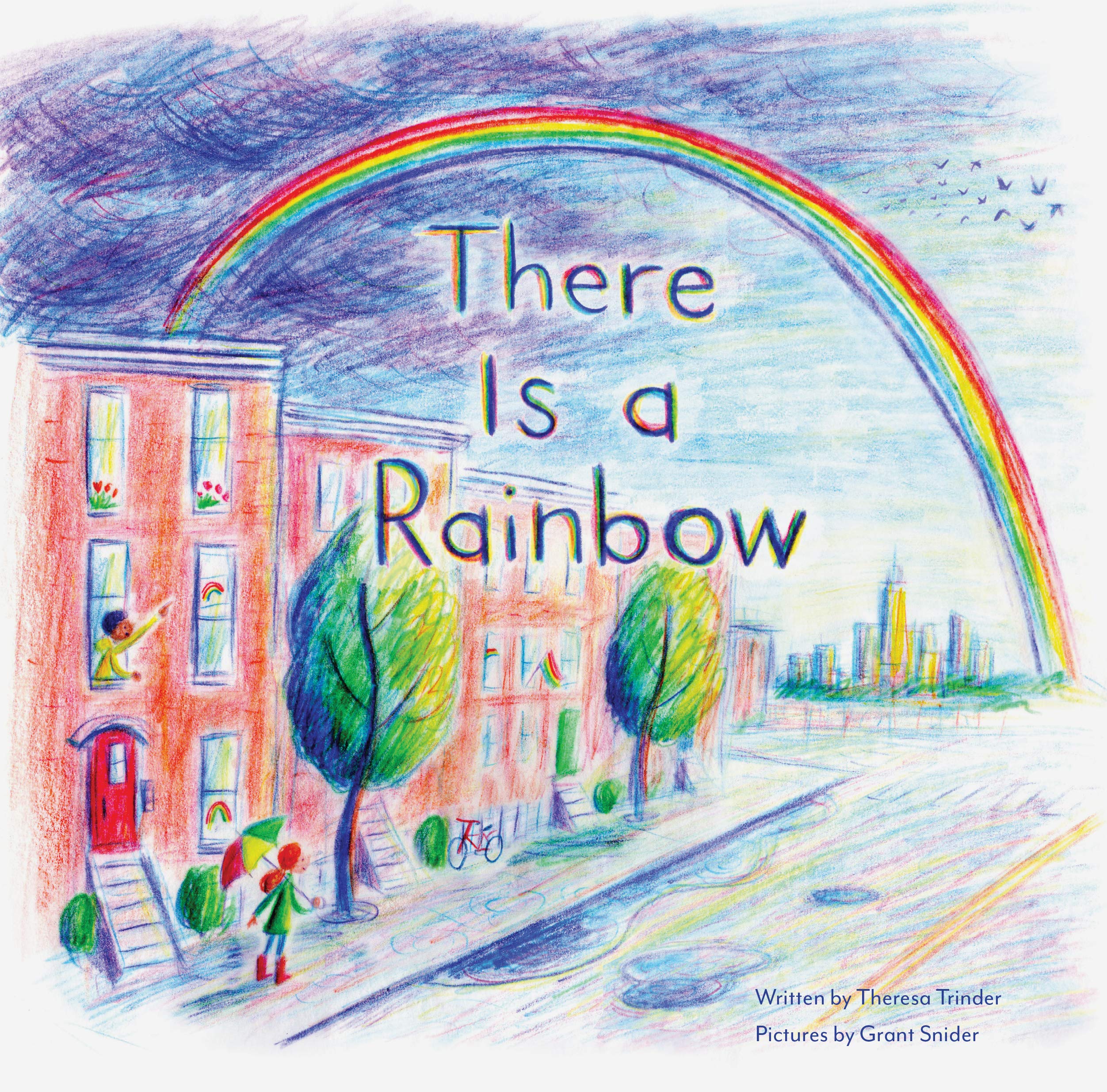
There Is a Rainbow by Theresa Trinder, illustrated by Grant Snider

Published by Chronicle Books
There is a Rainbow: Trinder, Theresa, Snider, Grant: 9781797211664: Amazon.com:  Books

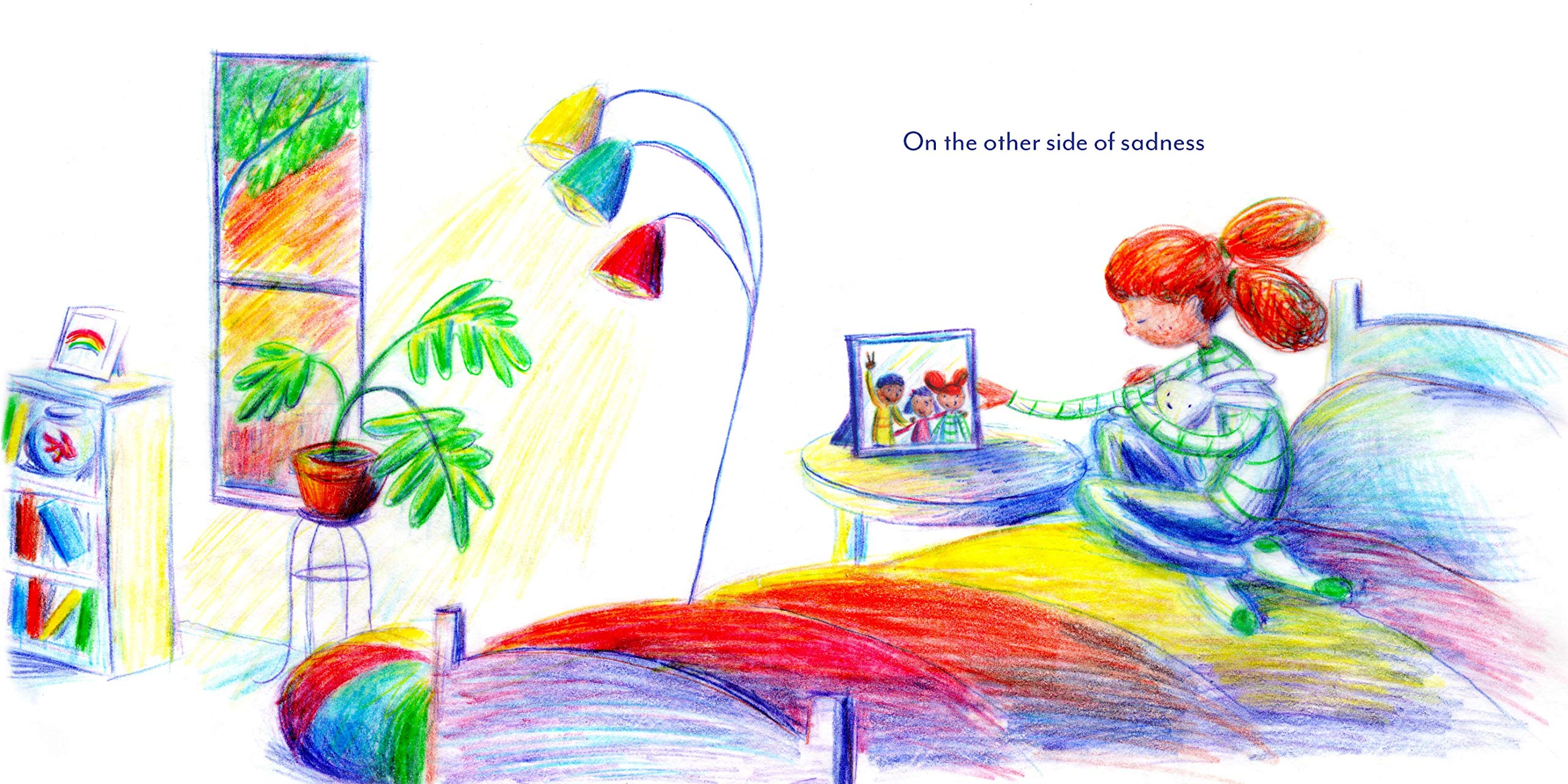
Summary:  Inspired by rainbows her children hung in their windows at the beginning of the pandemic, the author starts with the statement that every story has a beginning and an end.  The illustration shows two kids drawing a rainbow on the sidewalk, also with a beginning and an end.  She then goes on to show what’s on the other side of things: on the other side of a screen is a school; on the other side of a window is a neighbor; on the other side of sadness there are hugs.  And on the other side of today is tomorrow, a tomorrow pictured here as unmasked children and their parents heading toward an open school.  Includes an author’s note.  52 pages; ages 3-8.

Pros:  As we keep our fingers crossed that we’re heading for the other side of the pandemic, this book really captures the emotions and experiences we’ve shared in the past year, both through the brief text and the rainbow-themed illustrations, which, I might add, are the first I’ve ever seen done by a moonlighting orthodontist.

Cons:  This book seems like it will feel dated in a short period of time.  Let’s hope so.
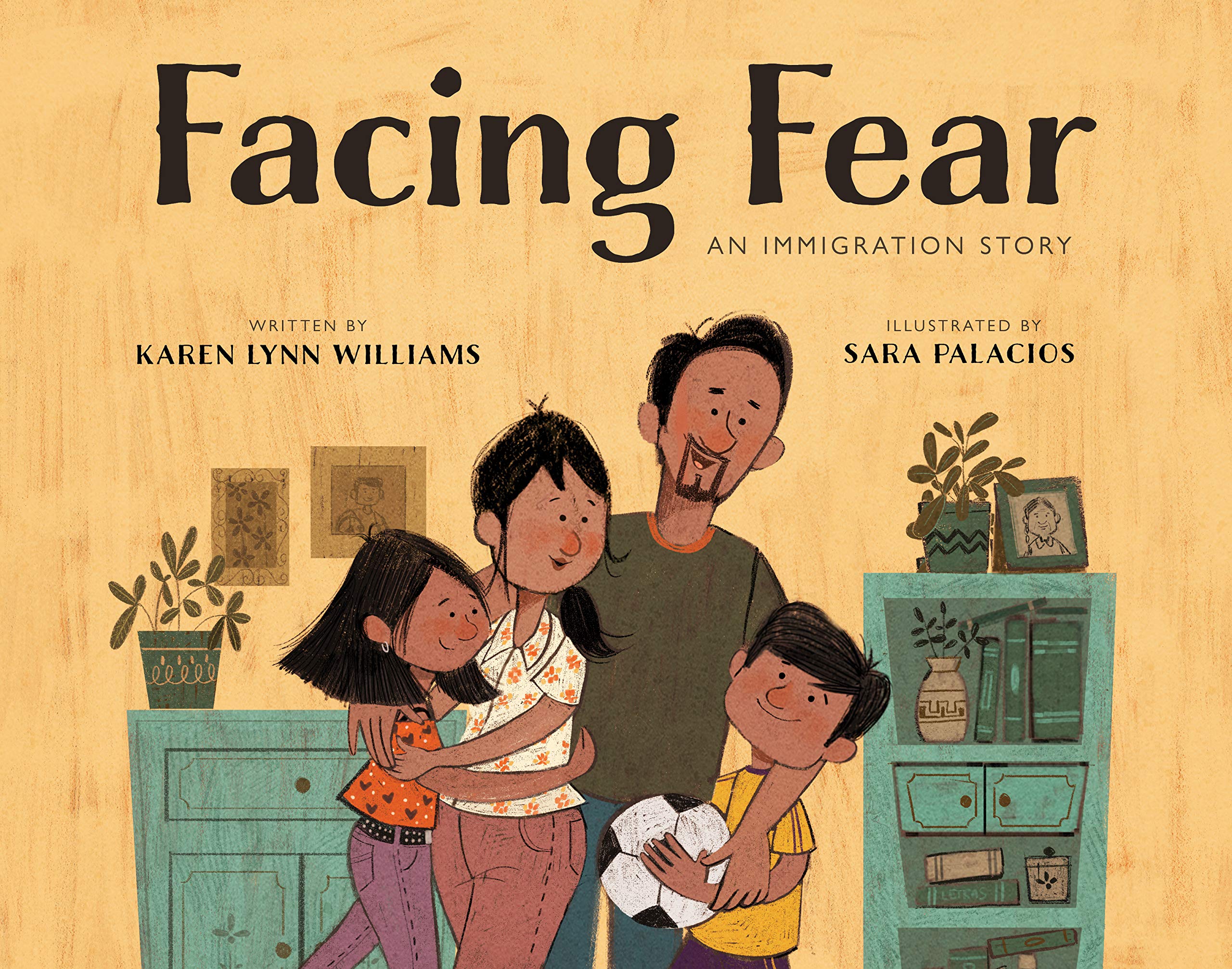
Facing Fear: An Immigration Story by Karen Lynn Williams, illustrated by Sara Palacios

Published by Eerdmans Books for Young Readers

Facing Fear: Williams, Karen Lynn, Palacios, Sara: 9780802854902:  Amazon.com: Books
Interview with Children's Book Illustrator Sara Palacios – Eerdlings

Summary:  Enrique is excited when his soccer team makes it to the tournament, then disappointed when his dad says he can’t go.  The team will have to pass through a checkpoint, and Enrique’s parents and older sister are undocumented.  Enrique thinks his dad is just scared, and decides to forge his signature on the permission slip.  Before he gets a chance to turn it in, though, there’s a rumor of a round-up, and the family goes to his Tía’s house to hide. There, for the first time, Enrique hears the full story of his family’s escape to the U.S., and decides his parents are both very brave.  After telling his team he’s decided not to play, they show up at his house to tell him they’re not going either, and everyone makes plans for a father-son game the next day.  Includes an author’s note; additional information on immigration and checkpoints; a list of organizations assisting and advocating for immigrant families; and a list of recommended reading.  44 pages; grades K-4.

Pros:  A compelling story about a boy forced to make a difficult decision that brings to light many of the issues faced by undocumented families.  The resources at the end provide excellent additional information.

Cons:  The story felt a bit didactic.

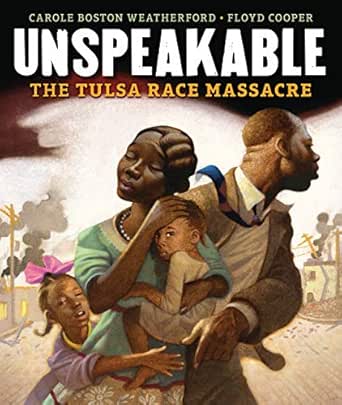
Unspeakable: The Tulsa Race Massacre by Carole Boston Weatherford, illustrated by Floyd Cooper

Published by Carolrhoda Books

Unspeakable: The Tulsa Race Massacre - Kindle edition by Weatherford, Carole  Boston, Cooper, Floyd. Children Kindle eBooks @ Amazon.com.
Debbie Reese (tribally enrolled, Nambé Pueblo) on Twitter: "Did you click  thru? Did you watch Floyd Cooper's video embedded in the article, of him  reading from UNSPEAKABLE: THE TULSA RACE MASSACRE? Here's

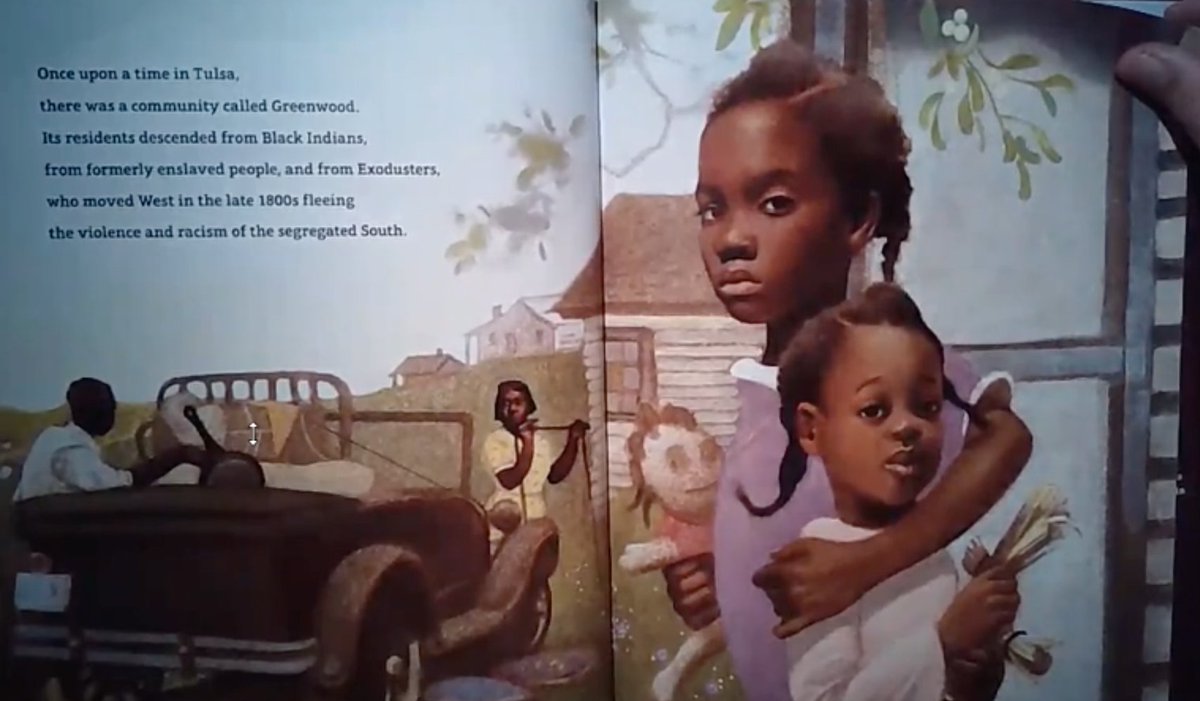
Summary:  “Once upon a time in Tulsa, there was a community called Greenwood.”  Although this was a segregated community, the Black part of town thrived, with excellent schools, libraries, medical facilities, and enough businesses to call Greenwood Avenue “Black Wall Street”.  But in 1921, accusations by a young white woman that a black teenager had assaulted her ignited a series of events that ultimately left up to 300 Black people dead, hundreds more injured, and more than 8,000 homeless when their community was burned to the ground.  The town was rebuilt, but the massacre was covered up; it was 75 years before an investigation took place that revealed that police and city officials plotted with the white mob to destroy the Black community.  Includes notes from both the author and illustrator describing their connections to this event, as well as photos of Greenwood burning and the Tower of Reconciliation that stands in Tulsa’s Reconciliation Park.  32 pages; grades 3-6.

Pros:  With six starred reviews, this book will surely be considered for multiple awards next January.  The structure of the story is perfect, describing the amazing community of Greenwood before the massacre as a place where Black people demonstrated that they could build thriving businesses and community services.  The massacre is described in a few heartbreaking pages, and Weatherford and Cooper don’t shy away from laying the blame squarely on the white community.  Their ending notes are fascinating, particularly Floyd Cooper’s story about his grandfather who survived the massacre.

Cons:  The endpapers are before and after pictures of Greenwood.  I wish the front endpaper was a photo like the back one is, but maybe there isn’t a photo in existence of what Greenwood looked like as a flourishing community.

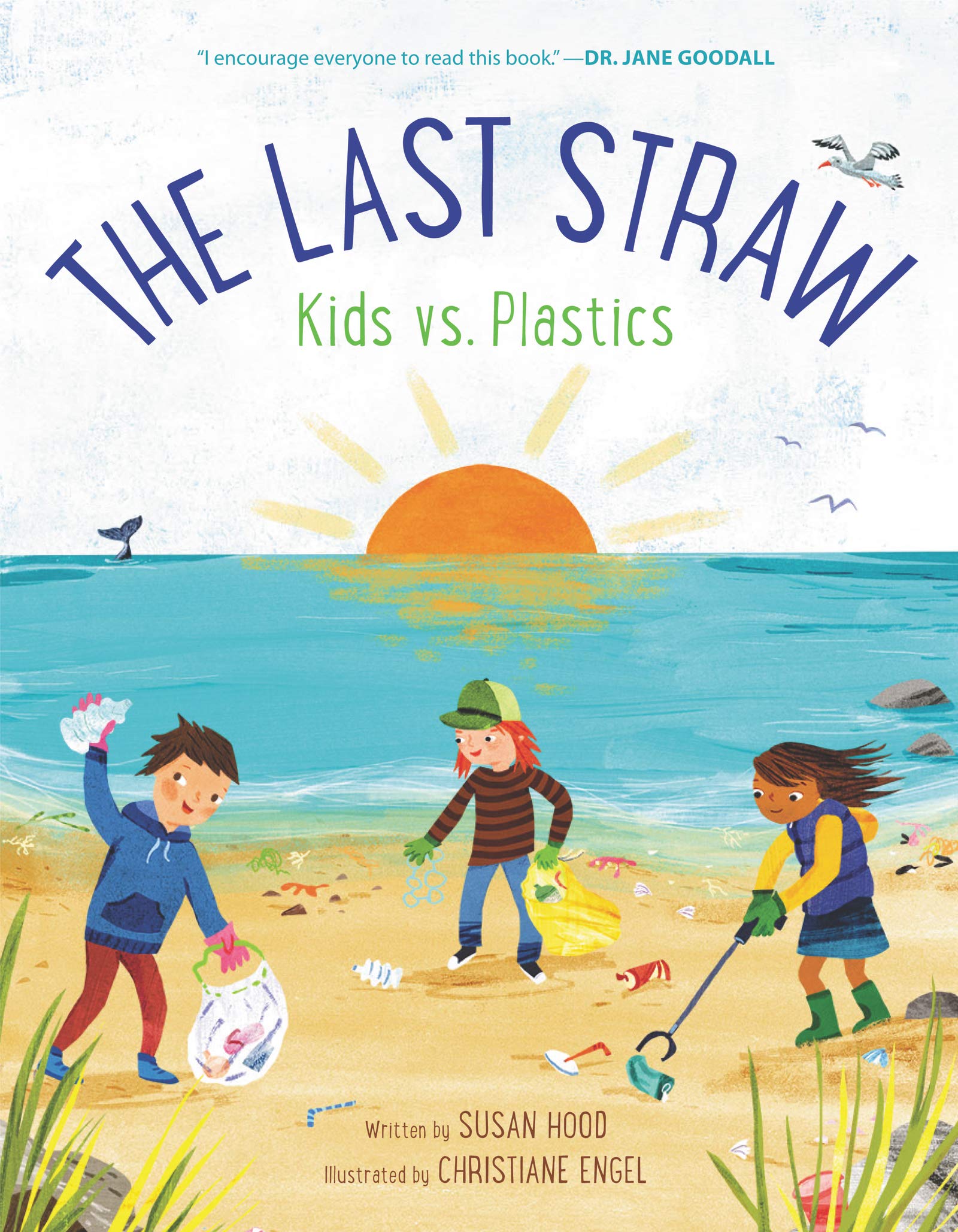
The Last Straw: Kids vs. Plastics by Susan Hood, illustrated by Christiane Engel

Published by HarperCollins

The Last Straw: Kids vs. Plastics: Hood, Susan, Engel, Christiane:  9780062981394: Amazon.com: Books

Summary:  Following an introduction by 9-year-old Milo Cress, founder of Be Straw Free, this poetry collection looks at different aspects of plastic, from its undeniable usefulness in many areas to the damage it is wreaking on the environment (especially the oceans) to different ways kids and teens are figuring out to recycle and find alternatives to plastic.  Includes a two-page author’s note; a timeline of the history of plastic from 1839; alternatives to single-use plastic items; top ten plastic ocean polluters; sources, websites, and additional notes for each poem; poetry notes for each poem; three books for further reading; and additional websites for news about plastics.  48 pages; grades K-5.

Pros:  The poetry is just the beginning in this book that is jam-packed with information and inspiring stories about kids working to make a difference in the world by recycling or eliminating plastics.  The colorful illustrators add a lot to the poems, and the 13 pages of back matter, enough to satisfy even me, would make this an excellent resource for older kids.

Cons:  I was feeling so bummed after reading the first few poems that I almost didn’t make it to the more inspirational section.

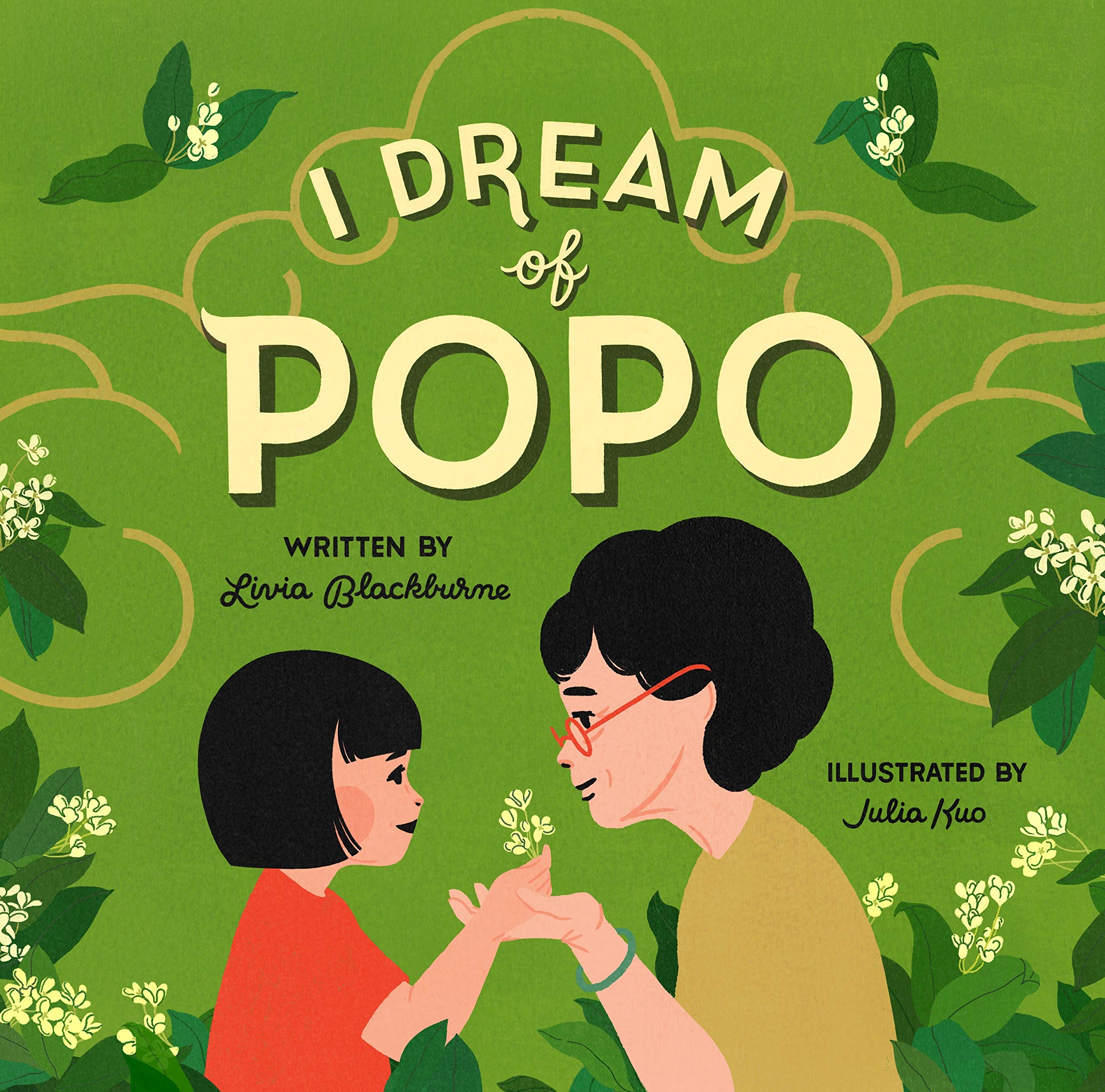
I Dream of Popo by Livia Blackburne, illustrated by Julia Kuo

Published by Roaring Brook Press

I Dream of Popo: Blackburne, Livia, Kuo, Julia: 9781250249319: Amazon.com:  Books
I Dream of Popo | Livia Blackburne | Macmillan

Summary:  “I dream with Popo” begins a girl living in Taiwan, who loves spending time with her grandmother.  Each page starts similarly: “I walk with Popo”, “I bow with Popo on New Year’s Day.”  After her family moves to San Diego, with Popo staying in Taiwan, she writes “I wave to Popo” as she boards the plane, then “I hug Popo” when she returns for a visit, discovering that it is harder for her to understand Popo’s language now that she is fluent in English.  Then it is “I pray for Popo” when Popo gets sick and finally, “I dream of Popo” as the girl dreams of being with Popo once again.  Includes notes and photos from both the author and illustrator describing their connections to Taiwan and a glossary.  40 pages; ages 4-8.

Pros:  A beautiful story (by Livia Blackburne, who apparently is a best-selling YA fantasy author) about immigration and how relationships with loved ones change after a move.  The author’s and illustrator’s notes personalize the experiences of the girl in the story.

Cons:  Kids may need some help understanding the somewhat ambiguous ending.

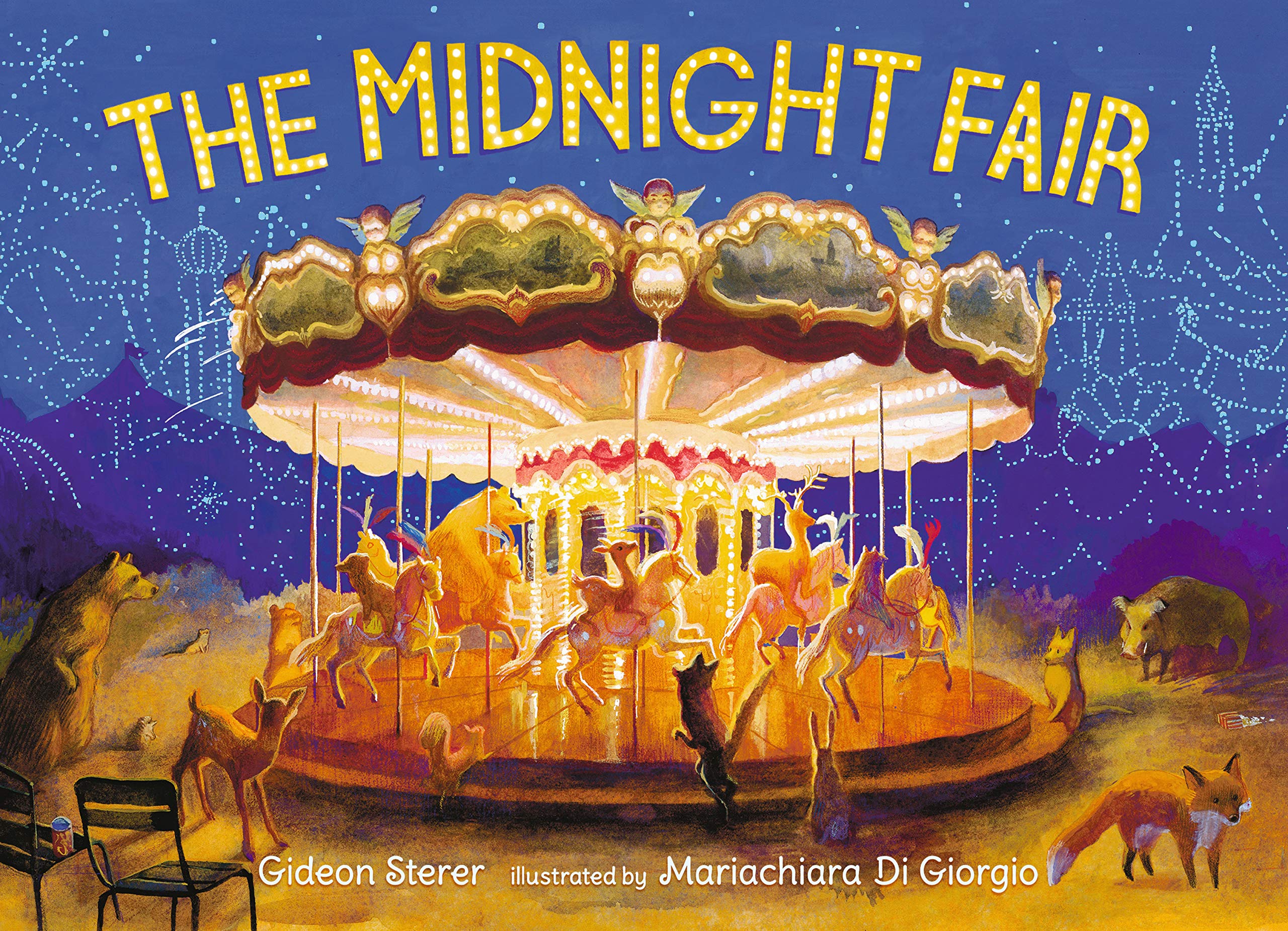
The Midnight Fair by Gideon Sterer, illustrated by Mariachiara Di Giorgio

Published by Candlewick

The Midnight Fair: Sterer, Gideon, Di Giorgio, Mariachiara: 9781536211153:  Amazon.com: Books

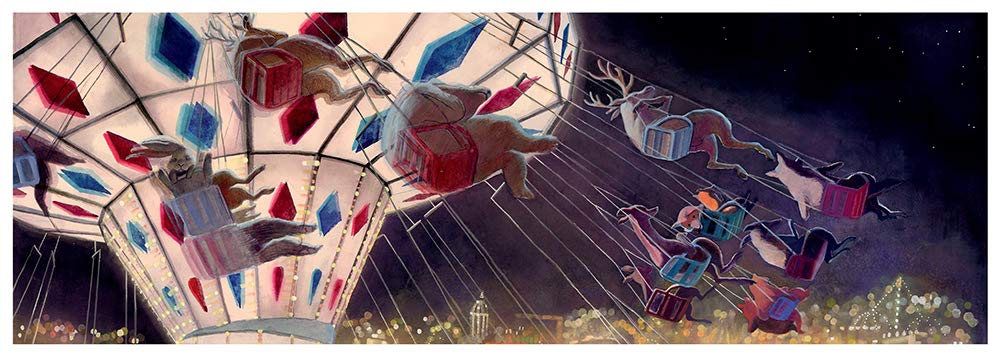
Summary:  When the fair closes down in this wordless picture book, animals come out of the forest to take over.  They start up the rides and games, enjoying the teacups, the carousel, and the cotton candy.  As the sun starts to come up, a man gets ready for the day and heads to the fair as the animals head back into the forest to enjoy their treats and get ready for sleeping.  On the final few pages, a wolf rips open the plastic bag with a goldfish inside that he won, and lets the fish free in a pond.  32 pages; ages 4-8.

Pros:  The illustrator of one of my favorite wordless books, Professional Crocodile, has created a visual feast of many different details of a fair and all sorts of animals enjoying it together.  Kids will enjoy poring over all the details and the fact that the animals are outwitting the humans.

Cons:  I can’t really explain why, but I found this book slightly creepy.  Maybe learning to drive bumper cars and eat cotton candy doesn’t really seem like a positive move for the animal kingdom.

Ten Beautiful Things by Molly Beth Griffin, illustrated by Maribel Lechuga

Published by Charlesbridge

Ten Beautiful Things by Molly Beth Griffin: 9781580899369 |  PenguinRandomHouse.com: Books
Ten Beautiful Things: Griffin, Molly, Lechuga, Maribel: 9781580899369:  Amazon.com: Books

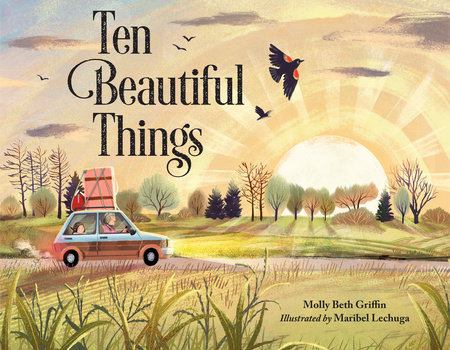
Summary:  Lily’s in the back seat of Gram’s car, heading toward her new home: Gram’s Iowa farm.  To distract Lily from her sadness, Gram suggests they find ten beautiful things before they get to the house.  “There’s nothing beautiful here,” says Lily, but at that moment, there’s a breathtaking sunrise.  Every time she starts to descend back into her sadness, there’s something beautiful to see: a wind farm, a red-winged blackbird, a gurgling creek.  Finally they pull up at Gram’s farmhouse.  “We only made it to nine,” says Lily.  But Gram reaches down for a hug.  “We’re ten,” she says.  “None of this was easy.  Maybe it would never be easy.  But she belonged with Gram now.  She belonged here now.”  32 pages; ages 4-8.

Pros:  While the reader never finds out why Lily is going to live with Gram, it’s clear there’s a lot of grief behind the reason, and Gram is wise to start the hunt for beauty.  The illustrations of the sunrise and thunderstorm are pretty spectacular.

Cons:  Some kids may feel dissatisfied not to know more about Lily; on the other hand, there are many groups of kids who will connect with her situation, so the vagueness may be a good thing.

We Wait for the Sun by Dovey Johnson Roundtree and Kate McCabe, illustrated by Raissa Figueroa

Published by Roaring Brook Press

We Wait for the Sun: McCabe, Katie, Figueroa, Raissa: 9781250229021: Amazon.com:  Books
We Wait for the Sun | Katie McCabe | Macmillan

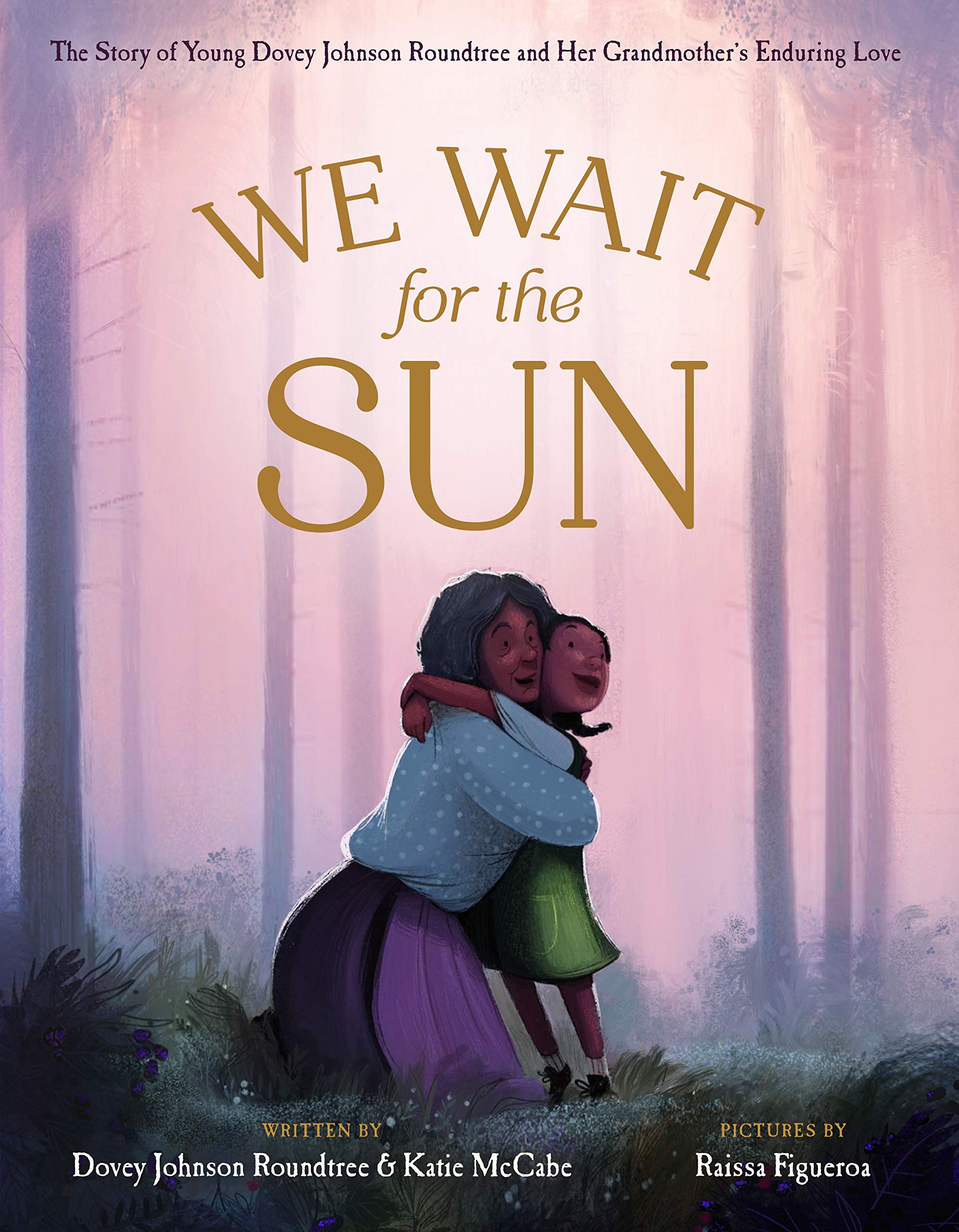
Summary:  Young Dovey follows her grandmother and other neighborhood women into the dark woods to pick berries before dawn.  Her grandmother reassures her when she’s scared of the dark, and before long everyone is filling their pails with berries.  Suddenly, Grandma stops and tells Dovey to look.  The sky turns from black to pink to gold, and as the new day begins, they head back home again.  Includes a four-page author’s note and additional information about civil rights leader Dovey Mae Johnson Roundtree and her grandmother Rachel Millis Bryant Graham; photos; a timeline; and a bibliography.  40 pages; grades K-6.

Pros:  This would make a great mentor text for personal narratives, complete with the beautiful illustrations that show the changing light as the night gradually gives way to daytime.  The extensive back matter makes this an excellent research resource that could be used well into middle school.

Cons:  The back matter is quite long, written in a single-spaced small font; while I appreciated all the information, it would have been nice to have something more accessible for the story’s audience.

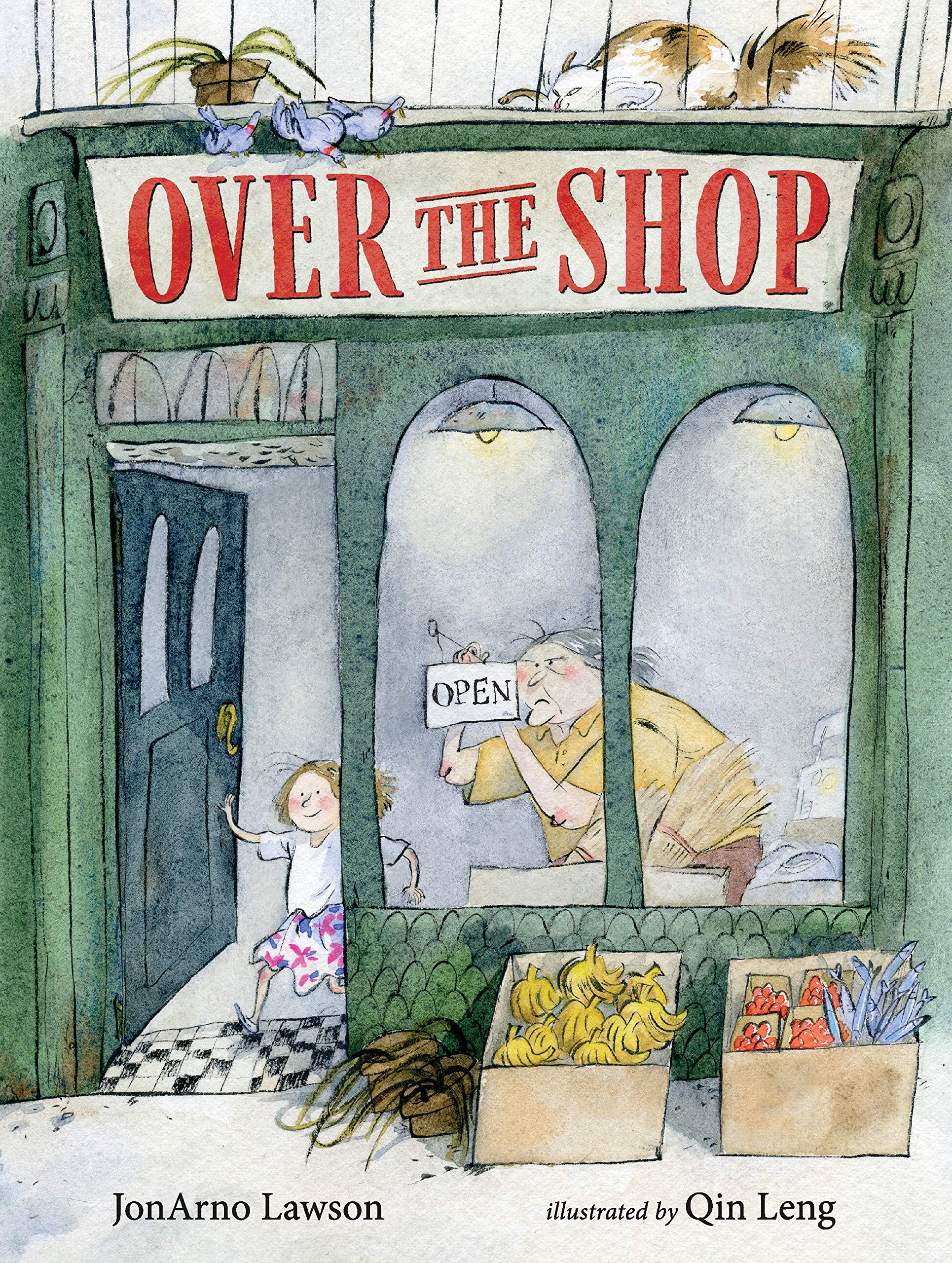
Over the Shop by JonArno Lawson, illustrated by Qin Leng

Published by Candlewick

Over the Shop: Lawson, Jonarno, Leng, Qin: 9781536201475: Amazon.com: Books

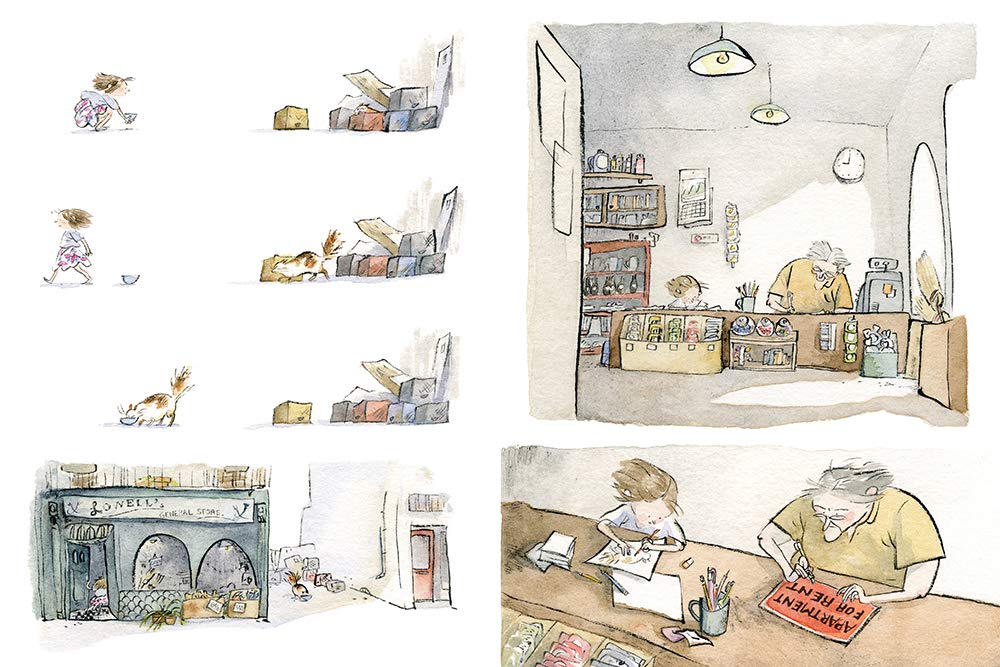
Summary: In this wordless picture book, a girl and her grandparent run Lowell’s General Store.  Over their shop is an apartment.  When the grandparent puts an “Apartment for Rent” sign in the window, a number of prospective tenants take a look, but are put off by dirty walls, cracked tiles, broken cabinets, and old furniture.  Finally, a friendly couple rents the place, immediately rolling up their sleeves to clean and fix it up.  Not only that, but they help out with the store, becoming friends with the owner and the girl.  The girl lures a stray cat up to the apartment to become a pet.  By the end, there’s a new sign on the store: “Lowell & Friends General Store”, accompanied by a rainbow flag.  48 pages; ages 4-8.

Pros:  The author of Sidewalk Flowers has created another beautiful wordless story that celebrates community and friendship in the midst of an impoverished neighborhood.  The dedication, “For trans activists of all ages”, the rainbow flag, and several possibly transgender or nonbinary characters make this an outstanding addition to LGBTQ+ collections as well.

Cons:  A review I read mentioned a rainbow belt and hat in the illustrations as well, but I have yet to discover them.  This isn’t a con, but the illustrations are so richly detailed that readers will want to go back over and over again to discover all the details.

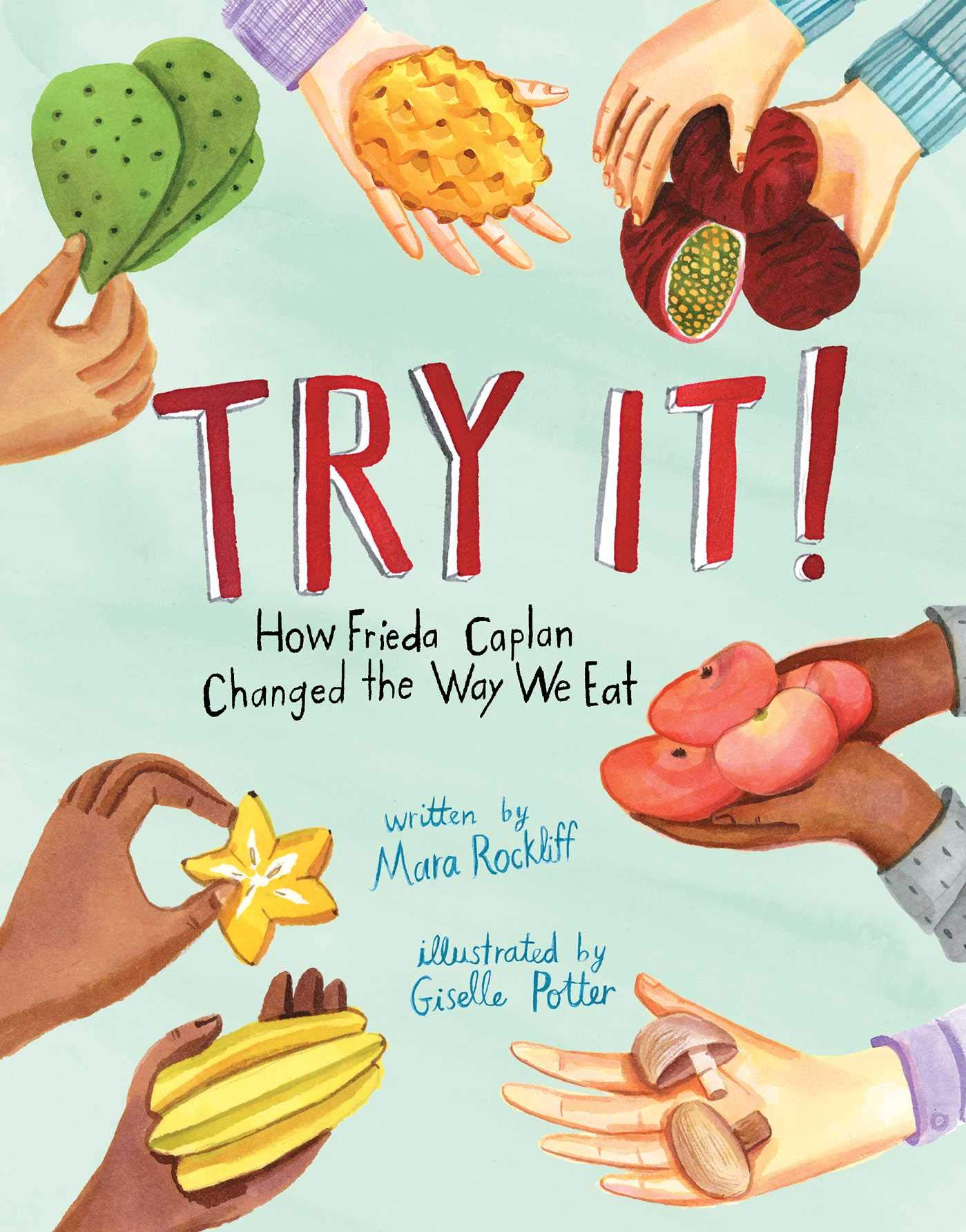
Try It! How Frieda Caplan Changed the Way We Eat by Mara Rockliff, illustrated by Giselle Porter

Published by Beach Lane Books

Try It!: How Frieda Caplan Changed the Way We Eat: Rockliff, Mara, Potter,  Giselle: 9781534460072: Amazon.com: Books
Try It! | Book by Mara Rockliff, Giselle Potter | Official Publisher Page |  Simon & Schuster

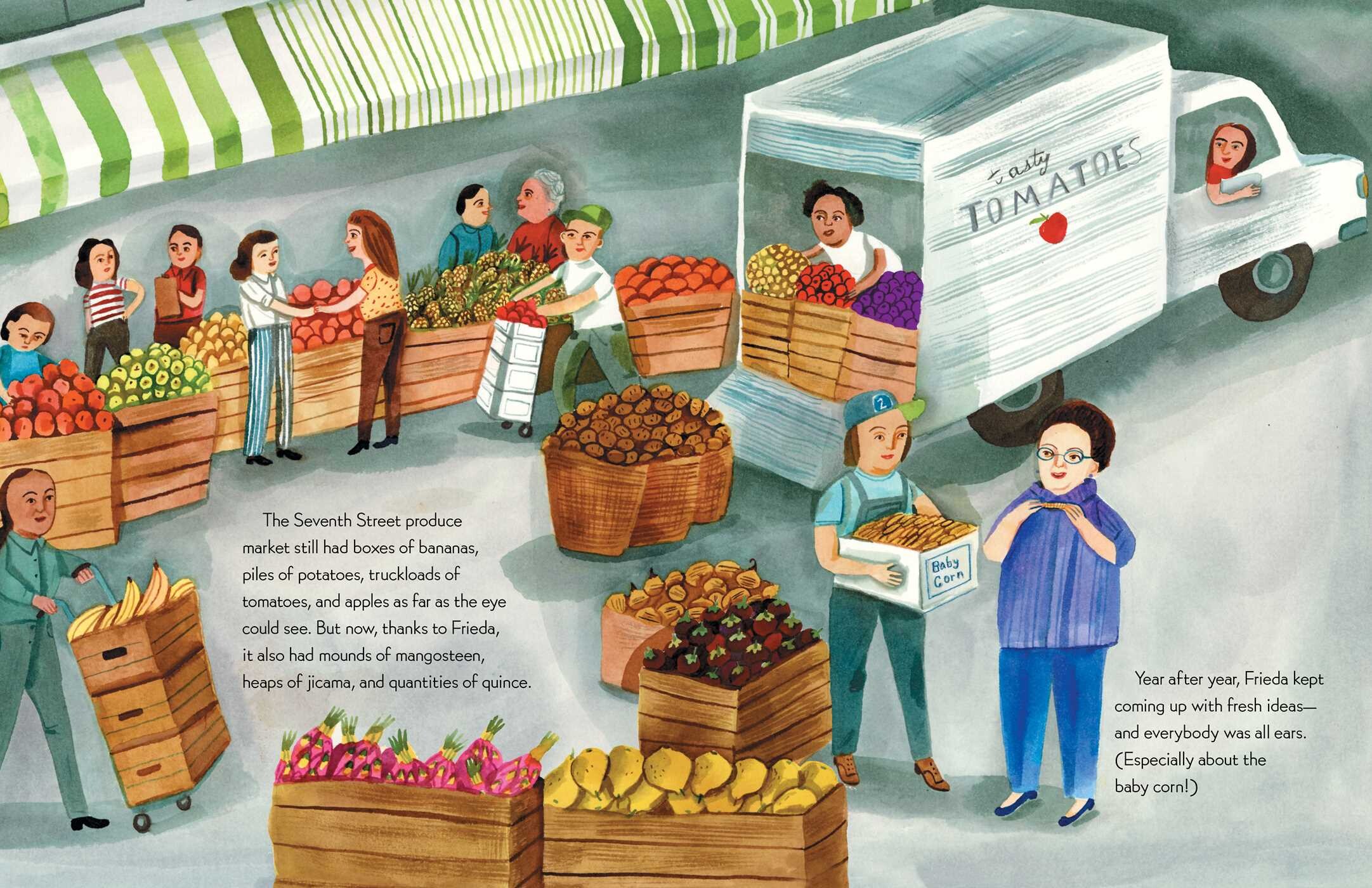
Summary:  When Frieda Caplan started working at the Seventh Street Produce Market, she saw piles of bananas, potatoes, apples, and tomatoes.  Hoping to introduce a bit more variety, she started selling mushrooms.  It took some convincing, but before long people began to buy them.  Frieda went on to start her own produce company, where she loved trying new fruits and vegetables.  Kiwis, jicama, blood oranges…Frieda would get a funny feeling in her elbows when she tried something that she thought others would enjoy.  Thanks in part to Frieda and the produce company her daughters and granddaughters now run, there are more than ten times as many varieties of fruits and vegetables in supermarkets than there were in the 1960’s.  Includes an author’s note giving more information about Frieda and her company.  32 pages; ages 4-8.

Pros:  The energetic writing and colorful illustrations of a great variety of fruits and vegetables capture Frieda’s enthusiasm for her work and may entice picky eaters to be a bit more adventurous.

Cons:  I was hoping for a bit more information in the author’s note about the funny feeling in the elbows, but alas, there was no further explanation.