Tern around, bright eyes

Sun Bird: The Amazing Journey of the Arctic Tern by Lindsay Moore (Greenwillow Books, 40 pages, ages 4-9). Baby Arctic terns begin life during the Arctic summer, their parents hunting for fish to feed their voracious appetites. The chicks grow and learn to fly as the Arctic days grow shorter. By late summer, they’re ready to begin their migration across the globe to Antarctica. By the time they reach their destination, it’s springtime there, and the terns spend the Antarctic summer resting and growing new feathers for their long journey back north to the Arctic. Includes additional information about the Arctic tern, which has the longest known migration of any animal on Earth and is believed to experience more hours of sunlight, as well as additional resources and a list of references.

Lindsay Moore, author and illustrator of Yoshi and the Ocean and Sea Bear has created another beautiful and fascinating animal book, this one about the Arctic tern. The predominantly blue and white watercolor illustration capture the graceful movements of the birds through the sky and sea, and the poetic text describes their journey with captivating details.

Meet the Mini-Mammals: A Night at the Natural History Museum by Melissa Stewart, illustrated by Brian Lies (Beach Lane Books, 40 pages, ages 4-8). Which mammal is the smallest? After introducing readers to what a mammal is, the ferret museum docent takes them on a tour of an exhibit of ten small mammals, descending in size. Each one is shown in the same size exhibit box to allow for size comparison, and each is accompanied by a paragraph of information, a “tiny tidbit” that compares its weight to a common object, and another illustration showing the animal in action. Kitti’s hog-nosed bat is the tiniest, and after its introduction, the mini mammals are pictured together as they enter a mapparium showing where each one lives in the world. Includes statistics on each mammal and a list of sources.

This award-winning team has created an appealing picture book filled with cute mammals and interesting information about each one. The illustrations are outstanding, and the museum presentation showing the animals in descending order of size is clever and keeps the interest high. Personally, I find mini mammals kind of creepy and rat-like, but putting my biases aside, I must concede that this is an excellent nonfiction picture book.

Intergenerational fun

Kwesi and Nana Ruby Learn to Swim by Kobina Commeh, illustrated by Bárbara Quintino (Barefoot Books, 32 pages, grades K-3). Kwesi wants to swim with his friends, but he’s afraid of the water. When Nana Ruby comes for a visit, he confides his fears to her. She tells him that when she moved to the U.S. from Ghana, many pools were closed to Black people, and she never learned to swim either. They make a deal to learn together, and Nana Ruby tells Kwesi about Mami Wati, a half-woman, half-fish creature from Ghanaian mythology, who will protect them. Their new teacher resembles Mami Wati (except for the fish tail), and she proves to be an excellent instructor. Before long, Kwesi is swimming in the lake with his friends and encouraging Nana Ruby to join them. Includes a glossary, additional information about the Akan people of Ghana, and notes from the author and illustrator about how they both learned to swim as adults.

The history of Black people historically being barred from learning to swim is woven into this story seamlessly, with the uplifting message that it’s never to late to try new things. The illustrations are beautiful, especially those in the water, and Mami Wati is spectacular. The story, from a first-time author, would have benefited from a little more editing to tighten it up a bit.

Little Big Man by Varian Johnson, illustrated by Reggie Brown (Orchard Books, 40 pages, ages 4-8). Elijah is disappointed when his father has to work the day he wanted to fly kites together, but Dad tells him, “A new baby means extra work for everyone.” Elijah’s job is to stay quiet around the baby, but he sometimes has trouble remembering. He strengthens his resolve the next day when Dad leaves for work. Their days parallel each other, as they plan, work hard, help others, and clean up after themselves. By the time Dad returns, Elijah has made a beautiful kite and convinces the whole family to play outside for the rest of the afternoon. Thanks to Orchard Books for providing this review copy; the book will be released in May.

This sweet story would make a nice sibling gift, showing various family dynamics and how both kids and adults have to work together to find a balance between work and play. There are lots of action words in a big bold font, and it’s fun to see Elijah and his dad in the illustrations as they perform similar tasks throughout their day. Having said all that, Varian Johnson is one of my favorite middle grade authors, and I hope he gets back to the genre to create more books like Twins and The Parker Inheritance.

Feminism, past and present

Tear This Down by Barbara Dee (Aladdin, 304 pages, grades 4-7). Freya has always liked asking lots of questions and having strong opinions, but as she’s gotten older, she’s learned to stay quiet rather than risk being made fun of. A school project leads her to the discovery that town founder Benjamin Wellstone, an outspoken abolitionist, opposed giving women the vote. Teaming up with new friend Callie, Freya embarks on a series of actions to tear down Wellstone’s statue and replace it with one of a local suffragist Octavia Padgett. After the girls sneak out of the house for some late-night statue vandalism before a big town festival, they are both grounded and forced to reconsider their tactics. Freya’s activist grandmother helps her to see that there’s room for both Benjamin and Octavia in town and leads her to come up with an idea of creating a quilt celebrating the suffragists that unites people rather than tearing them apart.

A good choice for Women’s History Month, the latest by Barbara Dee portrays an idealistic, outspoken protagonist who sometimes feels like her strong opinions need to be silenced. I always enjoy Dee’s books that tackle difficult issues with a light touch. Thanks to Aladdin Books for providing me with a free copy.

One Girl’s Vote: How Lucy Stone Helped Change the Law of the Land by Vivian Kirkfield, illustrated by Rebecca Gibbon (Calkins Creek, 40 pages, grades 2-5). From an early age, Lucy Stone felt the unfairness of the ways she and other girls were treated as inferior to boys. Her teacher called on the boys before Lucy, even though Lucy’s hand was raised first, and her father dictated family policy, including the decision that Lucy would not attend college like her brothers. Lucy was determined, though, and earned enough money to pay her tuition at Oberlin College, the first American college to accept women. But even at Oberlin, there was inequality, and Lucy fought back, organizing a secret women’s debate society and striking for equal wages to men’s for her campus jobs. After graduation, she was hired by William Lloyd Garrison to work for the New England Anti-Slavery Society. She soon became well-known as a passionate speaker, and her work evolved to include women’s rights. The work and travel was exhausting, but Lucy Stone’s voice helped pass the Thirteenth Amendment, abolishing slavery, and paved the way for women to get full voting rights 27 years after her death. Includes a timeline for Lucy Stone and the fight for women’s rights and equality for all, a couple photos, fun facts, and a bibliography.

In my experience, Lucy Stone is lesser known than fellow suffragists Elizabeth Cady Stanton and Susan B. Anthony, so I’m happy to see this delightful picture book that emphasizes Lucy’s early days but gives a nod to her tireless work for abolition and women’s rights. The timeline offers quite a few milestones in women’s history. I did not know that Lucy Stone was married to Elizabeth Blackwell’s brother, and that women who kept their maiden names, as Lucy did, were sometimes called Lucy Stoners.

Kids navigating two worlds

The Interpreter/La Intérprete by Olivia Abtahi, illustrated by Monica Arnaldo (Kokila, 40 pages, ages 5-8). “Some kids had one job: to be a kid. Cecilia worked two.” Cecilia’s second job is the family interpreter, translating English to Spanish for her immigrant parents. This job takes her to places most kids don’t go, like the DMV, the bank, and the car mechanic. Cecilia used to have a partner, but her older brother “got promoted” by going away to college. At a parent-teacher conference, her teacher asks her how she’s doing. Cecilia starts to translate the question, then realizes it’s directed at her…and that she’s not doing great. She finally explodes, and her parents realize she’s under too much pressure. After a family meeting, they get some back-up: her brother comes home for a weekend, and her aunt offers to do some interpreting. Cecilia still loves to help her family, but now they work together to make sure she gets the time she needs to be a kid as well.

I’m so grateful for this book, which I can’t wait to share with my classes of international students, for whom I’m sure it will resonate. I love the illustrations that portray Cecilia in a business suit for her interpreter duties and use cartoon bubbles in blue for English and yellow for Spanish. There’s plenty of humor, but also good advice for kids to take breaks and get support from family members and other adults. The author and illustrator information on the back flap reveals that both of them served as kid interpreters for their own immigrant families.

Home Is a Wish by Julia Kuo (Roaring Brook Press, 32 pages, ages 4-8). A girl lives with her mother and grandmother. Sometimes, she and Mama or Amah go out, but they always come back home again. One day, though, they leave for good, and as they fly across the ocean, the girl wonders if there will ever be a place that feels like home again. The new place feels strange at first, but slowly, the family begins to go out and come back, until it starts to feel like home. There are new friends and newly familiar places, and she realizes that there are different homes for different times: “a home from before, a home for now, even a home for later.”

The immigrant experience is beautifully captured here with brief text and lovely illustrations of both home countries. The pictures and use of the word Amah suggest that the first home might be in Taiwan or China, while the later illustrations could portray Julia Kuo’s current home state of Washington, but the ambiguity makes this a more universal story. It would have been interesting to have an author’s note to learn how much, if any, of this story is based on her own childhood.

Skywalkers, buffalo hunters, and ribbon dancers: three books about Indigenous Americans

To Walk the Sky: How Iroquois Steelworkers Helped Build Towering Cities by Patricia Morris Buckley, illustrated by E. B. Lewis (Heartdrum, 40 pages, grades 1-5). For more than a century, members of the Mohawk tribe from Canada’s Caughnawaga reserve have worked construction as “skywalkers,” balancing on beams high above the ground. Many of them were working on a bridge across the St. Lawrence River near Quebec City that collapsed in August, 1907, killing 75, including 33 from Caughnawaga. Beginning in the 1920’s, Mohawk skywalkers from New York and Canada traveled to New York City to build skyscrapers, including the World Trade Center. After the towers’ destruction on September 11, 2001, skywalkers helped dismantle broken beams and later were an important part of building One World Trade Center. Today, skywalkers continue their work across North America, including Native women who have entered the profession. Includes an author’s note about her family’s connection to the story, additional information about the Quebec bridge collapse and the Kahnawà:ke reserve (formerly Caughnawaga), a glossary, and a list of some of the buildings constructed by skywalkers.

Kids will be fascinated by the story of these skilled, courageous workers who have helped build some of the most famous structures in North America. The Mohawks originally worked as unskilled laborers in exchange for some of their reserve land, but soon proved their fearless skill as skywalkers and have continued the tradition for over a century. Look for YouTube clips to supplement the book with heart-pounding visuals.

The Gift of the Great Buffalo by Carole Lindstrom, illustrated by Aly McKnight (Bloomsbury Children’s Books, 40 pages, grades K-3). Rose is excited to be at the semi-annual Métis buffalo hunt. Pa is a captain for the first time, in command of ten other hunters. After several days of scouting, no buffalo have been seen, and Rose hears Pa saying they’re scarce because of the settlers and their iron horse. Rose is sure she could find the herd, but Pa says she’s too young to help. But Rose is determined, and with the help of a wolf skin, she finds the buffalo, and the men hunt what they need for their people. At the end of the day, she tells Pa she wishes he would take her with him on the next hunt. “I just might,” he replies. Includes an author’s note relating how she enjoyed the Laura Ingalls Wilder books but felt alienated by their portrayal of Native Americans as savages, and how that led her to write this story about the same time and place; also includes additional information about the buffalo hunt and a bibliography.

This is a fascinating parallel story to Laura Ingalls Wilder’s books. Rose has Laura’s same independent spirit and desire to help her family, and she even calls her parents Ma and Pa. It’s a much-needed portrayal of the indigenous people of the plains who are often marginalized in the Little House books.

Raven’s Ribbons by Tasha Spillett, illustrated by Daniel Ramirez (Little, Brown Books for Young Readers, 32 pages, ages 4-8). Raven loves participating in round dances with his family and friends, and his favorite part is watching the ribbon skirts. His grandmother is famous for making these colorful garments that are created with just the right ribbons for each dancer. When Raven asks if he can have a ribbon skirt, Grandma says, “I’ve lived for a long time, Nosesim, and have never seen a boy in a ribbon skirt.” While Raven sleeps, however, she works late into the night, and by morning there is a beautiful ribbon skirt that looks just like a rainbow. “I’ve lived for a long time, Nosesim,” she tells him, “And I’m lucky to see beautiful things that I’ve never seen before.” Includes notes from the author and the illustrator with additional information about the Round Dance and Two-Spirit people.

This simple story celebrates Indigenous dancing as well as offering a gentle, empowering message about being yourself and affirming gender differences. I loved how Grandmother was able to acknowledge both that a boy wearing a ribbon skirt was new to her and that there can be beauty in doing things in a new way.

Two books for Ramadan

Almost Sunset by Wahab Algarmi (HarperAlley, 224 pages, grades 4-7). Hassan is fasting for Ramadan in this graphic novel, and, although it’s his third year doing so, this year seems harder than before. He’s going to the mosque for nightly prayers with his father for the first time, and there’s not as much community support as there was when his family was back in Yemen. Not only is Hassan falling asleep in math class, but he’s not performing up to par on the soccer field, getting shown up by teammate and frenemy Rosie. Everywhere he goes, Hassan sees delicious food, and when some cousins talk him into sneaking off for snacks, he’s wracked with guilt. When Hassan finally tells his soccer coach why his performance is off and he’s leaving practices early, he’s happily surprised to learn that Coach is also observing Ramadan with his own fast. Finally, Eid arrives, and Hassan is rewarded for his determination with a joyous celebration that include friends and family who help him to acknowledge his perseverance and to forgive himself for mistakes.

Muslim kids observing Ramadan will relate to Hassan’s struggles and hopefully learn to open up to those around them about what is going on with them for the month; non-Muslims will learn more about Ramadan and how to support their friends. The artwork is excellent, with lots of wordless pages that move the story along at a good clip, and some funny pictures of Hassan imagining food in all kinds of contexts.

The Gift of Eid by Shifa Saltagi Safadi, illustrated by Aaliya Jaleel (Holiday House, 40 pages, ages 4-8). Yasmine and Mama are shopping in Damascus’s Souq Al-Hamidiyeh. They’re both grieving the recent death of Yasmine’s dad, and Yasmine wishes she could find the perfect Eid gift to bring a smile to Mama’s face. When she sees a sign offering money for jewelry, she sells the chain she’s wearing around her neck. At the Masjid Al-Umawi mosque, Mama and Yasmine meet up again for prayers. At the end, they agree to exchange early Eid gifts, but when Yasmine gives Mama the beautiful box she’s bought for Mama to keep her bracelet in, Mama starts to laugh. She sold the bracelet to buy Yasmine a charm to put on her gold chain. They realize that their love for each other is the greatest gift they can give, and head for home with a charm but no chain, a box but no bracelet, and “all the love we need.” Includes an author’s note about how her childhood in Syria inspired this story.

Based on the O. Henry story The Gift of the Magi, this sweet story introduces readers to daily life in Syria, beautifully portrayed in the illustrations. It’s also a tale of grief and healing, as Yasmine and Mama look for ways to help each other through a difficult time.

Black History for younger kids

Greatness by Regis and Kahran Bethencourt (Little Brown Books for Young Readers, 40 pages, ages 4-8). When Nasir and Imani visit Grandma, she pulls out a special photo album handed down to her from her mother. Inside are photos of great people from Black history. The kids get out dress-up clothes and pretend to be Bessie Coleman, a Tuskegee Airmen, and business people from Black Wall Street. Then some magic happens, and they are pulled into the album, where they become the famous people in the photos, like Katherine Johnson, Barack Obama, Colin Kaepernick, and Ruby Bridges. For Grandma, though, nothing compares to the greatness she saw in the two babies pictured at the end–and after spending so much time imagining themselves among greatness, Imani and Nasir feel like nothing is impossible. Includes some photos and additional information about all the people from the photo album.

Every year, I gather books for our big Black History read-aloud, where community members come to our school and read to all the classes. It can be challenging to find books for the younger grades, and this one would make a great introduction to a wide variety of historical figures, encouraging kids to think about their own dreams. The photos of the kids dressed up are fun and inspiring, although I wish there had been photographs of all the famous people at the end.

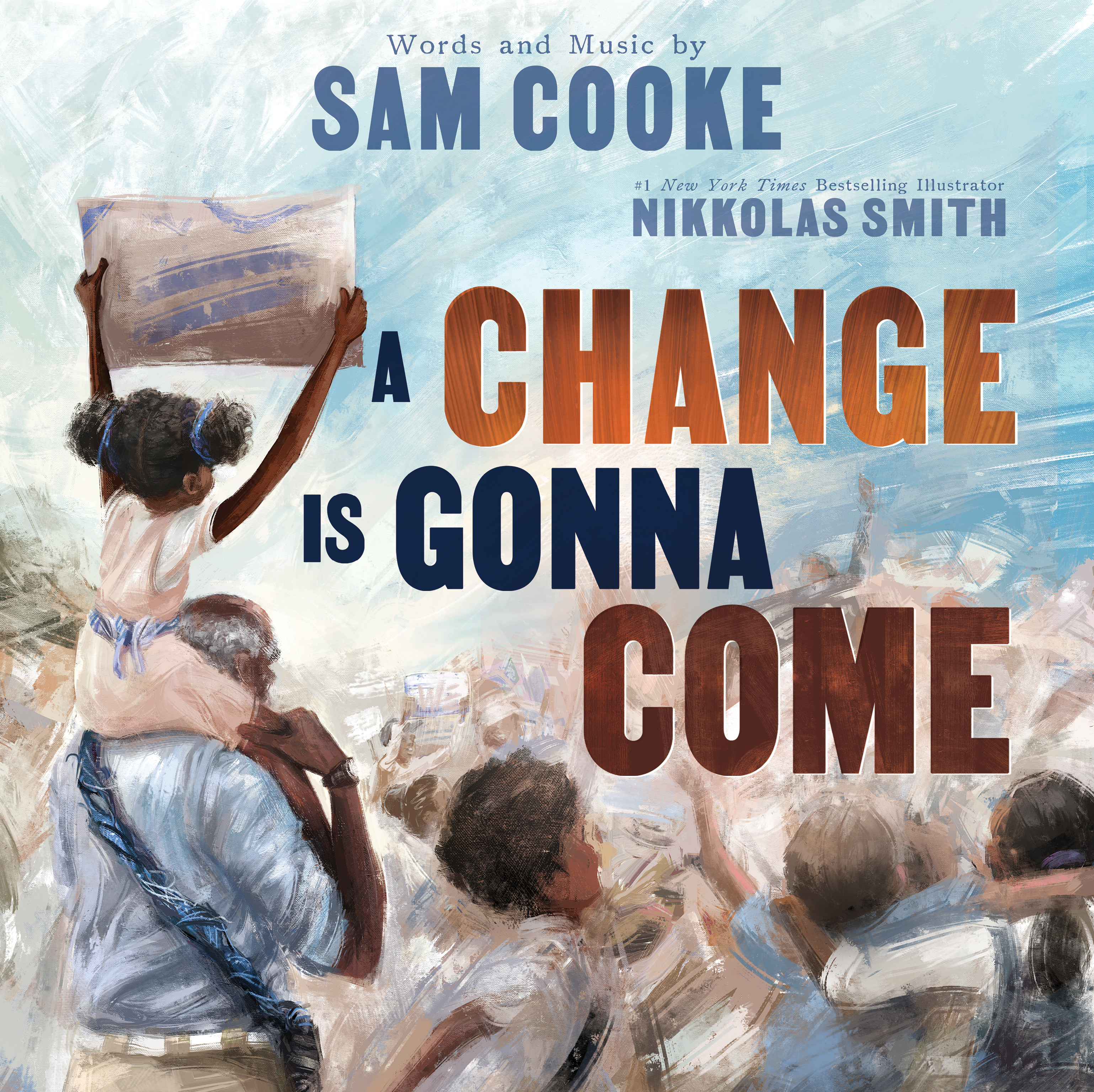
Sharing the Dream by Shelia P. Moses, illustrated by Keith Mallett (Nancy Paulsen Books, 32 pages, ages 4-8). Agnes is excited to be on a bus with her parents, traveling from Birmingham, Alabama to Washington, D.C. in August, 1963 to attend the March on Washington. There’s a stop at Frederick Douglass’s house, where Agnes is amazed to see Black and white people drinking from the same water fountain. Then it’s on to the March, where Agnes sits on Daddy’s shoulders to hear John Lewis and Josephine Baker speak, and Mahalia Jackson sing. Finally, Dr. Martin Luther King, Jr. steps up to the podium. “Tell ’em about the dream,” Agnes hears Mahalia Jackson say, and Dr. King delivers his now-famous words about his dream. Afterwards, Agnes sees Black and white people sitting side by side, soaking their tired feet in the reflecting pool, before she and her parents get back on the bus heading home to Birmingham. Includes an author’s note and thumbnail profiles of six people at the March who are mentioned in the story.

I’m so happy to see this book describing the 1963 March on Washington from a young child’s perspective. Agnes is probably about six years old, telling about events in a way that primary students will understand. There’s plenty of information packed into her story, though, with an introduction to such celebrities of the time as Lena Horne, Sidney Poitier, and Jackie Robinson. The straightforward story and illustrations make this a perfect introduction to this important event from Black history.

O Is for Owl. And Octopus.

To See an Owl by Matthew Cordell (Random House Studio, 40 pages, ages 4-8). Janie is a birder whose ultimate quest is to see an owl. Her patient mother (“Mama doesn’t look for birds the way I do”) takes Janie on trips to meadows and forests where she can look for birds. This year, Janie has a teacher who shares her passion. Mr. Koji shows the class pictures from his birding expeditions and maps he made as a child and tells the class, “To see an owl is magic.” When Janie shares her owl drawings, journal, and maps with the class, Mr. Koji is impressed by her determination and tells her where he’s recently seen a pair of great horned owls. Back home, Janie convinces her mother to take her on one more outing, and when they get to the place Mr. Koji described…there are the owls. Magic.

Caldecott Medalist Matthew Cordell clearly shares Janie’s passion for owls (read about it on the book jacket’s back flap), and he conveys that passion, as well as the persistence needed and the amazing rewards that come from finally seeing that owl. His illustrations capture the beauty and majesty of nature, and show readers how to use art to record their outdoor adventures like Janie does. As someone who shares Mama’s indifference to birding, I admired her for being willing to keep taking her daughter out on various excursions. This book would go well with Owl Moon by Jane Yolen or Night Owl Night by Susan Edwards Richmond

Octopus Ocean: Geniuses of the Deep by Mark Leiren-Young (Orca Book Publishers, 104 pages, grades 4-7). The author introduces octopuses with the story of his first meeting with an octopus named Storm at the Salish Sea Centre in British Columbia. From there, he moves on to five chapters describing many aspects of octopuses’ lives: anatomy, reproduction, intelligence, food, defenses, and homes in the ocean. The second half of the book includes stories of amazing “octopus celebrities” who carried out elaborate escapes or predicted the outcome of soccer games with amazing accuracy. There’s a chapter about the effect of the documentary The Octopus Teacher on educating the public on this amazing animal, which has led to a decrease in human consumption of octopus meat. The final chapter gives readers suggestions for helping octopuses survive in the wild and keeping oceans cleaner and healthier. Includes a glossary, an index, and a list of resources.

I learned a ton about the octopus from reading this book, and anyone doing research will not have to go much further to get everything they need on the topic. I found the second half of the book a bit more engaging than the first half, particularly the chapter on octopus celebrities. The book is pretty text-heavy, and It would be nice to have a companion picture book, which I think would find a wider audience.

A collection of mysteries and the mystery of collections

Casey’s Cases by Kay Healy (Neal Porter Books, 160 pages, grades 2-5). Fifth grader Casey aspires to be a detective, and sees a mystery in almost every situation. Who is the new girl? Where is her missing hair band? What did her crush write in his notebook? Who is the owner of the lost cat she found? Some mysteries are solved in a few minutes (the hair band), while others take the whole book to solve (the new girl, Jan, who becomes Casey’s best friend), and some have surprise twists (the stray cat, whose growing belly turns out not to be from eating too much tuna). Here’s hoping that Casey and Jan will team up for another book of mysteries.

The humor, simple story line, and short chapters will make this an appealing choice for beginning and/or reluctant readers, who may also enjoy copying the drawings that employ basic shapes, such as the triangle-headed Casey.

Monti and Leo: A Mystery in Pocketville by Sylvie Kantorovitz (Walker Books, 80 pages, grades 1-4). Monti and Leo enjoy looking at Mrs. Sheep’s collection of small figurines on display at the local library. In fact, Monti is so enchanted with one item in the collection that he’s a prime suspect when it disappears. Leo wrestles with his feelings that Monti might have wanted it enough to take it, but ultimately he believes in his friend’s innocence and sets out to solve the mystery. When he starts hearing about other missing items around town, he discovers a bird he’s never seen before flying overhead with an item in her beak. Leo runs after the bird, climbs a huge tree, and discovers all the missing treasures–including the figurine–in the bird’s nest. In the final chapter, Monti thanks his friend and reveals his new collection: containers, each one holding a mini collection of different small items.

This is book two of a series I missed last year (thank you, Walker Books for sending me a review copy). The animal cast will appeal to fans of Mr. Wolf’s Class, and it would make a good book for those just starting with chapter books. I’m always fascinated by animal stories in which some of the animals act like humans and others are more like animals (like how Marc Brown’s Arthur has a pet dog), so I was intrigued by the fact that one crow was living in a nest acting bird-like, while another one was the local librarian.

A Pocket Full of Rocks by Kristin Mahoney, illustrated by E. B. Goodale (Knopf Books for Young Readers, 40 pages, ages 3-8). Mom may say a pocket full of rocks will make your coat dirty, Dad might ask where your other mitten will go, and your sister will dismiss them as ordinary, but you know those rocks will make excellent chairs for fairies, or let you write on the sidewalk if you don’t have chalk. There are other collections to fill your pockets as the year goes on: petals in the spring, seashells in the winter, and acorns in the fall. Each object fires up your imagination, and at the end of the year, you can use them for presents: a bowl of shells for Dad’s dresser, tiny pictures on the acorns for your sister, and a bag of petals for Mom to put in the drawer with her sweaters. And a pocket full of rocks for you to make sleds for the fairies.

Wow, this book really took me back, as my older daughter–soon to turn 30–was a collector just like the narrator. I don’t remember flower petals, but our house had plenty of rocks, shells, and acorns, with imaginative stories about each collection. This would be a lovely book to begin a conversation about collecting, seasons, or making crafts from your imagination, with illustrations that beautifully capture each season.

Once upon a time

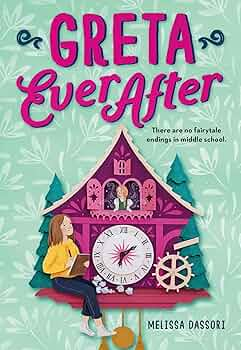
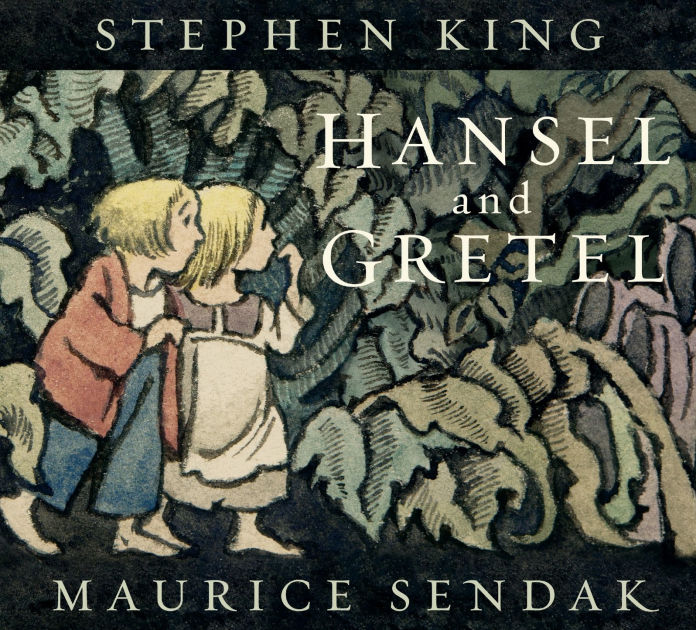
The Princess Swap: Cinderella and the Beast or Beauty and the Glass Slipper by Kim Bussing (Random House Books for Young Readers, 304 pages, grades 3-7). Ella from Cinderella and Belle from Beauty and the Beast unexpectedly switch places in this fairy tale mash-up. The bold and adventurous Belle winds up as a servant in Ella’s stepmother’s basement, while Ella, whose glass leg has always kept her on the sidelines, finds herself sharing a gloomy castle with a fearsome beast. Cinderella’s prince is just a kid named Amir in this telling, and he’s sad that his sister Anisa has mysteriously vanished for the last few years. The two stories come together as Ella learns more about the cursed beast, and each heroine has to take matters into her own hands to create a happily-ever-after ending for both of them. A preview of book two, featuring Snow White and Sleeping Beauty, is featured at the end.

I’m not really much of a fractured fairy tale fan, but this version was so clever and well-told, once I got into it, I couldn’t put it down. The stories are told in alternating third-person chapters, and many of the chapters ends on a cliff-hanger that will keep the reader turning the pages. Even the villains are treated with some sympathy in the end, and both girls are strong and brave, with just enough flaws to be believable.

Lily’s Dream: A Fairy Friendship by Bea Jackson (Aladdin, 40 pages, ages 4-8). Although Lily dreams of flying, so far her fairy wings haven’t worked. As a result, she knows more about beauty close to the ground, and one day she stumbles upon a beautiful fairy house. When the human creator reveals herself, Lily runs away, accidentally leaving behind her cherished gold anklet. The next day, she goes back to look for it, and the girl, who introduces herself as Willow, has found it. Willow makes Lily a fairy-sized acorn helmet, pillow, and trampoline to help her practice flying. Soon she’s taken to the air, and although she still can’t fly high, “Lily was over the moon.” Includes an author’s note that gives more of Willow’s backstory.

Those who judge books by their covers will be captivated by the picture of Lily on this one, and will undoubtedly find the rest of the story equally enchanting. I hope that this is the beginning of a beautiful friendship and that Willow and Lily will have more stories, maybe told from Willow’s point of view. I enjoyed reading about her in the author’s note and wished that more of it had been incorporated into he main story.