Yoshi, Sea Turtle Genius: A True Story About an Amazing Swimmer by Lynne Cox, illustrated by Richard Jones

Published by Anne Schwartz Books

Summary:  Yoshi the sea turtle gets another picture book about her record-breaking swim from South Africa to Australia.  After getting entangled in a fishing net, she was rescued and sent to Two Oceans Aquarium in Cape Town, South Africa, where she lived for the next twenty years.  She spent 18 months training to swim in the ocean before being released with a tracker attached to her shell.  The tracker showed when she left Africa and began heading to her native Australia.  Over the next twenty-six months, Yoshi swam 22,998 miles, the longest recorded swim of any animal.  She found her way back to where she had started her life, laying eggs on the very same beach.  Includes a note from the author, who is also a long-distance swimmer, with additional information about Yoshi and sea turtles.  40 pages; grades K-4.

Pros:  Like Yoshi and the Ocean, this picture book will appeal to animal lovers, telling Yoshi’s story with a sense of awe that is reflected in the gorgeous underwater illustrations.

Cons:  I wouldn’t have objected to a larger font.

5 favorite nonfiction books

Lots of great science books this year! I’d love to see any of these win a Robert F. Sibert award or honor for nonfiction.

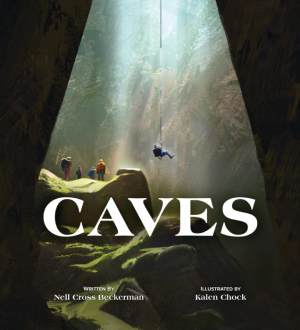
Caves by Nell Cross Beckerman, illustrated by Kalen Chock

Published by Orchard Books

The author’s love of caves is evident from the poetic text and the illustrations may inspire readers to try spelunking.

The Universe in You: A Microscopic Journey by Jason Chin

Published by Neal Porter Books

In this follow-up to Your Place in the Universe, Jason Chin goes microscopic to explore the tiniest particles that make up everything in the universe and how they combine to make each one of us unique.

Surviving the Wild series by Remy Lai

Published by Henry Holt and Co.

Each book in this series tells a true story of survival from an animal’s perspective. A perfect trifecta of cute and funny animals, graphic novel format, and important environmental information.

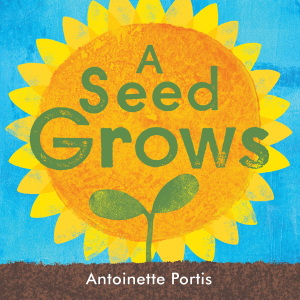
A Seed Grows by Antoinette Portis

Published by Neal Porter Books

A perfect early science resource that I’m already excited to share with preschoolers when they learn about seeds and plants next spring.

If the World Were 100 Animals by Miranda Smith, illustrated by Aaron Cushley

Published by Crown Books for Young Readers

This companion to If the World Were 100 People makes a great interactive read-aloud to share facts about animals in a way that has a big wow factor and is easy to understand.

The Tide Pool Waits by Candace Fleming, illustrated by Amy Hevron

Published by Neal Porter Books

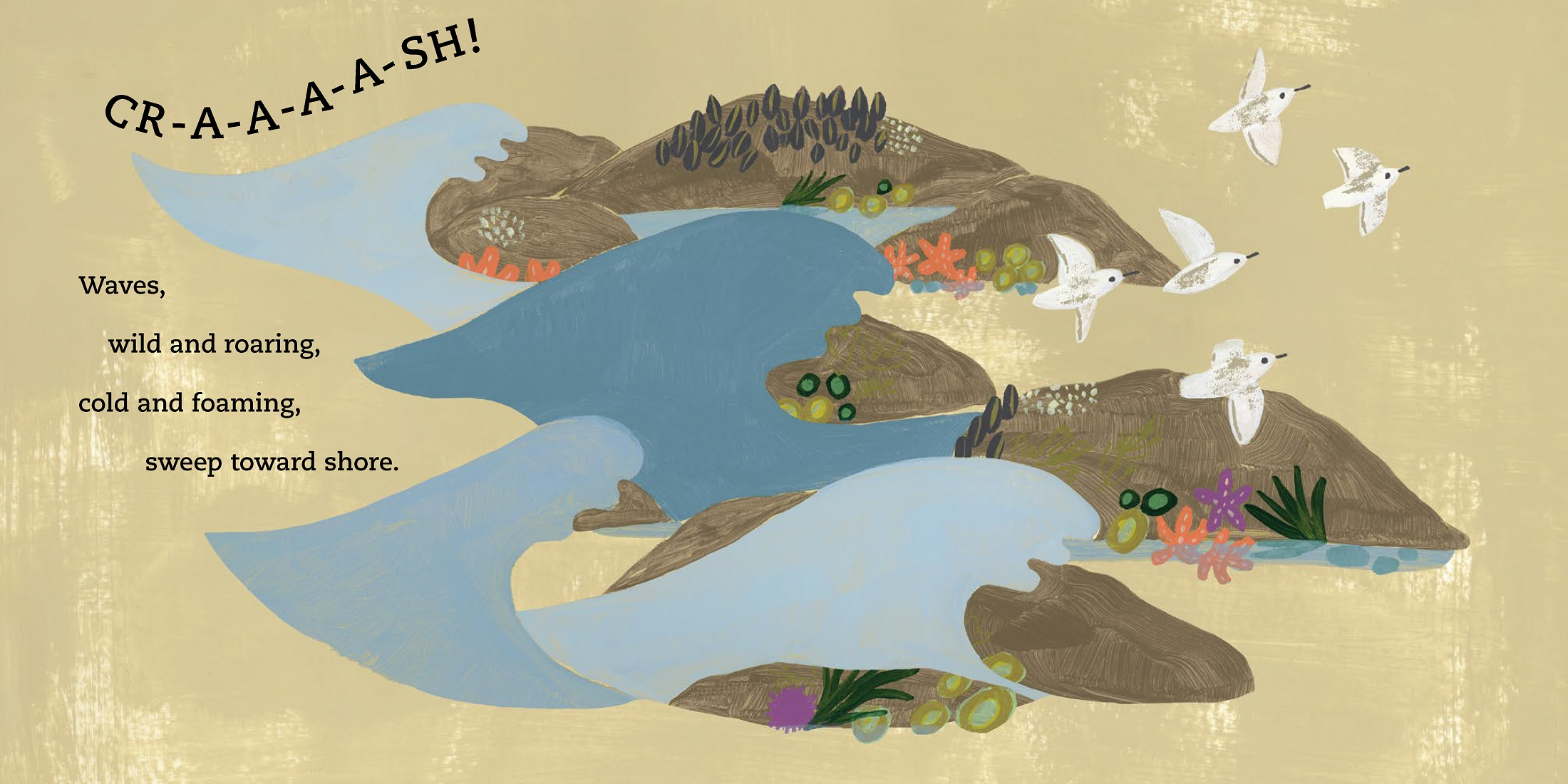
Summary:  The cycle of a tide pool is explored, starting with a wave crashing onto the shore, the water pooling in some rocks.  As the sun warms the water, all kinds of creatures gather in the pool–barnacles, mussels, an octopus–and they all wait.  Finally, the wait is over, as another wave crashes, connecting the tide pool to the rest of the ocean.  The animals swim around and eat, and slowly, the cycle begins all over again.  Includes thumbnail illustrations of the various animals mentioned with additional information, websites, and a diagram of the different parts of the tide zone.  40 pages; ages 4-8.

Pros:  I loved the illustrations in this introduction to tide pools, which is a great resource for preschool and primary grade science lessons.  The colors are beautiful, and kids will enjoy learning about the different critters.

Cons:  If you’re seeking an action-packed thriller, you may have to look elsewhere.

The Bird Book by Steve Jenkins and Robin Page

Published by Clarion Books

Summary:  The husband-and-wife team of Jenkins and Page have created a picture book jam-packed with information about birds.  From their anatomy and physiology to their evolution from dinosaurs to record-holders in the avian world, readers will learn fascinating facts about birds, accompanied by Steve Jenkins’s trademark cut-paper illustrations.  Includes a four-page table listing every bird mentioned in the book, with its size, diet, range, and the page where it can be found; also, a list of books and websites with more information.  48 pages; grades 1-5.

Pros:  Another beautiful offering by Robin Page and the late Steve Jenkins, with a ton of information offered in an appealing format with stunning illustrations.

Cons:  Another childhood bubble was burst when I learned that the oldest bird on record is a pink cockatoo that lived to the age of 83, not Dr. Dolittle’s 199-year-old parrot Polynesia.

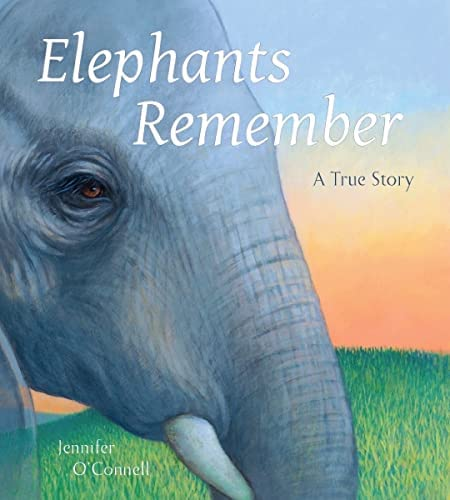
Elephants Remember: A True Story by Jennifer O’Connell

Published by Tilbury House Publishers

Summary:  When Lawrence Anthony gets a call saying that a herd of elephants will be shot if he can’t rescue them, he quickly sets up his wildlife reserve to accommodate them.  The animals have been traumatized after having members of their herd killed by poachers, including the matriarch and her baby.  Lawrence names the new matriarch Nana, and after the elephants trample the reserve’s electric fence and escape the first night, he sets out to earn Nana’s trust.  Slowly, she begins to let down her guard and allow Lawrence to come closer to her.  Over the years, Lawrence distances himself from the growing herd to help them remain wild, but he always keeps a connection with Nana.  When Lawrence dies of a heart attack, Nana leads the herd to his house and does so again on the same day for the next two years.  Includes an author’s note and three pages of additional information about elephants and Lawrence Anthony.  48 pages; grades 1-5.

Pros:  An incredibly moving story of a man dedicated to helping African wildlife and the amazing connection he made with elephants.  

Cons:  Some photos would have been a nice addition.

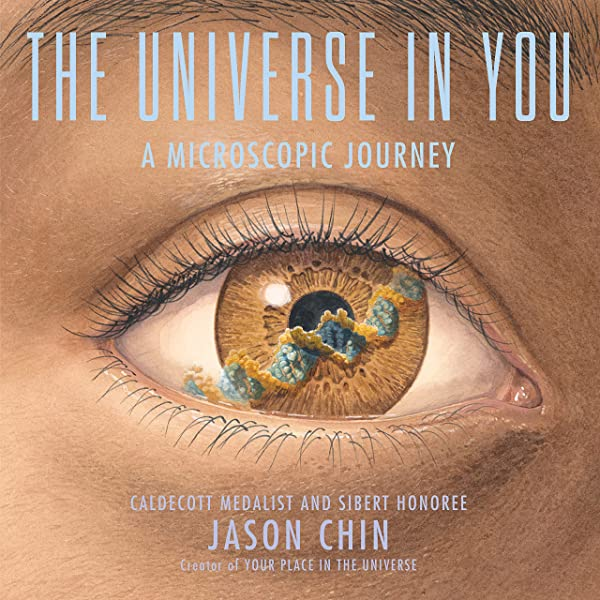
The Universe in You: A Microscopic Journey by Jason Chin

Published by Neal Porter Books

Summary:  In Your Place in the Universe, Jason Chin starts with a group of kids, then gradually moves out into the farthest reaches of the universe.  In this book, he goes in the opposite direction, beginning with the smallest bird–a Calliope Hummingbird–landing on a girl’s hand, then moving to the hair on her skin, then to cells, DNA, atoms, and eventually to elementary particles.  From there, the journey continues back outward, inviting a sense of wonder that everything in the universe is made of the same molecules, yet combines in a way to make a unique human.  Includes additional information on the building blocks of matter, as well as an author’s note and a note about the illustrations.  40 pages; grades 3-7.

Pros:  Another mind-blowing offering from last year’s Caldecott medalist, Jason Chin, with amazingly detailed illustrations, some of things that are too small to be seen with the human eye.  A contender for a Caldecott or Sibert, both of which Chin has already won.

Cons:  I’m more wowed by the larger universe than the subatomic one.

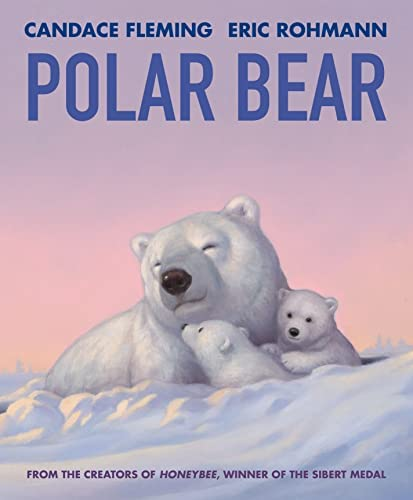
Polar Bear by Candace Fleming, illustrated by Eric Rohmann

Published by Neal Porter Books

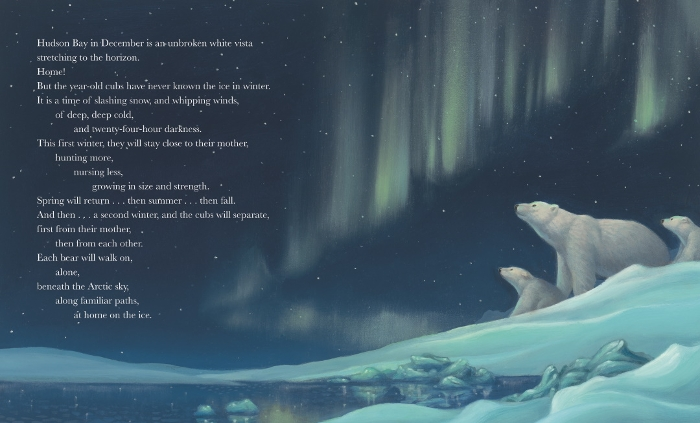
Summary:  The award-winning team behind Giant Squid, Honeybee, and Strongheart has created a new book that explores the world of a mother polar bear and her two cubs.  Emerging from five months in the den, during which time she gave birth and nursed her offspring, the mother bear emerges emaciated and hungry.  She heads for the ice where she knows she can hunt seals.  The narrative follows the bears through the year, showing how climate change affects their ability to hunt and perilously strands them on some floating ice.  They survive the dangers, and the final pages show them back on the ice in the 24-hour darkness of an Arctic winter.  Includes a two-page labeled diagram of a polar bear, additional facts about polar bears and the effects of warming in the Arctic, and a list of resources.  32 pages; grades K-5.

Pros:  Another breathtaking science book with poetic informative text and detailed realistic paintings of the polar bears and their environment.  With a Sibert Medal and Honor on their resumé, this team can expect awards consideration again for this book.

Cons:  As always, I found it stressful to read about the effects of climate change.

Luminous: Living Things That Light Up the Night by Julia Kuo

Published by Greystone Kids

Summary:  A mother and child travel through the night, walking, boating, and swimming to observe bioluminescence in many different forms.  The pages are all in black, making the colors glow brightly.  Each page has a single phrase or sentence in a larger font, then a few sentences in smaller print that give additional information.  A sense of wonder is conveyed in the last few pages, sharing the information that many life forms have yet to be discovered, and encouraging readers to look closely at the world around them.  44 pages; ages 4-10.

Pros:  A beautiful introduction to bioluminescence that will encourage kids to look for other wonders in the world as well.  The illustrations are striking and there is plenty of interesting information.

Cons:  No back matter.

Yuck, You Suck! Poems About Animals That Sip, Slurp Suck by Jane Yolen and Heidi E. Y. Stemple, illustrated by Eugenia Nobati

Published by Millbrook Press

Summary:  Thirteen animals are profiled in this poetry collection, from the tiny mosquito to the elephant.  Some animals, like the vampire bat, have a reputation for sucking but actually lap up blood from the animals they bite (is that better?).  The first poem introduces the concept of sucking, and the final one connects the animals to humans, who start their lives sucking milk.  Includes additional information about animals that suck, a list of additional resources, anatomical terms for body parts that suck, a glossary, and a bit more information on each animal.  32 pages; grades 2-5.

Pros:  From the team that brought you Eek, You Reek! (about stinky animals) comes a book that is sure to catch the eye of many elementary students.  Most of the poems have catchy rhymes (although there’s a haiku thrown in, for the honeybee), and kids will get a kick out of the bug-eyed creatures in the illustrations.

Cons:  There’s a certain bloody gross-out factor inherent in the subject matter. You may not want to read this book before sitting down to Thanksgiving dinner and perhaps not too soon after either.

A Journey Under the Sea by Craig Foster and Ross Frylinck

Published by Clarion Books

Summary:  The narrator takes readers on a dive into the ocean at the tip of South Africa.  Underwater, they observe all kinds of animals including a seal, an octopus, a cuttlefish, and a couple of different sharks.  On the way back, they see tiny snail eggs and a whale, which likes to snack on the sea snails, an example of how ocean animals are all connected.  Includes a note from the authors and additional information about each photo in the book.  56 pages; grades K-5.

Pros:  A gorgeous picture book from the creators of The Octopus Teacher, now streaming on Netflix. Their joy and enthusiasm for diving and exploring the ocean really shines through in both the photos and the text.  From the eye-catching cover to the farewell from the dolphins, kids will be captivated by this journey.

Cons:  There’s just a little bit of information about each animal, so some additional resources would have been nice.