Curious Comparisons: A Life-Size Look at the World Around You by Jorge Doneiger, translated from the Spanish by Iraida Iturralde and The Screaming Hairy Armadillo and 76 Other Animals with Weird, Wild Names by Matthew Murrie and Steve Murrie, illustrated by Julie Benbassat

Published by Candlewick
Curious Comparisons: A Life-Size Look at the World Around You: Doneiger,  Jorge, Chouela, Guido, Sisso, David, Setton, Marcelo: 9781536200218:  Amazon.com: Books
Curious Comparisons: A Life-Size Look at the World Around You by Jorge  Doneiger, Guido Chouela, David Sisso, Marcelo Setton, Hardcover | Barnes &  Noble®

Published by Workman Publishing Co.

The Screaming Hairy Armadillo and 76 Other Animals with Weird, Wild Names:  Murrie, Matthew, Murrie, Steve, Benbassat, Julie: 9781523508112: Amazon.com:  Books

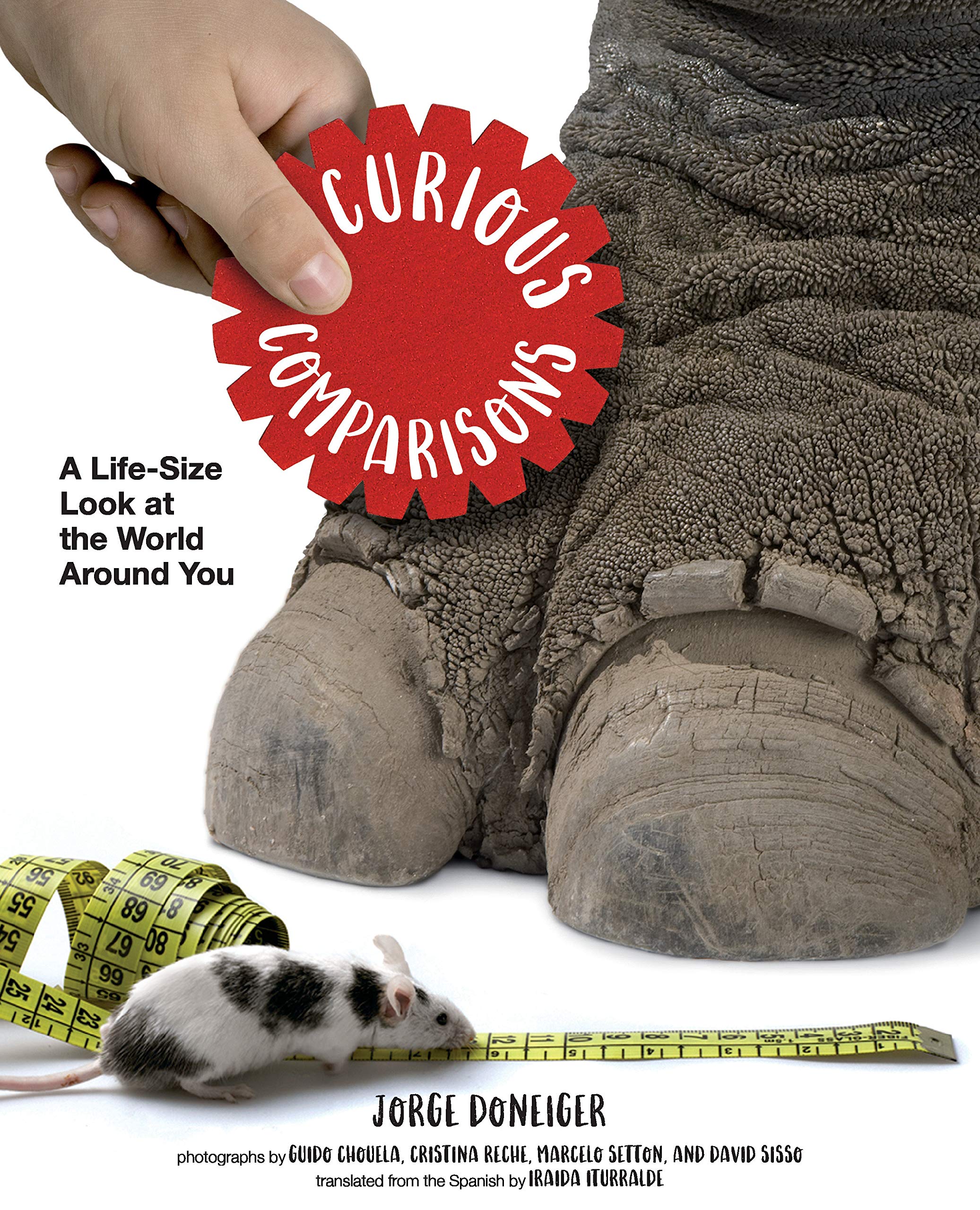
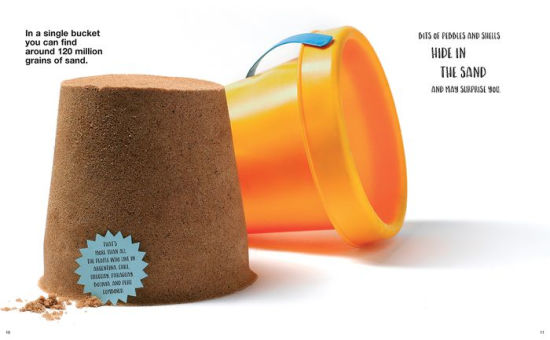
Summary:  For those kids who enjoy books filled with quirky facts, here’s a double dose.  Curious Comparisons is an import from Argentina showing true-to-size photos of an eclectic mix of animals and objects.  A pound of feathers and a pound of lead; the amount of water a lion can drink at once shown in empty water bottles; a pile of thread representing an unraveled shirt: each item is shown on a white page with a fact or two and often a question.  There are a few fold out pages: glasses filled with the amount of milk a cow produces and the flowers needed for a bee to make a pound of honey.  Includes 4 pages of additional facts about each page.  64 pages; grades K-5.

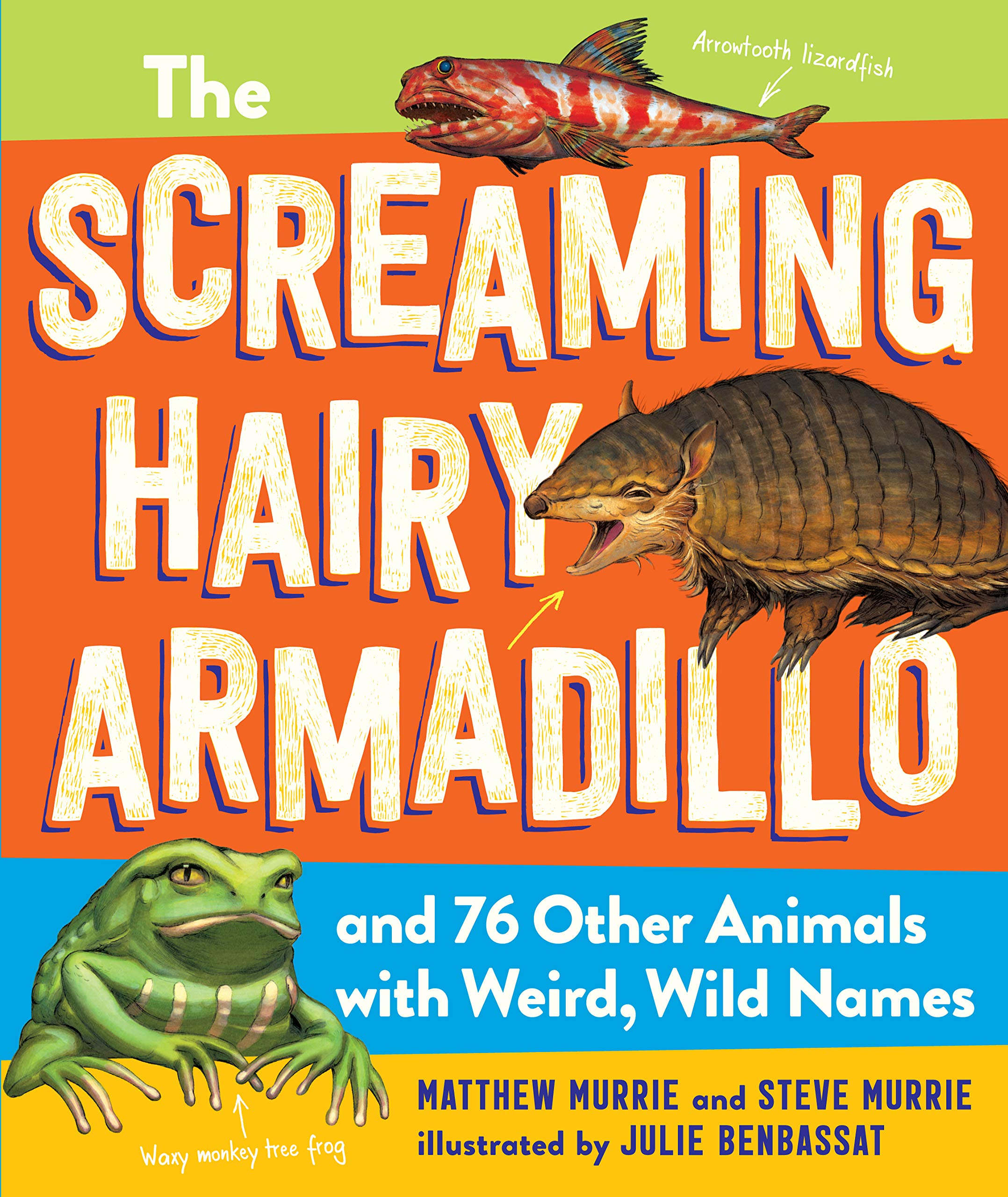
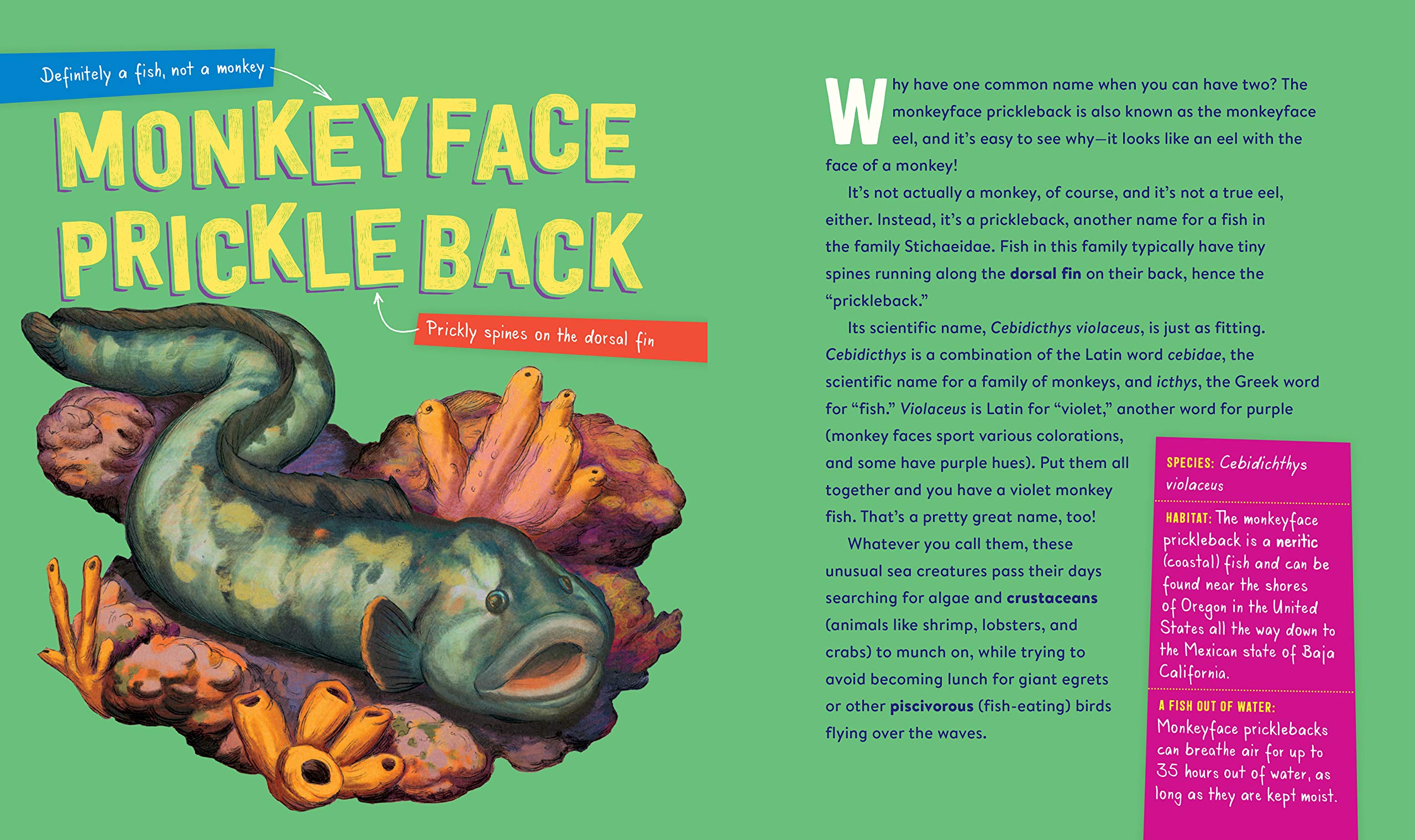
Screaming Hairy Armadillo starts off with several pages explaining how animals are named, including a description of scientific classification.  From there, the 77 animals are profiled, everything from the monkeyface prickleback to the bone-eating snot flower worm.  The animals are grouped by name: funny names, fierce names, magical names, delicious names, and just plain weird names (looking at you, headless chicken monster).  Each animal gets a page of information; a sidebar telling its species, habitat, and a fun fact; an illustration; and sometimes a photo.  Includes a couple pages of awards (for different name-related categories); how to discover and name an organism; a weird and wild name generator; a glossary; a list of websites for further research; and information on conservation organizations.  176 pages; grades 2-5.

Pros:  Books like these are almost too easy to book talk.  Just show a page or two, maybe read a fact or share a couple of weird names, and boom, kids are clamoring for them.  The photos and simple text in Curious Comparisons makes it a great choice for any elementary grade.  Screaming Hairy Armadillo will appeal to older kids, and contains a lot of great information in addition to the animal profiles.

Cons:  Curious Comparisons seemed a bit random to my well-ordered, Dewey-Decimal-trained brain.

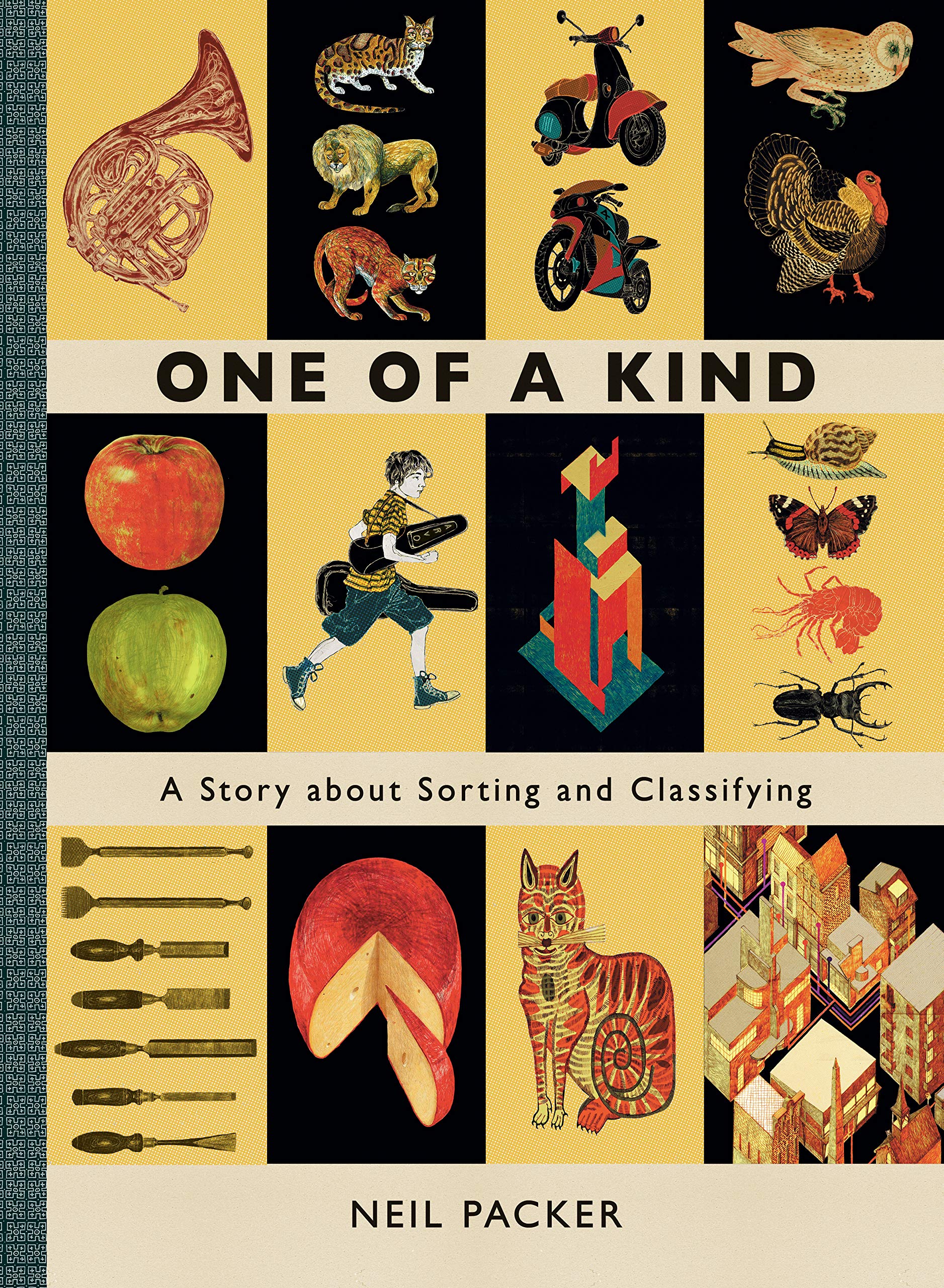
One of a Kind: A Story About Sorting and Classifying by Neil Packer

Published by Candlewick

One of a Kind: A Story About Sorting and Classifying: Packer, Neil, Packer,  Neil: 9781536211214: Amazon.com: Books
One of a Kind: A Story About Sorting and Classifying by Neil Packer,  Hardcover | Barnes & Noble®

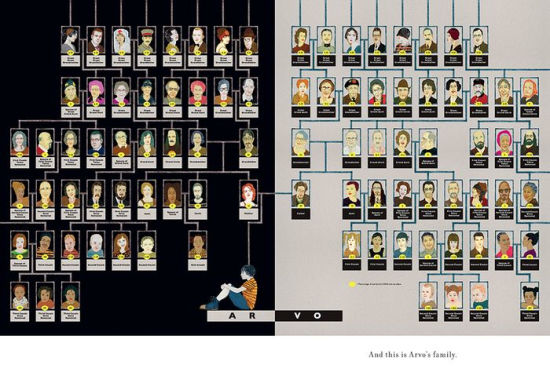
Summary:  On page 1, we meet Arvo.  On page 2, we meet Arvo’s family: a family tree going back to his great grandparents and to third cousins once removed, including the percentage of DNA each shares with Arvo.  Page 3 is Arvo’s cat Malcolm–and the family of cats, a.k.a. Felidae.  And so it goes throughout Arvo’s day.  His violin lesson is accompanied by an illustration of musical instrument classification; the car ride to the violin lesson includes vehicles and how they are grouped.  There are pages for clouds, foods, the library, and more.  When Arvo’s dad picks him up at the end of the day, though, he’s able to pick his son out of a crowd.  When Arvo asks him how, his dad tells him, “There is only one YOU!”  Includes an additional four pages giving more information on each of the classification systems.  48 pages; grades 2-5.

Pros:  Many years ago, when I worked at the Boston Museum of Science, I looked in vain for good children’s books on classification (my co-worker and I actually tried writing one).  I wish we had had this excellent oversized book to show kids how all kinds of objects in the world are sorted and classified into groups.  Readers will want to spend a lot of time with the detailed illustrations on every page.

Cons:  This is another large book that librarians may struggle to find space for.

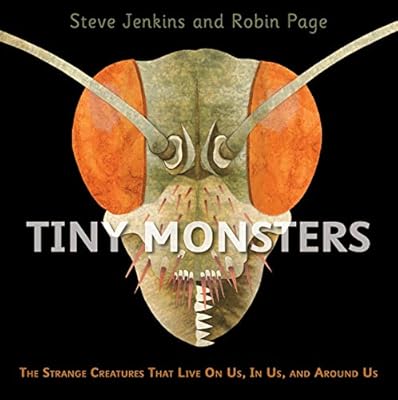
Tiny Monsters: The Strange Creatures That Live On Us, In Us, and Around Us by Steve Jenkins and Robin Page

HMH Books for Young Readers

Tiny Monsters: The Strange Creatures That Live On Us, In Us, and Around Us:  Jenkins, Steve, Page, Robin: 9780358307112: Amazon.com: Books

Summary:  Maybe you don’t want to think about the tiny eyelash mites that are living on, not surprisingly, your eyelashes, but you can bet there’s some 9-year-old kid out there who does.  And that kid will also enjoy learning about bedbugs, chiggers, dust mites, and a whole host of other small creatures who live on humans, in houses, and outside.  Each spread features Jenkins’ trademark cut paper illustrations, with the actual size shown as a black silhouette (some are just a dot), the magnification of the illustration, and a paragraph of information.  The last two pages give additional information about each critter, and there is also a short bibliography.  32 pages; grades 1-4.

Pros:  I’m always delighted to learn that Steve Jenkins has a new book; even more so when he teams up with his wife Robin Page.  Personally, I did not find the subject of this one particularly engaging, but I just know it will be a huge hit in any elementary library.

Cons:  I feel itchy.

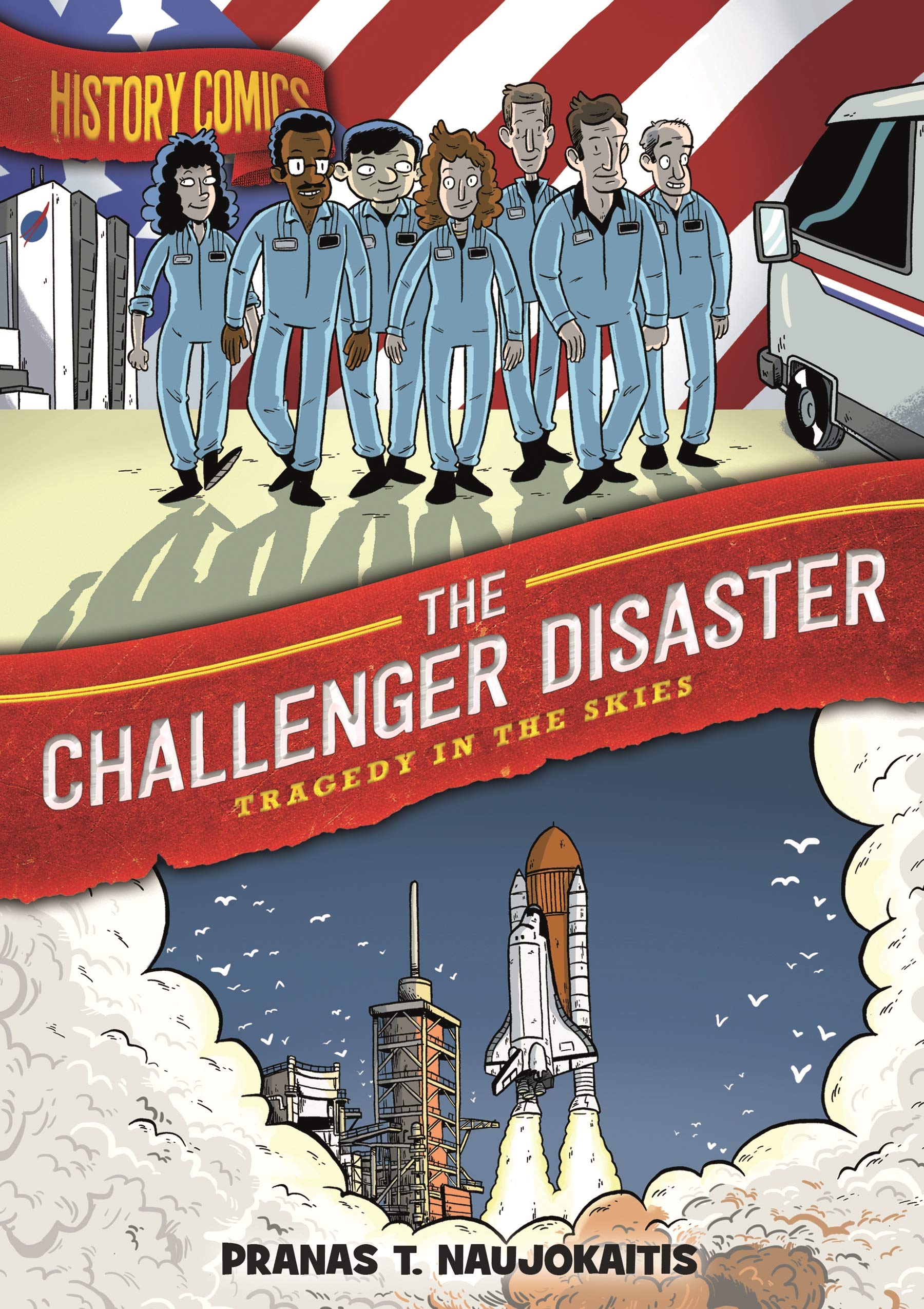
The Challenger Disaster: Tragedy in the Skies by Pranas T. Naujokaitis

Published by First Second

Amazon.com: History Comics: The Challenger Disaster: Tragedy in the Skies  (9781250174307): Naujokaitis, Pranas T.: Books
History Comics: The Challenger Disaster | Pranas T. Naujokaitis | Macmillan

Summary:  A group of kids going to school on board a 24th century spacecraft has an assignment to research the Challenger disaster.  Each presents one aspect of the event, including the history of the space shuttle, the crew, the launch, and the investigation of what went wrong.  The kids are all certain that Carmen, the slacker among them, hasn’t done her research, and when it comes time for her to present, it turns out they’re right.  But she’s been so moved by what she’s learned that she makes an emotional case for continuing to explore the universe, even though tragedies sometimes happen as part of those explorations.  The day ends with A plus grades for everyone, and the teacher musing to herself that she believes the future is in good hands.  Includes an author’s afterword and a list of additional Challenger facts.  128 pages; grades 4-6.

Pros:  A moving look at many different aspects of the Challenger explosion that includes holographic images of each crew member giving an introduction to his or her life and career.  This is part of a new series called History Comics that will undoubtedly have wide appeal, particularly for fans of books like Nathan Hale’s Hazardous Tales.

Cons:  The detailed descriptions of the space shuttle in the first third of the book may lose a few readers.

If you would like to buy this book on Amazon, click here.

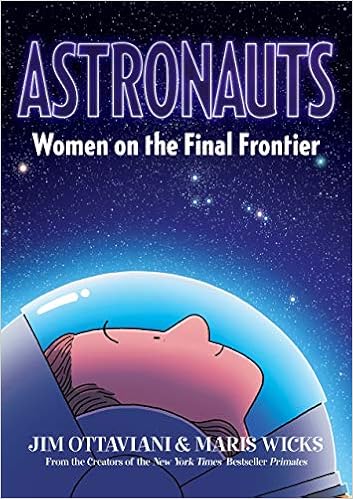
Astronauts: Women on the Final Frontier by Jim Ottaviani and Maris Wicks

Published by First Second

Interior Image

Summary:  Real-life astronaut Mary Cleave narrates the story of how women clawed their way into the space program, beginning with a group of women called the Mercury 13 who tried to be part of the first group of astronauts.  Although they were qualified, and their smaller size would have been a plus on early space missions, they were eventually passed over for the all-male Mercury 7.  Meanwhile, in the Soviet Union, Valentina Tereshkova became the first woman to travel to space.  It wasn’t until 1983 that Sally Ride broke the barriers at NASA, and many other women have succeeded there in the decades since.  The final section of the book is a detailed narrative of Cleave’s own journey aboard the space shuttle in 1985.  Includes photos of a diverse group of astronauts, an author’s note, and a lengthy bibliography.  176 pages; grades 5-8.

Pros:  As I’m writing this review, my daughter is sitting at the dining room table taking an orbital mechanics final for her graduate program in astronautics at Stanford, so I can’t help but be grateful for how far women have come since Sally Ride burst on the scene during my own college days.  This book gives a humorous but honest account of the hard work those early women had to do, and the ridiculous sexism that made it so difficult for them to become part of the space program.  The artwork is appealing, and the detailed illustrations of life aboard the space shuttle are truly remarkable. 

Cons:  The beginning, with its whirlwind history of the early days of the space program in both the U.S. and USSR, is a bit confusing, with a big cast of characters, and a lot of switching back and forth between the two countries (the Russian scenes are cleverly shown with a font resembling Cyrillic script).

If you would like to buy this book on Amazon, click here.

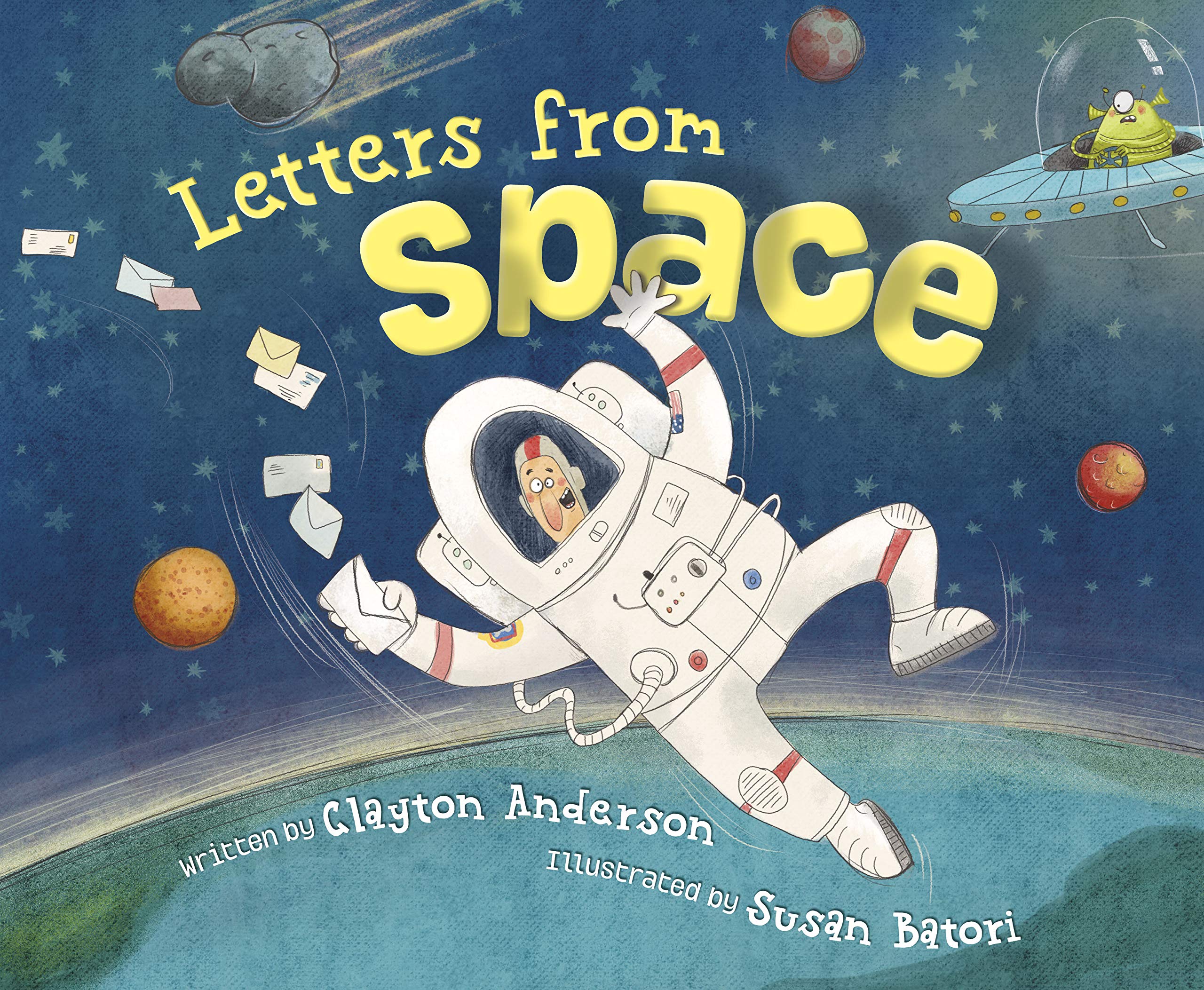
Letters from Space by Clayton Anderson, illustrated by Susan Batori

Published by Sleeping Bear Press

Letters from Space: Anderson, Clayton, Batori, Susan: 9781534110748:  Amazon.com: Books

Summary: Former astronaut Clayton Anderson drew on his experience living aboard the International Space Station to create these fictional letters about life in space.  From Day 1 (“Dear Mom, I did it I made it into outer space! LAUNCH WAS SO COOL!”) to Day 152 (“Dear Mission Control: I’m home–safely back on Earth. And boy, am I glad about that!”), his letters brim with enthusiasm for sharing his experiences and scientific information about space.  The science is very kid-friendly, describing why the crews’ heads look bigger when the first few days of a mission, animals who have traveled into space, and how astronauts take pictures. Living in a weightless environment, conducting experiments, and going for a space walk are all explained with an air of excitement, and a P.S. from the astronaut at the end gives a bit more information about each topic.  32 pages; grades K-3.

Pros:  Anderson’s enthusiasm is infectious, and is sure to lead some readers to consider a career in space.  The letters format is engaging, and could serve as a writing prompt.  Batori’s humorous cartoon-inspired illustrations add to the fun.

Cons:  I wished the letters had clarified who each recipient was.  Some (Mom, Brother, Mission Control) are obvious, while others (Cole, Sofia, Ana) are more ambiguous.

If you would like to buy this book on Amazon, click here.

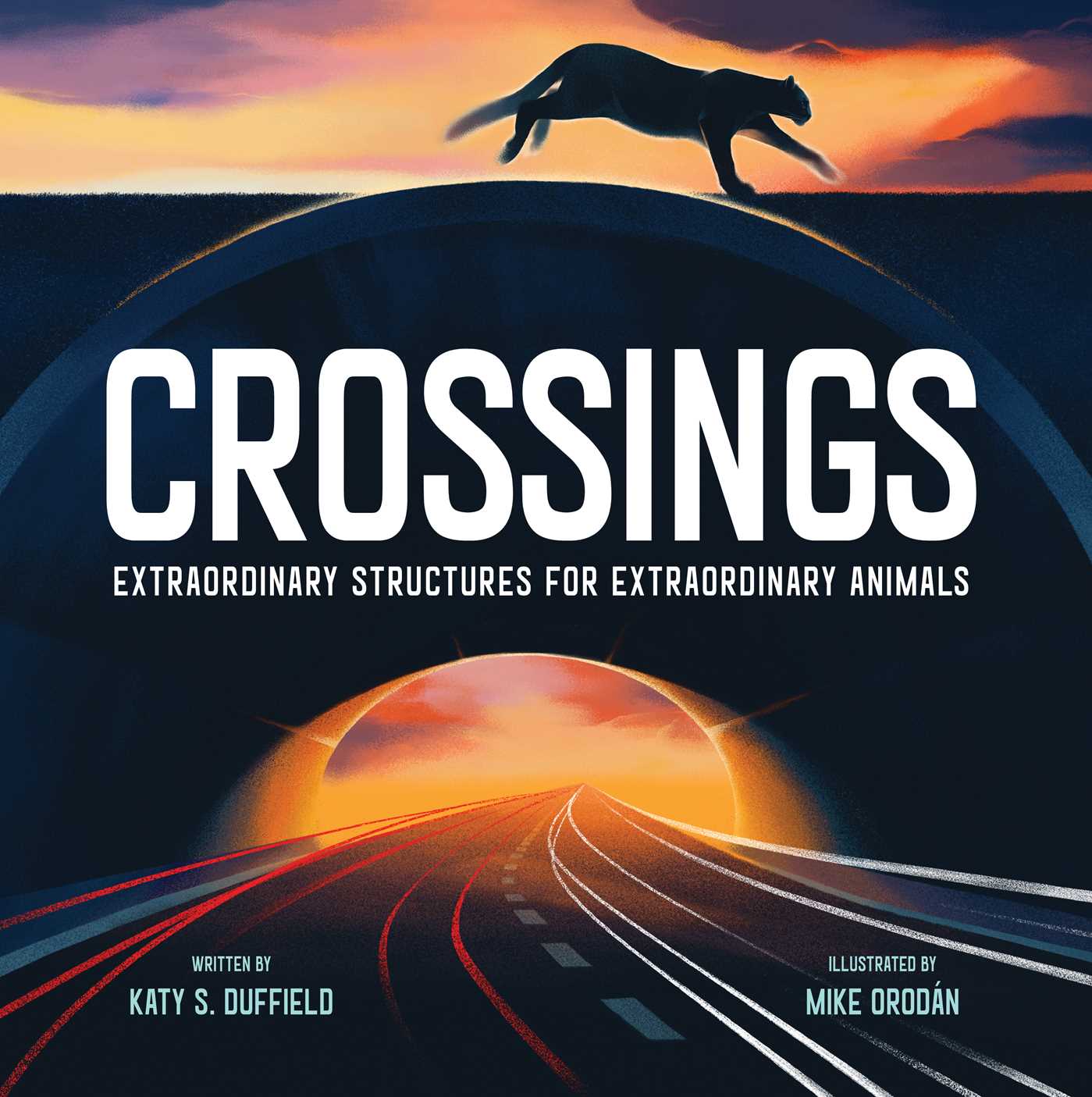
Crossings: Extraordinary Structures for Extraordinary Animals by Katy S. Duffield, illustrated by Mike Orodán

Published by Beach Lane Books

Crossings | Book by Katy S. Duffield, Mike Orodán | Official Publisher Page  | Simon & Schuster
Crossings: Extraordinary Structures for Extraordinary Animals: Duffield,  Katy S., Orodán, Mike: 9781534465794: Amazon.com: Books

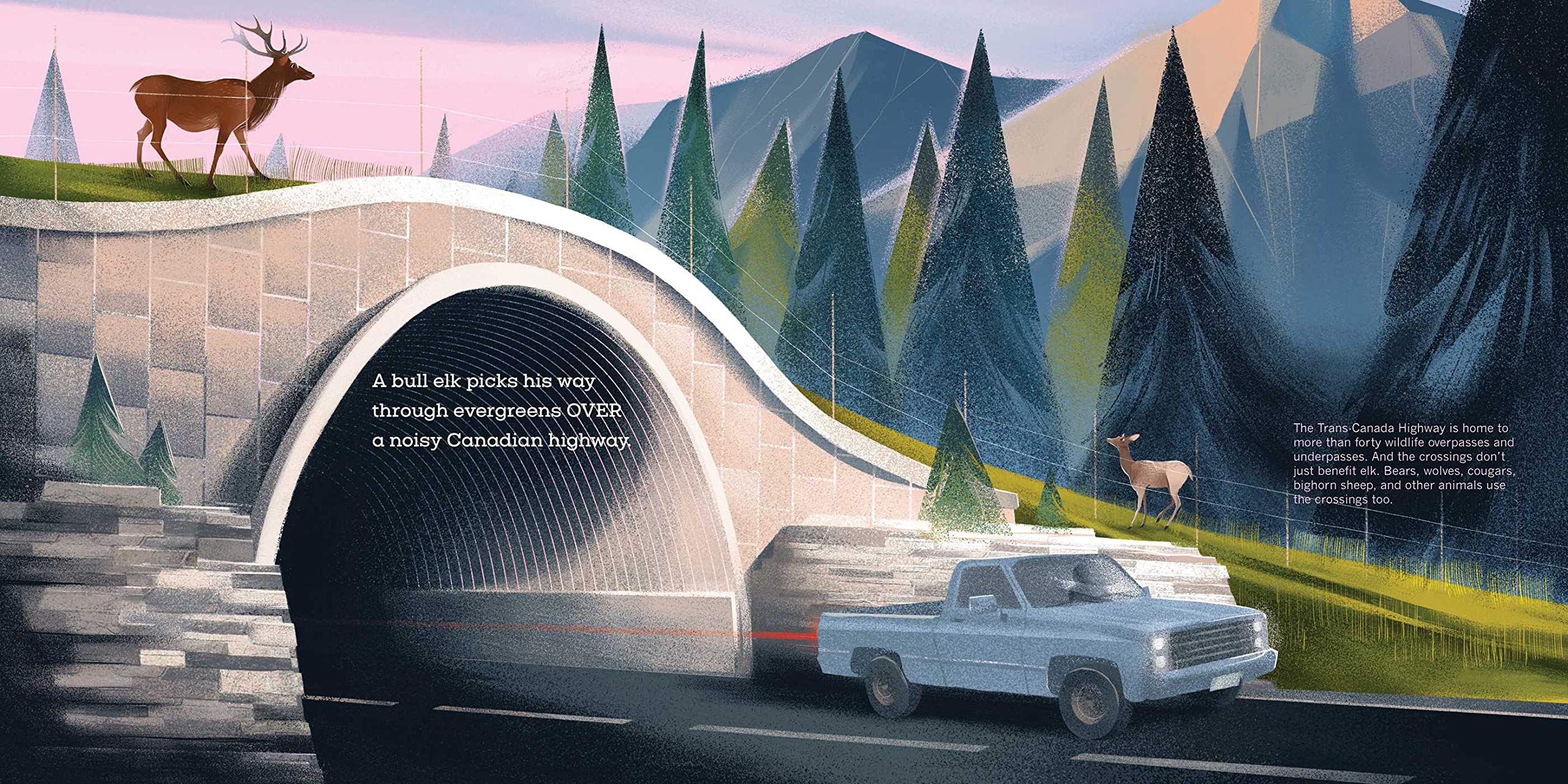
Summary:  Animals struggle to survive in a world overrun by humans, but there are people who build structures to make life a little easier for them.  They’ve created overpasses, underpasses, bridges, and tunnels to help different creatures move from one place to another safely.  From overpasses across the Trans-Canada Highway to rope bridges over Australia’s Hume Highway to tiny passageways built for spotted salamanders in Massachusetts, engineers have come up with some creative solutions to help animals threatened by traffic and other human activities.  Includes two pages with additional information about each structure and a bibliography.  48 pages; ages 4-9.

Pros:  Kids will enjoy learning about both the animals and the structures, but the real appeal of this book is the large, colorful illustrations of all the critters.  I hope we’ll be seeing more from illustrator Mike Orodán.

Cons:  I hope I never stumble upon those millions of crabs crossing their special crab bridge on Christmas Island.

If you would like to buy this book on Amazon, click here.

Becoming a Good Creature by Sy Montgomery, illustrated by Rebecca Green

Published by HMH Books for Young Readers

Becoming a Good Creature: Montgomery, Sy, Green, Rebecca: 9780358252108:  Amazon.com: Books
Becoming a Good Creature - Kindle edition by Montgomery, Sy, Green, Rebecca.  Children Kindle eBooks @ Amazon.com.

Summary:  Based on her 2018 YA/adult book How to Be a Good Creature, Sy Montgomery shares with readers the lessons she has learned from animals.  Her earliest teacher was her childhood dog Molly, who helped her discover how to observe animals.  She used those skills to study emus, gorillas, tigers, sharks, and more all over the world.  Animals taught her to be patient, to forgive, and to not be afraid.  A pig named Christopher Hogwood helped Sy and her husband create a unique kind of family.  Even animals that aren’t always loved–hyenas, a tarantula, and a weasel–helped her to become more open-minded and understanding.  The last lesson, “Trust tomorrow” tells how a border collie puppy who was blind in one eye reminded her that, even when things seem like they’re ending, there’s promise in a new day.  Includes a brief thank-you note to the animals from the author with photos of her with a few of the animals from the book.  40 pages; grades K-4.

Pros:  Animal lovers will enjoy reading these brief but intimate stories about Montgomery’s many animal adventures.  Social-emotional or spiritual teachers could use any of these stories to introduce a lesson.

Cons:  The photos at the end left me wanting to see more.

If you would like to buy this book on Amazon, click here.

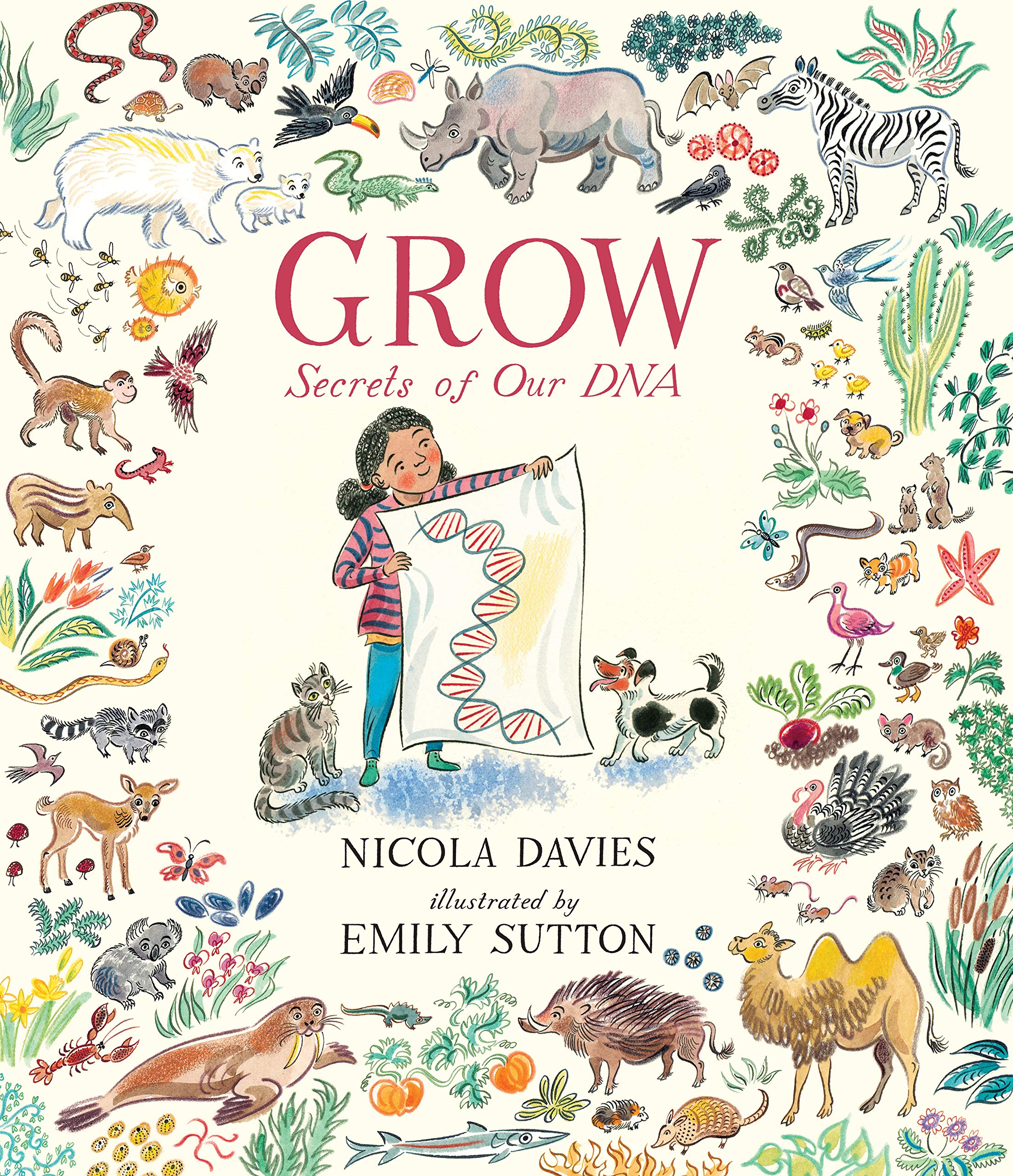
Grow: Secrets of Our DNA by Nicola Davies, illustrated by Emily Sutton

Published by Candlewick

Grow: Secrets of Our DNA: Davies, Nicola, Sutton, Emily: 9781536212723:  Amazon.com: Books

Summary:  All living things grow: some quickly, some slowly, some a little, and some a lot.  Humans grow from a tiny dot to an adult, following a set of instructions coded into DNA, the genetic code.  Humans’ genetic code is similar to some animals, like chimpanzees, less similar to other animals like dogs, and even less similar to plants.  But all forms of life are connected, and all connect back to earlier forms of life “because all life has always been written in one language”.  Includes an afterword called “How did you grow?”.  40 pages; grades K-5.

Pros:  Nicola Davies does a masterful job of explaining DNA and genetics in a way that allows me to confidently recommend this book for kids as young as kindergarteners.  The gorgeous illustrations showing all kinds of animal and plant life make it even more accessible for readers of all ages.

Cons:  I was surprised there were no resources for further research included at the end.

If you would like to buy this book on Amazon, click here.

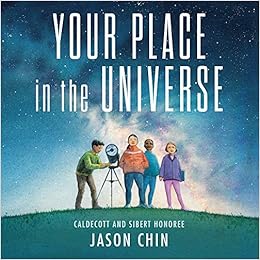
Your Place in the Universe by Jason Chin

Published by Neal Porter Books

Your Place in the Universe - Kindle edition by Chin, Jason. Children Kindle  eBooks @ Amazon.com.

Summary:  An eight-year-old is about five times as tall as this book…but only half as tall as an ostrich.  The ostrich is half as tall as the tallest land animal, the giraffe, but the giraffe is 20 times shorter than the tallest living thing, a redwood tree.  The journey continues outward: skyscrapers, mountains, outer space, all the way to the very edges of the universe.  It then comes back to Earth, and that group of eight-year-olds, who are capable of looking into the sky and imagining their place in the universe.  Includes additional information on Earth, the solar system, the universe, and making maps and models, as well as notes on the text and the illustrations, and a list of selected sources.  40 pages; ages 4-8.

Pros:  Although this sort of journey has been shown before (Cosmic View: The Universe in 40 Jumps or Powers of Ten), Jason Chin brings his own deft touch to it.  As always, Chin’s illustrations are amazing in their details, colors, and realistic renderings (I was particularly awed by the panoramic view of Mount Everest showing a juxtaposition with the tallest skyscrapers).  The simple comparisons make this accessible to early elementary kids, but the back matter makes it hefty enough for older readers.  Sure to be a contender for another Sibert award.

Cons:  I’m feeling pretty insignificant right now.

If you would like to buy this book on Amazon, click here.