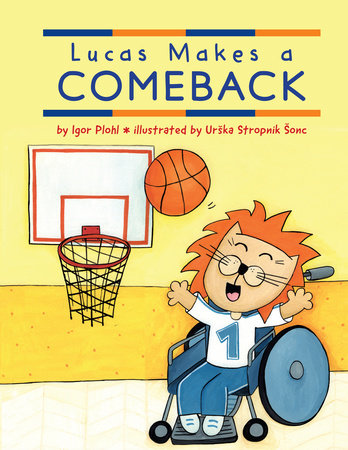
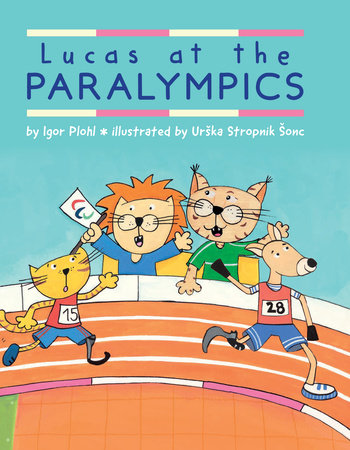
Lucas Makes a Comeback and Lucas at the Paralympics by Igor Plohl, illustrated by Urška Stropnik Šonc

Published by Holiday House

Lucas Makes a Comeback by Igor Plohl: 9780823447664 |  PenguinRandomHouse.com: Books

Lucas at the Paralympics by Igor Plohl: 9780823447657 |  PenguinRandomHouse.com: Books

Summary: Slovenian author Igor Plohl has drawn on his own experiences to create Lucas, a lion who loses the use of his legs after falling off a ladder and injuring his spine. Lucas goes through a period of sadness, feeling like he has lost his independence and ability to work. With the help of therapists, friends, and family, he learns how to use a wheelchair and drive a car, gets his own apartment, and returns to his job as a teacher. Photos on the endpapers show Igor doing many of the activities that are described in the story.

In Lucas At the Paralympics, Lucas meets a fellow cyclist named Eddie, and the two of them decide to travel to the Summer Paralympic Games. Sidebars give additional information about the different competitions they attend. At the end, Lucas decides to train for the Paralympic Games in four years. Includes two pages of information about different events at the Winter Paralympic Games. Both books are 32 pages and recommended for ages 4-8.

Pros: Some much-needed picture books featuring a character with a disability. Readers will learn about some of the challenges faced by a person in a wheelchair, as well opportunities to compete in sports that are open to those with many different types of disabilities.. The book about the Paralympic Games is timely, since the 2021 Games take place at the end of the summer.

Cons: Given the restrictions of a picture book, Lucas’s journey to independence appears deceptively simple. Also, the photos of the author were on the endpapers, which meant some of them were covered up by the library dust jacket.

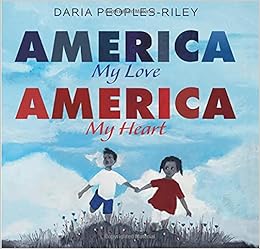
America, My Love, America, My Heart by Daria Peoples-Riley

Published by Greenwillow Books

America, My Love, America, My Heart: Peoples-Riley, Daria, Peoples-Riley,  Daria: 9780062993298: Amazon.com: Books

Summary:  The text of this book consists of questions to America: “Do you love me when I raise my hand? My head? My voice? When I whisper? When I SHOUT? Do you love my black? Do you love my brown?”  Spanish and Creole words are interspersed throughout the text. Includes an author’s note, describing her childhood growing up as one of the few Black kids in her class and with a Louisiana Creole background that sometimes made her feel on the outside of things. There’s also information on Louisiana Creole and Spanish, and photos of the author with her two grandmothers who spoke both languages; the Pledge of Allegiance is written on both endpapers. 40 pages; ages 4 and up.

Pros:  A thought-provoking read as we move toward the flag-waving patriotism of Independence Day, asking questions about what the American experience is like for all of its inhabitants.

Cons:  The affectionate title felt a little dissonant from the rest of the book.

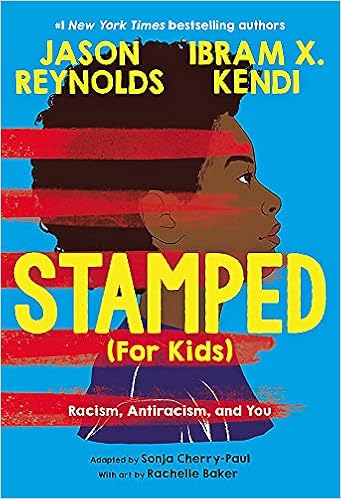
Stamped (For Kids): Racism, Antiracism, and You illustrated by Rachelle Baker and adapted by Sonja Cherry-Paul, from Stamped: Racism, Antiracism, and You by Jason Reynolds, a remix of Stamped from the Beginning by Ibram X. Kendi

Published by Little, Brown and Company

Stamped (For Kids): Racism, Antiracism, and You: Cherry-Paul, Sonja,  Reynolds, Jason, Kendi, Ibram X., Baker, Rachelle: 9780316167581:  Amazon.com: Books

Summary:  It started with Ibram X. Kendi’s book Stamped from the Beginning.  Then Jason Reynolds did a “remix” for teens: Stamped: Racism, Antiracism, and You, and now there is this version for elementary kids.  In keeping with Reynolds’ assertion that Stamped isn’t a history book, Cherry-Paul writes that her book talks about history but is “directly connected to our lives as we live them right this minute.”  She suggests using rope as a metaphor when learning about race: a rope can lift climbers, join people together, or be used as a weapon.  In 24 chapters she traces the history of racism in America from 1415 to the present.  Throughout the narrative there are boxes inviting readers to pause and think more deeply about an idea that’s been introduced and how it relates to them.  The final section, “An Antiracist Future” calls kids to lead their generation in learning all they can about the “tree of racism” and to finally be the ones to chop it down.  Includes a timeline, glossary, and lists for further reading.  176 pages; grades 3-6.

Pros:  Every bit as compelling as Jason Reynolds’ book, written at a level that will be accessible to kids as young as eight or nine.  Essential reading for kids, teachers, and parents.

Cons:  Similar to my “Con” for the Reynolds book, this felt like a whirlwind tour through history; readers will only get a taste of many different interesting people and events. Hopefully, they’ll be inspired to use the reading lists to learn more.

Wilbur Wright Meets Lady Liberty by Robert Burleigh, illustrated by Wendell Minor

Published by Henry Holt and Co.

Wilbur Wright Meets Lady Liberty | Robert Burleigh | Macmillan

Summary:  On September 29, 1909, Wilbur Wright flew for six and a half minutes around the Statue of Liberty, the first time either of the Wright Brothers had flown over a body of water.  His feat was witnessed by a large crowd of New Yorkers, including 10-year-old Juan Trippe, whose conversation with his father bookends the main narrative of this story; Trippe would grow up to found Pan Am Airways.  The story is supplemented by extensive back matter, including an author’s note with additional information about the Wright Brothers and their New York flights (a few days later, Wilbur took a longer flight down the Hudson River).  There’s also a list of facts about other aspects of the story, an illustrator’s note, and a bibliography.  Front end papers show a newspaper article reporting the event, and back papers show a map of the flight.  40 pages; grades K-5.

Pros:  This veteran author-illustrator team has created a picture book that perfectly captures the tension and excitement of Wilbur Wright’s flight, while also conveying the peacefulness of flying.  The extensive back matter adds a lot of information, and is written in a way that is accessible to younger readers.

Cons:  I wish the back matter had included a few photos.

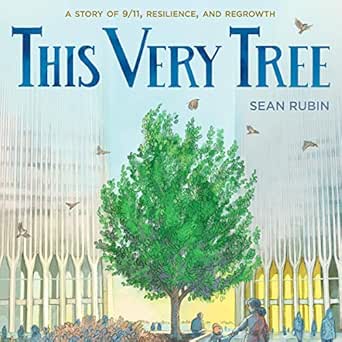
This Very Tree: A Story of 9/11, Resilience, and Regrowth by Sean Rubin

Published by Henry Holt and Co.

Amazon.com: This Very Tree: A Story of 9/11, Resilience, and Regrowth  (Audible Audio Edition): Sean Rubin, Jennifer Ceci, Macmillan Young  Listeners: Audible Audiobooks
This Very Tree: A Story of 9/11, Resilience, and Regrowth: Rubin, Sean:  9781250788504: Amazon.com: Books

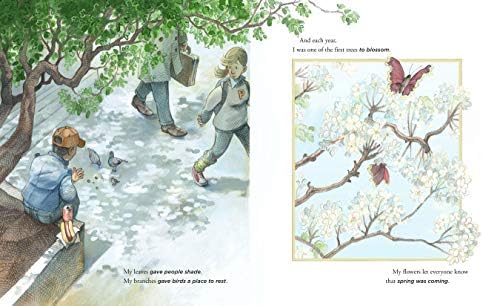
Summary:  A Callery pear tree narrates its experiences, beginning with its earliest days in a plaza near the World Trade Center.  It was buried on 9/11, and near death when discovered in the rubble several weeks later.  Moved to a different location, it survived against expectations, and in December 2010, it was dug up and replanted in a new plaza near its former location.  Surrounded by other trees that give it strength, the Survivor Tree helps the people who come to see it by giving them peace, hope, and the promise that spring will always come again.  Includes an author’s note; a two-page history of the World Trade Center, 9/11, and the Survivor Tree; a note on the illustrations; and a list of six sources.  48 pages; grades K-5.

Pros:  A beautifully written and illustrated story that makes a unique introduction to the events of 9/11 and also speaks to anyone who has survived a traumatic event.

Cons:  The events of 9/11 are not described at all (“It was an ordinary morning.  Until it wasn’t”), so kids will definitely need an introduction before reading this book.

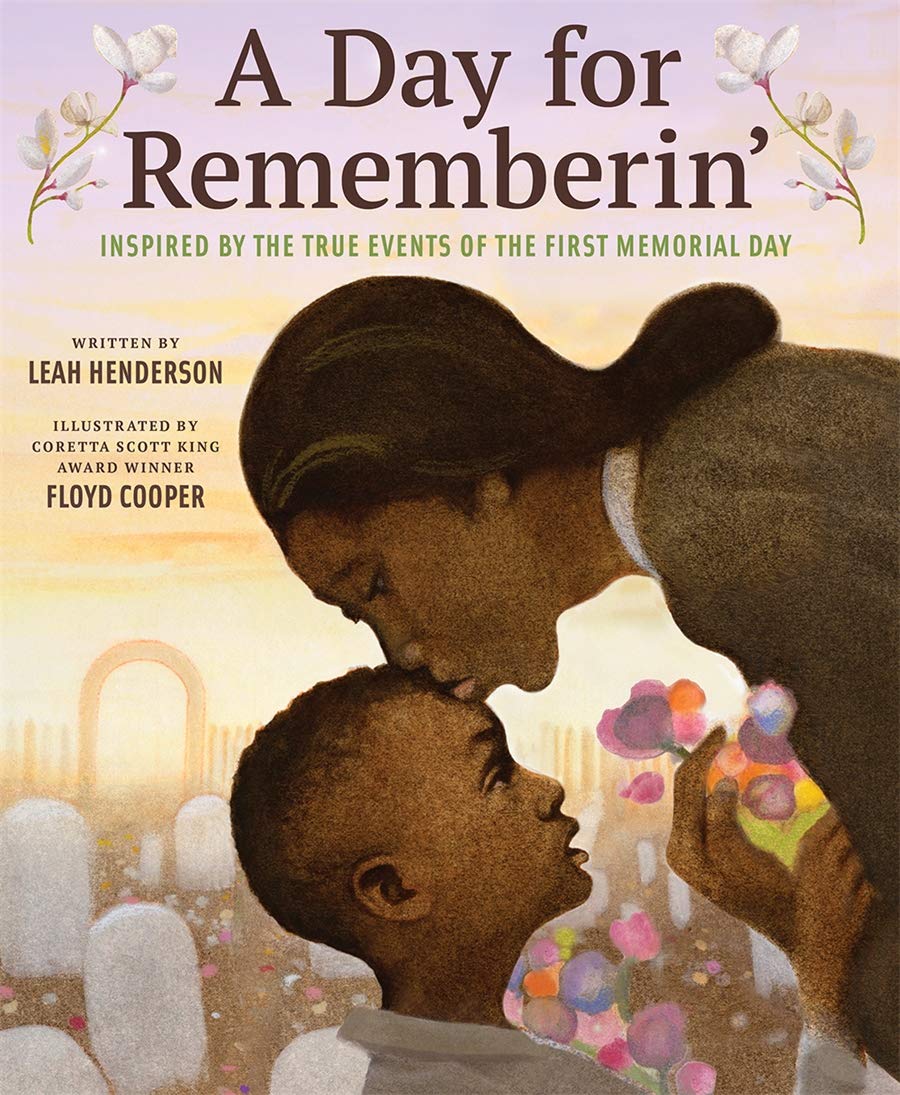
A Day for Rememberin’: Inspired by the True Events of the First Memorial Day by Leah Henderson, illustrated by Floyd Cooper

Published by Harry N. Abrams

A Day for Rememberin': The First Memorial Day: Henderson, Leah, Cooper,  Floyd: 9781419736308: Amazon.com: Books

Summary:  Eli misses his dad, who’s been working long days for the last week and a half.  He wants to help, but his parents tell him school is the place for him.  Now that the family is free, Eli’s parents want him to get all the education he can.  Finally, on day 10, he’s allowed to go paint the fence surrounding the new cemetery where Union prisoners of war are buried.  The next morning, everyone dresses in their best clothes, arms full of flowers, to march together in honor of those dead soldiers.  The children lead the way to the cemetery, where everyone decorates the graves with the flowers.  They spend the rest of the day listening to speeches, praying, and celebrating their hard-won freedom. Includes an author’s note, additional information on the origins of Decoration Day, a timeline, two photos; notes, and a bibliography. 48 pages; grades 2-6.

Pros:  A fascinating look at an early (maybe the earliest; the history is unclear) celebration of Decoration Day, the holiday that eventually became Memorial Day.  Coretta Scott King Award winner Floyd Cooper has captured the day magnificently, and the text, combined with the extensive back matter, will give kids a new perspective on the day.

Cons:  There was a of information covered for a picture book. If you’re doing this as a Memorial Day read-aloud, plan on spending some time…I had to go back for a second read to get it all.

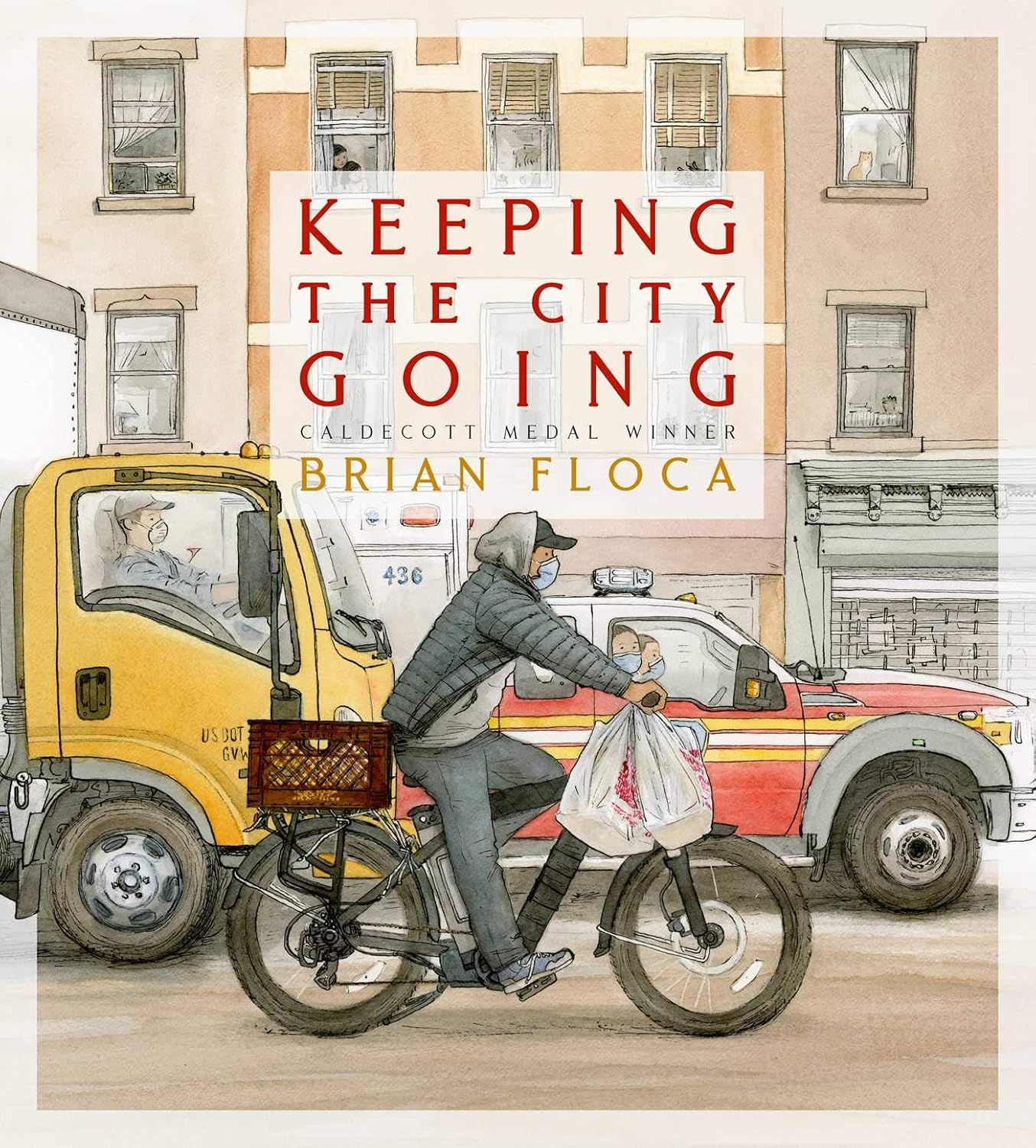
Keeping the City Going by Brian Floca

Published by Atheneum

Keeping the City Going - Kindle edition by Floca, Brian, Floca, Brian.  Children Kindle eBooks @ Amazon.com.
Keeping the City Going: Floca, Brian, Floca, Brian: 9781534493773:  Amazon.com: Books

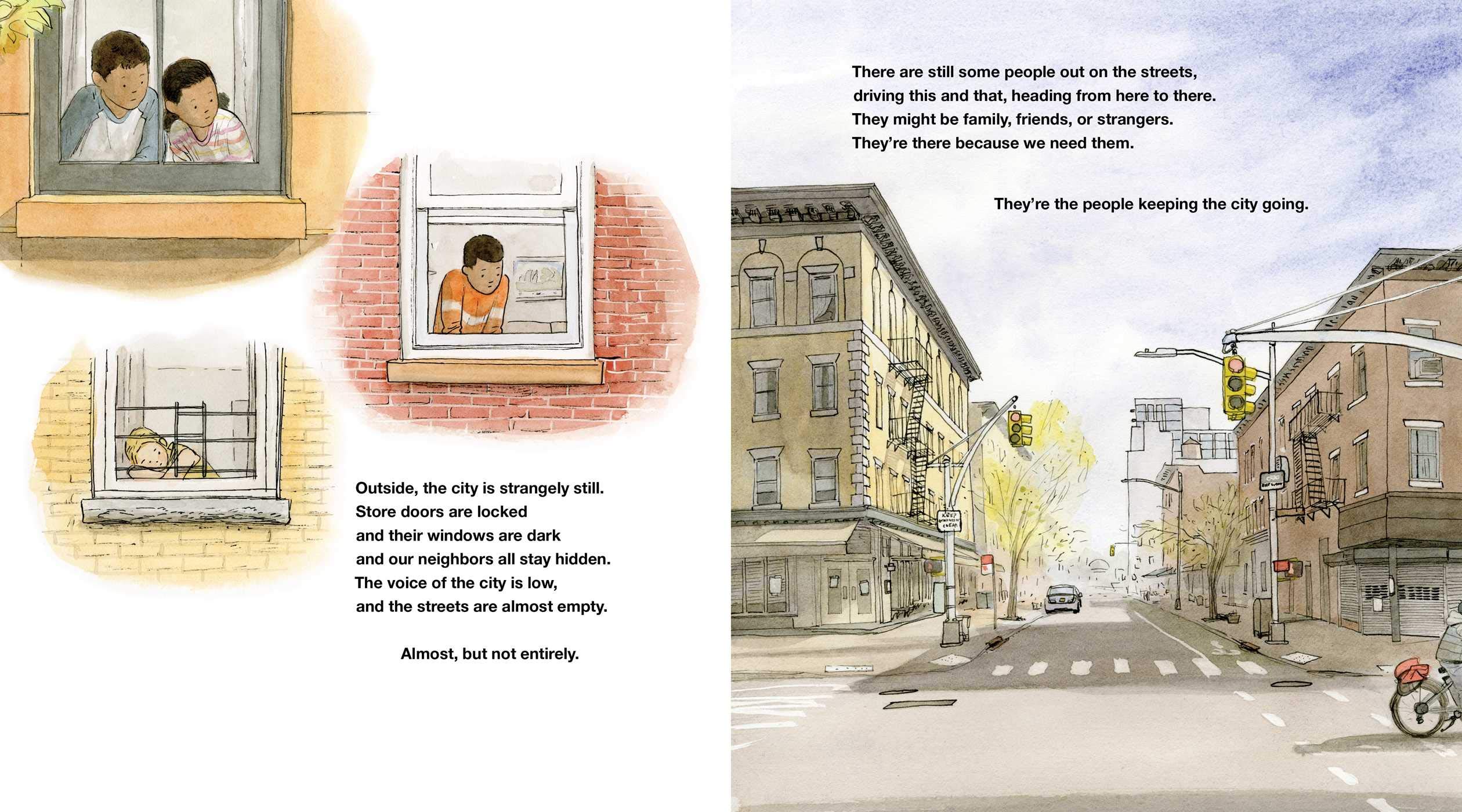
Summary:  When everyone had to stay home, wondering what would happen next, they looked out their windows at the empty city.  It wasn’t quite empty, though; there were still some people out in the streets keeping the city going.  Delivery people, trash collectors, construction workers, medical personnel, transit workers: they all continued to show up for work even when the rest of us stayed home.  The story ends with neighbors who gathered at their windows, balconies, and roofs to cheer, play instruments, and bang on pots and pans, acknowledging that they are still part of the city and saying thank you to those who are keeping it going. Includes an author’s note.  40 pages; ages 4-8.

Pros:  Another picture book inspired by the Covid pandemic, this one celebrates the essential workers who didn’t get to stay home when everyone else did.  The bouncy almost-rhyming text makes a nice complement to award-winning Illustrator Brian Floca’s lifelike drawings of vehicles and the people who operate them.

Cons:  Although I think it’s important to have books that commemorate the past year, I do wonder how they’re going to stand the test of time.

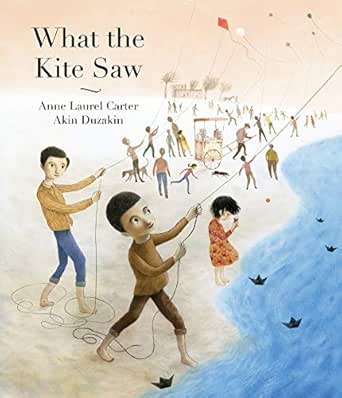
What the Kite Saw by Anne Laurel Carter, illustrated by Akin Duzakin

Published by Groundwood Books

What the Kite Saw - Kindle edition by Carter, Anne Laurel, Duzakin, Akin.  Children Kindle eBooks @ Amazon.com.
What the Kite Saw: Carter, Anne Laurel, Duzakin, Akin: 9781773062433: Amazon.com:  Books

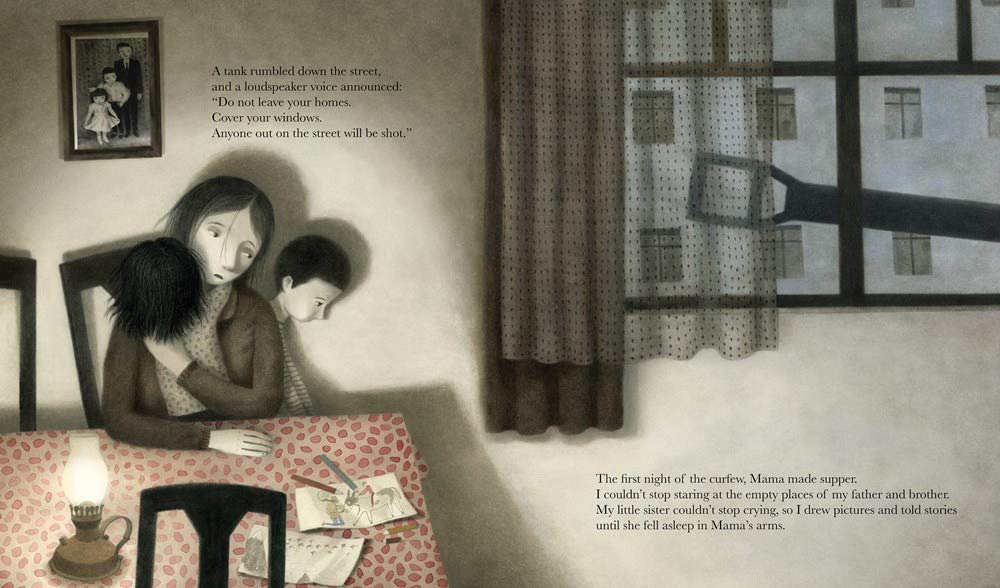
Summary:  When the narrator’s town is occupied, his brother and father are taken away, and a curfew is imposed each night.  He witnesses tanks rolling down his street and soldiers shooting at someone who breaks curfew.  He and his friends can gather in the park for an hour each day.  One day, he gets an idea that he shares with his friends.  Back home, he makes a star-shaped kite, and that night, he flies it from his rooftop.  Soon other kites are flying in the sky.  But not for long: soldiers fire on the kites and shoot them down.  That night the boy tells his mother and sister a story about what the kite saw as it flew high above their city.  Includes a two-sentence author’s note stating that the story was inspired by Palestinian children but could take place any place that children love to fly kites and are threatened by war.  32 pages; grades 2-5.

Pros:  A timely story of hope during a grim time.  The drab illustrations through most of the story contrast with the colorful ones when the boy and his friends gather in the park and fly their kites.  This could lead to some thoughtful discussions with upper elementary and middle school kids.

Cons:  Most recommendations I saw started at ages 4 and 5.  I’d be hesitant to put it in the picture book collection for preschool and primary ages.

How Old Am I? 1-100 Faces From Around the World by Julie Pugeat

Published by Phaidon Press (released May 12)

How Old Am I?: 1-100 Faces From Around The World by Julie Pugeat, Hardcover  | Barnes & Noble®
All you need to know about JR's new book How Old Am I? | design | Phaidon

Summary:  The first two pages in the book show the questions asked of each person: What is your name? How old are you? Where do you live? What makes you happy?  People from all over the world from ages 1 to 100 are pictured with the answers to the questions.  The last several pages give additional information about artist JR and his Inside Out Project that inspired this book.  216 pages; ages 1-100.

Pros:  A fascinating look at how people appear at different ages and what makes them happy.  Any child or adult will enjoy poring over this book and finding out more about the Inside Out Project.

Cons:  The people all seemed so interesting, and there was only a little information about each one.
 

Hear My Voice/Escucha Mi Voz: The Testimonies of Children Detained at the Southern Border of the United States compiled by Warren Binford for Project Amplify

Published by Workman Publishing

Amazon.com: Hear My Voice/Escucha mi voz: The Testimonies of Children  Detained at the Southern Border of the United States (English and Spanish  Edition) (9781523513482): Binford, Warren, Bochenek, Michael Garcia: Books

Amazon.com: Hear My Voice/Escucha mi voz: The Testimonies of Children  Detained at the Southern Border of the United States (English and Spanish  Edition) (9781523513482): Binford, Warren, Bochenek, Michael Garcia: Books

Summary:  International children’s advocate Warren Binford was shocked by his 2019 visit to  the Clint Border Patrol Station in Texas where he found over 350 children locked in a warehouse, a loading dock, and overcrowded cells.  After Donald Trump and Mike Pence refused to acknowledge the truth about Clint, Warren and his colleagues went on social media to ask artists, writers, faith leaders, and anyone else to help these children tell their stories.  Project Amplify has resulted in songs, plays, billboards, works of art, and now this book, which is a collection of the children’s stories in their own words.  Illustrated by 17 Latinx artists, the text is in both English and Spanish, and lets the kids tell why they left their countries for the U.S. and the deplorable conditions they experienced once they got here.  Includes a foreword by Michael Garcia Bochenek of Human Rights Watch and several pages about Project Amplify and the book, including thumbnail portraits of each artist and questions to ask children about the text.  96 pages; ages 8 and up.

Pros:  An incredibly powerful book, made more so by the amazing illustrations (some realistic and some more fantastic), and the back matter.  

Cons:  It’s hard to recommend an age group for this book.  While I think there are plenty of elementary kids who would learn a lot from it, it should definitely be read with some adult guidance.