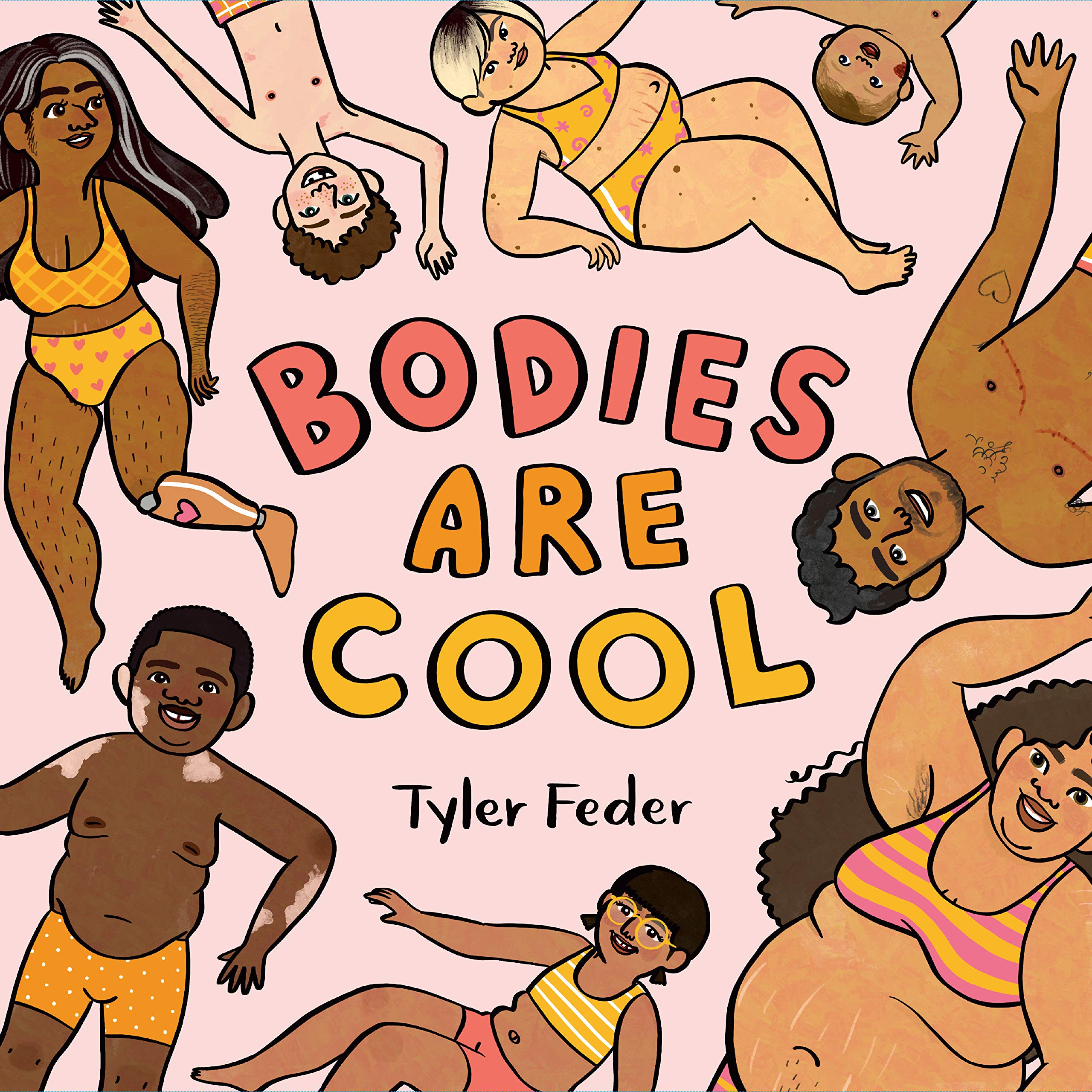
Bodies Are Cool by Tyler Feder

Published by Dial Books
Amazon.com: Bodies Are Cool (9780593112625): Feder, Tyler, Feder, Tyler:  Books

Amazon.com: Bodies Are Cool (9780593112625): Feder, Tyler, Feder, Tyler:  Books

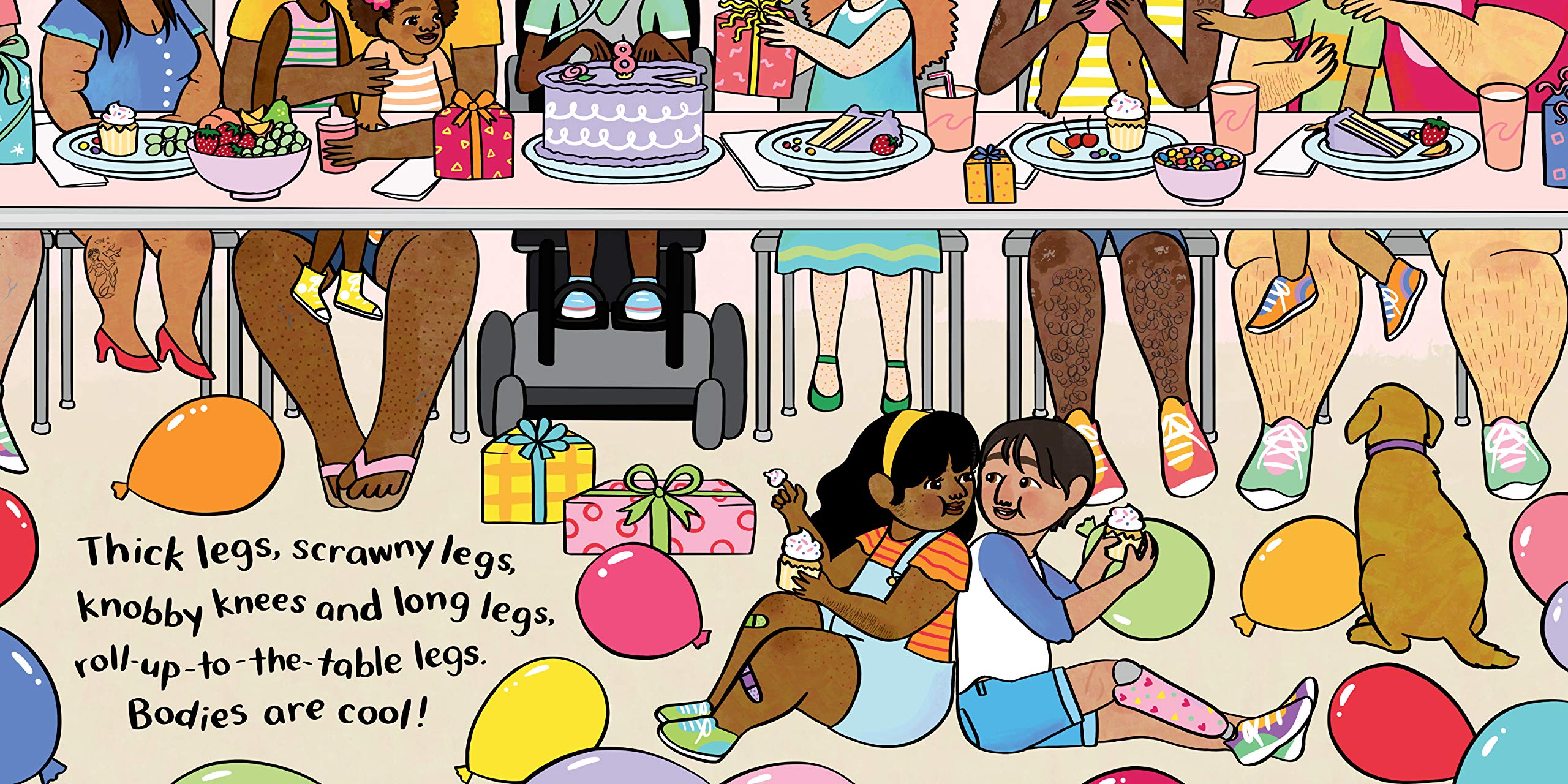
Summary:  Tall, short, wide, narrow, fat, thin, hairy, bald, skin of many different colors…bodies are cool!  This is the repeating refrain that concludes each of the catchy rhymes (“Freckled bodies, dotted bodies, rosy-patched or speckled bodies, dark-skin-swirled-with-light-skin bodies. Bodies are cool!”).  Each two page spread shows lots of different types of people all enjoying fun activities like swimming, eating ice cream, or going to the movies.  Conclusion? “My body, your body, every different kind of body! All of them are good bodies! Bodies are cool!”.  32 pages; ages 2-7.

Pros:  What’s not to like?  The positive images and words accept all different types of bodies and body parts, including those that are sometimes deemed “ugly”.  The busy illustrations are a joyful celebration of humanity, and, combined with the catchy rhymes, will have preschoolers up on their feet dancing.

Cons:  I can’t help feeling envious that this message is in the world for kids now…I wish it had been the case when I was growing up.
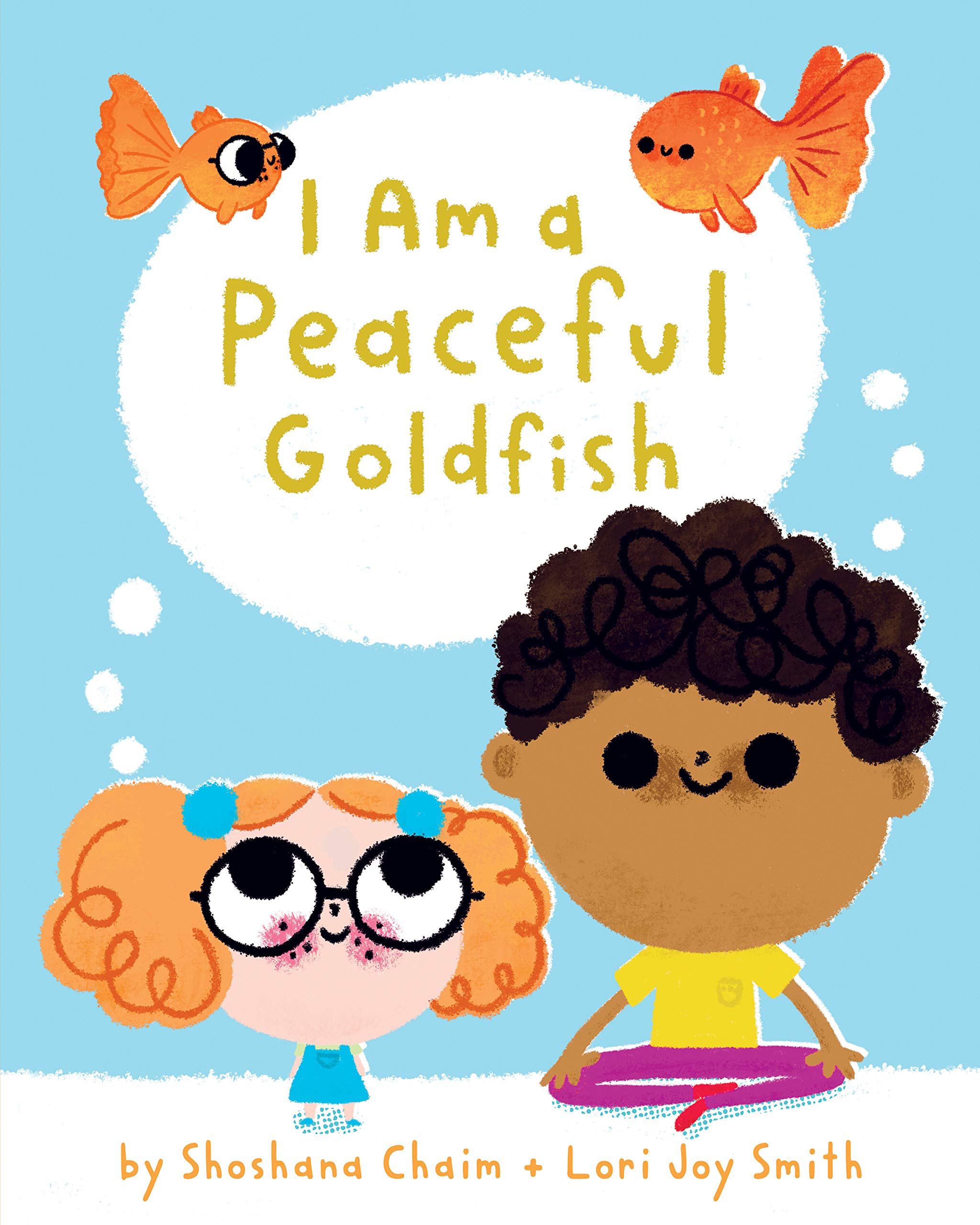
I Am a Peaceful Goldfish by Shoshana Chaim, illustrated by Lori Joy Smith

Published by Greystone Books

I Am a Peaceful Goldfish: Chaim, Shoshana, Joy Smith, Lori: 9781771646376:  Amazon.com: Books

I Am a Peaceful Goldfish – Greystone Books Ltd.

Summary:  When things go wrong, two kids practice self-calming by breathing deeply while thinking of things around them: a goldfish blowing bubbles, an elephant trumpeting, a dandelion scattering its seeds, or a flower stretching toward the sky.  When they’re calm, they’re ready to focus on the task at hand.  Includes an author’s note about using breathing techniques to feel better in difficult situations.  48 pages; ages 3-6.

Pros:  A perfect introduction to the use of breathing as a calming technique for the preschoolers or early elementary kids.  The real-life examples are engaging and will help them visualize how to take calming breaths.

Cons:  A creature with gills may not be the best example of deep breathing.

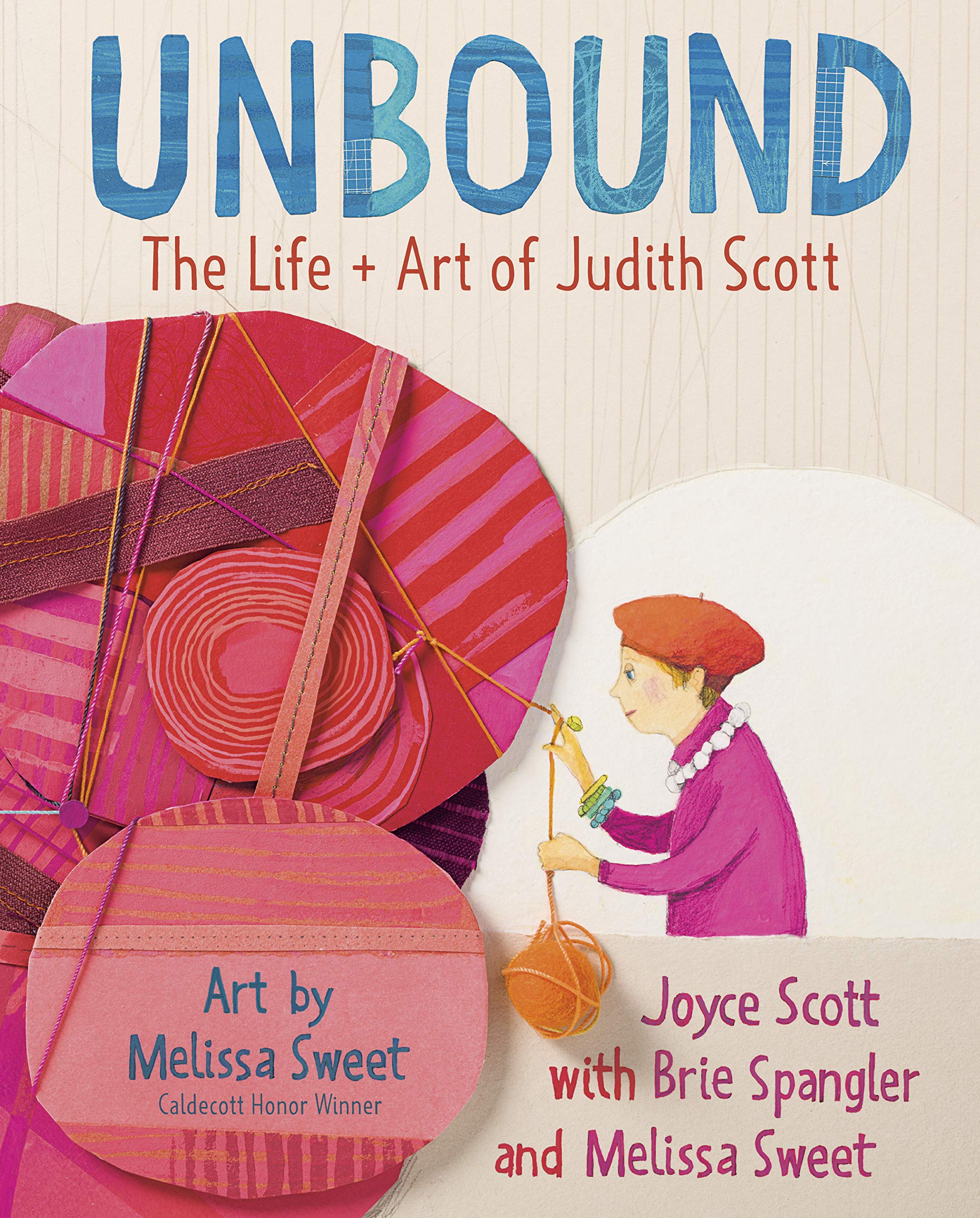
Unbound: The Life and Art of Judith Scott by Joyce Scott with Brie Spangler and Melissa Sweet, art by Melissa Sweet

Published by Knopf Books for Young Readers

Unbound: The Life and Art of Judith Scott: Scott, Joyce, Spangler, Brie,  Sweet, Melissa, Sweet, Melissa: 9780525648123: Amazon.com: Books

Melissa Sweet on Unbound: The Life and Art of Judith Scott | The  TeachingBooks Blog

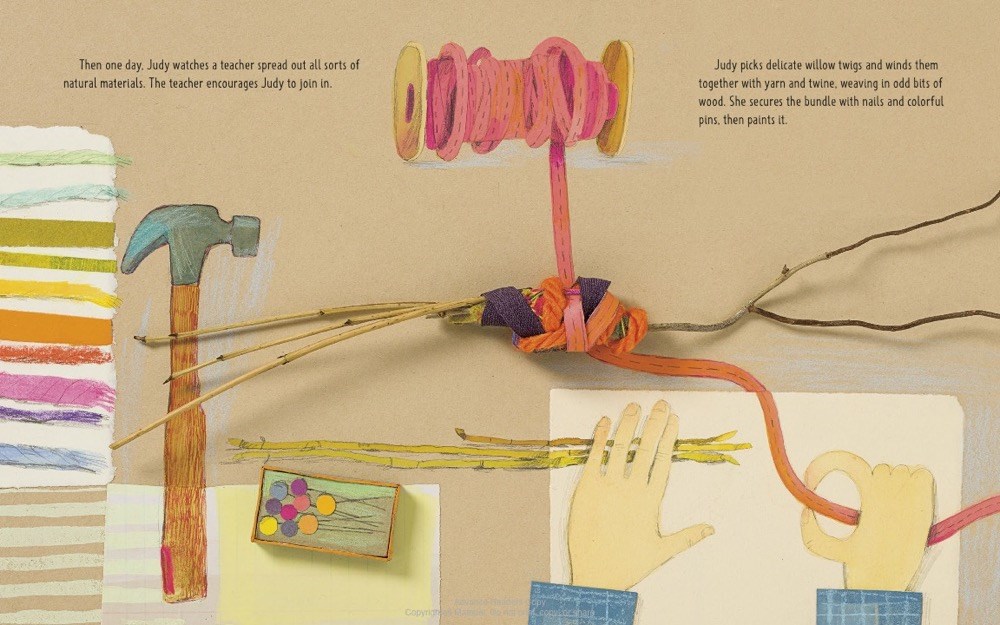
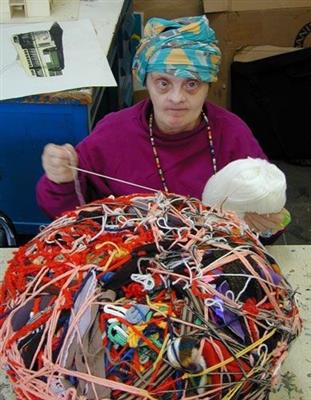
Summary:  Until the age of 5, Joyce Scott and her twin sister Judy are inseparable.  But when Joyce starts kindergarten, Judy, who had “what will come to be known as Down syndrome”, stays home.  One day Joyce wakes up and finds that Judy is gone.  From that day on, Judy lives in a big gray institution where Joyce only sees her on occasional visits.  Joyce finds it harder and harder to leave at the end of each visit until, as an adult, she decides to bring Judy home to live with her and her family.  Since Joyce works during the day, she enrolls Judy at the Creative Growth Art Center, an art school for adults with disabilities.  For many months, Judy sits and looks at magazines, until one day she creates a small sculpture with twigs, yarn, twine, and paint.  From that day on, she works at the studio every day, making unique art from all sorts of colorful materials.  After her death, her work becomes renowned and continues to be exhibited all over the world.  Includes information on Creative Growth Art Center and Down Syndrome, a timeline of Judith Scott’s life, notes from the author and illustrator, sources, and photographs of Judy and one of her sculptures called “Twins”.  48 pages; grades K-5.

Pros:  Judith Scott’s story is so engaging that, even though it’s a bit long for a picture book, it would hold the attention of younger readers, and possibly inspire them to try their own creations.  Joyce’s voice passes along the love and appreciation she feels for her sister and Judy’s artistic gifts.  And, as always, I would be happy to see Melissa Sweet get some Caldecott recognition, which I wanted so badly for Some Writer! that I feel compelled to still mention it four years later.

Cons:  I wish there were more photos of Judy’s work in the book.

Judith Scott - 20 artworks


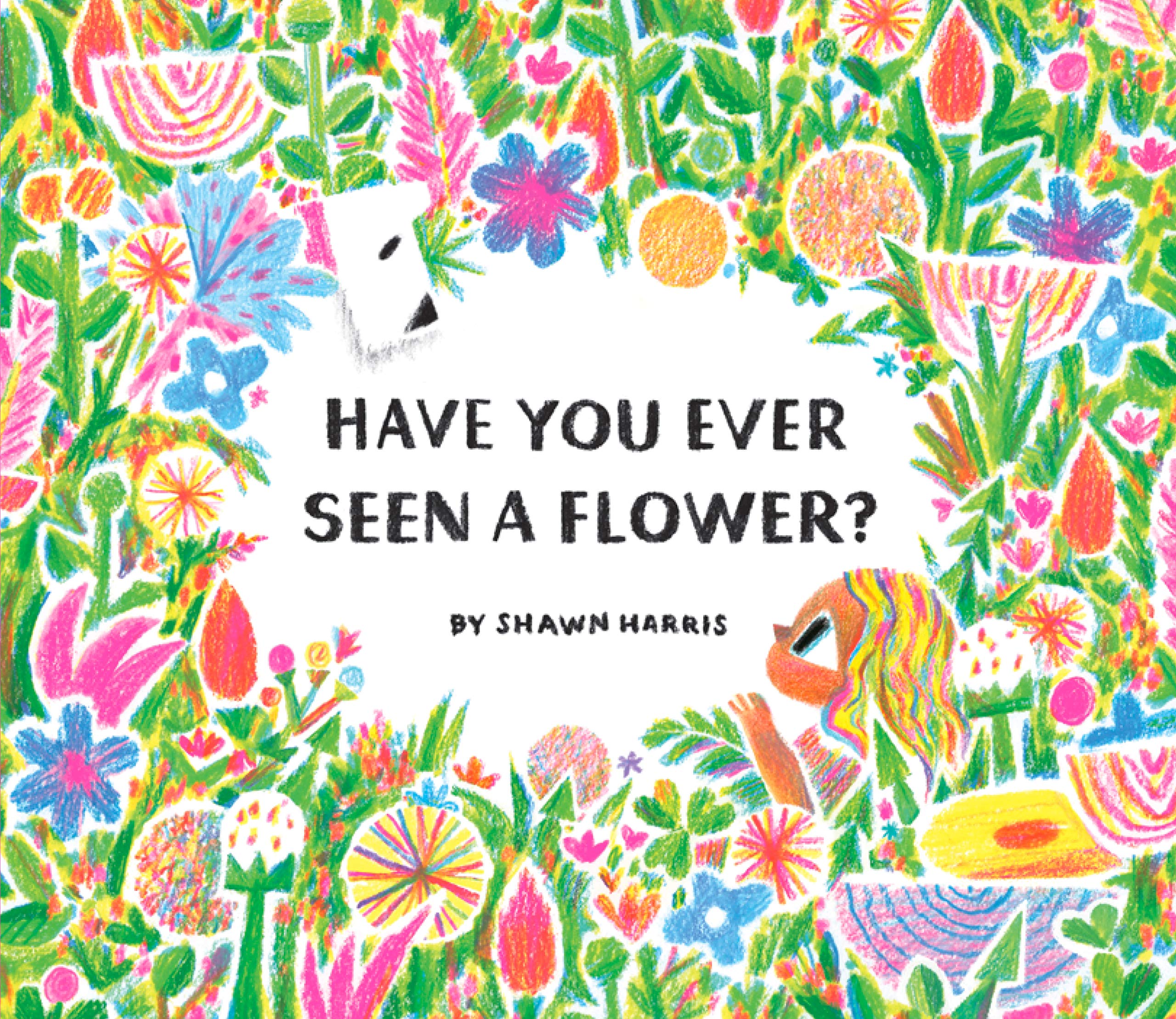
Have You Ever Seen a Flower? by Shawn Harris

Published by Chronicle Books

Amazon.com: Have You Ever Seen a Flower? (9781452182704): Harris, Shawn:  Books

Children's Book Week 2021: Have You Ever Seen A Flower? by Shawn Harris -  Sincerely Stacie

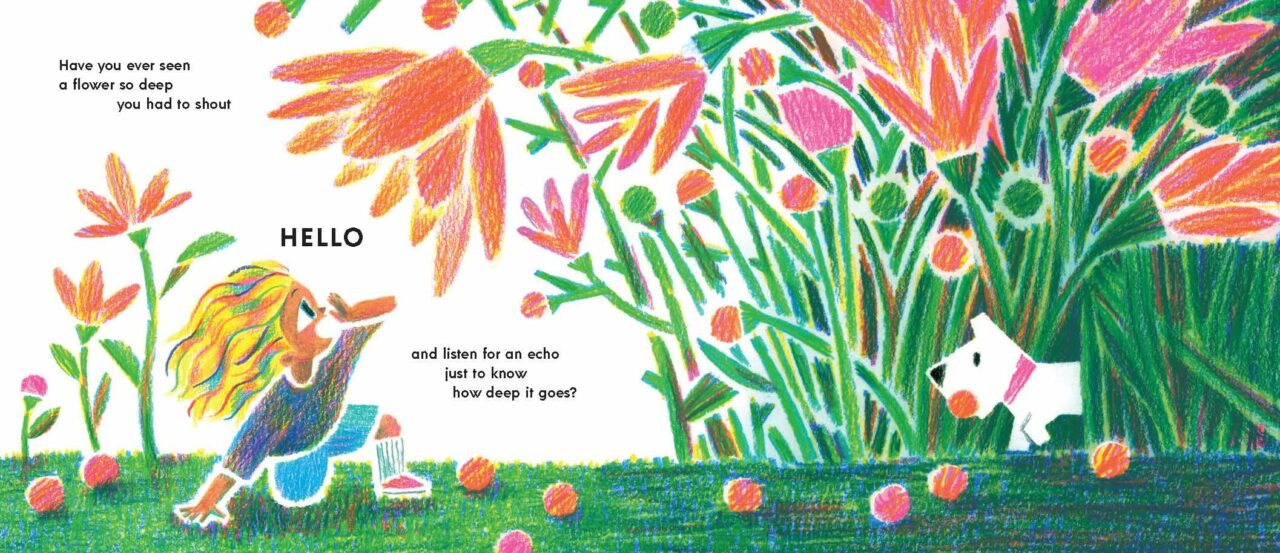
Summary:  Have you ever seen a flower?  Really seen a flower?  Seen it using only your nose?  Have you ever felt a flower…the veins on the petals that feel like veins on your skin?  Those veins show that life is inside you and all around you.  Put your hands on your belly (like your stem), then stretch your arms up toward the sky like a flower reaching for the sun.  48 pages; ages 3-7.

Pros:  Shawn Harris has his debut as an author, although he illustrated Her Right Foot and A Polar Bear in the Snow, two books, which, like this book, defied categorization.  His brilliant (in both senses of the word) colored pencil illustrations made me want to go color, and kids will undoubtedly feel the same tug of inspiration.  The text could be used for a lesson in mindfulness, using your imagination, or undoubtedly a host of other interesting ways that my limited mind isn’t thinking of right now.

Cons:  Adults may be scratching their heads at the end, wondering what exactly this book was about (which might actually be a “pro”).

Areli Is a Dreamer: A True Story /Areli Es Una Dreamer: Una Historia Real by Areli Morales, a DACA recipient/beneficiaria de DACA, illustrated by Luisa Uribe

Published by Random House Studio

Spanish and English versions available

Areli Is a Dreamer: A True Story by Areli Morales, a DACA Recipient:  Morales, Areli, Uribe, Luisa: 9781984893994: Amazon.com: Books

Areli Es Una Dreamer (Areli Is a Dreamer Spanish Edition): Una Historia  Real por Areli Morales, Beneficiaria de DACA - Kindle edition by Morales,  Areli, Uribe, Luisa. Children Kindle eBooks @ Amazon.com.

Areli Es Una Dreamer (Areli Is a Dreamer Spanish Edition): Una Historia  Real por Areli Morales, Beneficiaria de DACA: Morales, Areli, Uribe, Luisa:  9780593380086: Amazon.com: Books

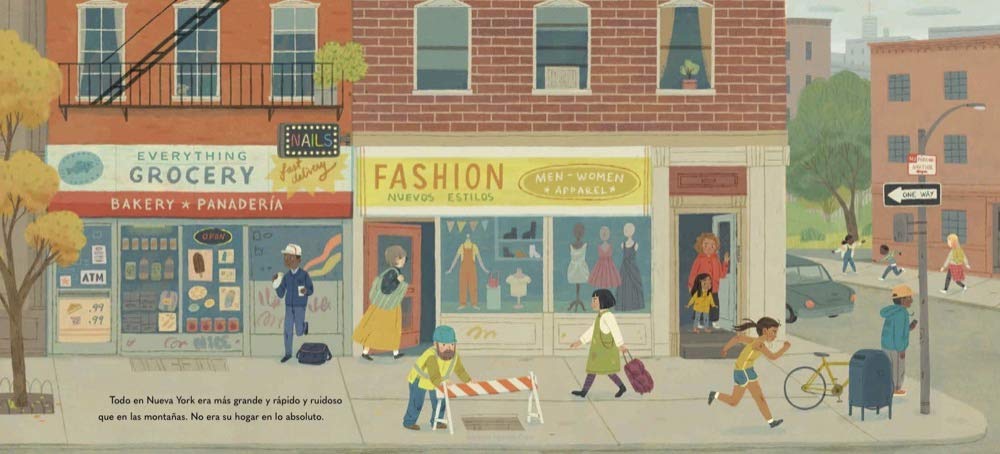
Summary:  Areli Morales tells her story, beginning with her childhood in Mexico where she lived with Abuela.  Every Saturday her parents would call from the United States, and Areli dreamed of the day she could join them there.  Her older brother Alex lived with her, but eventually was able to leave, because, unlike Areli, he had been born in the U.S.  Finally, when Areli was in kindergarten, she got word that she would be able to join the rest of the family.  When Areli arrived, she was thrilled to be with her parents and Alex, but struggled to learn English and fit in at school, where kids sometimes called her “illegal”.  As the years passed, things got easier, and a fifth grade field trip to Ellis Island made Areli realize how many other immigrants had come to America just like she had, and helped her to dream of a bright future in America.  Includes an author’s note about her DACA status: how she obtained it, what opportunities it opened up for her, and how it has been threatened.  40 pages; grades K-4.

Pros:  Areli’s story is told in a way that will engage younger readers but also show older kids the experience of immigrating to the U.S. and what it means to be a DACA recipient.  Kids who have had an experience similar to Areli’s will appreciate her story, and those who haven’t will get a child’s perspective on what it’s like.

Cons:  I liked Areli’s author’s note, but I would have liked even more information or additional resources about DACA.

Jukebox by Nidhi Chanani

Published by First Second

Amazon.com: Jukebox (9781250156372): Chanani, Nidhi, Chanani, Nidhi: Books

Jukebox | Nidhi Chanani | Macmillan

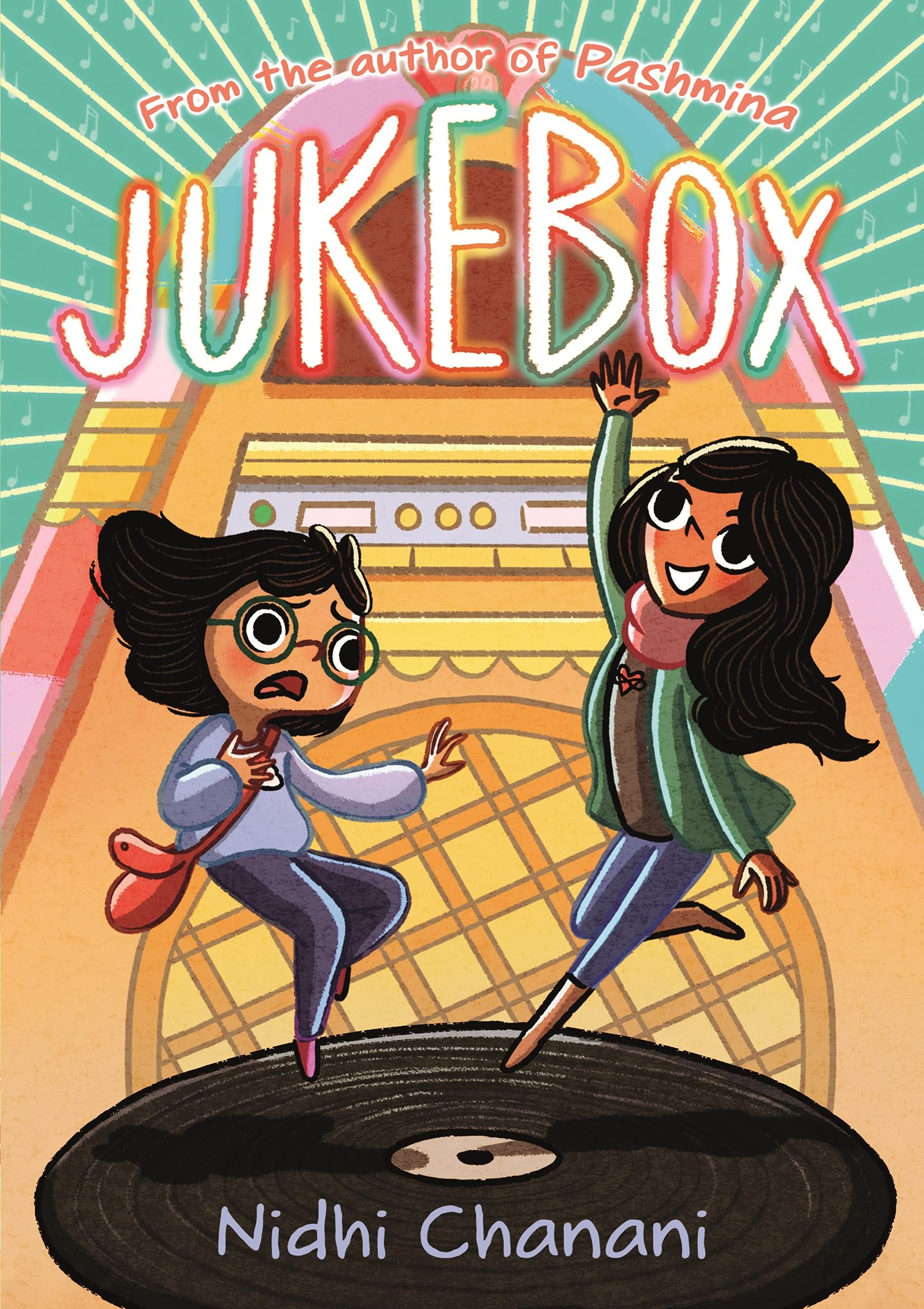
Summary:  When Shahi’s music-obsessed dad goes missing, she and her cousin Naz wind up at Earl’s music store where her father spent a lot of time.  They find an unusual old jukebox that plays LP records, then accidentally discover that it transports them back to the time the album was released.  While they get some interesting glimpses of history, they don’t find Shahi’s dad.  It takes a lot of trial-and-error and some detective work to finally figure out what’s going on and to have a reunion that not only brings Dad back to the present but mends some of the more difficult parts of Shahi’s relationship with him.  Includes a playlist of songs referenced in the story; an author’s note explaining her inspirations for the book; and several pages showing the evolution of some of her artwork.  224 pages; grades 4-7.

Pros:  The premise of this graphic novel is very cool, and serves as a great introduction to a lot of music and some of the historical events that both inspired that music and were influenced by it.  Although there’s a bit of an age gap between the two girls (Naz is Shahi’s babysitter), they are loyal friends who help and protect each other.

Cons:  The story felt a bit too ambitious with not only the musical and historical aspects, but a variety of relationship issues and subplots about Naz’s ear surgery and worries about coming out as bisexual.  The pictures at the beginning of the time travel sections included some jotted notes about the artist and/or album, which looked really interesting, but were hard to read.

Finding Junie Kim by Ellen Oh

Published by HarperCollins

Finding Junie Kim: Oh, Ellen: 9780062987983: Amazon.com: Books

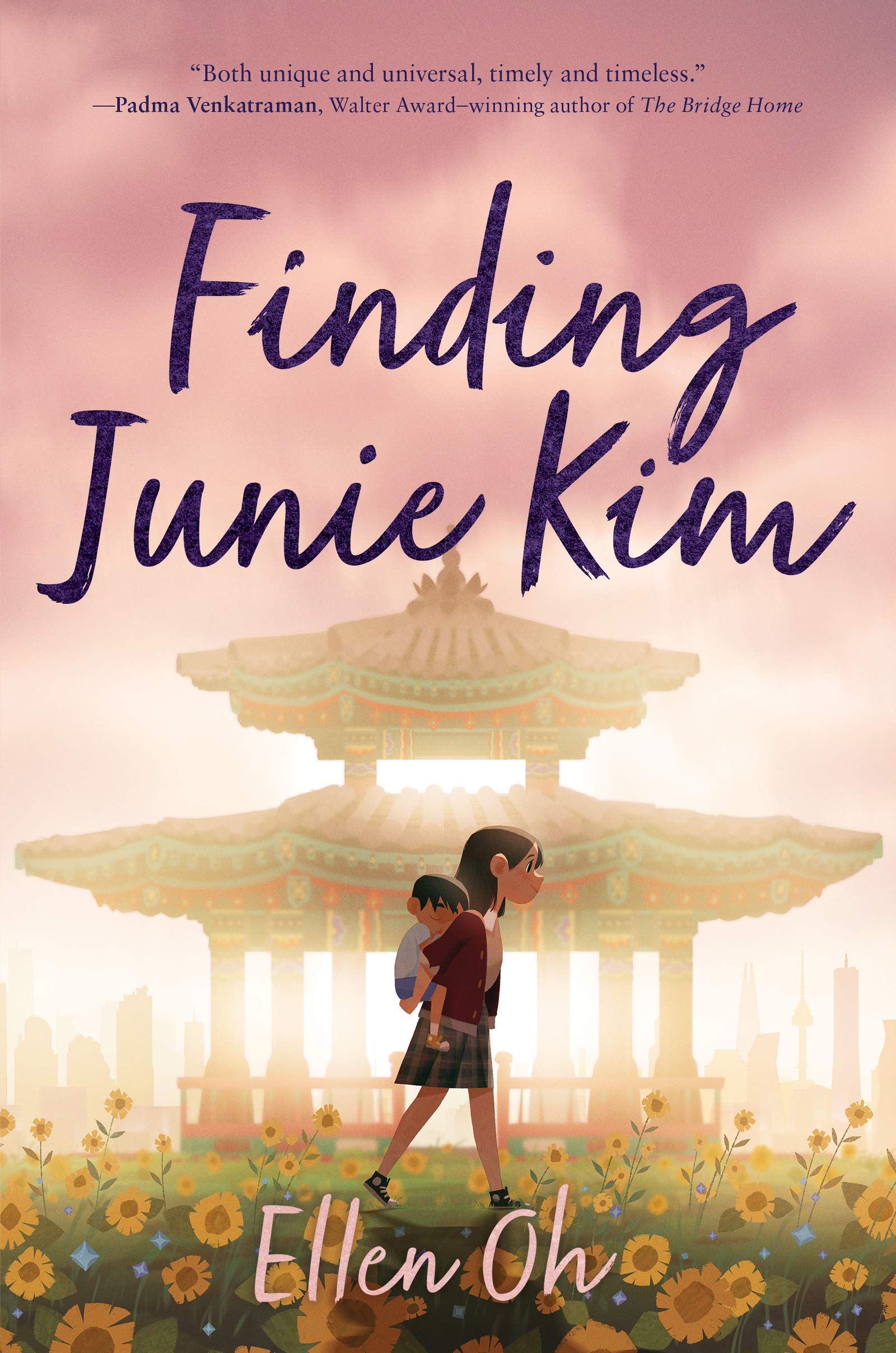
Summary:  Junie’s strategy for getting through middle school is to keep her head down and her mouth shut, even when a boy bullies her for being Korean.  When racist graffiti starts appearing in her school, her friends want to take a stand, but Junie’s not so sure.  But when she starts recording her grandfather’s stories about the Korean War for a school project, she sees the price that can be paid for not standing up for what is right.  After a family tragedy, her grandmother finally agrees to talk about her childhood, and Junie gets another lesson in courage.  Their inspiration leads Junie to confront her bully and to find her own way to lead the conversation about racism at school. Includes an author’s note about how her own family members’ stories inspired this book.  368 pages; grades 5-8.  

Pros:  The rich narrative shifts from Junie’s Trump-era story to her grandfather’s as a young boy and then her grandmother’s as a young girl.  Each one has its own fascinating cast of characters, and the Korean War sections will undoubtedly provide an education for readers, as they did for me.  This would be an amazing book to read and discuss with middle schoolers.

Cons:  The grandparents’ stories, especially her grandfather’s, revealed the motivation for the bullying behavior.  I wish there had been more of that for the bullies in Junie’s life, who just seemed like terrible MAGA hat-wearing boys.

Walking for Water: How One Boy Stood Up for Gender Equality by Susan Hughes, illustrated by Nicole Miles

Published by Kids Can Press

Walking for Water — Susan Hughes

Susan Hughes on Walking for Water: How One Boy Stood Up for Gender Equality  | The TeachingBooks Blog

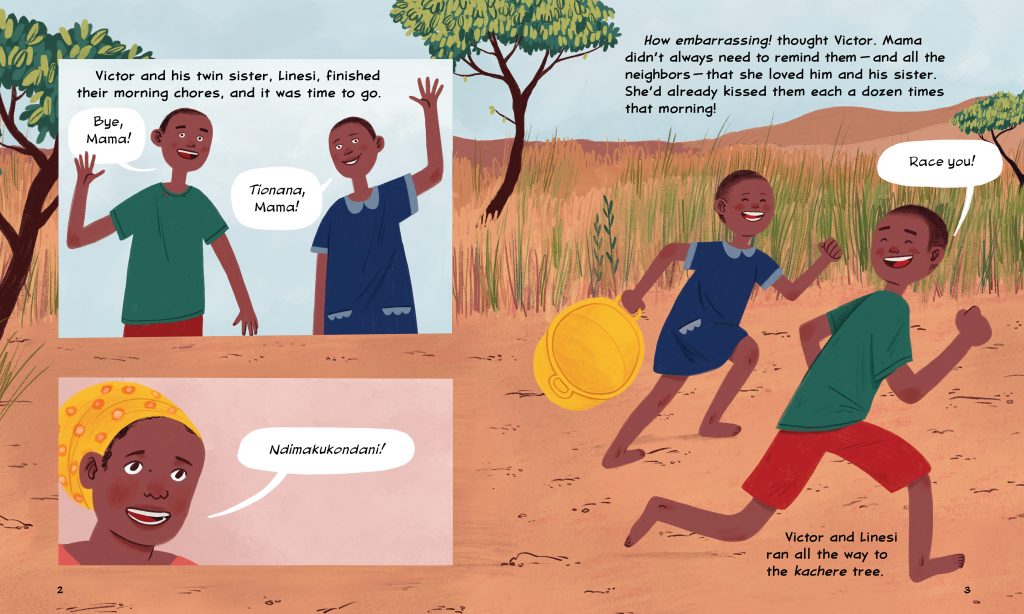
Summary:  Since turning eight, Victor and his twin sister Linesi have different morning routines: Victor heads to school, but Linesi sets off to spend the day fetching water for the family.  When Victor’s teacher talks to the class about inequality, Victor starts to notice how unequal life has become for him and Linesi.  He tries teaching her after school, but it’s hard for him to explain math concepts, and Linesi is exhausted at the end of her work day.  Finally, Victor presents a plan to his mother and sister, and the next day Victor is the one getting the water while Linesi goes to school.  They alternate days for school and work, and before long other kids have noticed and implemented similar plans in their own homes.  Includes an author’s note; a list of organizations working on water scarcity and gender inequality in Malawi (where the story takes place); and a glossary of Chichewa words used in the story.  32 pages; grades K-4.

Pros:  I’m always happy to see a new Citizen Kid book, and I found this one as inspiring and feel-good as many of its predecessors.  Like other books in the series, this one tells a story of a kid who has made a difference for his own family and the larger community.  The resources at the end will help readers find more information and think about what they can do to help.

Cons:  Many of the Citizen Kid books are about real children, but Victor and Linesi seem to be fictional, although the author says she was inspired by a 13-year-old Malawian boy.  I wish the story had stuck closer to the real-life kid.

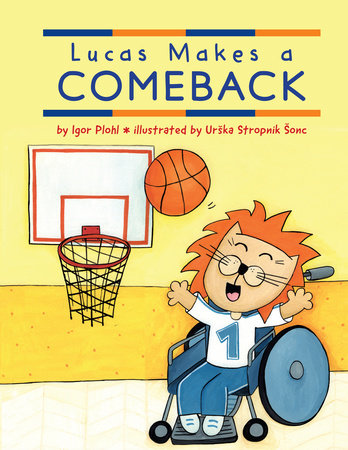
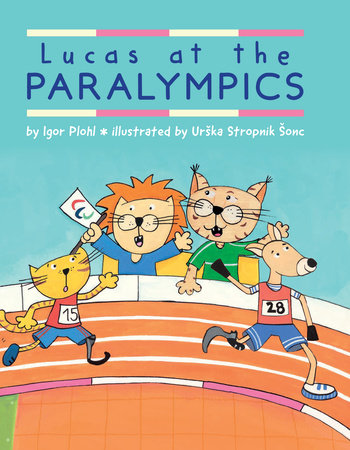
Lucas Makes a Comeback and Lucas at the Paralympics by Igor Plohl, illustrated by Urška Stropnik Šonc

Published by Holiday House

Lucas Makes a Comeback by Igor Plohl: 9780823447664 |  PenguinRandomHouse.com: Books

Lucas at the Paralympics by Igor Plohl: 9780823447657 |  PenguinRandomHouse.com: Books

Summary: Slovenian author Igor Plohl has drawn on his own experiences to create Lucas, a lion who loses the use of his legs after falling off a ladder and injuring his spine. Lucas goes through a period of sadness, feeling like he has lost his independence and ability to work. With the help of therapists, friends, and family, he learns how to use a wheelchair and drive a car, gets his own apartment, and returns to his job as a teacher. Photos on the endpapers show Igor doing many of the activities that are described in the story.

In Lucas At the Paralympics, Lucas meets a fellow cyclist named Eddie, and the two of them decide to travel to the Summer Paralympic Games. Sidebars give additional information about the different competitions they attend. At the end, Lucas decides to train for the Paralympic Games in four years. Includes two pages of information about different events at the Winter Paralympic Games. Both books are 32 pages and recommended for ages 4-8.

Pros: Some much-needed picture books featuring a character with a disability. Readers will learn about some of the challenges faced by a person in a wheelchair, as well opportunities to compete in sports that are open to those with many different types of disabilities.. The book about the Paralympic Games is timely, since the 2021 Games take place at the end of the summer.

Cons: Given the restrictions of a picture book, Lucas’s journey to independence appears deceptively simple. Also, the photos of the author were on the endpapers, which meant some of them were covered up by the library dust jacket.

We All Play = Kimêtawânaw by Julie Flett

Published by Greystone Kids

We All Play: Flett, Julie, Flett, Julie: 9781771646079: Amazon.com: Books

We All Play – Greystone Books Ltd.

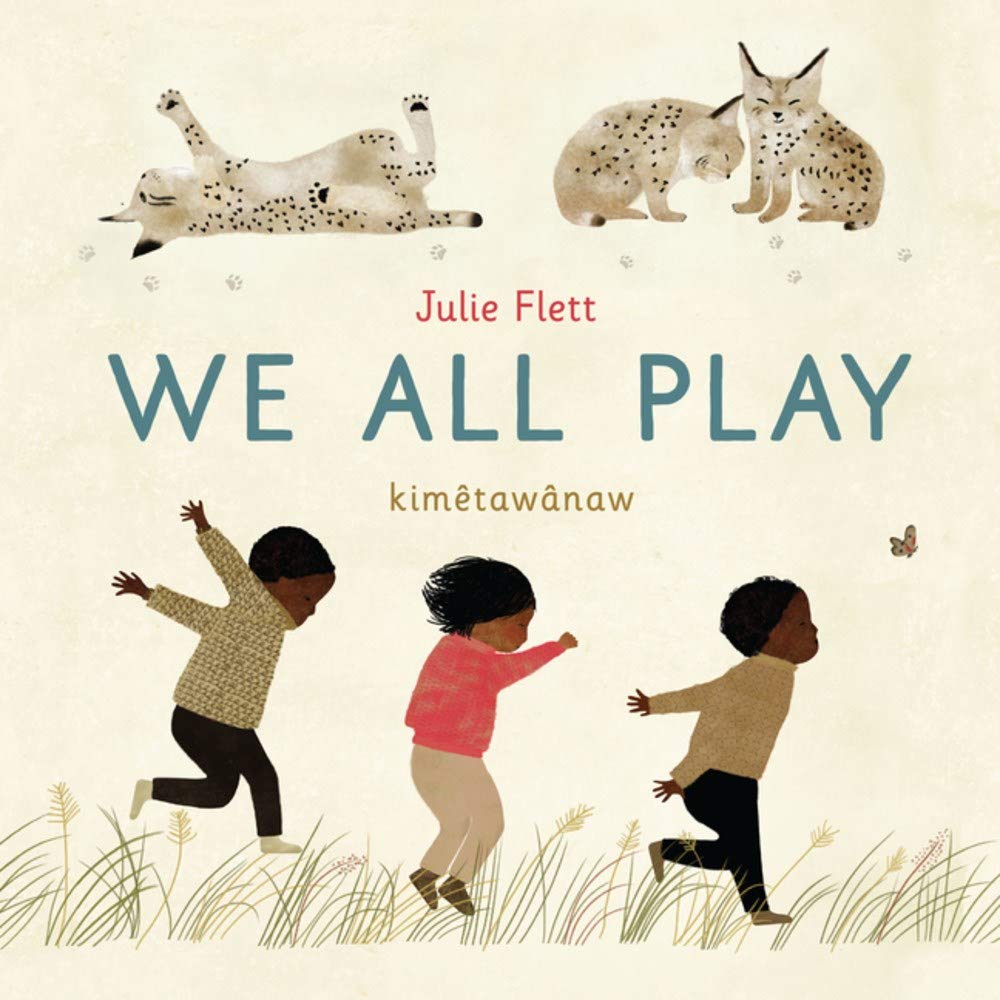
Summary:  Animals and children play through the pages of this book: a rabbit hides in the grass, then hops with a cricket, while a fox and turtle go nose to nose, sniffing and sneaking.  After the animals come the children, jumping and hiding in their own patches of grass.  The refrain “We play too! Kimêtawânaw mîna” appears on all the pages depicting the kids.  The animals are listed at the end in English and Cree, with the Cree words for one animal, more than one, and younger, smaller, cuter versions of that animal.  There’s also additional information on the Cree language and a website readers can visit to hear pronunciations of the words in the book; also a letter from the author with more information about her inspirations for creating this book.  48 pages; ages 2-7.

Pros:  Kids will love the beautiful illustrations of the different animals portrayed on simple white backgrounds, and the pictures of the children may inspire them to get up and move like the animals.

Cons:  The headings on the list of animals were “English”, “One”, “More than one”, and “Younger, Smaller, Cuter”; I had to read the next page to figure out they were in Cree.