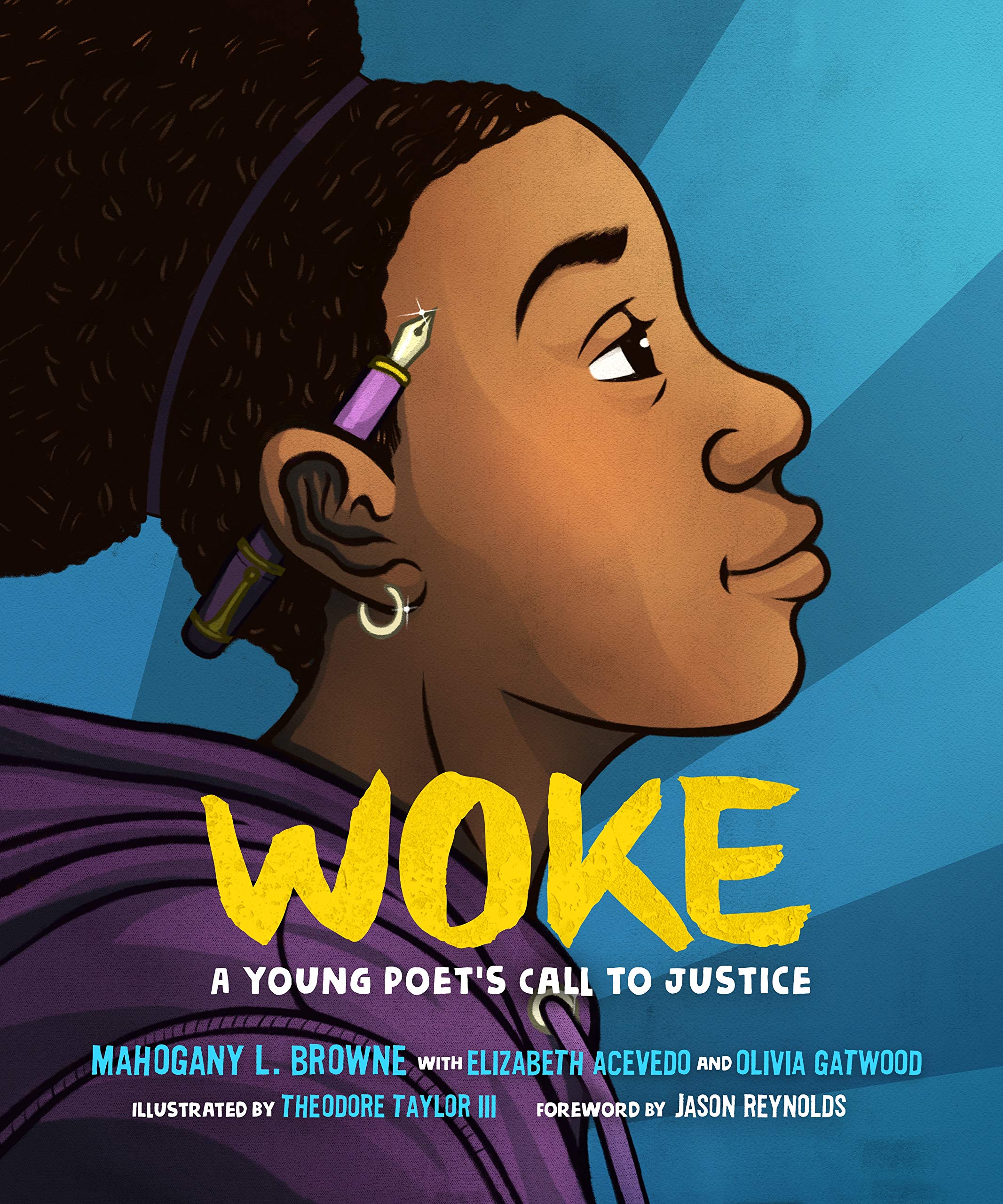
Woke: A Young Poet’s Call to Justice by Mahogany L. Browne with Elizabeth Acevedo and Olivia Gatewood, illustrated by Theodore Taylor III, foreword by Jason Reynolds

Published by Roaring Brook Press
Woke: A Young Poet's Call to Justice: Browne, Mahogany L., Acevedo ...

Woke | Mahogany L. Browne | Macmillan

Summary:  What does it mean to be woke?  Mahogany Browne answers this question in her introduction:  awake, eyes open, seeing everything around you.  Sometimes what you see will seem unfair, and it’s important to speak up about that.  The two dozen poems by three different writers explore this concept, looking at such topics as community, empathy, gender, immigration, equality, and more.  Each poem gets its own two-page spread with a colorful illustration.  Includes a poem and foreword by Jason Reynolds.  56 pages; grades 3-8.

Pros:  Add this book to your Black Lives Matter reading lists, or any social justice collection.  Each poem is worthy of individual attention and discussion.  My favorites were “Say the Names” by Elizabeth Acevedo and “A Me-Shaped Box” by Olivia Gatwood.  The illustrations reminded me of Raina Telgemeier’s and Victoria Jamieson’s graphic novels, which offer near-universal appeal to kids.

Cons:  I tried reading this book in one sitting, and it started to feel a bit heavy.  I think the poems would be better savored and discussed one at a time. 
If you would like to buy this book on Amazon, click here.

Baloney and Friends by Greg Pizzoli

Published by Little, Brown Books for Young Readers

Amazon.com: Baloney and Friends (Baloney & Friends (1 ...

Amazon.com: Baloney and Friends (Baloney & Friends (1 ...

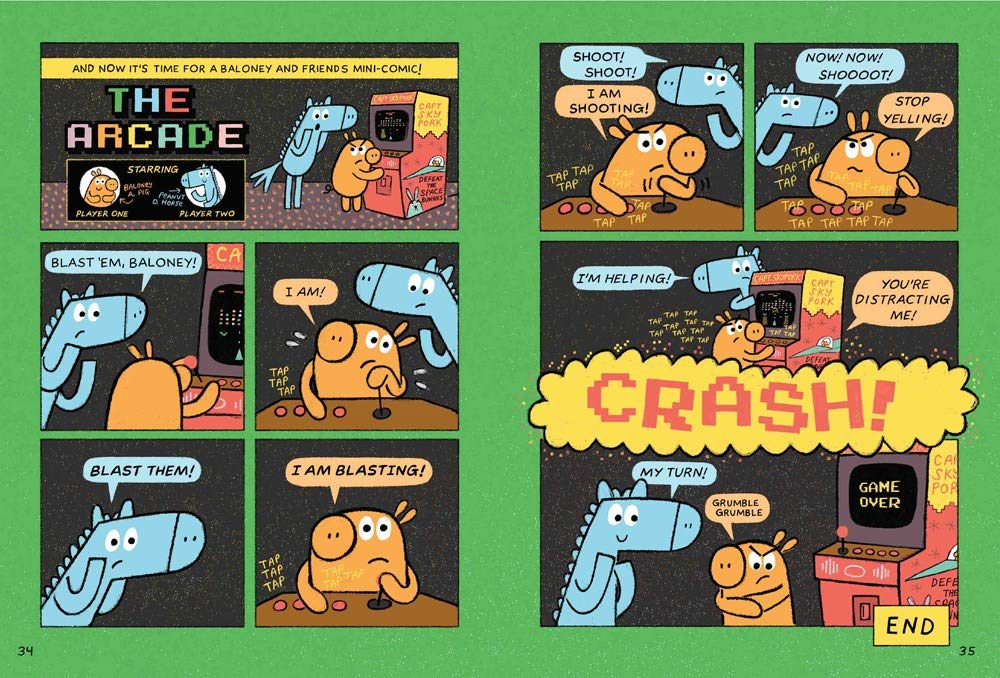
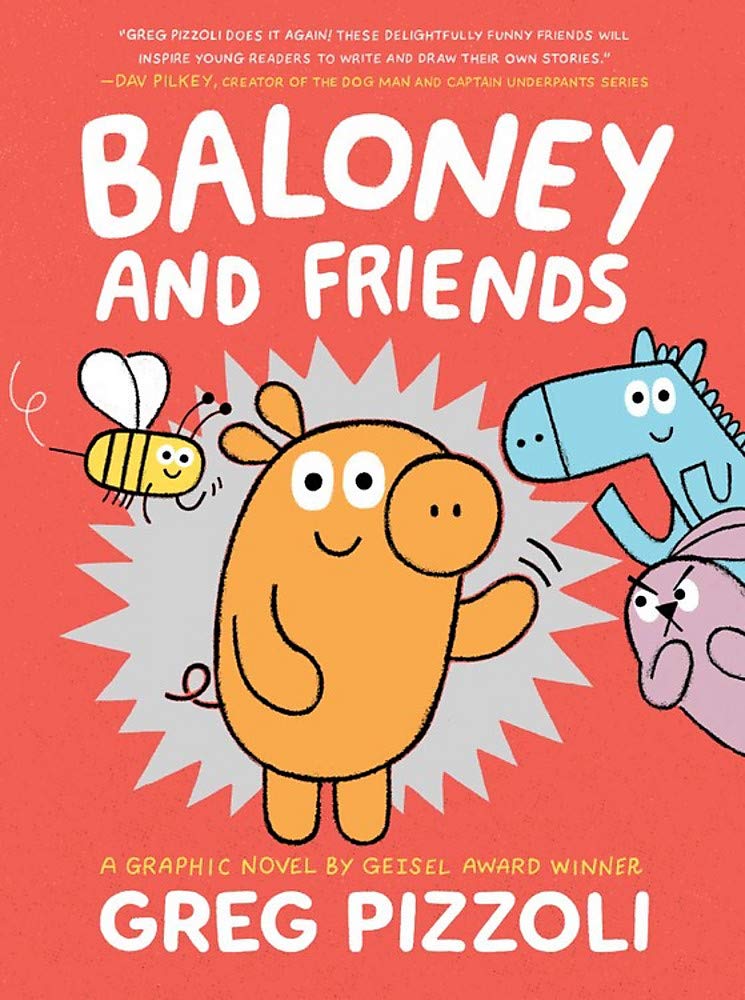
Summary:  Baloney’s introduction to his book is interrupted by his friends: Peanut, a blue pony; Bizz, a cheerful bee; and Krabbit, a grouchy pink rabbit.  Once introductions are (finally) out of the way, the friends move on to three more stories: Baloney’s somewhat lame magic show, how his friends help him overcome his fear of swimming, and attempts by Peanut to cheer up Baloney when he’s feeling blue.  In between the longer stories are two-page mini-comics.  The last few pages show kids how to draw the four characters so they can create their own comics.  96 pages; grades K-2.

Pros:  The straight-guy narrator with the goofy friend(s) has proven a winning combination before (Narwhal & Jelly, Peter & Ernesto, etc.), and undoubtedly will again with this crew.  I found myself laughing out loud a few times, particularly at Krabbit, and I’m sure kids raised on Elephant and Piggie will find this new series (I think it will be a series) delightful.

Cons:  It kind of bugged me how Baloney’s nose seemed off-kilter, like it was being shown in profile, but his eyes and mouth weren’t. 

If you would like to buy this book on Amazon, click here.


96 Miles by J. L. Esplin

Published by Starscape

96 Miles - Kindle edition by Esplin, J. L.. Children Kindle eBooks ...

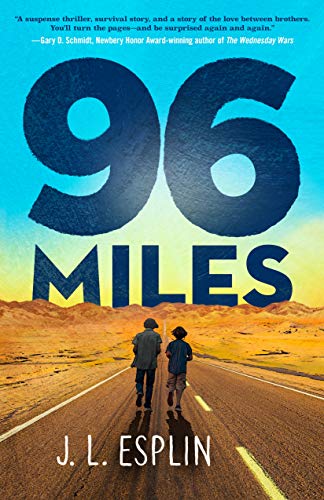
Summary:  “Dad always said if things get desperate, it’s okay to drink the water in the toilet bowl.”  When we meet John and his younger brother Stew, they are indeed scooping water out of a toilet; things have obviously gotten desperate.  Their father is away on a business trip, and the power grid over much of the U.S. has been out for weeks.  Dad is a bit of a survivalist, but unfortunately his reputation was well-known.  When some unsavory neighbors learned the boys were on their own, their food and water supplies were stolen one night.  Now they’re stocking up on toilet water to make a 96-mile hike through the Nevada desert to the one place they know of that might save them.  Another pair of siblings, Cleverly and Will, who are also trying to stay alive, find them in the bathroom.  Stew convinces a reluctant John to let them come along, and the four of them start out.  For reasons that are not clear until well past the halfway point of the book, they have to make the trip in three days, and even John and Stew’s survivalist training may not be enough to get all four of them safely to their destination.  272 pages; grades 4-8.

Pros:  Holy cow!  Once I got about a third of the way through, nothing would do but to read all the way to the end.  Unlike many survival stories, the situations felt fairly realistic, as did the knowledge the kids had.  The characters were interesting and reasonably well-developed, and the pace did not let up from page one until the very end.

Cons:  I had a very unproductive Saturday morning, thanks to this book.

If you would like to buy this book on Amazon, click here.

Our Favorite Day of the Year by A. E. Ali, illustrated by Rahele Jomepour Bell

Published by Salaam Reads

Our Favorite Day of the Year: Ali, A. E., Bell, Rahele Jomepour ...

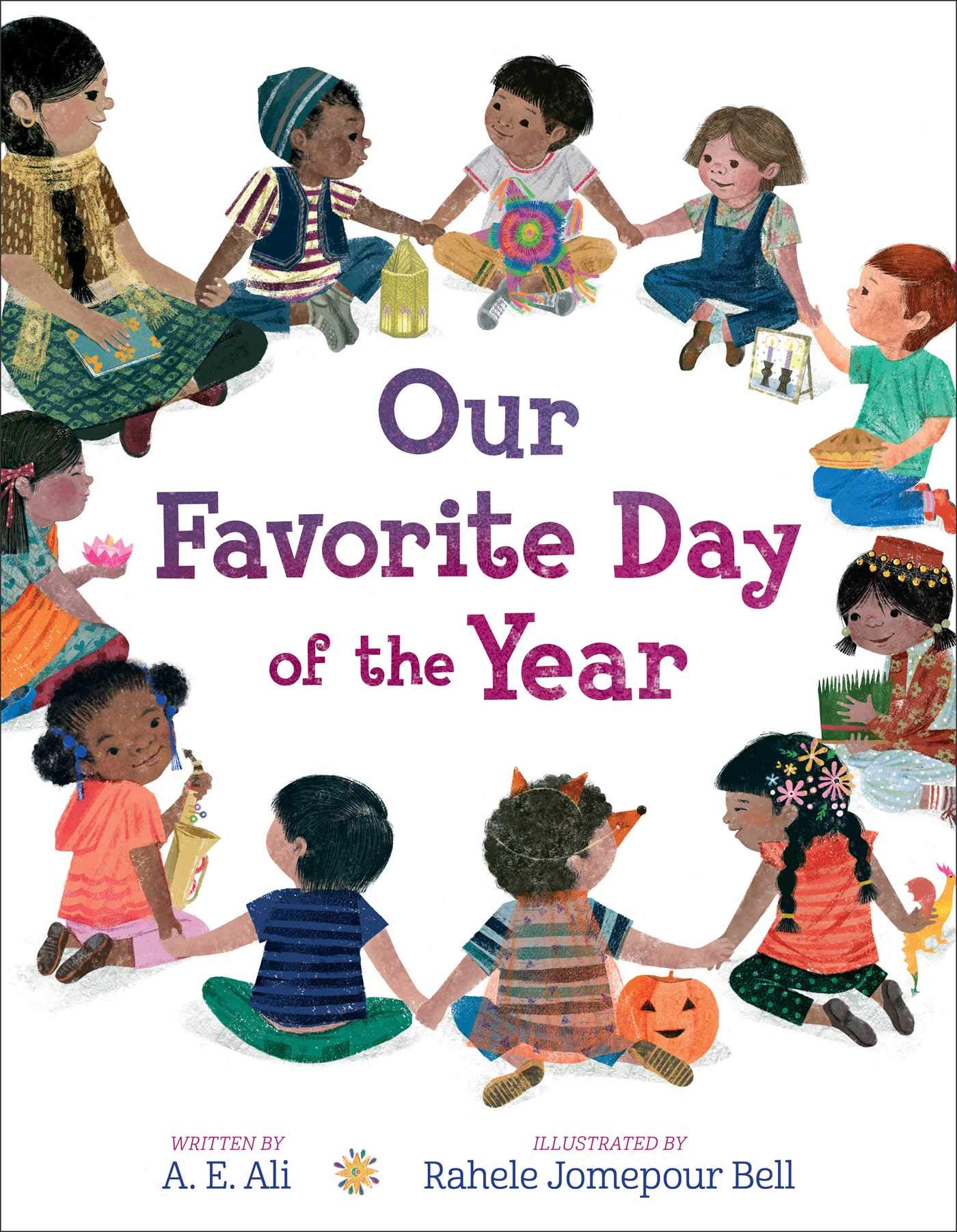
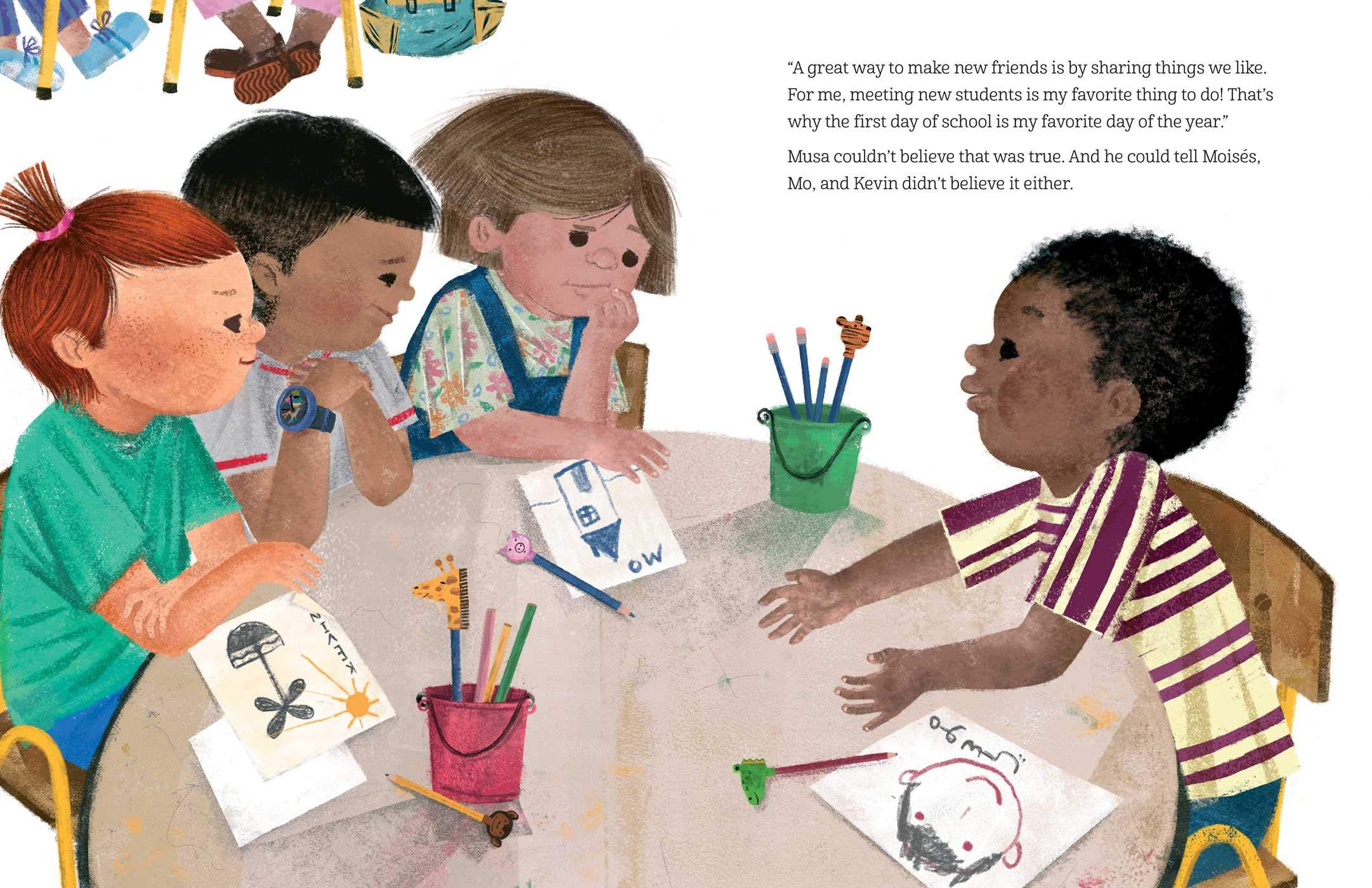
Summary:  On Musa’s first day of kindergarten, his teacher, Ms. Gupta, tells the kids that the first day of school is her favorite day of the year, and announces that they will be sharing their favorite days for show and tell throughout the year.  A few weeks later, Musa is excited to tell his classmates about Eid al-Fitr.  As the year goes along, the other boys at his table get to share Rosh Hashanah, Las Posadas, and Pi Day.  When the rest of the kids learn about the food and fun associated with each of these events, they understand why it is that boy’s favorite day.  At the end of the year, Ms. Gupta gives them a calendar with all their favorite holidays so that they continue to celebrate even when they’re no longer in a class together.  Includes a bit more information on each of the holidays mentioned in the story.  40 pages; ages 4-8.

Pros:  This would make a great first day of school book, and Ms. Gupta’s idea is a fun one for encouraging her students to learn about each other’s cultures.  The kids in the illustrations are adorable, and the endpapers feature a striking patchwork quilt with patterns and symbols from a wide variety of cultures.

Cons:  What kindergartener’s favorite day of the year is Pi Day?  

If you would like to buy this book on Amazon, click here.

Wink by Rob Harrell

Published by Dial Books

Wink: Harrell, Rob: 9781984815149: Amazon.com: Books

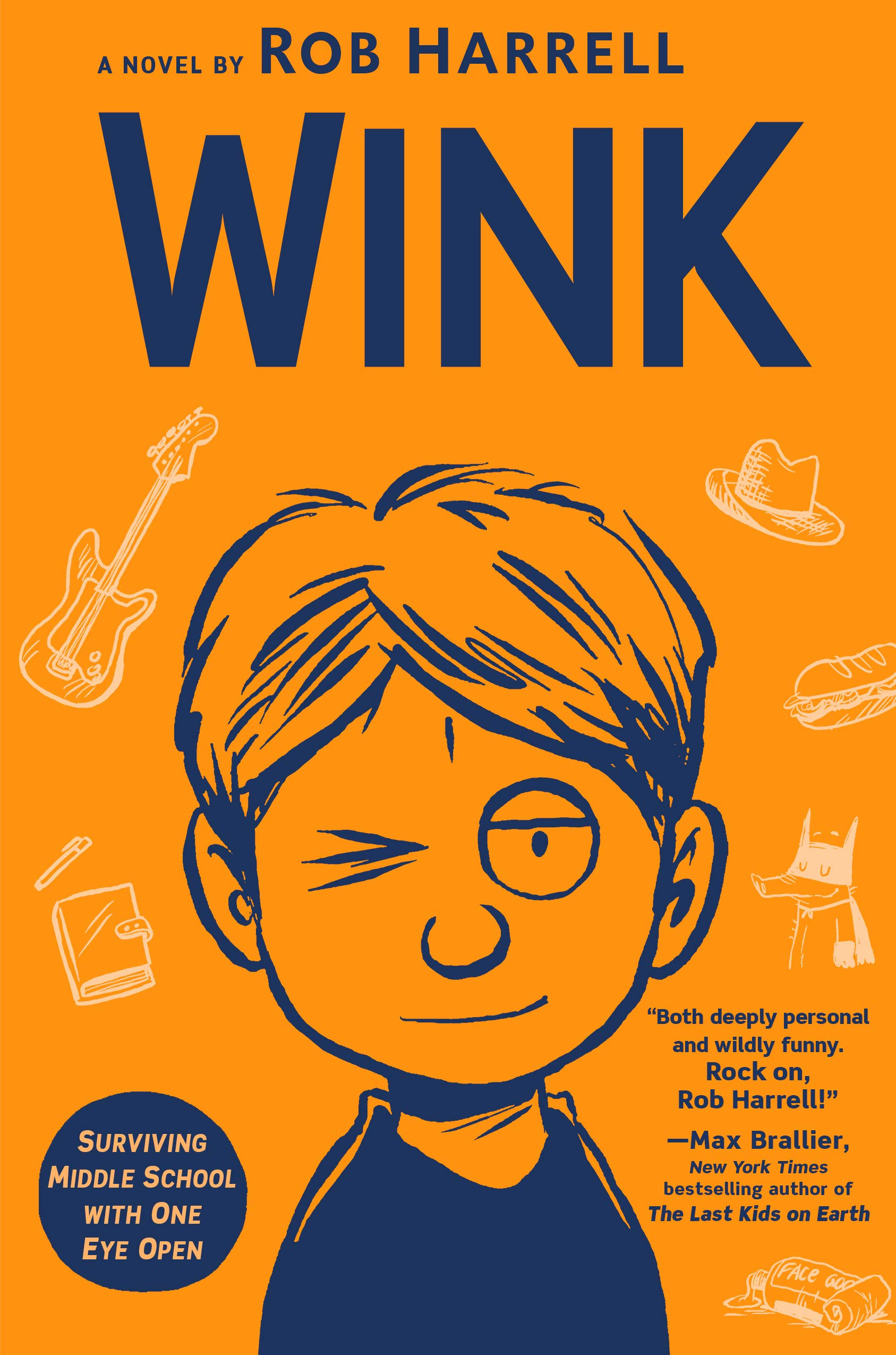
Summary:  Ross just wants to slink through seventh grade with as little attention as possible, but the diagnosis of a rare, aggressive form of cancer in his eye makes that impossible.  The story opens with his first radiation treatment, then brings the reader up to date with a series of flashbacks that describe his diagnosis and surgery.  Thanks to the radiation, he has to wear a hat at all times and constantly apply a goopy ointment to the eye that no longer has tear ducts.  One of his best friends has stopped talking to him and the other one, Abby, finds out that her family is moving in just a few weeks.  Music saves Ross, as he’s introduced to a whole new way of listening by one of his radiation technicians, Frank, who turns out to be an excellent guitar teacher and mentor.  When Ross, Abby, and an unlikely third kid form a band, Ross gets a chance to express everything he’s been feeling about the changes in his life, and learns not to shrink from the spotlight.  The author’s acknowledgements mention his own experiences with the kind of cancer Ross has.  320 pages; grades 4-7.

Pros:  From the cover to the irreverent middle-school voice to the illustrations (including some full-page comics), this is a book that will appeal to reluctant upper elementary and middle school readers.  There’s plenty of substance, though, as Ross overcomes a life-threatening illness and finds his own voice and talents.

Cons:  Having witnessed my own guitar-enthusiast daughters taking months to learn to play simple songs, it seemed unlikely that Ross would be performing with a band after just a few weeks.

If you would like to buy this book on Amazon, click here.

Raise Your Voice: 12 Protests That Shaped America by Jeffrey Kluger

Published by Philomel Books

Raise Your Voice: 12 Protests That Shaped America: Kluger, Jeffrey ...

Summary:  From the Boston Tea Party to the Dakota Access Uprising and the Women’s March, these twelve chapters cover protests organized by ordinary people that have stood up to the established order and helped effect change.  Other than the Tea Party and the Seneca Falls Convention, the rest are from the 20th and 21st century, including the Triangle Shirtwaist Factory Fire, the Montgomery Bus Boycott, the March on Washington, the 1968 Democratic Convention, the Stonewall Uprising, Earth Day, the March Against Nuclear Weapons, and ACT UP.  Each chapter begins with a photo, then gives some background before launching into the people and places of each protest, and the outcomes they did or didn’t achieve.  There are no source notes, but there’s a “Note on Sources” at the end that gives a good introduction to different types of sources and research; there is also an extensive index.  224 pages; grades 6 and up.

Pros:  Seeing as we seem to be living through chapter 13 of this book, readers may find a lot to connect with and inspire them.  It was encouraging to read about the impact these protests made.  The narratives are engagingly written; each one could be used as a stand-alone research source.  

Cons:  The small font and lack of photos made this not very visually appealing.  Also, in the heads-up category, protesters do use salty language, which is represented as “f—” or other fill-in-the-blank forms.  And there’s no getting around the need to describe the pussy hats of the Women’s March, but it’s pretty sanitized.

If you would like to buy this book on Amazon, click here.

Things That Go Away by Beatrice Alemagna

Published by Abrams Books for Young Readers

Things That Go Away: Alemagna, Beatrice: 9781419744822: Amazon.com ...

Book Review: Things That Go Away by Beatrice Alemagna - Coquette Maman

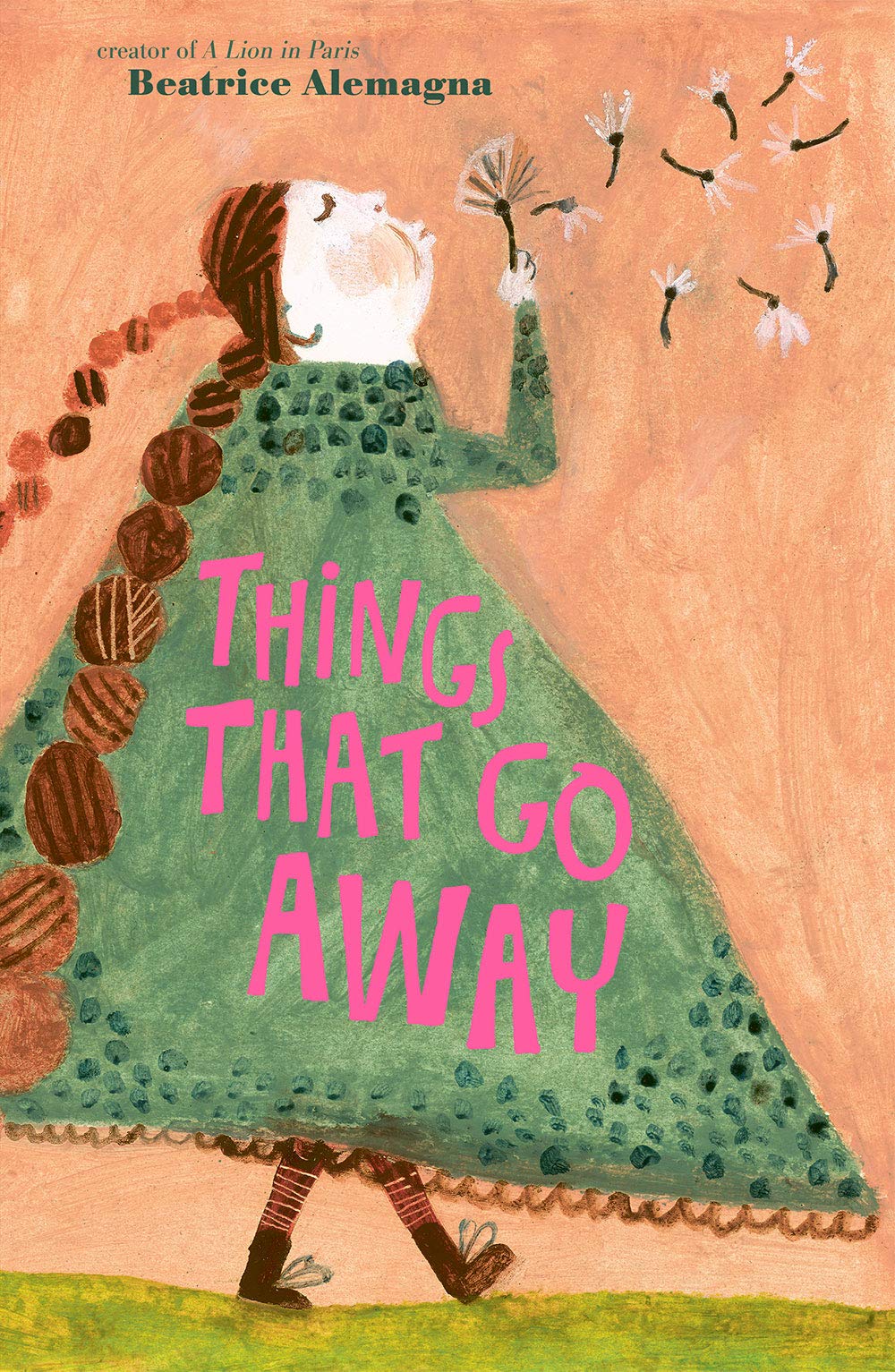
Summary:  If there’s one thing we’ve all learned in the last few months, it’s that nothing is predictable, and here is a book to drive that point home.  Whether they’re things we enjoy (soap bubbles, music) or aren’t so fond of (wounds, lice), things generally go away eventually.  Some, like sleep and dust, regularly return.  Each two page spread has a piece of tracing paper inserted with black marks on it that fit into each illustration when you turn it.  So the black specks that look like head lice become part of the design on the girl’s dress when you flip the page.  “Eventually, everything passes, moves on, or changes.  But one thing never goes away, and never will.”  The last page shows a mother hugging a child with the single word “Never”.  40 pages; ages 3-8.

Pros:  This unique book is fun for kids, but could also serve as a meditative tool for us oldsters.  The illustrations are beautiful, and the whole book, which was originally published in France, has a bit of a European feel to it.

Cons:  The black marks on the vellum pages weren’t well-incorporated into the left-handed illustrations.

If you would like to buy this book on Amazon, click here.

My Friend Earth by Patricia Maclachlan, illustrated by Francesca Sanna

Published by Chronicle Books

Amazon.com: My Friend Earth: (Earth Day Books with ...

Let's Talk Picture Books: MY FRIEND EARTH

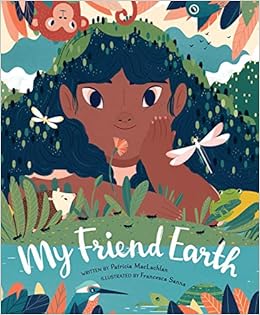
Summary:  “My friend Earth wakes from a winter nap,” says the narrator on page 1, with a flap that changes a sleeping girl into one who has just woken up.  The flap also reveals a hole in the snowbank (and the page) with a robin peeping out.  Turn the page, and it’s spring, with Earth hearing the sounds of that season.  The narrative goes through the year, as Earth sees and hears the rhythms and changes of each season.  And she’s not just a passive listener: she guides and guards animals, pours summer rain down, and blows autumn winds.  Finally, snow has fallen once again, and Earth settles down for a rest, ending up where she started.  44 pages; ages 4-8.

Pros:  An unusual way to represent Earth and look at the seasons.  Kids will love the busy illustrations with die-cuts that offer a hint of what’s coming on the next page.

Cons:  Those flaps and die cuts often don’t hold up well in the library.  The copy I borrowed from my library had already been ripped and repaired.

If you would like to buy this book on Amazon, click here.

Cubs in the Tub: The True Story of the Bronx Zoo’s First Woman Zookeeper by Candace Fleming, illustrated by Julie Downing

Published by Neal Porter Books (Released August 4)

Cubs in the Tub: The True Story of the Bronx Zoo's First Woman ...

Tessa Takes Wing is Landing — Julie Downing Illustration

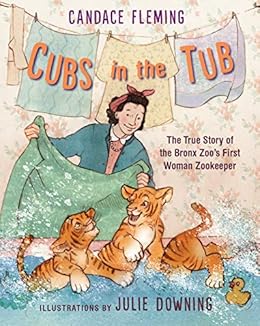
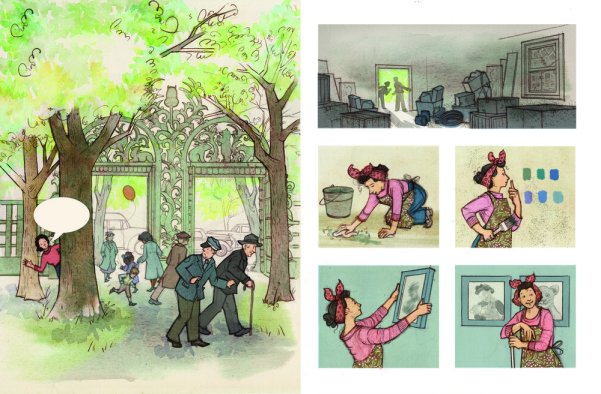
Summary:  Helen and Fred Martini wanted to have a baby, but this was not in the cards for them.  One day, Fred, a zookeeper at the Bronx Zoo, brought home a lion cub whose mother had abandoned it.  He told Helen to care for the cub the way she would a human baby, so she went to work feeding him, grooming him, and tucking him into a crib.  The lion, MacArthur, stayed with the Martinis for two months before being transferred to another zoo.  Next came three tiger cubs, named Raniganj, Dacca, and Rajpur.  When it was time for them to go back to the zoo, Helen went along.  Fred showed her a storeroom that she proceeded to turn into a zoo nursery.  When zoo officials found out, they offered her a job as “keeper of the nursery”.  Helen kept this position for the next 20 years, becoming the Bronx Zoo’s first woman zookeeper and pioneering new methods for caring for young animals.  Includes additional information about Helen Martini, a photo, and a bibliography.  48 pages; grades K-3.

Pros:  Lots of adorable animal illustrations will draw kids to this books, and they’ll learn about a woman who quietly broke down barriers.  The author’s note emphasizes how Helen, like many women of her time, worked within existing power structures to find a way to have a career at a time when women were encouraged to stay home.  

Cons:  The connection between Helen’s wish for a human baby and the fulfillment of that wish through baby zoo animals felt a little uncomfortable, both for Helen and the animals.

HerNaturalHistory [Instagram] | WCS Archives Blog

If you would like to buy this book on Amazon, click here.

A Whale of the Wild by Rosanne Parry, illustrated by Lindsay Moore

Published by Greenwillow Books (Released September 1)

A Whale of the Wild: Parry, Rosanne, Moore, Lindsay: 9780062995926 ...

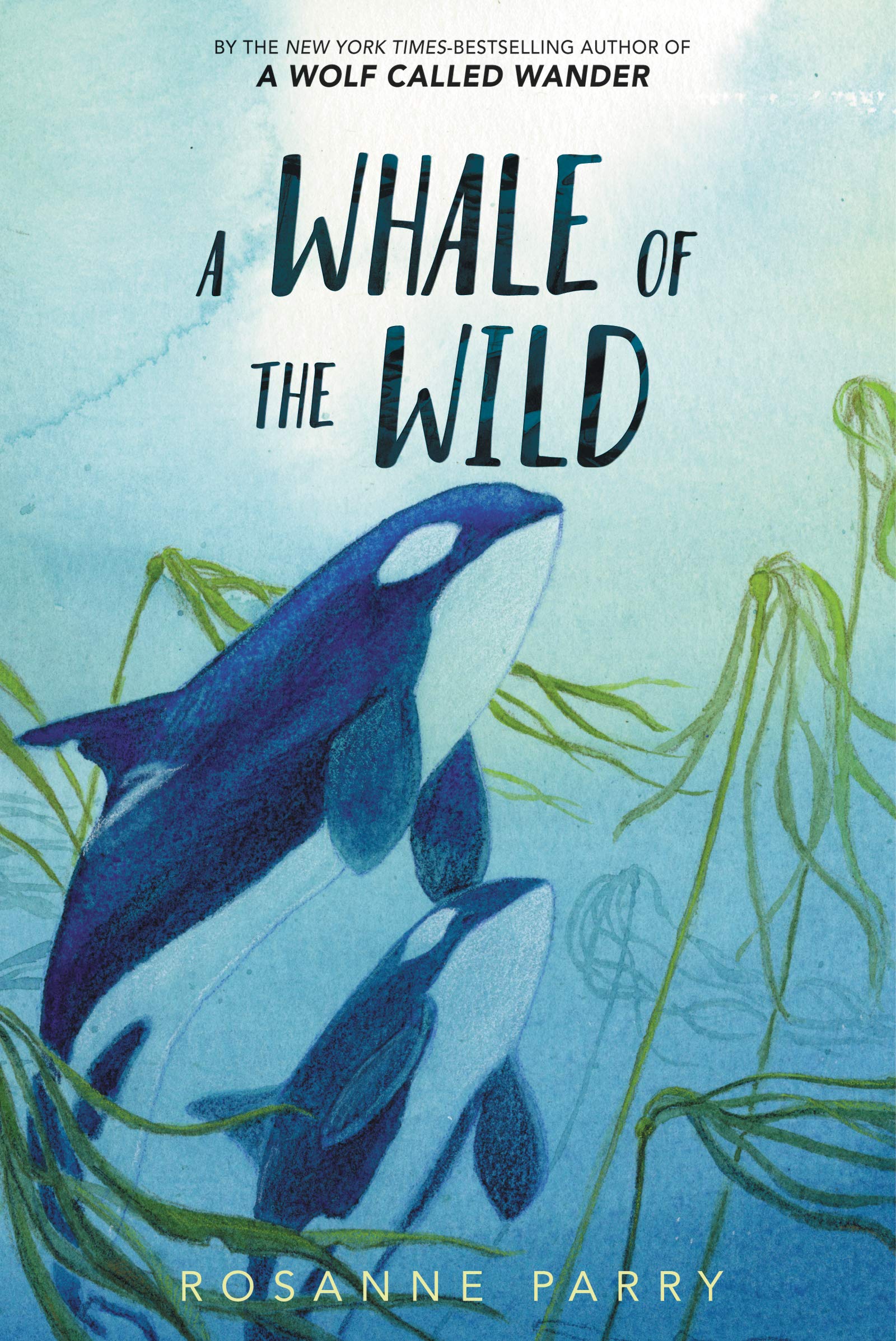
Summary:  Vega and her orca family live in the waters near land, taking care of each other and hunting for the salmon that sustains them.  Vega is learning to be a wayfinder, taught by her mother and grandmother in the matriarchal orca society.  When an earthquake and tsunami separate the family, Vega must keep herself and her younger brother Deneb safe.  They wind up in a much deeper part of the ocean, where they discover sights and creatures they have never seen before.  A harrowing journey back to their home reunites them with a couple of family members and gives them hope that they may find the rest of their kin some day.  Includes maps; facts about orcas; the real orcas who inspired the story; and additional information about salmon, the various habitats in the story, earthquakes and tsunamis, and how to help the orcas (not seen by me in the advanced review copy I got).  336 pages; grades 3-7.

Pros:  Another fascinating animal adventure by the author of A Wolf Called Wander, probably my top book club book in 2019.  Readers will learn a lot about the orcas and their ocean environment, as well as the threat humans pose to them.  I was sorry not to get to see Lindsay Moore’s illustrations (who is oddly not credited on the cover), which I’m sure are beautiful based on her work in Sea Bear.

Cons:  I found myself struggling a bit to get through this book, although it is beautifully written and has plenty of action.  I hope I’ll get to try it out on kids soon to see if they enjoy it as much as Wander

If you would like to buy this book on Amazon, click here.