Thank You, Garden by Liz Garton Scanlon, illustrated by Simone Shin

Published by Beach Lane Books

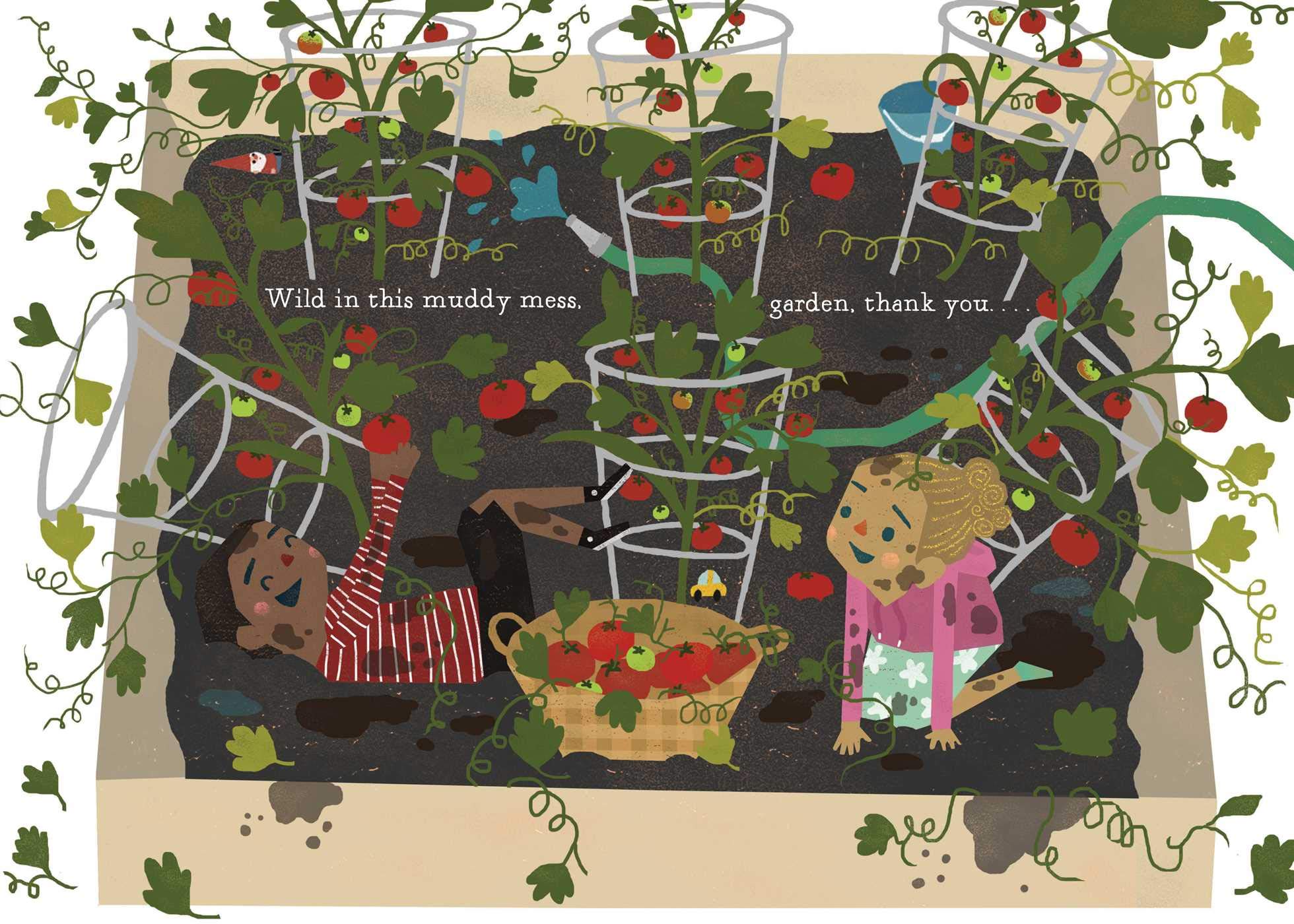
Thank You, Garden | Book by Liz Garton Scanlon, Simone Shin ...

Amazon.com: Thank You, Garden (9781481403504): Scanlon, Liz Garton ...

Summary:  A community rooftop garden takes shape, bringing together a diverse group of neighbors who grow an equally diverse collection of fruits and vegetables.  From “Garden ready, garden new/Garden so much work to do” to “Garden growing like a child, rosy, leggy, fresh and wild/Wild in this muddy mess, garden, thank you…Garden, yes!”, the brief rhyming text celebrates different stages of gardening.  A girl and a boy meet each other through the garden, and enjoy all the different aspects, even the rainy days and the bugs and worms that they discover.  The final illustration shows the whole group sitting down to enjoy the fruits (and vegetables) of their labors.  32 pages; ages 3-7.

Pros:  This bouncy rhyming ode to gardens is a perfect summertime read.  Kids with gardens will connect with the different phases of growing produce, and everyone will enjoy finding details in the cheerful illustrations, such as the recurring appearances of a garden gnome and two toy vehicles: a blue truck and a yellow car. 

Cons:  A gardening activity at the end would have been nice.
If you would like to buy this book on Amazon, click here.

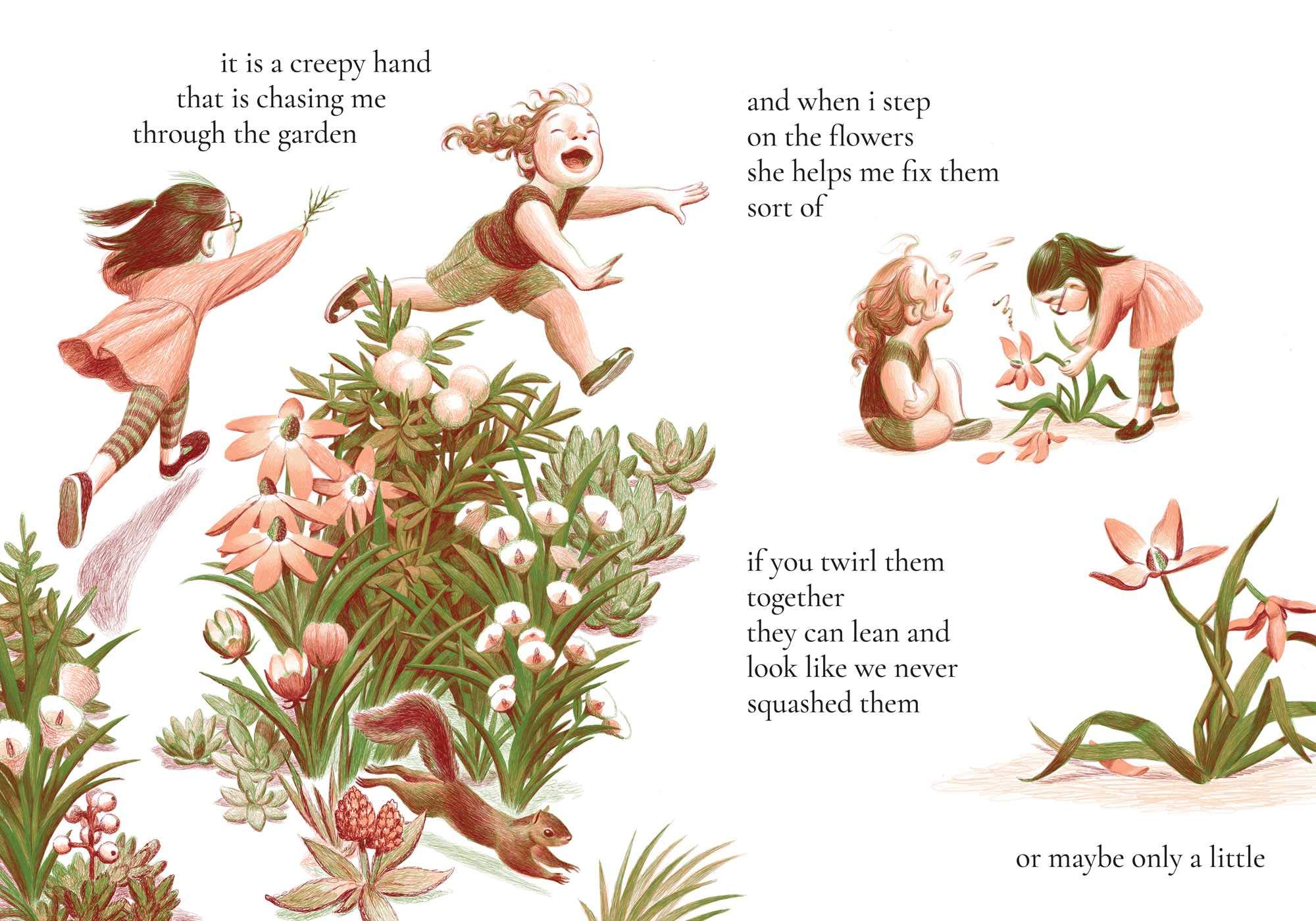
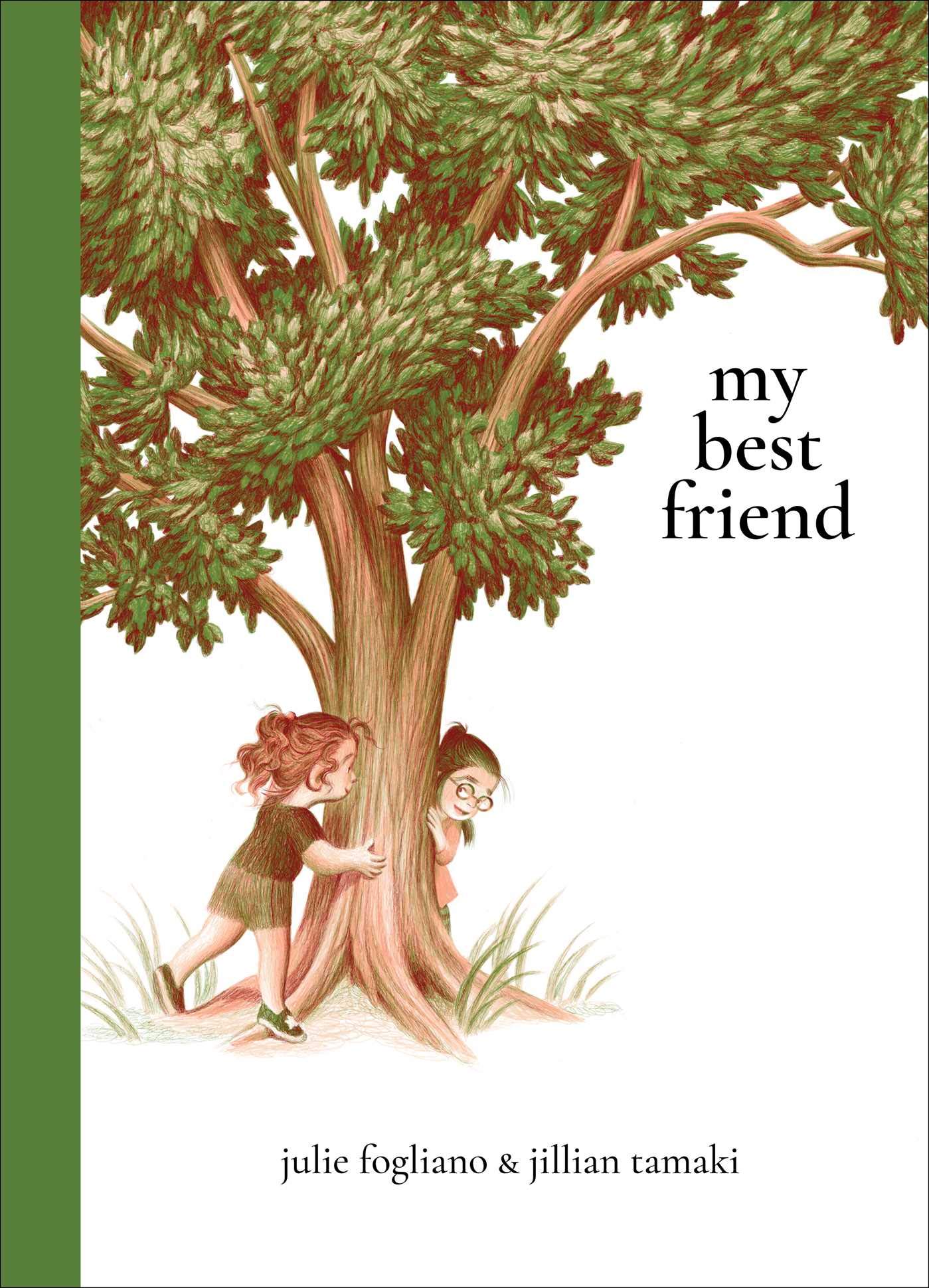
My Best Friend by Julie Fogliano, illustrated by Jillian Tamaki

Published by Atheneum Books for Young Readers

My Best Friend: Fogliano, Julie, Tamaki, Jillian: 9781534427228 ...

My Best Friend: Fogliano, Julie, Tamaki, Jillian: 9781534427228 ...

Summary:  A young girl introduces her new best friend, who is smart and she laughs at everything.  The two friends like to run around, quacking like ducks, then sit quietly under a tree.  Even though one loves strawberry ice cream and the other hates it, they are still friends.  When they’re drawing, she draws her friend and her friend draws her, and they make hearts around their pictures.  “She is my best friend I think.  I’ve never had a best friend so I’m not sure.”  As the two girls go their separate ways, each with a parent, the narrator reveals that they don’t know each other’s names, but they can find out tomorrow “because we are best friends.”  32 pages; ages 3-7.

Pros:  As she did in When’s My Birthday?, Julie Fogliano perfectly captures the voice of a very young child and explores what it’s like to instantly become friends with someone new.  Caldecott honoree Jillian Tamaki explores their friendship in green and peach illustrations surrounded by white space; she’s deserving of some Caldecott consideration once again for this book.

Cons:  I have a personal preference for illustrations using a wider palette of colors.

If you would like to buy this book on Amazon, click here.

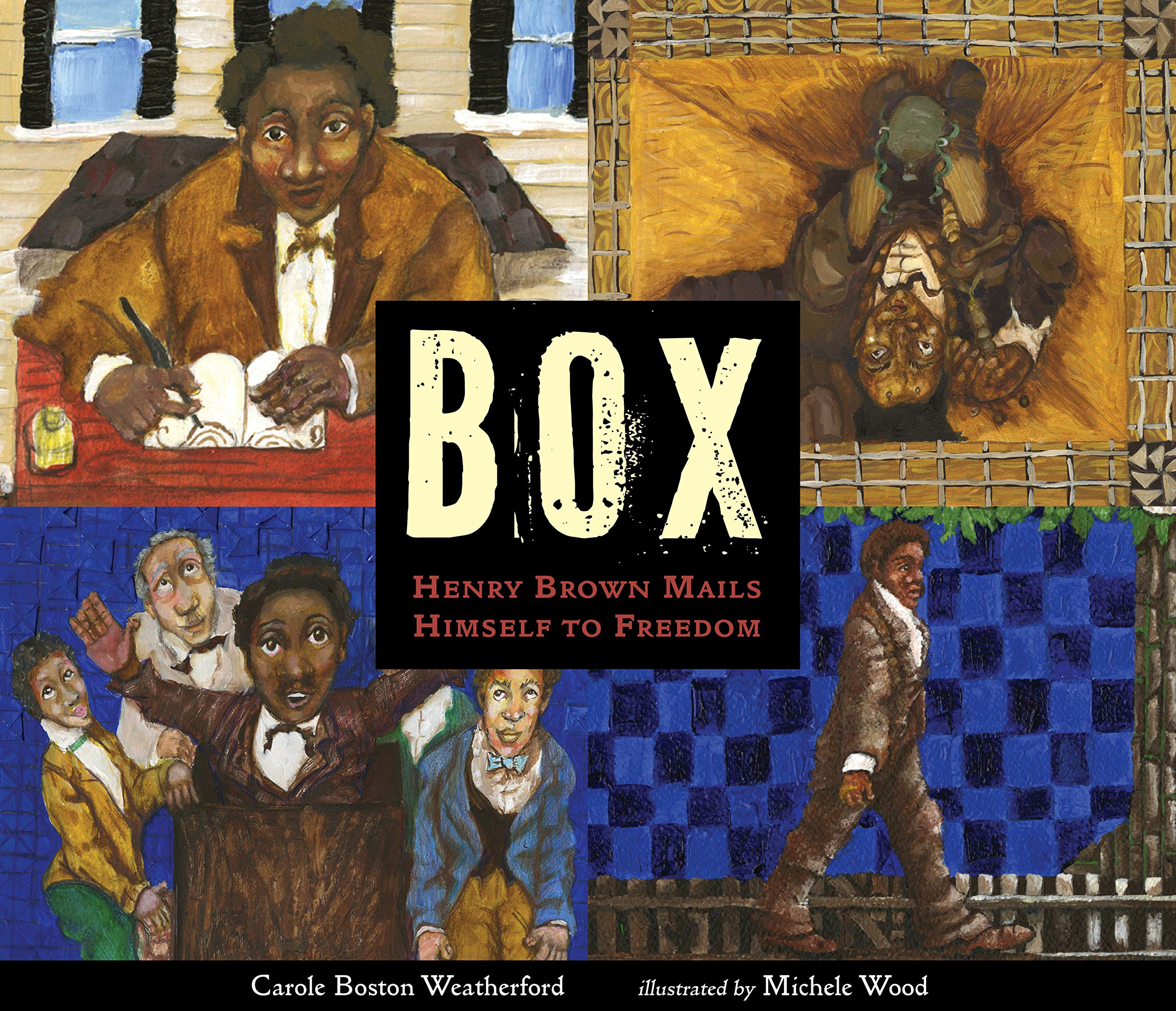
Box: Henry Brown Mails Himself to Freedom by Carole Boston Weatherford, illustrated by Michele Wood

Published by Candlewick

BOX: Henry Brown Mails Himself to Freedom: Weatherford, Carole ...

BOX: Henry Brown Mails Himself to Freedom: Weatherford, Carole ...

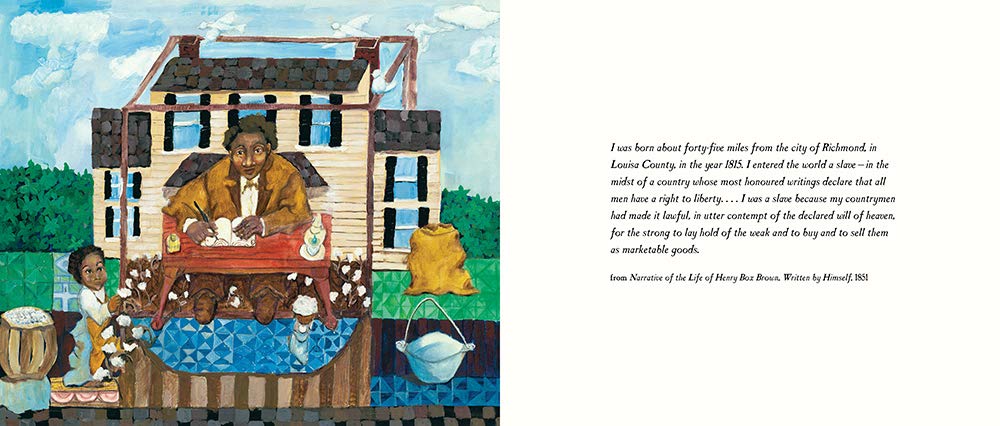
Summary:  Henry Brown’s story has been told before, probably most famously (for kids) in the Caldecott Award winning Henry’s Freedom Box by Ellen Levine. Here, the narrative is in the form of a series of six-line poems.  They focus not only on Henry’s story, but on other aspects of slavery, including Nat Turner’s rebellion and the division of families, both Henry’s family of origin and later, his forced separation from his wife and children.  His harrowing escape in a sealed box traveling for two days from Virginia to Philadelphia is described, as well as the almost fifty years he lived afterward.  Brown published his story, The Narrative of the Life of Henry Box Brown, and created a moving panorama that he exhibited in both the U.S. and England, remaining overseas with his wife and daughter for almost 25 years.  Includes a timeline of both Henry Brown’s life and other significant events that occurred during his lifetime, a bibliography, and an illustrator’s note.  40 pages; grades 4-8.

Pros:  This would make an excellent companion to Henry’s Freedom Box, giving older students a chance to delve into Brown’s life a little deeper.  The first-person poems are enhanced by the mixed media folk art illustrations.  It would be an interesting twist in children’s literature history if this book received a Caldecott medal or honor next year.

Cons:  Due to the nature of poetry, readers have to make a fair number of inferences to understand the details of Henry Brown’s life.  An introductory note would have maybe made this a little simpler, as would reading this in conjunction with Ellen Levine’s book.

If you would like to buy this book on Amazon, click here.

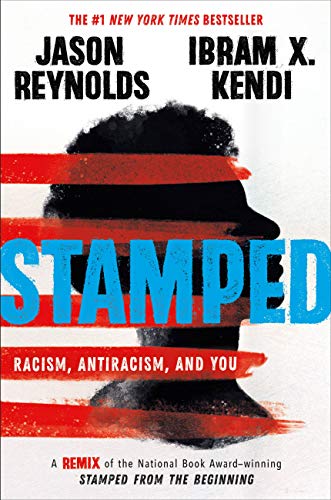
Stamped: Racism, Antiracism, and You: A Remix of the National Book Award Winning Stamped from the Beginning by Jason Reynolds and Ibram X. Kendi

Published by Little Brown Books for Young Readers

Amazon.com: Stamped: Racism, Antiracism, and You: A Remix of the ...

Summary: In this “remix” of Ibram Kendi’s award-winning book Stamped from the Beginning, Jason Reynolds tells the history of racism in America, going back to the fifteenth century and continuing to (almost) the present day.  Focusing on people such as Cotton Mather, Thomas Jefferson, William Jennings Bryan, and Angela Davis, Reynolds explores their lives and beliefs in the context of racism vs. assimilation vs. antiracism.  Starting off with the statement (revisited many times) that “this is not a history book”, the book is written in a tone designed to appeal to young readers.  Includes an afterword, acknowledgements from both Jason Reynolds and Ibram X. Kendi, a lengthy reading list, and extensive source notes.  320 pages; grades 6-12.

Pros:  Jason Reynolds’ book could not have been more timely, and will undoubtedly find its way into the curriculum of many a school district in the coming year.  As he has proven in his fiction writing, his writing style is extremely engaging for young adults, who may be relieved to hear this isn’t a history book and will enjoy reading it for their own edification.  The content will reveal to them–and to adults as well–what has traditionally been left out of the telling of America’s past, and will give them an antiracist lens with which to view the present.

Cons:  Covering 600 years of history in a book of this length is a daunting task, and readers may struggle to keep all the names, places, events, and belief systems straight as they quickly travel through the centuries.

If you would like to buy this book on Amazon, click here.

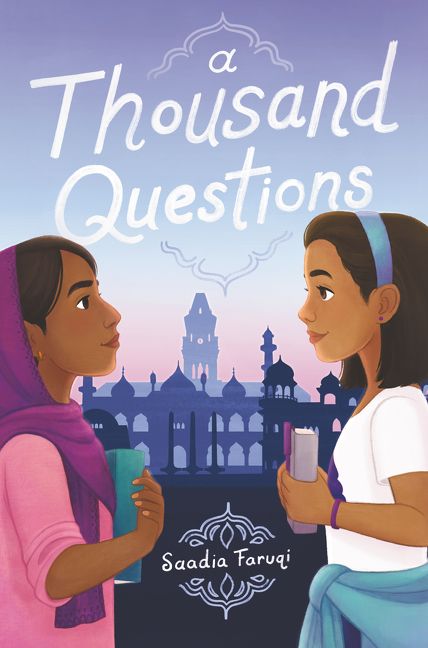
A Thousand Questions by Saadia Faru

Published by Quill Tree Books (Released October 6)

A Thousand Questions - Saadia Faruqi - Hardcover

Summary:  Mimi’s not thrilled to be visiting the grandparents she’s never met in Karachi, Pakistan, but her mom has decided it’s time to go back after a long estrangement.  Sakima helps her father cook in Mimi’s grandparents’ house, but dreams of going to school if she can improve her English.  At first, Sakima can’t imagine being friendly to the wealthy, spoiled visitor from America, but slowly the girls begin to find ways to communicate in broken English and Urdu.  Mimi offers to tutor Sakina in English, and in return, Sakina helps Mimi find the father who left her several years ago.  As the weeks go by, the two families’ lives become intertwined.  By the end of the summer, much has changed for both Mimi and Sakina, but their new friendship promises to last even when they are living half a world away from each other.  Includes an author’s note about Karachi, where she grew up and a glossary.  320 pages; grades 4-7.

Pros:  Kids will learn a lot about life in Pakistan, and the inequities between the rich and the poor.  The characters are interesting and well-developed, not only the two girls, but their family members as well.

Cons:  The girls seemed to communicate remarkably well, considering neither one of them was particularly fluent in the other’s language.

If you would like to buy this book on Amazon, click here.

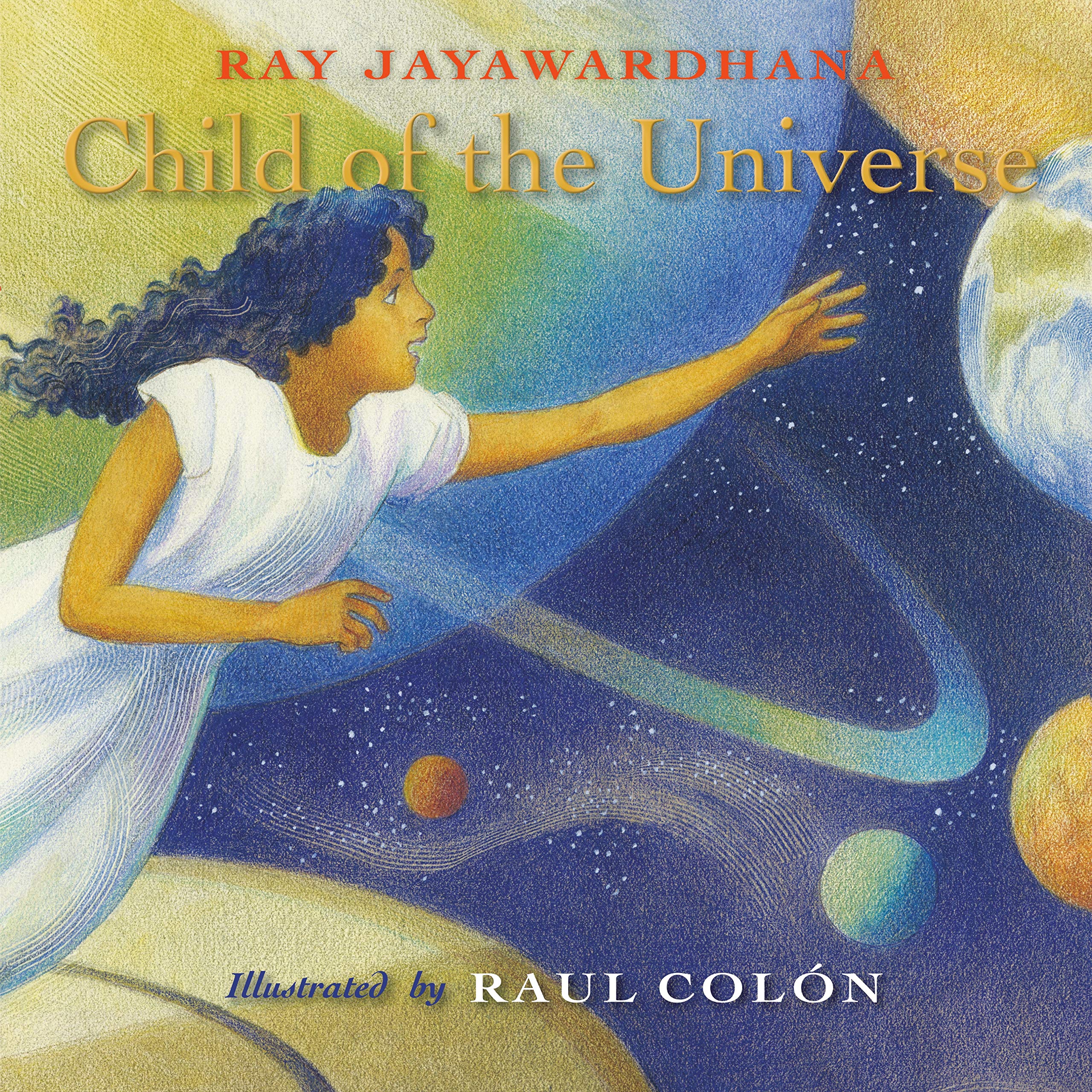
Child of the Universe by Ray Jayawardhana, illustrated by Raul Colón

Published by Make Me a World

Child of the Universe: Jayawardhana, Ray, Colón, Raul ...

Child of the Universe: Jayawardhana, Ray, Colón, Raul ...

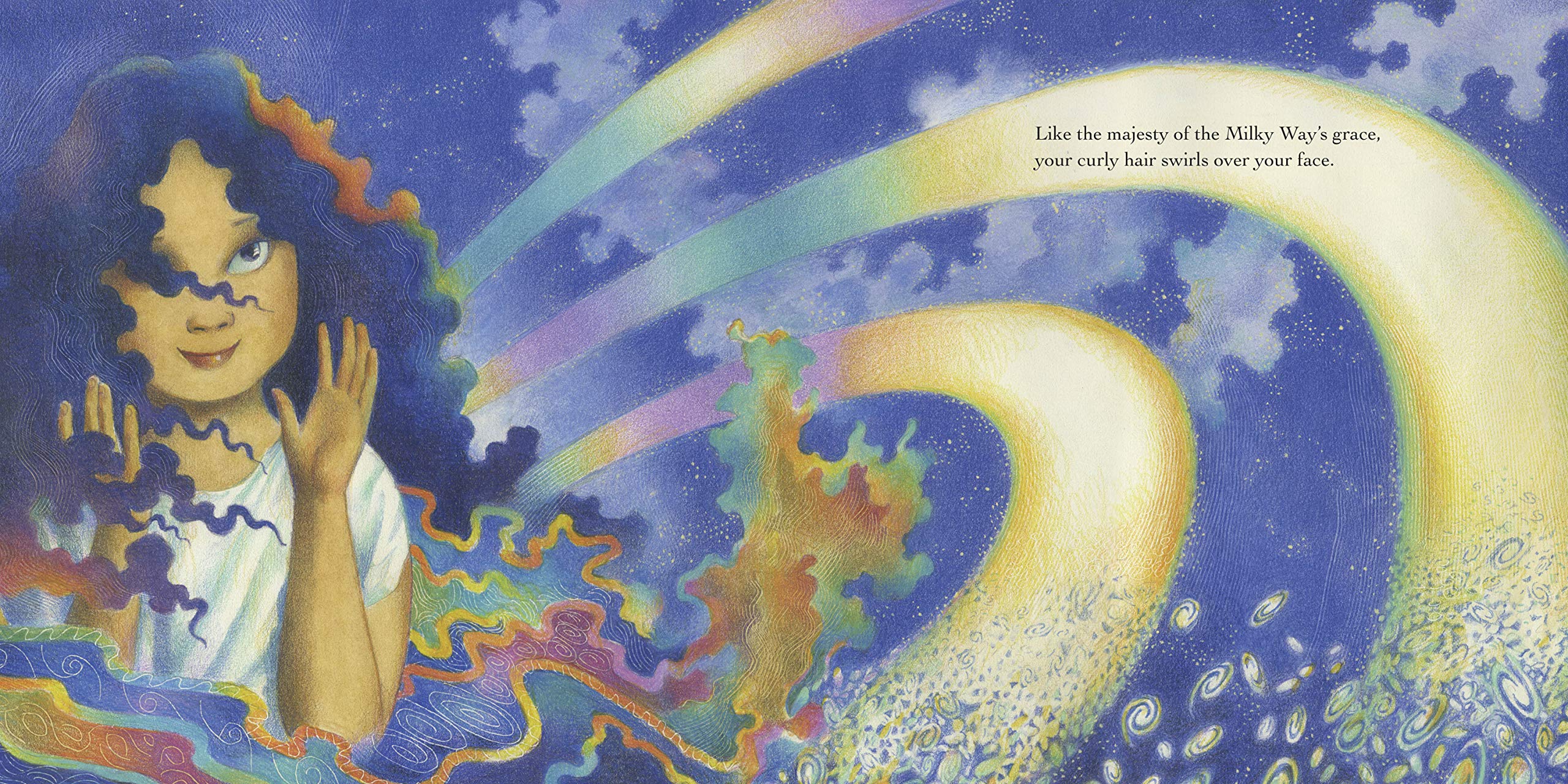
Summary:  As a girl is getting ready for bed, she and her father look out at the moon.  “The universe conspired to make you,” he tells her, then goes on to compare her to the beauty and majesty of the universe: her hair swirls about her face like the Milky Way, she lights up the room like the sun lights the moon, and the cosmos are reflected in her eyes.  He gives more concrete examples as well, like the fact that the iron and calcium in her blood and bones comes from stars that lived long ago.  On the last page, she gets tucked into bed, and looks out at the moon smiling back at her.  Includes an author’s note that tells of the strong connections to the cosmos that are part of Earth and humanity.  40 pages; ages 3-7.

Pros:  The gorgeous illustrations showing the girl traveling through the cosmos are worthy of Caldecott consideration.  Their brilliant, yet slightly muted colors fill every inch of each two-page spread.  Young scientists will be amazed to learn the science that connects them to the universe.

Cons:  If you’re going to use rhyming text, it has to be really, really good, and this isn’t quite there.  Jayawardhana, a dean at Cornell University who has researched planetary systems and the prospect for life on other planets, seems more comfortable writing his author’s note. 

If you would like to buy this book on Amazon, click here.

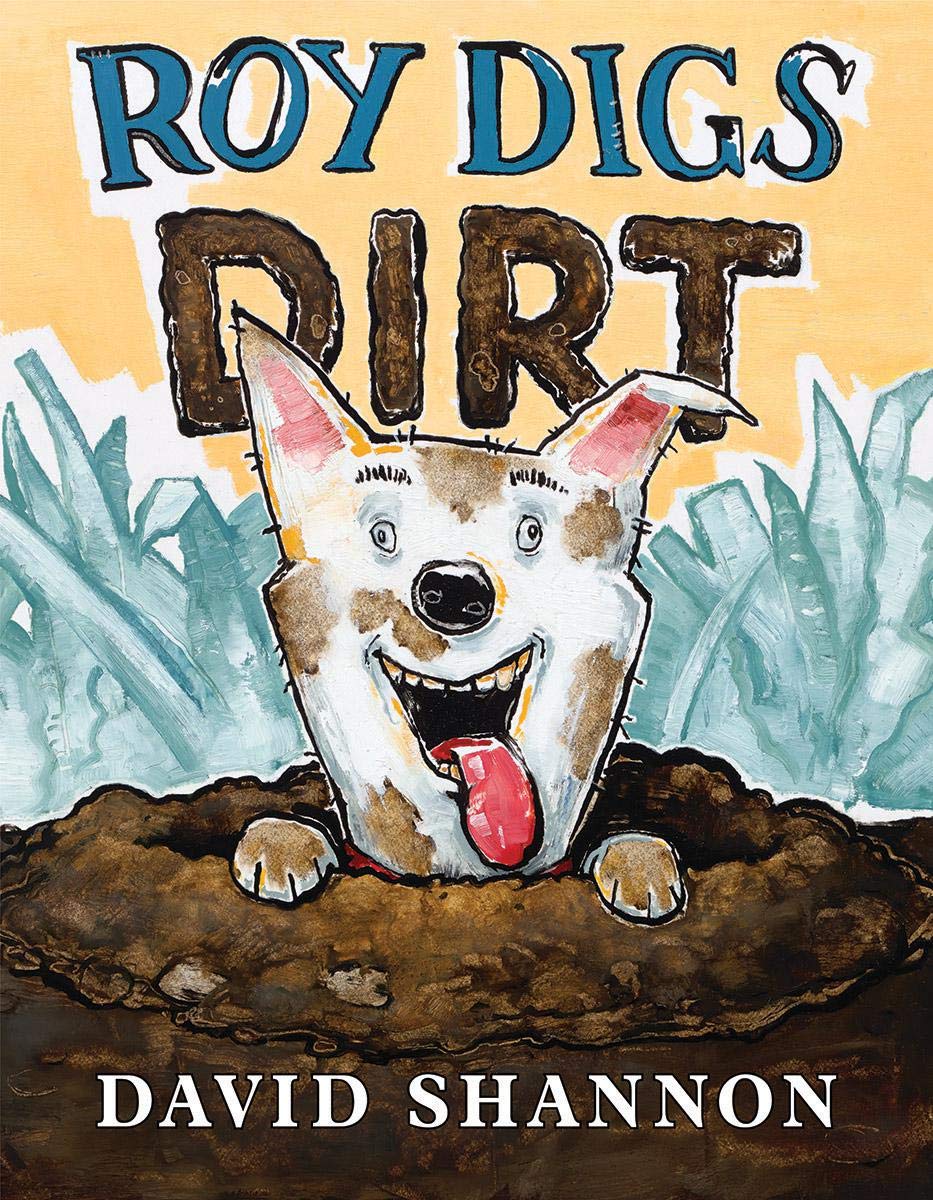
Roy Digs Dirt by David Shannon

Published by The Blue Sky Press

Amazon.com: Roy Digs Dirt (David Books) (9781338251012): David ...

Summary:  Roy loves dirt: digging in it, lying in it, rolling around in it.  He likes to bury things in dirt.  He eats it, sniffs it, and listens to it.  Mud is even better than dirt; it’s like “dirt gravy”.  When Roy doesn’t have access to dirt, he digs rugs, blankets, and newspapers.  One thing Roy does not love is baths.  At night, after his torturous bath, he sleeps, dreaming about digging.  In the morning, he returns to his same old dirt, but for Roy, it’s like brand-new dirt every day.  40 pages; ages 2-7.

Pros:  A David Shannon book about a goofy dog who loves dirt?  I probably don’t need to say anything else here, this will undoubtedly be a hilarious favorite with anyone under the age of 8 who comes in contact with it.

Cons:  I love this one-star review on Amazon: “This book has no message or meaning.  It is absolutely pointless.”  Um, yeah.  It’s a book by David Shannon with a silly-looking dog on the cover.  Kids (and adults) don’t always need a message.

If you would like to buy this book on Amazon, click here.

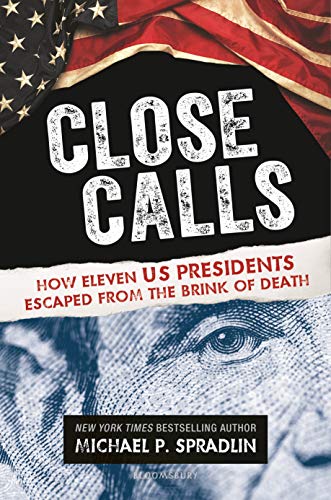
Close Calls: How Eleven U.S. Presidents Escaped from the Brink of Death by Michael P. Spradlin

Published by Bloomsbury Children’s Books

Close Calls: How Eleven US Presidents Escaped from the Brink of ...

Summary:  These stories relate how eleven United States presidents narrowly escaped death, either before their administration or during it.  Quite a few are war stories, including George Washington in the American Revolution, and John F. Kennedy, Dwight D. Eisenhower, George H. W. Bush, and Gerald Ford in World War II.  A few were assassination attempts on sitting presidents: Andrew Jackson, Theodore Roosevelt, Harry Truman, and Ronald Reagan.  The story of Abraham Lincoln is how rumors of assassination were thwarted while Lincoln traveled to Washington, D.C. after he was elected president.  Each story includes at least one sidebar with information on a topic related to the main narrative.  Includes a list of sources and an index.  128 pages; grades 4-8.

Pros:  These exciting survival stories with some name recognition of at least the most famous presidents will surely entice some reluctant readers to sample some nonfiction.  Each chapter is relatively short with plenty of action.

Cons:  Not a single photo, and some of the stories (Kennedy, Carter, Reagan) have no dates.

If you would like to buy this book on Amazon, click here.

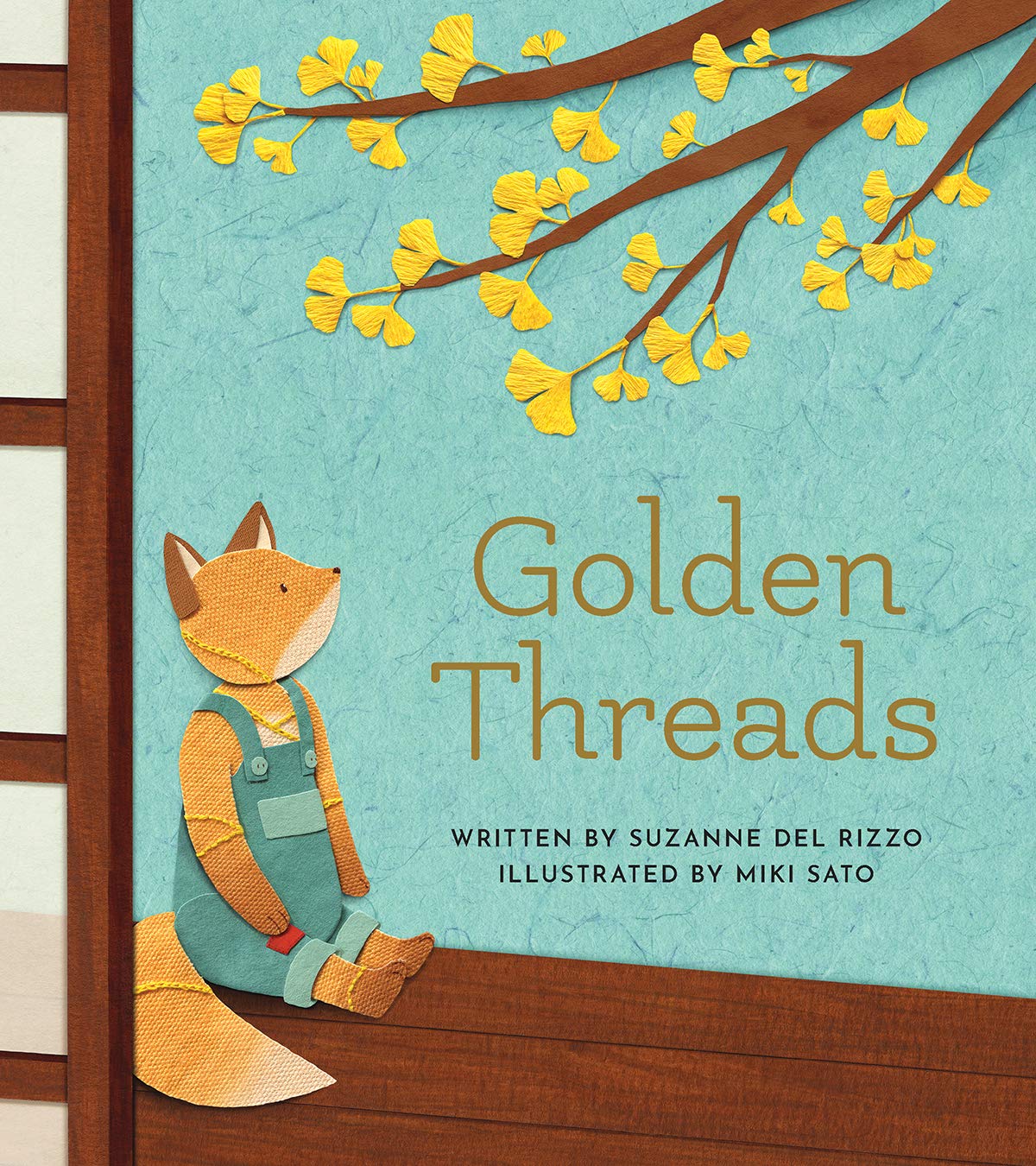
Golden Threads by Suzanne Del Rizzo, illustrated by Miki Sato

Published by Owlkids

Amazon.com: Golden Threads (9781771473606): Rizzo, Suzanne Del ...

Golden Threads – Miki Sato

Summary:  The stuffed fox narrator lives an idyllic life with his girl, Emi.  On the day that Emi finds the first golden leaf on the gingko tree, a storm comes and washes the fox away.  Torn and battered, he eventually lands on a beach, where a man finds him and brings him home to his daughter, Kiko.  In the same way they repair broken china with gold, Kiko stitches up the fox with gold thread.  A golden gingko leaf that was with the fox provides the clue needed to get him home again.  After spending winter, spring, and summer with Kiko, the fox is taken on a boat trip with the girl and her father.  They follow the trail of gold gingko leaves in the water until they get to Emi’s house, where there is a happy reunion, a new friendship between the two girls, and maybe even a romance? (Pure speculation on my part, but Emi’s mom and Kiko’s dad both appear to be single).  Includes an author’s note with additional information on two Japanese ideas: kintsugi, in which broken china is mended with gold, encouraging reuse instead of throwing away; and wabi-sabi, finding beauty in things that are imperfect and incomplete.  32 pages; ages 4-8.

Pros:  Edward Tulane fans, rejoice!  This beautiful picture book is also about the miraculous journey of a stuffed animal, an adorable fox in this case.  The themes of kintsugi and wabi-sabi are also beautifully incorporated into the story, not only with the fox, but with a broken branch on the gingko tree and Kiko’s broken leg.  Lots to think about and discuss here. 

Cons:  Keep the Kleenexes handy.

If you would like to buy this book on Amazon, click here.

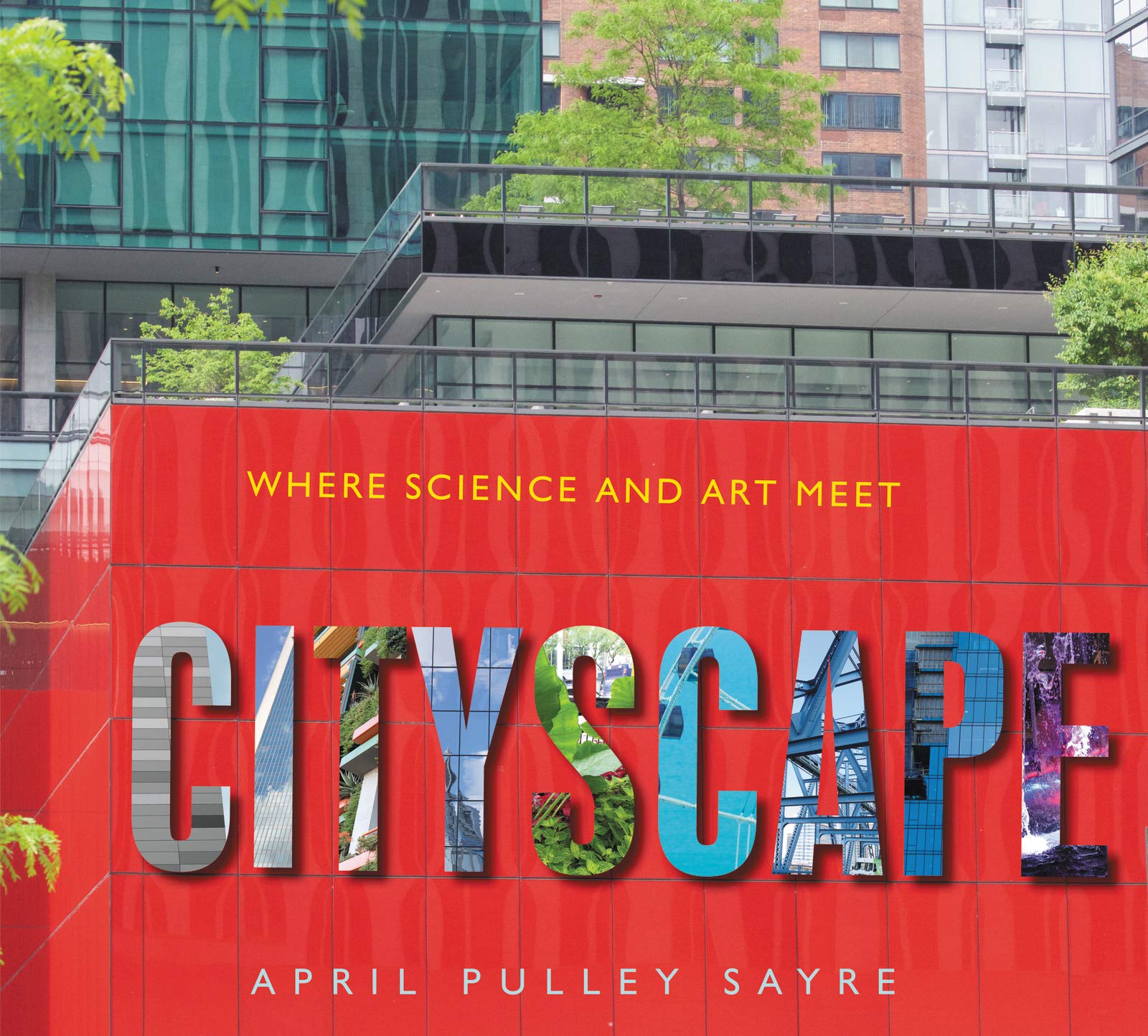
Cityscape: Where Science and Art Meet by April Pulley Sayre

Published by Greenwillow Books

Amazon.com: Cityscape: Where Science and Art Meet (9780062893314 ...

Summary:  “Rectangle. Right angle. Window. Wall. A windy canyon where shadows fall.”  The simple rhyming text is accompanied by several photos on each page showing urban landscapes.  Building, vehicles, and other structures focus on shapes, angles, functions, and art.  The last couple pages discuss how to find science, technology, engineering, math, and art in the city.  A list of 40 questions encourages readers to observe what they see in the city with an inquiring mind.  40 pages; ages 4-8.

Pros:  April Pulley Sayre works her usual magic with her combination of interesting photographs and brief rhyming text.  She moves in a different direction with this book, away from her usual nature topics, and into the city and human-built structures.  There’s a lot to absorb in both the book and the questions at the end, and kids will come away from this book observing their surroundings in a whole new way.

Cons:  Some of the topics seemed somewhat abstract.  On the other hand, this could make the book an interesting read for older kids as well.

If you would like to buy this book from Amazon, click here.