No Small Potatoes: Junius G. Groves and His Kingdom In Kansas by Tonya Bolden, illustrated by Don Tate

Published by Knopf Books for Young Readers

Image result for no small potatoes amazon

Image result for no small potatoes junius

Summary:  Slavery ended just a few years after Junius Groves was born on a plantation in Kentucky.  As a young man, he headed for Kansas to farm.  Starting out as a hired hand earning 40 cents a day, he worked hard to become a foreman, tripling his wages and eventually allowing him to rent his own land to farm.  With his wife Matilda at his side, he saved enough money to buy a farm.  The two of them worked hard, along with their twelve children, to make the farm prosperous.  Their main crop was potatoes: in 1894 he was named Potato King of Wyandotte County by the local paper; six years later, he was called the Potato King of the whole state of Kansas, and in 1902, he was crowned Potato King of the World.  In addition to millions of pounds of potatoes, Junius helped grow a church, a store, a golf course, and a town called Groves Center.  Includes a timeline, glossary, and list of sources.  40 pages; grades 1-4.

Pros:  A real rags-to-riches tale extolling the rewards of hard work, told in a style that almost makes it feel like a tall tale.

Cons:  The potential downside of vying for the title of Potato King of the World at the Thanksgiving table today.

If you would like to buy this book on Amazon, click here.


Hey, Kiddo: How I Lost My Mother, Found My Father, and Dealt With Family Addiction by Jarrett J. Krosoczka

Published by Graphix
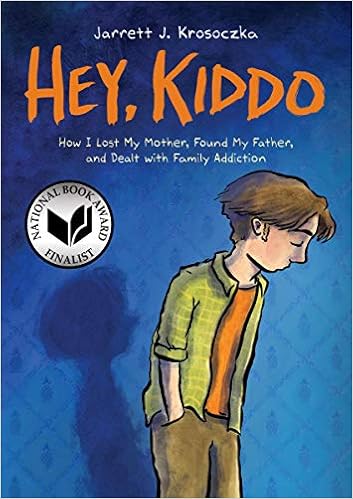
Image result for hey kiddo amazon

Image result for hey kiddo krosoczka

Summary:  Jarrett Krosoczka spent his first few years with his mother until his grandparents intervened and got custody of him.  It was not until he was a teenager that he learned that she had been a heroin addict from the age of 13.  Jarrett grew up with Joe and Shirley, his mother’s parents.  Despite their drinking, smoking, and occasional unkind words, they loved him deeply and did their best to provide him with a good home and to support his artistic ambitions. This memoir also includes Jarrett’s memories of friends, school, and the first time he met his father and half brother and sister during his senior year in high school.  Determined not to let his past curtail his future, he graduated from the Rhode Island School of Design and has gone on to create many beloved children’s books, perhaps most famously the Lunch Lady series.  Includes an author’s note with more information about his life, the people in the book, and how he came to create this memoir. 320 pages; grades 8 and up.

Pros:  A National Book Award finalist, this graphic memoir is hard to put down (I read it in one sitting).  My already high esteem for Jarrett Krosoczka (whom I once arranged to have visit my school) grew to worshipful admiration as I learned of all the obstacles he has overcome to achieve his success.  The artwork is particularly effective, with the beginning of each chapter including actual documents, many of them letters his mother wrote to him from jail and halfway houses.

Cons:  I was hoping to get this for my middle school library, but the language and subject matter make it more of a high school/adult book.
If you would like to buy this book on Amazon, click here.

Unstoppable: How Jim Thorpe and the Carlisle Indian School Football Team Defeated Army by Art Coulson, illustrated by Nick Hardcastle

Published by Capstone

Image result for unstoppable how jim thorpe amazon

Image result for unstoppable how jim thorpe amazon

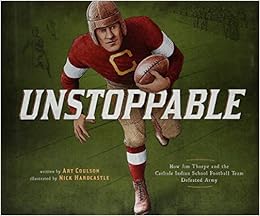
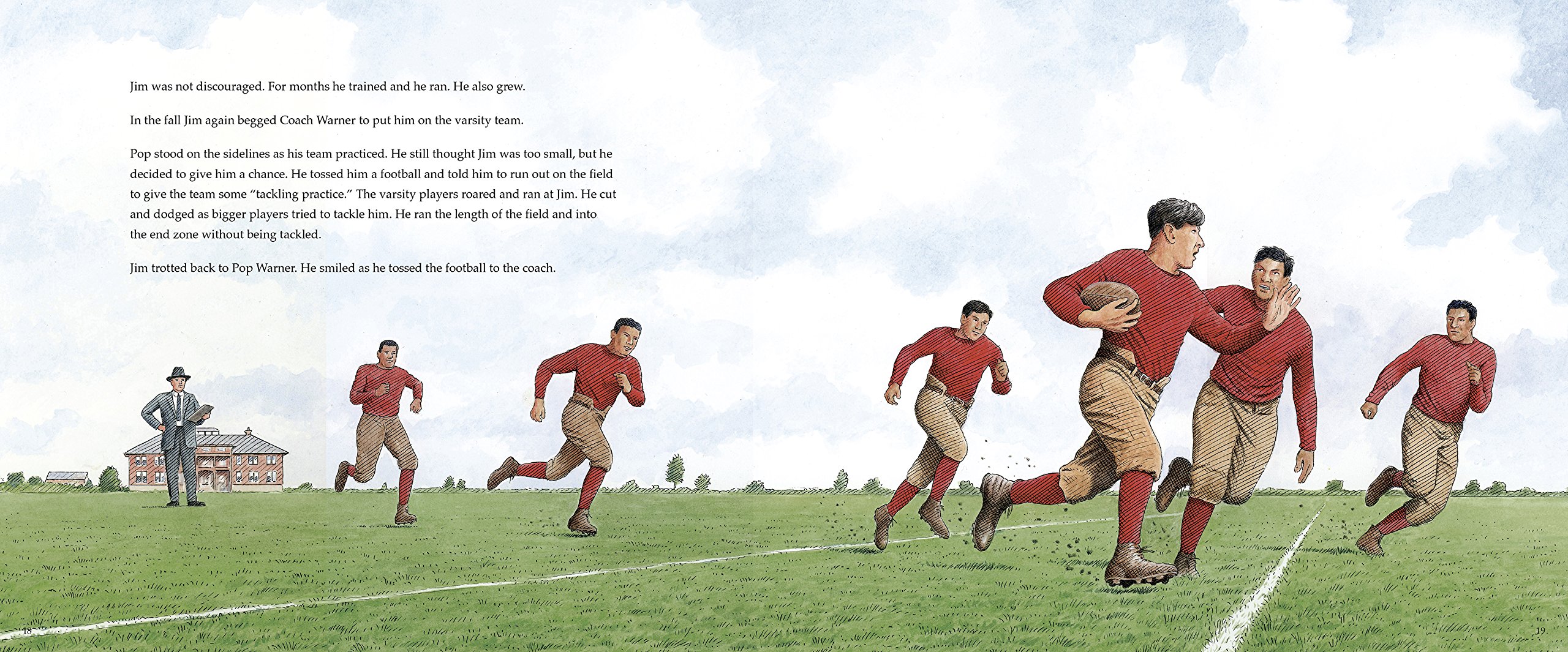
Summary:  The big game against Army is the climax of this book, but there’s a long story to be told before that.  Jim Thorpe, like so many other Indian children, was sent to boarding school, where he was forced to have his hair cut, wear school-issued clothing, and stop speaking his native language.  After running away from a school in Kansas, his father sent him to the Carlisle Indian Industrial School in Pennsylvania. He excelled at all sports there, becoming a football and track star and winning a couple of gold medals at the 1912 Olympics.  Later that year, Thorpe and the Carlisle team traveled to West Point to play against a team that included Dwight Eisenhower and three other future generals. The symbolism of the future Army soldiers versus the Indians was not lost on anyone as the Carlisle team played a new kind of football created by coach Pop Warner and won the game 27-6.  Includes additional information on Jim Thorpe, other members of the Carlisle team, Pop Warner, and the Carlisle Indian Industrial School, as well as a glossary and a list of additional information sources. 40 pages; grades 3-6.

Pros:  So many people (including me) know Jim Thorpe mainly as the guy who lost his Olympic medals for playing semi-professional baseball, but there is so much more to his story.  This is a good introduction to Thorpe, the Carlisle Indian Industrial School, Pop Warner, and the early days of football.

Cons:  Due to the picture book format, a lot of the more interesting (and in some cases, horrifying) details are omitted.  For a more comprehensive picture, read Steve Sheinkin’s Undefeated: Jim Thorpe and the Carlisle Indian School Football Team.

If you would like to buy this book on Amazon, click here.

Ski Soldier: A World War II Biography by Louise Borden

Published by Calkins Creek

Image result for ski soldier borden amazon

Summary:  Growing up in Sharon, Massachusetts, Pete Siebert taught himself to ski on an old pair of wooden skis he found in his parents’ barn.  As he got older, his parents took him and his sister to the White Mountains of New Hampshire, where he became a proficient racer and vowed to one day open his own ski resort.  After graduating high school, he enlisted in the army, the 10th Mountain Division of soldiers on skis. After training in the Colorado Rockies, the division was shipped overseas to Italy, where they took part in a daring nighttime attack on Germans in the Apennines Mountains.  Pete was wounded so severely doctors weren’t sure he would walk again, but he was determined to ski. He persevered and recovered enough to make the 1950 U.S. men’s ski team. And in 1962, his boyhood dream came true when he opened the Vail Ski Resort in Colorado. Includes additional information about Pete Seibert and the 10th Mountain Division, as well as a list of sources.  176 pages; grades 4-8.

Pros:  Told in verse, with plenty of photos, this story will appeal to skiers and World War II buffs.  It’s a quick read, but the story is engaging, and readers will learn a lot about Pete and an unusual chapter in military history.

Cons:  The cover makes the book look kind of old.

If you would like to buy this book on Amazon, click here.


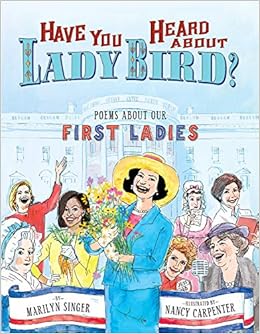
Have You Heard About Lady Bird? Poems About Our First Ladies by Marilyn Singer, illustrated by Nancy Carpenter

Published by Disney-Hyperion

Image result for have you heard lady bird amazon

Summary:  As she did for the Presidents in Rutherford B., Who Was He?, Marilyn Singer has written a poem for every First Lady from Martha Washington (“‘Lady Presidentess,’ dear wife of our first leader,/did not bemoan, she set the tone,/for all who would succeed her”) to Melania Trump (“She learned languages, changed her name,/married into fortune, embraced new fame”).  Each is accompanied by a picture of the First Lady in some scene from her term. Includes a page on “Being the First Lady”, several pages of thumbnail portraits and brief profiles of each woman, and a list of sources for additional information. 56 pages; grades 2-5.

Pros:  These easily accessible poems are a fun way to introduce kids to the wide variety of women who have served as First Lady, and the way the job has changed over time.

Cons:  Some of the poems about the less well-known First Ladies may be a little confusing to kids without any background knowledge.

If you would like to buy this book on Amazon, click here.

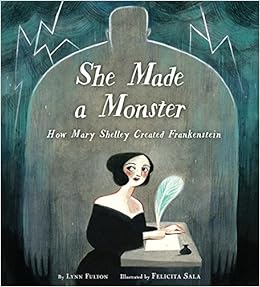
She Made a Monster: How Mary Shelley Created Frankenstein by Lynn Fulton, illustrated by Felicita Sala

Published by Knopf Books for Young Readers

Image result for she made a monster amazon

Image result for she made a monster sala

Summary:  On a dark and stormy night two hundred years ago, young Mary sat in her room trying to think of a story.  Downstairs, she could hear her friends Lord Byron and Percy Shelley (soon to be her husband) talking about their own stories.  The group had decided to have a contest to see who could write the best ghost story in a week, and the deadline was approaching.  Finally, Mary went to bed, but in her dreams, she saw a huge creature lying on a table, with a terrified young student shrinking away from him.  Mary knew the young man had brought this being to life. Jolted awake, heart pounding, she realized she finally had an idea for her story. Includes an author’s note about Mary Shelley’s story, Frankenstein, with additional information about Mary and her mother Mary Wollstonecraft, who is referenced in the book.  40 pages; grades 2-5.

Pros:  The writing and illustrations create a deliciously creepy feeling as readers learn about the history behind Mary’s famous book.  This would be an excellent supplement to anyone reading Frankenstein.

Cons:  This is a somewhat fictionalized account (the author’s note tells the parts she took some liberties with) and not really a biography, since it only covers a single episode in Mary Shelley’s life.

If you would like to buy this book on Amazon, click here.

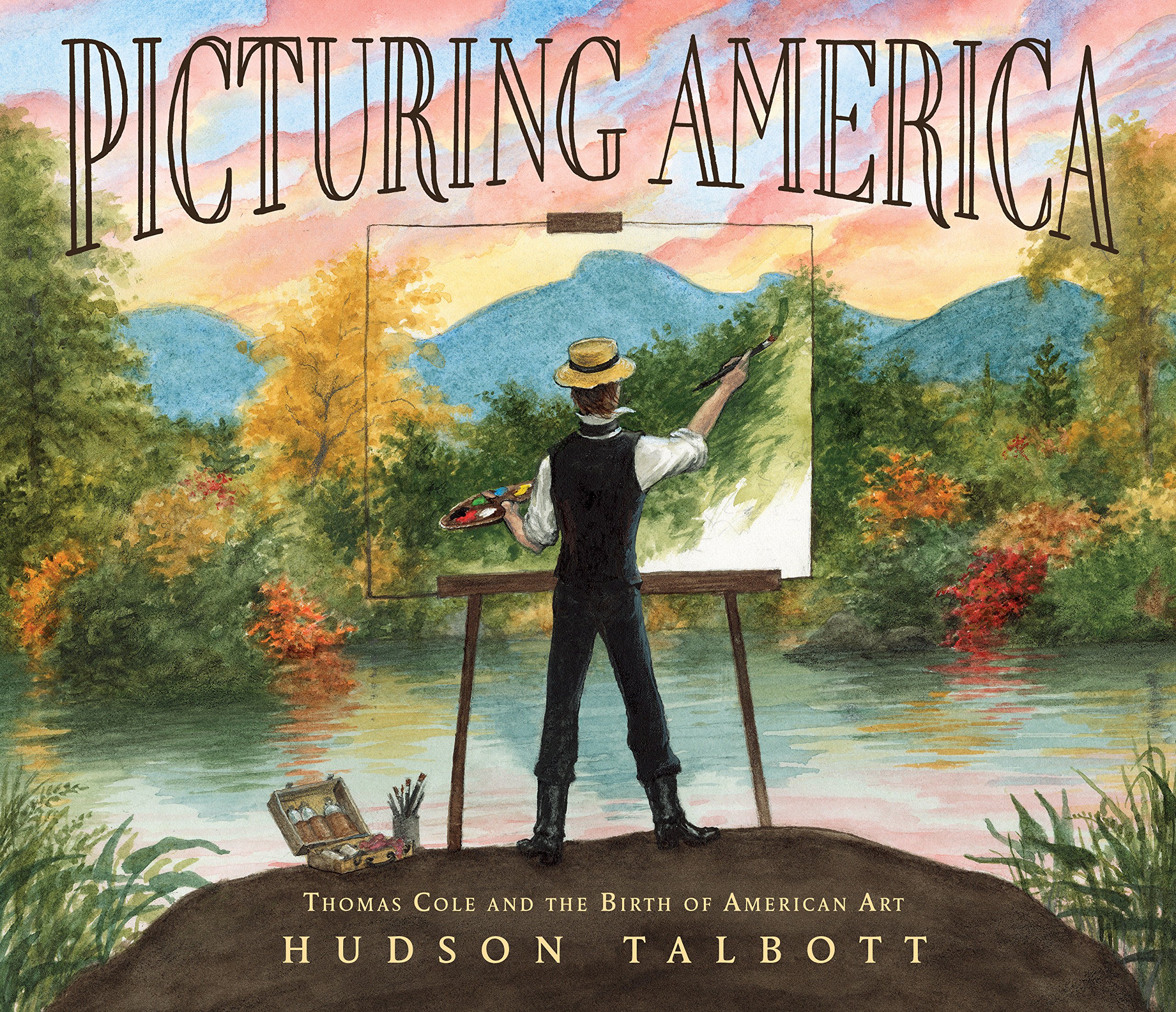
Picturing America: Thomas Cole and the Birth of American Art by Hudson Talbott

Published by Nancy Paulsen Books

Image result for picturing america talbott amazon

Image result for picturing america talbott

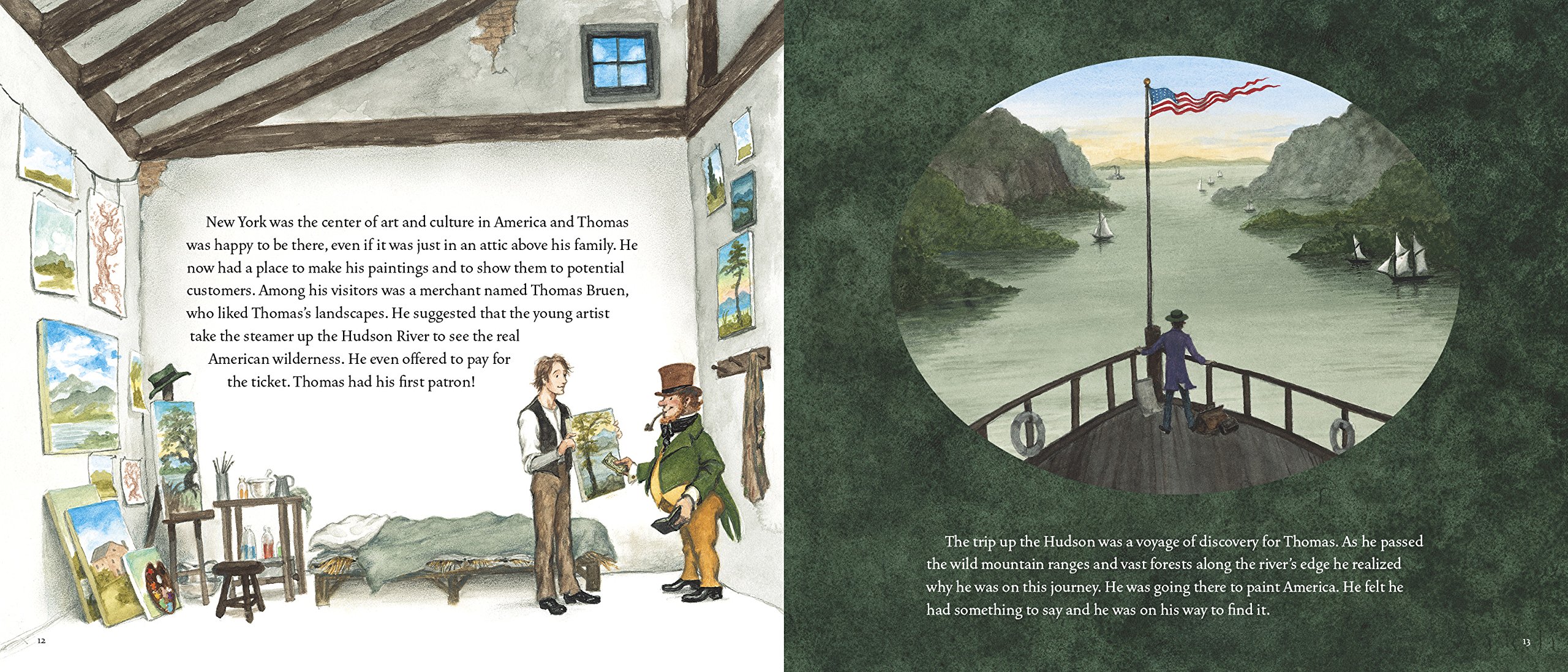
Summary:  Thomas Cole loved nature and drawing from the time he was a little boy growing up in the English countryside.  When the Industrial Revolution hit, his family fell on hard times and decide to emigrate to America. The family settled first in Ohio, then Pennsylvania, but it wasn’t until they moved to New York that Thomas’s luck began to change.  A merchant named Thomas Bruen admired Cole’s landscape paintings and financed a trip up the Hudson.  Cole’s paintings of the wilderness there brought him fame and fortune, enough to support him on a three-year visit to Europe. He was particularly fascinated by the ruins in Rome, and painted a series of landscapes depicting a society moving from wilderness to civilization and back again.  He returned to the U.S., where he married and settled in the Catskills, living and working there until his death at the age of 47. His style, known as the Hudson River school of art, was the first American art movement, and influenced many other American artists for generations. 32 pages; grades 1-5.

Pros:  This straightforward biography is illuminated with many of Cole’s paintings, showcasing an important early American artist.

Cons:  A timeline would have been useful, since only one date is given in the text (1818, the year the Coles came to the U.S.).

If you would like to buy this book on Amazon, click here.

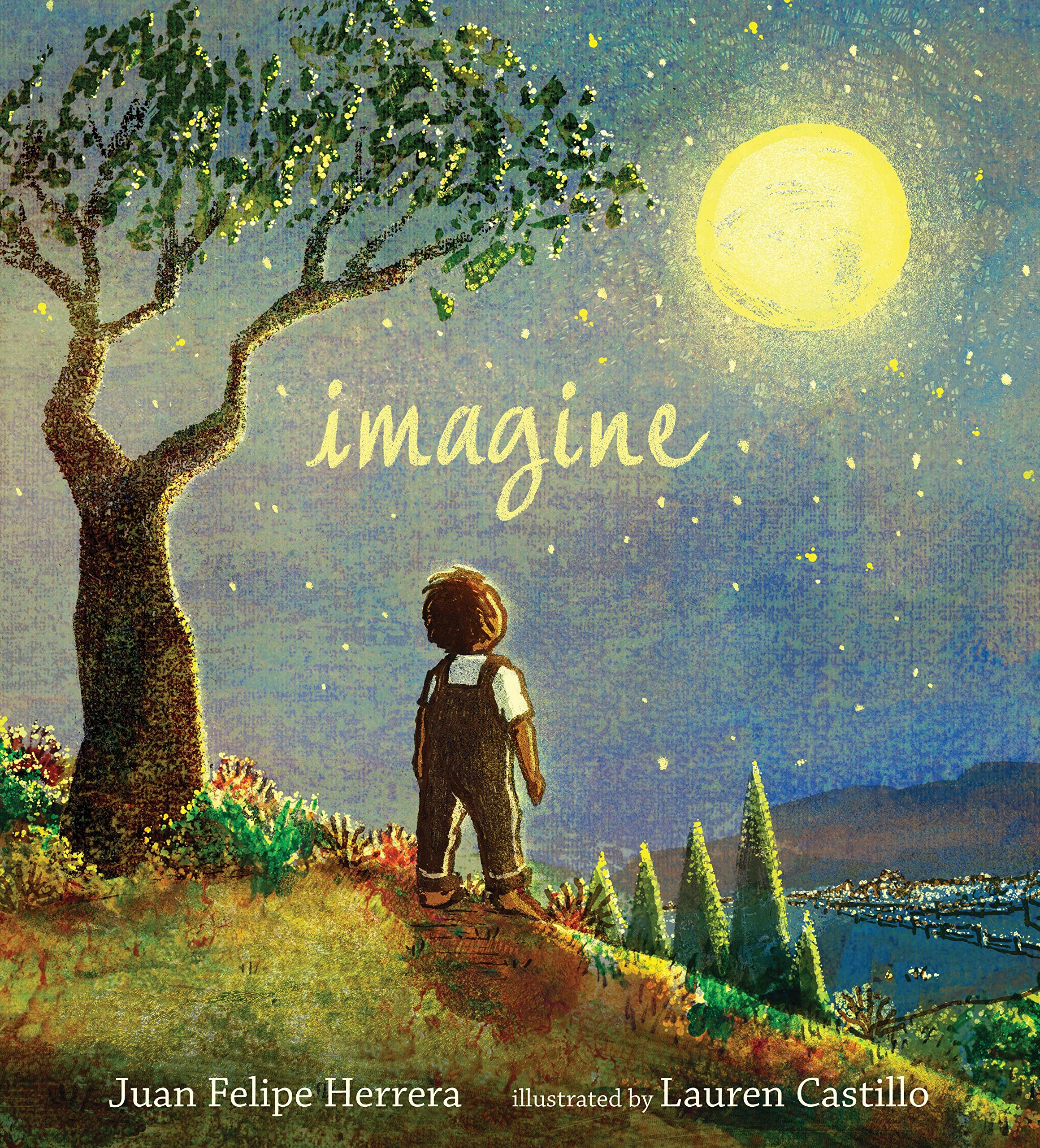
Imagine by Juan Felipe Herrera, illustrated by Lauren Castillo

Published by Candlewick

Image result for imagine herrera amazon

Image result for imagine lauren castillo

Summary:  Former U.S. Poet Laureate tells the story of his life in a poem inviting readers to imagine his past and their own futures.  Starting off as a little boy who loved nature (“If I picked chamomile flowers as a child/in the windy fields and whispered/to their fuzzy faces,/imagine”), he shows his life as a child of migrant farm workers, having to repeatedly leave his home and friends, and going to school not knowing any English.  He loved his new language, using it to write poetry, then learning music so he could turn his poems into songs. Each sentence ends with the word “imagine”. He concludes: “If I stood up/wearing a robe/in front of my familia and many more/on the high steps/of the Library of Congress/in Washington, D.C., and/read out loud and signed/my poetry book/like this–/Poet Laureate of the United States of America/Imagine what you could do.”  32 pages; grades K-5.

Pros:  This picture book-length poem allows Herrera to tell his own amazing story as well as to inspire kids to follow their own dreams.

Cons:  I almost cried when I got to the end and there was no author’s note or biography to give more information about Herrera.

If you would like to buy this book on Amazon, click here.

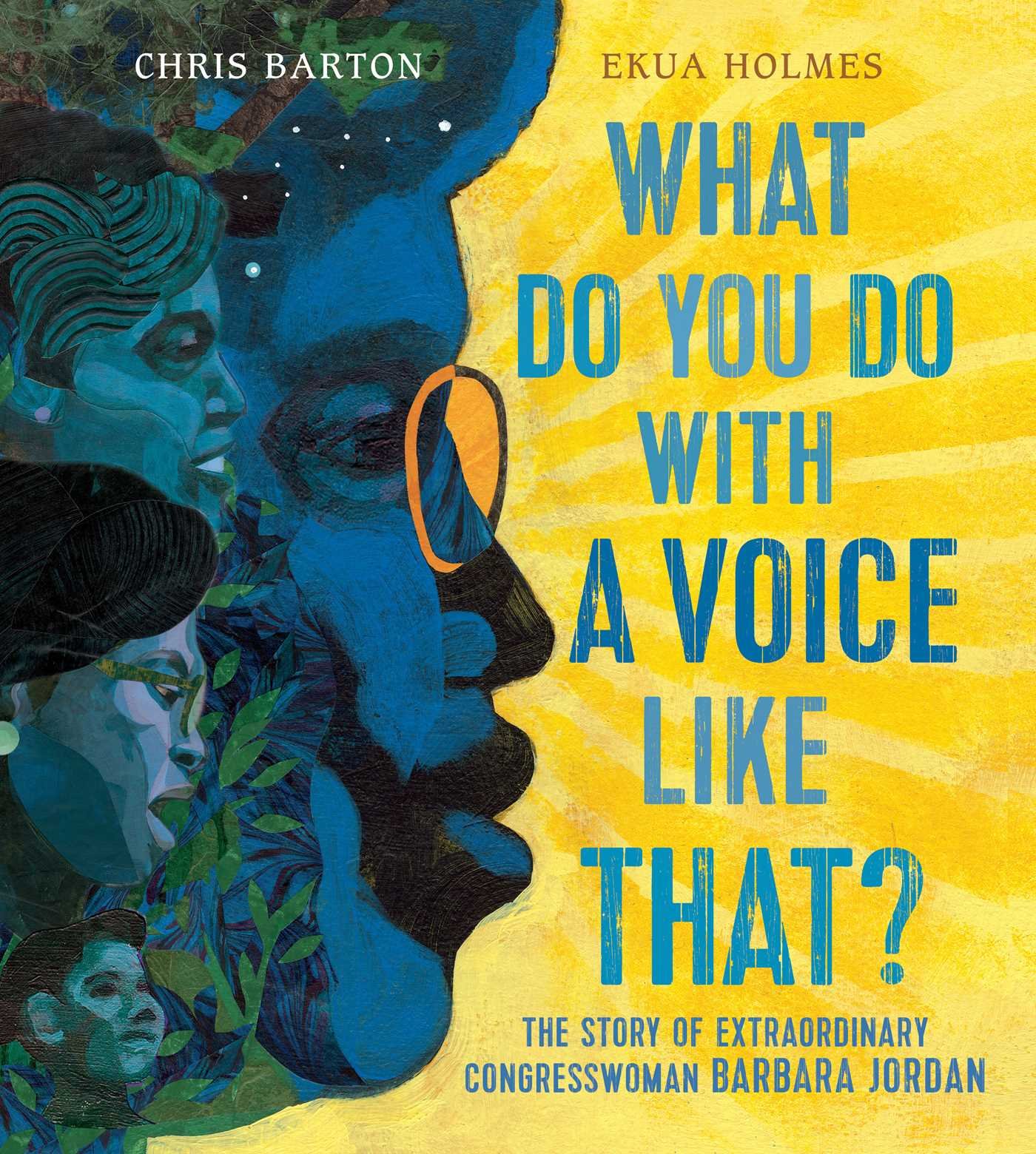
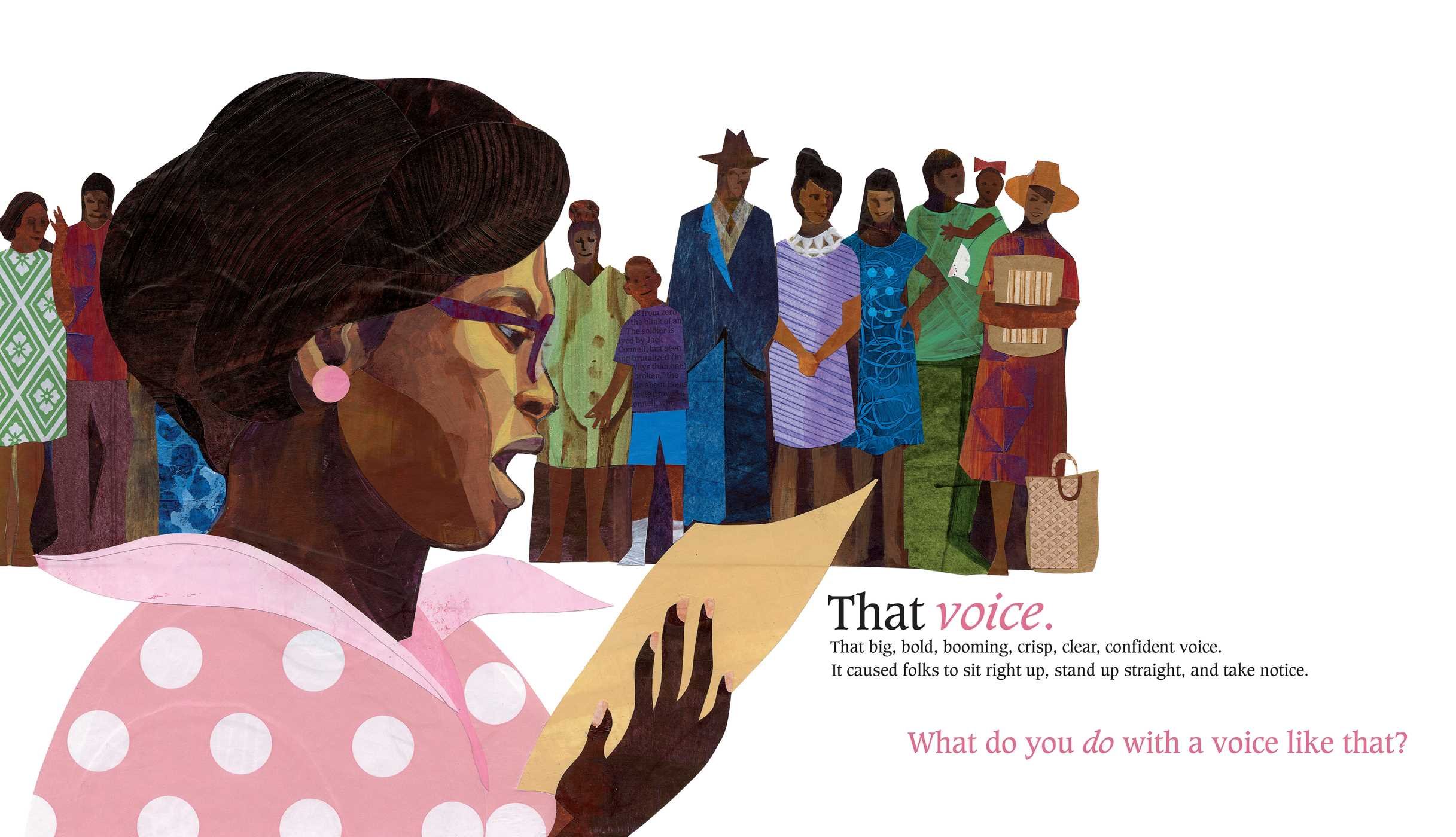
What Do You Do With A Voice Like That? The Story of Extraordinary Congresswoman Barbara Jordan by Chris Barton, illustrated by Ekua Holmes

Published by Beach Lane Books

Image result for what do you do with a voice like that amazon

Image result for what do you do with a voice like that amazon

Summary:  From an early age, Barbara Jordan had a powerful voice.  As she grew up, she had to figure out how she would use it: as a teacher?  A preacher? Finally, she decided to become a lawyer. But the work bored her.  She moved into politics, instead–or at least she tried to. It took three attempts, but she finally won a seat in the Texas Senate.  From there, her voice took her to the U.S. Congress. She used that voice to speak out against Nixon in 1974. Barbara’s star was rising, but, unknown to the public, she suffered from multiple sclerosis.  She retired from Congress in 1979 and moved back home, where she taught at the University of Texas. Jordan died in 1996, but her legacy lives on through her former students. Includes an author’s note, timeline, and additional sources.  48 pages; grades 2-6.

Pros:  One huge benefit of doing this blog has been learning about so many inspiring people whom I have heard of but didn’t really know much about.  Here is a perfect example, and it is beautifully and imaginatively illustrated by Caldecott honoree Ekua Holmes.

Cons:  Too bad Barbara Jordan isn’t still around to lend her inspiring voice to the current political discourse.

If you would like to buy this book on Amazon, click here.

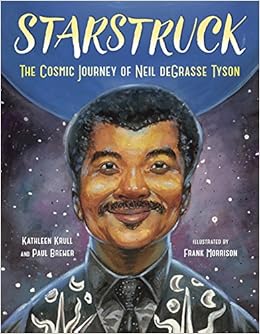
Starstruck: The Cosmic Journey of Neil DeGrasse Tyson by Kathleen Krull and Paul Brewer, illustrated by Frank Morrison

Published by Crown Books for Young Readers

Image result for starstruck neil degrasse amazon

Image result for starstruck frank morrison

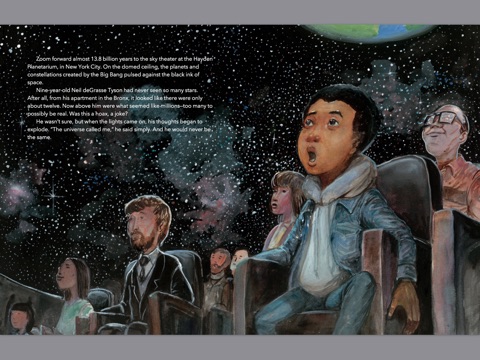
Summary:  Growing up in the Bronx, young Neil DeGrasse Tyson only saw a few stars in the night sky.  He couldn’t believe his eyes when he visited the Hayden Planetarium at age 9 and saw how many stars were really there.  From that time on, Neil was fascinated by astronomy. His parents supported him, buying him a telescope and books, and a sixth-grade teacher suggested he take an advanced class at the planetarium.  He went on to the Bronx High School of Science and Harvard, where he learned all he could about science, while also enjoying dancing and wrestling. Eventually, he wound up back at the Hayden Planetarium as a director, and has become a voice for science, appearing on TV and writing books and tweets to share his enthusiasm.  In life and in the universe, says Tyson, “It’s always best to keep looking up.” Includes an authors’ note and sources.  48 pages; grades 1-5.

Pros:  The authors show how Tyson turned his passion into a rewarding career through hard work and determination.  The illustrations capture his energy, as well as the beautiful night sky.

Cons:  I often see books like this recommended for grades K-3 (all the reviews I looked at, as well as Amazon, had that range for their recommendations).  I find picture book biographies are appreciated by upper elementary and middle school students even more than the younger ones.

If you would like to buy this book on Amazon, click here.