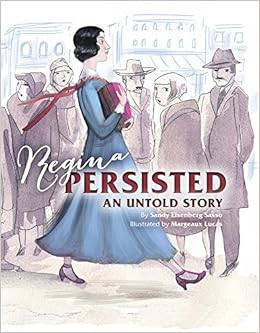
Regina Persisted: An Untold Story by Sandy Eisenberg Sasso, illustrated by Margeaux Lucas

Published by Apples and Honey Press

Image result for regina persisted amazon

Summary:  The story opens as Regina Jonas is on her way to take an exam that will allow her to be a Jewish rabbi.  As she’s walking to the school, she thinks back on what has brought her to this day–a love of the Torah, a father who believed girls should learn Hebrew, years of going to synagogue every week and staying after the service to study with the rabbi.  When she arrives at school, though, she’s stopped from taking the exam by a teacher who tells her that girls can’t be rabbis and that she must give up her dream. For five years, Regina continues to teach and inspire Jews during what is becoming an increasingly dark time in Germany.  Finally, on December 26, 1935, she is allowed to take the exam and become the first woman rabbi in the world. An afterword tells of Regina’s brief career until her death in Auschwitz in 1944; there was not another woman rabbi until 1972, but now there are close to 1,000, including the author.  32 pages; grades 2-5.

Pros:  It’s an amazing story of a woman who refused to take no for an answer in pursuing her dream.  The text and illustrations do a nice job of incorporating the stories of a couple of other strong Jewish women (Miriam and Esther).

Cons:  Because this was published by a small press specializing in Judaism, it’s probably not going to fly under the radar for many librarians and other book buyers.

If you would like to buy this book on Amazon, click here.

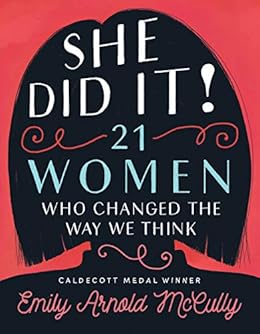
She Did It! 21 Women Who Changed the Way We Think by Emily Arnold McCully

Published by Disney-Hyperion

Image result for she did it mccully amazon

Image result for she did it mccully amazon

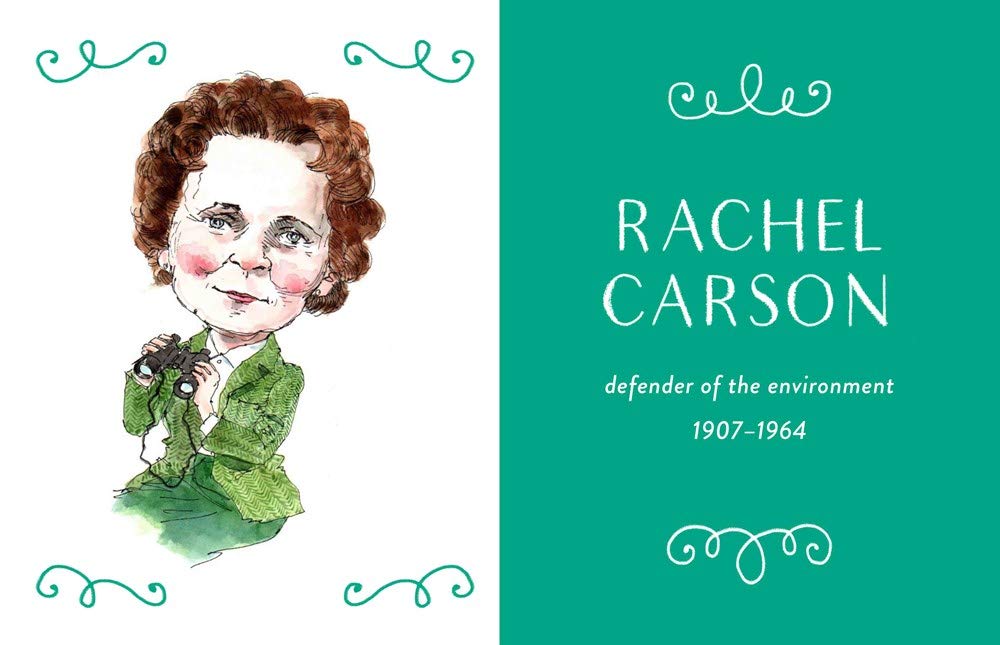
Summary:  As per the subtitle, you’ll find 21 women who promoted feminism and changed the role of women, mostly in the twentieth century.  Each profile is several pages long, broken into sections with headings and sidebars, and begins with an illustration of the woman with a large head, a la the Who Was biography series.  They’re arranged in chronological order by the year each woman was born, beginning with Ida Tarbell (1857) and concluding with Temple Grandin (1947).  Many of the names may be unfamiliar to elementary and middle school students. The concluding chapter, “Second Wave Feminism” tells the story of feminism in the 1960’s and 1970’s, and includes an eye-popping list of eight things a woman couldn’t do before the second wave (get a bank loan, serve on a jury in most states, etc.).  Includes a list of sources and an index. 272 pages; grades 4-7.

Pros:  An educational and entertaining look at 21 fascinating women in a wide variety of fields and from diverse backgrounds, all placed in the context of the history of feminism.  The illustrations and page layouts make this easy to browse.

Cons:  While I liked the illustrations, photos of each woman would have been a useful addition as well.

If you would like to buy this book on Amazon, click here.

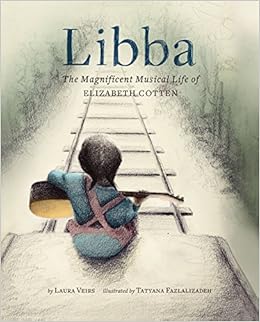
Libba: The Magnificent Musical Life of Elizabeth Cotten by Laura Veirs, illustrated by Tatyana Fazlalizadeh

Published by Chronicle Books

Image result for libba the magnificent amazon

Image result for libba the magnificent amazon

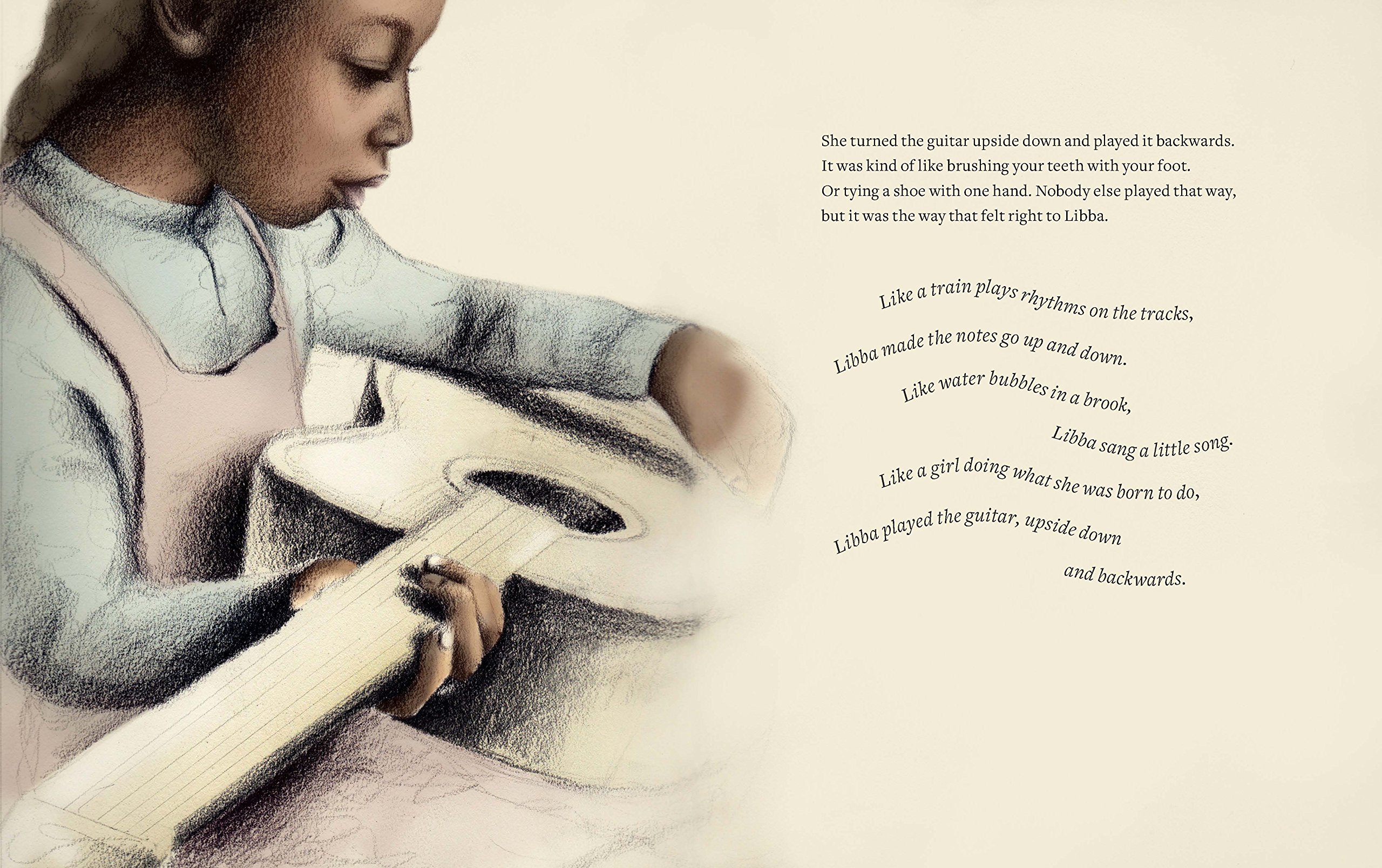
Summary:  Growing up in North Carolina, Elizabeth “Libba” Cotten loved playing music.  She learned to play her brother’s guitar, but because she was left-handed, she played it upside-down and backwards.  When her brother moved out, taking his guitar with him, Libba did chores until she had saved $3.75 to buy her own instrument. When she was 12, she wrote a song called “Freight Train”.  But an early marriage and a baby derailed her musical ambitions for many years. In the 1940’s, she took a job as a housekeeper for the musical Seeger family.  When they heard her play, they helped launch her career. She recorded her first album in 1958, then went on tour. “Freight Train” became a hit, and her songs were covered by many artists.  Libba won a Grammy award in 1985, when she was in her 90’s. Includes a lengthy author’s note with additional biographical information and a list of works cited. 48 pages; grades 2-5.

Pros:  Kids may not appreciate the “it’s never too late to follow your dreams message”, but it’s an inspiring one for us older readers, and Libba’s unconventional way of playing the guitar will help kids to see there’s more than one path to greatness.  Look on YouTube for a video of Libba playing and singing “Freight Train” to really appreciate her guitar talents.

Cons:  Although the illustrations are lovely, the cover didn’t really grab me, and I had this out of the library a couple times before I finally read it.

If you would like to buy this book on Amazon, click here.

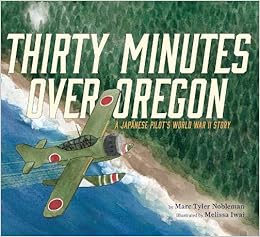
Thirty Minutes Over Oregon: A Japanese Pilot’s World War II Story by Marc Tyler Nobleman, illustrated by Melissa Iwai

Published by Clarion Books

Image result for thirty minutes over oregon

Image result for thirty minutes over oregon

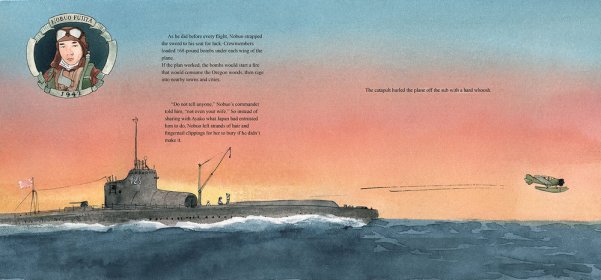
Summary:  On September 9, 1942, Nobuo Fujita set out on a mission to drop two bombs in Oregon, with the intention of setting a forest fire that would spread to nearby towns.  The raid was successful, but only one bomb ignited, and the resulting fire was quickly contained. Residents of the town of Brookings, Oregon were somewhat alarmed to discover pieces of a Japanese bomb in a nearby forest.  The mission was repeated a few weeks later, with similar results. After the war, Nobuo settled down in Japan, never telling anyone about his raids over America. In 1962, the Brookings Jaycees, trying to boost tourism, decided to track down the Japanese bomber pilot and invite him to America.  For the first time, Nobuo told his family about his role in the war, and the whole family traveled to Oregon, not sure about what to expect. Despite some protests, most of the townspeople welcomed the Japanese visitors with open arms, and the trip ended up being the first of four that Nobuo made; he also sponsored three Brookings high school students to visit him in Tokyo.  The day before he died in 1997, a town representative flew to Japan to make Nobuo an honorary citizen; a year after his death, his widow scattered some of his ashes in the Oregon town. Includes an author’s note and additional sources. 40 pages; grades 1-6.

Pros:  Kids who are interested in World War II may pick this up, but there is a lot more to the story than just military history.  It’s a tale of forgiveness and pacifism, and raises the interesting question about Nobuo: “He went from fighting to uniting.  Which took more courage?’’ An engaging story and meditation on war and peace.

Cons:  It does make you wonder what would have happened if those bombs had worked the way they were supposed to.


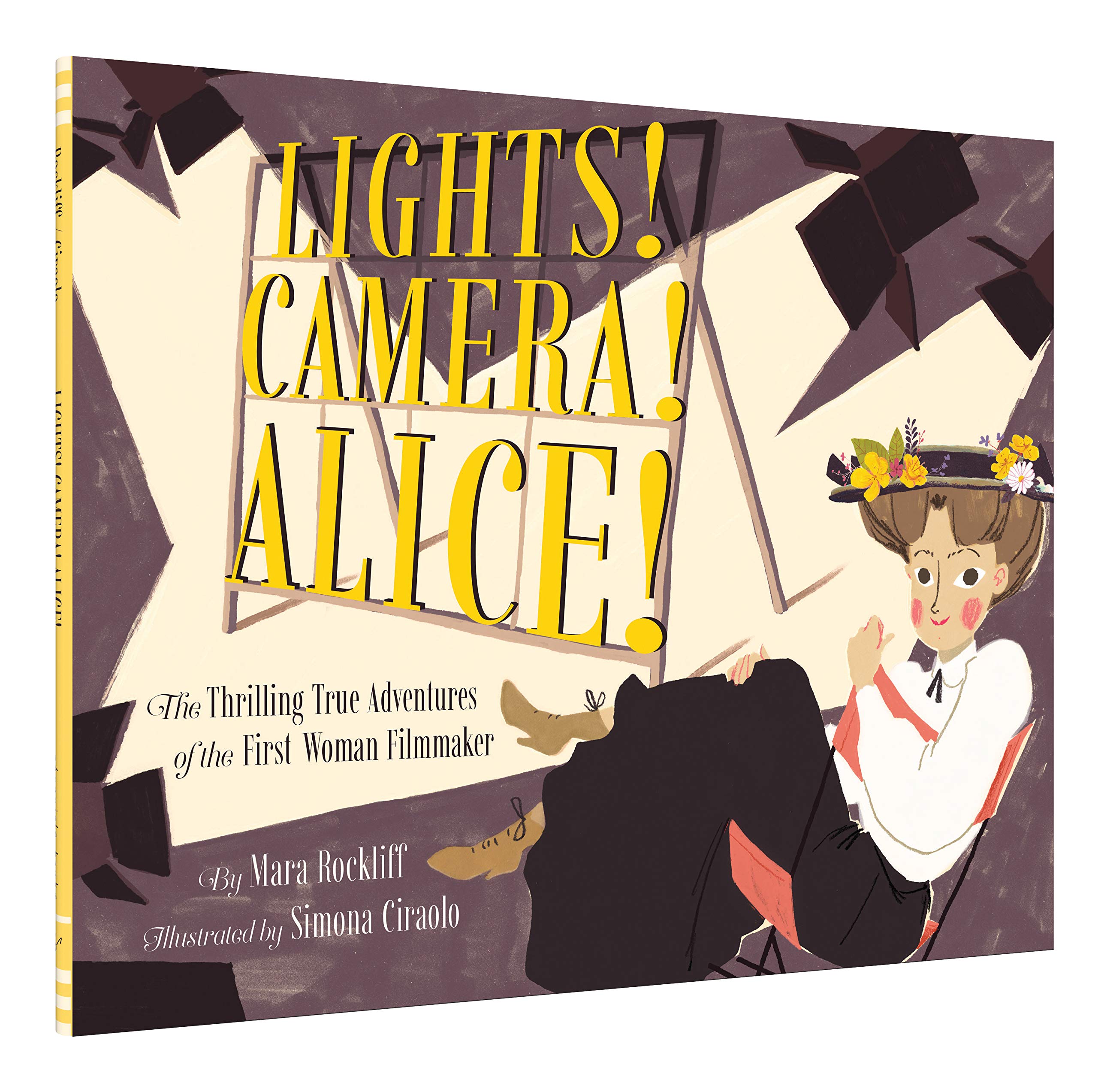
Lights, Camera, Alice! The Thrilling True Adventures of the First Woman Filmmaker by Mara Rockliff, illustrated by Simona Ciraolo

Published by Chronicle Books

Image result for lights camera alice guy amazon

Summary:  Alice always loved stories, but when her father died and the family business went under, she was forced to become practical and find a job.  She was hired by a camera company and learned about a new kind of camera–one that made moving pictures.  To help sell the camera, Alice decided to capture some of her stories on film.  She created props and costumes, found actors and actresses, and experimented with different film techniques.  She even learned to add sound and color to her motion pictures.  She eventually moved to America, where she opened a studio and eventually made over 700 movies.  But when the film industry became big business, Hollywood put Alice’s little studio out of business, and she moved back to France with her children.  Much of her work was lost, but in 1955, her role in movie making was rediscovered, and she was awarded the Legion of Honor.  She also wrote her memoirs, which were finally published in America in 1986.  Includes additional information and a list of sources, including two of Alice’s films that can be seen on YouTube.  60 pages; grades 2-6.

Pros:  This quirky book tells the unbelievable story of Alice Guy-Blache, who contributed a huge amount to early film, yet was almost completely unrecognized for her achievements.  The story is told in the style of a silent movie, and the illustrations have a good time playing with that genre.

Cons:  All recommendations I saw were for grades K-3 or K-4, but most kindergarteners and first graders wouldn’t have enough background knowledge to understand or appreciate this.

If you would like to buy this book on Amazon, click here.


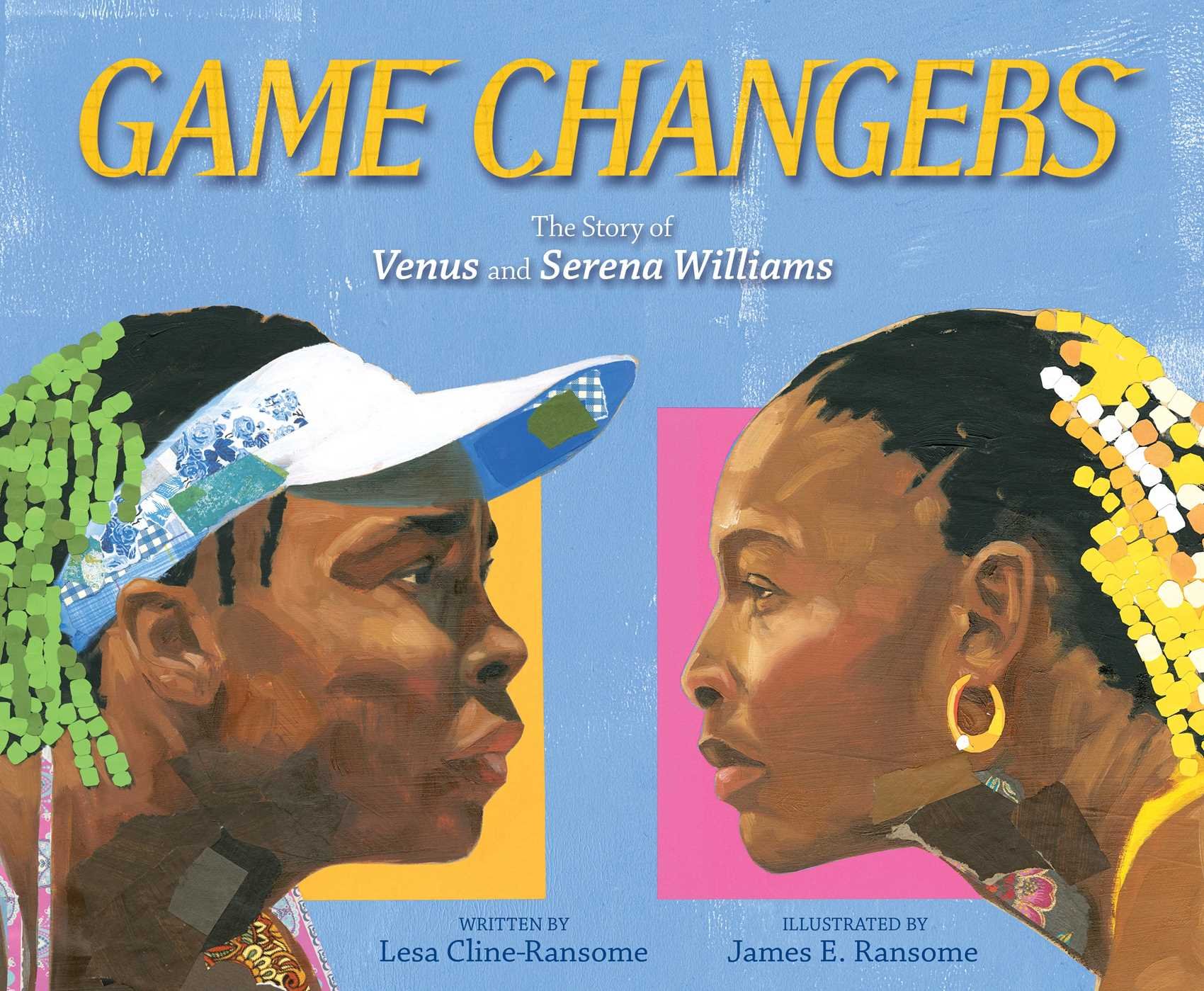
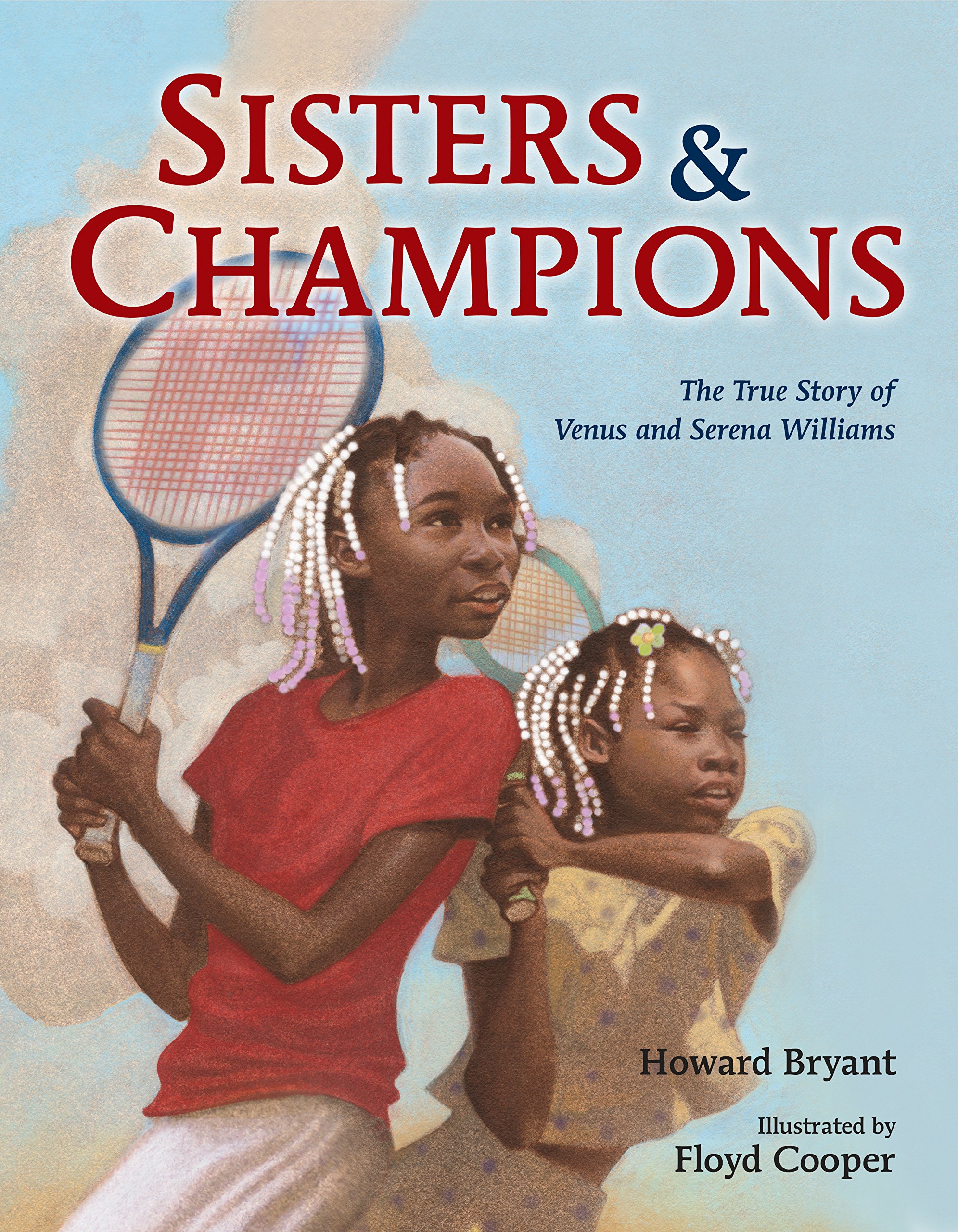
Game Changers: The Story of Venus and Serena Williams by Lesa Cline-Ransom, illustrated by James E. Ransome and Sisters and Champions: The True Story of Venus and Serena Williams by Howard Bryant, illustrated by Floyd Cooper

Game Changers published by Simon and Schuster Books for Young Readers

Sisters and Champions published by Philomel Books

Image result for game changers story of venus amazon

Image result for game changers ransome

Image result for sisters & champions amazon

Image result for sisters & champions cooper

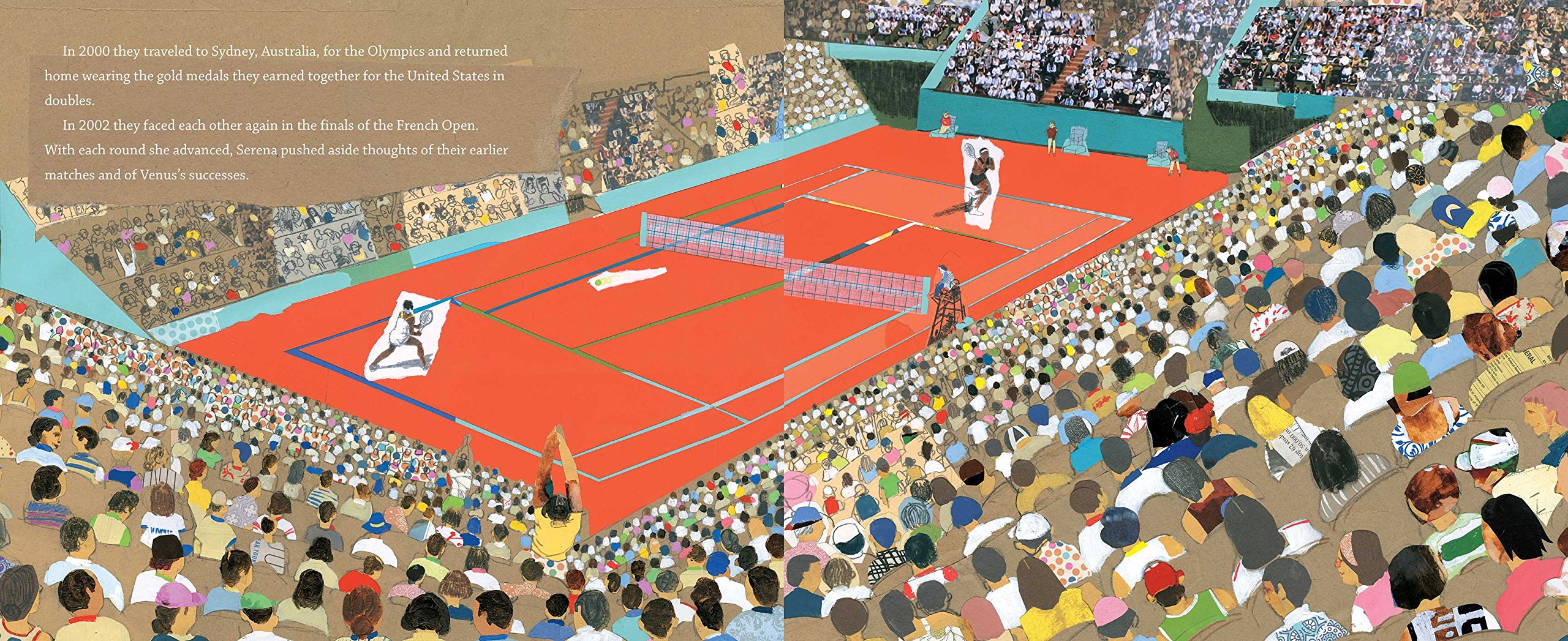
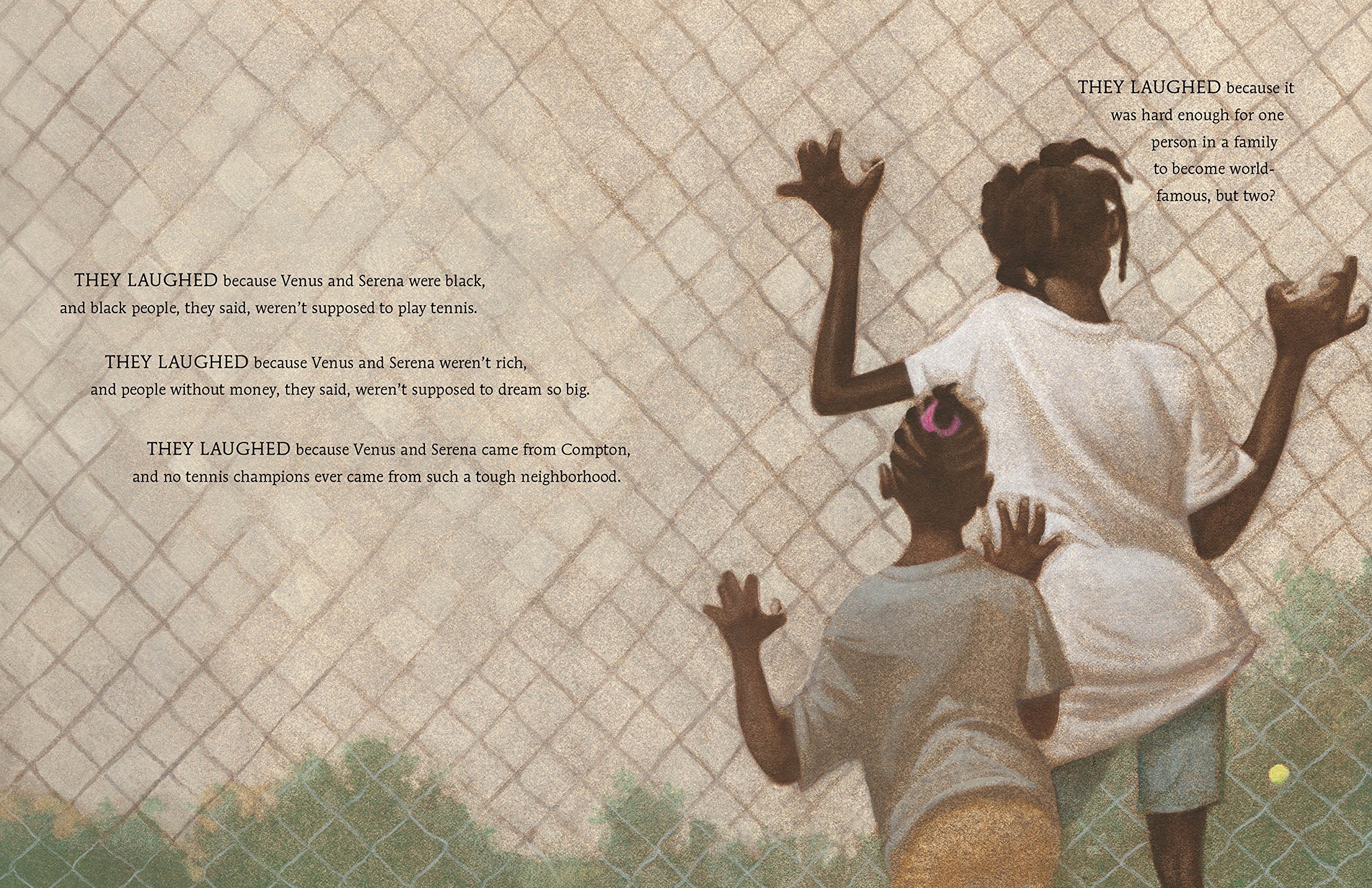
Summary:  When I went to write a review about Game Changers, I discovered Sisters and Champions, another 2018 book about Venus and Serena Williams.  Both are picture book biographies that emphasize the girls’ unlikely background, growing up in Compton, a rough Los Angeles neighborhood.  Richard Williams, their father, is introduced in both books as their coach who never wavered from his belief that they could become professional tennis stars.  Venus’s rise to success and fame, followed shortly by Serena’s is documented in the books, as well as the fact that the sisters often played each other for the championship at many professional matches.  Cline-Ransome’s book talks a bit more about the racism the two of them encountered as they moved up the ranks in what had traditionally been an almost all-white sport. Her story ends with Venus taking pictures of Serena after Serena had beat her for the first time at the French Open.  Bryant’s goes a bit further, touching on illness and injuries that both women have had to overcome. Game Changers includes an afterword, source notes, a selected bibliography, and a list for further reading; no back matter in Sisters and Champions.  48 pages (Game Changers) and 32 pages (Sisters & Champions); grades 1-4 for both.

Pros:  I’m happy to see two excellent books on the Williams sisters by acclaimed authors and illustrators; Serena and Venus are a frequent topic of research in my third grade libraries.  Both books are well done, but if I had to pick one, it would be Game Changers.  I preferred the sharp, action-packed cut-paper illustrations to Cooper’s pastels, and the back matter makes it a better choice for research.

Cons:  There were some inconsistencies between the two. Cline-Ransome: “Venus won every single one of her sixty-three junior tournaments by age ten.”  Bryant: “Their father wouldn’t let his girls play junior tournaments even though everyone played juniors.”  Also, no photos in either book.

If you would like to buy Game Changers on Amazon, click here.

If you would like to buy Sisters and Champions on Amazon, click here.

Someday Is Now: Clara Luper and the 1958 Oklahoma City Sit-Ins by Olugbemisola Rhuday-Perkovich, illustrated by Jade Johnson

Published by Seagrass Press

Image result for someday is now amazon clara luper

Image result for someday is now amazon clara luper

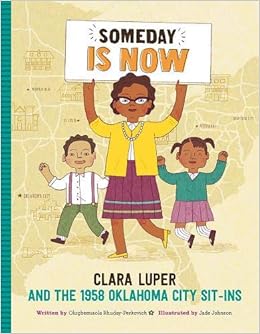
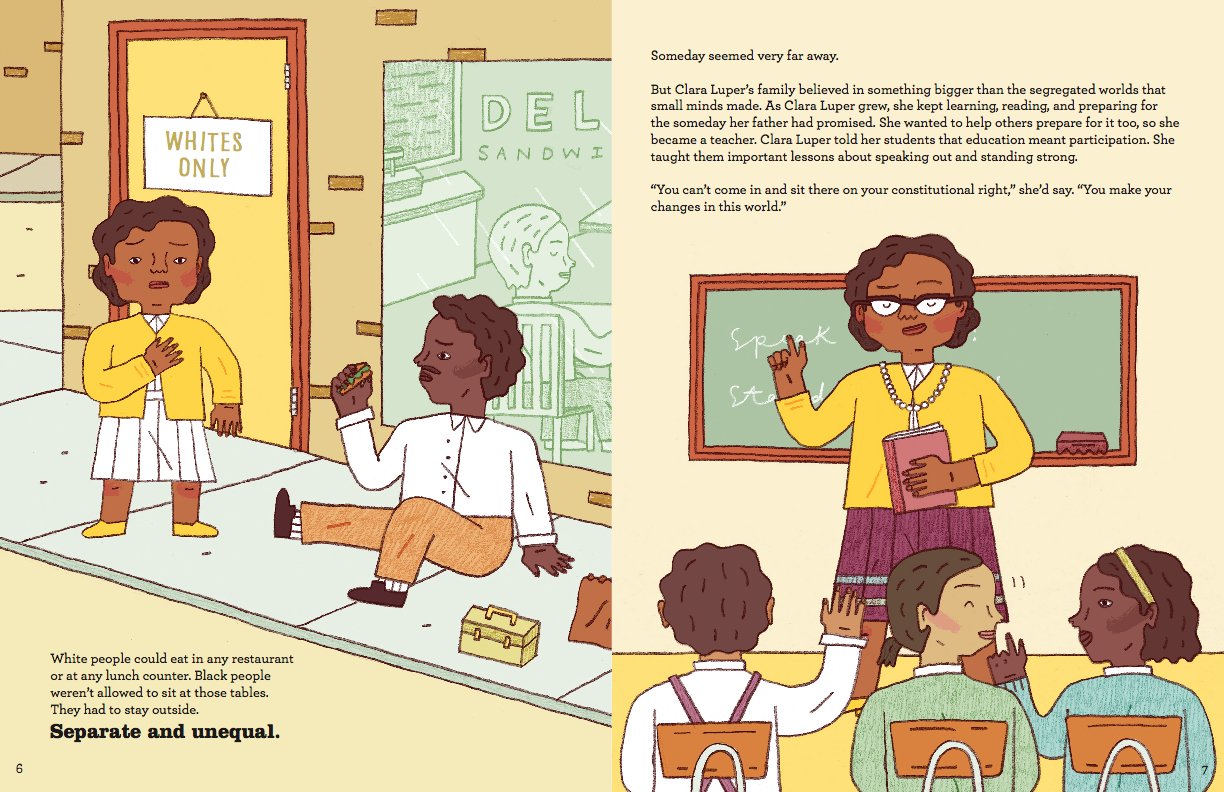
Summary:  When Clara Luper was growing up in Oklahoma in the 1930’s, her father promised to take her to segregated parks and restaurants “someday” when it was legal for them to go there.  Clara grew up to be a teacher, and decided that “someday is now”. She wrote a play called “Brother President”, and her students were invited by the NAACP to perform it in New York.  There, they experienced the freedom to go wherever they wanted, and to eat in restaurants with white people. Back in Oklahoma, they studied Martin Luther King Jr.’s four steps to nonviolent change: investigation, negotiation, education, and demonstration.  They used these steps to try to desegregate the lunch counter at Katz restaurant. When the first three steps failed, they demonstrated by sitting at the counter and demanding to be served. Day after day, they braved being spit on, having food thrown on them, and hateful phone calls to their homes.  Finally, Katz agreed to desegregate the lunch counters, not only in Oklahoma, but in Missouri, Kansas, and Iowa. Clara and her students enjoyed a meal together, then moved on to their next challenge. Includes additional information about Clara Luper and nonviolent resistance and a glossary. 32 pages; grades 2-5.

Pros:  An interesting and little-known chapter in the Civil Rights Movement.  Clara Luper and her students used sit-ins to desegregate lunch counters two years before the more famous protests at the Woolworth’s in Greensboro, NC.  The folk art-style illustrations are a good complement to the story, and the back matter provides important additional information.

Cons:  A few more dates included in the text or a timeline at the end would have helped place the story in historical context.

If you would like to buy this book on Amazon, click here.

Peace and Me: Inspired by the Lives of Nobel Peace Prize Laureates by Ali Winter, illustrated by Mickael El Fathi

Published by Lantana Publishing

Image result for peace and me ali winter amazon

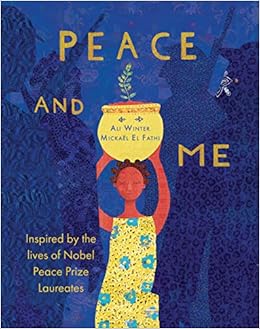
Summary:  Twelve Nobel Peace Prize winners are profiled, along with the man who started it all, Alfred Nobel.  Winners are presented in chronological order, beginning with Jean Henry Dunant in 1901 and finishing with Malala Yousafzai in 2014.  Some will likely be familiar to kids (Martin Luther King Jr., Mother Teresa, Nelson Mandela), while others are less well known (Fridtjof Nansen, Rigoberta Menchu Tum, Shirin Ebadi).  The first two pages show an interesting timeline, with each person’s name and year shown on a sailboat on the Pacific Ocean.  The last two have a world map showing the country of origin for each recipient.  32 pages; grades 1-5.

Pros:  An interesting and important collection of people for kids to know about.  The collage-style illustrations are fascinating, with lots of details to notice.  Kids will enjoy finding the girl on the cover who appears in every one.

Cons:  Only 12 of the many interesting recipients are profiled.

If you would like to buy this book on Amazon, click here.

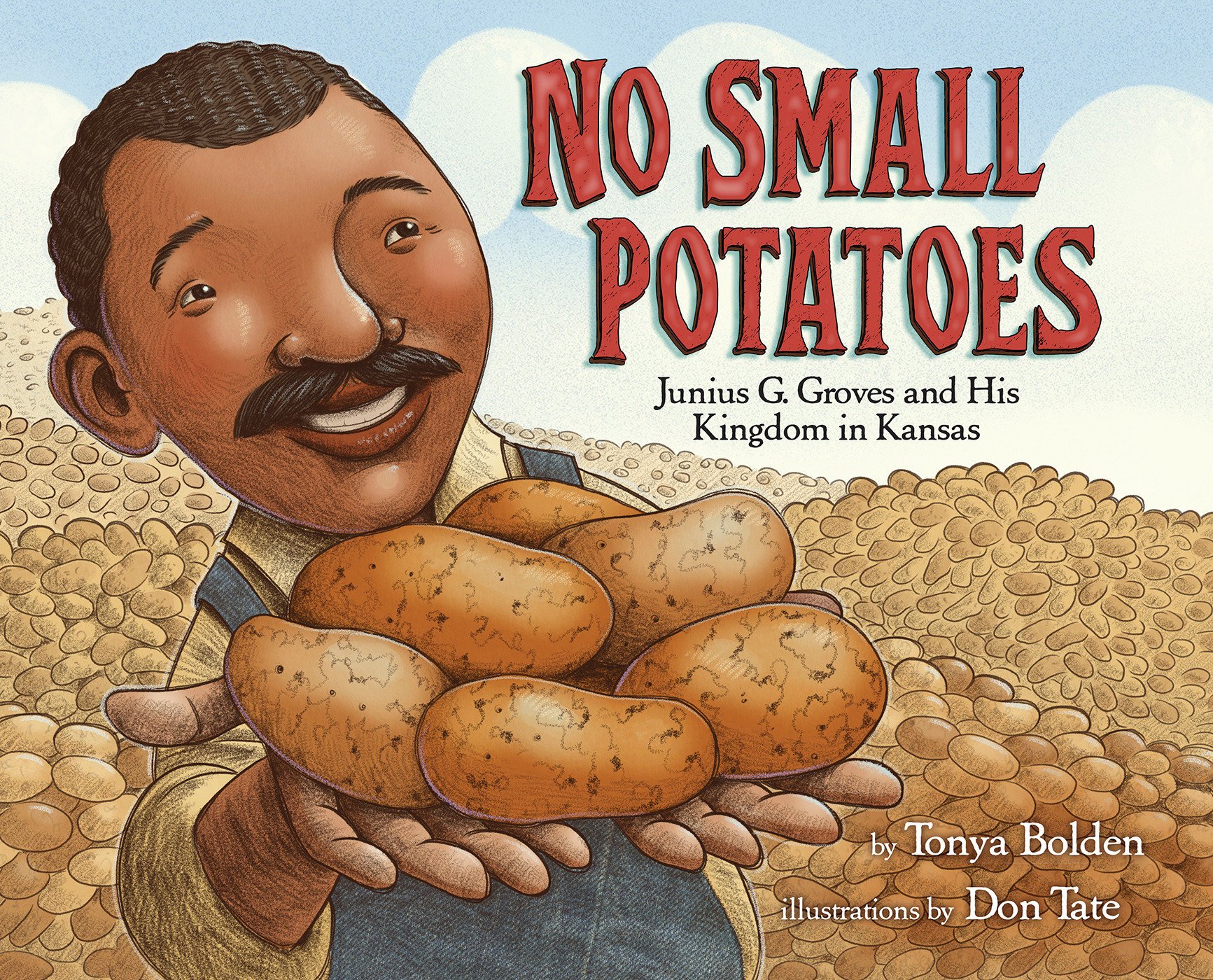
No Small Potatoes: Junius G. Groves and His Kingdom In Kansas by Tonya Bolden, illustrated by Don Tate

Published by Knopf Books for Young Readers

Image result for no small potatoes amazon

Image result for no small potatoes junius

Summary:  Slavery ended just a few years after Junius Groves was born on a plantation in Kentucky.  As a young man, he headed for Kansas to farm.  Starting out as a hired hand earning 40 cents a day, he worked hard to become a foreman, tripling his wages and eventually allowing him to rent his own land to farm.  With his wife Matilda at his side, he saved enough money to buy a farm.  The two of them worked hard, along with their twelve children, to make the farm prosperous.  Their main crop was potatoes: in 1894 he was named Potato King of Wyandotte County by the local paper; six years later, he was called the Potato King of the whole state of Kansas, and in 1902, he was crowned Potato King of the World.  In addition to millions of pounds of potatoes, Junius helped grow a church, a store, a golf course, and a town called Groves Center.  Includes a timeline, glossary, and list of sources.  40 pages; grades 1-4.

Pros:  A real rags-to-riches tale extolling the rewards of hard work, told in a style that almost makes it feel like a tall tale.

Cons:  The potential downside of vying for the title of Potato King of the World at the Thanksgiving table today.

If you would like to buy this book on Amazon, click here.


Hey, Kiddo: How I Lost My Mother, Found My Father, and Dealt With Family Addiction by Jarrett J. Krosoczka

Published by Graphix

Image result for hey kiddo amazon

Image result for hey kiddo krosoczka

Summary:  Jarrett Krosoczka spent his first few years with his mother until his grandparents intervened and got custody of him.  It was not until he was a teenager that he learned that she had been a heroin addict from the age of 13.  Jarrett grew up with Joe and Shirley, his mother’s parents.  Despite their drinking, smoking, and occasional unkind words, they loved him deeply and did their best to provide him with a good home and to support his artistic ambitions. This memoir also includes Jarrett’s memories of friends, school, and the first time he met his father and half brother and sister during his senior year in high school.  Determined not to let his past curtail his future, he graduated from the Rhode Island School of Design and has gone on to create many beloved children’s books, perhaps most famously the Lunch Lady series.  Includes an author’s note with more information about his life, the people in the book, and how he came to create this memoir. 320 pages; grades 8 and up.

Pros:  A National Book Award finalist, this graphic memoir is hard to put down (I read it in one sitting).  My already high esteem for Jarrett Krosoczka (whom I once arranged to have visit my school) grew to worshipful admiration as I learned of all the obstacles he has overcome to achieve his success.  The artwork is particularly effective, with the beginning of each chapter including actual documents, many of them letters his mother wrote to him from jail and halfway houses.

Cons:  I was hoping to get this for my middle school library, but the language and subject matter make it more of a high school/adult book.

If you would like to buy this book on Amazon, click here.