Thurgood by Jonah Winter, illustrated by Bryan Collier

Published by Schwartz and Wade
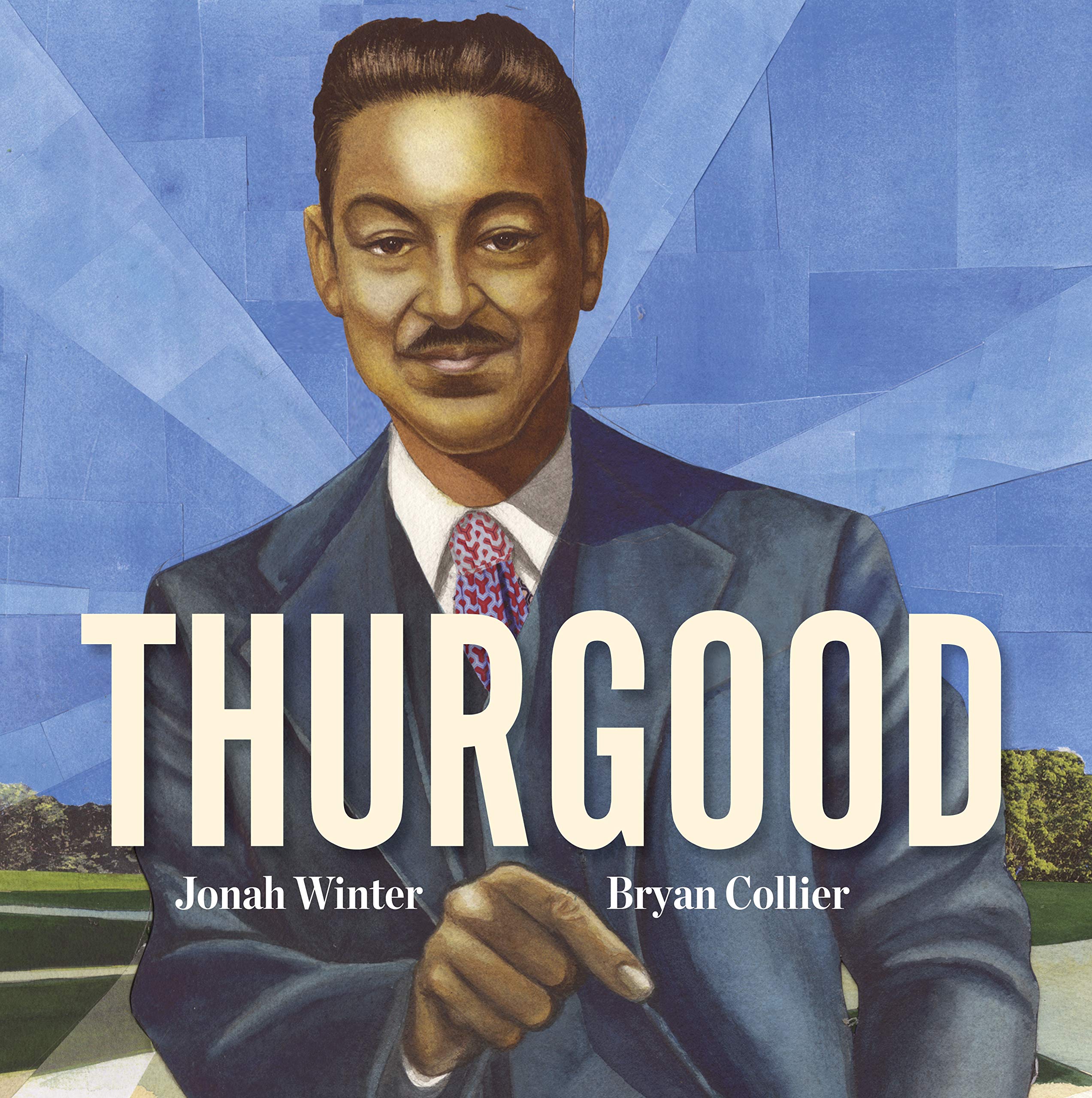
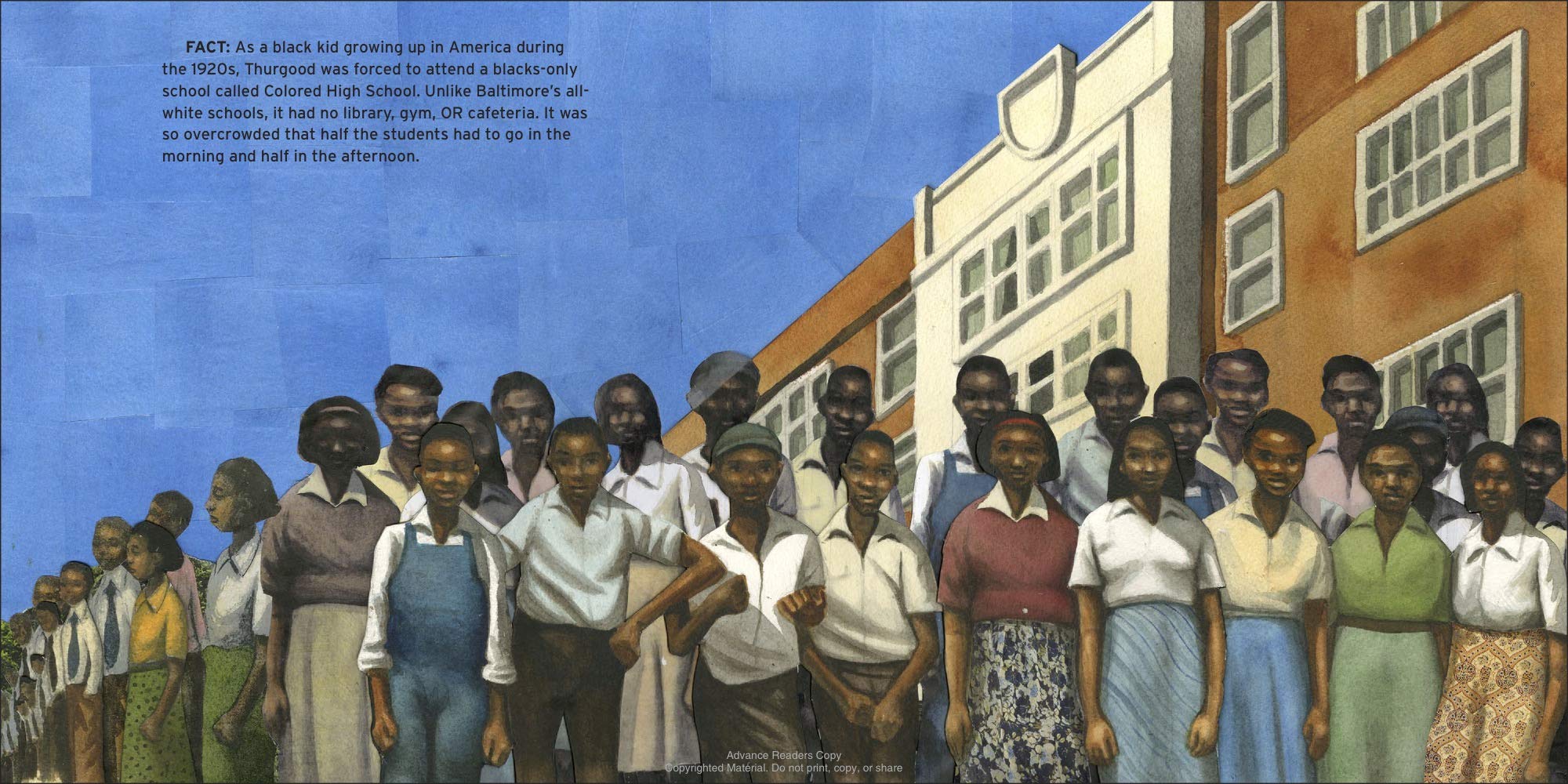
Image result for thurgood jonah winter

Image result for thurgood jonah winter

Summary:  Thurgood Marshall’s path to legal greatness began at the age of six, when he convinced his parents to legally change his name from Thoroughgood to Thurgood.  Growing up in 1920’s Baltimore, he saw injustice on a daily basis; at home, he learned from his father to back up his statements with factual evidence. After leading his high school debate team, Thurgood went on to college and then to law school at Howard University.  He became a lawyer for the NAACP, and argued 29 cases before the Supreme Court, including Brown v. Board of Education.  The book ends with that decision, simply mentioning on the last page that Marshall became the first black Supreme Court justice in U.S. history.  Includes an author’s note with more information about Thurgood Marshall’s Supreme Court appointment and career. 40 pages; grades 1-5.

Pros:  A powerful narrative about Thurgood Marshall’s life, presenting much of the information in legal terms (“Fact:”; “Verdict:”; “Injustice:”).  Bryan Collier’s illustrations boldly bring to life many dramatic scenes from Marshall’s life, in the courtroom and in unjust, sometimes dangerous settings growing up in Baltimore and traveling through the South.  

Cons:  The author’s note states, “A forty-page picture book such as this cannot possibly convey the magnitude of his legacy”, yet there are no resources for additional research.
If you would like to buy this book on Amazon, click here.

Manhattan: Mapping the Story of an Island by Jennifer Thermes

Published by Harry N. Abrams

Image result for manhattan jennifer thermes

Image result for manhattan jennifer thermes

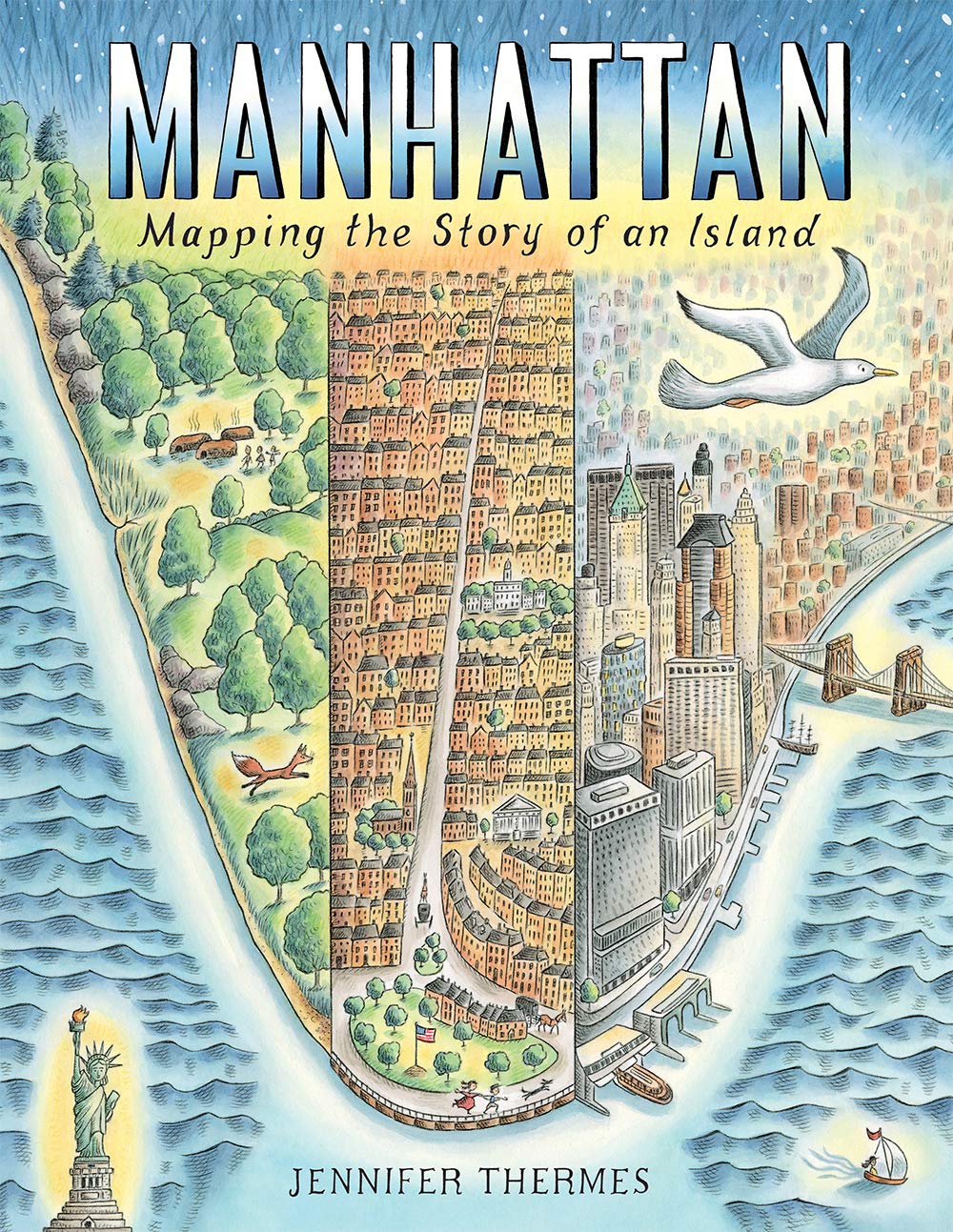
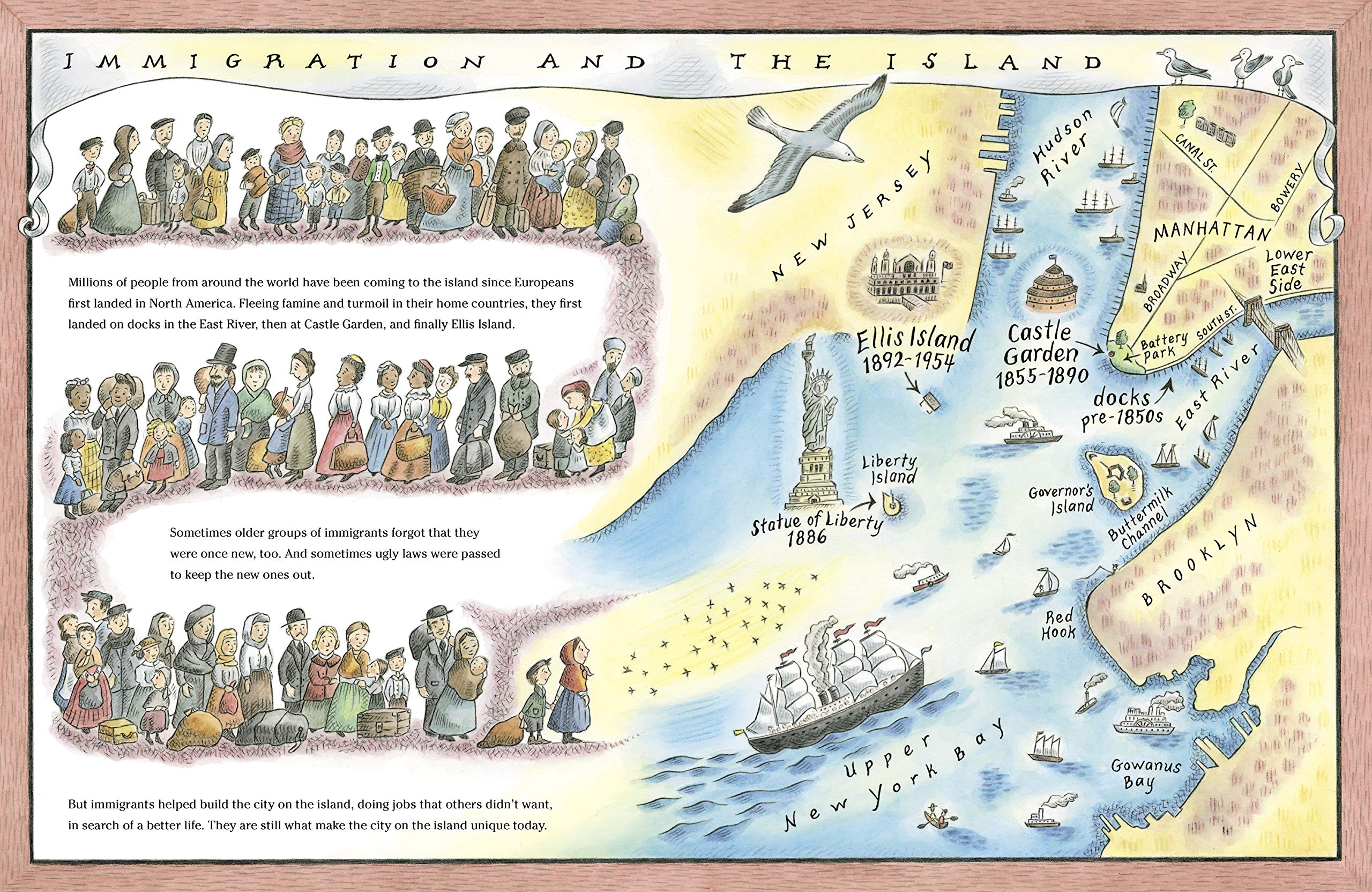
Summary:  From Henry Hudson’s discovery in 1609 to Hurricane Sandy in 2012, this history looks at the changes made to the island of Manhattan.  Before the arrival of the Europeans, the island was inhabited by the Lenape who called it Mannahatta, meaning “islands of many hills”.  That landscape changed in the early 19th century, when city planners created a grid of roads that flattened hills and straightened curves.  When life in the grid became too congested, Central Park was created to bring some green space to the city. Blizzards, fires, skyscrapers, and bridges have all changed the look of the city over the years, and with close to 4 million people living or working in New York City every week, you can be sure that those changes will continue.  Includes an afterword; an extensive timeline crammed onto a single page; and a list of books, websites, and museums with more information. 64 pages; grades 3-7.

Pros:  As she did in Grandma Gatewood Hikes the Appalachian Trail, Jennifer Thermes has created a picture book featuring beautiful maps that show a changing landscape.  There are plenty of other interesting illustrations as well, but the maps of Manhattan, all with the same shape, but gradually evolving over time, really tell the story of the city’s history.  Plan on putting aside a substantial chunk of time to enjoy this book in its entirety.

Cons:  I was surprised there was no mention of 9/11, except as an entry in the timeline.

If you would like to buy this book on Amazon, click here.

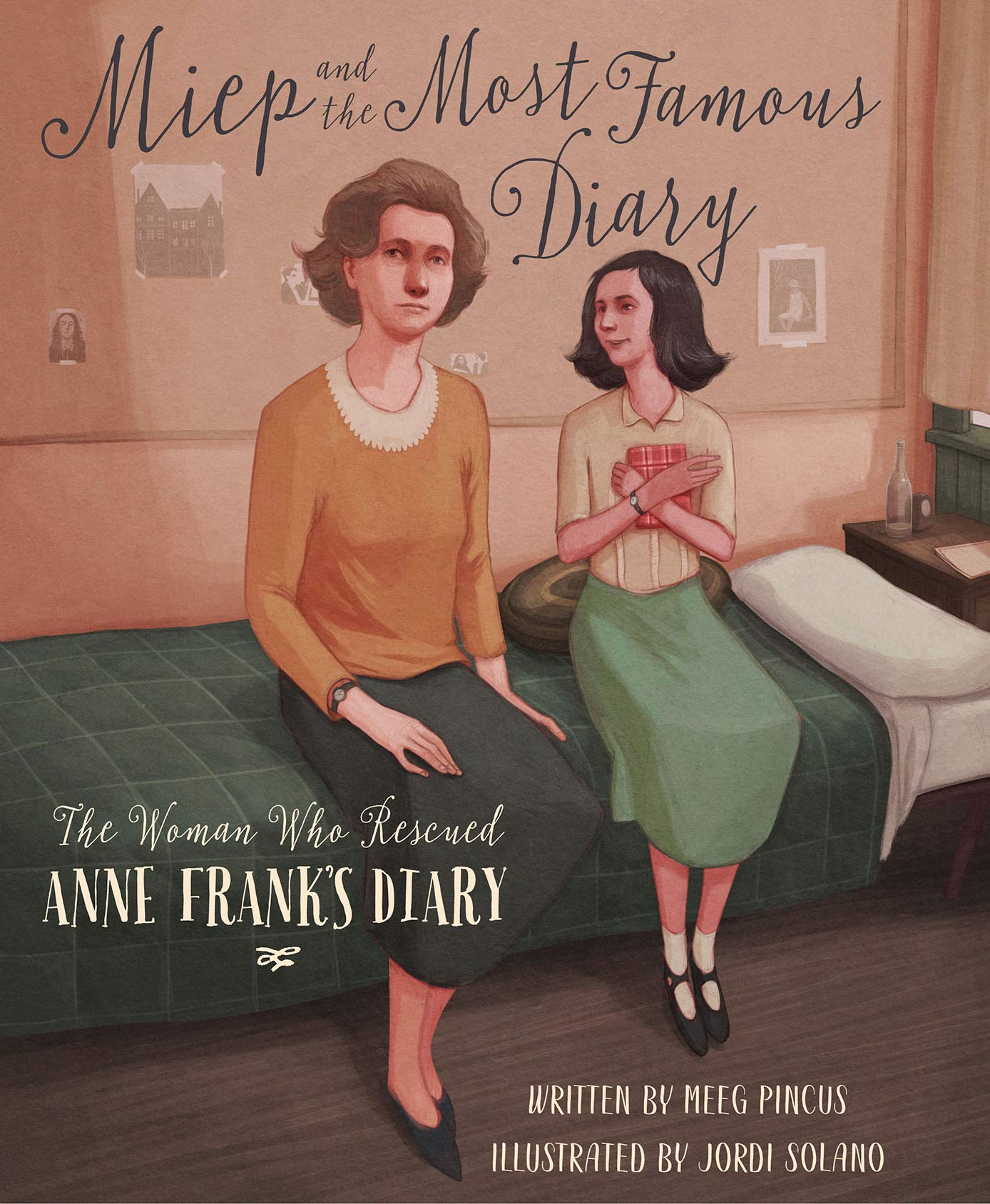
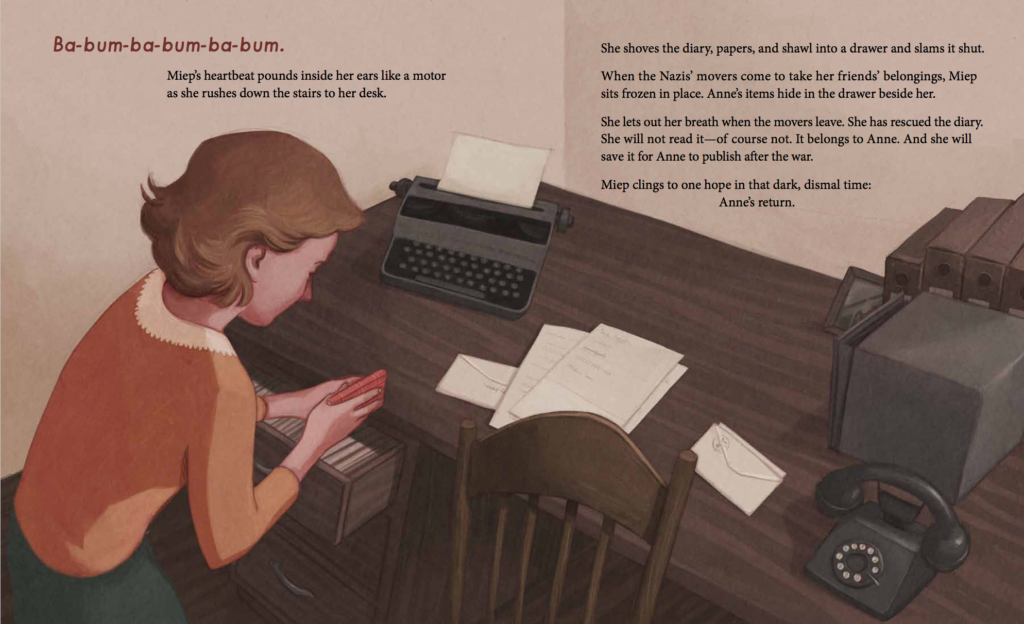
Miep and the Most Famous Diary: The Woman Who Rescued Anne Frank’s Diary by Meeg Pincus, illustrated by Jordi Solano

Published by Sleeping Bear Press

Image result for miep and the most famous diary

Image result for miep and the most famous diary

Summary:  Beginning on August 4, 1944, when the eight occupants of the Secret Annex under Miep Gies’s care were arrested and taken away, the narrative follows Miep’s story of how she saved Anne Frank’s diary.  Facing arrest for keeping any of the group’s belongings from the Nazis, Miep snuck back into the annex before their return, taking Anne’s diary and a combing shawl with some of Anne’s hair still on it. She kept these, hoping that Anne would return one day to claim them, but it was only Anne’s father, Otto Frank, who survived.  After he received the devastating news of his daughters’ deaths, Miep gave him Anne’s things. Even after the diary was published, it was many years before Miep could bring herself to read it. Reading it in one sitting at last, she felt a measure of peace, knowing that Anne would live on, thanks to her efforts. Includes an author’s note and a timeline of Miep’s life.  40 pages; grades 2-6.   

Pros:  Even with so many books about Anne Frank, this one is unique for its perspective from Miep’s point of view.  Her courage in standing up to the Nazis on numerous occasions is inspiring, as is her role in preserving Anne’s words.

Cons:  The illustrations were just okay.

If you would like to buy this book on Amazon, click here.

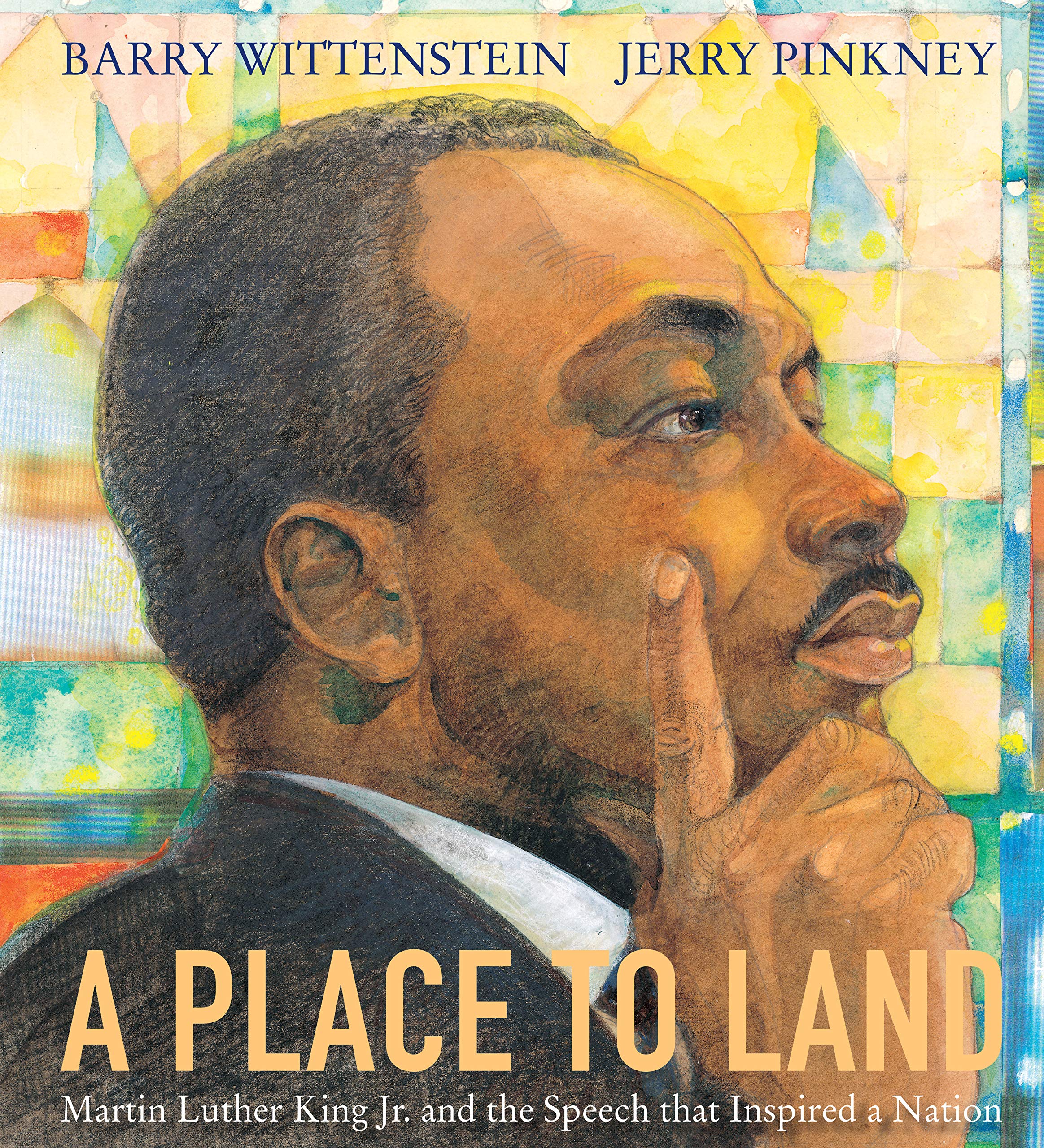
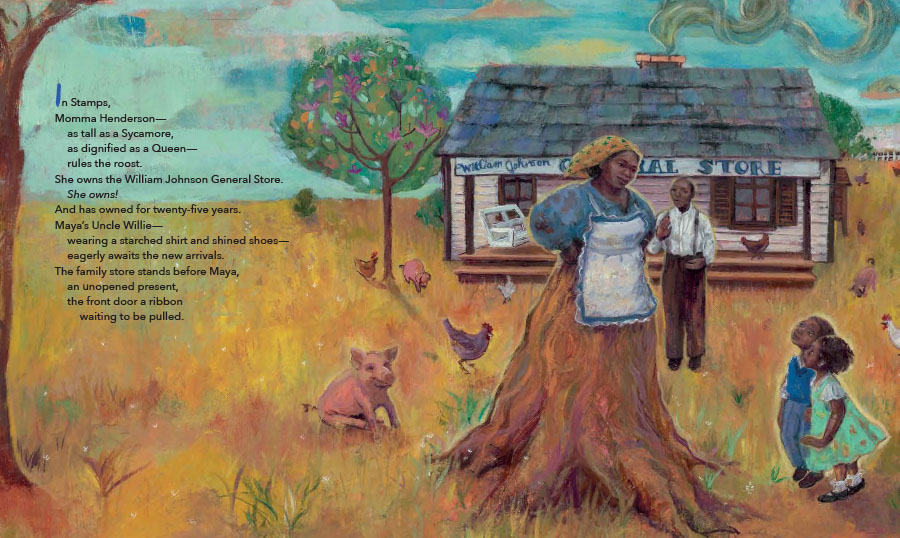
A Place to Land: Martin Luther King Jr. and the Speech That Inspired a Nation by Barry Wittenstein, illustrated by Jerry Pinkney

Published by Neal Porter Books

Image result for place to land martin

Summary:  Martin Luther King Jr.’s “I Have a Dream” speech is such an integral part of American history, it’s difficult to believe that it almost didn’t happen.  This book starts the night before the speech, when King sat down with his closest advisors to hash out what he was going to say the next day.  The focus was on jobs and economic justice, and one friend even advised, “Don’t use the line about ‘I have a dream.’ You have used it too many times already.”  King then retired to his room to meditate and pray about what he was going to say. Shortly after 3:00 the next afternoon, he delivered his speech. It went well, but didn’t seem quite powerful enough to him.  So when singer Mahalia Jackson called to him, “Tell them about the dream, Martin!”, he put his notes aside and spoke from his heart. Back at the hotel, he and his friends celebrated the speech, knowing that it was just the beginning of a long struggle ahead. Includes notes from the author and artist; thumbnail sketches of who was in the hotel that night; a list of who spoke at the March on Washington; and a bibliography.  48 pages; grades 2-6.

Pros:  So many picture books have been written about Martin Luther King, Jr. and “I Have a Dream”, but this one adds to the narrative, giving background to the speech and placing it in the context of the Civil Rights Movement.  Jerry Pinkney’s illustrations not only add beauty and color to the story, but label the different people that were there and who inspired King while writing his speech.

Cons:  There’s no additional information about some of the people labeled in the illustrations.

If you would like to buy this book on Amazon, click here.

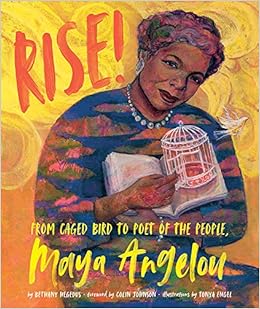
Rise! From Caged Bird to Poet of the People by Bethany Hegedus, foreword by Colin Johnson, illustrations by Tonya Engel

Published by Lee and Low Books

Image result for rise from caged

Image result for rise from caged

Summary:  Beginning with young Maya’s journey south to live with her grandmother in Arkansas, the narrative describes her early experiences of blatant racism in the deep south, and continues as she and her brother went to live with their mother in St. Louis.  Her rape by her mother’s boyfriend is described indirectly: “One day, Maya, left alone with Mr. Freeman, is anything but free. After a visit to the hospital, Maya calls out Mr. Freeman’s name as the one who hurt her.” Soon after, he was murdered, and Maya stopped speaking for several years, burying herself in books until she slowly emerged to become a dancer, actress, cable car driver, mother, and finally, a writer and activist. Ending with her death at age 86, the author assures readers that Maya’s words will “always rise rise rise”.  Includes a foreword by Angelou’s grandson; a timeline; resources for children who have been sexually abused; and a bibliography. 48 pages; grades 1-5.

Pros:  Gorgeous acrylic illustrations and poetic text detail the many different aspects of Maya Angelou’s incredible life.  Due to the horrific events of her childhood, it can be tricky to share her story with children, but Hegedus does a good job not shying away from Maya’s rape and its aftermath in a way that’s appropriate for the intended audience.  

Cons:  I had no idea Maya Angelou did so many different interesting things in her life.  It’s hard to cram it all into one picture book.

If you would like to buy this book on Amazon, click here.

Bringing Down A President: The Watergate Scandal by Dr. Andrea Balis and Elizabeth Levy, illustrated by Tim Foley

Published by Roaring Brook Press

Image result for bringing down a president amazon

Summary:  From the break-in at the Watergate hotel on May 25, 1972 to Richard Nixon’s resignation as U.S. President on August 9, 1974, this book covers what went on in the White House in a unique fashion.  The story is narrated by a “fly on the wall”, whose story is interspersed with quotes from many different key players in the events. There are black and white illustrations, some with cartoon bubbles that quote the people shown.  The epilogue tells what happened to those who went to jail (answer: all served ridiculously short terms and made obscene amounts of money off of their experiences when they got out), and those who put them in prison by persisting in their investigation.  Includes almost 200 sources and a three-page bibliography with a tiny font. 240 pages; grades 5-8.

Pros:  Even though I’ve watched All the President’s Men about ten times, this added a lot to my understanding of Watergate and the depths of the corruption going on in Richard Nixon’s presidency.  Once I got through the first few chapters and figured out who was who (there are a lot of characters, and they’re almost all white men in suits), I couldn’t put it down.  Anyone from tween to adult will add to their knowledge of history pretty painlessly by reading this book.

Cons:  1. The illustrations are fun, but photos would have been a nice addition. Those who went to jail are pictured at the end, but there’s not a single photo of Nixon. 2. As one might expect from a book featuring Tricky Dick, there is plenty of salty language, either quoted directly or through #?!&* indicators.

If you would like to buy this book on Amazon, click here.

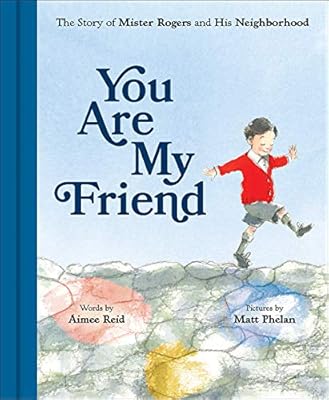
You Are My Friend: The Story of Mister Rogers and His Neighborhood by Aimee Reid, illustrated by Matt Phelan

Published by Harry N. Abrams

Image result for you are my friend phelan amazon

Summary:  For those familiar with Mister Rogers’ Neighborhood, this book explains how Freddie Rogers’ childhood created the adult Fred Rogers that millions loved to watch on his TV show.  Freddie was a sickly child who had to learn to entertain himself during long periods indoors. He loved surrounding himself with puppets and telling them how he was feeling.  Bullied at school, Freddie appreciated the love and safety of his Grandfather McFeeley, who assured him he was special just being himself. When Fred grew up, he saw people fighting on TV and wanted to create a program that showed people helping each other.  The result was his own neighborhood where both people and puppets could express their feelings and learn how to care for one another. Includes additional biographical information, notes from both the author and the illustrator, and a bibliography. 40 pages; grades K-3.

Pros:  With the new Tom Hanks movie coming out this fall, this provides an excellent introduction to Fred Rogers and all he stood for, and will serve to introduce a new generation to the neighborhood.  Matt Phelan’s gently muted illustrations provide a perfect complement to the text.

Cons:  I’m pretty sure it’s a federal offense to say anything negative about Mister Rogers.

If you would like to buy this book on Amazon, click here.

Image result for you are my friend matt phelan

Homes in the Wild: Where Baby Animals and Their Parents Live by Lita Judge

Published by Roaring Brook Press

Image result for homes in the wild judge

Image result for homes in the wild judge

Summary:  26 animal babies and their families are profiled, grouped together by the type of home they have–underground, hidden in the trees, a nest, etc.  Large, realistic watercolors introduce each section, followed by smaller pictures with a paragraph of text about the two or three animals who inhabit that particular type of home.  The book concludes with the statement that animals are safe and sheltered in their homes, just like human children. Includes further information about each animal with a thumbnail sketch, a brief glossary, and a list of books and websites that give more information.  48 pages; grades K-3.

Pros:  Kids will love these adorable baby animal pictures, and there’s plenty of interesting information for them to browse.  The lists of additional resources will allow for further research.

Cons:  All 26 animals are mammals; it would have been interesting to throw in a few fish, reptiles, and birds for comparison.

If you would like to buy this book on Amazon, click here.

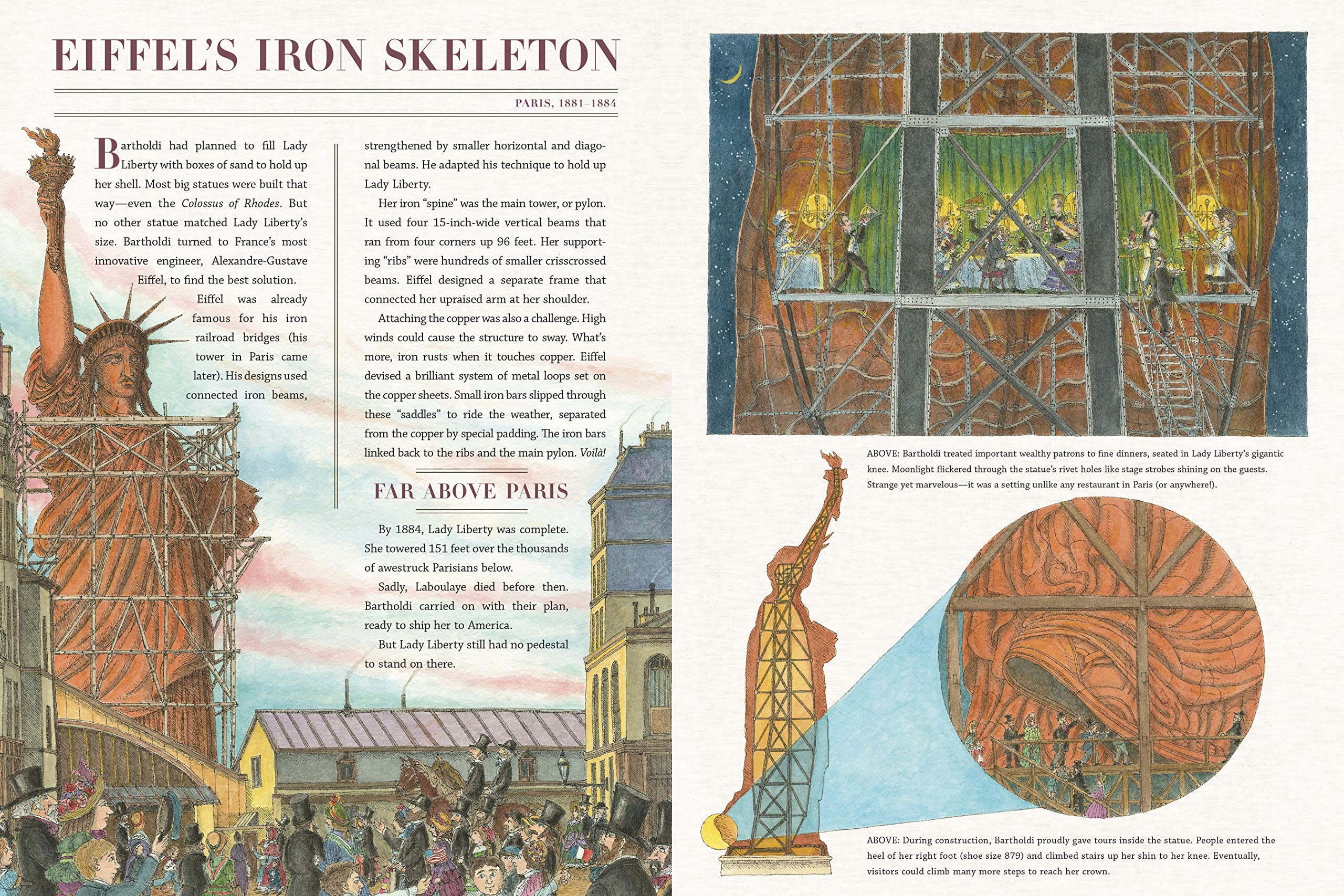
Liberty Arrives! How America’s Grandest Statue Found Her Home by Robert Byrd

Published by Dial Books

Image result for liberty arrives byrd

Image result for liberty arrives byrd

Summary:  The idea for the Statue of Liberty began in France in 1865 when Édouard de Laboulaye, a wealthy French judge who admired America, dreamed of presenting the United States with a gift for the 1876 centennial.  He enlisted sculptor Frédéric-Auguste Bartholdi who specialized in large creations. Little did the two of them realize it would take more than two decades before their dream would finally come to fruition–and Laboulaye wouldn’t live to see it.  Part of the reason for the slowdown was the logistics of constructing a 151-foot statue and shipping it to the U.S.; the other part was money for covering the cost of creating the statue, shipping it, and building the base for her to stand on. Joseph Pulitzer finally solved the problem by challenging Americans to donate through his newspaper, the World, and approximately 121,000 people sent in $102,000.  On October 28 , 1886, Liberty Enlightening the World–more commonly known as the Statue of Liberty–was dedicated in New York Harbor.  Includes a diagram showing measurements of different parts of the statue; a timeline; a bibliography of books for adults and children and online sources; and Emma Lazarus’s poem printed on both endpapers.  40 pages; grades 2-6.

Pros:  This oversized book offers a wealth of fascinating, engagingly written information about the origins of the Statue of Liberty, all illustrated with Robert Byrd’s detailed watercolors.  Fun for browsing, and plenty of facts for research.

Cons:  The small, dense text may be a bit off-putting to kids.

If you would like to buy this book on Amazon, click here.

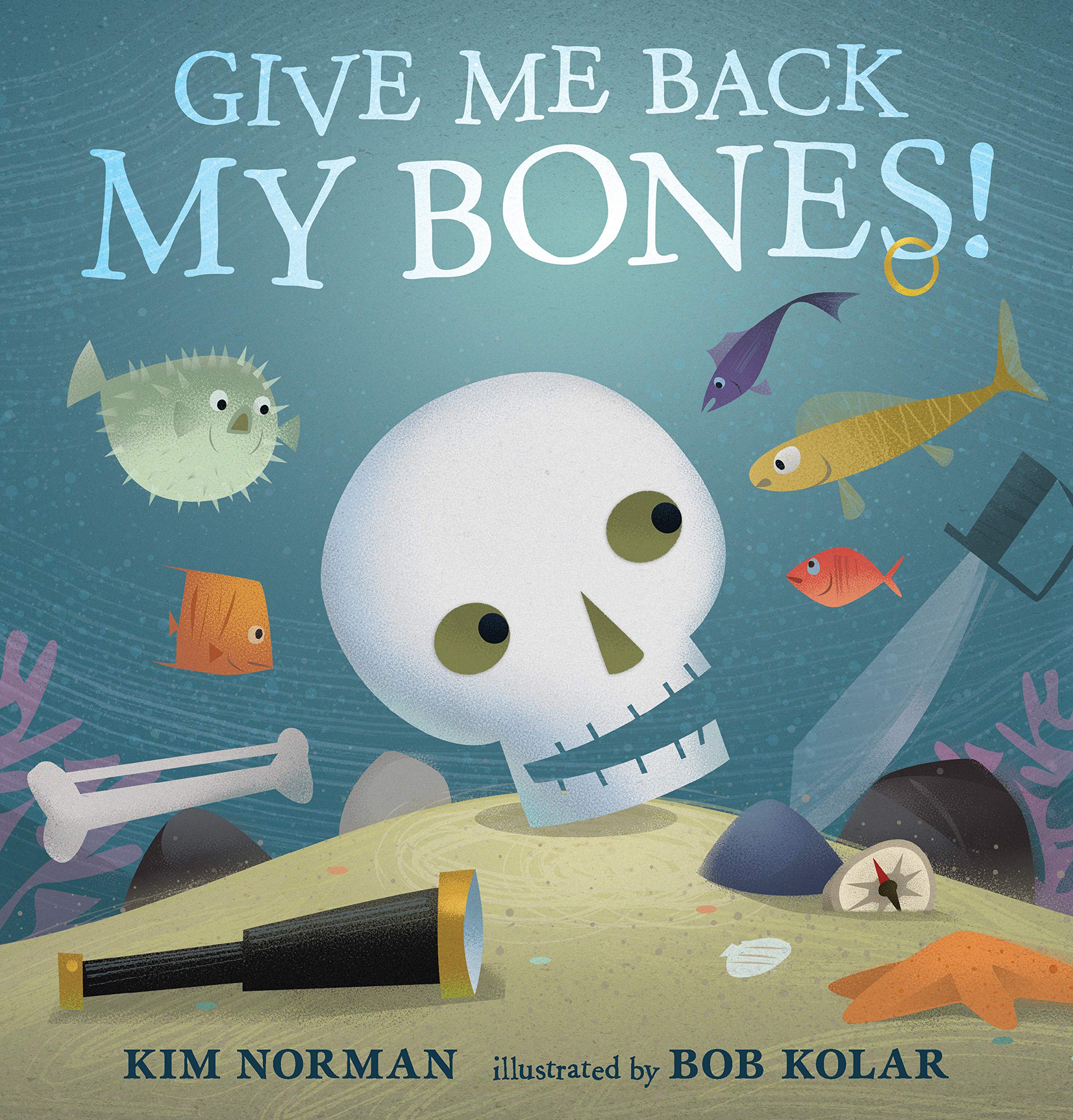
Give Me Back My Bones! by Kim Norman, illustrated by Bob Kolar

Published by Candlewick

Image result for give me back my bones norman

Related image

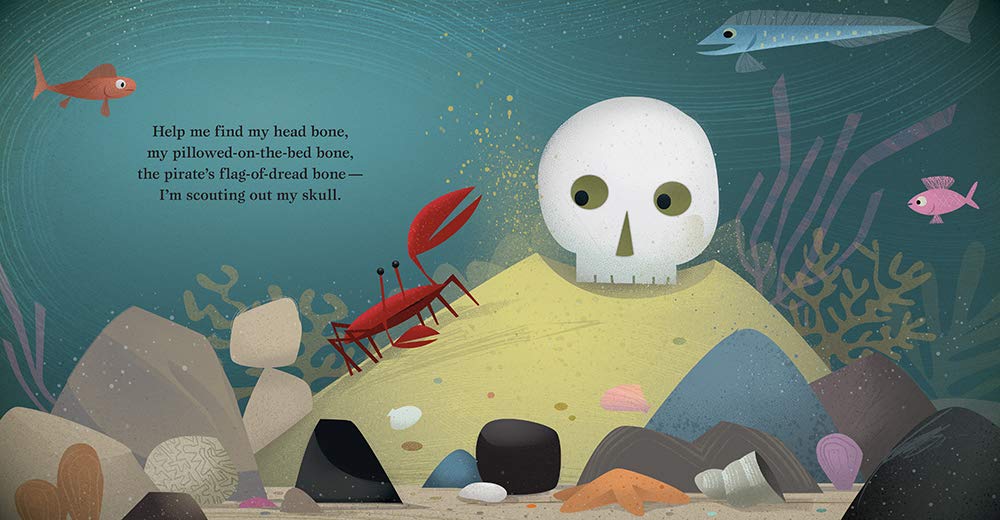
Summary:  A pile of bones on the ocean floor slowly reassembles itself into a pirate with the help of some sea creatures.  “Help me find my head bone, my pillowed-on-the-bed bone, the pirate’s flag-of-dread bone–I’m scouting out my skull.”  He continues working his way down, each rhyme ending with the name of the bone he’s seeking: from mandible and clavicle all the way to tibia, fibula, and phalanges.  At last, he’s ready to don his pirate’s hat, and climb aboard his shipwrecked ship where he’s sure he’ll find treasure–”I feel it in my bones!” The endpapers show the separate bones on the front and a labeled skeleton on the back.  40 pages; ages 4-9.

Pros:  Although this has the feel of a preschool-to-primary-grade picture book, older kids would find this a humorous introduction to different bones.  The rhymes are catchy and the skeleton is oddly endearing. It could even be a nice alternative to traditional Halloween reading. Great fun!

Cons:  Back matter about the skeleton with additional resources would have been useful.

If you would like to buy this book on Amazon, click here.