Jack and the Beanstalk and the French Fries by Mark Teague

Published by Orchard Books
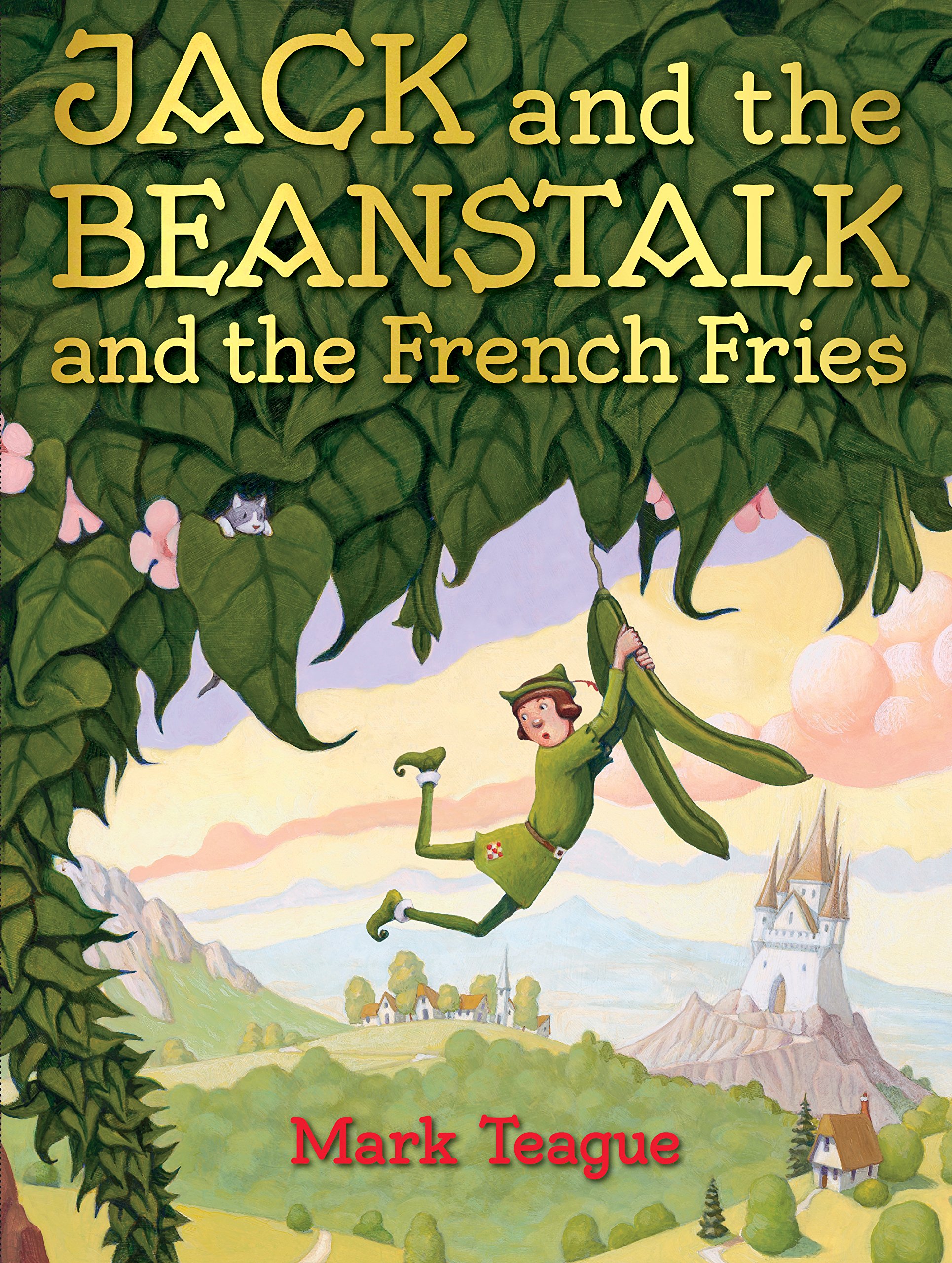
Summary:  The familiar story of Jack begins as usual when he trades the family cow for some bean seeds that his irate mother tosses out the window.  The huge stalk grows, but then the story veers off into a new and humorous direction.  Jack’s mother is thrilled with the free food the beanstalk provides, and Jack finds himself eating bean soup, bean salad, and other bean dishes three times a day.  When he receives a bean bag and a slice of bean cake on his birthday, he’s ready to take a hatchet to the stalk.  But the old man who sold him the seeds reappears and encourages Jack to check out what’s at the top of the huge plant.  Jack takes his advice and discovers a giant’s wife, who is cooking…you guessed it, beans.  The giant feels the same way as Jack does about beans, and the two return to Jack’s home in search of French fries.  They plant a vegetable garden, which proves to be influenced by the presence of the beanstalk, and grows a plethora of large vegetables.  Everyone–humans and giants alike–is thrilled with the new diet, which of course includes extra-large fries.  40 pages; grades K-3.

Pros:  Mark Teague has produced another winning takeoff on a fairy tale.  Kids will love the funny story and illustrations, and teachers will enjoy comparing it to other versions of Jack and the Beanstalk.

Cons:  There’s no golden egg-laying goose.
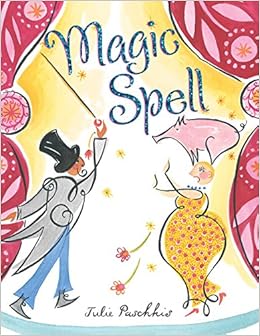
Magic Spell by Julie Paschkis

Published by Simon and Schuster Books for Young Readers

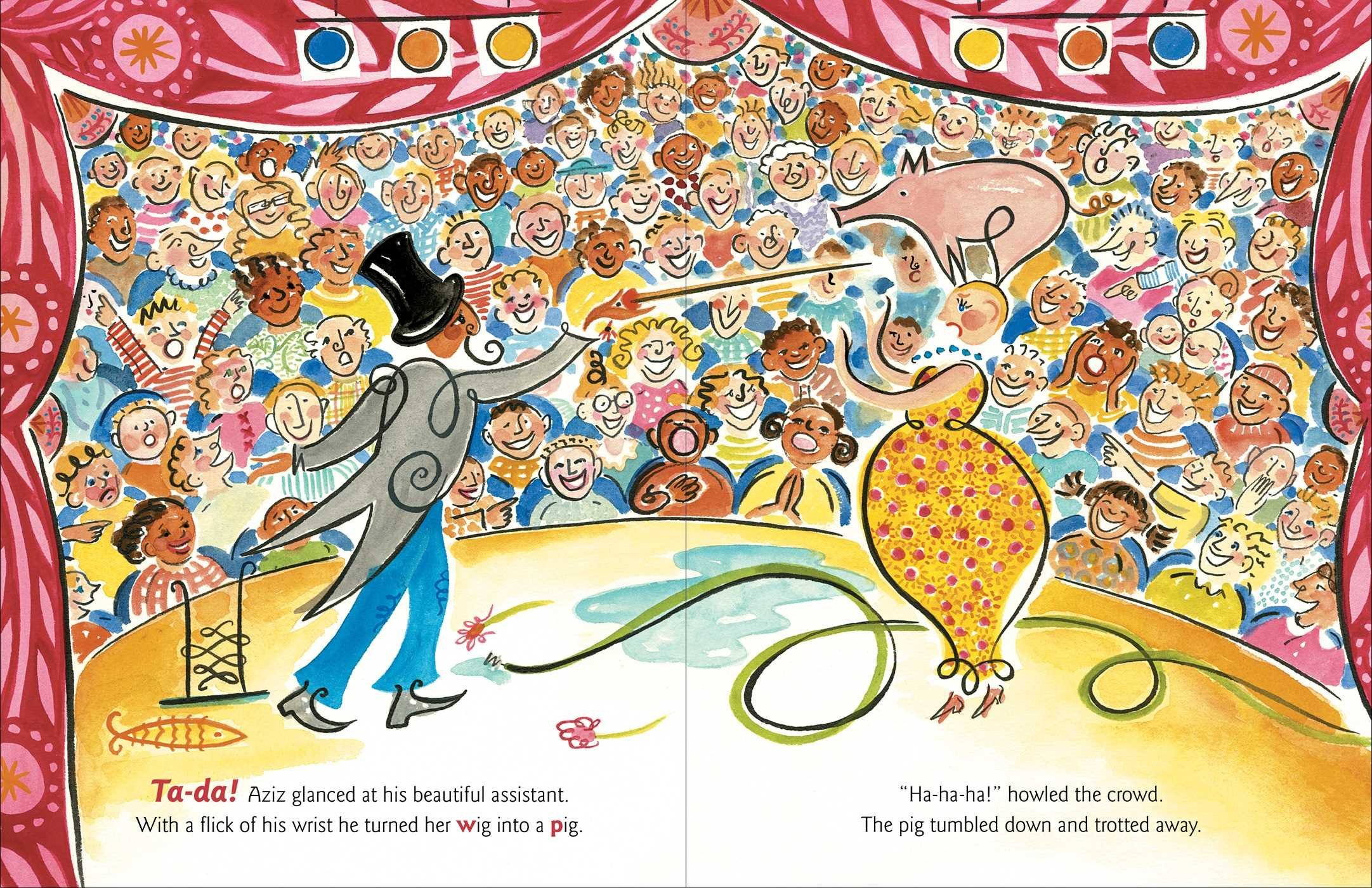
Summary:  The Great Aziz can magically transform one thing into another with the flick of a wand and the changing of a letter.  A dish becomes a fish, a rose becomes a hose, and a wire becomes a fire, while his adoring assistant takes care of the ensuing chaos.  But when he turns her wig into a pig, she’s had enough and takes revenge by changing his hat into a bat.  When beads become bears, however, the two magicians have to work together to avert danger.  They learn to share the light each night…and everything turns out just right.  32 pages; ages 4-8.

Pros:  Lots of word fun, illustrated with Paschkis’s somewhat impressionistic paintings.  Kids could enjoy creating their own transformation by changing one letter to another.

Cons:  The poor assistant never gets her hair back.

Far Apart, Close in Heart: Being a Family When a Loved One is Incarcerated by Becky Birtha, illustrated by Maja Kastelic

Published by Albert Whitman and Co.

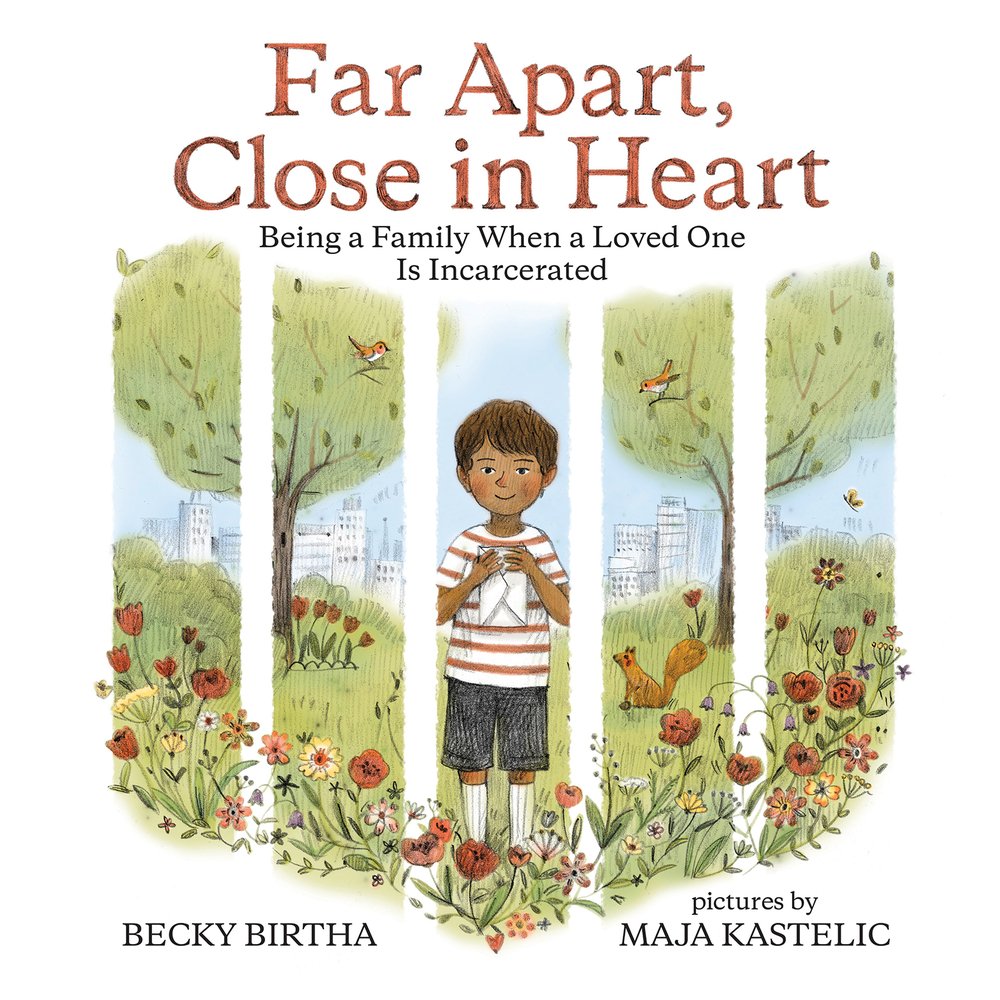
Summary:  What does it feel like to have a parent in jail, and how do you deal with those feelings?  The children in this book all react differently to their parents’ incarceration.  They feel scared, angry, and confused.  One girl wonders if it was her fault her mom went to jail.  A boy’s mom begs him not to tell anyone about his dad, so he stops talking altogether.  Another girl’s family is torn apart when her mom gets arrested and sent to jail, just like her dad.  Kids are encouraged to share their feelings with other adults in their lives, and to try to stay in touch with their incarcerated parents through visits, or, if that’s not possible, phone calls and letters.  One mom writes to assure her daughter that, “You and I may be far apart, but you’re always close to me in heart.”  Includes an author’s note and tips for adults from the National Resource Center on Children and Families of the Incarcerated.  32 pages; ages 4-8.

Pros:  A useful and engaging book to help kids feel more accepting of having a parent in prison, and to learn how to deal with their feelings about it.

Cons:  With nine kids featured, there were a lot of people to keep track of in such a short book.

The Banana-Leaf Ball: How Play Can Change the World by Katie Smith Milway, illustrated by Shane W. Evans

Published by Kids Can Press

Summary:  When Deo is forced to flee his home in Burundi, he gets separated from his family and eventually ends up in a refugee camp in Tanzania.  Life there is difficult and sometimes scary, with a bully named Remy who forces the other kids to hand over their meager possessions to him.  Deo tries to make a soccer ball from banana leaves like the one he had back home, but Remy discovers it and takes it away.  One day, a man comes to camp with a leather soccer ball and starts organizing the kids into teams.  Deo and Remy end up on the same team and work together to score the winning goal.  It’s the beginning of a friendship; that and the soccer games sustain Deo until he is able to return home to his family and a chance to coach kids from his village.  Includes information and photos of the real Deo (see above); information about organizations that help kids learn how to trust each other and play together; and a paragraph called “What You Can Do”.  32 pages; grades 2-7.

Pros:  Another excellent entry from Kids Can Press’s CitizenKid series, introducing readers to other young people from around the world and showing them ways they can make a difference.

Cons:  The small font and large amount of text on each page may make this a more challenging read-aloud book.

Now by Antoinette Portis

Published by Roaring Brook Press

Summary:  A girl introduces the reader to all her favorites: “This is my favorite breeze.  This is my favorite leaf.  That is my favorite cloud because it’s the one I’m watching.”  Nature, eating, drinking, singing, and losing a tooth are all enjoyed as the book continues.  She concludes with “This is my favorite now because it’s the one I am having with you.”  32 pages; ages 3-6.

Pros:  A simple but effective reminder or enjoying the present moment.  This goes well with the author’s book Wait from last year, which has a similar message.

Cons:  I don’t think I can really have a favorite worm, no matter how “present” I am.

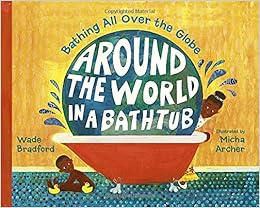
Around the World in a Bathtub: Bathing All Over the Globe by Wade Bradford, illustrated by Micha Archer

Published by Charlesbridge

Summary:  “Bath time!” says the mama.  “No, no!” says the boy.  “Yes, yes!” says the mama.  This scenario is repeated throughout the book in different countries, and with the no’s and yesses in different languages.  In Japan, family members bathe in age order in a large square tub called and afuro.  In Alaska, the family enters a steamy maqil.  Some day, a weightless mother may be chasing her floating child for a bath on board a space station.  From the Ganges River in India to the hot springs of Himalayan valleys to a muddy volcano in South America, kids resist taking baths, but often don’t want to get out once they’ve gotten in.  Includes two final pages of additional information on bathing in all the places mentioned in the text.  32 pages; ages 3-7.

Pros:  An unusual geography lesson based on a universal experience kids will be able to connect with.  The illustrations feature a multicultural cast, with the bathtub scene reminiscent of a similar one in Ezra Jack Keats’ The Snowy Day.

Cons:  Naked kids on almost every page will be sure to elicit a lot of giggling at storytime.

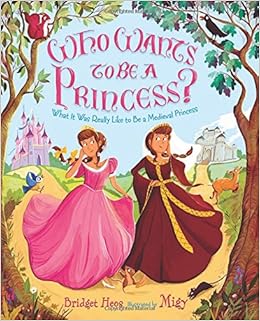
Who Wants to Be a Princess? What It Was Really Like to Be a Medieval Princess by Bridget Heos, illustrated by Migy

Published by Henry Holt and Co.

Summary:  For those dreaming about Disney life, this book provides a bit of a wake-up call as to what life for a princess was really like.  The author explains in her note that the “real” princess shown here is based on what life was like circa 1100-1300 in Great Britain.  Each two-page spread contrasts a fantasy princess with a real one.  Pink and purple castle?  Nope, it would have been drab stone surrounded by a moat stinking of sewage.  Beautiful gown?  Itchy brown wool was more like it  There might have been a handsome prince to marry…at around the age of 12, and that marriage would have been arranged.  The final page shows the princess falling asleep and dreaming of being “you”, the modern reader.  Includes an author’s note and a bibliography.  32 pages; ages 4-8.

Pros:  A clever way to teach a bit of history, using a concept that’s sure to catch the eye of certain readers.  The illustrations are kind of Disney-esque, which will add to the appeal.  There’s also a nicely subtle message about being happy with who you are.  If you’re struggling to loose your little cherub from her “Elsa” costume, this, just might do the trick.

Cons:  It’s a pretty cursory look; those wanting much information will have to look elsewhere.


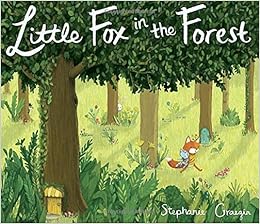
Little Fox in the Forest by Stephanie Graegin

Published by Schwartz & Wade Books

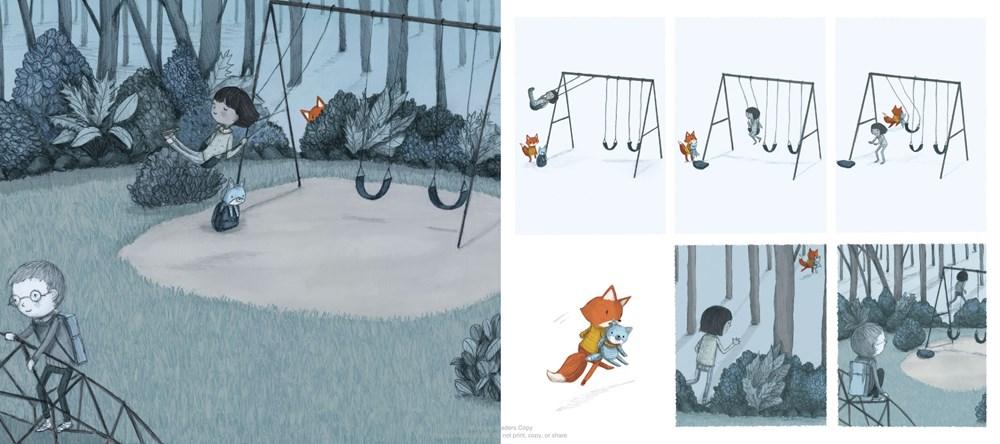
Summary:  A little girl takes her favorite stuffed fox to school for show-and-tell in this wordless picture book.  After school, she goes to the playground, her fox sticking out of her backpack.  As she’s swinging, a real fox comes along, takes her stuffed one, and heads off into the forest.  She runs after the fox; her friend sees her go and follows her  The two combine forces, and eventually discover a woodland world populated by many different animals.  After a long, convoluted search, they find the fox, who really just wants a stuffed fox to love.  The girl and the fox make a trade, and there is a happy ending for everyone.  40 pages; ages 4-8.

Pros:  A seemingly simple tale opens up a whole new world in this beautifully detailed wordless book.  Kids will find the animals’ community enchanting, and will discover something new with each repeated reading.

Cons:  Plan on spending a long time with this book.

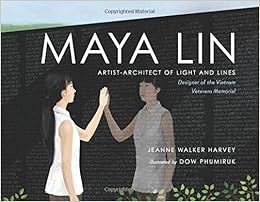
Maya Lin: Artist-Architect of Light and Lines by Jeanne Walker Harvey, illustrated by Dow Phumiruk

Published by Henry Holt

Summary:  Maya Lin grew up surrounded by nature, books, and parents “who never told her what to be or how to think”, having left China to escape that kind of doctrine.  Maya loved to create, inspired by her artist father and poet mother.  In college, she decided to study architecture, combining her love of art, science, and math.  When she was a senior, she entered a contest to design a memorial for the Vietnam War.  Her entry was selected from 1,421 others.  When the judges found out how young she was, they were shocked, and many felt that another design should be chosen.  Maya persisted, however, and her dream of a beautiful black wall with the names of those who died in the Vietnam War became a reality. It was the first of many art-architecture installations that Maya continues to create today.  Includes an author’s note with additional information about Maya Lin and the memorial.  32 pages; grades K-4.

Pros:  A quiet, beautiful work about a talented artist who persisted in bringing her creation to fruition.  The digital watercolors by first-time illustrator Phumiruk perfectly capture tone of the book and the Vietnam Veterans Memorial.

Cons:  This only touches on details of Lin’s life, and is not a complete biography.

Chef Roy Choi and the Street Food Remix by Jacqueline Briggs Martin and June Jo Lee, illustrated by Man One

Published by Readers to Eaters

Summary:  Roy Choi’s family moved from South Korea to Los Angeles when he was two.  He grew up exploring the streets of L.A. and coming home to his mom’s delicious Korean cuisine.  After graduating from culinary school, Roy became a chef in a fancy restaurant.  When he lost his job, he decided to partner up with a friend and open a taco truck with a Korean twist.  The Kogi Korean taco trucks were a hit, and Roy built on this success by starting the Locol restaurant in the Watts neighborhood of L.A.  He continues to expand his culinary offerings, bringing his cooking to as many different types of places and people as he can.  Includes notes from both authors and the illustrator, as well as a bibliography and list of resources.  32 pages; grades 1-5.

Pros:  The third collaboration between Jacqueline Briggs Martin and Readers to Eaters, this mouth-watering, fast-paced biography is designed to inspire kids to cook and eat new foods.  The graffiti-influenced illustrations are the perfect complement for this ode to the city streets.

Cons:  You’ll be craving a Korean taco before you’re halfway through this book.