Fred’s Big Feelings: The Life and Legacy of Mister Rogers by Laura Renauld, illustrated by Brigette Barrager

Published by Atheneum Books for Young Readers
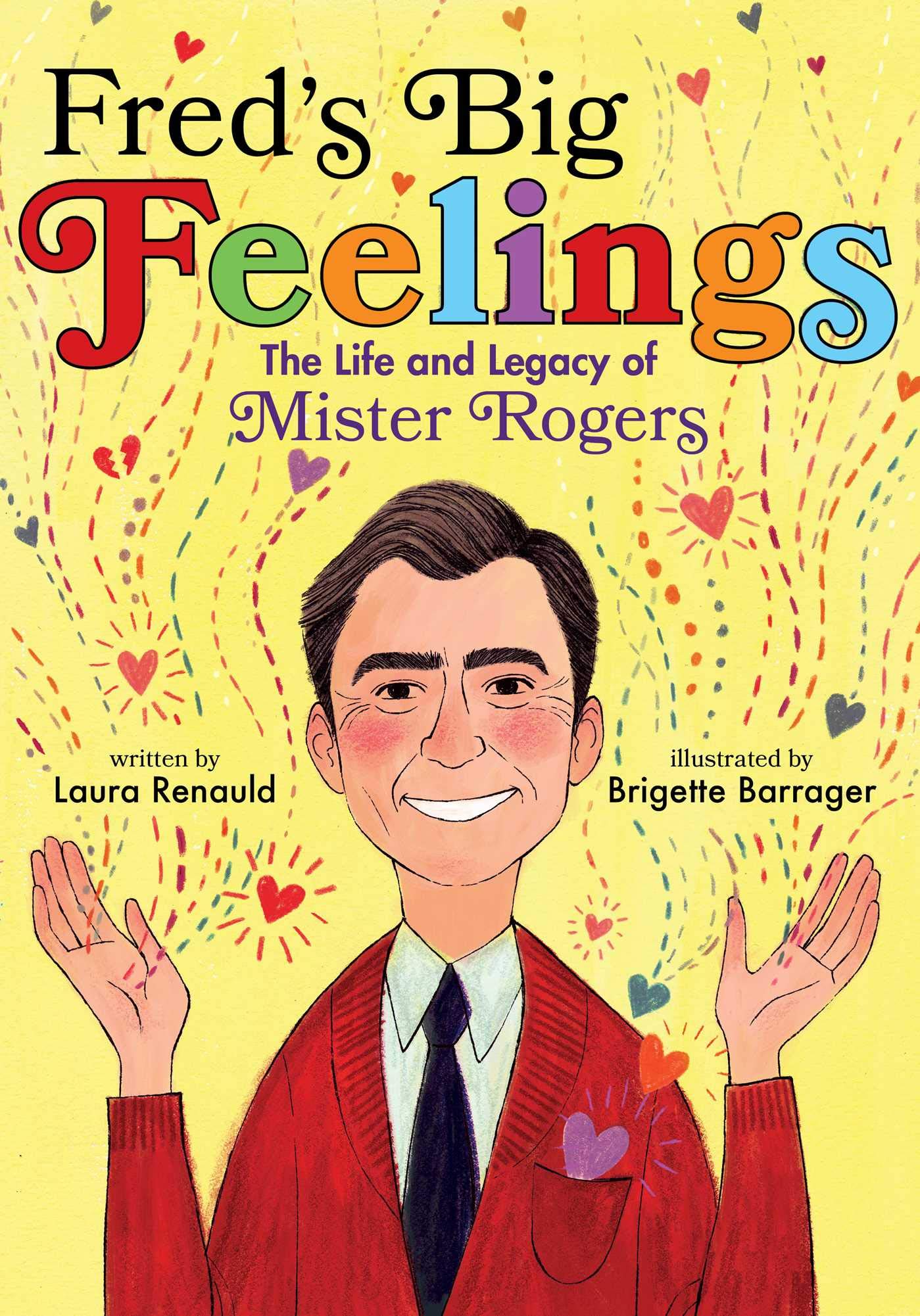
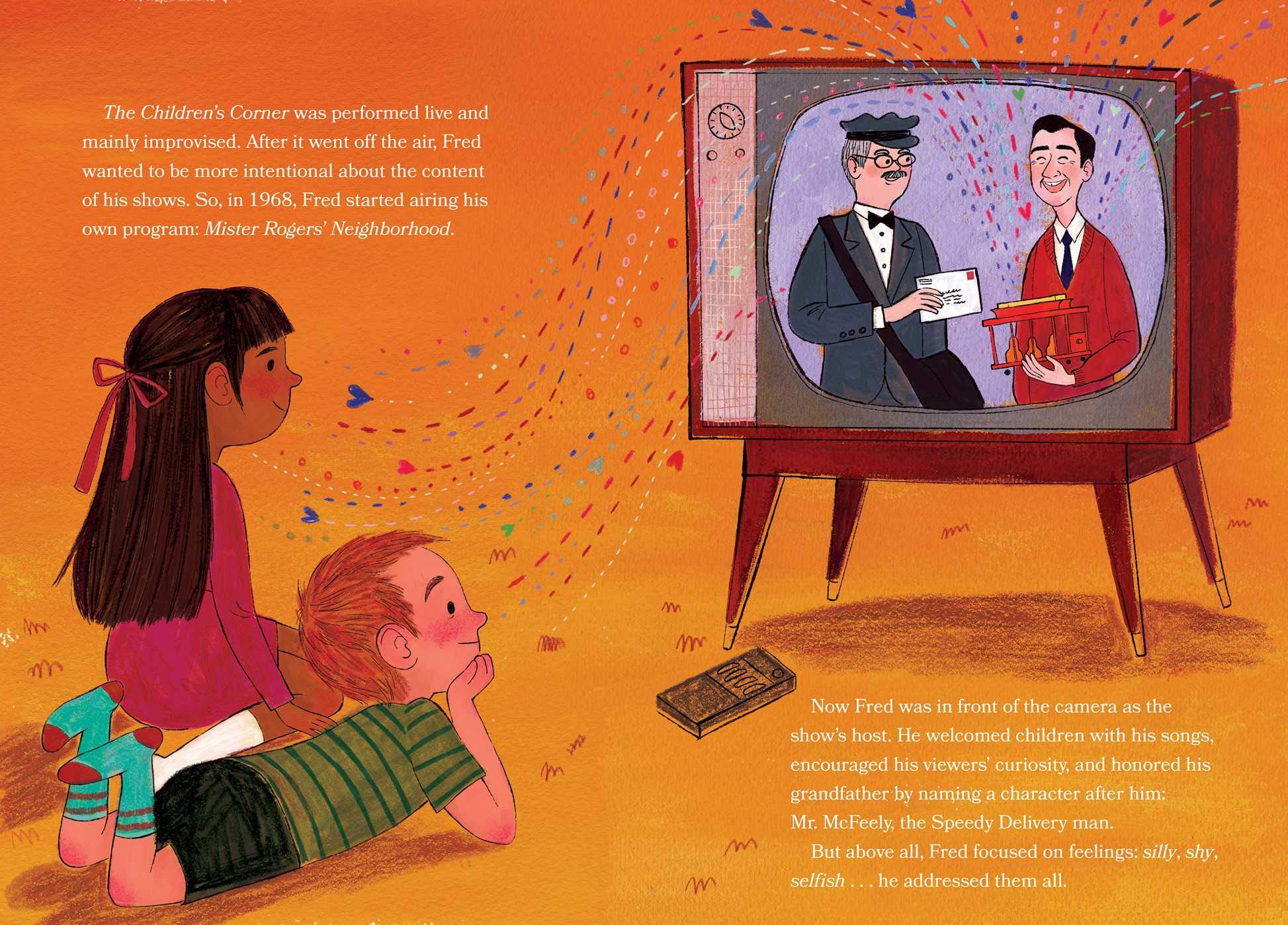
Image result for fred's big feelings amazon

Image result for fred's big feelings amazon

Summary:  As a sickly child, Fred Rogers often felt alone and misunderstood.  He appreciated his grandfather’s unconditional love and acceptance, and learned to express himself through music and playing with puppets.  He planned to attend seminary to become a minister, but when he saw a children’s TV show filled with pranks and gags, he was inspired to try to do better.  Beginning with a local show in Pittsburgh, Fred’s show eventually grew to the universally loved Mister Rogers’ Neighborhood on PBS.  Recalling his own childhood, he acknowledged children’s feelings and accepted and loved them for being themselves, using music and make-believe to get his message across.  When Congress threatened to cut funding for public television, Fred went to Capital Hill and used a similar message to convince a Senate panel of the importance of his show. He continued to produce his show for more than 30 years, airing almost 900 episodes.  Includes a lengthy author’s note. 40 pages; ages 4-8.

Pros:  Similar in scope to You Are My Friend, this picture book biography emphasizes feelings, italicizing the different emotions that Fred Rogers experienced over the years.  This book includes Mister Rogers’ testimony to Congress that helped preserve PBS funding. Young fans of the show are sure to enjoy learning more about their favorite neighbor.

Cons:  Still socially unacceptable to say anything bad about Mister Rogers.
If you would like to buy this book on Amazon, click here.

A Ride to Remember: A Civil Rights Story by Sharon Langley and Amy Nathan, illustrated by Floyd Cooper

Published by Harry N. Abrams

Image result for ride to remember sharon langley"

Image result for ride to remember floyd cooper"

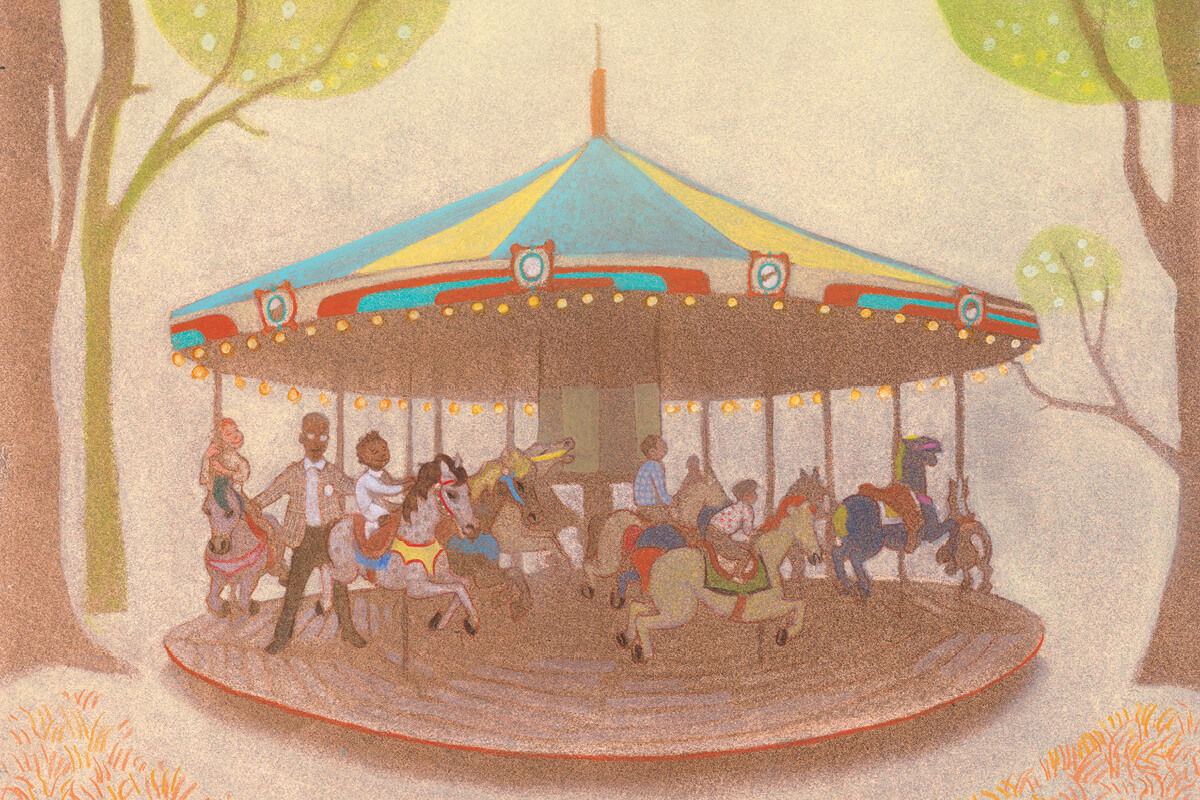
Summary:  Sharon Langley recounts the story of how her neighborhood amusement park slowly became desegregated thanks to nonviolent protests in July of 1963.  On the Fourth of July, groups of protesters stood outside the park holding signs and singing songs. When some members of the group tried to buy tickets, they were arrested.  After a second protest three days later, the media coverage became so intense that the owners of the park were forced to agree to let everyone in. Sharon and her family became the first African-Americans to enter the park on August 28, 1963, the first day it was open to all.  Just one month shy of her first birthday, Sharon was photographed with her father, riding the carousel. The day was memorable for another civil rights milestone: the March on Washington and Martin Luther King, Jr.’s “I Have a Dream” speech. The carousel now stands on the National Mall in Washington, D.C., with Sharon’s name on one of the horse’s saddles and horseshoes.  Includes two pages of additional information, photos, a timeline, and a bibliography. 40 pages; grades 1-4.

Pros:  I love how this book connects the civil rights movement to something kids will relate to: going to an amusement park.  Coretta Scott King Award winner Floyd Cooper does a masterful job of portraying all the characters in the story, including the carousel horses.

Cons:  I found the first couple pages a little confusing, until I realized who Sharon was and that she was telling her own story.

If you would like to buy this book on Amazon, click here.

Image result for ride to remember sharon langley"

I Voted: Making a Choice Makes a Difference by Mark Shulman, illustrated by Serge Bloch

Published by Neal Porter Books

Image result for i voted shulman amazon"

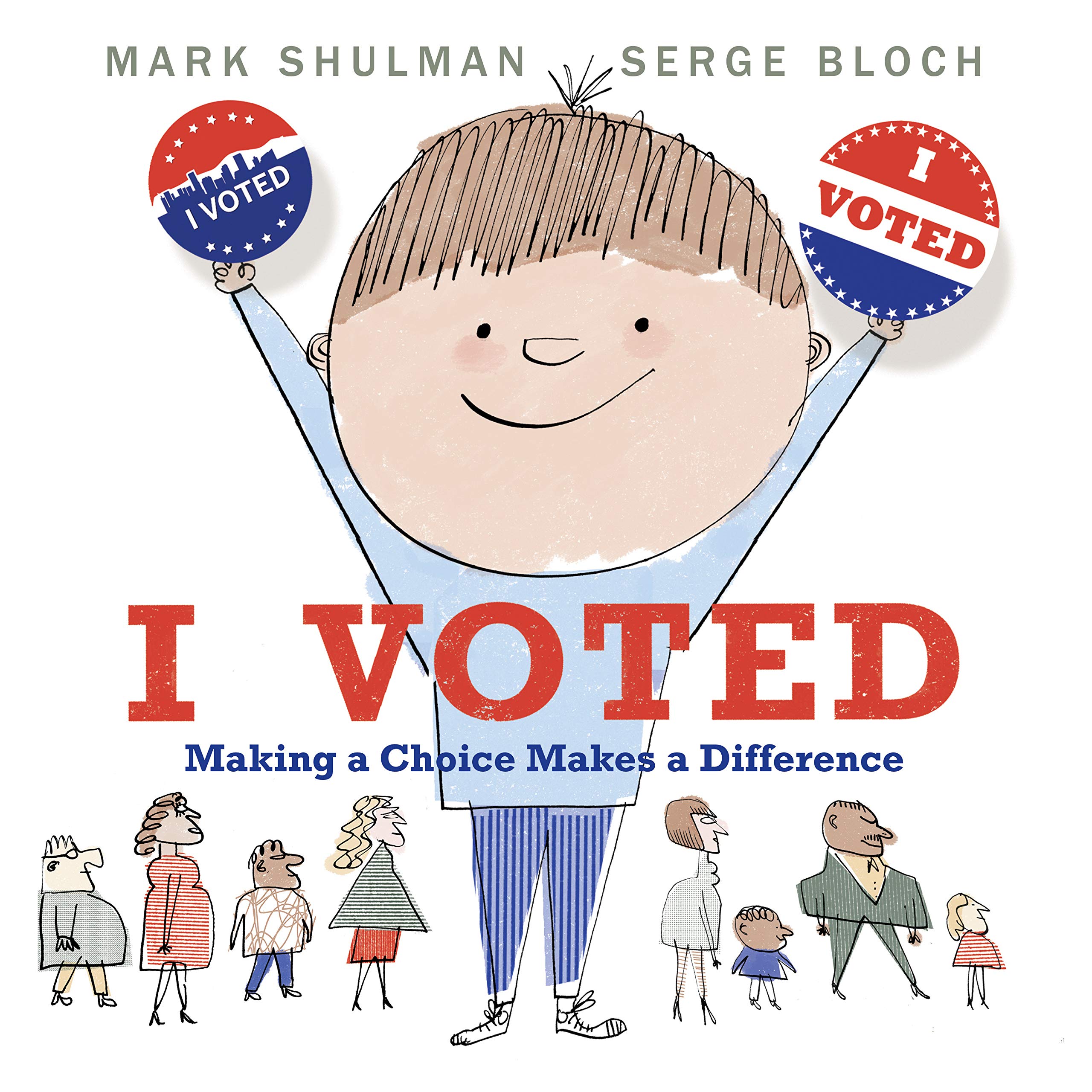
Summary:  Apples or oranges? Markers or crayons? Ice cream or cupcakes? Any time you make a choice, you are casting a vote.  When people vote together, the majority wins (at least theoretically, but we won’t go there). Talking to people about what you want can help them understand, and maybe they will change their minds.  It’s also a good idea to listen to others so you can make an informed decision. If you don’t vote, you don’t get to choose, so learn all you can about voting now, and exercise that right when you turn 18!  Includes additional information on voting and how the U.S. government works, as well as a list of books and online sites with additional information. 40 pages; ages 4-8.

Pros:  Kids are sure to hear a lot about voting and elections this year, and this is a great resource that explains the process in terms that even preschoolers will understand.

Cons:  Some may say the picture showing a red brick wall with a sign reading “No kids allowed!” and a blue brick wall saying “Free for kids” reflects a bit of partisan bias.

If you would like to buy this book on Amazon, click here.

Big Papa and the Time Machine by Daniel Bernstrom, pictures by Shane W. Evans

Published by HarperCollins

Image result for big papa and the time machine amazon

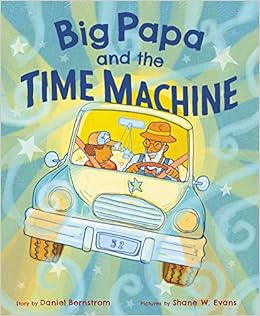
Summary:  It’s the first day of school, and the narrator is scared as his grandfather drives him to school.  Big Papa turns his car into a time machine, and the two of them travel back in time: to 1952 Little Rock where Big Papa is leaving home for the first time; 1986 Chicago where his daughter leaves her baby with him, then disappears; a 1941 cotton field where a man tears up the young Papa’s schoolwork and tells him the field is his only school.  Each time, Big Papa explains to the boy how scared he was, but that he had to be brave to move forward. By the time they reach school, the boy has gotten the message and is ready to hug his grandfather good-bye and courageously head toward school. Includes an author’s note about his grandfather who inspired this book and an illustrator’s note. 40 pages; ages 4-8.

Pros:  An interesting twist on a first-day-of-school book, or any other situation that requires courage.  This could inspire some good inter-generational discussions about what it’s like to be scared and/or brave.

Cons:  The intended audience of first-time school attenders may need some extra help to understand the different circumstances of Big Papa’s life.

If you would like to buy this book on Amazon, click here.

Bear Goes Sugaring by Maxwell Eaton III

Published by Neal Porter Books

Image result for bear goes sugaring eaton

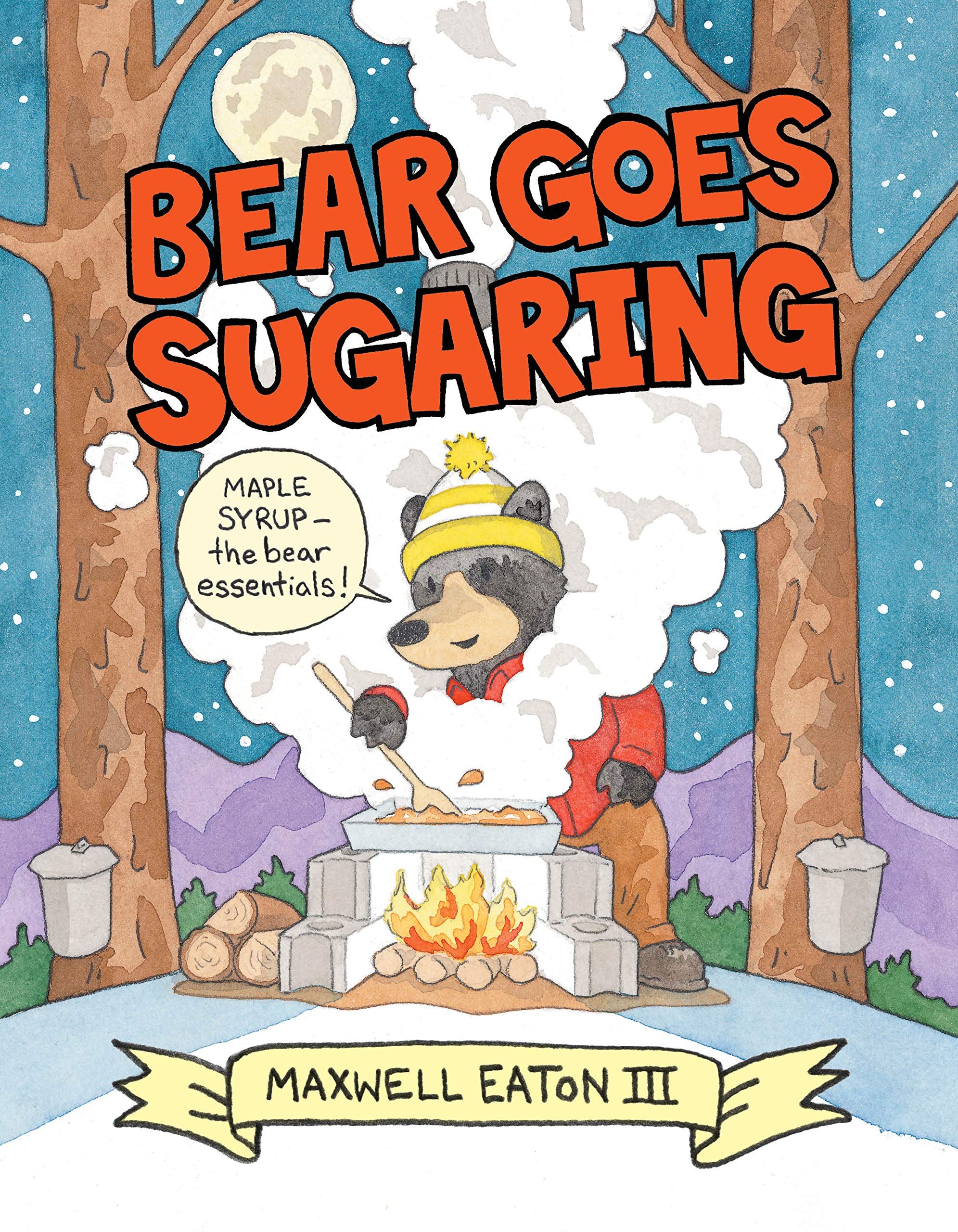
Summary:  As late-winter temperatures start to slowly rise, Bear begins her plans to make maple syrup.  Her sidekicks, Dog and Squirrel, are only interested for the pancakes they hope to eat. The process of making syrup is shown step by step, as Bear drills holes in her sugar maples, then sets the containers to collect the sap.  Readers learn pertinent information, such as how to identify a sugar maple (versus a red or silver maple) and how the sap forms inside the tree. After the sap starts to flow, Bear builds an evaporator to boil it down to syrup, all the while accompanied by the wisecracking Dog and Squirrel.  It’s a long process, but finally the syrup is bottled and ready to go. Dog and Squirrel enjoy maple syrup splendor as Bear flips pancakes on the stove. Includes a brief author’s note and three additional resources. 32 pages; ages 4-10.

Pros:  My love of maple syrup is well-known amongst my family and friends, so I’m delighted to have found two new picture books on the topic before the end of January.  This one is fun for the whole family, with surprisingly detailed information on the whole process and lots of humor from the goofy sidekicks.  

Cons:  No pancake recipe.

If you would like to buy this book on Amazon, click here.

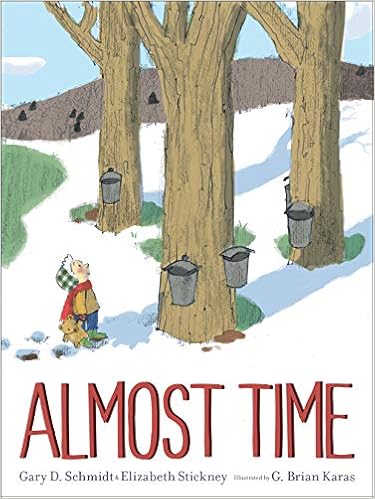
Almost Time by Gary D. Schmidt and Elizabeth Stickney, illustrated by G. Brian Karas

Published by Clarion

Image result for almost time gary schmidt

Summary:  When Ethan’s dad serves him his pancakes with applesauce, Ethan knows they’ve run out of maple syrup.  Dad tells him that they’ll have to wait for the days to get warmer and longer before they can make more.  In the meantime, Ethan discovers a loose tooth, and waiting for the tooth to fall out and sugaring season to begin get tied together in a mood of anticipation.  One day, at long last, the tooth falls out, and when Ethan gets off the school bus to show his dad, he realizes that the buckets are on the maple trees as well. For the next week, father and son work to collect and boil sap, and on Sunday morning, Ethan enjoys his reward–pancakes with maple syrup.  32 pages; ages 4-8.

Pros:  A perfect late winter book to start conversations about making maple syrup and the difficulty of waiting for exciting events.  The charming illustrations and warm father-son relationship make this a perfect book for sharing.

Cons:  Seems like dad could have sprung for a bottle of maple syrup to tide them over until sugaring season.  No one in this day and age should have to eat pancakes without maple syrup.

If you would like to buy this book on Amazon, click here.

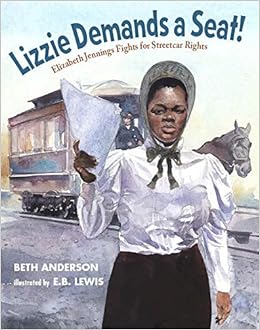
Lizzie Demands A Seat! Elizabeth Jennings Fights for Streetcar Rights by Beth Anderson, illustrated by E. B. Lewis

Published by Calkins Creek

Image result for lizzie demands a seat

Image result for lizzie demands a seat

Summary:  When Lizzie Jennings was denied admission onto a New York City “Whites Only” streetcar in 1854, she stood her ground, refusing to leave until she was forcibly thrown off by the driver and conductor.  Lizzie was a teacher whose parents were abolitionists. When she told the people of her church what had happened, they hired a lawyer and formed a committee to make sure she had plenty of support. Her case became Elizabeth Jennings v. The Third Avenue Railroad Company, and she was represented by Chester A. Arthur, who went on to become President of the United States.  Lizzie won her case, and the “Colored People Allowed on This Car” came off the Third Avenue streetcars.  Others were inspired by her courage, and continued the fight against segregated public transportation, including, a century later, Rosa Parks.  Includes a lengthy author’s note with additional information and photos; and an extensive bibliography. 32 pages; grades 1-5.

Pros:  A fascinating and little-known story about an ordinary person whose courageous deeds led to real change.  Caldecott honoree E. B. Lewis’s colorful paintings complement the story perfectly.  

Cons:  It would have been nice to tie this to the more familiar story of Rosa Parks, either through the text or the illustrations.

If you would like to buy this book on Amazon, click here.

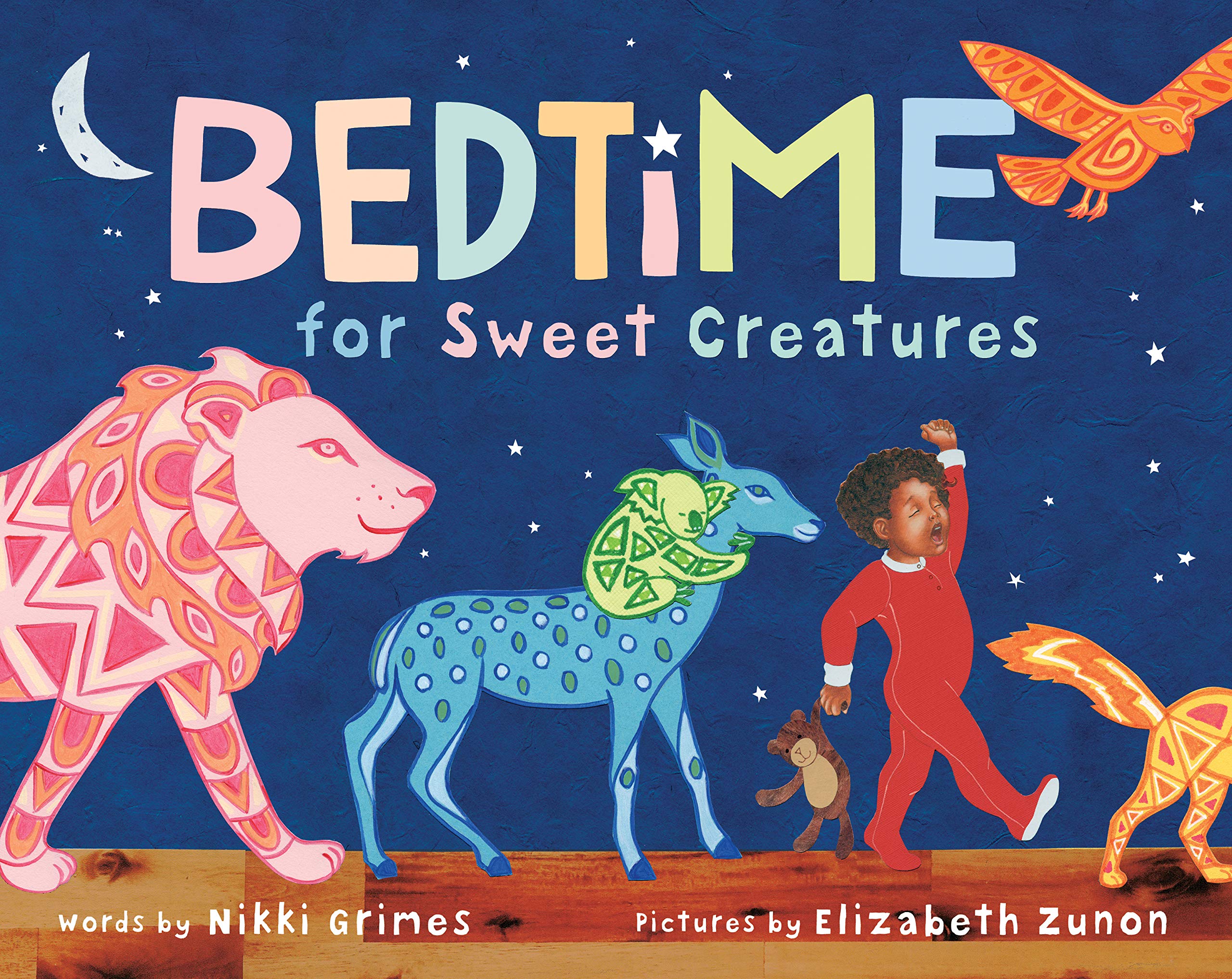
Bedtime for Sweet Creatures by Nikki Grimes, pictures by Elizabeth Zunon

Published by Sourcebooks Jaberwocky

Image result for bedtime for sweet creatures grimes

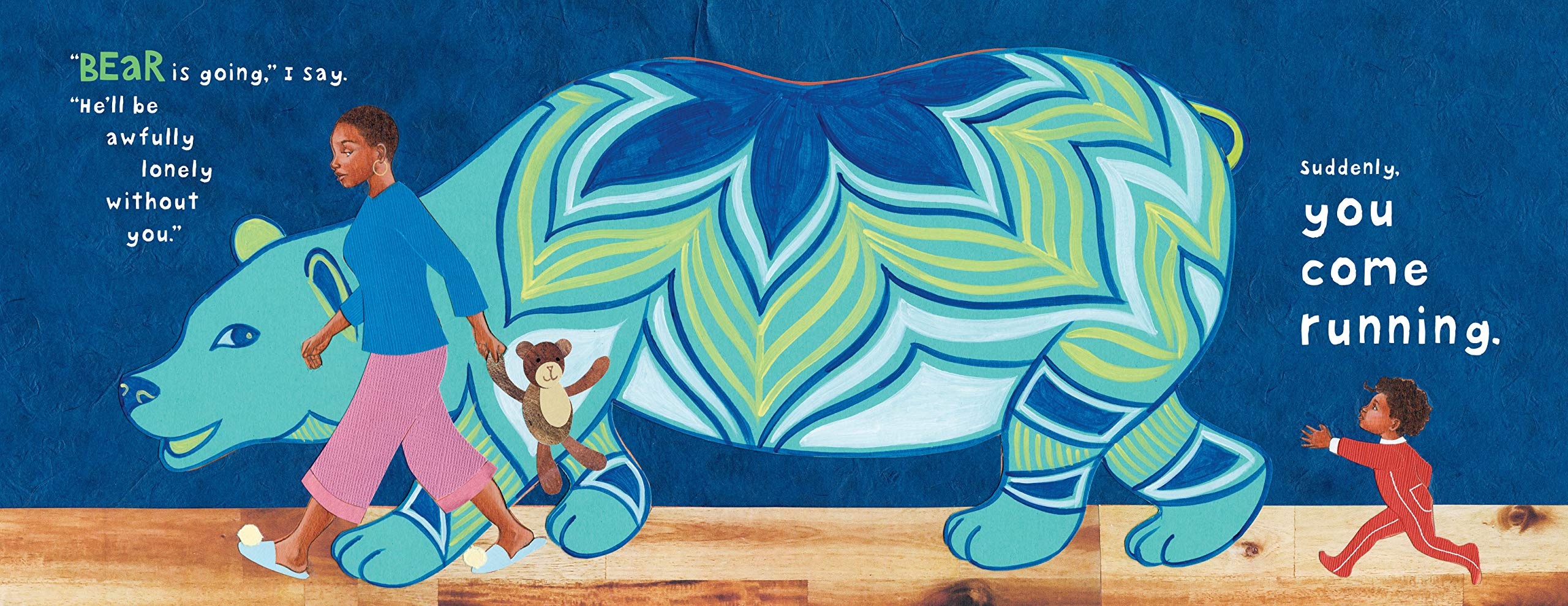
Image result for bedtime for sweet creatures grimes

Summary:  As a mother tries to corral her unwilling child into bed, she uses all kinds of animal comparisons to get him interested.  The child’s eyes are as wide as an owl’s; he coils under his blankets like a snake, then clings to his mother like a koala.  After the lights are out, he bounds out of bed like a wolf to get a glass of water, then lopes back like an antelope. Inevitably, the child appears at his parents’ bedside in the middle of the night, and they welcome the owl, snake, koala, etc.–and one small child–into bed with them.  32 pages; ages 4-8.

Pros:  A fun bedtime story–what little kid doesn’t love pretending to be an animal?–with large, eye-catching collage and acrylic illustrations.

Cons:  Dad seems to be a pretty passive parent, leaving all the bedtime struggles to Mom.

If you would like to buy this book on Amazon, click here.

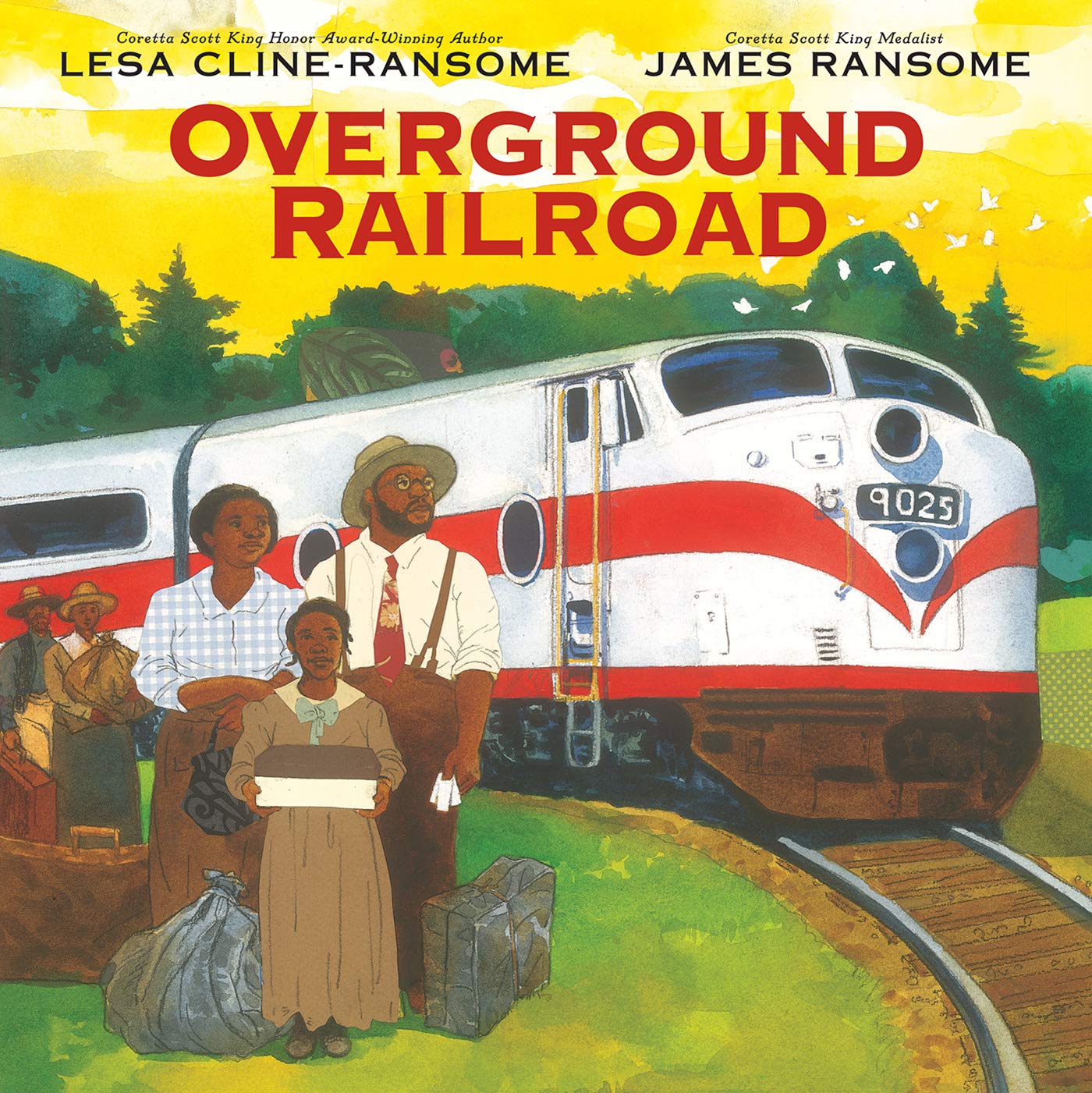
Overground Railroad by Lesa Cline-Ransome, illustrated by James Ransome

Published by Holiday House

Image result for overground railroad lesa ransome

Summary: Ruth Ellen tells the story of traveling by train from North Carolina to New York City with her parents during the Great Migration.  They’ve left their lives as sharecroppers secretly, without telling the boss. After traveling to Baltimore, Maryland, the “Whites Only” sign is removed, and Ruth Ellen and her family can leave the colored car and explore the rest of the train.  They pass the time by playing cards, eating from a shoebox (they’re not allowed in the dining car until the sign comes down), and reading a book by Frederick Douglass. Finally, they arrive at Penn Station in New York, where the city lights and bright stars seem to offer promise for the future.  Includes an author’s note with additional information on the Overground Railroad. 48 pages; grades K-4.

Pros:  This husband-and-wife team has produced a beautiful historical fiction picture book about a time not often written about in children’s literature.

Cons:  There were no dates given for Ruth Ellen’s journey or the Great Migration in general.

If you would like to buy this book on Amazon, click here.

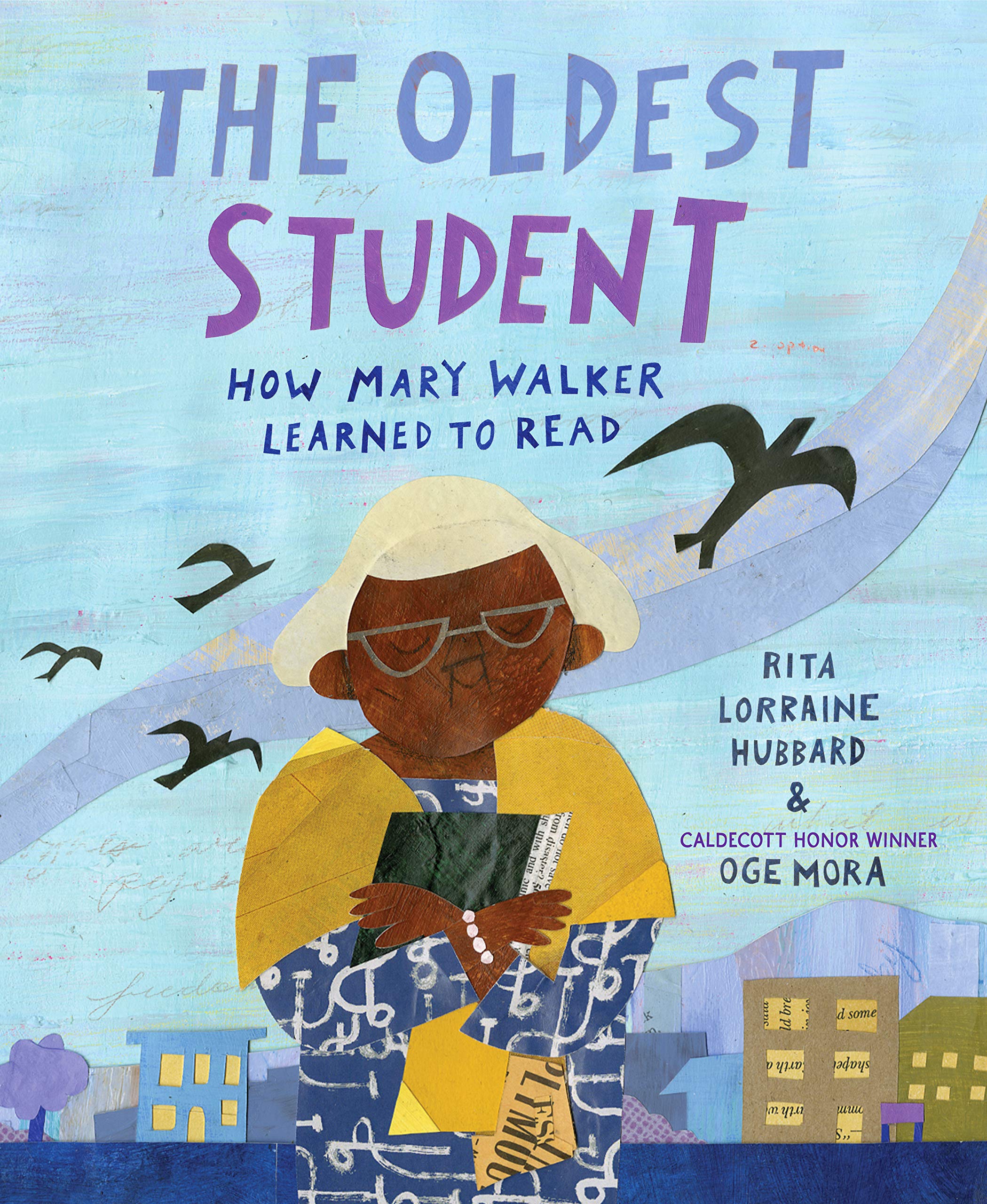
The Oldest Student: How Mary Walker Learned to Read by Rita Lorraine Hubbard, illustrated by Oge Mora

Published by Schwartz and Wade

Image result for oldest student how mary walker

Image result for oldest student how mary walker

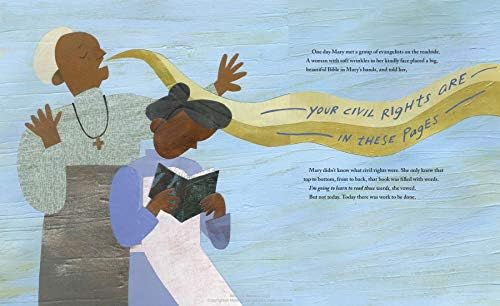
Summary:  Mary Walker was born into slavery in 1848.  As a child, she learned to work hard, but she never learned to read and write.  She continued to work throughout her life, marrying twice and raising three sons.  She received a Bible as a young woman, but didn’t know how to read it, and needed someone else to record the births of her children inside of it.  Finally, 114 years old and the last surviving member of her family, Mary heard about a literacy class and decided to enroll. Over the next year, she learned to read, write, add, and subtract, and was eventually certified as the oldest student in the United States.  She continued to enjoy reading until her death on December 1, 1969 at age 121. Includes an author’s note and several photos on the endpapers. 40 pages; ages 4-10.

Pros:  An inspiring story that ends with a picture of Mary telling readers, “You’re never too old to learn,” a sentiment that may mean more to readers like myself than its intended audience.  Oge Mora’s illustrations make the story come alive. I particularly liked how the scribbles Mary sees everywhere have transformed into letters and words by the end.

Cons:  I was a little disappointed to read in the author’s note that little is known of Mary’s life before she learned to read well past 100, and that much of the story was Hubbard’s imagining of what her life was like.

If you would like to buy this book on Amazon, click here.