The International Day of the Girl: Celebrating Girls Around the World by Jessica Dee Humphries and the Hon. Rona Ambrose, illustrated by Simone Shin

Published by Kids Can Press (Released September 1)
The International Day of the Girl: Celebrating Girls Around the ...

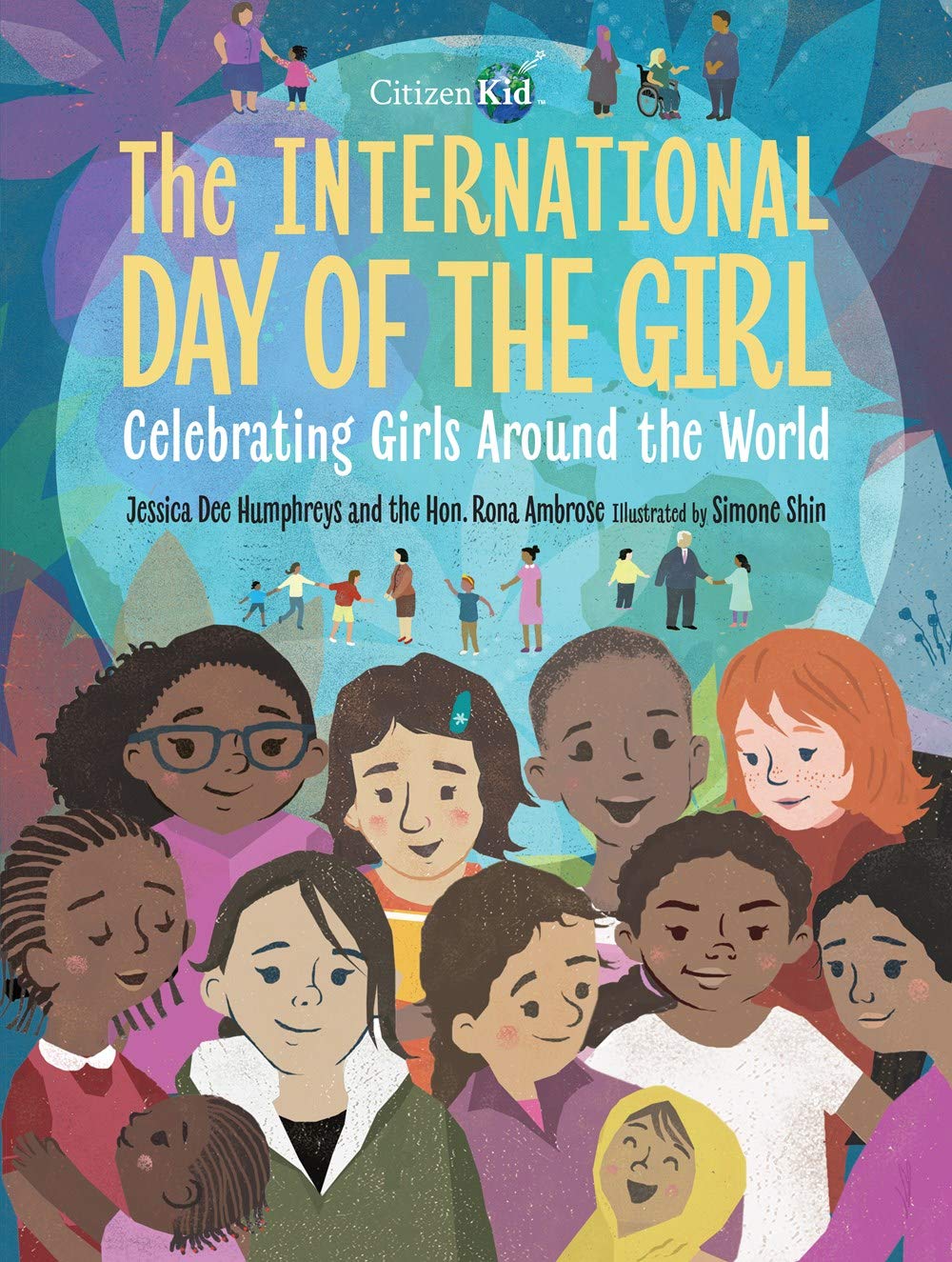
Summary:  In 2011, the United Nations declared that October 11 would be an annual day of recognition for girls around the world–the International Day of the Girl.  This book tells the stories of nine (fictional) girls from all over the world who experienced gender inequality, and took action to remedy it.  Each one is introduced by name and a personality trait (“This is Abuya.  She is creative”), then tells a brief version of her story, including a sidebar about the more global issue it connects to.  For instance, in Kenya,  Abuya overheard her older sister asking to stay home from school because there was no girls’ bathroom.  Assisted by her father, Abuya used her carpentry skills to build an outhouse.  The sidebar describes the issue of providing safe bathroom facilities so girls are able to get an education.  An illustration accompanies each story.  Includes a timeline of events leading to the creation of the International Day of the Girl and further information about each of the issues facing girls addressed in the book.  32 pages; grades 2-6.

Pros:  This was the first I had heard of the International Day of the Girl, and this introduction explains many of the issues affecting girls around the world in a way that readers will understand and connect with.  The introduction uses the metaphor of a garden that’s been divided into two halves, with one half receiving all the nurturing and attention.  The colorful illustrations continue that metaphor, and the last page encourages kids to “be the world’s gardener”.  Another excellent entry in the CitizenKid series.

Cons:  A map showing where the different girls live around the world and some additional resources would have been useful additions.

111 Trees: How One Village Celebrates the Birth of Every Girl by Rina Singh, illustrated by Marianne Ferrer (CitizenKid series)

Published by Kids Can Press (Released October 6)

111 Trees: How One Village Celebrates the Birth of Every Girl by ...

Summary:  Growing up in India, Sundar Paliwal watched his mother as she spent hours fetching water, cried over her hungry children, and ultimately died of a snakebite when he was still a child.  As an adult, he worked in a marble factory and witnessed the environmental devastation this work caused.  When his oldest daughter died, he planted trees in her memory.  This gave him the idea to plant 111 trees to honor any girl born in his village.  There were celebrations whenever a boy was born, and Sundar believed that girls should be celebrated as well.  After winning an election to be head of the village, Sundar put his many ideas into practice, and today, there is plenty of food and water, and girls go to school with boys until they are 18.  He continues to plant 111 trees any time a girl is born.  Includes five pages of back matter with additional information, photos, and ways kids can help Sundar’s work.  36 pages; grades K-5.

Pros:  I’m a huge fan of the CitizenKid books and review them whenever I can (look for another one coming soon).  Like others in the series, this one profiles a real person who has made a difference in a part of the world American kids may not know much about.  It also empowers kids to see how an ordinary person can do extraordinary things in their community, and gives them ways that kids can contribute.

Cons:  I’d like to see a world map in all the CitizenKid books showing where the story takes place.

If you would like to buy this book on Amazon, click here.

Dictionary for a Better World: Poems, Quotes, and Anecdotes from A to Z by Irene Latham and Charles Waters, illustrated by Mehrdokht Amini

Published by Carolrhoda Books

Dictionary for a Better World: Poems, Quotes, and Anecdotes from A ...

The Art of Dictionary for a Better World

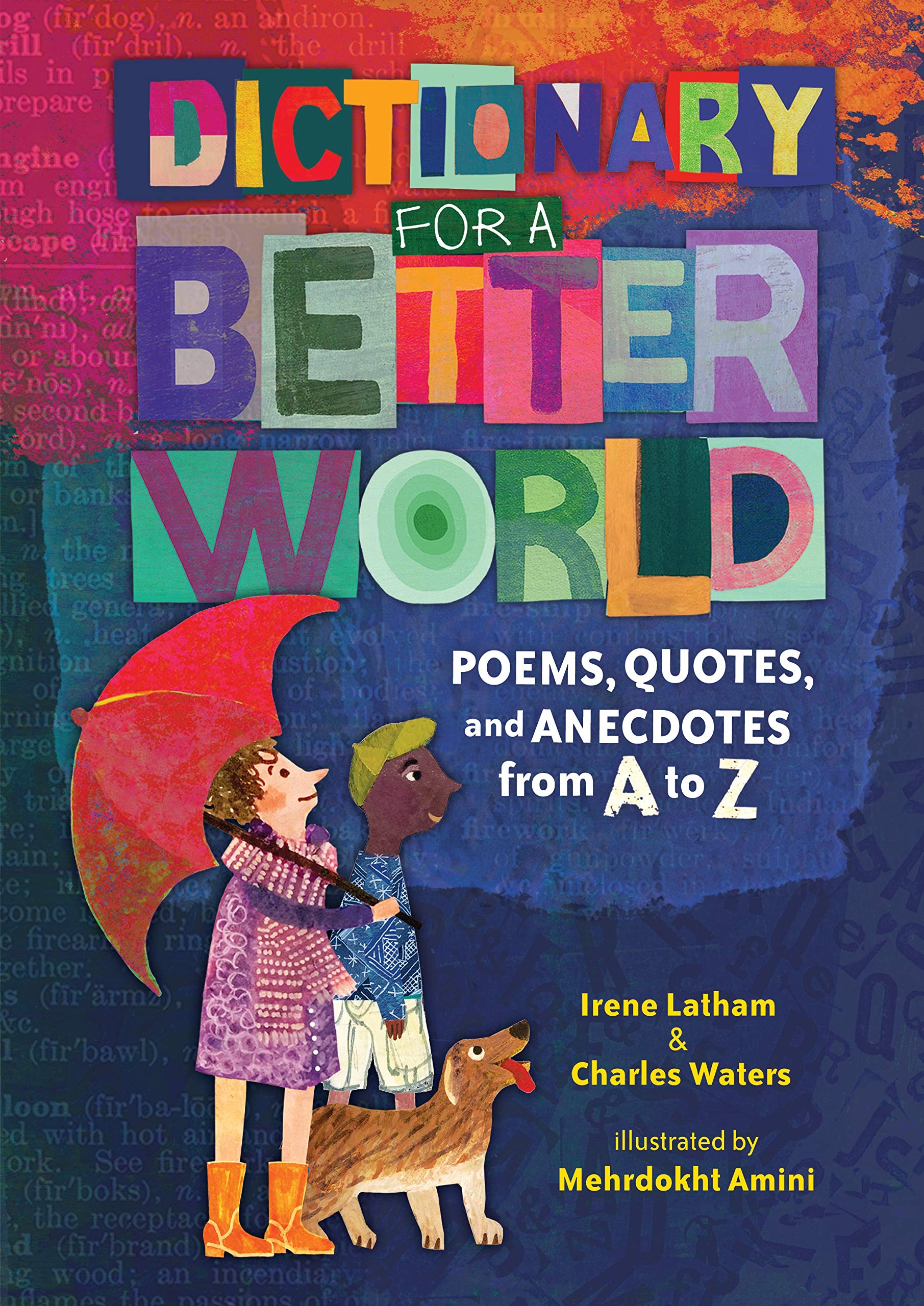
Summary:  From “acceptance” and “ally” to “yes” and “zest”, Latham and Waters take readers through an alphabet of words designed to make them think about how to make the world a better place.  Each page features a poem about the word, a personal anecdote written by one of the authors, an appropriate quote, and a definition of the poetic form used. There’s also a “Try It!” suggestion for an activity that focuses on the concept.  Includes a note from the authors; materials referenced in the quotes; additional recommended books; poetry resources; and an index of poetic forms.  120 pages; grades 3-7.

Pros:  The team that brought you Can I Touch Your Hair? has created a beautifully illustrated book that could be used to teach poetry or to begin a discussion on any of the words.  The anecdotes and “Try It!” suggestions could lead to some writing activities.  

Cons:  I wasn’t super excited to read a book entitled Dictionary for a Better World; seems like the authors or editors could have thought of a title with a little more zing.

If you would like to buy this book on Amazon, click here.

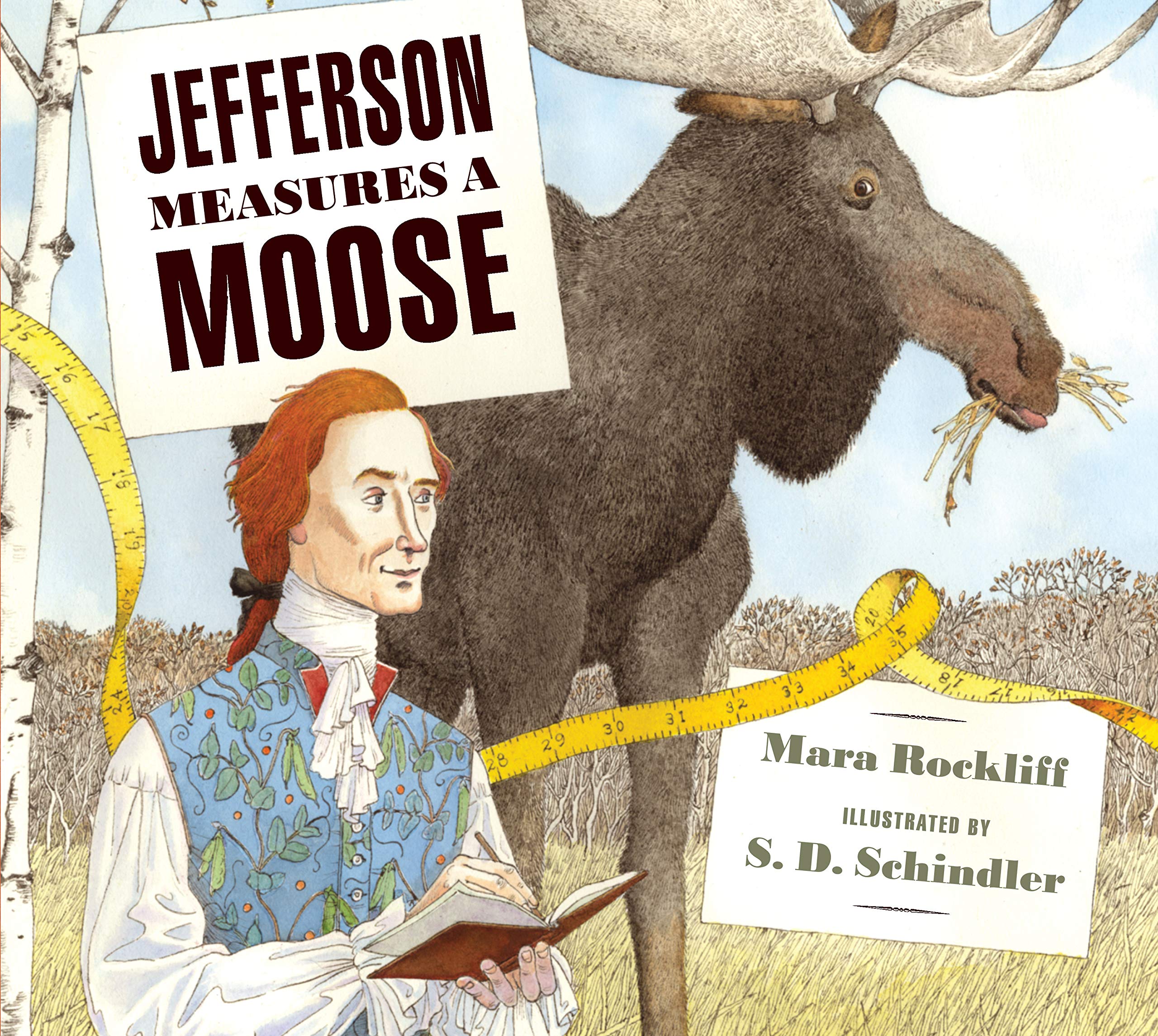
Jefferson Measures a Moose by Mara Rockliff, illustrated by S. D. Schindler

Published by Candlewick (Released August 4)

Jefferson Measures a Moose: Mara Rockliff, S. D. Schindler ...

Jefferson Measures a Moose: Mara Rockliff, S. D. Schindler ...

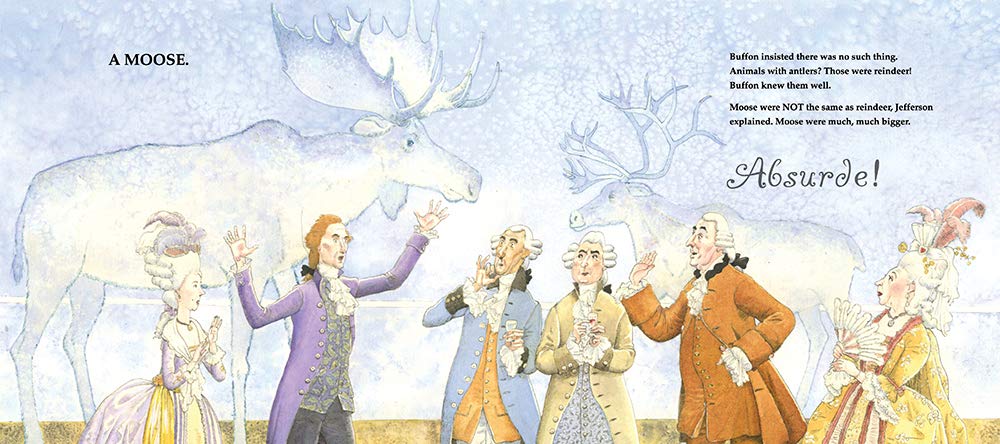
Summary:  Thomas Jefferson loved numbers and was always measuring, observing, and jotting down all things quantitative.  So when he read a book by a French naturalist named Buffon, claiming that America was a terrible place populated with weak and puny animals, Jefferson was determined to set the record straight.  He wrote a book of his own, filled with measurements of different American animals.  But when he presented this book to Buffon in person, the Frenchman was unimpressed.  Jefferson was living in France at the time, so he put his friend James Madison to work back home measuring moles and weighing weasels.  He even got a friend from New Hampshire to ship him a dead moose (which arrived in France a bit worse for the wear).  Buffon died before printing a retraction, but Jefferson continued his work to prove to Europeans that Americans and their animals were healthy and robust.  Includes an afterword with additional information; some examples of Jefferson’s numbers; and lists of both primary and secondary sources.  48 pages; grades 2-5.

Pros:  As she did in Mesmerized: How Ben Franklin Solved a Mystery That Baffled All of France, Mara Rockliff has written a fun, well-researched, and informative picture book in which a Founding Father takes on a Frenchman and blinds him with science.  The excellent back matter makes this a great starting point for research.

Cons:  While the illustrations were fun and perfectly adequate, I preferred the more distinctive ones in Mesmerized done by Iacopo Bruno, who also illustrated Rockliff’s Anything But Ordinary Addie.

If you would like to buy this book on Amazon, click here.

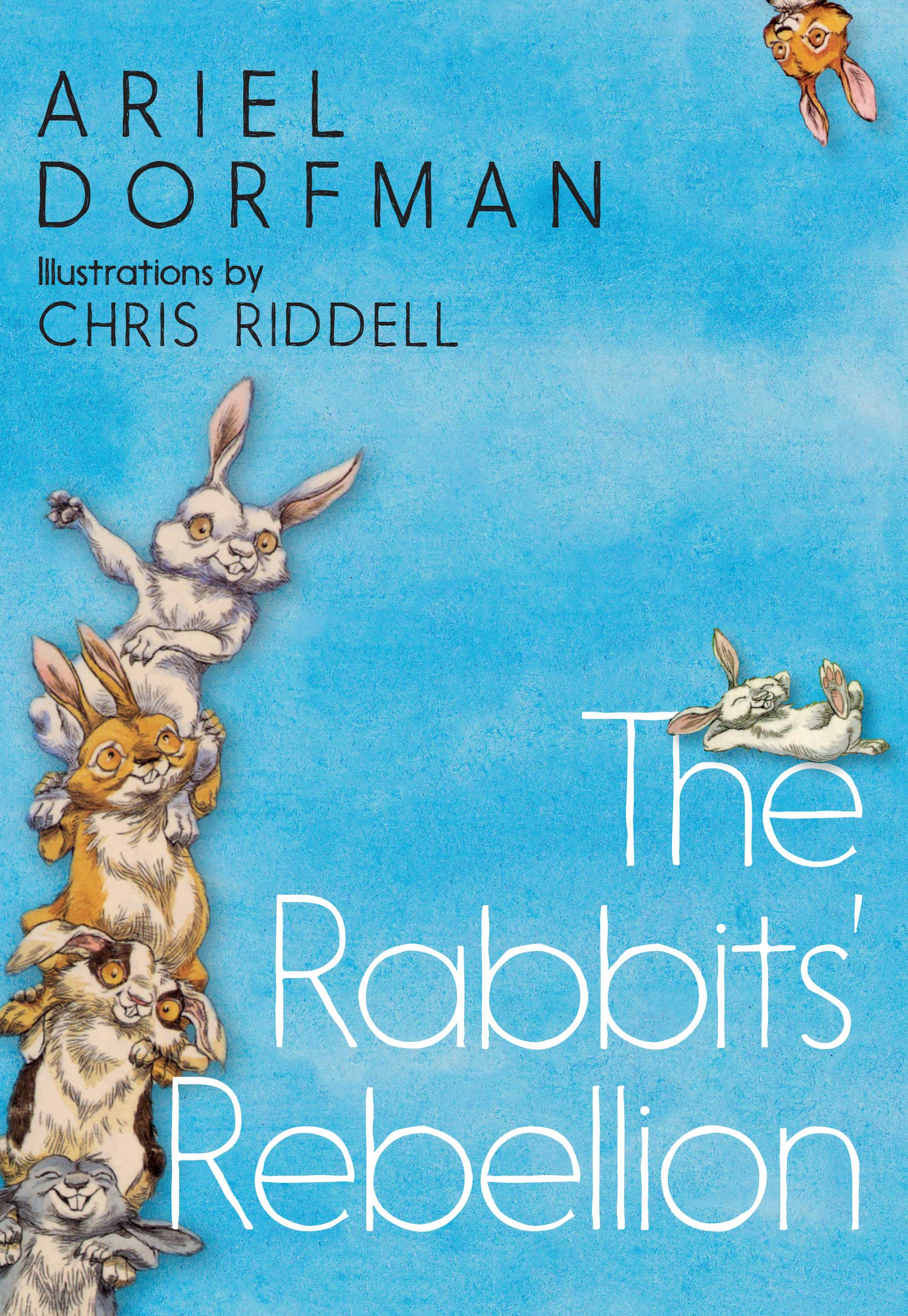
The Rabbits’ Rebellion by Ariel Dorfman, illustrations by Chris Riddell

Published by Triangle Square

The Rabbits' Rebellion: Ariel Dorfman, Chris Riddell ...

The Rabbits' Rebellion: Ariel Dorfman, Chris Riddell ...

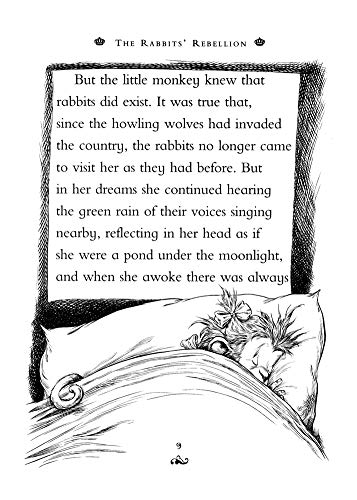
Summary:  “When the wolves conquered the land of rabbits, the first thing the leader of the pack did was to proclaim himself king.  The second was to announce that the rabbits ceased to exist.”  Rabbits have been removed from all parts of the new world, but the old monkey’s daughter still believes they exist.  When the old monkey is summoned to the palace to take pictures of the wolf king, he is dismayed when rabbit ears and noses start appearing on his photos.  He and the fox who serves as the king’s counsellor try to remove the offending rabbits, but they still keep coming, eventually showing up in the photos chewing on the king’s throne.  When the monkey is finally forced to take a photo on which his career and even his life depend, he captures on film the moment the entire throne collapses.  He brings the photo home to his daughter, and the story ends with the  family gazing out on a field full of rabbits.  64 pages; grades 2 and up.

Pros:  The story and illustrations are wickedly funny, and can be read on many different levels.  This is the only children’s story written by Latin American novelist Ariel Dorfman, and can be enjoyed by adults as well as kids.

Cons:  Some of the more political implications may be lost on a younger audience.

If you would like to order this book from The Odyssey Bookshop, click here.

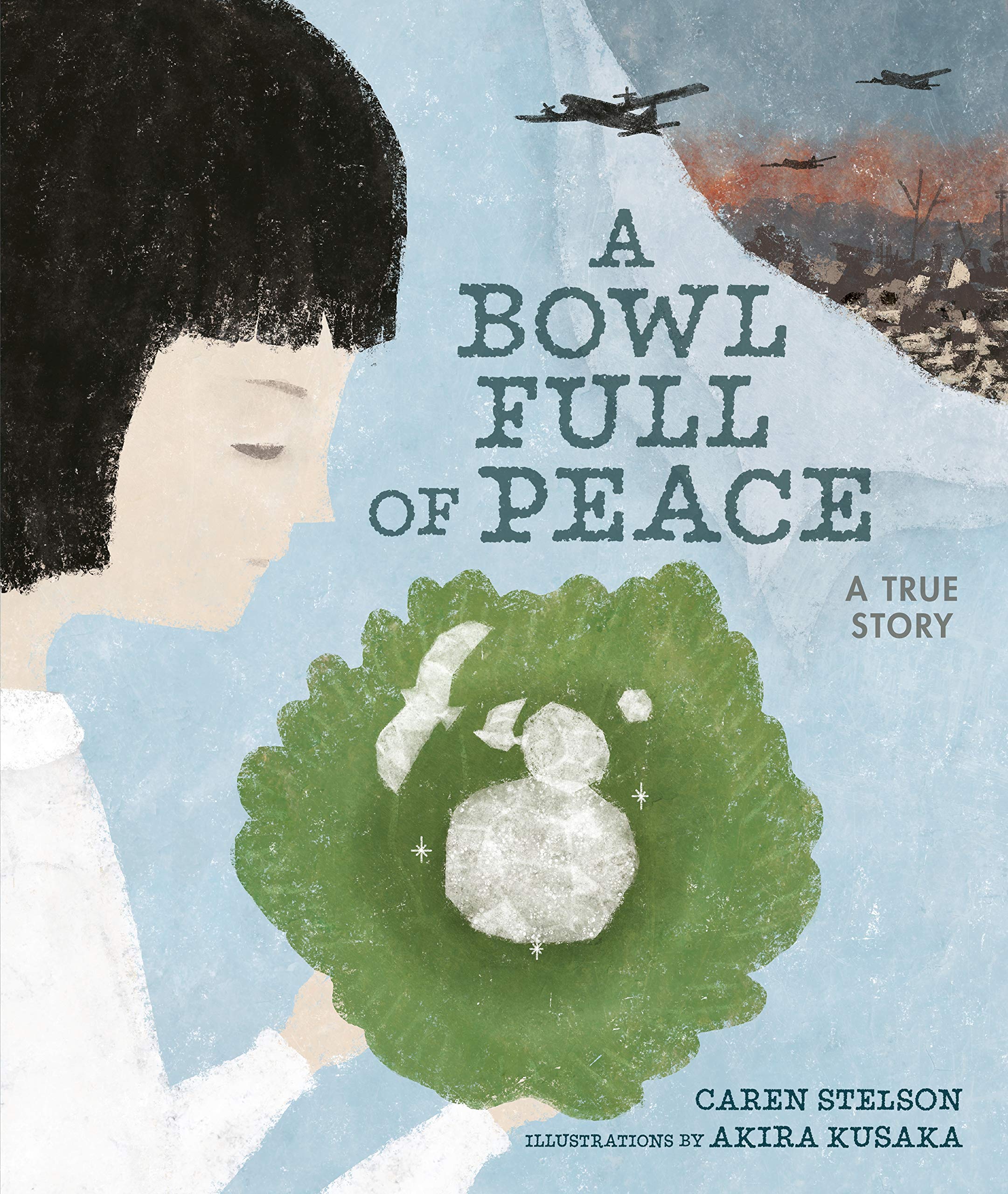
A Bowl Full of Peace by Caren Stetson, illustrated by Akira Kusaka

Published by Carolrhoda Books

A Bowl Full of Peace: A True Story: Stelson, Caren, Kusaka, Akira ...

Summary:  Sachiko’s family cherishes Grandmother’s bowl, which is always filled with food at dinnertime.  As the war drags on, food becomes scarcer; still, the family still gathers and offers thanks for what they have.  August 9, 1945, begins like other hot summer days for the family, but an atomic bomb dropped on their city of Nagasaki changes life forever.  Sachiko’s youngest sister dies, and slowly over the course of the next several years, her remaining siblings and father sicken and pass away. The family leaves for awhile after the bombing, and when they return, Sachiko’s father miraculously finds Grandmother’s bowl in the rubble.  Each year, the remaining family members fill the bowl with ice and watch it melt, remembering the suffering they endured. Finally, Sachiko is the only survivor. She continues to help others remember and work for peace, work that inspired Caren Stetson to write her award-winning book Sachiko: A Nagasaki Bomb Survivor’s Story in 2016 and this picture book for younger readers.  Includes author’s and illustrator’s notes; photographs; and a list of books for further reading.  40 pages; grades 2-5.

Pros:  This beautifully written and illustrated story deserves a place in any curriculum studying peace or the history of World War II.  Sachiko’s story makes the abstract concept of war more personal for kids.

Cons:  It is a tragic story to be sure, and one that kids may need some guidance to understand and process it.

If you would like to pre-order this book from the Odyssey Bookshop, click here.

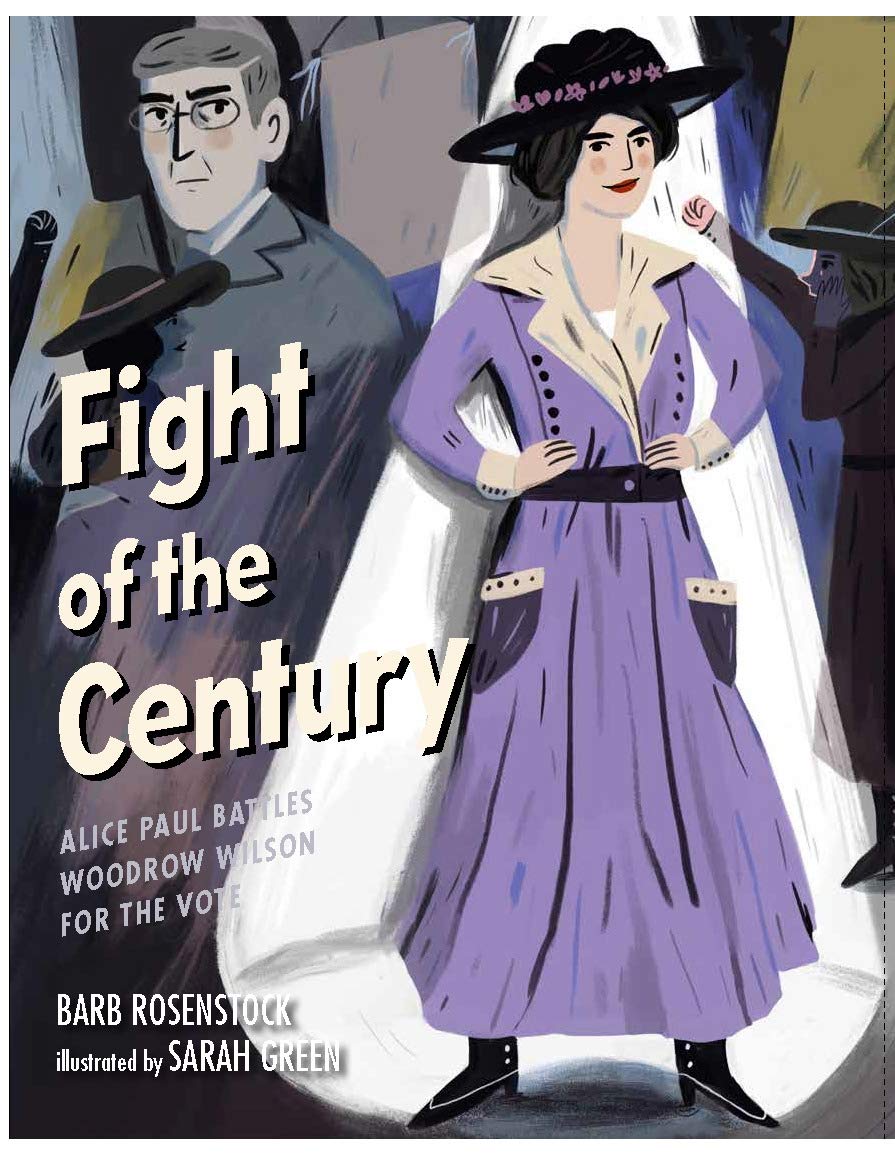
Fight of the Century: Alice Paul Battles Woodrow Wilson for the Vote by Barb Rosenstock, illustrated by Sarah Green

Published by Calkins Creek

Fight of the Century: Alice Paul Battles Woodrow Wilson for the ...

Coming Soon: The Fight Of The Century - sarah.green

Summary:  When Woodrow Wilson was elected president in 1912, Alice Paul decided to convince him that U.S. women should be given the right to vote.  After a parade the day before his inauguration and multiple visits to the White House failed to garner any results, Paul and other suffragists began a silent protest in front of the White House.  She was eventually arrested and spent seven months in jail, where she staged a hunger strike. Finally, in early 1918, Wilson agreed to support an amendment for women’s suffrage, and the rest is history as the Nineteenth Amendment granting women the right to vote became law on August 26, 1920.  Includes additional information about Alice Paul and Woodrow Wilson; a timeline of women’s suffrage in the U.S.; photos; and a lengthy bibliography. 40 pages; grades 2-5.

Pros:  Using the format of a prize fight with Paul and Wilson as the two worthy opponents adds an element of fun to this story, but doesn’t take away from the informational value.  The extensive back matter makes it a great research resource.

Cons:  Readers with no background knowledge may find the format a bit confusing.

If you would like to buy this book from the Odyssey Bookshop, click here.


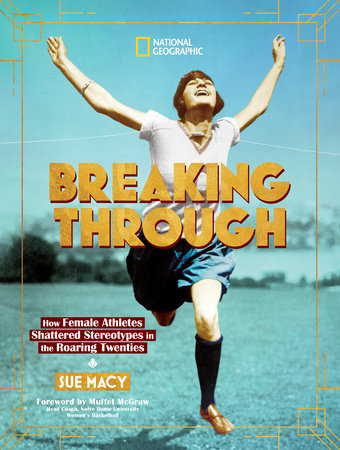
Breaking Through: How Female Athletes Shattered Stereotypes in the Roaring Twenties by Sue Macy

Published by National Geographic

Breaking Through by Sue Macy: 9781426336768 | PenguinRandomHouse ...

Summary:  While few women athletes from the 1920’s are widely remembered today, it was an important decade for women’s sports.  In chapter one, we meet Olympic diving gold medalist 14-year-old Aileen Riggin, one of the first American women to compete in the Olympics, held in 1920, the same year U.S. women finally got the right to vote.  Subsequent chapters look at each year in the decade, profiling women athletes, and also looking at the men (and sometimes women) who tried to discourage them from competing. There are plenty of photos and sidebars, and each chapter ends with two pages of other events that occurred during the year, offering a big of historical perspective.  An epilogue summarizes what has happened in women’s sports since the end of the 1920’s, with brief profiles of women athletes from 1930 until the present. Includes an author’s note, additional resources, source notes, and an index. 96 pages; grades 4-7.

Pros:  A fresh and interesting look at sports, written in an engaging style that will draw readers in.  Boys and girls alike will be inspired by these women who competed, often in multiple sports, against a backdrop of criticism and naysaying, opening up opportunities that continue to this day.

Cons:  The font seemed unnecessarily small, and a high-powered microscope may be needed to decipher the source notes and index.

If you would like to order this book from the Odyssey Bookshop, click here.


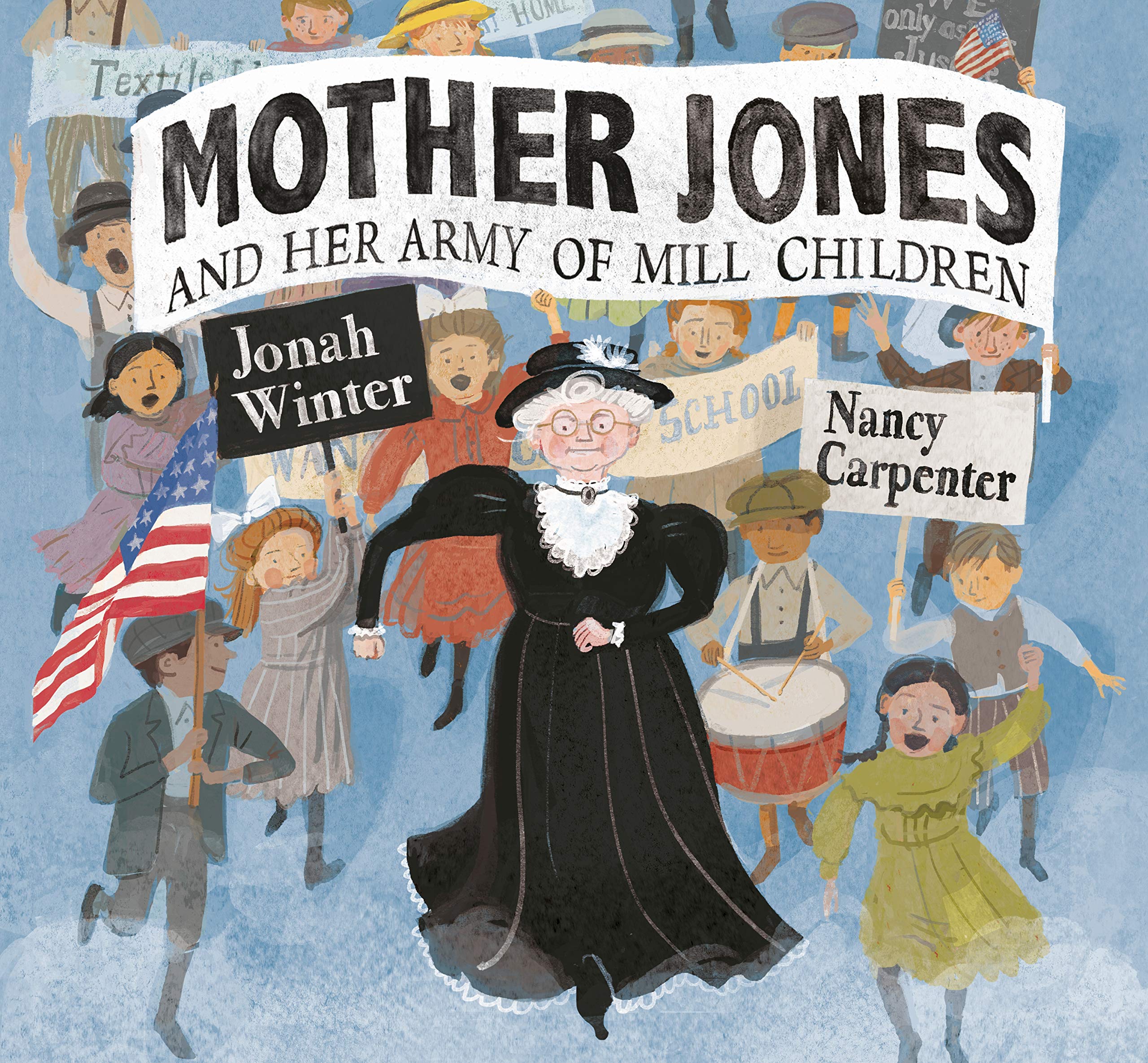
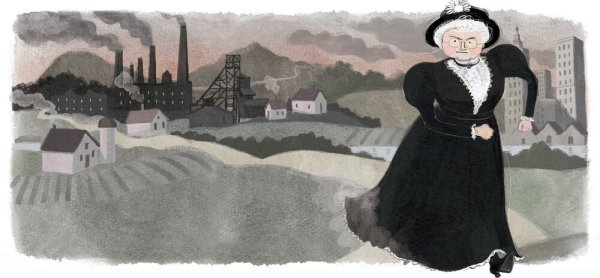
Mother Jones and Her Army of Children by Jonah Winter, illustrated by Nancy Carpenter

Published by Schwartz & Wade

Image result for mother jones and her jonah winter

Image result for mother jones nancy carpenter

Summary:  Mother Jones tells her story, beginning with some of the things that have made her mad: conditions for coal miners in West Virginia, factory workers getting shot at for protesting for fair pay, and young children working ten-hour days in Philadelphia factories.  It was these last that inspired her to set out with 100 children on July 7, 1903, determined to march from Philadelphia to New York City, and then on to Theodore Roosevelt’s “fancy-schmancy” Long Island summer home to speak with the president himself. They traveled 100 miles in the hot summer sun, demonstrating in towns as they went.  By the time they reached New York, many of the kids had given up and gone home, but 37 of them marched in a torchlight parade up Fourth Avenue. After a trip to Coney Island, Mother Jones sent most of the children home, approaching the Roosevelt mansion with just three of the boys and two other men. They were turned away at the gate, but the Children’s Crusade had shone a spotlight on child labor, and laws began to change.  Includes an author’s note, four photos, and a bibliography. 40 pages; grades 2-5.

Pros:  An inspiring story that will show kids the power of some unlikely people:  a 66-year-old woman and 100 poor children taken from factories. The text does a masterful job of using Mother Jones’s voice and incorporating many of her quotes into the story.  The author’s note gives full credit to Mother Jones for being instrumental in changing labor laws for both children and adults.

Cons:  Theodore Roosevelt certainly doesn’t come off too well in this story.

If you would like to buy this book on Amazon, click here.

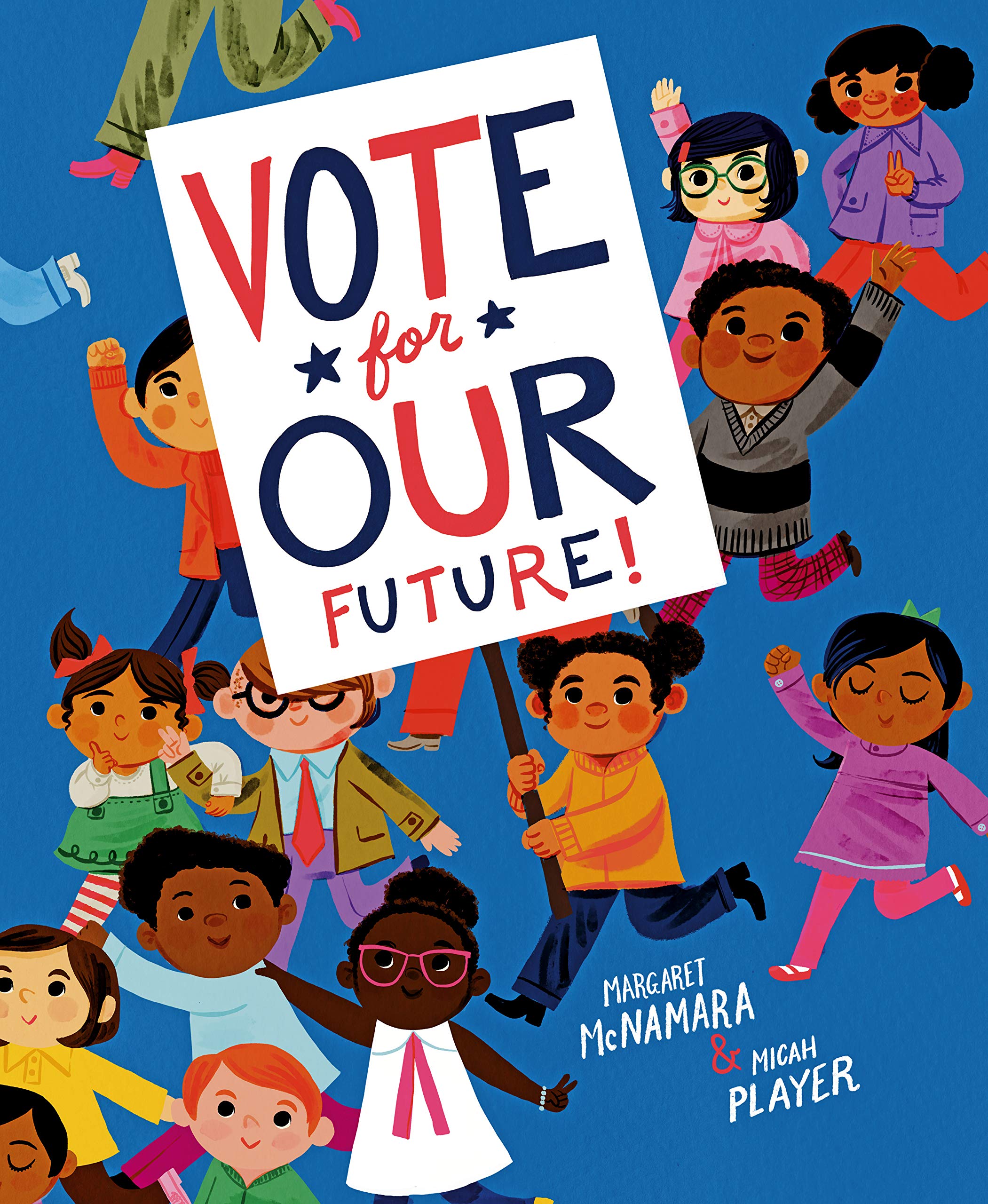
Vote for Our Future! by Margaret McNamara, illustrated by Micah Player and Equality’s Call: The Story of Voting Rights In America by Deborah Diesen, illustrated by Magdalena Mora

Published by Schwartz & Wade 

Image result for vote for our future mcnamara

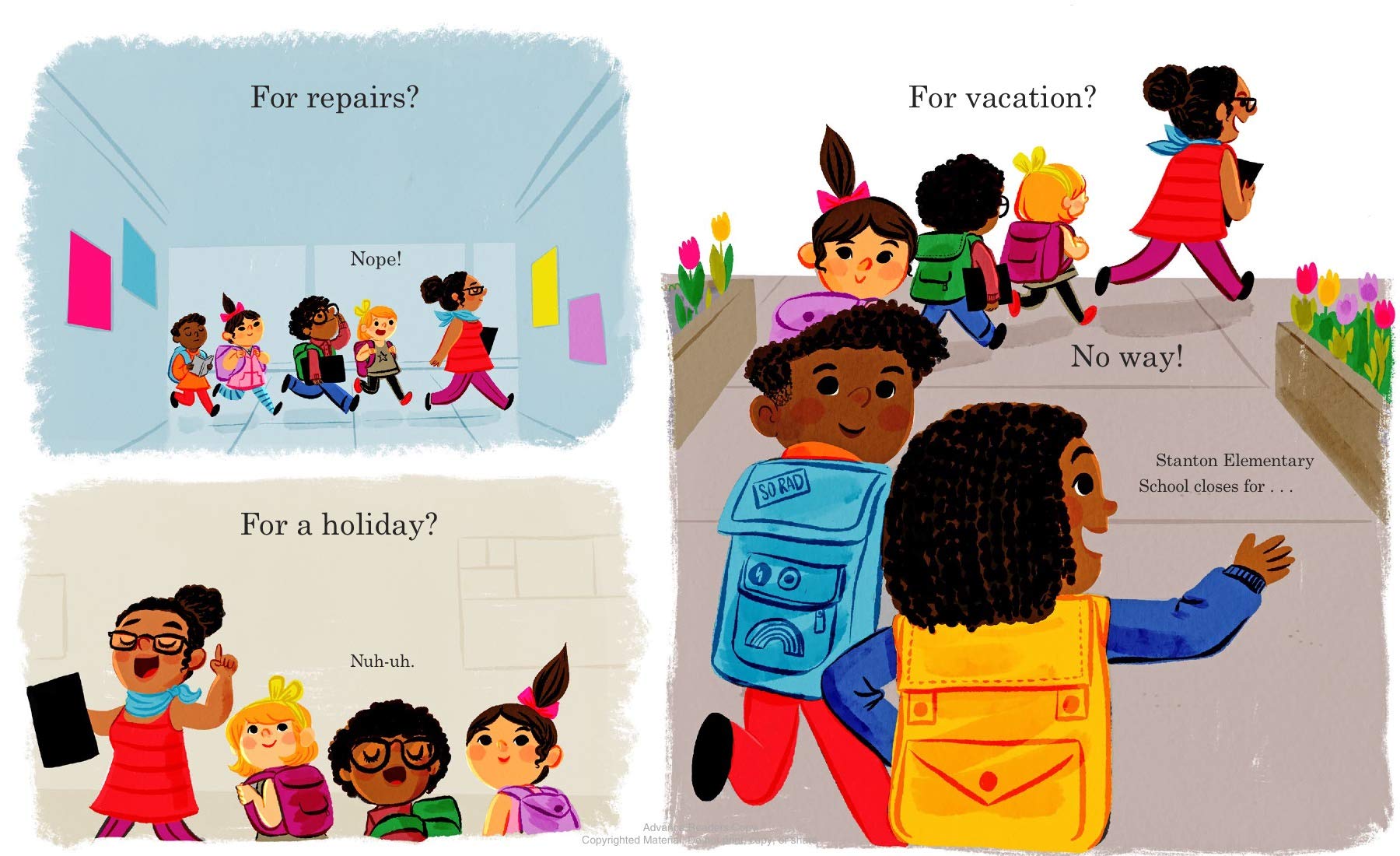
Image result for vote for our future mcnamara


Published by Beach Lane Books

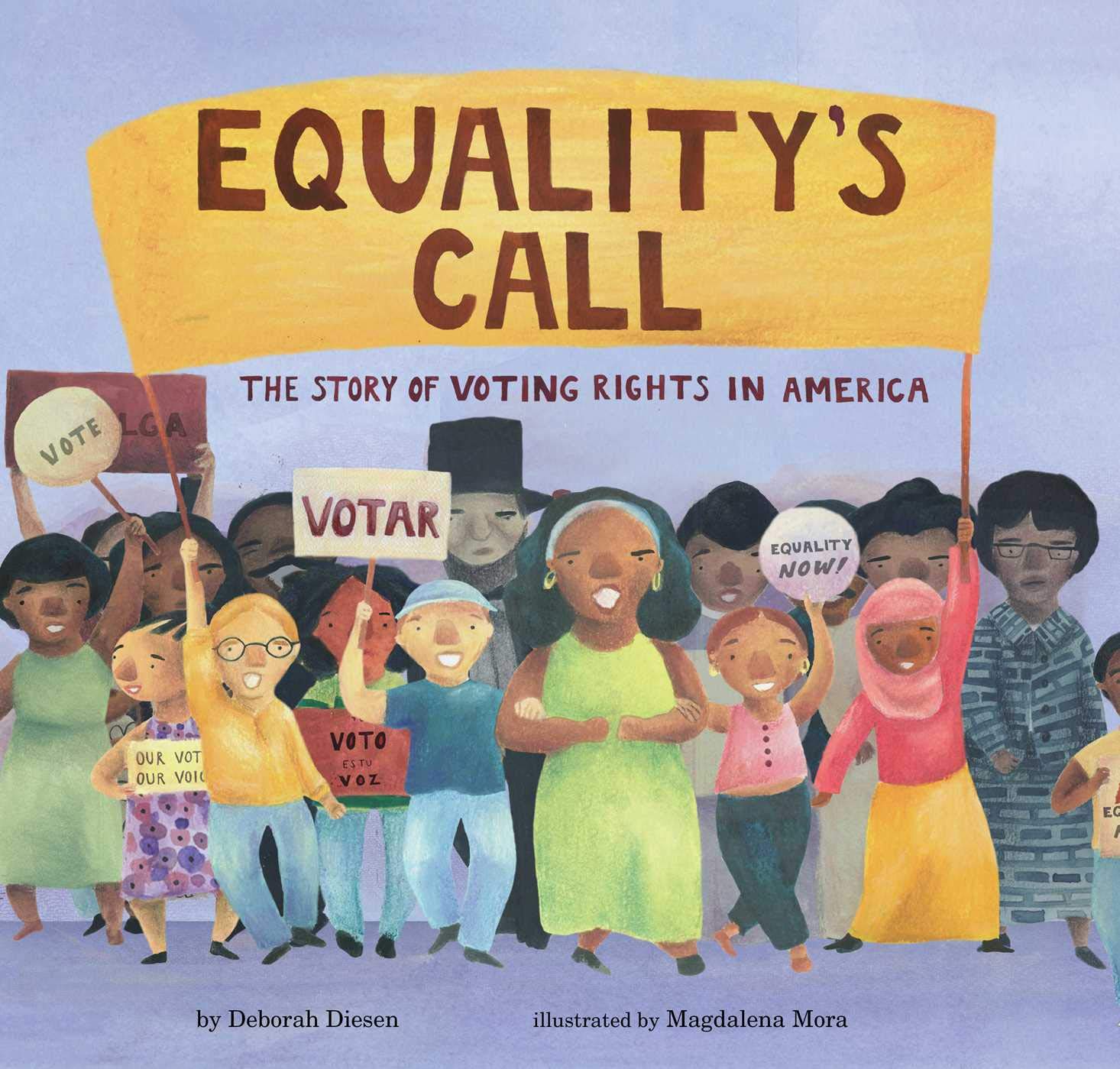
Image result for equality's call story

Image result for equality's call story

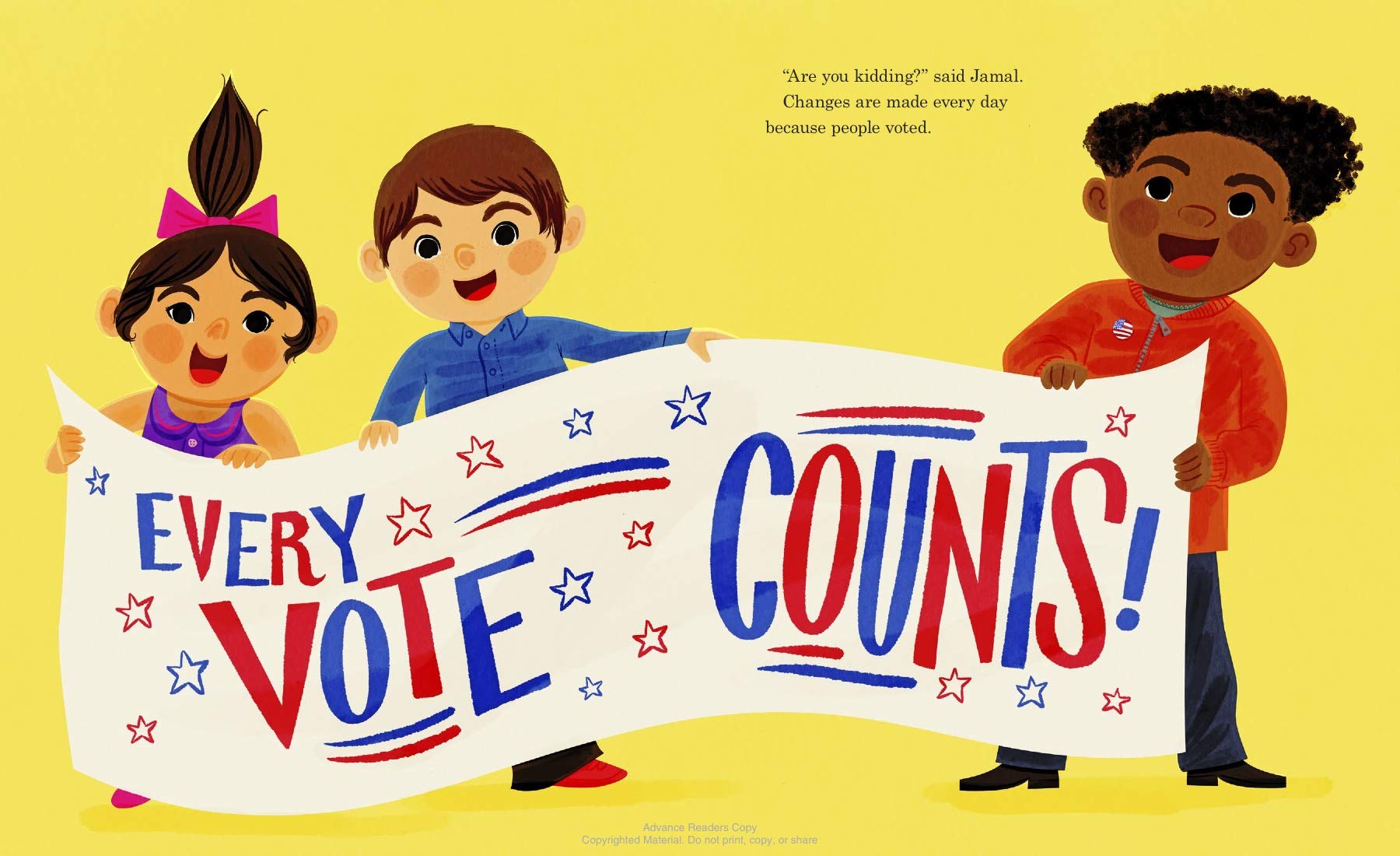
Summaries:  Every two years, Stanton Elementary School closes down on the Tuesday after the first Monday in November.  Turns out it’s a polling place on Election Day, and the kids in Vote for Our Future! want to be a part of it.  They visit friends, family, and neighbors to encourage them to vote, meeting each one of their lame excuses with a solution to get them registered and to the polls.  A gatefold page shows long lines on Election Day, and excitement builds as votes are counted and recounted. Kids are back at school the next day, “and the future begins to change”.  Includes a list of Acts of Congress that have made the future better for Americans. 40 pages; ages 4-8.

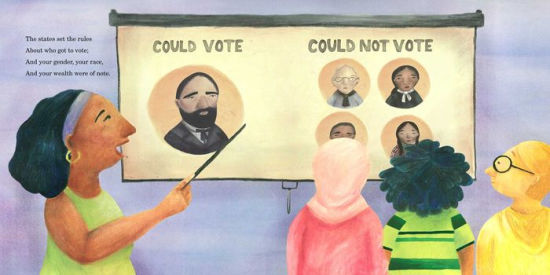
The rhyming text of Equality’s Call tells the story of how voting rights have changed over the last 200 years.  At first, “white men with property went to the polls, but the rest of the people were left off the rolls”.  Over time, things slowly changed, allowing women, people of color, and the non-wealthy to vote. Every few pages, a double-page spread shows a growing parade of voters with the refrain, “We heard ever louder/Equality’s call/A right isn’t a right/Till it’s granted to all.”  The last few pages remind readers that we owe a debt of gratitude to those who fought for voters’ rights and that “democracy’s dream must be constantly tended”. Includes two pages of voting-related amendments and legislation with a description of each one and two pages with thumbnail profiles of voting rights activists.  48 pages; ages 4-8.

Pros:  A double dose of democracy with two excellent picture books that show the importance of voting and put it in historical context.  

Cons:  Not voting on Election Day!  If you’re in a Super Tuesday state and know someone who isn’t voting today, I encourage you to call or visit that person and read one of these books to them in an aggrieved, disappointed voice.  Say it kids:

Image result for vote for our future mcnamara

If you would like to buy Vote for Our Future on Amazon, click here.

If you would like to buy Equality’s Call on Amazon, click here.