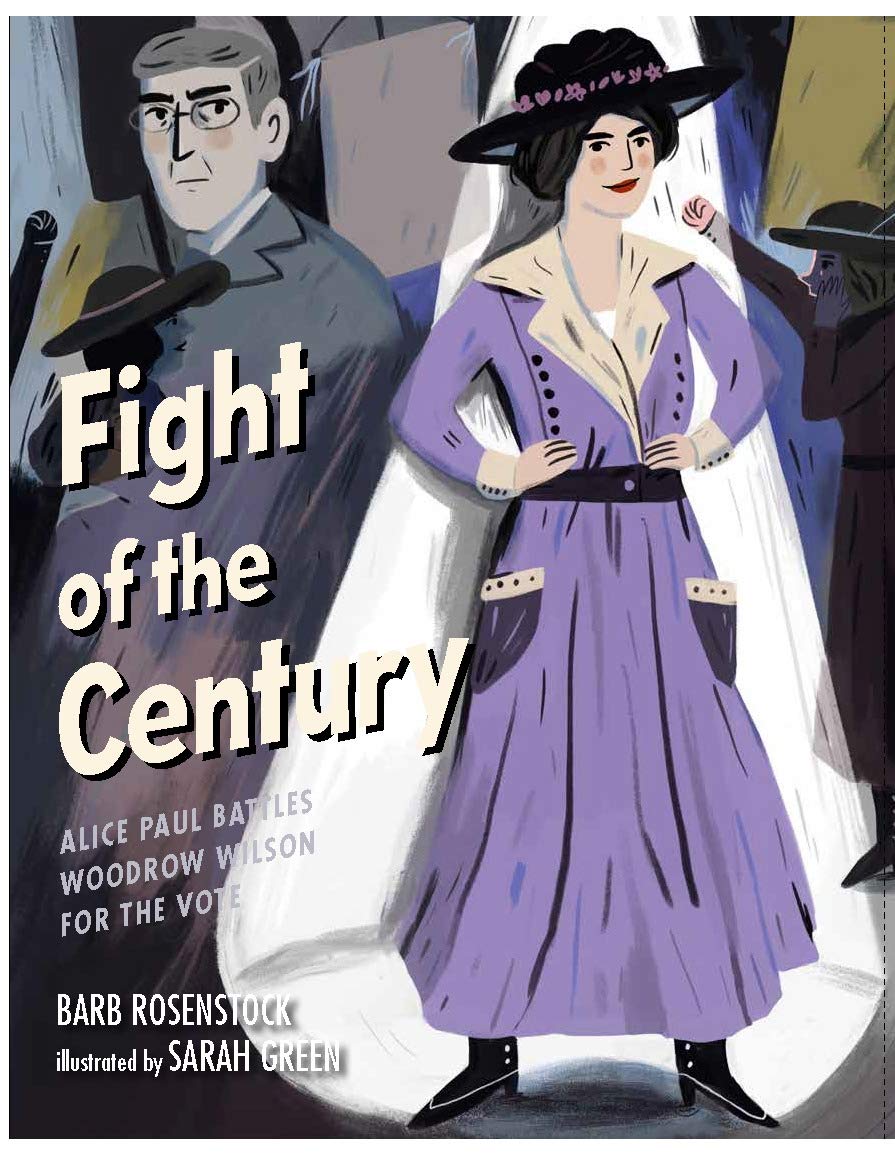
Fight of the Century: Alice Paul Battles Woodrow Wilson for the Vote by Barb Rosenstock, illustrated by Sarah Green

Published by Calkins Creek

Fight of the Century: Alice Paul Battles Woodrow Wilson for the ...

Coming Soon: The Fight Of The Century - sarah.green

Summary:  When Woodrow Wilson was elected president in 1912, Alice Paul decided to convince him that U.S. women should be given the right to vote.  After a parade the day before his inauguration and multiple visits to the White House failed to garner any results, Paul and other suffragists began a silent protest in front of the White House.  She was eventually arrested and spent seven months in jail, where she staged a hunger strike. Finally, in early 1918, Wilson agreed to support an amendment for women’s suffrage, and the rest is history as the Nineteenth Amendment granting women the right to vote became law on August 26, 1920.  Includes additional information about Alice Paul and Woodrow Wilson; a timeline of women’s suffrage in the U.S.; photos; and a lengthy bibliography. 40 pages; grades 2-5.

Pros:  Using the format of a prize fight with Paul and Wilson as the two worthy opponents adds an element of fun to this story, but doesn’t take away from the informational value.  The extensive back matter makes it a great research resource.

Cons:  Readers with no background knowledge may find the format a bit confusing.

If you would like to buy this book from the Odyssey Bookshop, click here.


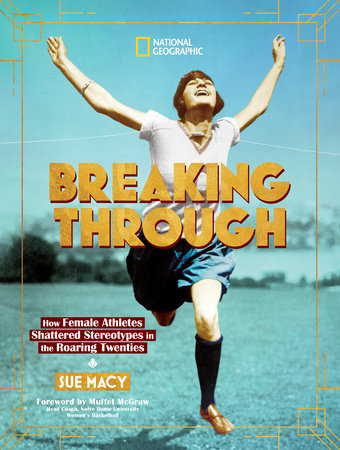
Breaking Through: How Female Athletes Shattered Stereotypes in the Roaring Twenties by Sue Macy

Published by National Geographic

Breaking Through by Sue Macy: 9781426336768 | PenguinRandomHouse ...

Summary:  While few women athletes from the 1920’s are widely remembered today, it was an important decade for women’s sports.  In chapter one, we meet Olympic diving gold medalist 14-year-old Aileen Riggin, one of the first American women to compete in the Olympics, held in 1920, the same year U.S. women finally got the right to vote.  Subsequent chapters look at each year in the decade, profiling women athletes, and also looking at the men (and sometimes women) who tried to discourage them from competing. There are plenty of photos and sidebars, and each chapter ends with two pages of other events that occurred during the year, offering a big of historical perspective.  An epilogue summarizes what has happened in women’s sports since the end of the 1920’s, with brief profiles of women athletes from 1930 until the present. Includes an author’s note, additional resources, source notes, and an index. 96 pages; grades 4-7.

Pros:  A fresh and interesting look at sports, written in an engaging style that will draw readers in.  Boys and girls alike will be inspired by these women who competed, often in multiple sports, against a backdrop of criticism and naysaying, opening up opportunities that continue to this day.

Cons:  The font seemed unnecessarily small, and a high-powered microscope may be needed to decipher the source notes and index.

If you would like to order this book from the Odyssey Bookshop, click here.


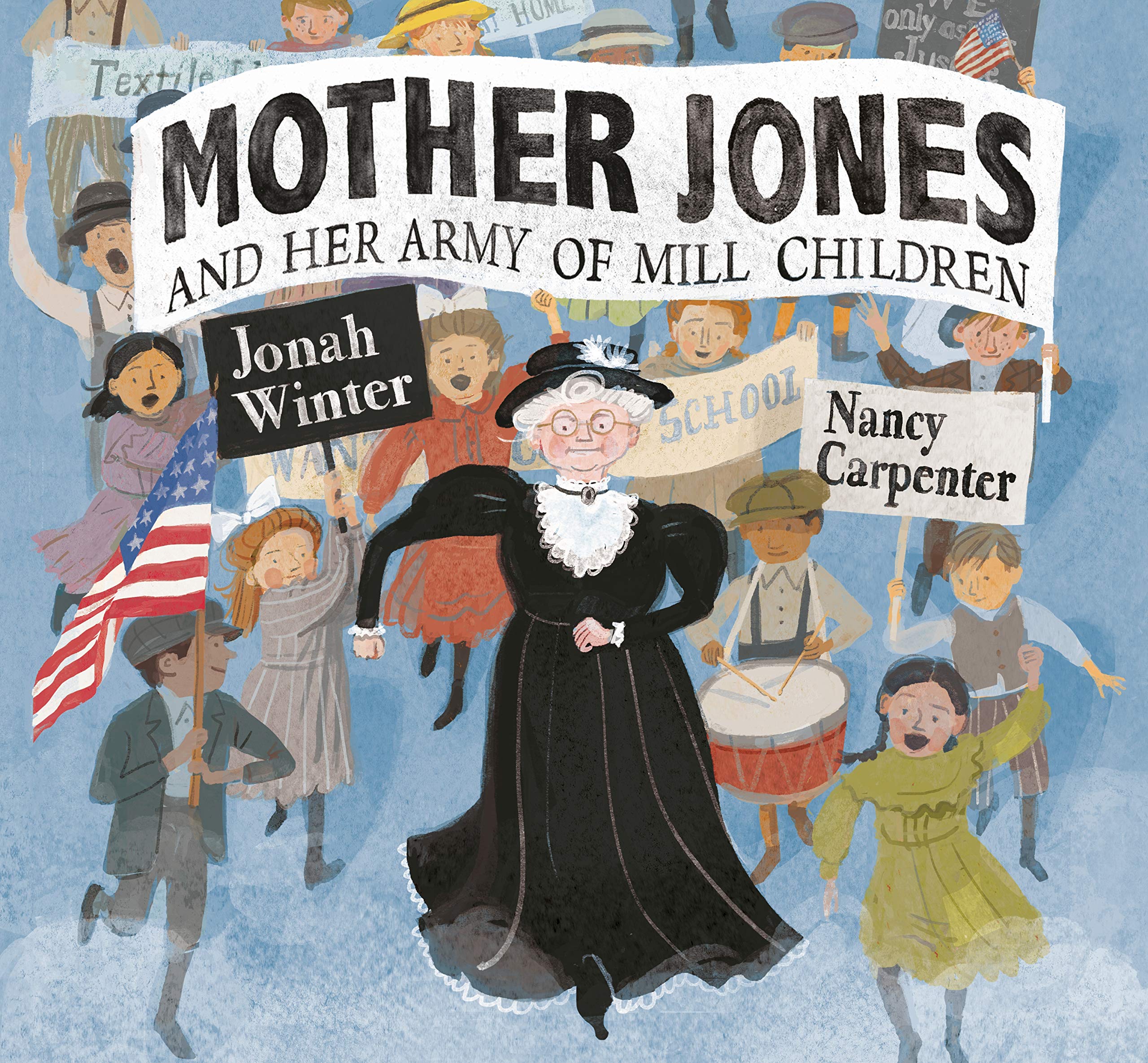
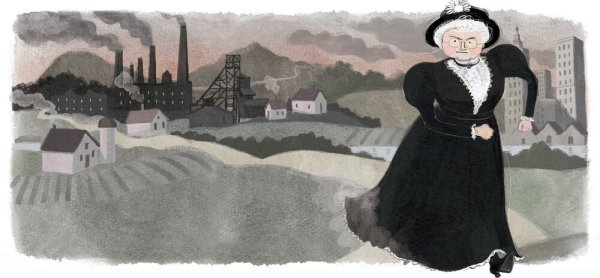
Mother Jones and Her Army of Children by Jonah Winter, illustrated by Nancy Carpenter

Published by Schwartz & Wade

Image result for mother jones and her jonah winter

Image result for mother jones nancy carpenter

Summary:  Mother Jones tells her story, beginning with some of the things that have made her mad: conditions for coal miners in West Virginia, factory workers getting shot at for protesting for fair pay, and young children working ten-hour days in Philadelphia factories.  It was these last that inspired her to set out with 100 children on July 7, 1903, determined to march from Philadelphia to New York City, and then on to Theodore Roosevelt’s “fancy-schmancy” Long Island summer home to speak with the president himself. They traveled 100 miles in the hot summer sun, demonstrating in towns as they went.  By the time they reached New York, many of the kids had given up and gone home, but 37 of them marched in a torchlight parade up Fourth Avenue. After a trip to Coney Island, Mother Jones sent most of the children home, approaching the Roosevelt mansion with just three of the boys and two other men. They were turned away at the gate, but the Children’s Crusade had shone a spotlight on child labor, and laws began to change.  Includes an author’s note, four photos, and a bibliography. 40 pages; grades 2-5.

Pros:  An inspiring story that will show kids the power of some unlikely people:  a 66-year-old woman and 100 poor children taken from factories. The text does a masterful job of using Mother Jones’s voice and incorporating many of her quotes into the story.  The author’s note gives full credit to Mother Jones for being instrumental in changing labor laws for both children and adults.

Cons:  Theodore Roosevelt certainly doesn’t come off too well in this story.

If you would like to buy this book on Amazon, click here.

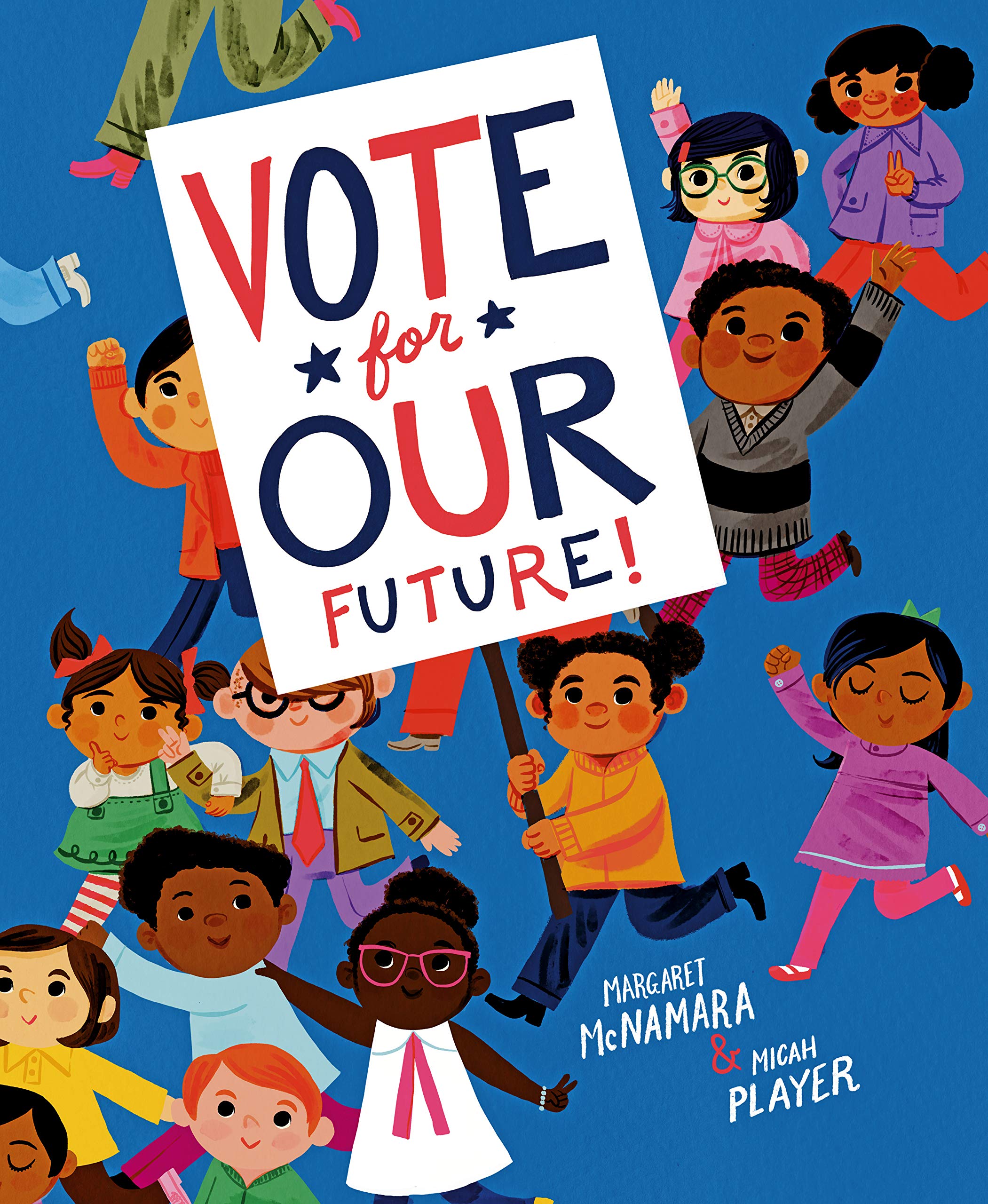
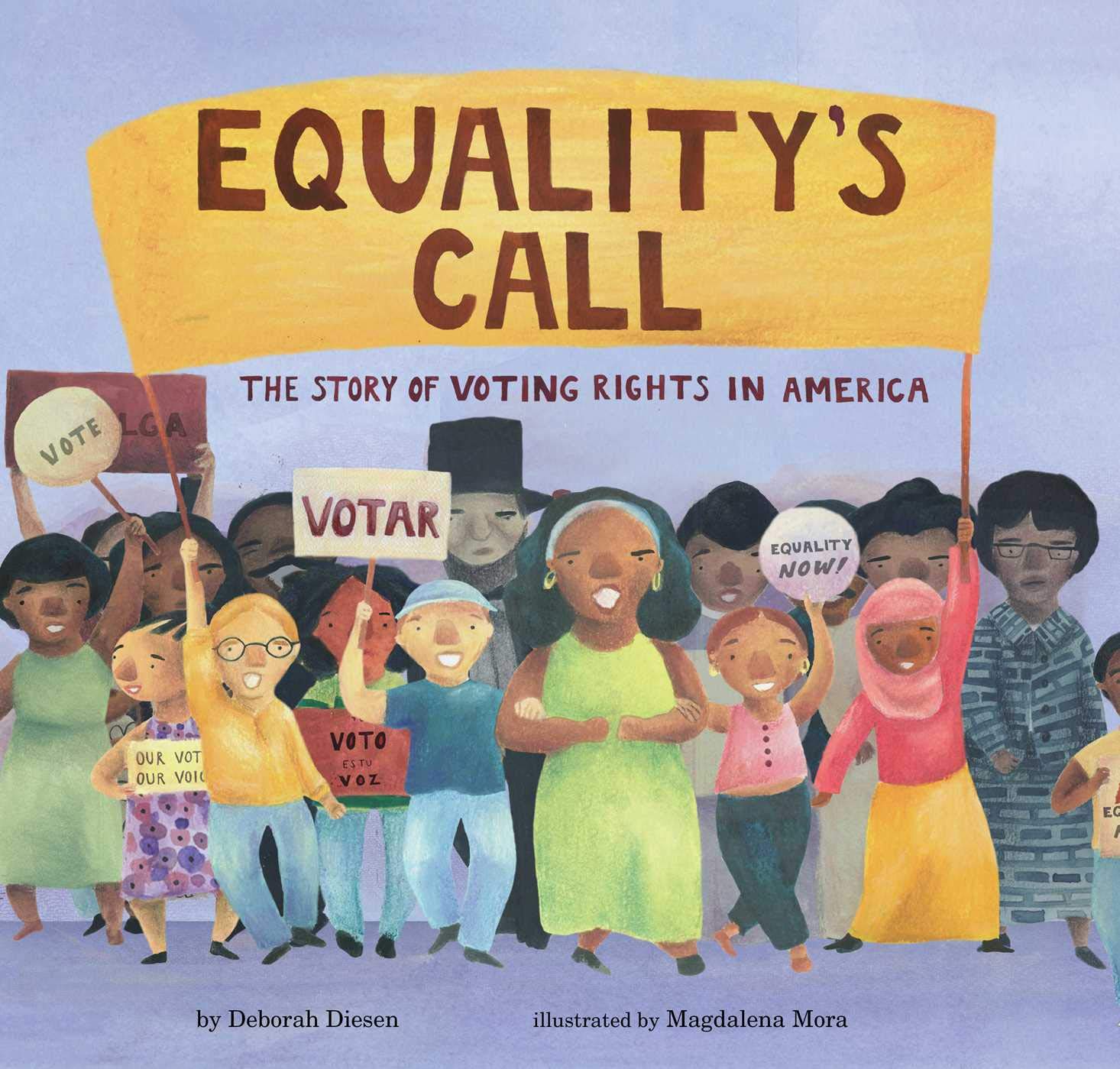
Vote for Our Future! by Margaret McNamara, illustrated by Micah Player and Equality’s Call: The Story of Voting Rights In America by Deborah Diesen, illustrated by Magdalena Mora

Published by Schwartz & Wade 

Image result for vote for our future mcnamara

Image result for vote for our future mcnamara


Published by Beach Lane Books

Image result for equality's call story

Image result for equality's call story

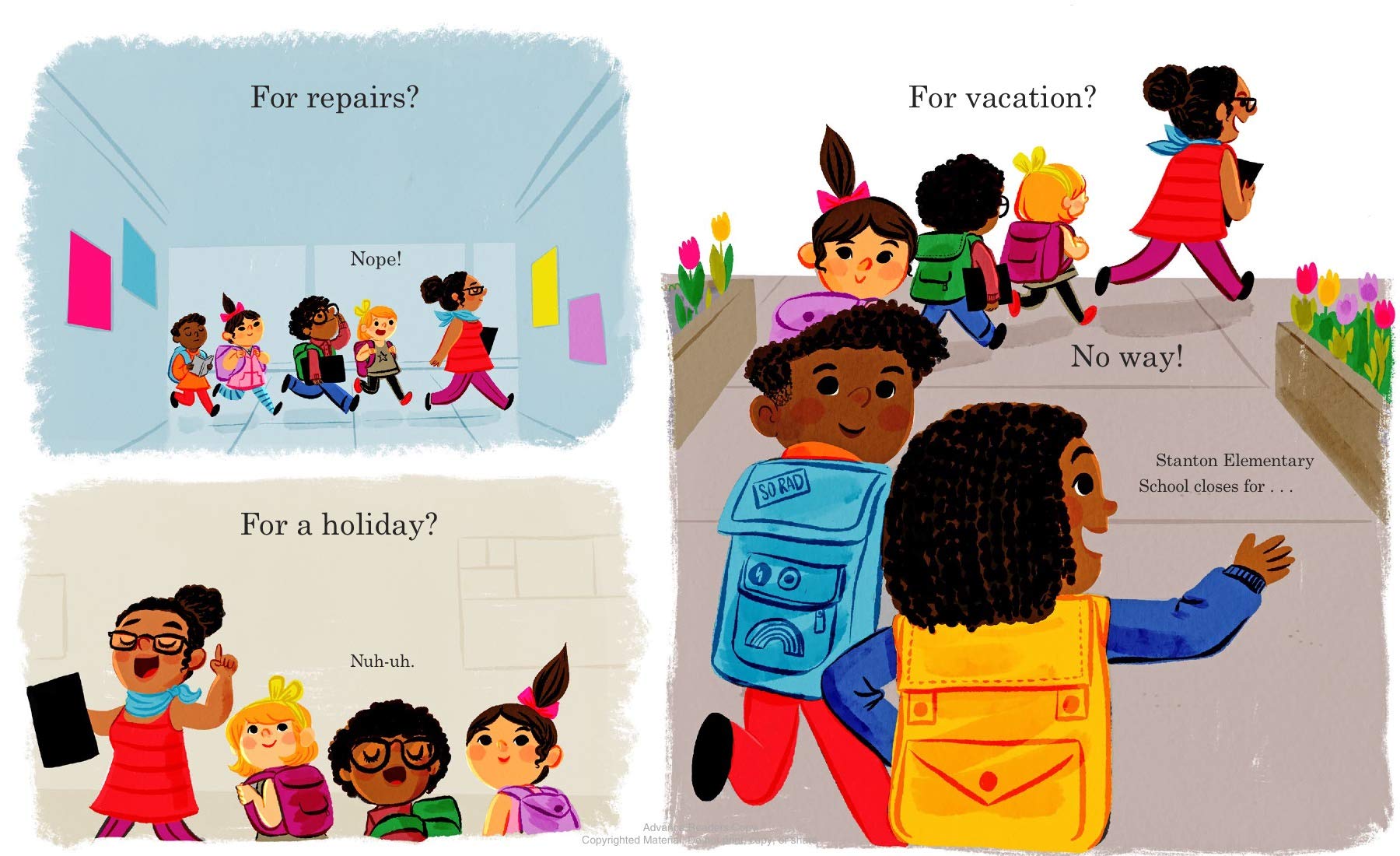
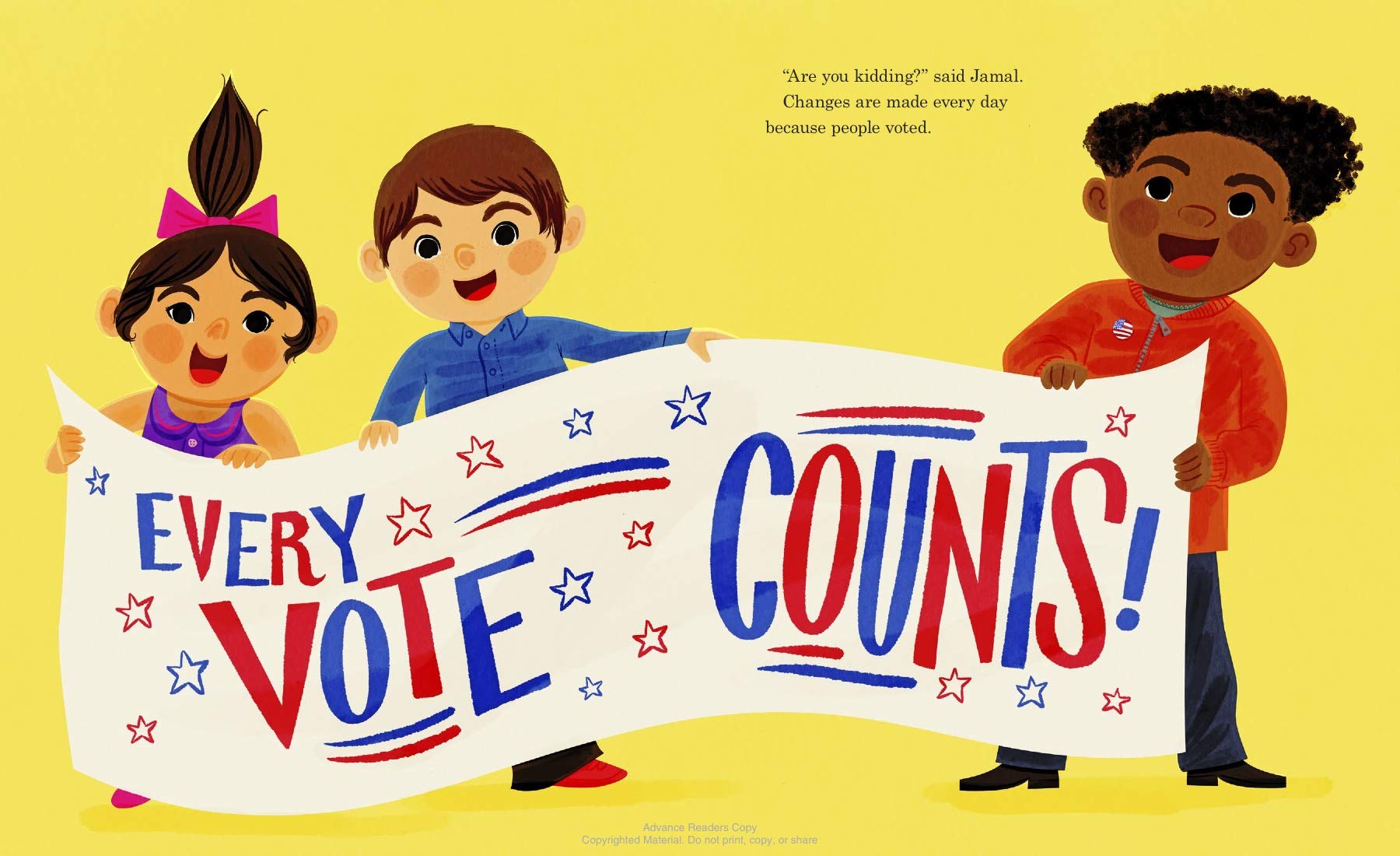
Summaries:  Every two years, Stanton Elementary School closes down on the Tuesday after the first Monday in November.  Turns out it’s a polling place on Election Day, and the kids in Vote for Our Future! want to be a part of it.  They visit friends, family, and neighbors to encourage them to vote, meeting each one of their lame excuses with a solution to get them registered and to the polls.  A gatefold page shows long lines on Election Day, and excitement builds as votes are counted and recounted. Kids are back at school the next day, “and the future begins to change”.  Includes a list of Acts of Congress that have made the future better for Americans. 40 pages; ages 4-8.

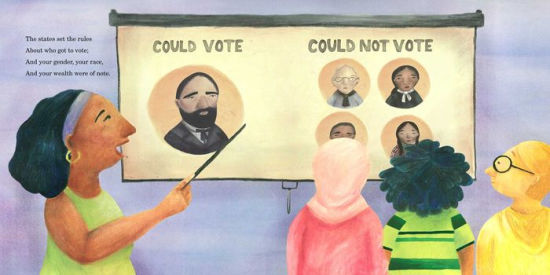
The rhyming text of Equality’s Call tells the story of how voting rights have changed over the last 200 years.  At first, “white men with property went to the polls, but the rest of the people were left off the rolls”.  Over time, things slowly changed, allowing women, people of color, and the non-wealthy to vote. Every few pages, a double-page spread shows a growing parade of voters with the refrain, “We heard ever louder/Equality’s call/A right isn’t a right/Till it’s granted to all.”  The last few pages remind readers that we owe a debt of gratitude to those who fought for voters’ rights and that “democracy’s dream must be constantly tended”. Includes two pages of voting-related amendments and legislation with a description of each one and two pages with thumbnail profiles of voting rights activists.  48 pages; ages 4-8.

Pros:  A double dose of democracy with two excellent picture books that show the importance of voting and put it in historical context.  

Cons:  Not voting on Election Day!  If you’re in a Super Tuesday state and know someone who isn’t voting today, I encourage you to call or visit that person and read one of these books to them in an aggrieved, disappointed voice.  Say it kids:

Image result for vote for our future mcnamara

If you would like to buy Vote for Our Future on Amazon, click here.

If you would like to buy Equality’s Call on Amazon, click here.

We Had to Be Brave: Escaping the Nazis on the Kindertransport by Deborah Hopkinson

Published by Scholastic

Image result for we had to be brave escaping the nazis on the kindertransport

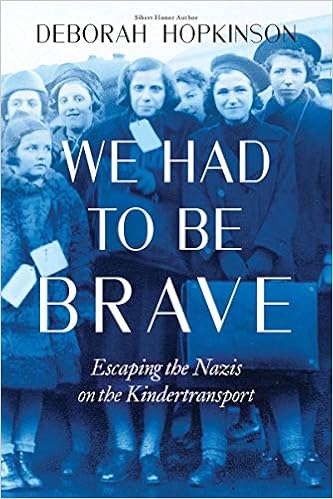
Summary:  Following Kristallnacht on November 1, 1938, rescuers organized the Kindertransport to get as many Jewish children out of Germany and Austria as they could.  About 10,000 children’s lives were saved before World War II began in the fall of 1939.  This book focuses on three of those children: what their lives were like before Hitler came to power, how changes gradually or suddenly occurred afterward, and how their parents decided to send them away, not knowing if they would ever see them again.  In most cases, they did not. Many other children are profiled more briefly. There are quite a few photos, although, sadly, not many pictures of the children or their families have survived. The 80 pages of back matter include brief profiles of survivors, rescuers, and historians; a timeline; a glossary; resources for further exploration; a bibliography; source notes; and an index.  368 pages; grades 6-10, although I’m sure there are fourth and fifth graders who would enjoy this.

Pros:  Middle school kids interested in World War II and the Holocaust will find this compelling reading.  Deborah Hopkinson really spells out how Nazism took over Germany, and how ordinary people embraced it and turned on their neighbors–a timely lesson for kids to learn.  The back matter is pretty amazing, including a lot of oral history resources where kids can hear the voices of the survivors.

Cons:  There were so many kids’ stories told, I couldn’t keep them all straight.

If you would like to buy this book on Amazon, click here.

Leave It to Abigail! The Revolutionary Life of Abigail Adams by Barb Rosenstock, illustrated by Elizabeth Baddeley

Published by Little, Brown Books for Young Readers

Image result for leave it to abigail goodreads

Summary:  “Leave it to Abigail!” is the repeating refrain of this book, as Abigail Adams defied expectations, beginning with her survival from a sickly baby to a rambunctious, inquisitive young girl.  She married John Adams at the age of 19, and continued to live life on her own terms, running a farm and raising a family when John was away for long periods of time. Their correspondence has become famous, as she offered insights and opinions from the home front while he traveled abroad.  When their children were grown, she boarded a schooner and sailed to Europe, where she lived the life of an ambassador’s wife, throwing parties and attending balls and concerts while maintaining a thrifty New England lifestyle. The Adams returned home to the presidency, and Abigail continued to influence politics through her writing and her conversations of John.  The two finally retired to their farm, but Abigail continued writing letters to the end of her life. Includes portraits of twelve American women influenced by Abigail Adams; author’s and illustrator’s notes; and source notes. 40 pages; grades K-4.

Pros:  It’s research project season at my schools, and with assignments on early American history and famous Massachusetts people, demand is outpacing supply.  So I’m delighted to find a new biography of Abigail Adams, particularly one that is written and illustrated so engagingly, really making Abigail come to life as a smart, courageous woman of her time.

Cons:  With research in mind, I would have liked to have seen a list of additional books and/or websites to help kids fill out Adams’ story.

If you would like to buy this book on Amazon, click here.

Black Is a Rainbow Color by Angela Joy, illustrated by Ekua Holmes

Published by Roaring Brook Press

Image result for black is a rainbow color amazon

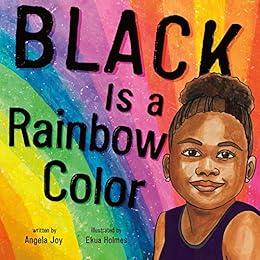
Summary:  A girl looks at the colors in her crayon box and in a rainbow, and realizes there’s no black in rainbows.  But her color is black, and she looks at what else is black: a feather in the snow, her best friend’s hair, her bicycle tires.  From there, she moves to the black in Black culture: Thurgood Marshall’s robe, birds in cages that sing, raisins and dreams left out in the sun to die.  Finally, she moves on to the history, family, memory, and love that are all part of her and her community. “So you see, there is no black in rainbows.  No black in green or blue.  But in my box of crayons, Black is a rainbow, too.”  Includes an author’s note; a playlist of 11 songs; two pages with further information on some of the allusions in the main text; 3 poems; a timeline of black ethnonyms (words that have been used to refer to Black people) over the course of American history; and a bibliography.  40 pages; ages 4 and up.

Pros:  This beautiful poem with its stunning illustrations (they reminded me of stained glass) is a deceptively simple introduction to Black culture and history.

Cons:  Most sources recommend this book for ages 4-8, but the references in the main text and the extensive back matter could make this a useful resource for any age and would be even more meaningful for older kids.

If you would like to buy this book on Amazon, click here.

A Ride to Remember: A Civil Rights Story by Sharon Langley and Amy Nathan, illustrated by Floyd Cooper

Published by Harry N. Abrams

Image result for ride to remember sharon langley"

Image result for ride to remember floyd cooper"

Summary:  Sharon Langley recounts the story of how her neighborhood amusement park slowly became desegregated thanks to nonviolent protests in July of 1963.  On the Fourth of July, groups of protesters stood outside the park holding signs and singing songs. When some members of the group tried to buy tickets, they were arrested.  After a second protest three days later, the media coverage became so intense that the owners of the park were forced to agree to let everyone in. Sharon and her family became the first African-Americans to enter the park on August 28, 1963, the first day it was open to all.  Just one month shy of her first birthday, Sharon was photographed with her father, riding the carousel. The day was memorable for another civil rights milestone: the March on Washington and Martin Luther King, Jr.’s “I Have a Dream” speech. The carousel now stands on the National Mall in Washington, D.C., with Sharon’s name on one of the horse’s saddles and horseshoes.  Includes two pages of additional information, photos, a timeline, and a bibliography. 40 pages; grades 1-4.

Pros:  I love how this book connects the civil rights movement to something kids will relate to: going to an amusement park.  Coretta Scott King Award winner Floyd Cooper does a masterful job of portraying all the characters in the story, including the carousel horses.

Cons:  I found the first couple pages a little confusing, until I realized who Sharon was and that she was telling her own story.

If you would like to buy this book on Amazon, click here.

Image result for ride to remember sharon langley"

I Voted: Making a Choice Makes a Difference by Mark Shulman, illustrated by Serge Bloch

Published by Neal Porter Books

Image result for i voted shulman amazon"

Summary:  Apples or oranges? Markers or crayons? Ice cream or cupcakes? Any time you make a choice, you are casting a vote.  When people vote together, the majority wins (at least theoretically, but we won’t go there). Talking to people about what you want can help them understand, and maybe they will change their minds.  It’s also a good idea to listen to others so you can make an informed decision. If you don’t vote, you don’t get to choose, so learn all you can about voting now, and exercise that right when you turn 18!  Includes additional information on voting and how the U.S. government works, as well as a list of books and online sites with additional information. 40 pages; ages 4-8.

Pros:  Kids are sure to hear a lot about voting and elections this year, and this is a great resource that explains the process in terms that even preschoolers will understand.

Cons:  Some may say the picture showing a red brick wall with a sign reading “No kids allowed!” and a blue brick wall saying “Free for kids” reflects a bit of partisan bias.

If you would like to buy this book on Amazon, click here.

Consent (For Kids!): Boundaries, Respect, and Being In Charge of YOU by Rachel Brian

Published by Little, Brown Books for Young Readers

Image result for consent for kids amazon"

Summary:  With chapters on such topics as “You Rule”, “Trust Your Gut”, and “Giving and Getting Consent”, this short graphic book uses a light tone to help kids understand inappropriate behavior and how to maintain boundaries.  Without getting into explicit details, the author covers inappropriate touching, whether it’s tickling or something more sexual, and helps kids understand what they should do in such situations. The comic panels explore different scenarios to allow kids to see their roles in making sure they stay safe and happy.  For a sample of Rachel Brian’s adult work (contains the f-word and is about consensual sex), take a look at her Youtube video Tea Consent.  240 pages; grades 1-7.

Pros:  This is an amazing resource for anyone who works with kids.  The tone is light and fun, the messages are clear, and the graphic format will appeal to children of all ages.  

Cons:  A list of additional resources would have been a great addition.

If you would like to buy this on Amazon, click here.