The Darkest Dark by Chris Hadfield and Kate Fillion, illustrated by the Fan Brothers

Published by Little, Brown, and Company 
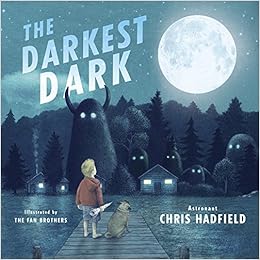
Summary:  Chris loves pretending he’s an astronaut, but when the sun sets, he has a problem.  He’s scared of the dark and refuses to go to sleep in his own bed.  Finally, his father issues an ultimatum: if Chris doesn’t go to sleep, they’ll all be too tired to go next door the next day.  That does the trick.  Chris falls asleep and dreams his favorite dream, about landing on the moon.  And the next day, watching on the only TV on the island where his family spends the summer, Chris sees the first man walk on the moon.  He realizes that the darkest dark is in outer space.  And he knows that he wants to explore that darkness, and that he won’t be alone, because his dreams will be with him.  An author’s note tells how Chris grew up to be one of the first Canadians in space and the first Canadian Commander of the International Space Station.  Also included is a montage of photos of Chris Hadfield as a child and an adult, and a message from him about following your dreams.  48 pages; ages 4-8.

Pros:  A book about overcoming your fears and following your dreams, particularly inspiring because it’s about a real person.  Brothers Eric and Terry Fan beautifully capture both the dark and the brilliant summer moon.

Cons:  Kids may not snap out of their fears of the dark quite as quickly as Chris does.
Monster Science: Could Monsters Survive (And Thrive!) in the Real World? By Helaine Becker, illustrated by Phil McAndrew

Published by Kids Can Press

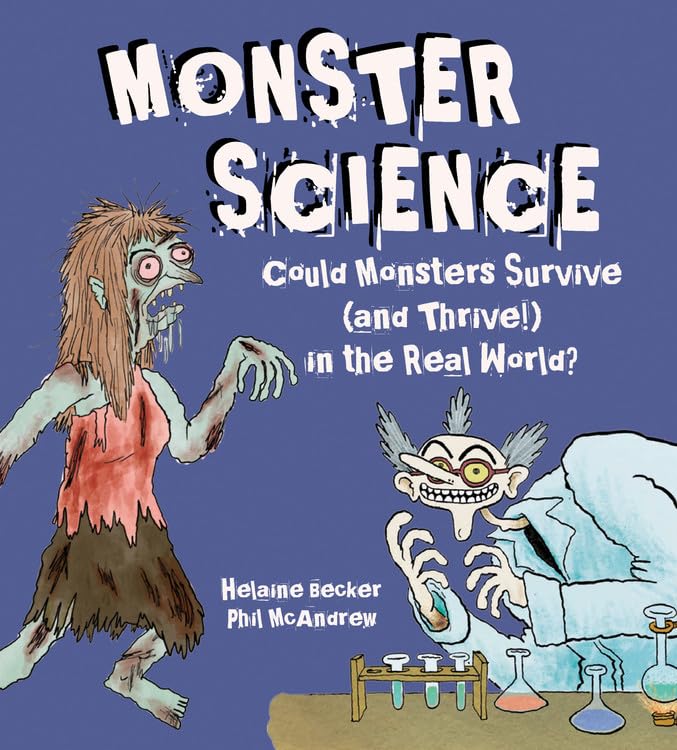
Summary:  Frankenstein, vampires, Bigfoot, zombies, werewolves, and sea monsters…each chapter starts with a labeled illustration of the monster in question, then gives a little history.  Then it’s on to science, and lots of it.  For instance, the first chapter—Frankenstein—covers electricity, the nervous system, organ transplants, genetic engineering, and robots.  There are plenty of humorous illustrations, sidebars, and “Monster Facts”.  Each chapter ends with a 10-question quiz that tests kids comprehension without taking itself too seriously.  For Frankenstein, a score of 0-2 earns you the title of Luigi Galvani; 3-6 is Isaac Newton; and 7-10 is Dr. Frankenstein himself.  An index is included, but no resources for further exploration.  96 pages; grades 3-7.

Pros: This could make a fun and fairly comprehensive science textbook.  There’s plenty of information, presented with lots of humor.  The monster aspect adds an extra element of interest for readers.

Cons:  It would take a keen interest in science to get through all the material here.

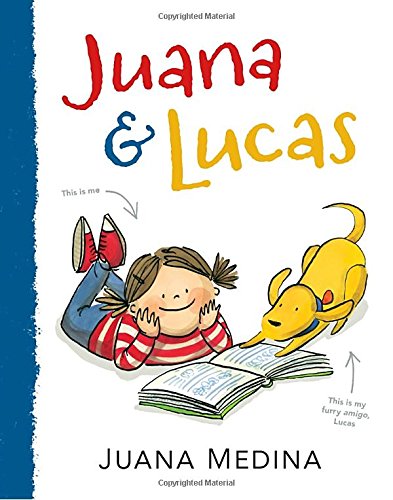
Juana & Lucas by Juana Medina

Published by Candlewick 

Summary:  Juana lives in Bogota, Colombia with her mother, Mami, and her dog Lucas.  She loves soccer, her best friend Juli, and Astroman.  She does not love learning “the English” at school.  It’s hard, and there doesn’t seem to be much point to it.  But then her beloved grandparents tell her they want to take her to Spaceworld in Orlando, Florida, where Juana will get to meet Astroman.  Her grandfather tells her that at Spaceworld, everyone speaks English, and Mami tells her that if her grades don’t improve, there will be no Spaceworld.  That’s all the inspiration she needs, and before long, the family has an amazing trip, and Juana gets to tell Astroman her whole life story.  96 pages; grades 2-4.

Pros:  Fans of Judy Moody and Junie B. Jones will enjoy the spunky Juana and her affectionate dog.  The Colombian setting and frequent Spanish words give this a nice international flavor.  Lots of colorful, cartoony illustrations throughout.

Cons:  It would have been nice to have a Spanish to English translation guide for all the Spanish words in the text.

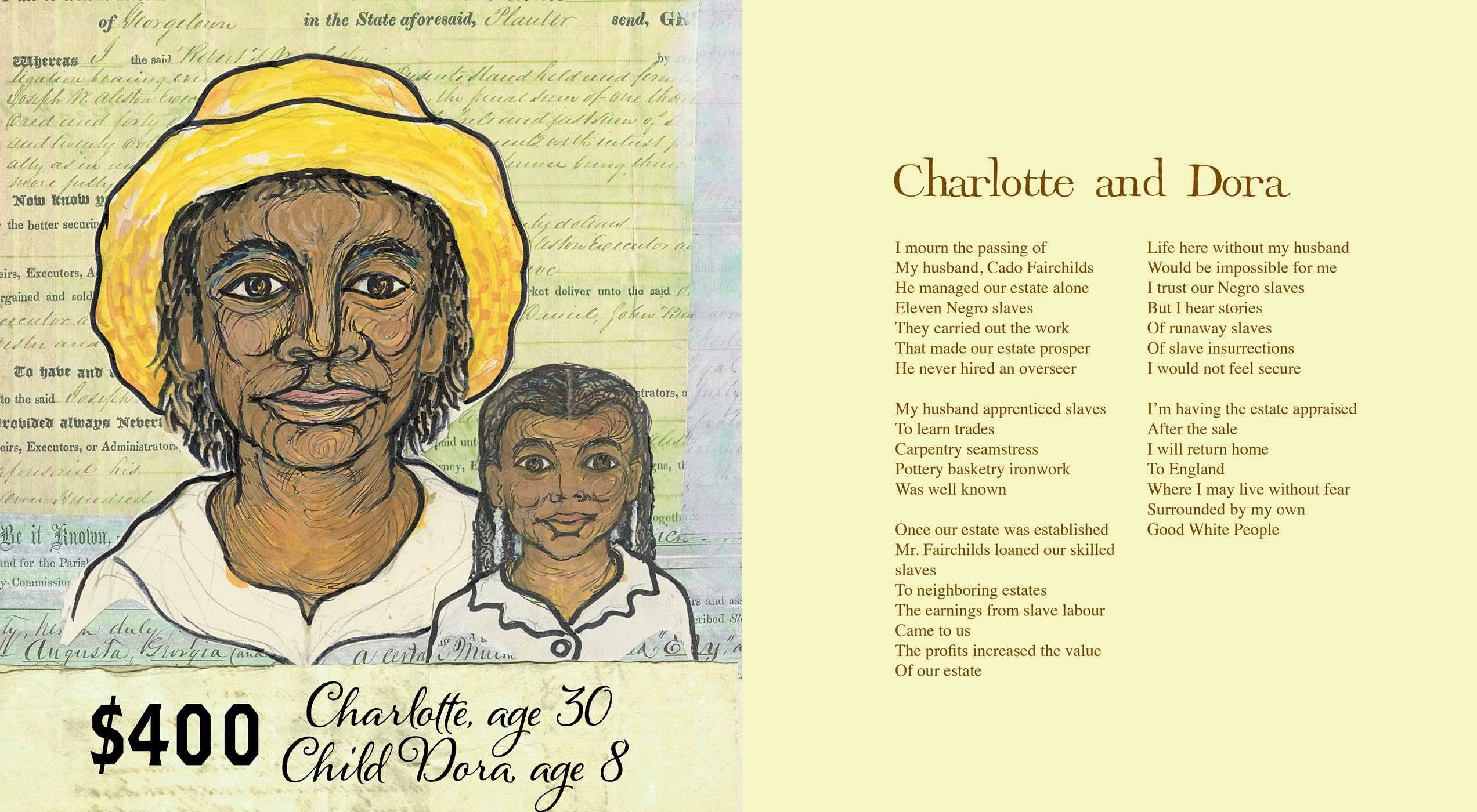
Freedom Over Me: eleven slaves, their lives and dreams brought to life by Ashley Bryan

 Published by Atheneum Books for Young Readers 

Summary:  Many years ago, as he explains in his ending author’s note, Ashley Bryan received a collection of documents relating to slavery from the 1820’s through the 1860’s.  He chose one of these, an 1828 appraisal of 11 slaves from the Fairchilds estate and created stories for each of them.  He has given each of them a name, connections to each other, and a trade or talent that each has used to increase the wealth of the estate.  Of course, this increase in wealth was not enjoyed by any of them.  Each slave has a portrait and two narrative poems, one describing himself or herself, and the other telling about his or dreams.  Almost everyone ends with a longing for freedom.  Their master has died, the mistress is selling the slaves, and they have no idea where they will end up.  The original document is shown at the end, along with the author’s note.  56 pages; grades 4-7.

Pros:  The sadness of slavery is profound in these poems of dignified, talented people, many of whom remember their lives and families in Africa.  Bryant has done a masterful job of bringing them to life, both in words and pictures.

Cons:  I wanted to know where the estate was, but no details were given.

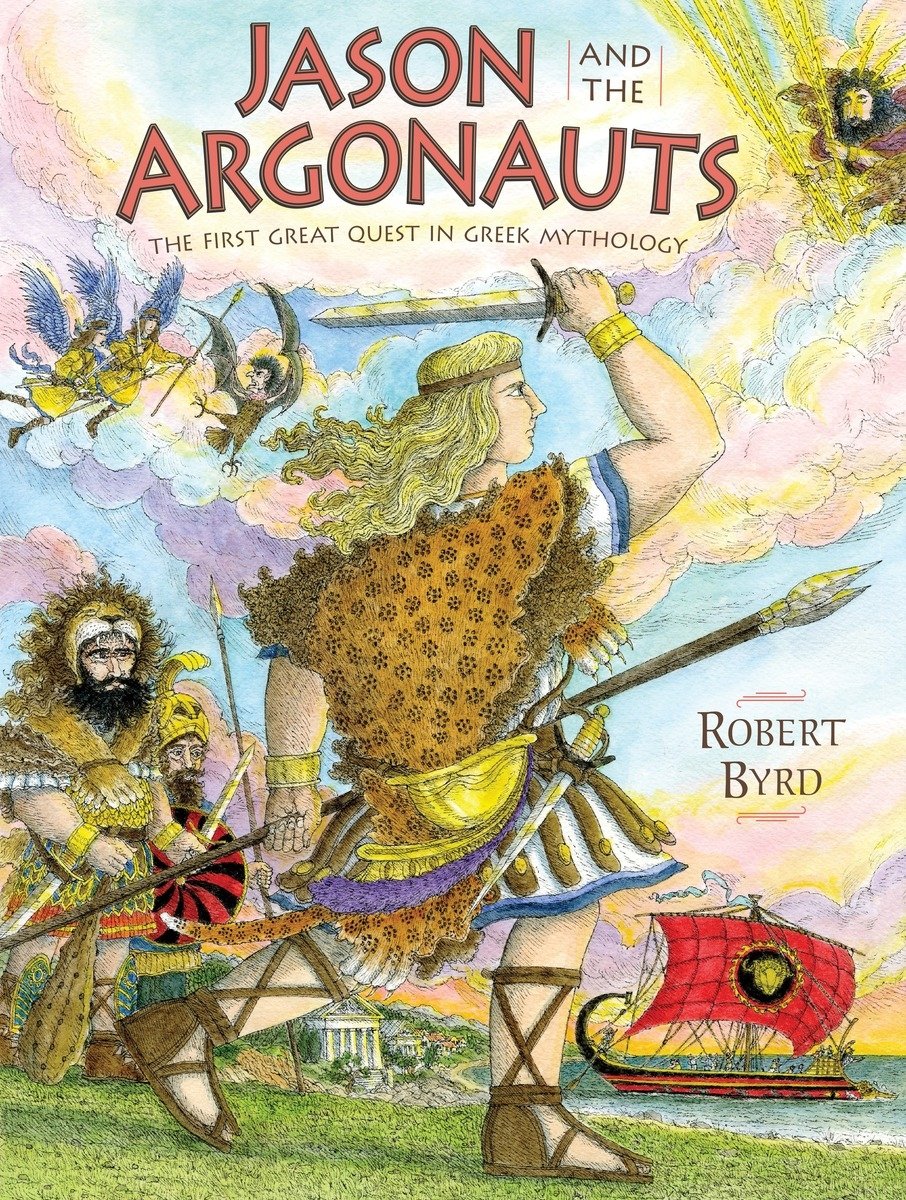
Jason and the Argonauts: The First Great Quest in Greek Mythology by Robert Byrd

Published by Dial Books for Young Readers

Jason and the Argonauts: The First Great Quest in Greek Mythology: Byrd,  Robert: 9780803741188: Amazon.com: Books

Summary:  Robert Byrd retells and illustrates the Greek myths about Jason and the Argonauts and their quest for the Golden Fleece.  He begins with the tale of how the Golden Fleece came to be, then moves on to Jason’s task to go in search of it, the help he received from Hera, and how he gathered the Argonauts to be his crew (Orpheus, Atalanta, and Hercules were all Argonauts…who knew?).  The crew sets sail, and encounters many dangers and adventures before finally returning with the Fleece, after which everything pretty much goes straight downhill.  Each two-page spread is a separate story; many have sidebars describing a deity or other mythological character who appears in the tale.  The final two pages includes brief profiles of the twelve Olympians (actually, thirteen), an author’s note, and a bibliography. Endpapers show a map of Jason’s journey.  48 pages; grades 2-5.

Pros:  A fantastic first book of mythology.  The story is an exciting adventure, with plenty of interesting details, both in the text and the illustrations.  The sidebars expand on the pantheon to introduce readers to many characters from the Greek myths.

Cons:  Those gods and goddesses sure were a fickle bunch.

Ghost by Jason Reynolds

Published by Atheneum Books for Young Readers 

Summary:  Castle Crenshaw learned to run fast the night his dad got drunk and fired a gun at him and his mom.  They ran fast enough to get away, and his father went to jail.  That was three years ago, but Castle hasn’t gotten over it.  He doesn’t like to go home after school to an empty house.  He refuses to sleep in his bedroom, opting instead for a pile of blankets on the living room floor, while his mom dozes on the couch. And he has a lot of anger inside that sometimes pushes him to do things he later regrets.  When he stumbles upon a middle school track practice and ends up beating one of the fastest sprinters, his life begins to change.  He gets a place on the team, a new nickname, “Ghost”, and a coach who grew up in the same neighborhood Castle did and understands his anger.  It’s one step back for every two steps forward Castle takes, but by the last chapter, it looks like Ghost has found his place on the team.  192 pages; grades 5-8.

Pros:  Castle’s voice tells his story in a strong voice with plenty of humor and wry insights into his situation.  Sports fans will love this, but so will anyone who enjoys rooting for a likeable underdog.  A National Book Award finalist for Young People’s Literature, and, in my opinion, a strong contender for the Newbery committee to consider.

Cons:  The last page…nooo!  The sequel can’t come out soon enough.

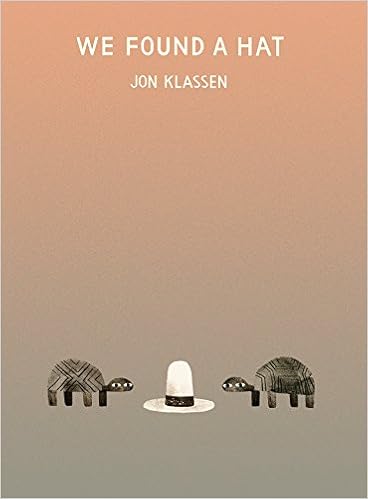
We Found a Hat by Jon Klassen

Published by Candlewick Press 

Summary:  Two turtles find a hat lying in the desert.  They each try it on.  It looks good on both of them. But there are two turtles and only one hat.  So it only makes sense that they would walk away and leave the hat behind.  Right?  But one of the turtles can’t stop thinking about that hat.  Night falls, and one turtle is falling asleep.  The other one waits until his companion is dreaming, and then….  48 pages; ages 4-8.

Pros:  The hat trilogy is now complete, with this book finishing what I Want My Hat Back and This Is Not My Hat started.  The deadpan humor, the intrigue, the ambiguous ending, and unique illustrations are all part of this one as well.

Cons:  Unlike the other two, the ending is ambiguously happy.  While this might sound like a “Pro”, kids love those surprise endings.  Did the bear really eat the rabbit?  Did the big fish eat the little fish?  This ending seemed a little too pat for this particular series.

Six Dots: A Story of Young Louis Braille by Jen Bryant, illustrations by Boris Kulikov

Published by Knopf Books for Young Readers 

Summary:  Louis Braille tells the story of his life, beginning with his early childhood, a bright, curious boy growing up in a loving family.  At a young age, he injured his eye with one of his father’s leatherworking tools.  The eye got an infection that spread to the other eye, and he became blind.  Fortunately, his family continued to support and educate him, eventually sending him to the Royal School for the Blind in Paris when he was 10.  Louis loved to learn, and his most fervent wish was to read.  But books at his school were rare, and they only had a few words on each page.  One day, his teacher told the class about a military code that could be read by touch.  Inspired, Louis decided to come up with his own code.  After a few years of hard work, he was ready to demonstrate his invention to the school’s headmaster.  The man read Louis a page from a book, while Louis copied it down, then read it back to him.  He had created the Braille alphabet, still used today to allow blind people to read and write.  The final pages include an author’s note about how she came to write the book, questions and answers about Louis Braille and his invention, and additional resources about both.  The Braille alphabet appears on both the front and back endpapers.  40 pages; grades 1-4.

Pros:  The inspiring story of Louis Braille is told in his own voice in a way that is accessible for young readers.

Cons:  The way Louis loses his eyesight is horrible.

The Water Princess by Susan Verde and Georgie Badiel, illustrated by Peter Reynolds

Published by G. P. Putnam’s Sons 

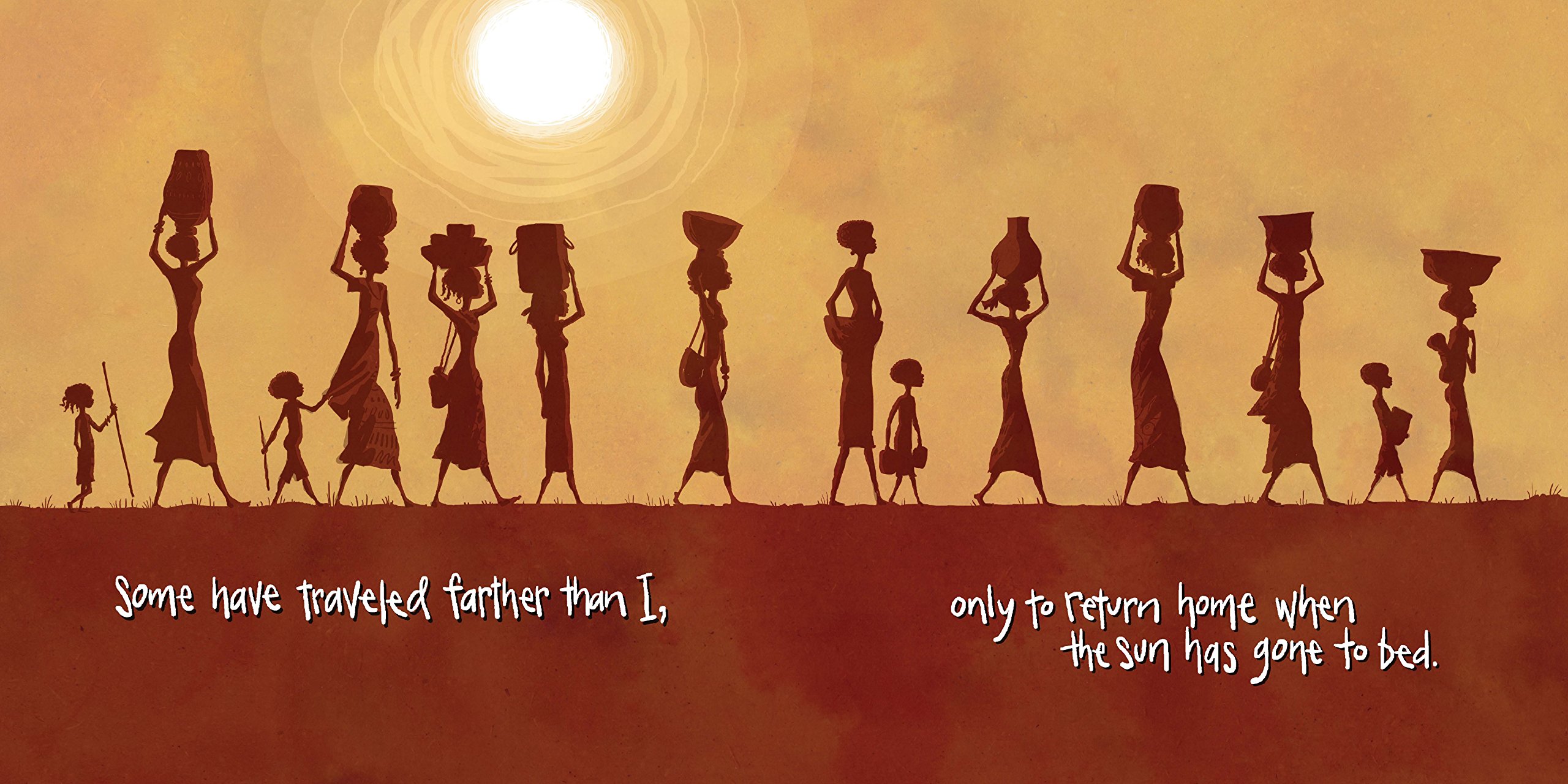
Summary:  Every day, the narrator goes with her mother to fetch water.  They start before dawn, and it’s late in the day when they get back.  The water is a dusty earth color and must be boiled before it can be drunk.  Despite these hardships, the girl’s family is happy.  Her mother sings as they travel to get the water, and her father gives her a warm greeting when he returns from the fields.  When she goes to sleep, her mother tells her to dream of someday when they will have clear, cold water nearby.  The last two pages tell more about the need for water for many people.  Links are provided to the Georgie Badiel Foundation, named for the supermodel who based this story on her childhood in Burkina Faso, and Ryan’s Well, an organization founded by a young Canadian boy.  Both groups are working to build wells in Africa and bring clean water to the people there.  40 pages; grades K-3.

Pros:  An eye-opening look at a difficult problem for many people around the world.  The illustrations are charming, and readers may be inspired to help out through the two organizations listed at the end.

Cons:  That this situation exists in the world today.

In Plain Sight by Richard Jackson, illustrated by Jerry Pinkney

Published by Roaring Brook Press 

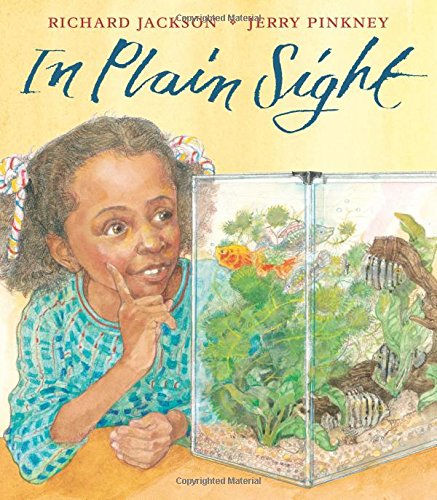
Summary:  Every day after school, Sophie hurries to Grandpa’s room to tell him about her day and to find out about his.  Each day, Grandpa has “lost” some small object (a paper clip, a rubber band) that he needs Sophie to find for him.  She searches until she finds it.  On the weekend, she starts to go to his room, but her parents tell her that Grandpa is sleeping.  That gives Sophie an idea.  With her parents’ permission, she hides herself behind the curtain in Grandpa’s room, so when he wakes up, it’s his turn to find something that’s hidden.  40 pages; ages 4-8.

Pros:  A warm, loving story about a playful ritual between a grandfather and granddaughter.  The detailed pictures allow readers to join Sophie in her treasure hunt for Grandpa’s lost items.

Cons:  Although Grandpa is consistently pictured in a wheelchair, on the back endpapers, he appears to be standing at the front door, waving to Sophie.