The Storyteller by Evan Turk

Published by Atheneum Books for Young Readers 

Summary:  Many years ago, in Morocco, people were sustained by the cool water of their fountains and the refreshing tales of their storytellers.  As life got easier, though, the storytellers began to die out; at the same time, the fountains started to dry up.  When a young boy goes in search of water, he finds a storyteller perched on the edge of a dried-up fountain.  After listening to the storyteller’s captivating tale, the boy finds his cup is full of water.  Each part of the story ends with a cliffhanger, and the boy returns each day until the fountain is full again.  When a djinn from the Sahara desert threatens to destroy the drought-stricken city, the boy becomes the storyteller, keeping the djinn at bay until the people of the town unite to fill all the fountains and save their city. An author’s note tells of Morocco’s storytellers, whose traditions have been being replaced by TV and the Internet, and a recent move to preserve their art. 40 pages; grades 1-5.

Pros:  A beautiful tale that explores the power of stories in humans’ lives.  The unique blue-and-gold themed illustrations may put this book on the Caldecott contenders’ list.

Cons:  A little difficult to classify the genre; while it has the feel of a folktale, it is not a traditional story.  The publisher calls it “an original folktale”.  .

Penny & Jelly: Slumber Under the Stars by Maria Gianferrari, illustrated by Thyra Heder

Published by Houghton Mifflin Harcourt 

Summary:  Penny is excited about the upcoming “Sleepover under the Stars” sponsored by the local recreation department.  As she gets ready, though, she notices the “No pets allowed” line on the flyer, and is sad that she can’t take her dog, Jelly.  She tries different ways to make a Jelly to take with her, using paper, yarn, fleece, and a host of other materials.  Nothing is as satisfactory as the real thing.  Finally, Penny and Jelly put their heads together and come up with the perfect solution.  Penny gets on the phone and calls her friends, and they have their own sleepover under the stars in Penny’s backyard, complete with pets.  32 pages; ages 4-7.

Pros:  A companion to last year’s Penny & Jelly: The School Show, this is an engaging slice-of-life tale of a girl and her dog.  Penny is a resourceful girl who works to solve a problem without any adult help.  Cute illustrations and a satisfying end.

Cons:  What Penny’s room must look like after creating a marshmallow Jelly, a shaving cream Jelly, and a jelly Jelly.

Bailey’s Story: A Dog’s Purpose Novel by W. Bruce Cameron

Published by Starscape 

Summary:  Bailey is born on a puppy mill, but his sense of adventure leads him into the world on his own.  He’s picked up by a truck driver who leaves him in a locked truck on a warm day.  Rescued once again, he ends up with Ethan, an eight-year-old boy who soon becomes his best friend and constant companion.  Through their years together, Bailey learns how to take care of Ethan, saving him from real and imagined dangers.  A neighborhood bully named Todd is part of Ethan’s life, first as a friend, but gradually becoming a dangerous enemy.  His final act of revenge against Ethan and his family sets the stage for Bailey’s greatest act of heroism.  This is the second book in a series adapted from Cameron’s adult novel, A Dog’s Purpose.  208 pages; grades 3-6.

Pros:  Told in Bailey’s voice, the story is by turns funny, touching, and exciting.  The adorable cover will catch the eye of dog lovers, and they won’t be disappointed by the rest of the book.

Cons:  This seemed like a contemporary story except for two brief, and seemingly unnecessary, references to the Apollo 11 moon landing.

The Seventh Wish by Kate Messner

Published by Bloomsbury 

Summary:  Charlie is trying to save money to buy a new dress for her Irish step dance competition, so when her friend Drew invites her to go ice fishing to make some money, she agrees.  The only fish she catches is too small to sell, but to her amazement, the fish speaks.  “Release me,” it says, “and I will grant you a wish.”  Skeptical, she gives it a try, and in the next day or so, realizes her wish has come true.  She returns to the hole several more times, making wishes to help her friends, but, predictably, the wishes go awry, and Charlie vows to stop.  Then comes a phone call that turns Charlie’s world upside down.  Her sister Abby, a college freshman, is addicted to heroin.  She has to leave college and enter a treatment center.  After much careful thought, Charlie makes one last wish for Abby.  It seems to be working until Charlie’s dance competition.  It’s a day of triumph for Charlie until Abby disappears, and Charlie has to learn that all the wishes and magic in the world can’t help someone who doesn’t want to be helped.  240 pages; grades 4-7.

Pros:  Charlie is an engaging protagonist, and the story lines about the fish and her dance competitions add some lighthearted notes to a sad and weighty topic.  The issue of addiction of a family member is handled realistically, and Charlie’s ultimate realization that she can’t save her sister and must live her own life as best she can is a good message for kids to hear.

Cons:  The cover and first few chapters make this feel like a much lighter read than it turns out to be.  Some kids in the recommended age group may not be ready for the subject of addiction…or parents may be concerned that they’re not ready for it.  Preview before sharing with young readers.

Wolf Hollow by Lauren Wolk

Published by Dutton Books for Young Readers 

Summary:  1943 is the year Annabelle turns 12, and a year when heart-wrenching circumstances change her life forever.  The catalyst is the arrival of Betty Glengarry, the 14-year-old granddaughter of Annabelle’s neighbors, and a girl who quickly establishes herself as a bully.  Her targets include Annabelle and Toby, a World War I veteran who lives as a squatter on a smokehouse near Annabelle’s family’s farm.  Although some of the neighbors have always been wary of Toby, Annabelle and her parents know him as a good man, if somewhat reserved and eccentric.  When Betty goes missing, Toby is a prime suspect, and Annabelle believes it is up to her to help.  Despite her efforts, tragic events unfold, and Annabelle sees the best and worst of humanity encapsulated in her small Pennsylvania community.  304 pages; grades 5-8.

Pros:  The beautiful writing, engagingly flawed characters, and subtle but profound messages have put this book at the top of my 2017 Newbery contender list.

Cons:  This is definitely a tragedy…there’s not a happy ending, although it’s appropriate, and in many ways, satisfying.   Young readers will need some help to understand the many layers of the story.

This Is Not a Picture Book! By Sergio Ruzzier

Published by Chronicle Books 

Summary:  A duckling finds a book, but when he discovers it has no pictures, he kicks it aside.  Contrite, he picks it up again just as his bug friend comes along.  “What is that?”  “It’s a book with no pictures.”  “Wacky. Can you read it?”  To his amazement, the duckling CAN read some of the words.  The two friends walk through a changing landscape that reflects the words…funny, sad, wild, and peaceful.  The words carry them away, then bring them home to read the book all over again.  40 pages; ages 3-7.

Pros:  A great introduction to the magic of words and reading.  Perfect for a newly independent reader.  The duck and bug are pretty cute, too.

Cons:  Kids who are struggling to read independently might not quite be feeling the magic of words.

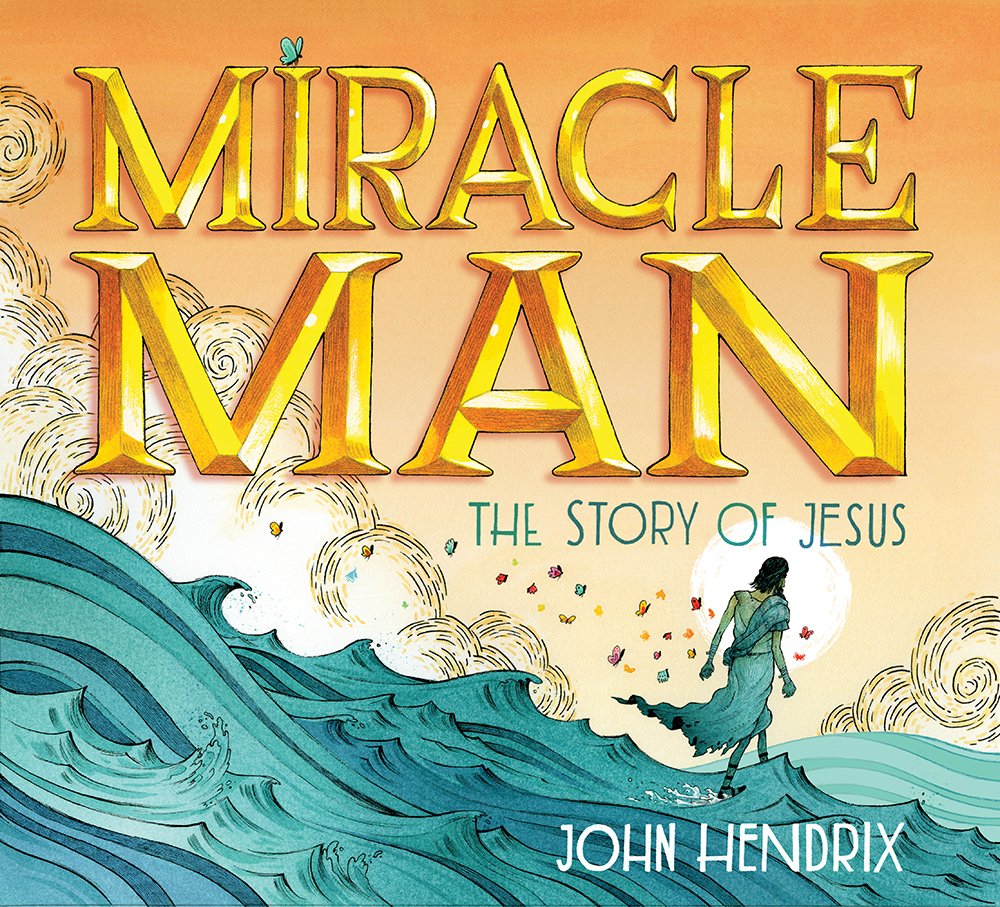
Miracle Man: The Story of Jesus by John Hendrix

Published by Abrams Books for Young Readers

Amazon.com: Miracle Man: The Story of Jesus (9781613758717): John ...


Summary:  The story of Jesus’ life is told from a Christian perspective, with an emphasis on miracles he performed.  The narrative begins with him calling his disciples from among the fishermen, then continues with various healings, Jesus calming the waves and walking on the water, and the miracle of the loaves and fishes.  His last supper is recounted, followed by his crucifixion, which is alluded to, but not shown in the pictures (something this reader, who was traumatized as a child by a book called The Easter Story for Children, appreciated).  The resurrection is covered in two pages, one showing a wrapped body lying in a tomb, the next showing Jesus in white, standing outside the tomb, and the sentence, “But God’s Son, Jesus, the Miracle Man, had in store one last glorious miracle…”  An author’s note explains how he came to create this book, and the process of choosing from among the stories of Jesus in the Bible, which necessarily left out some of the story.  40 pages; grades K-4.

Pros:  The beautifully designed illustrations, incorporating some of Jesus’ words into the pictures, are worthy of Caldecott consideration (would a group of 21st-century librarians recognize a book that is clearly written from a Christian perspective?).  The simple text is a good introduction to Jesus’ miracles and many aspects of his life.

Cons:  As noted by the author, this is a selection of stories, and some key parts of Jesus’ life (birth, John the Baptist, Sermon on the Mount, Mary Magdalene) are excluded.

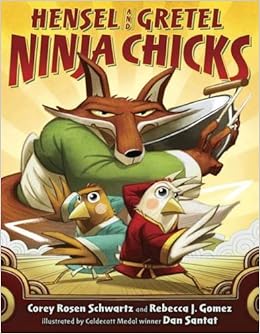
Hensel and Gretel Ninja Chicks by Corey Rosen Schwartz and Rebecca J. Gomez, illustrated by Dan Santat

Published by G.P. Putnam’s Son 

Summary:  Brought to you by the same team (with new author Gomez) that produced The Three Ninja Pigs, Ninja Red Riding Hood, and Goldi Rocks and the Three Bears, here’s another martial arts-inspired fractured fairy tale told in rhyme.  Hensel (renamed from Hansel and now a girl…or “chick”) and Gretel use their martial arts training when they discover their parents held prisoner by a fox in a cornbread house.  Hensel gets stuck in a cage, but Gretel’s stealthy ninja moves rescue her.  The two chicks combine forces to free their parents and stuff the fox in the cage.  Result?  “Justice, not dinner was served.”  40 pages; ages 4-8.

Pros: As in previous books, the rhymes and vocabulary are hilarious, and Caldecott medalist Santat provides plenty of visual accompaniment.  A great read-aloud.

Cons:  Nothing will ever top The Three Ninja Pigs.

The Big Move (Commander in Cheese series) by Lindsey Leavitt, illustrated by A. G. Ford

Published by Random House 

Summary:  Excitement is building in the White House as a new President is about to be inaugurated.  Mouse siblings (and White House residents) Ava and Dean are particularly excited because the new Commander in Chief has two children of her own.  The mice hope to add a Lego to the collection of White House treasures that generations of mice have maintained in tunnels around the house.  They see their chance to explore the kids’ rooms when everyone else is distracted by the inauguration ceremony, but plans go awry.  First, they get locked into a room with no tunnels, then the kids come back and discover them, resulting in a “Code Brown” that brings in Secret Service agents to try to get rid of the “vermin”.  There’s a happy ending for all, both human and rodent, and a promise of further interactions and adventures between the mice and their new human friends.  Back matter includes pictures of all the U.S. Presidents, fun facts about Inauguration Day, a floor plan of the part of the White House in the story, and a preview of book #2.  112 pages; grades 1-3.

Pros:  As a kid, I would have loved imagining being a mouse in the White House.  Ava and Dean are likeable characters, and readers will effortlessly learn a few facts about the presidency while enjoying the mice’s adventures.

Cons:  The plot is fairly predictable and the characters are pretty one-dimensional.

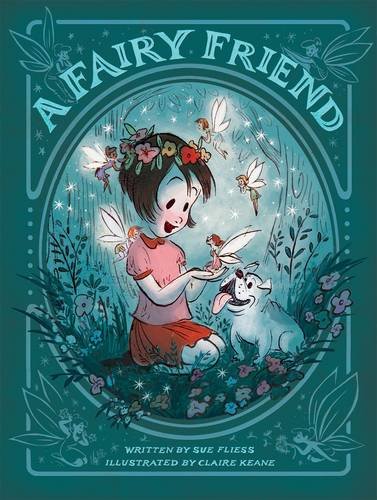
A Fairy Friend by Sue Fliess, illustrated by Claire Keane

Published by Henry Holt and Co.


Summary:  Fairies are all around us, but they can be shy and hard to find.  You have to really seek them out.  The best way is to build a house with soft, fun furnishings, and some flower petal stew to eat.  If you’re lucky, a fairy will move in and become your friend, teaching you to fly and keeping you safe with her magic.  She may not stay forever, but you should never trap a fairy.  Let her go, and some day she and her friends will return.  32 pages; ages 4-8.

Pros:  Rhyming text and Disney-esque pictures (the illustrator is a former Disney animator) will spark the imagination of young readers, who will undoubtedly want to try to lure a fairy or two to their own homes.

Cons:  It would have been nice to have a boy join the girl protagonist.  I bet boys would enjoy making fairy houses, too.