Becoming Muhammad Ali by James Patterson and Kwame Alexander, illustrated by Dawud Anyabwile

Published by Jimmy Patterson Books (Little, Brown)
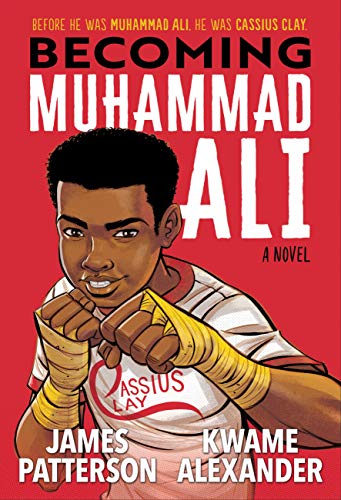
Becoming Muhammad Ali - Kindle edition by Patterson, James, Alexander,  Kwame, Anyabwile, Dawud. Children Kindle eBooks @ Amazon.com.

Summary:  Round One: Cassius Clay’s friend Lucky and the rest of Cassius’s friends and family are awaiting the results of the 1958 Golden Gloves championship.  16-year-old Cassius is in Chicago, 300 miles from his home in Louisville, KY.  The phone rings, and the story shifts to Cassius’s voice, told in verse.  Clay didn’t win that championship, but he relates how he got there: the friends and relatives who influenced him, the events that led him to boxing, the unflagging discipline and confidence that helped him in his training.  By the time we get to Round Nine, Cassius is ready to return to the Golden Gloves competition and become a champion.  Lucky introduces each round, then finishes with a Final Round, in which he tells what happened to Cassius Clay, later Muhammad Ali, during the rest of his career.  320 pages; grades 4-7.

Pros:  Apparently, Kwame Alexander has been a Muhammad Ali fan since he read Ali’s autobiography as a kid, and he uses his considerable poetic talents to bring the boxer life.  I wasn’t sure I liked Lucky’s prose sections at first, but they did flesh out the story, setting up the action for the poetry parts. This is sure to be an enormously popular choice for kids.

Cons:  I’m curious about the collaboration James Patterson, who seems more like a brand than an actual author these days.  I would have preferred this to be the sole work of Kwame Alexander, whom I’m sure could have pulled it off without any help.
If you would like to buy this on Amazon, click here.

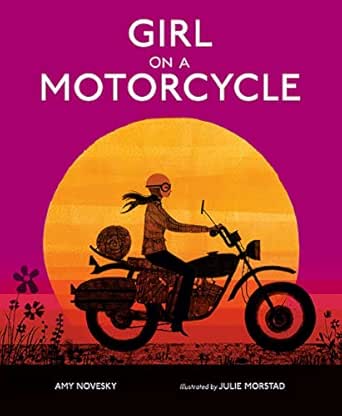
Girl on a Motorcycle by Amy Novesky, illustrated by Julie Morstad

Published by Viking Books for Young Readers

Girl on a Motorcycle - Kindle edition by Novesky, Amy, Morstad, Julie.  Children Kindle eBooks @ Amazon.com.
Girl on a Motorcycle: Novesky, Amy, Morstad, Julie: 9780593116296:  Amazon.com: Books

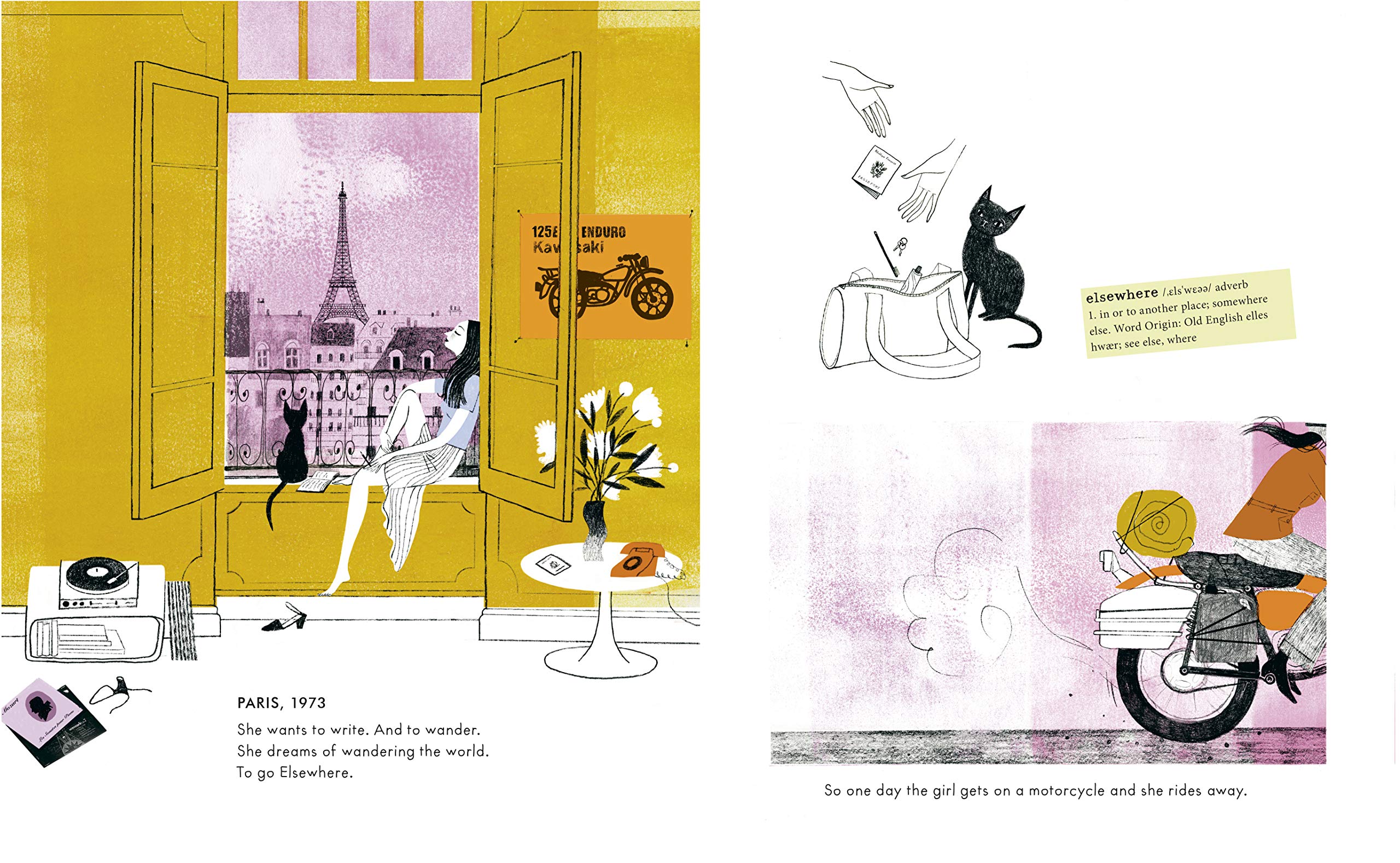
Summary:  In 1973, a girl in her Paris home dreams about going somewhere else.  One day she packs up her motorcycle (her packing list includes tools, a sleeping bag, cookware, and a pretty white dress), and heads to Canada (she flies; it’s not clear how the motorcycle gets there).  She travels on her motorcycle from Montreal to Alaska, then flies to Japan.  From there, it’s on to a number of Asian countries, then back into Europe: Bulgaria, Yugoslavia, Hungary, Austria, Germany, and finally, home to France.  She has become the first woman to travel around the world by motorcycle.  Includes additional information and photos about Anne-France Dautheville, the Frenchwoman on whom this story is based, and an author’s note.  48 pages; grades 2-6.

Pros:  A fun, true story that may inspire others to lead a more adventurous life.  The illustrations are full of interesting details and lists like “How to drink tea in India” and “How to make a fire”.  The information at the end will answer many of the questions about the real-life woman who made this journey.

Cons:  I was surprised there was no map anywhere showing Dautheville’s route.

If you would like to buy this on Amazon, click here.

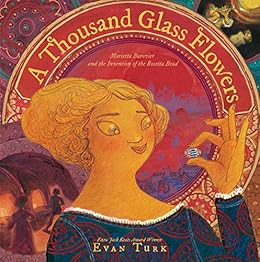
A Thousand Glass Flowers: Marietta Barovier and the Invention of the Rosetta Bead by Evan Turk

Published by Atheneum Books for Young Readers

A Thousand Glass Flowers: Marietta Barovier and the Invention of the  Rosetta Bead - Kindle edition by Turk, Evan, Turk, Evan. Children Kindle  eBooks @ Amazon.com.
A Thousand Glass Flowers: Marietta Barovier and the Invention of the  Rosetta Bead: Turk, Evan, Turk, Evan: 9781534410343: Amazon.com: Books

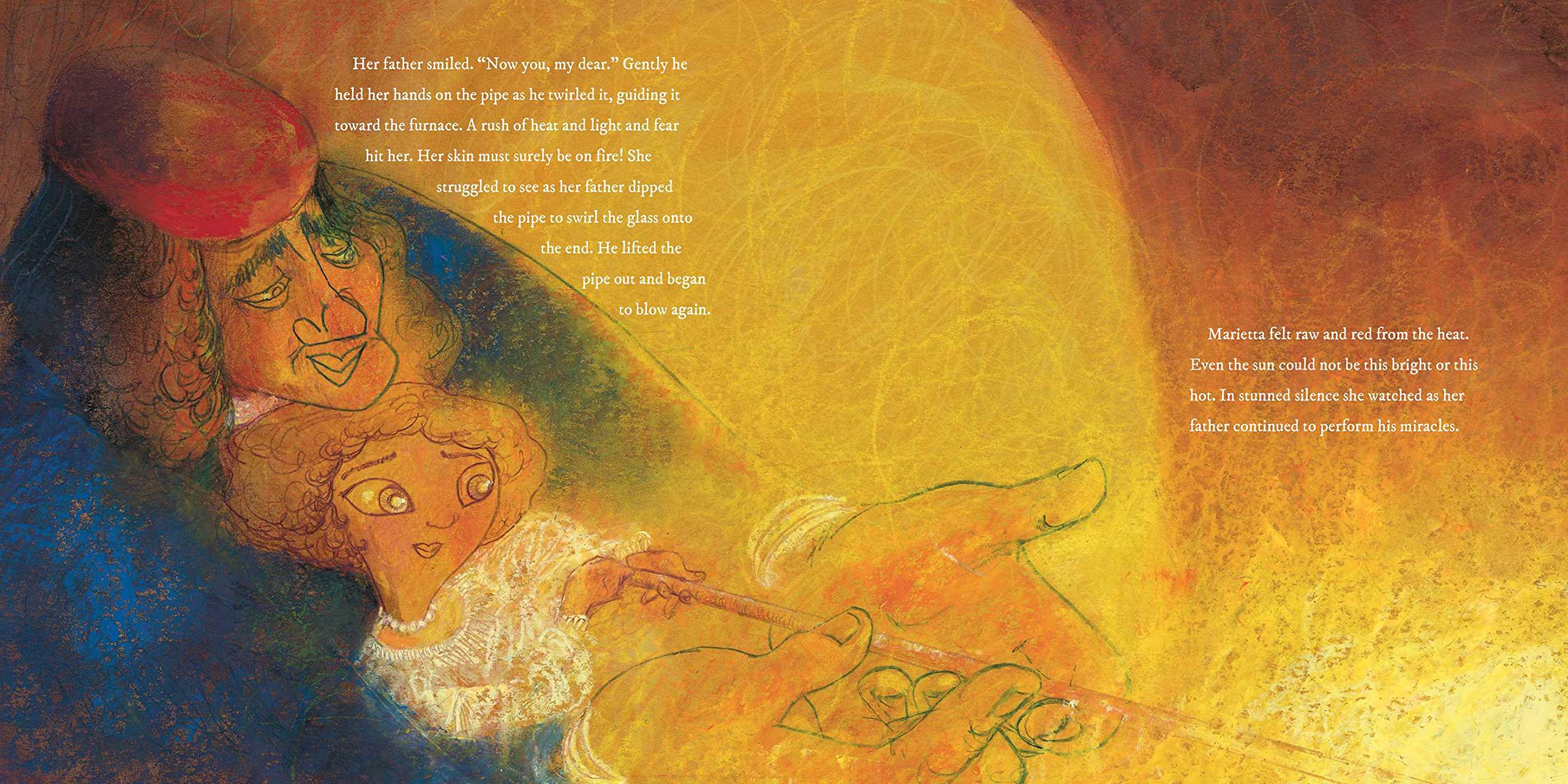
Summary:  Marietta Barovier grew up in fifteenth-century Murano, an island near Venice, where her father and brothers worked as glassblowers.  She wanted to learn the craft, but it wasn’t something girls did.  She persisted, though, hanging around the shop, and finally her father showed her how.  One day, she and her father took a trip to Venice to visit a wealthy patron.  Marietta discovered a small glass bowl covered with flowers, and was told that the technique for making such glass had been lost.  Years later, she remembered the bowl when she tried a new technique, layering different colors of glass together to make beads.  These rosetta beads became valuable currency and spread throughout the world. Includes an author’s note with additional information about Barovier and her beads, and a note about the art. 48 pages; grades 2-5.

Pros:  Evan Turk’s dazzling illustrations were inspired by Renaissance and Impressionist artists, with hues of yellow, gold, and orange that capture the fiery heat of glassblowing and the light and energy of Venice.  The story of Marietta is fascinating (although slightly fictionalized, since records about her are sparse), and could make a nice addition to an art curriculum.

Cons:  Although there are a couple photos of Evan Turk learning to blow glass and sketching in Italy, I would have liked to have seen some of the beads.

If you would like to buy this book on Amazon, click here.

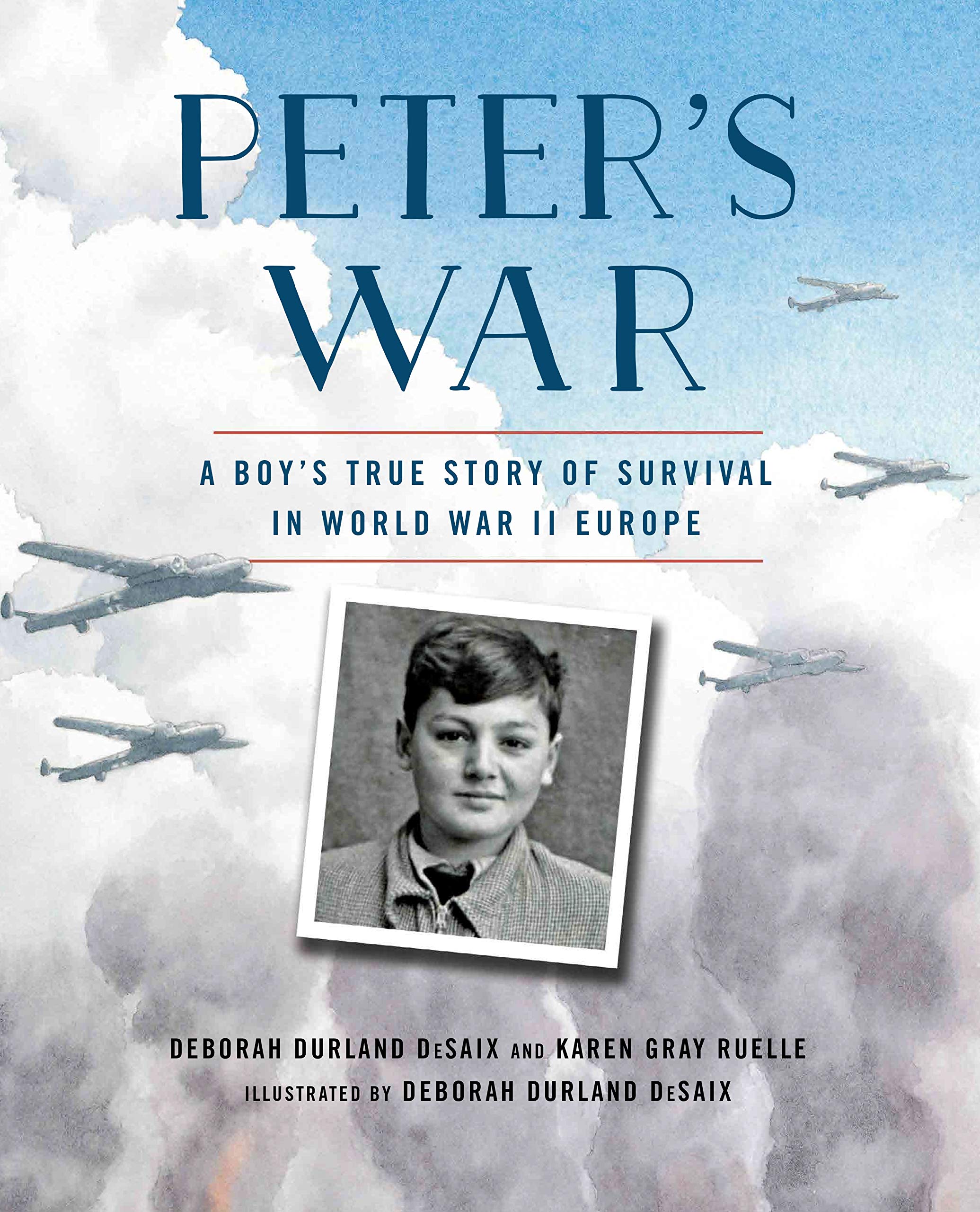
Peter’s War: A Boy’s True Story of Survival in World War II Europe by Deborah Durland DeSaix and Karen Gray Ruelle

Published by Holiday House

Peter's War: A Boy's True Story of Survival in World War II Europe: Ruelle,  Karen Gray, Durland DeSaix, Deborah: 9780823424160: Amazon.com: Books

Summary:  Peter was born to a wealthy family in Berlin, German in 1930.  All that changed when Hitler rose to power, and his Jewish family had to escape, first to Belgium, and then to France.  In the summer of 1942, Peter’s parents sent him to summer camp.  While he was there, they were arrested and taken away.  He got two postcards from them, then never heard from them again.  He spent the next two years living in children’s homes and a boarding school, using his German language skills to spy on the Nazis.  When rumors started circulating that the Germans knew one of the school’s students was a spy, a group of French resistance fighters arranged for Peter’s escape.  On May 22, 1944, he managed to cross the border into Switzerland, where he spent the next two years before joining his aunt and grandmother in the U.S.  Includes an epilogue with photos; notes with additional information about each two-page spread; a bibliography, and an index.  40 pages; grades 3-6.

Pros:  A good choice for upper elementary students interested in the Holocaust and World War II history.  Although it’s revealed in the epilogue that Peter’s parents both died in Auschwitz, the focus of the narrative is mostly on Peter’s courage and survival skills.  The extensive bibliography will guide readers to more resources, and the book list gives recommendations for appropriate age groups for each.

Cons:  The story was so brief that I felt like I never really got to know Peter or any of his family members.  Half the book is back matter, so Peter’s story, covering over a decade, is told in 20 illustrated pages.

If you would like to buy this book on Amazon, click here.

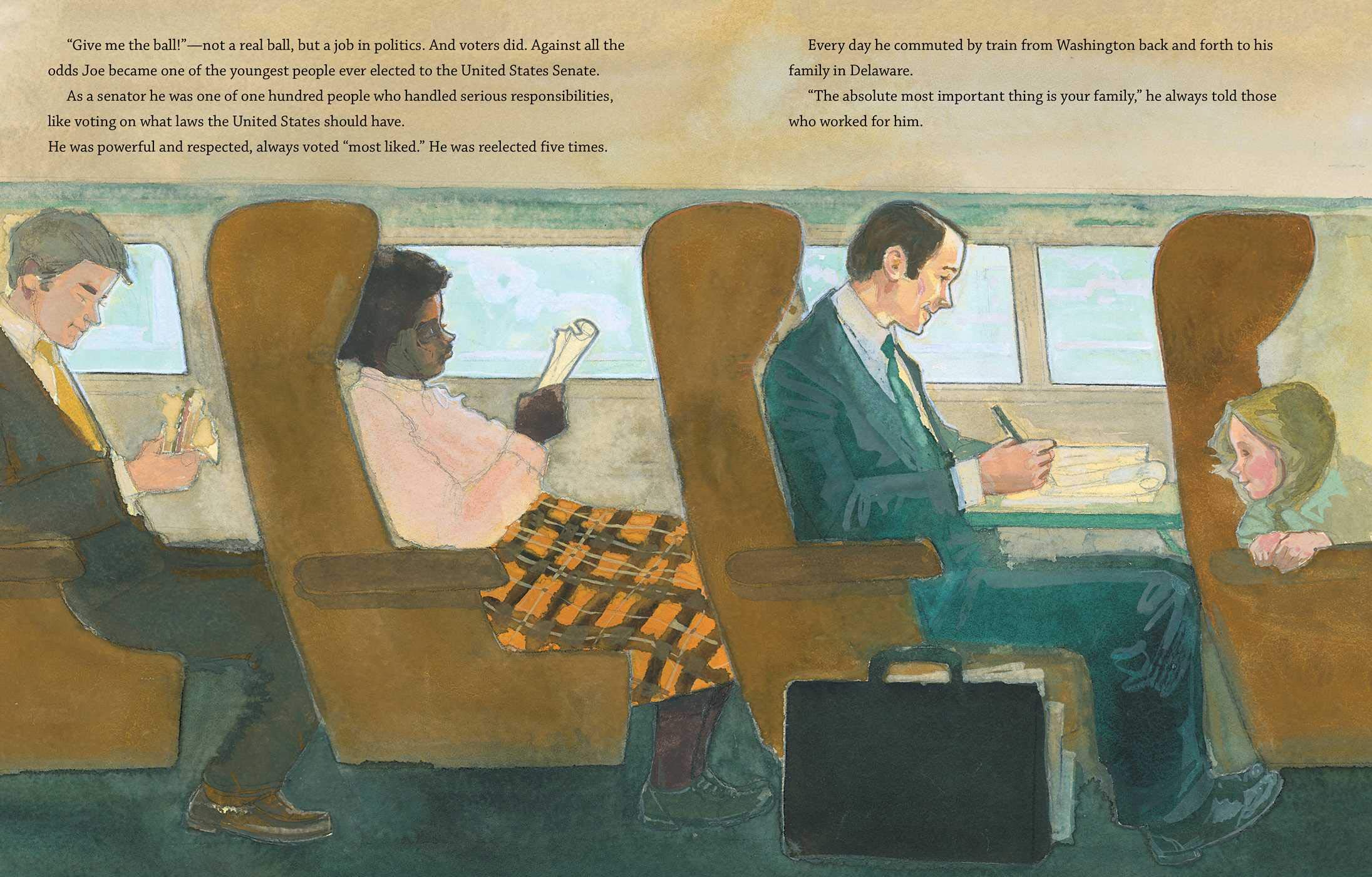
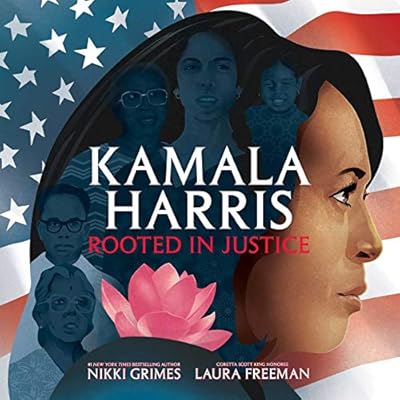
Joey: The Story of Joe Biden by Jill Biden with Kathleen Krull, illustrated by Amy June Bates and Kamala Harris: Rooted in Justice by Nikki Grimes, illustrated by Laura Freeman

Published by Simon and Schuster/Paula Wiseman Books

Joey: The Story of Joe Biden: Biden, Dr Jill, Krull, Kathleen, Bates, Amy  June: 9781534480537: Amazon.com: Books

Published by Atheneum Books for Young Readers

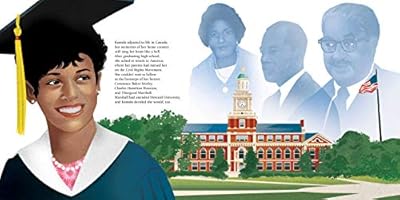
Kamala Harris: Rooted in Justice: Grimes, Nikki, Freeman, Laura:  9781534462670: Amazon.com: Books

Summary:  The Democratic nominees for President and Vice President are profiled in these two picture books.  Each one traces the candidate’s life from childhood, emphasizing their hard work, integrity, and quest for justice.  Biden’s is a straightforward account of his life, while Harris’s is narrated by a mother to her young daughter who has been told that girls can’t grow up to be President.  Published before she was chosen as Biden’s running mate, Harris’s story ends with her dropping out of the primary.  Joey includes photos, sources for quotations, a timeline, a bibliography, and a list of “Bidenisms”; Kamala Harris includes a timeline and list of sources. 48 pp. and 40 pp.; grades K-5.

Pros:  These books may come in handy as November 3 approaches and students are looking for more information on the candidates (I did try, in the interest of being nonpartisan, to find Trump and Pence picture book biographies, but was unsuccessful).  Readers will get ample biographical information, as well as some insights into both Joe Biden’s and Kamala Harris’s characters.

Cons:  One might expect a book written by the candidate’s wife (Biden) to read like a piece of campaign literature, and one would be right.  I wish the editors had worked a little harder to tone down the fawning rhetoric, letting Biden’s life speak for itself.  Also, the device of having the mother tell her daughter the story of Harris’s life seemed unnecessary, particularly the last page, where the girl tells her mother she’s going to call the kid who said she can’t be President a doofus.

If you would like to buy Joey on Amazon, click here.

If you would like to buy Kamala Harris on Amazon, click here.

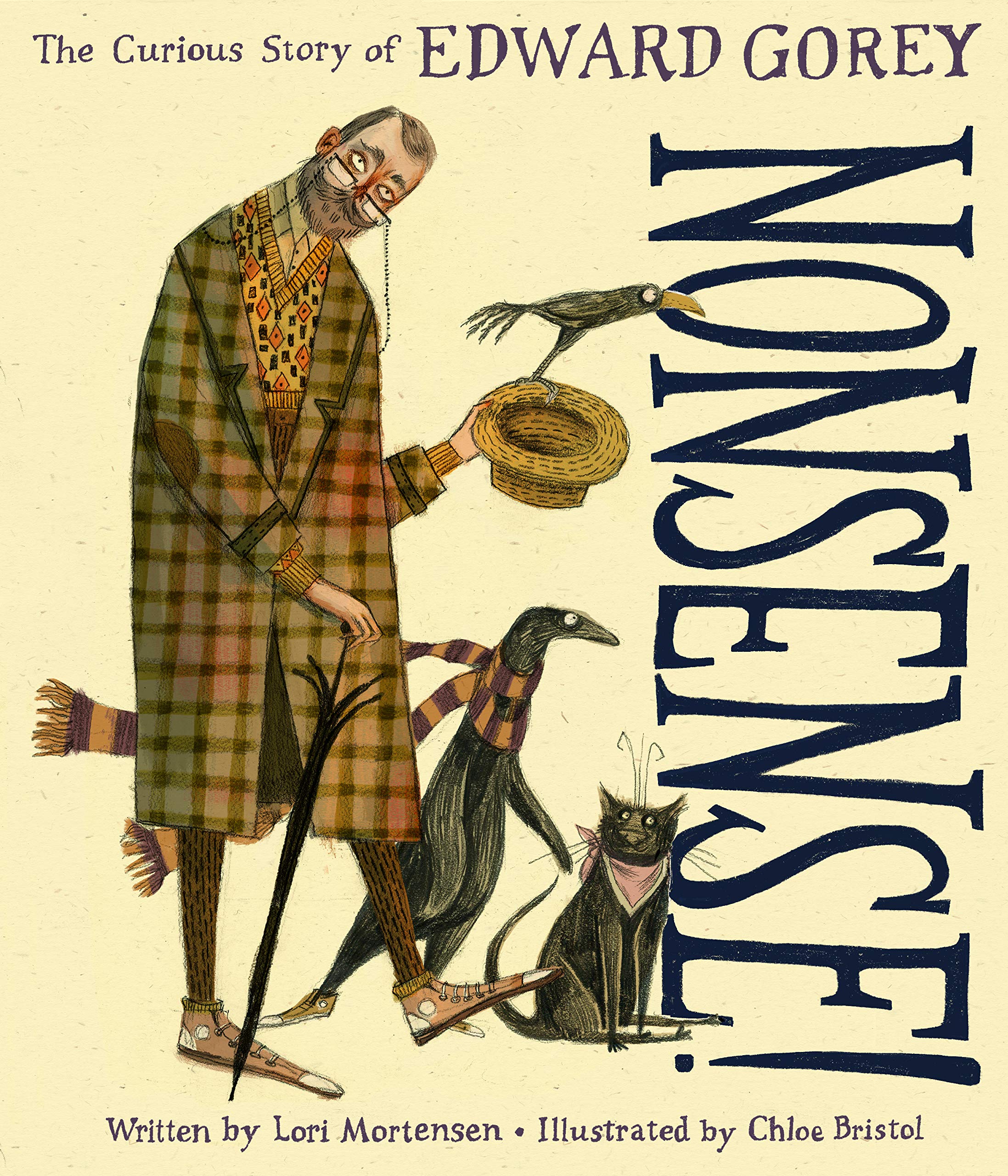
Nonsense! The Curious Story of Edward Gorey by Lori Mortensen, illustrated by Chloe Bristol

Published by Versify

Nonsense! The Curious Story of Edward Gorey: Mortensen, Lori ...

Summary:  Growing up in Chicago, Edward Gorey was an avid reader, enjoying books as different from each other as Alice In Wonderland and Dracula.  A solitary child who skipped three grades and moved a dozen times, he loved passing hours writing and drawing.  After a stint in the army and four years at Harvard, Edward moved to New York City where he worked in the art department of a publisher.  After work, he wrote his own stories filled with ghastly silliness.  A group of mothers found his book The Beastly Baby so disturbing that they ripped it up and mailed the pieces to him.  But Edward was rarely influenced by what other people thought, and went his own way to achieve his own form of success.  Includes an author’s note with additional information, a photo, and additional sources of information.  40 pages; grades K-5.

Pros:  Any fan of Edward Gorey’s work will appreciate this homage, written and illustrated in a very similar style.  Try introducing Gorey to young Lemony Snicket fans.

Cons:  Those not familiar with Gorey’s works, including most of today’s kids, may not fully appreciate this book. 

If you would like to buy this book on Amazon, click here.

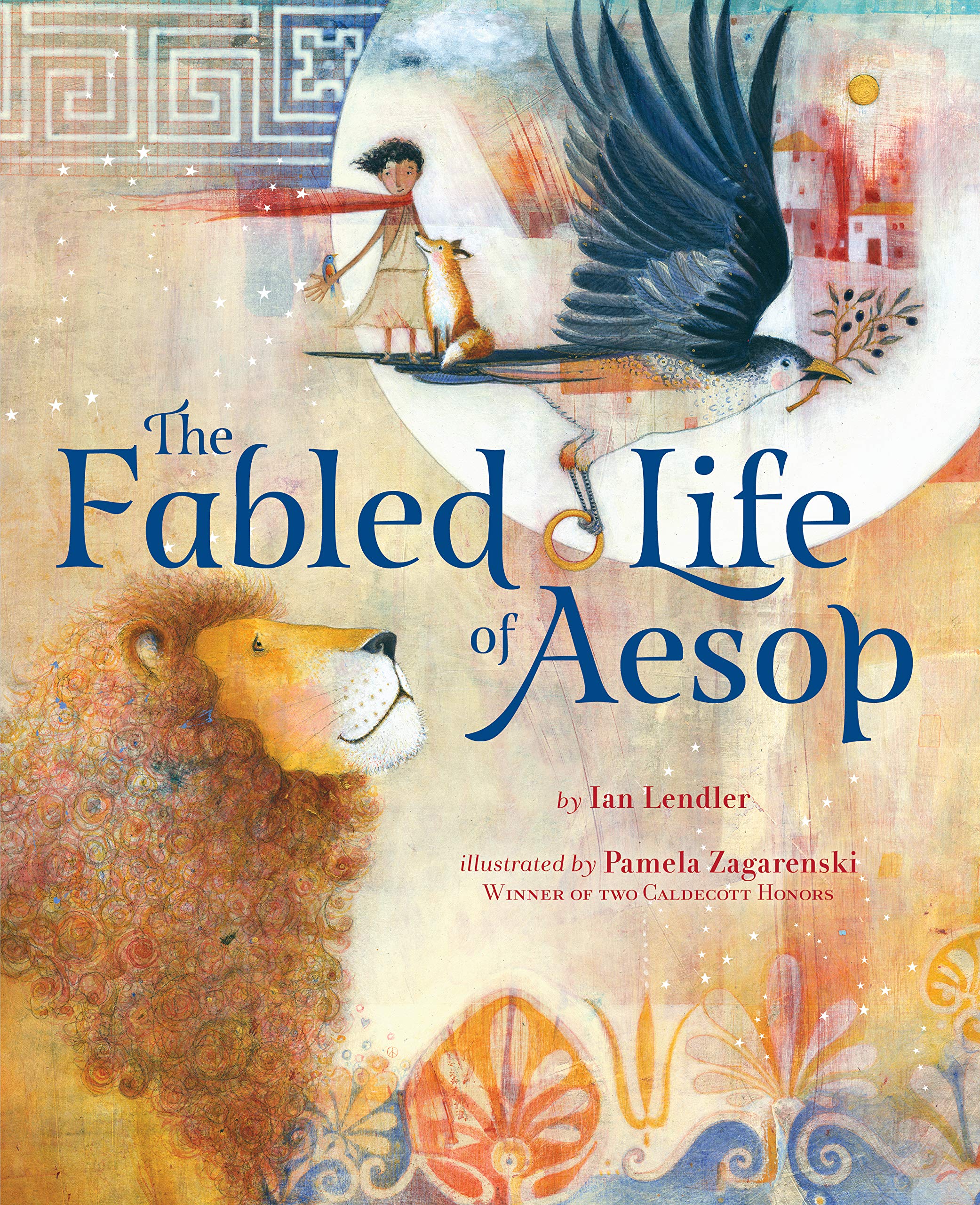
The Fabled Life of Aesop by Ian Lendler, illustrated by Pamela Zagarenski

Published by HMH Books for Young Readers

The Fabled Life of Aesop: The extraordinary journey and collected ...

Summary:  Aesop was born a slave in ancient Greece over 2000 years ago.  He learned that speaking out could be dangerous in his position, so he learned to talk in code, telling stories about the powerless and the powerful through his fables.  Following an introduction to Aesop’s life, the book presents ten fables.  Each telling is only a few paragraphs, with an illustration or two, and the moral in gold type at the end.  The final few pages recount how Aesop was freed, and how his fables were told for many years before they were finally published in book form.  Includes an afterword that explains more about what we do and don’t know about Aesop and which parts of his story in this book are true; also, a bibliography.  64 pages; grades K-5.

Pros:  An excellent introduction to Aesop’s fables, giving some context  about how they are not only lessons about morality, but give advice on “how to survive in a world in which some have power and some do not.”  Caldecott honoree Pamela Zagarenski will surely get some additional consideration for her beautiful illustrations here.

Cons:  I would have preferred that the afterword were a foreword, so readers would be aware of the uncertainties around Aesop’s history before reading the pages about his life.

If you would like to buy this book on Amazon, click here.

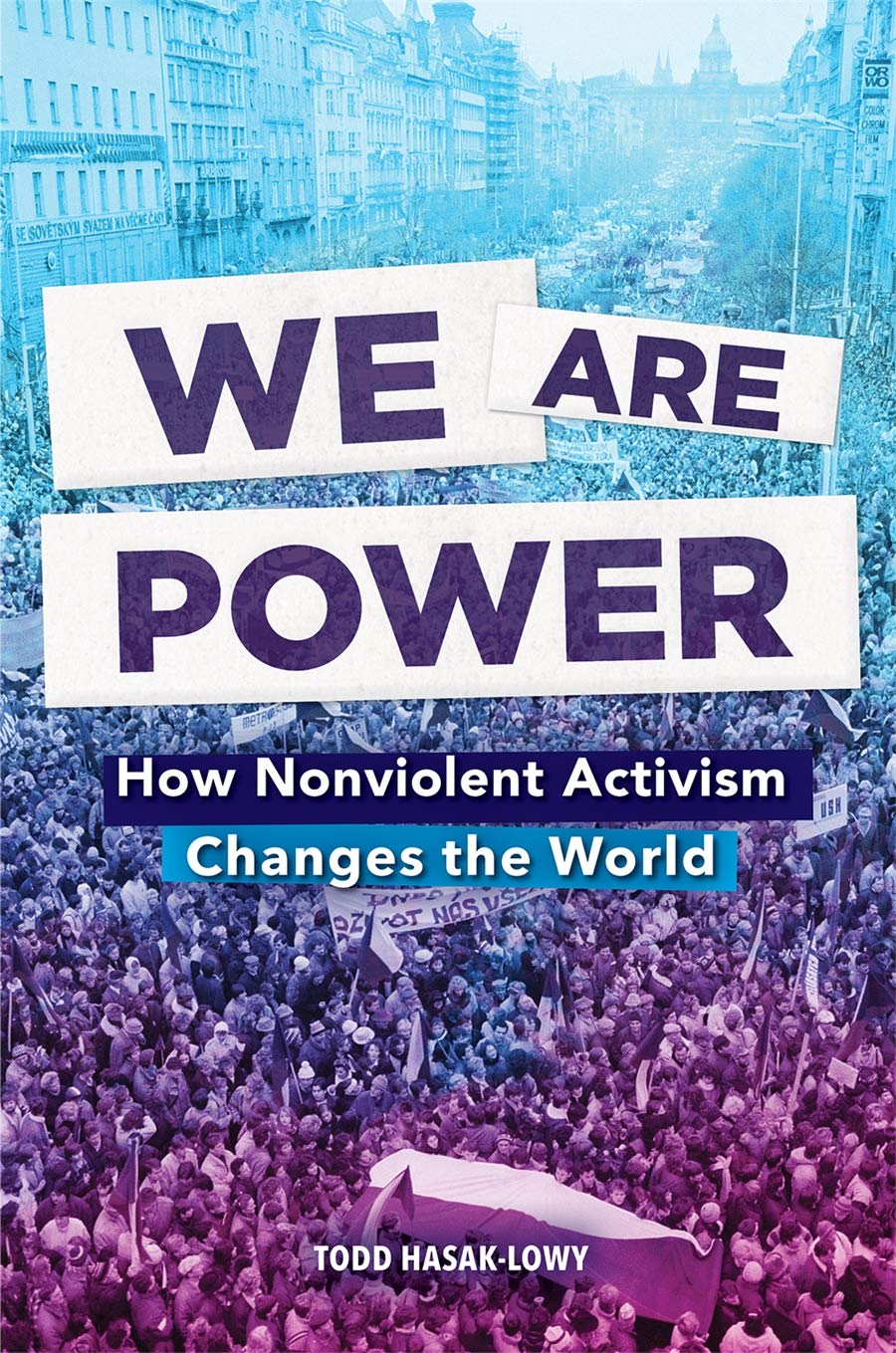
We Are Power: How Nonviolent Activism Changes the World by Todd Hasak-Lowy

Published by Abrams Books for Young Readers

We Are Power: How Nonviolent Activism Changes the World: Hasak ...

Summary:  Although we often learn about violent events in history (wars, assassinations), history is often made by those who embrace nonviolence.  Hasak-Lowy makes a distinction between institutional activism–writing letters and editorials, circulating petitions, lobbying politicians–and nonviolent activism, which “employs disruptive, risky tactics that challenge those in power and interrupt the way things normally work.” He illustrates this with chapters on Gandhi, Alice Paul, Martin Luther King, Jr., Cesar Chavez, and Václav Havel.  The final chapter is about Greta Thunberg and her current nonviolent activism around climate change.  A list at the end gives brief descriptions of half a dozen other groups that successfully employed nonviolent activism.  Includes notes, a seven-page bibliography, and an index.  320 pages; grades 5-9.

Pros:  An excellent, accessible, and inspiring introduction to nonviolent activism.  I found it fascinating to learn the distinctions between institutional and nonviolent activism.  The engagingly-written profiles demonstrate the commitment and sacrifices necessary for this type of activism–but also show how effective it ultimately can be.

Cons:  No mention of Henry David “Mr. Civil Disobedience” Thoreau, who is said to have inspired both Gandhi and King.

If you would like to buy this book on Amazon, click here.


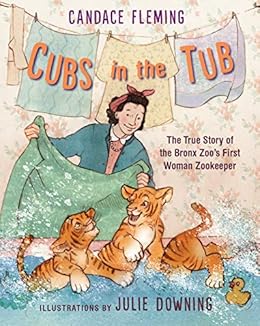
Cubs in the Tub: The True Story of the Bronx Zoo’s First Woman Zookeeper by Candace Fleming, illustrated by Julie Downing

Published by Neal Porter Books (Released August 4)

Cubs in the Tub: The True Story of the Bronx Zoo's First Woman ...

Tessa Takes Wing is Landing — Julie Downing Illustration

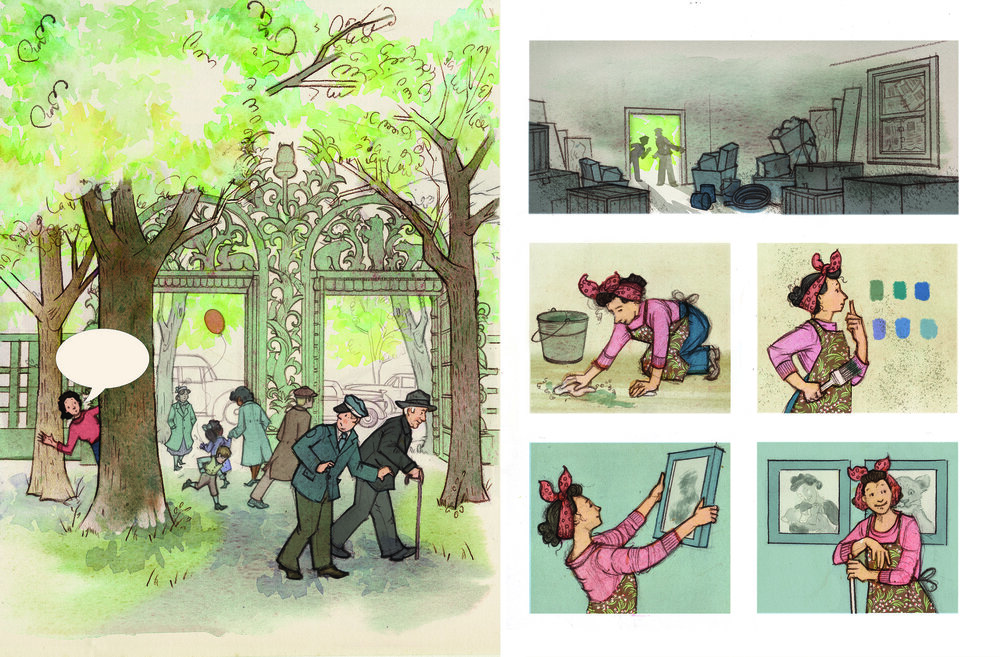
Summary:  Helen and Fred Martini wanted to have a baby, but this was not in the cards for them.  One day, Fred, a zookeeper at the Bronx Zoo, brought home a lion cub whose mother had abandoned it.  He told Helen to care for the cub the way she would a human baby, so she went to work feeding him, grooming him, and tucking him into a crib.  The lion, MacArthur, stayed with the Martinis for two months before being transferred to another zoo.  Next came three tiger cubs, named Raniganj, Dacca, and Rajpur.  When it was time for them to go back to the zoo, Helen went along.  Fred showed her a storeroom that she proceeded to turn into a zoo nursery.  When zoo officials found out, they offered her a job as “keeper of the nursery”.  Helen kept this position for the next 20 years, becoming the Bronx Zoo’s first woman zookeeper and pioneering new methods for caring for young animals.  Includes additional information about Helen Martini, a photo, and a bibliography.  48 pages; grades K-3.

Pros:  Lots of adorable animal illustrations will draw kids to this books, and they’ll learn about a woman who quietly broke down barriers.  The author’s note emphasizes how Helen, like many women of her time, worked within existing power structures to find a way to have a career at a time when women were encouraged to stay home.  

Cons:  The connection between Helen’s wish for a human baby and the fulfillment of that wish through baby zoo animals felt a little uncomfortable, both for Helen and the animals.

HerNaturalHistory [Instagram] | WCS Archives Blog

If you would like to buy this book on Amazon, click here.

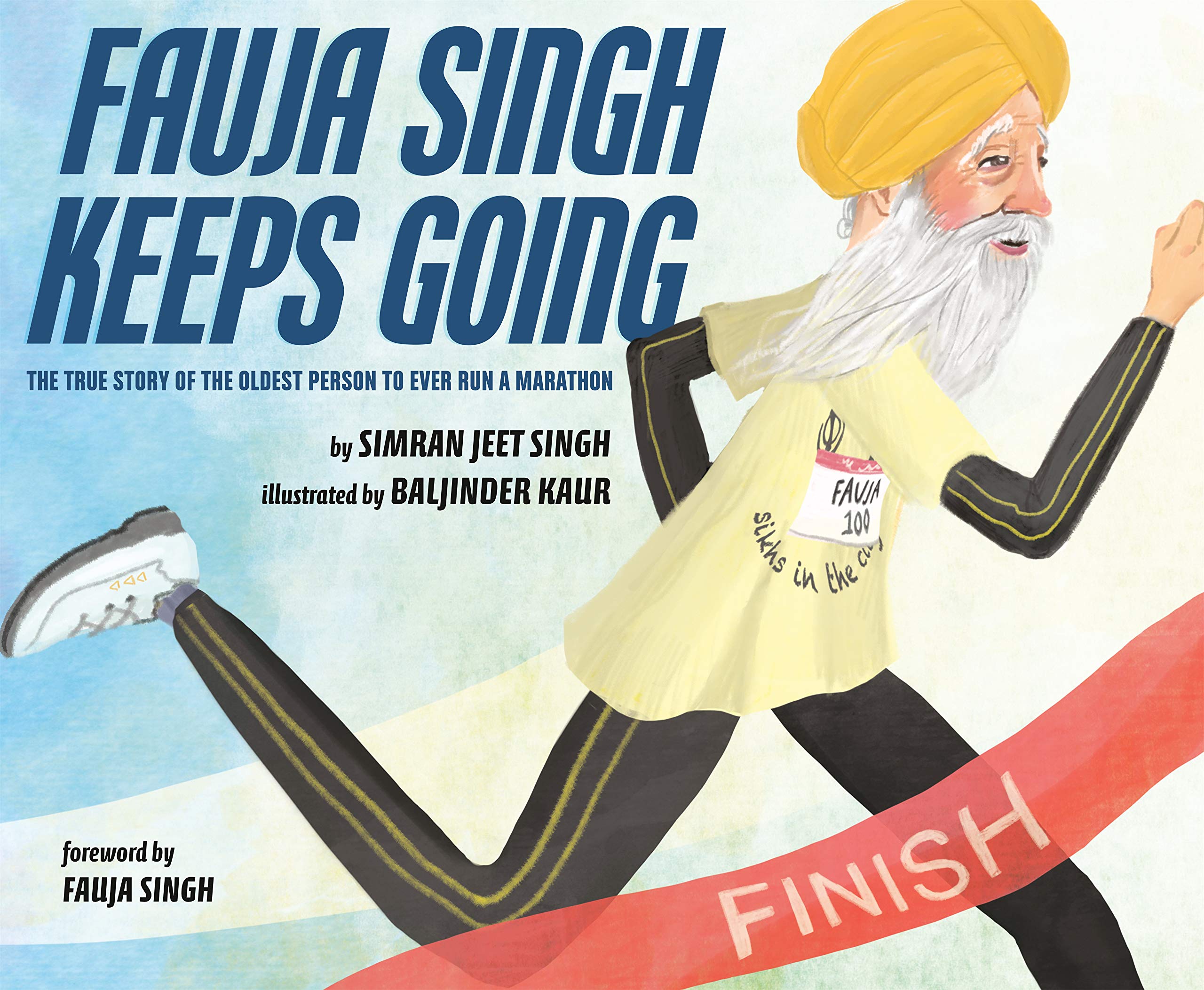
Fauja Singh Keeps Going: The True Story of the Oldest Person to Ever Run a Marathon by Simran Jeet Singh, illustrated by Baljinder Kaur

Published by Kokila (Released August 25)

Amazon.com: Fauja Singh Keeps Going: The True Story of the Oldest ...

Summary:  Throughout his life, Fauja Singh has heard people telling him his limitations.  He didn’t learn to walk until he was almost five years old.  School was too far for him to get to.  After his wife died and his family moved away, he was lonely.  This refrain is repeated throughout the story:  “But Fauja did not listen and Fauja did not stop.”  He did learn to walk, and worked hard to become strong enough to walk a mile.  Because he couldn’t go to school, he learned to be a farmer instead.  And at age 81, he left India to live with his family in England.  At first he was sad and lonely, but one day he saw people running on TV.  They looked so happy that he decided to try it.  Every day, he ran a little further and a little faster.  He eventually decided to run a marathon.  When he heard that people of his faith, Sikhs, were experiencing discrimination in the U.S., he decided to run in the New York City marathon.  After that, he decided to be the first 100-year-old to complete a marathon, and reached this goal in Toronto in 2011.  Includes an introduction by Singh (age 108 when he wrote it); an afterword with additional information and a photo; and a list of the national (UK) and world records he holds.  48 pages; ages 4 to 104 (and up).

Pros:  If you need inspiration to stop reading and get off your couch, here it is!  Even if you are 56 (just as a random example), you still have almost half a century left to run a marathon!  And even if you don’t want to run a marathon, Fauja Singh’s story is an inspiring one of perseverance, kindness, and trusting yourself.  

Cons:  The NYC marathon part of the story is kind of a bummer.

Punjabi by nature: The incorrigible Fauja Singh - chandigarh ...

If you would like to buy this book on Amazon, click here.