Frog and Ball by Kathy Caple and Spring Cakes by Miranda Harmon (I Like to Read Comics series)

Published by Holiday House
Frog and Ball by Kathy Caple: 9780823443413 | PenguinRandomHouse.com: Books
Bound To Stay Bound Books, Inc. - Bookstore
Amazon.com: Spring Cakes (I Like to Read Comics): 9780823449354: Harmon,  Miranda: Books

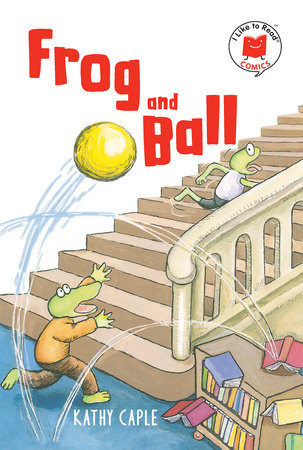
Summary:  In Frog and Ball, Frog checks out a book about magic from the library.  On the way home, he comes across a deflated ball, and decides to try out the book to bring the ball back to life.  His magic works a little too well when the ball really does come to life and starts chasing him all over town, including a chaotic return to the library.  Frog finally manages to subdue the ball back into deflated submission, but when Rabbit comes along, it looks like things are going to start up again.

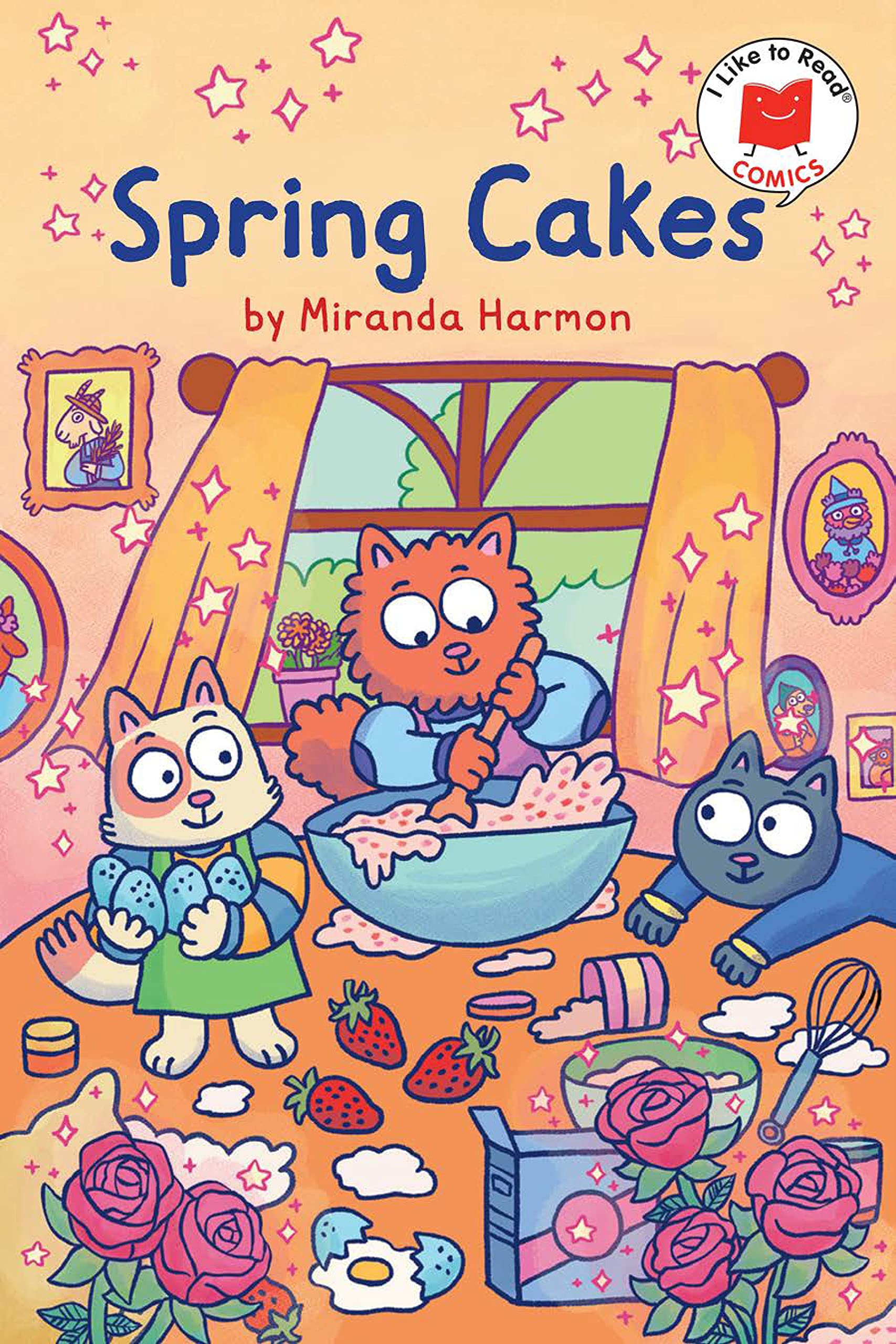
A family of cats has big cooking plans in Spring Cakes, but first they have to gather the ingredients: flour, honey, eggs, strawberries, and some magic roses.  Each item requires going to the source, so the kitties get a series of adventures, including a visit to the witch who has the roses.  Finally, it’s time to bake, and everyone who helped out gets to enjoy a picnic with some spring cakes.  Both books are 40 pages; ages 4-8.

Pros:  I’ve long been a fan of the I Like to Read books, and was excited to hear that there was a new comic series (and grateful to Holiday House for the free copies!).  These are sure to be a hit with kids learning to read: the comic format is, of course, hugely popular and the stories are well-crafted with cute illustrations.

Cons:  One of the things I love about the I Like to Read series is that it includes books that look like “real books” (not like early readers) that are written at the earliest Fountas and Pinnell levels (A, B, C).  These comic books are at a higher F&P level (Frog and Ball is I and Spring Cakes is L).  I’m hoping Holiday House will come out with some that are for those earlier levels.

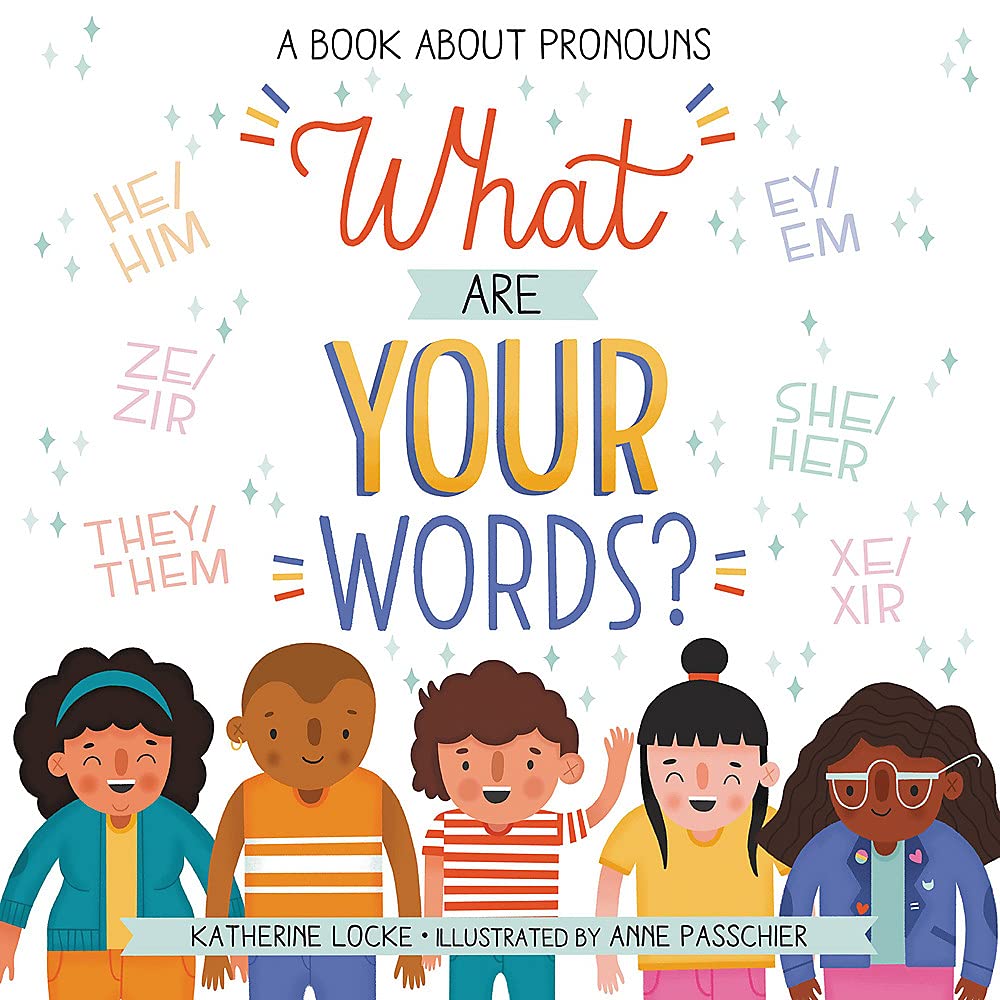
What Are Your Words? A Book About Pronouns by Katherine Locke, illustrated by Anne Passchier

Published by Little, Brown Books for Young Readers

What Are Your Words?: A Book About Pronouns: Locke, Katherine, Passchier,  Anne: 9780316542067: Amazon.com: Books
Andy Passchier Illustrates Children's Book 'What Are Your Words?' | Arts &  Culture | Ideastream Public Media

Summary:  Ari is excited that Uncle Lior is coming for a visit.  Uncle Lior uses they/them pronouns, and they always ask Ari, “What are your words?”  Usually Ari knows right away; it may be “Happy! Creative! Funny! He/him” or “Thoughtful! Athletic! Silly! She/her.”  Today, though, nothing quite seems to fit.  Ari worries about it as the day progresses, with more introductions (including pronouns) around the neighborhood, finishing up with a barbecue and fireworks.  As the first ones burst across the sky, Ari suddenly discovers the words for today: “Impatient! Excited! Colorful! They/them.”  Uncle Lior tells them, “That’s definitely you, Ari.”  40 pages; ages 4-8.

Pros:  This book will be a valuable resource to anyone working with transgender, nonbinary, or gender fluid kids and will help others to understand the importance of pronouns.  The illustrations are cheerful and colorful; I especially liked the endpapers that showed a variety of people and pronouns.

Cons:  The story was definitely secondary to the lessons being taught.

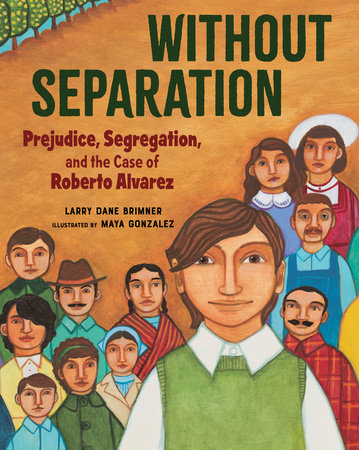
Without Separation: Prejudice, Segregation, and the Case of Roberto Alvarez by Larry Dane Brimner, illustrated by Maya Gonzalez

Published by Calkins Creek

Without Separation by Larry Dane Brimner: 9781684371952 |  PenguinRandomHouse.com: Books
Without Separation: Prejudice, Segregation, and the Case of Roberto Alvarez  by Larry Dane Brimner and Maya Gonzalez

Summary:  When Roberto Alvarerez returned to school from Christmas vacation on January 5, 1931, he was told he was no longer a student at the Lemon Grove Grammar School in Lemon Grove, California.  He and the other Mexican American children were supposed to go to the new Olive Street School.  Most of the kids headed home, as they had been instructed to do by their parents when rumors of the new school started to make their rounds in the neighborhood.  Families filed a lawsuit with Roberto’s name on it against the Lemon Grove School District.  On March 12, a judge ruled that there could be no separate school for Mexican children, and the students were allowed to return to Lemon Grove.  Includes a six-page author’s note with additional information and photos; and sources and source notes.  40 pages; grades 2-5.

Pros:  This straightforward picture book tells a story of standing up to school segregation that happened years before Brown vs. Board of Education.  While the story and folk art style illustrations could be understood and appreciated by a second-grader, there’s enough information in the author’s note to get a good start on a middle school project.

Cons:  90 years later, de facto school segregation is still prevalent all over the United States.

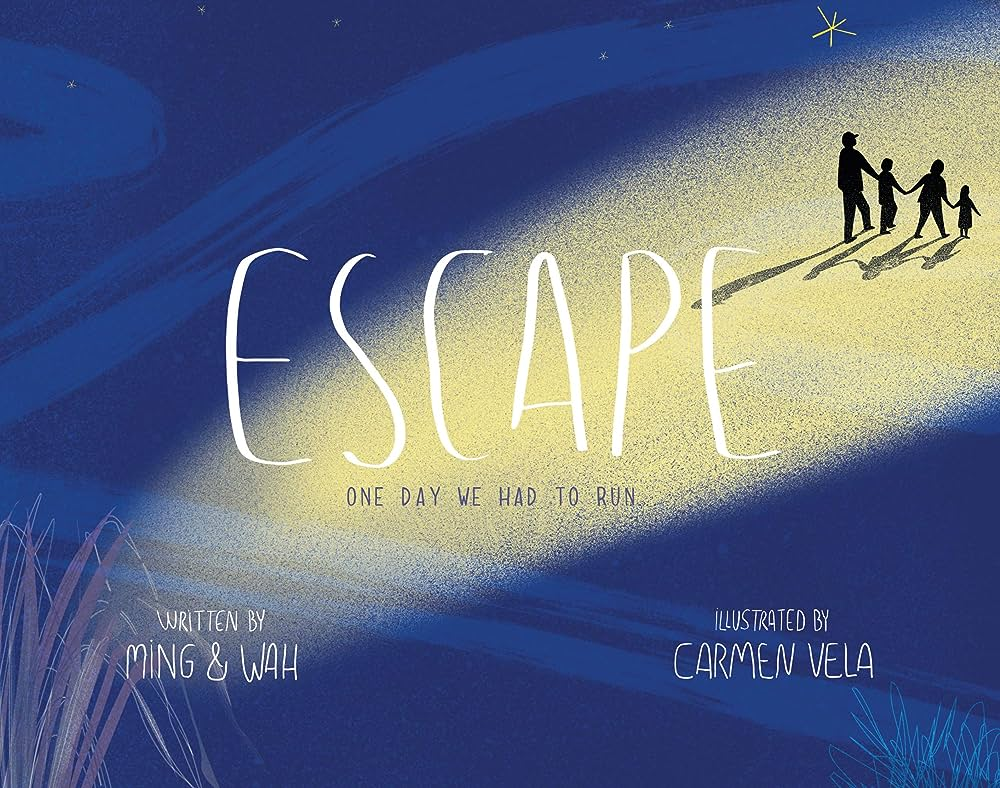
Escape: One Day We Had to Run by Ming & Wah, illustrated by Carmen Vela

Published by Lantana Publishing

Escape: One Day We Had to Run . . . by Wah, Ming &, Vela, Carmen - Amazon.ae

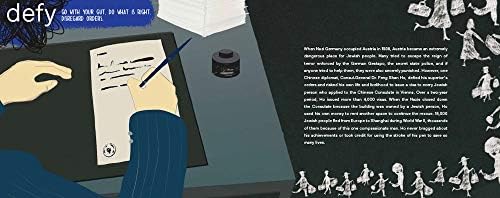
Summary:  “Escape (verb) – To avoid a threatening evil”: that’s the definition given on the title page.  Each spread has another verb–cling, defy, swim–with a story of refugees escaping danger.  Yusra and Dara Mardini cling to their boat as  they escape from Syra; Yusra goes on to swim for the Refugee Olympic Team in 2016.  Chinese diplomat Dr. Feng Shan Ho defies orders and issues over 4,000 visas to Jews escaping Germany during World War II.  Chan Hak-chi and Li Kit-hing swim for six hours through shark-infested waters in a typhoon to make it from mainland China to Hong Kong.  Each story is accompanied by a somewhat abstract illustration showing the escape.  Includes Articles 13 and 14 from The Universal Declaration of Human Rights and a link for more information.  40 pages; grades 2 and up.

Pros:  Each story is brief and compelling, making it a gripping read-aloud for older elementary or middle school kids.  The brief text, abstract illustrations, and even slightly mysterious authors (identical twins known simply as Ming & Wah) add an air of suspense that is perfect for the topic.

Cons:  I definitely wanted to know where I could find out more information about every one of the stories.

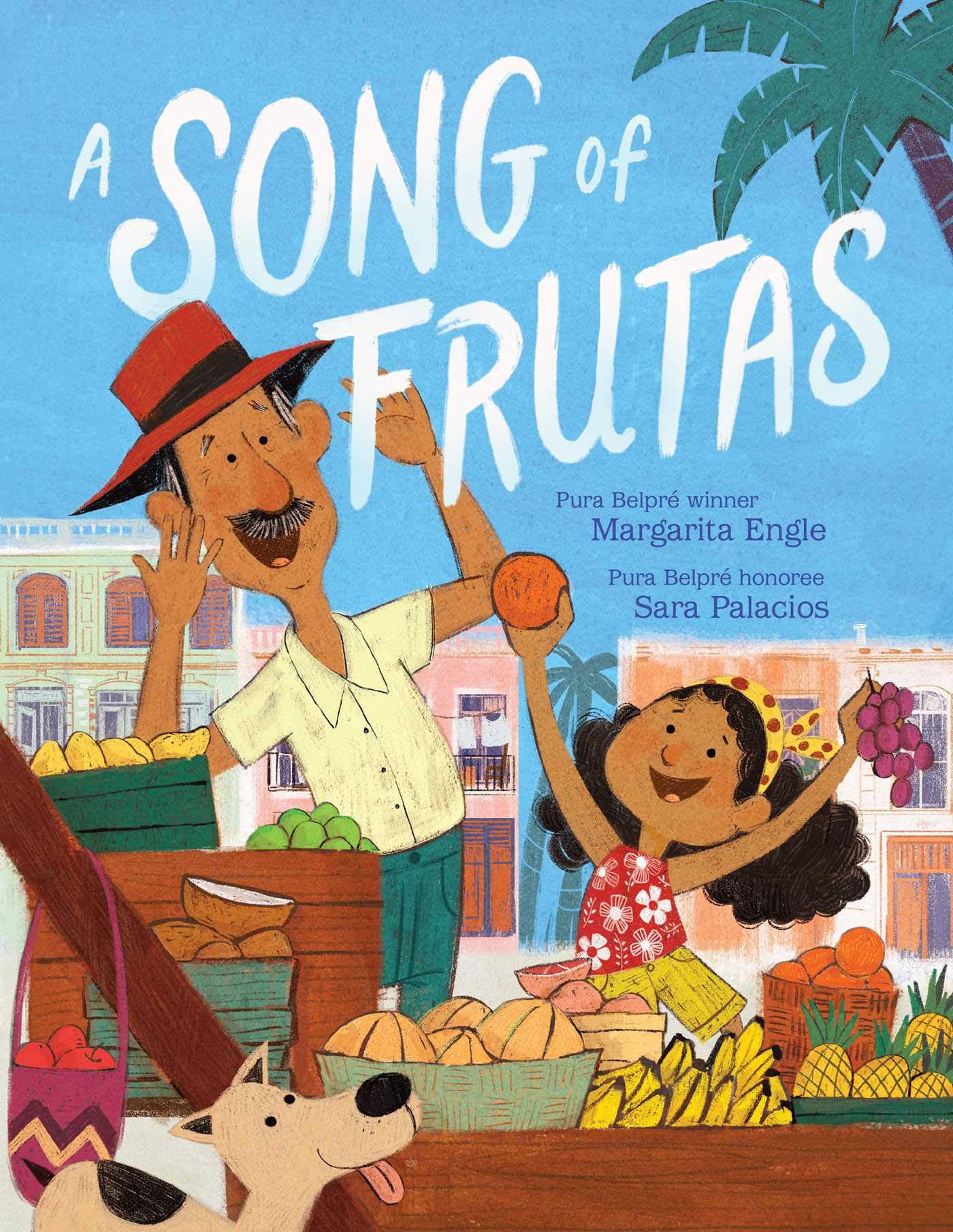
A Song of Frutas/Un Pregón de Frutas by Margarita Engle, illustrated by Sara Palacios

Published by Atheneum Books for Young Readers

A Song of Frutas: Engle, Margarita, Palacios, Sara: 9781534444898: Amazon.com:  Books

Un pregón de frutas (Song of Frutas) (Spanish Edition): Engle, Margarita,  Palacios, Sara, Romay, Alexis: 9781534494763: Amazon.com: Books

A Song of Frutas: Engle, Margarita, Palacios, Sara: 9781534444898: Amazon.com:  Books

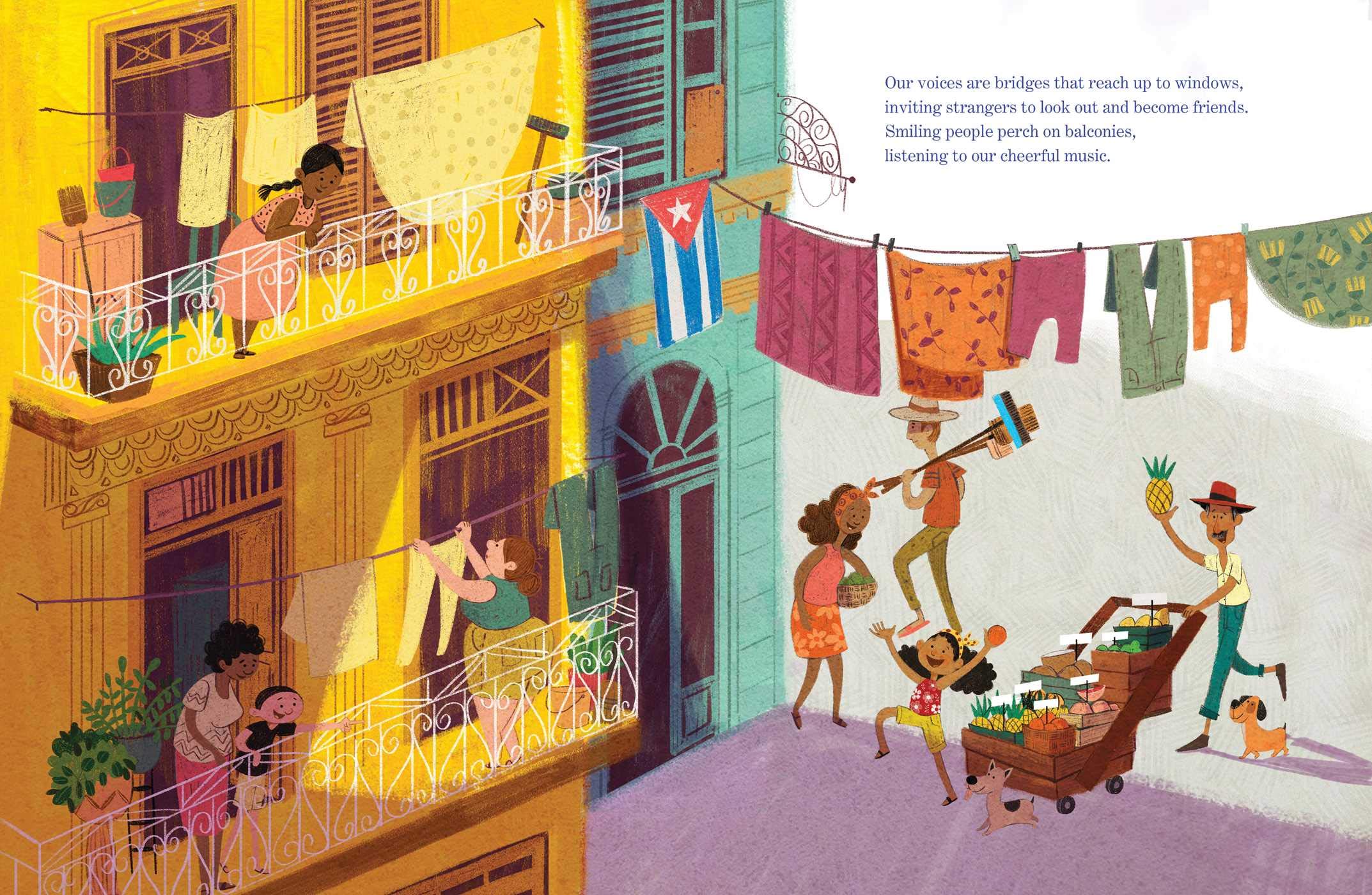
Summary:  When the narrator visits her abuelo, she loves helping him sell fruit.  Together they make up a song to let people know the fruits they have, “Mango, limón, coco, melón, naranja, toronjo, plátano, piña.”  On New Year’s Eve, many customers buy grapes so they can gobble up twelve at midnight, making a wish for each chime of the clock.  The girl’s last wish is always to be able to visit her grandparents more often, but much of the time they have to make do with letters that travel between the U.S. and Cuba.  Includes an author’s note with additional information about Spanglish, travel restrictions to Cuba, los pregoneros or the singing vendors, and New Year’s Eve. Available in Spanish and English. 40 pages; ages 4-8.

Pros:  The lively narration and colorful illustrations present an inviting portrayal of Cuba that would pair well with All the Way to Havana for a Cuban/Margarita Engle story hour. Well deserving of some Pura Belpré recognition.

Cons:  Eating twelve grapes on the stroke of midnight sounds challenging.

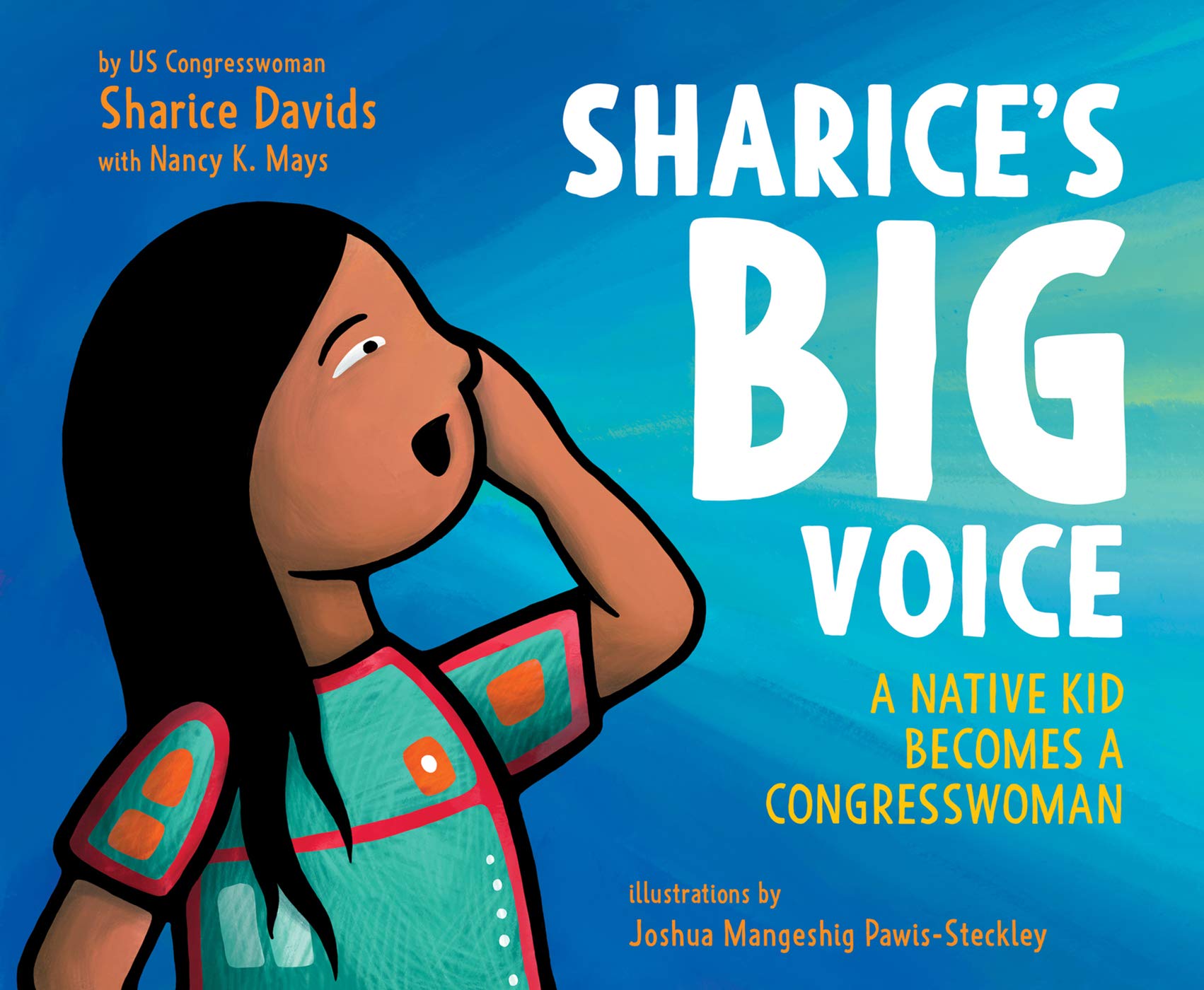
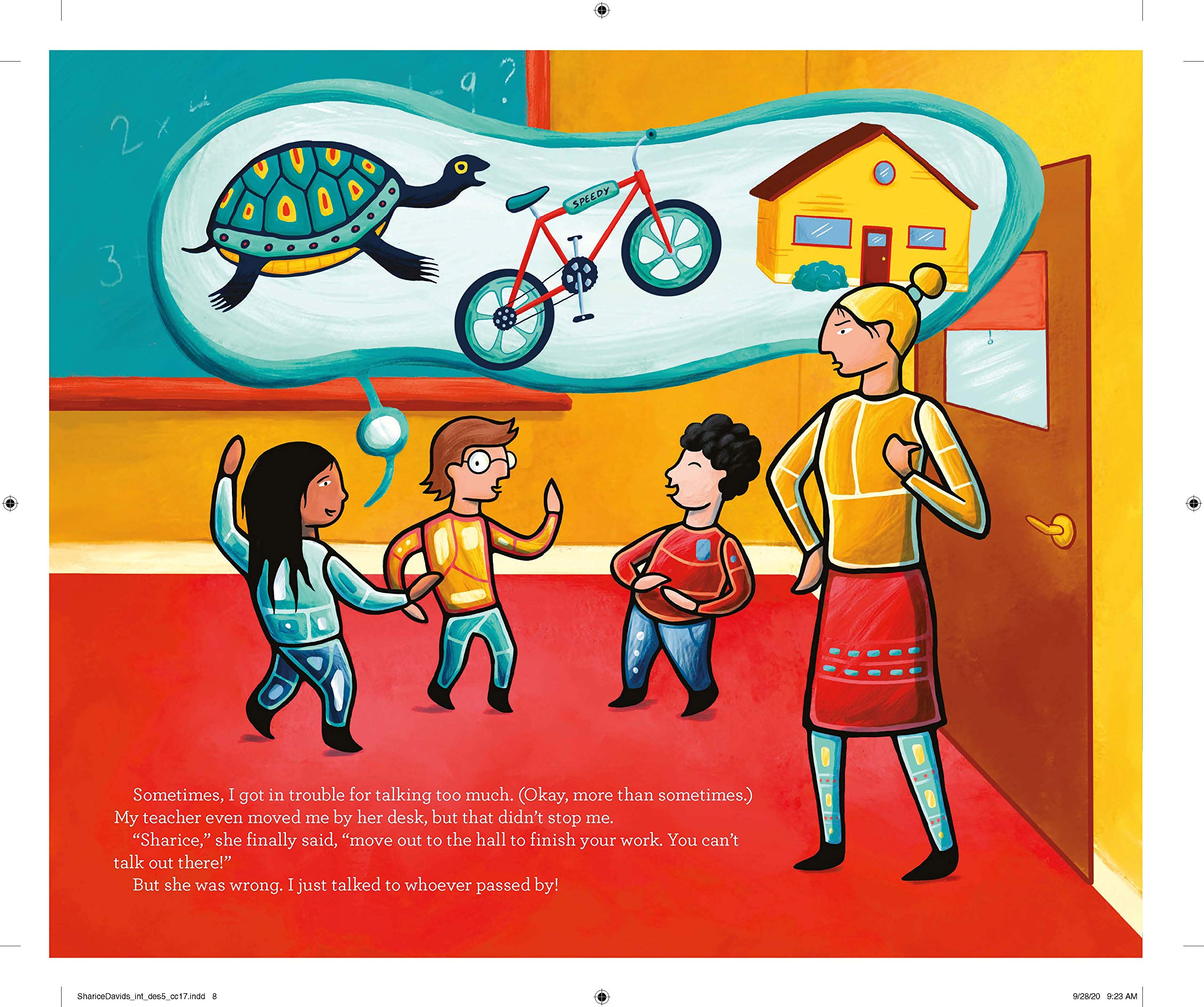
Sharice’s Big Voice: A Native Kid Becomes a Congresswoman by Sharice Davids with Nancy K. Mays, illustrated by Joshua Nageshig Pawis-Steckley

Published by HarperCollins

Sharice's Big Voice: A Native Kid Becomes a Congresswoman: Davids, Sharice,  Mays, Nancy K., Pawis-Steckley, Joshua Mangeshig: 9780062979667:  Amazon.com: Books

Summary:  In 2018, Sharice Davids became one of the first two Native American women in Congress.  From a young age, Sharice loved to talk and used her big voice to make friends when her single mother’s army career forced them to move several times.  She worked hard to get through college and law school and to pursue a passion for martial arts.  Her law degree led her to a South Dakota reservation, where she helped people start small businesses, and eventually to a career at the White House.  In Washington, she noticed that there weren’t a lot of people who looked like her, and decided to try to change that by running for Congress.  Her victory made her not only one of the first Native women in Congress, but also the first LGBTQ Native American there.  Includes an author’s note, an illustrator’s note, and additional information about Davids’ Ho-Chunk tribe.  40 pages; grades K-4.

Pros:  The chatty, informal tone of the writing makes Sharice seem like an old friend, and like pursuing your dreams is a real possibility.  I loved the art for this book, created by Ojibwe Woodland artist Pawis-Steckley. I want to mention that this is the third book I’ve reviewed in the last week that’s by a Native American author with Native main characters. Things sure have changed since I started this blog in 2015, and it’s about time.

Cons:  I wish there were more photos with the author’s note.  I think the one there is of Sharice with her mom, but it wasn’t labeled, so I’m not sure.

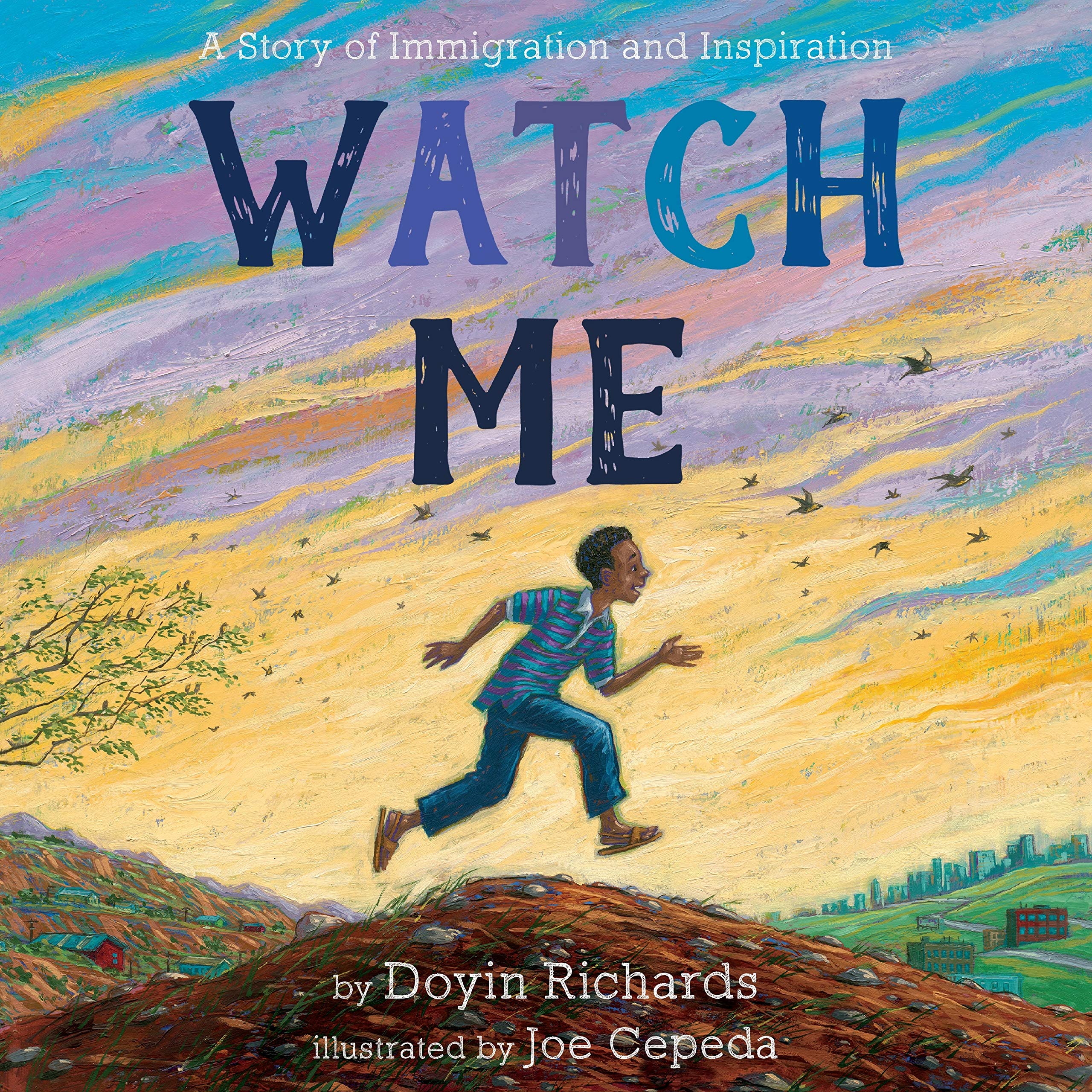
Watch Me: A Story of Immigration and Inspiration by Doyin Richards, illustrated by Joe Cepeda

Published by Feiwel and Friends

Watch Me: A Story of Immigration and Inspiration: Richards, Doyin, Cepeda,  Joe: 9781250266514: Amazon.com: Books
Watch Me | Doyin Richards | Macmillan

Summary:  Growing up in Sierra Leone, Joe had big dreams.  He decided he needed to go to America to follow them.  Family and friends told him people in America would laugh at his accent and be afraid of his dark skin, but Joe said, “Watch me,” and moved to America.  People did, in fact, make fun of his accent and sometimes told him to go back to Africa.  Joe was homesick, but he persisted.  Sometimes he felt he had to work twice as hard to prove himself, but in the end he kept going and became a doctor.  How does the narrator know all this?  Dr. Joe was his dad.  40 pages; ages 4-8.

Pros:  This inspiring narrative tells Dr. Joe’s story, but also asks a lot of questions of the reader: do you know people like Joe?  Do you see them at your school?  Did they come by plane or boat?  Maybe you did, too?  The text is simple, but it is sure to provoke discussion and encourage kids to make connections between Joe and themselves or people around them.

Cons:  I wanted to know a lot more about Dr. Joe, but there was no additional information.

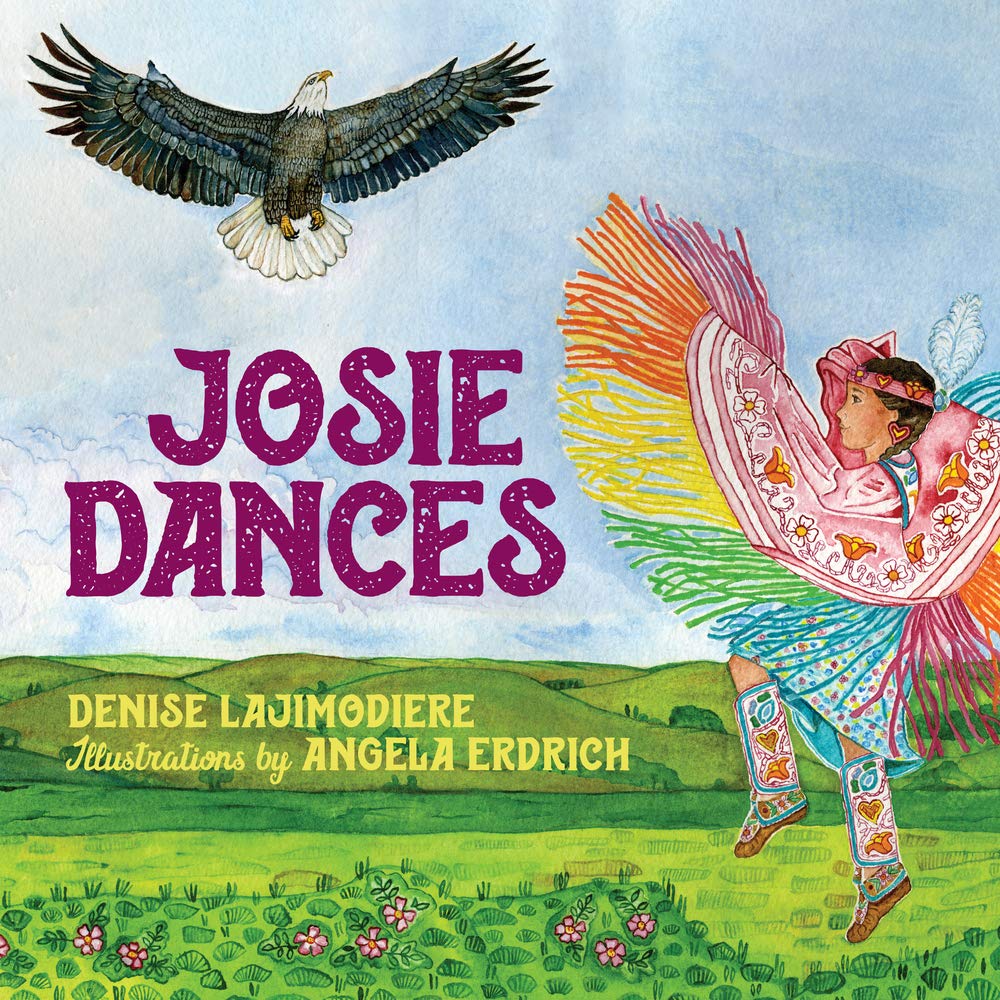
Josie Dances by Denise Lajimodiere, illustrations by Angela Erdrich

Published by Minnesota Historical Society

Josie Dances: Lajimodiere, Denise, Erdrich, Angela: 9781681342078: Books -  Amazon.ca
Josie Dances – Minnesota Historical Society

Summary:  When Josie decides she wants to dance at her tribe’s powwow, she enlists her mom, grandmother (kookum), aunty, and tribal elder Grandma Greatwalker to sew and bead her costume and to dream her spirit name.  Josie practices all winter and spring, excited about all the preparations but a little anxious that they won’t be done in time.  On the morning of her dance, though, everyone surprises her with their completed work, and Elder Grandma Greatwalker tells Josie that she has dreamed her spirit name: Migiziinsikwe, or Young Eagle Woman.  Josie is welcomed into the circle of dancers as the singers say her name, Migiziinsikwe, and Young Eagle Woman soars into the dance.  Includes a glossary and information about Turtle Mountain, a reservation where the author lives as a citizen of the Tribal Band of Chippewa and the illustrator is a tribal member.  32 pages; ages 4-8.

Pros:  This would pair well with Bowwow Powwow for a story hour about contemporary kids participating in their powwows.  The colorful illustrations and text give a real flavor of what goes into preparing for the dance and the excitement of the actual event.  I loved the endpapers portraying a variety of powwow participants.

Cons:  I wish there had been some more information about Josie’s dance in the back matter.

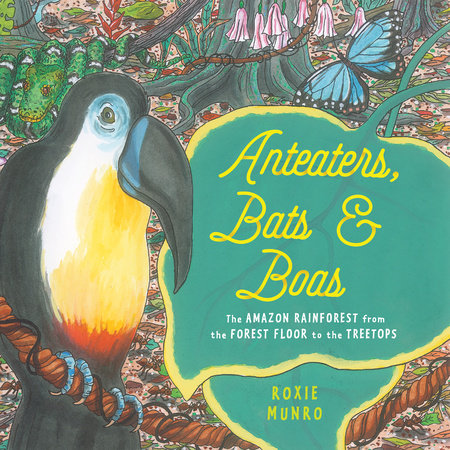
Anteaters, Bats & Boas: The Amazon Rainforest from the Forest Floor to the Treetops by Roxie Munro

Published by Holiday House
Anteaters, Bats & Boas by Roxie Munro: 9780823446568 |  PenguinRandomHouse.com: Books

Summary:  Thirty animals from the rainforest are profiled, beginning with an introduction that tells readers a little bit about rainforests, specifically the Amazon, where the animals in the book live.  From there, the two-page spreads show two or three animals with a paragraph of facts about each one.  The animals are pictured in their natural habitats and shown in proportion to each other.  A final spread includes black-and-white outlines of all the animals with a color-coded list that categorizes them by class.  There’s also information on the layers of the rainforests and rainforest preservation, as well as a glossary, index, and list of additional information sources.  32 pages; grades 2-5.

Pros:  The large, full-color illustrations really make this book, which also includes interesting tidbits of information about each animal, and excellent backmatter which can lead readers to further research.

Cons:  It’s a beautiful and interesting catalog of animals, but kids will have to look elsewhere for more comprehensive information about the rainforest.

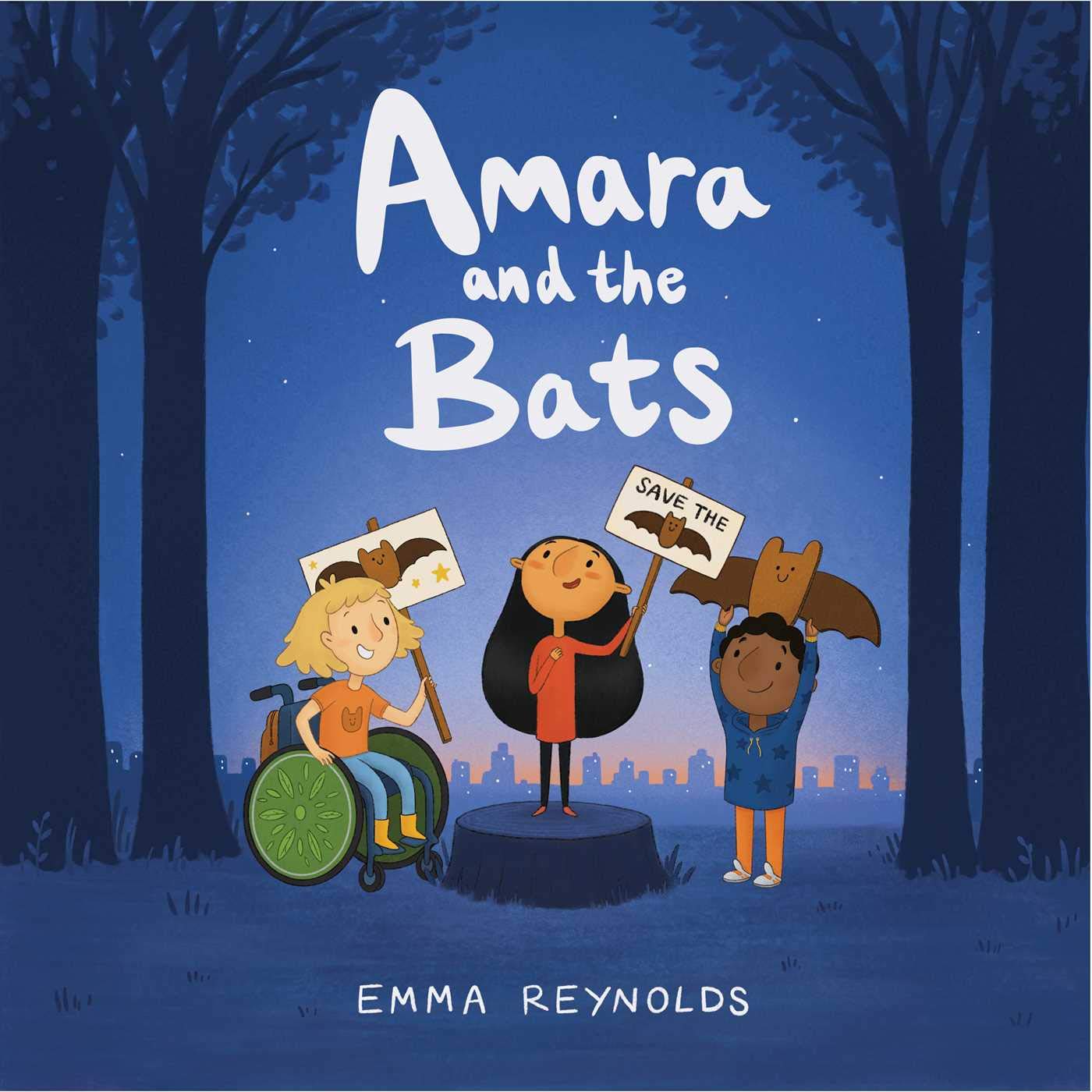
Amara and the Bats by Emma Reynolds

Published by Atheneum Books for Young Readers

Amara and the Bats: Reynolds, Emma, Reynolds, Emma: 9781534469013: Amazon.com:  Books

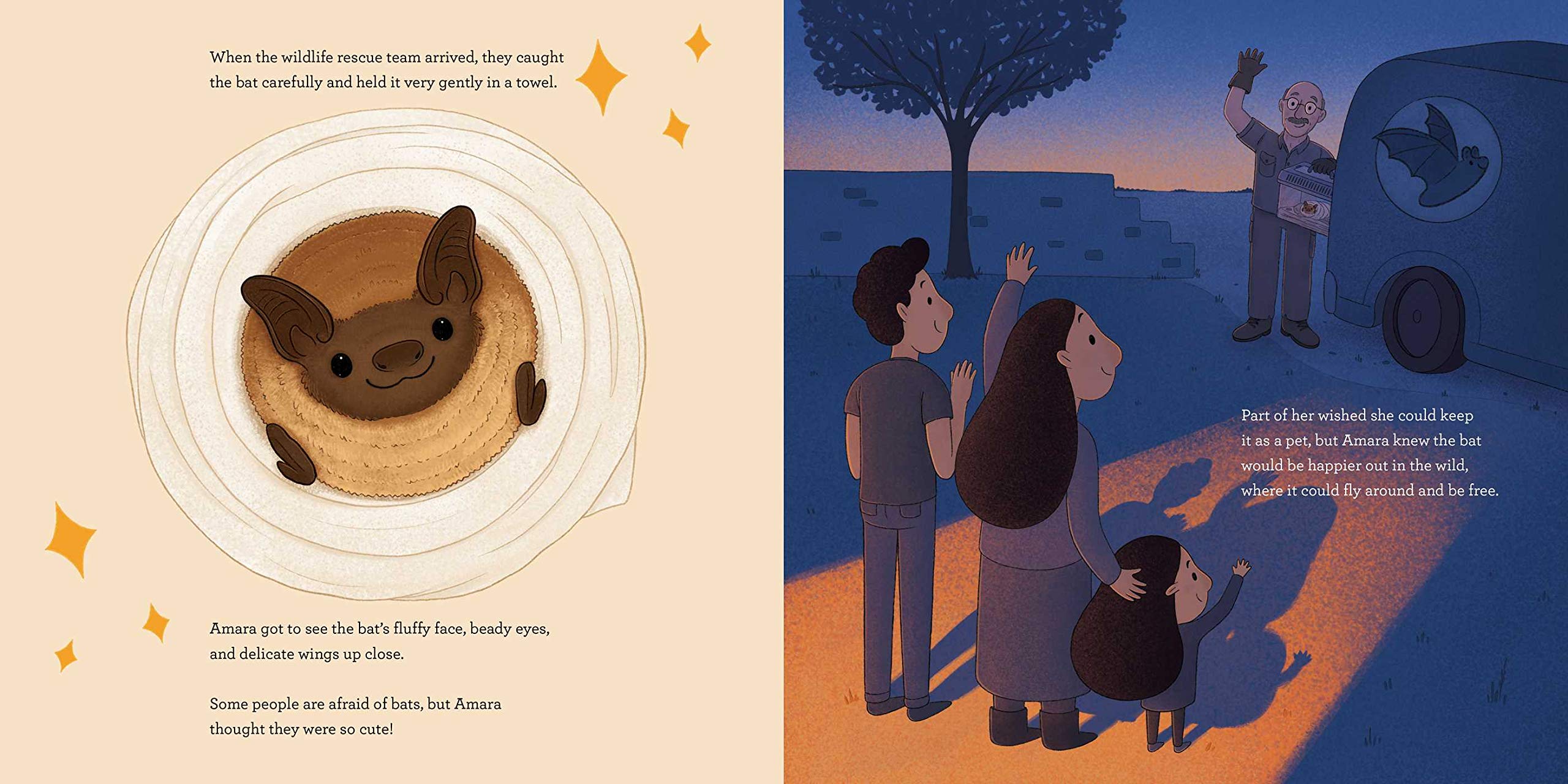
Summary:  Amara has loved bats since one got into her attic and a wildlife rescue team gave her a close look when it came to get it out.  When the family moves, she’s dismayed to learn that there are no bats at the local park.  After reading about other young environmental activists, Amara gets the idea to build bat houses to try to get her favorite animals to return.  She bravely makes a presentation about it at her new school, and is joined by a couple of other kids who also love animals.  It takes a lot of time and patience, but the kids raise money, build the houses, and wait.  Finally, Amara gets a call one night from the park ranger, and when she and her family get to the park, they see that the bats have returned!  Includes facts about bats, echolocation, setting up bat houses, and ways kids can help bats.  48 pages; ages 4-8.

Pros:  An empowering story of how one kid can make a difference in her community.  Amara stays true to her passion for bats while also dealing with moving and making new friends.  The material at the end could be good for starting some research.

Cons:  Sorry, Amara, I just can’t share your excitement for finding a bat in the attic.