My Best Friend by Julie Fogliano, illustrated by Jillian Tamaki

Published by Atheneum Books for Young Readers

My Best Friend: Fogliano, Julie, Tamaki, Jillian: 9781534427228 ...

My Best Friend: Fogliano, Julie, Tamaki, Jillian: 9781534427228 ...

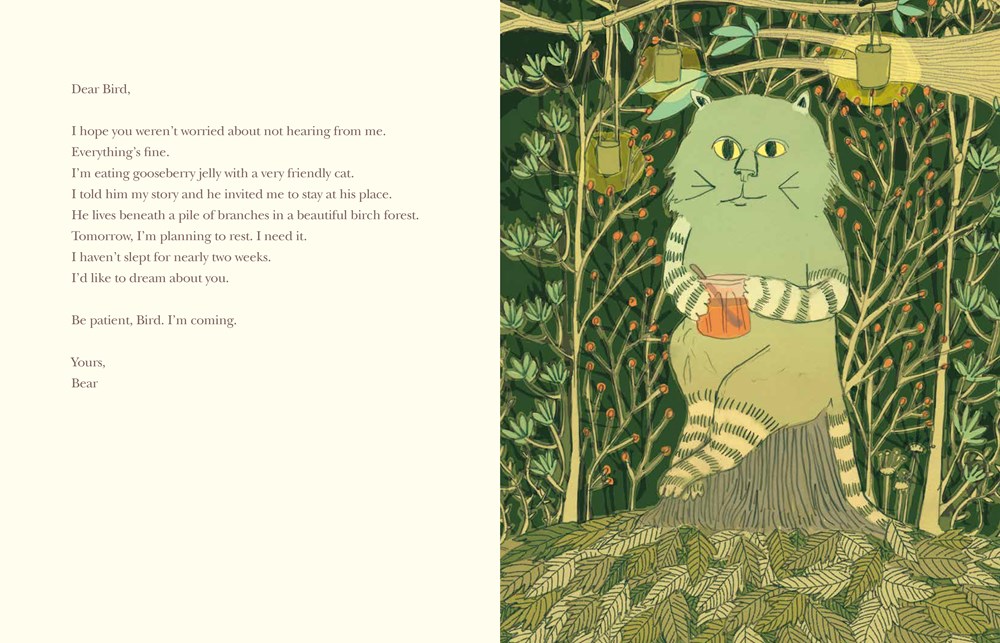
Summary:  A young girl introduces her new best friend, who is smart and she laughs at everything.  The two friends like to run around, quacking like ducks, then sit quietly under a tree.  Even though one loves strawberry ice cream and the other hates it, they are still friends.  When they’re drawing, she draws her friend and her friend draws her, and they make hearts around their pictures.  “She is my best friend I think.  I’ve never had a best friend so I’m not sure.”  As the two girls go their separate ways, each with a parent, the narrator reveals that they don’t know each other’s names, but they can find out tomorrow “because we are best friends.”  32 pages; ages 3-7.

Pros:  As she did in When’s My Birthday?, Julie Fogliano perfectly captures the voice of a very young child and explores what it’s like to instantly become friends with someone new.  Caldecott honoree Jillian Tamaki explores their friendship in green and peach illustrations surrounded by white space; she’s deserving of some Caldecott consideration once again for this book.

Cons:  I have a personal preference for illustrations using a wider palette of colors.

If you would like to buy this book on Amazon, click here.

Box: Henry Brown Mails Himself to Freedom by Carole Boston Weatherford, illustrated by Michele Wood

Published by Candlewick

BOX: Henry Brown Mails Himself to Freedom: Weatherford, Carole ...

BOX: Henry Brown Mails Himself to Freedom: Weatherford, Carole ...

Summary:  Henry Brown’s story has been told before, probably most famously (for kids) in the Caldecott Award winning Henry’s Freedom Box by Ellen Levine. Here, the narrative is in the form of a series of six-line poems.  They focus not only on Henry’s story, but on other aspects of slavery, including Nat Turner’s rebellion and the division of families, both Henry’s family of origin and later, his forced separation from his wife and children.  His harrowing escape in a sealed box traveling for two days from Virginia to Philadelphia is described, as well as the almost fifty years he lived afterward.  Brown published his story, The Narrative of the Life of Henry Box Brown, and created a moving panorama that he exhibited in both the U.S. and England, remaining overseas with his wife and daughter for almost 25 years.  Includes a timeline of both Henry Brown’s life and other significant events that occurred during his lifetime, a bibliography, and an illustrator’s note.  40 pages; grades 4-8.

Pros:  This would make an excellent companion to Henry’s Freedom Box, giving older students a chance to delve into Brown’s life a little deeper.  The first-person poems are enhanced by the mixed media folk art illustrations.  It would be an interesting twist in children’s literature history if this book received a Caldecott medal or honor next year.

Cons:  Due to the nature of poetry, readers have to make a fair number of inferences to understand the details of Henry Brown’s life.  An introductory note would have maybe made this a little simpler, as would reading this in conjunction with Ellen Levine’s book.

If you would like to buy this book on Amazon, click here.

Child of the Universe by Ray Jayawardhana, illustrated by Raul Colón

Published by Make Me a World

Child of the Universe: Jayawardhana, Ray, Colón, Raul ...

Child of the Universe: Jayawardhana, Ray, Colón, Raul ...

Summary:  As a girl is getting ready for bed, she and her father look out at the moon.  “The universe conspired to make you,” he tells her, then goes on to compare her to the beauty and majesty of the universe: her hair swirls about her face like the Milky Way, she lights up the room like the sun lights the moon, and the cosmos are reflected in her eyes.  He gives more concrete examples as well, like the fact that the iron and calcium in her blood and bones comes from stars that lived long ago.  On the last page, she gets tucked into bed, and looks out at the moon smiling back at her.  Includes an author’s note that tells of the strong connections to the cosmos that are part of Earth and humanity.  40 pages; ages 3-7.

Pros:  The gorgeous illustrations showing the girl traveling through the cosmos are worthy of Caldecott consideration.  Their brilliant, yet slightly muted colors fill every inch of each two-page spread.  Young scientists will be amazed to learn the science that connects them to the universe.

Cons:  If you’re going to use rhyming text, it has to be really, really good, and this isn’t quite there.  Jayawardhana, a dean at Cornell University who has researched planetary systems and the prospect for life on other planets, seems more comfortable writing his author’s note. 

If you would like to buy this book on Amazon, click here.

Roy Digs Dirt by David Shannon

Published by The Blue Sky Press

Amazon.com: Roy Digs Dirt (David Books) (9781338251012): David ...

Summary:  Roy loves dirt: digging in it, lying in it, rolling around in it.  He likes to bury things in dirt.  He eats it, sniffs it, and listens to it.  Mud is even better than dirt; it’s like “dirt gravy”.  When Roy doesn’t have access to dirt, he digs rugs, blankets, and newspapers.  One thing Roy does not love is baths.  At night, after his torturous bath, he sleeps, dreaming about digging.  In the morning, he returns to his same old dirt, but for Roy, it’s like brand-new dirt every day.  40 pages; ages 2-7.

Pros:  A David Shannon book about a goofy dog who loves dirt?  I probably don’t need to say anything else here, this will undoubtedly be a hilarious favorite with anyone under the age of 8 who comes in contact with it.

Cons:  I love this one-star review on Amazon: “This book has no message or meaning.  It is absolutely pointless.”  Um, yeah.  It’s a book by David Shannon with a silly-looking dog on the cover.  Kids (and adults) don’t always need a message.

If you would like to buy this book on Amazon, click here.

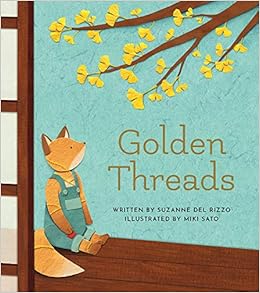
Golden Threads by Suzanne Del Rizzo, illustrated by Miki Sato

Published by Owlkids

Amazon.com: Golden Threads (9781771473606): Rizzo, Suzanne Del ...

Golden Threads – Miki Sato

Summary:  The stuffed fox narrator lives an idyllic life with his girl, Emi.  On the day that Emi finds the first golden leaf on the gingko tree, a storm comes and washes the fox away.  Torn and battered, he eventually lands on a beach, where a man finds him and brings him home to his daughter, Kiko.  In the same way they repair broken china with gold, Kiko stitches up the fox with gold thread.  A golden gingko leaf that was with the fox provides the clue needed to get him home again.  After spending winter, spring, and summer with Kiko, the fox is taken on a boat trip with the girl and her father.  They follow the trail of gold gingko leaves in the water until they get to Emi’s house, where there is a happy reunion, a new friendship between the two girls, and maybe even a romance? (Pure speculation on my part, but Emi’s mom and Kiko’s dad both appear to be single).  Includes an author’s note with additional information on two Japanese ideas: kintsugi, in which broken china is mended with gold, encouraging reuse instead of throwing away; and wabi-sabi, finding beauty in things that are imperfect and incomplete.  32 pages; ages 4-8.

Pros:  Edward Tulane fans, rejoice!  This beautiful picture book is also about the miraculous journey of a stuffed animal, an adorable fox in this case.  The themes of kintsugi and wabi-sabi are also beautifully incorporated into the story, not only with the fox, but with a broken branch on the gingko tree and Kiko’s broken leg.  Lots to think about and discuss here. 

Cons:  Keep the Kleenexes handy.

If you would like to buy this book on Amazon, click here.

Cityscape: Where Science and Art Meet by April Pulley Sayre

Published by Greenwillow Books

Amazon.com: Cityscape: Where Science and Art Meet (9780062893314 ...

Summary:  “Rectangle. Right angle. Window. Wall. A windy canyon where shadows fall.”  The simple rhyming text is accompanied by several photos on each page showing urban landscapes.  Building, vehicles, and other structures focus on shapes, angles, functions, and art.  The last couple pages discuss how to find science, technology, engineering, math, and art in the city.  A list of 40 questions encourages readers to observe what they see in the city with an inquiring mind.  40 pages; ages 4-8.

Pros:  April Pulley Sayre works her usual magic with her combination of interesting photographs and brief rhyming text.  She moves in a different direction with this book, away from her usual nature topics, and into the city and human-built structures.  There’s a lot to absorb in both the book and the questions at the end, and kids will come away from this book observing their surroundings in a whole new way.

Cons:  Some of the topics seemed somewhat abstract.  On the other hand, this could make the book an interesting read for older kids as well.

If you would like to buy this book from Amazon, click here.

Odin, Dog Hero of the Fires by Emma Bland Smith, illustrated by Carrie Salazar

Published by West Margin Press

Odin, Dog Hero of the Fires - Kindle edition by Smith, Emma Bland ...

Summary:  Based on a true story, this tale is narrated by Odin, a Great Pyrenees dog charged with looking after the goats on a small California ranch.  When wildfires threaten the ranch, owner Roland and his daughter escape in their truck.  Odin’s sister goes with them, but Odin refuses to leave the goats.  He watches the house and barn burn, desperately seeking a safe refuge.  He finally notices some boulders, and leads the goats there, where they are eventually joined by a few fawns.  When Roland returns a few days later, he is stunned to see Odin and the goats, alive and well except for some burned whiskers and scorched paws.  Includes an author’s note about the actual event in October, 2017, with several photos of the dogs, goats, humans, and house before and after the fire.  36 pages; grades K-5.

Pros:  A story narrated by a dog featuring a based-on-a-true-story survival of a wildfire?  That’s almost too easy to book talk!  Readers of all ages will fall in love with Odin, and admire his devotion to duty in the face of danger.  They will enjoy poring over the author’s note and photos to learn more about the real people and animals.

Cons:  You might want to throw in some advice to kids about following directions in a fire, as not doing so doesn’t usually result in Odin’s happy outcome.

If you would like to buy this book on Amazon, click here.

Hike by Pete Oswald

Published by Candlewick

Hike: Oswald, Pete, Oswald, Pete: 9781536201574: Amazon.com: Books

Hike: Oswald, Pete, Oswald, Pete: 9781536201574: Amazon.com: Books

Summary:  A boy and his father wake at dawn to go for a hike.  From the drawings scattered about the boy’s bedroom and the way he seems to know just what to do to get ready, it seems like they’ve done this before.  They drive out of the city and into the wilderness, where they enjoy a day of hiking, climbing, and exploring.  They take pictures and look at things with a magnifying glass.  They hunt for animal tracks, find a waterfall, and scale a rocky summit, where they watch bald eagles soar overhead.  At the end of the day, they’re home again, celebrating with milk and cookies and looking at photo albums, having made another memory to share.  40 pages; ages 4-8.

Pros:  Kids will want to get out in nature when they see all there is to explore in a single day.  This book celebrates both hiking and a warm father-son relationship, and would make a perfect pairing with Jennifer Mann’s The Camping Trip.  I’ll definitely be putting this in my “Caldecott contender” collection at the end of the year.

Cons:  I would call this a wordless book, but if I do, kids are sure to tell me, “There’s a word!” as soon as I turn a page.  Do not ask me how I know this.  So, fine, I would say there are between 8 and 12 words in this book, depending on how you count them. 

If you would like to buy this book on Amazon, click here.

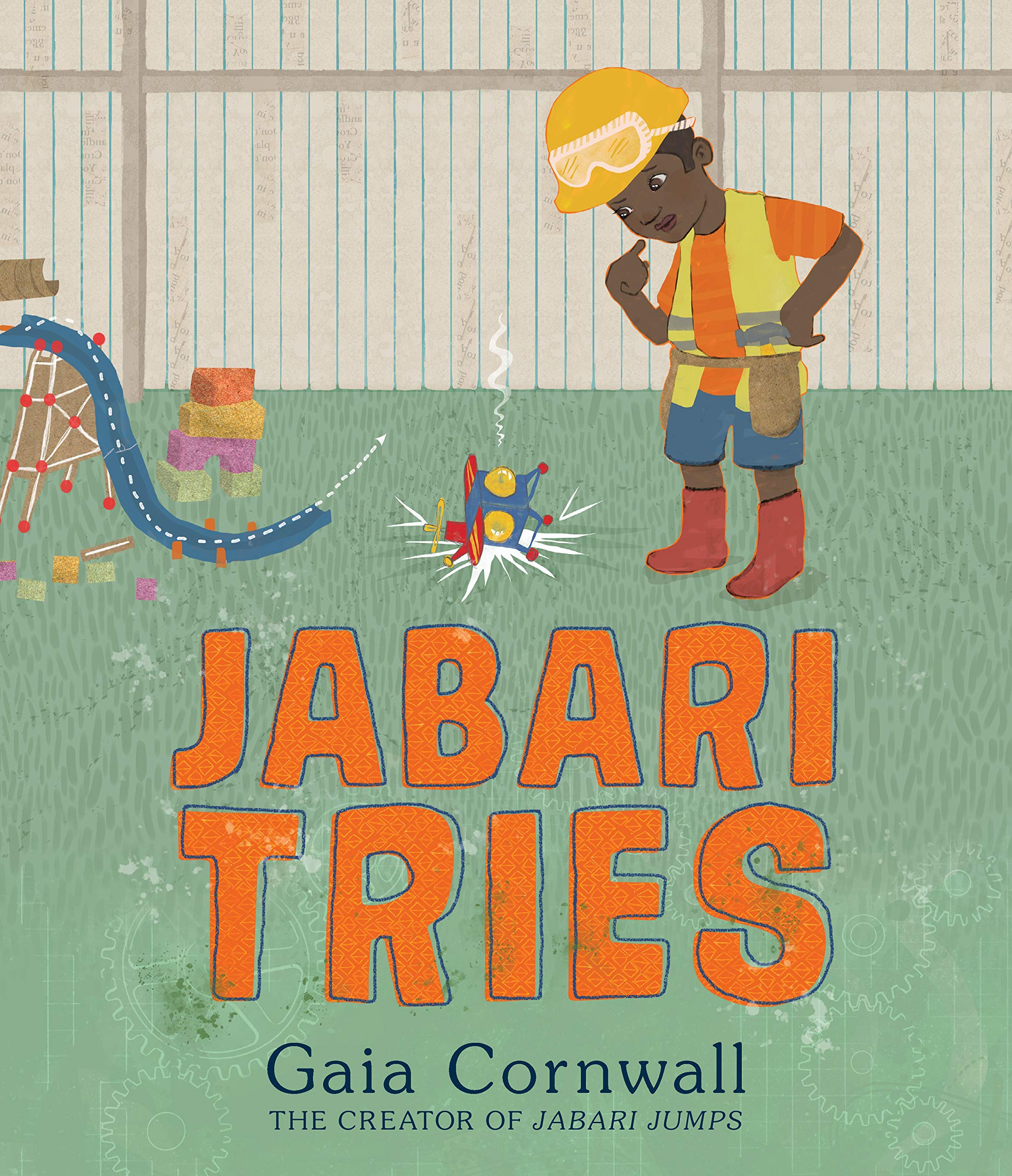
Jabari Tries by Gaia Cornwall

Published by Candlewick (released September 8)

Jabari Tries: Cornwall, Gaia, Cornwall, Gaia: 9781536207163 ...

Jabari Tries: Cornwall, Gaia, Cornwall, Gaia: 9781536207163 ...

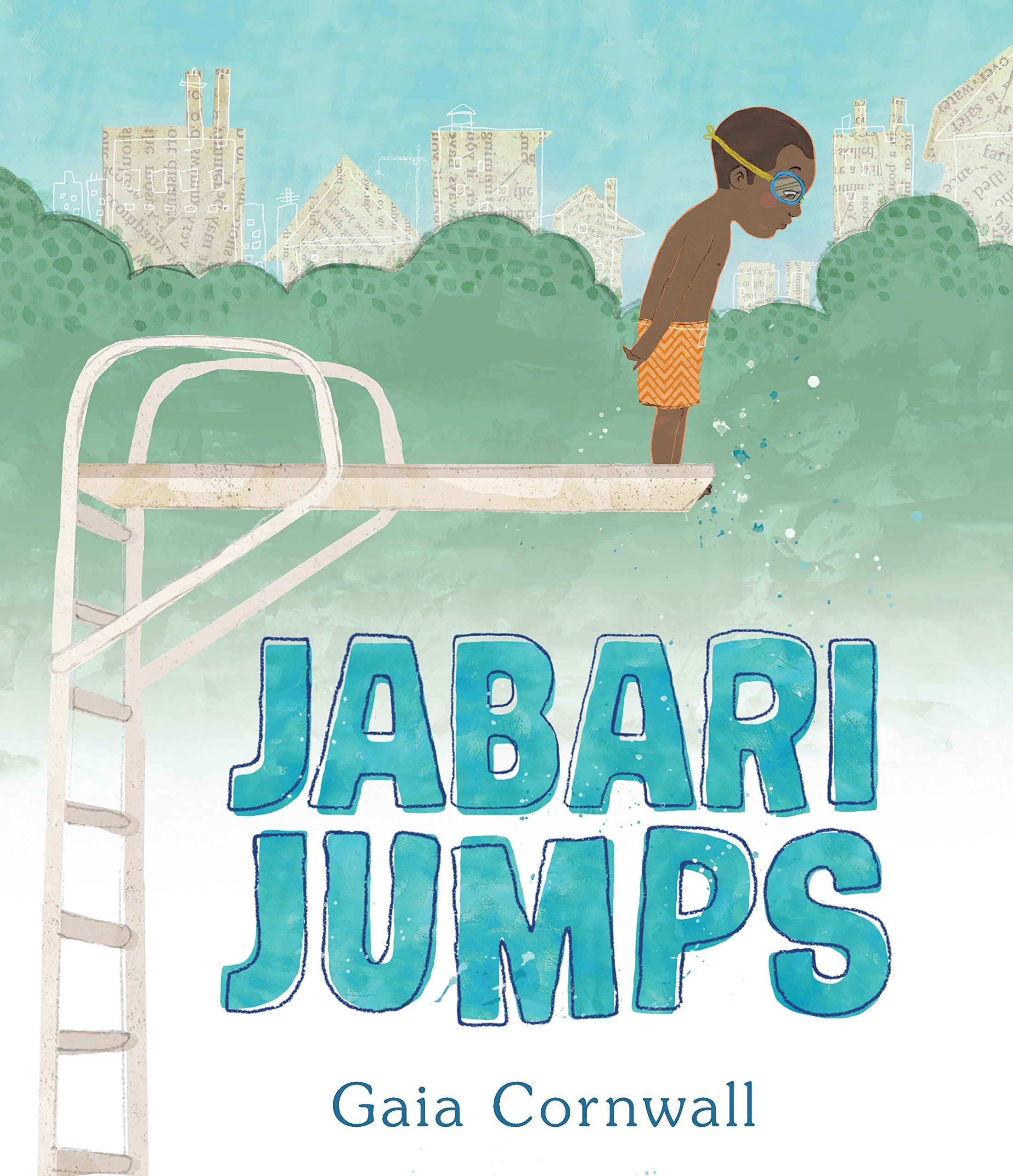
Summary:  Jabari, his little sister Nika, and his dad are back for a follow-up book to Jabari Jumps.  This time, Jabari is excited to be building a flying machine.  “It’ll be easy,” he says.  “I don’t need any help.”  His first attempt flies, but crashes, and Jabari works to redesign it.  He thinks about other Black engineers and scientists who have had to solve problems like this one.  When another attempt fails, his dad suggests that he take Nika on as a partner.  Another crash brings frustration, and Dad helps Jabari take a break, then try again.  Nika turns out to have the key to success, and when Jabari implements it into his design, success!  The two engineers are ready for their next project: a rocket to Jupiter.  32 pages; ages 4-8.

Pros:  I was happy to see the return of Jabari and his family from one of my favorite slice-of-life picture books.  This one celebrates both engineering and grit, helping readers see what it takes to persevere.  

Cons:  This story felt a bit more didactic than the first one.

If you would like to buy this book on Amazon, click here.

Nana Akua Goes to School by Tricia Elam Walker, illustrated by April Harrison

Published by Schwartz and Wade

Nana Akua Goes to School by Tricia Elam Walker: 9780525581130 ...

Summary:  When Zura’s teacher talks about the class’s upcoming Grandparents’ Day, the other kids are all abuzz about bringing their grandparents to school.  But Zura is quiet.  When she gets home, readers get to meet Nana Akua, Zura’s “favorite person in the whole universe”.  So why is Zura nervous about Nana Akua visiting her school?  When Nana Akua was a baby in Ghana, her parents tattooed marks on her face to show her tribal family and to represent beauty and confidence.  Zura has overheard Nana being called “scary” and seen people act nervous around her.  When Zura confides her concerns, her grandmother suggests they take Zura’s quilt to school.  Nana made the quilt, using the Adinkra symbols of her people in Ghana.  On Grandparents’ Day, Nana Akua sensibly addresses the issue of her facial markings right away, then offers to let the kids choose which Adinkra symbols they would like painted on their faces.  This proves to be such a hit that the other grandparents line up for face painting as well, and Zura and Nana Akua conclude the day with a big hug.  Includes a glossary, sources, and Adrinka symbols and their meanings on both sets of endpapers.  40 pages; ages 4-8.

Pros:  This warm and tender story celebrates differences and also acknowledges that sometimes those differences can be a little scary if you don’t understand them.  You get the feeling that Nana Akua has lived a full life and has the gift at putting anyone at ease.  The colorful illustrations, with lots of interesting prints and details, reminded me of Patricia Polacco.  

Cons:  My usual beef about interesting endpapers that get covered up by taped-down dust jackets on library books.

If you would like to buy this book on Amazon, click here.