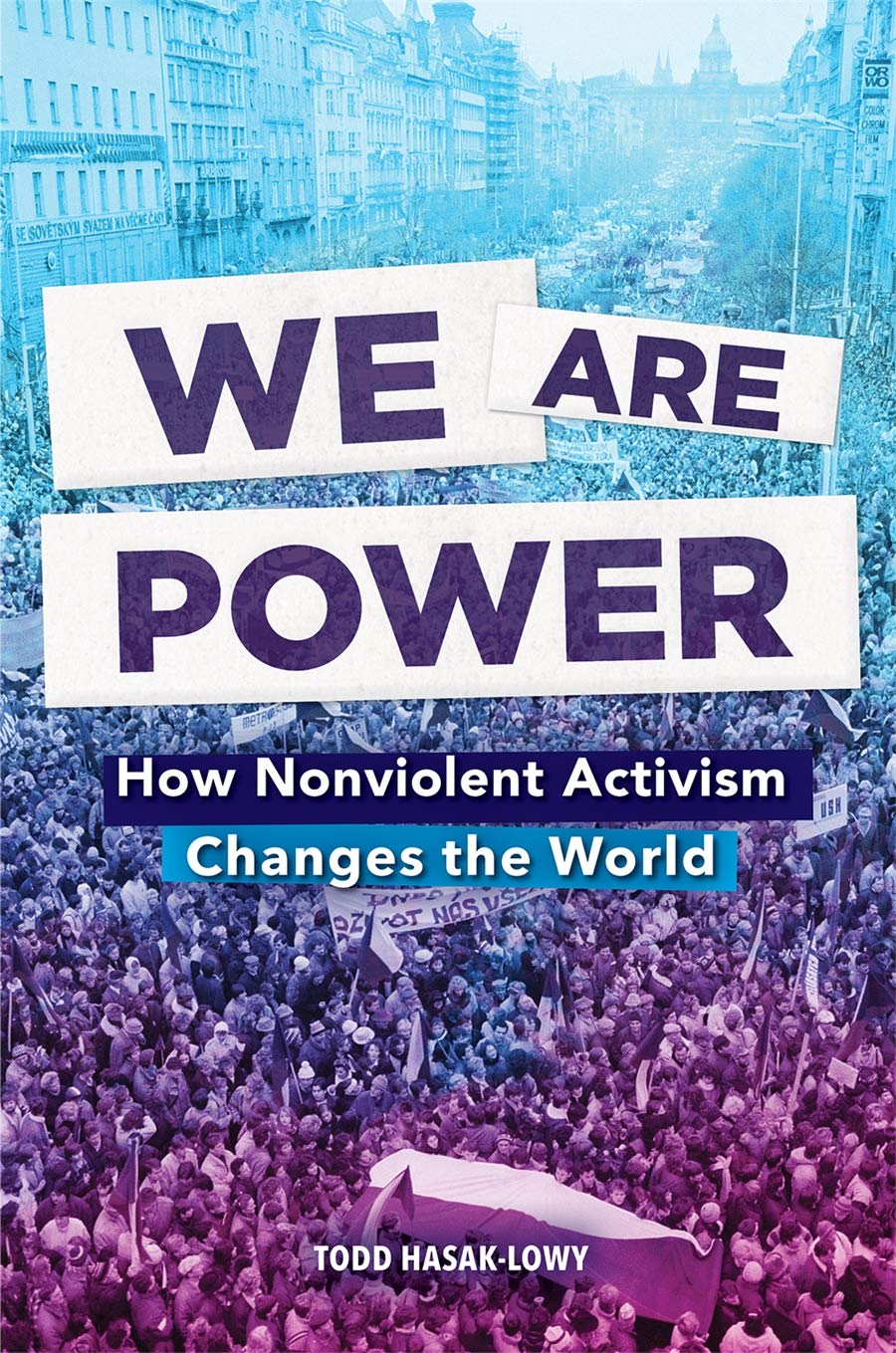
We Are Power: How Nonviolent Activism Changes the World by Todd Hasak-Lowy

Published by Abrams Books for Young Readers

We Are Power: How Nonviolent Activism Changes the World: Hasak ...

Summary:  Although we often learn about violent events in history (wars, assassinations), history is often made by those who embrace nonviolence.  Hasak-Lowy makes a distinction between institutional activism–writing letters and editorials, circulating petitions, lobbying politicians–and nonviolent activism, which “employs disruptive, risky tactics that challenge those in power and interrupt the way things normally work.” He illustrates this with chapters on Gandhi, Alice Paul, Martin Luther King, Jr., Cesar Chavez, and Václav Havel.  The final chapter is about Greta Thunberg and her current nonviolent activism around climate change.  A list at the end gives brief descriptions of half a dozen other groups that successfully employed nonviolent activism.  Includes notes, a seven-page bibliography, and an index.  320 pages; grades 5-9.

Pros:  An excellent, accessible, and inspiring introduction to nonviolent activism.  I found it fascinating to learn the distinctions between institutional and nonviolent activism.  The engagingly-written profiles demonstrate the commitment and sacrifices necessary for this type of activism–but also show how effective it ultimately can be.

Cons:  No mention of Henry David “Mr. Civil Disobedience” Thoreau, who is said to have inspired both Gandhi and King.

If you would like to buy this book on Amazon, click here.


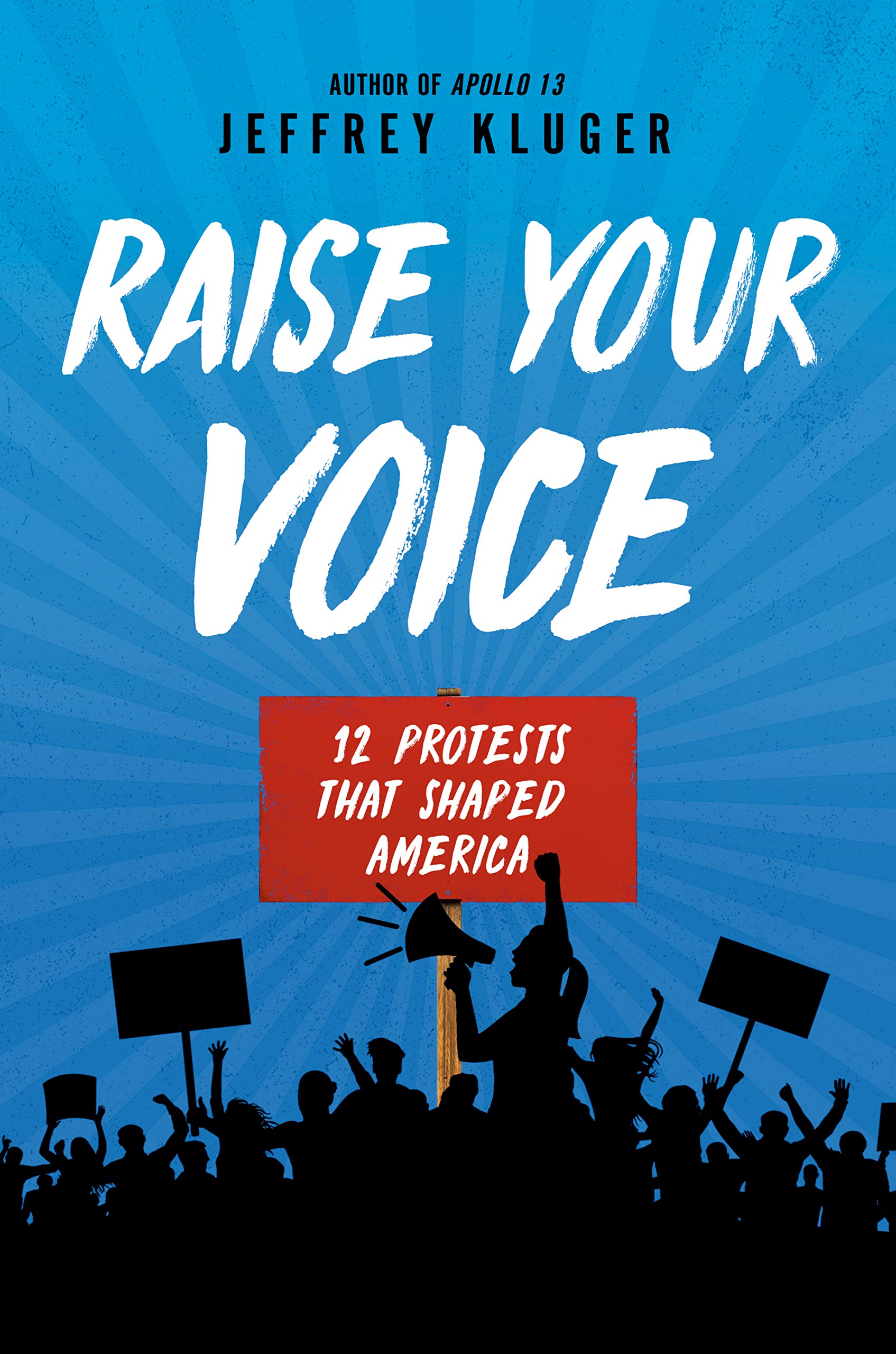
Raise Your Voice: 12 Protests That Shaped America by Jeffrey Kluger

Published by Philomel Books

Raise Your Voice: 12 Protests That Shaped America: Kluger, Jeffrey ...

Summary:  From the Boston Tea Party to the Dakota Access Uprising and the Women’s March, these twelve chapters cover protests organized by ordinary people that have stood up to the established order and helped effect change.  Other than the Tea Party and the Seneca Falls Convention, the rest are from the 20th and 21st century, including the Triangle Shirtwaist Factory Fire, the Montgomery Bus Boycott, the March on Washington, the 1968 Democratic Convention, the Stonewall Uprising, Earth Day, the March Against Nuclear Weapons, and ACT UP.  Each chapter begins with a photo, then gives some background before launching into the people and places of each protest, and the outcomes they did or didn’t achieve.  There are no source notes, but there’s a “Note on Sources” at the end that gives a good introduction to different types of sources and research; there is also an extensive index.  224 pages; grades 6 and up.

Pros:  Seeing as we seem to be living through chapter 13 of this book, readers may find a lot to connect with and inspire them.  It was encouraging to read about the impact these protests made.  The narratives are engagingly written; each one could be used as a stand-alone research source.  

Cons:  The small font and lack of photos made this not very visually appealing.  Also, in the heads-up category, protesters do use salty language, which is represented as “f—” or other fill-in-the-blank forms.  And there’s no getting around the need to describe the pussy hats of the Women’s March, but it’s pretty sanitized.

If you would like to buy this book on Amazon, click here.

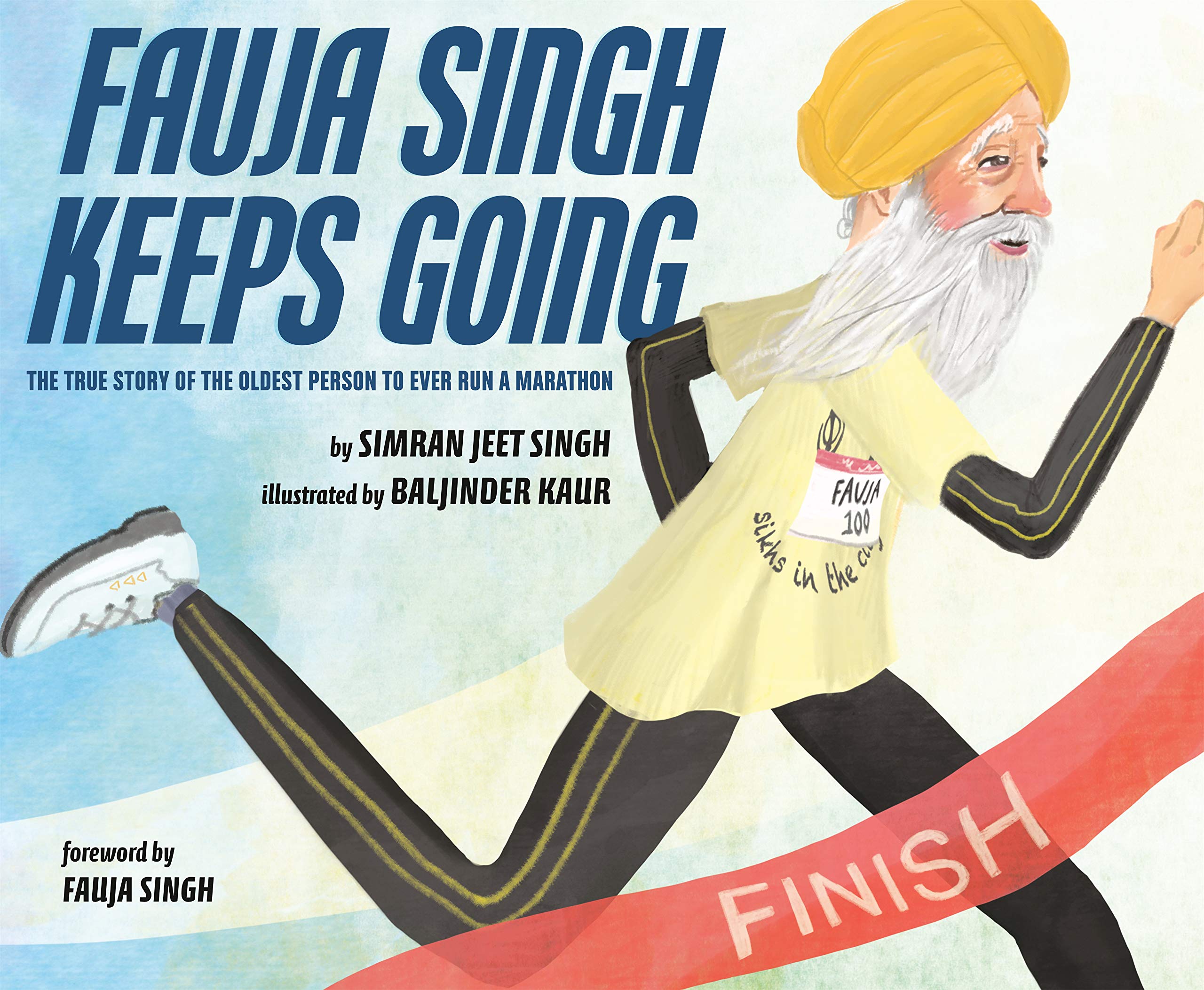
Fauja Singh Keeps Going: The True Story of the Oldest Person to Ever Run a Marathon by Simran Jeet Singh, illustrated by Baljinder Kaur

Published by Kokila (Released August 25)

Amazon.com: Fauja Singh Keeps Going: The True Story of the Oldest ...

Summary:  Throughout his life, Fauja Singh has heard people telling him his limitations.  He didn’t learn to walk until he was almost five years old.  School was too far for him to get to.  After his wife died and his family moved away, he was lonely.  This refrain is repeated throughout the story:  “But Fauja did not listen and Fauja did not stop.”  He did learn to walk, and worked hard to become strong enough to walk a mile.  Because he couldn’t go to school, he learned to be a farmer instead.  And at age 81, he left India to live with his family in England.  At first he was sad and lonely, but one day he saw people running on TV.  They looked so happy that he decided to try it.  Every day, he ran a little further and a little faster.  He eventually decided to run a marathon.  When he heard that people of his faith, Sikhs, were experiencing discrimination in the U.S., he decided to run in the New York City marathon.  After that, he decided to be the first 100-year-old to complete a marathon, and reached this goal in Toronto in 2011.  Includes an introduction by Singh (age 108 when he wrote it); an afterword with additional information and a photo; and a list of the national (UK) and world records he holds.  48 pages; ages 4 to 104 (and up).

Pros:  If you need inspiration to stop reading and get off your couch, here it is!  Even if you are 56 (just as a random example), you still have almost half a century left to run a marathon!  And even if you don’t want to run a marathon, Fauja Singh’s story is an inspiring one of perseverance, kindness, and trusting yourself.  

Cons:  The NYC marathon part of the story is kind of a bummer.

Punjabi by nature: The incorrigible Fauja Singh - chandigarh ...

If you would like to buy this book on Amazon, click here.

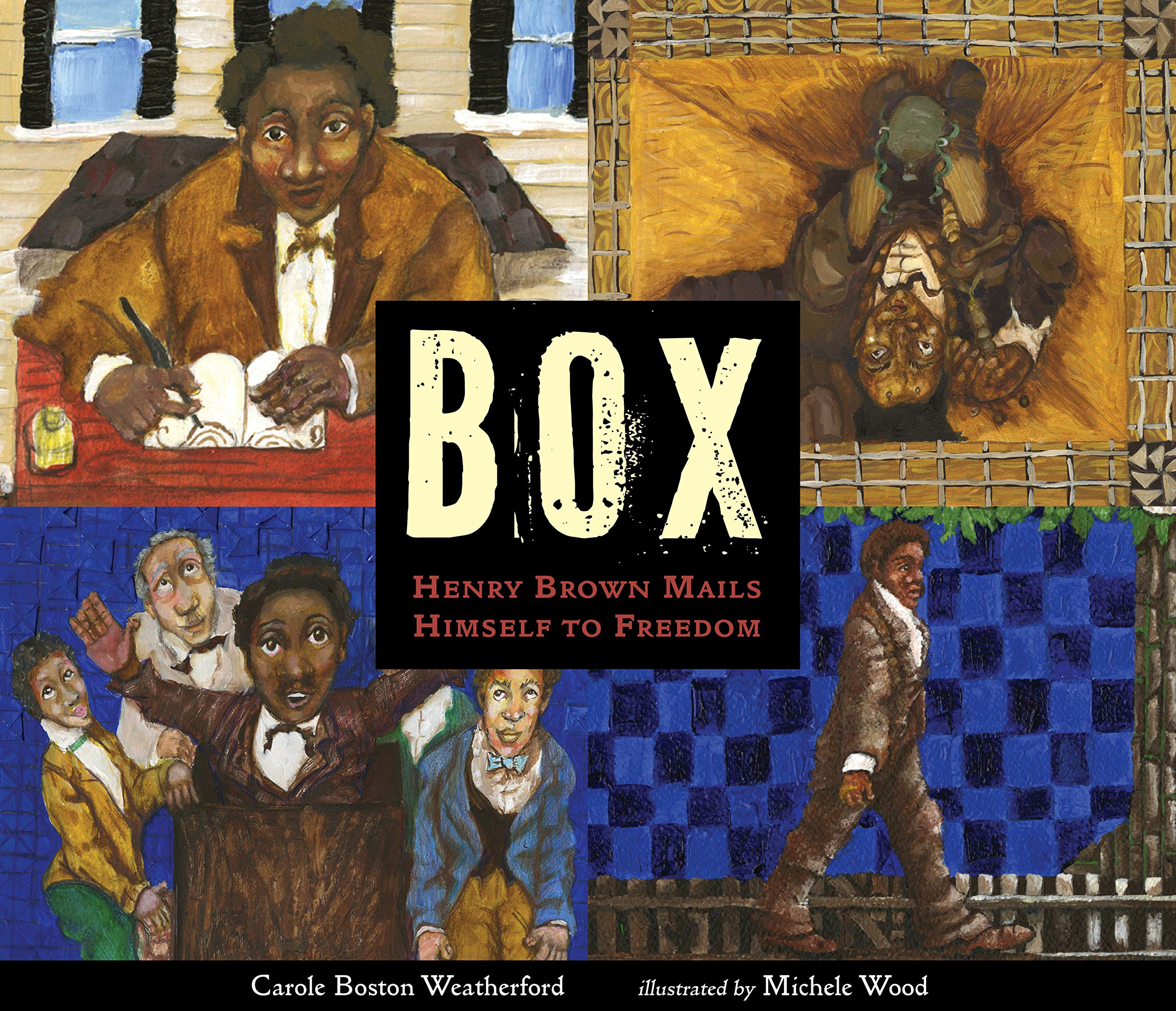
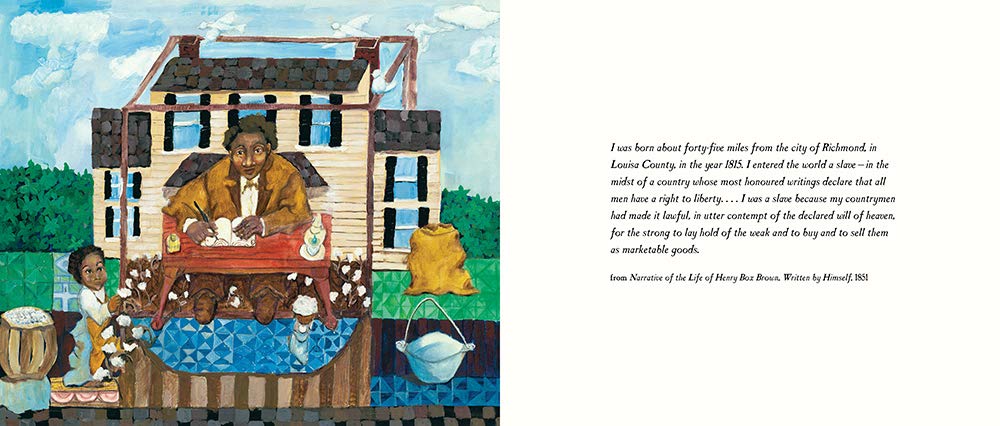
Box: Henry Brown Mails Himself to Freedom by Carole Boston Weatherford, illustrated by Michele Wood

Published by Candlewick

BOX: Henry Brown Mails Himself to Freedom: Weatherford, Carole ...

BOX: Henry Brown Mails Himself to Freedom: Weatherford, Carole ...

Summary:  Henry Brown’s story has been told before, probably most famously (for kids) in the Caldecott Award winning Henry’s Freedom Box by Ellen Levine. Here, the narrative is in the form of a series of six-line poems.  They focus not only on Henry’s story, but on other aspects of slavery, including Nat Turner’s rebellion and the division of families, both Henry’s family of origin and later, his forced separation from his wife and children.  His harrowing escape in a sealed box traveling for two days from Virginia to Philadelphia is described, as well as the almost fifty years he lived afterward.  Brown published his story, The Narrative of the Life of Henry Box Brown, and created a moving panorama that he exhibited in both the U.S. and England, remaining overseas with his wife and daughter for almost 25 years.  Includes a timeline of both Henry Brown’s life and other significant events that occurred during his lifetime, a bibliography, and an illustrator’s note.  40 pages; grades 4-8.

Pros:  This would make an excellent companion to Henry’s Freedom Box, giving older students a chance to delve into Brown’s life a little deeper.  The first-person poems are enhanced by the mixed media folk art illustrations.  It would be an interesting twist in children’s literature history if this book received a Caldecott medal or honor next year.

Cons:  Due to the nature of poetry, readers have to make a fair number of inferences to understand the details of Henry Brown’s life.  An introductory note would have maybe made this a little simpler, as would reading this in conjunction with Ellen Levine’s book.

If you would like to buy this book on Amazon, click here.

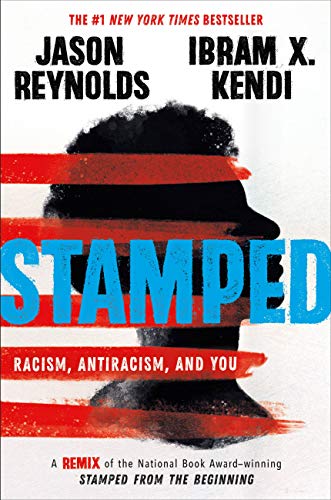
Stamped: Racism, Antiracism, and You: A Remix of the National Book Award Winning Stamped from the Beginning by Jason Reynolds and Ibram X. Kendi

Published by Little Brown Books for Young Readers

Amazon.com: Stamped: Racism, Antiracism, and You: A Remix of the ...

Summary: In this “remix” of Ibram Kendi’s award-winning book Stamped from the Beginning, Jason Reynolds tells the history of racism in America, going back to the fifteenth century and continuing to (almost) the present day.  Focusing on people such as Cotton Mather, Thomas Jefferson, William Jennings Bryan, and Angela Davis, Reynolds explores their lives and beliefs in the context of racism vs. assimilation vs. antiracism.  Starting off with the statement (revisited many times) that “this is not a history book”, the book is written in a tone designed to appeal to young readers.  Includes an afterword, acknowledgements from both Jason Reynolds and Ibram X. Kendi, a lengthy reading list, and extensive source notes.  320 pages; grades 6-12.

Pros:  Jason Reynolds’ book could not have been more timely, and will undoubtedly find its way into the curriculum of many a school district in the coming year.  As he has proven in his fiction writing, his writing style is extremely engaging for young adults, who may be relieved to hear this isn’t a history book and will enjoy reading it for their own edification.  The content will reveal to them–and to adults as well–what has traditionally been left out of the telling of America’s past, and will give them an antiracist lens with which to view the present.

Cons:  Covering 600 years of history in a book of this length is a daunting task, and readers may struggle to keep all the names, places, events, and belief systems straight as they quickly travel through the centuries.

If you would like to buy this book on Amazon, click here.

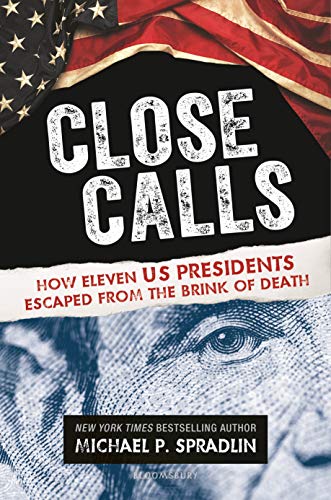
Close Calls: How Eleven U.S. Presidents Escaped from the Brink of Death by Michael P. Spradlin

Published by Bloomsbury Children’s Books

Close Calls: How Eleven US Presidents Escaped from the Brink of ...

Summary:  These stories relate how eleven United States presidents narrowly escaped death, either before their administration or during it.  Quite a few are war stories, including George Washington in the American Revolution, and John F. Kennedy, Dwight D. Eisenhower, George H. W. Bush, and Gerald Ford in World War II.  A few were assassination attempts on sitting presidents: Andrew Jackson, Theodore Roosevelt, Harry Truman, and Ronald Reagan.  The story of Abraham Lincoln is how rumors of assassination were thwarted while Lincoln traveled to Washington, D.C. after he was elected president.  Each story includes at least one sidebar with information on a topic related to the main narrative.  Includes a list of sources and an index.  128 pages; grades 4-8.

Pros:  These exciting survival stories with some name recognition of at least the most famous presidents will surely entice some reluctant readers to sample some nonfiction.  Each chapter is relatively short with plenty of action.

Cons:  Not a single photo, and some of the stories (Kennedy, Carter, Reagan) have no dates.

If you would like to buy this book on Amazon, click here.

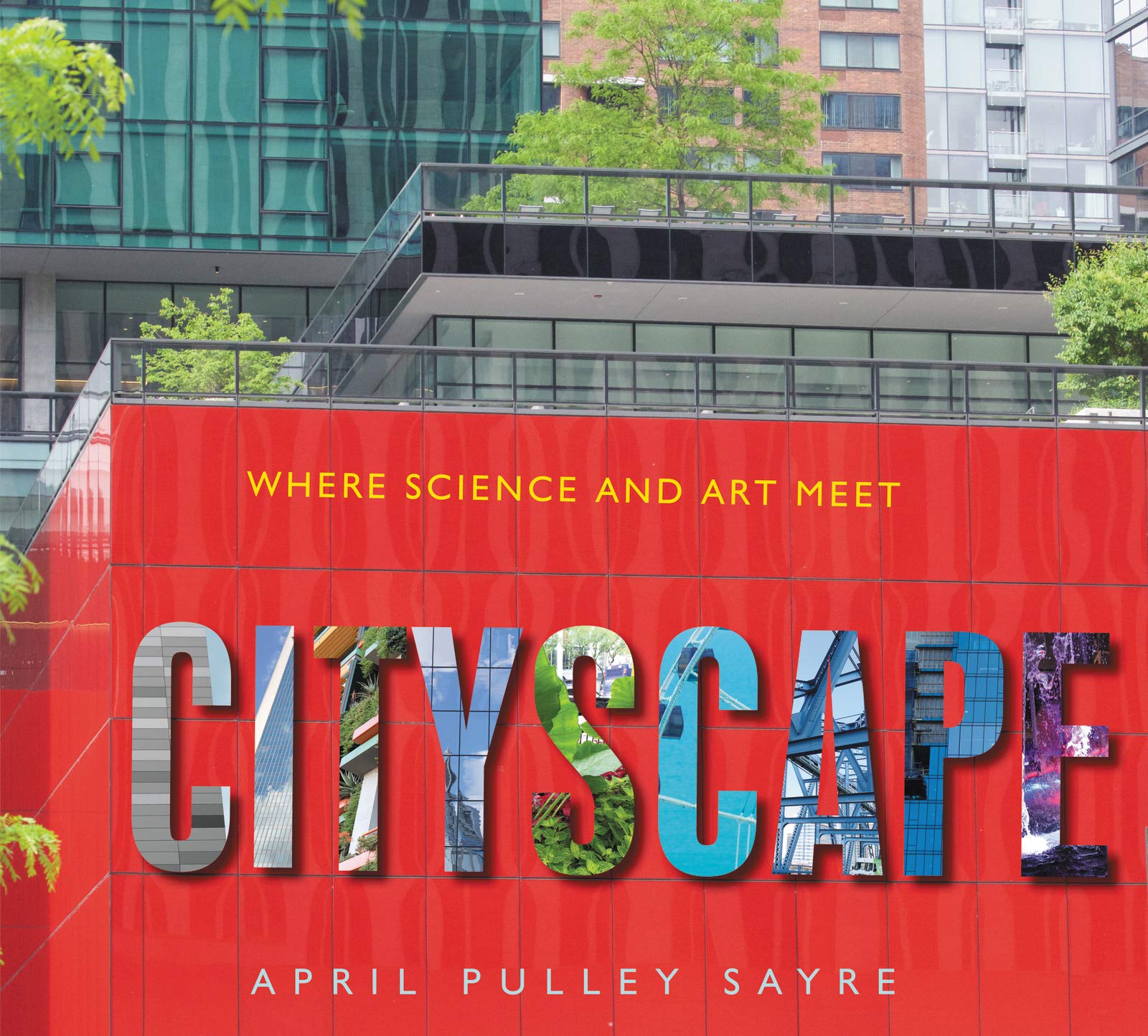
Cityscape: Where Science and Art Meet by April Pulley Sayre

Published by Greenwillow Books

Amazon.com: Cityscape: Where Science and Art Meet (9780062893314 ...

Summary:  “Rectangle. Right angle. Window. Wall. A windy canyon where shadows fall.”  The simple rhyming text is accompanied by several photos on each page showing urban landscapes.  Building, vehicles, and other structures focus on shapes, angles, functions, and art.  The last couple pages discuss how to find science, technology, engineering, math, and art in the city.  A list of 40 questions encourages readers to observe what they see in the city with an inquiring mind.  40 pages; ages 4-8.

Pros:  April Pulley Sayre works her usual magic with her combination of interesting photographs and brief rhyming text.  She moves in a different direction with this book, away from her usual nature topics, and into the city and human-built structures.  There’s a lot to absorb in both the book and the questions at the end, and kids will come away from this book observing their surroundings in a whole new way.

Cons:  Some of the topics seemed somewhat abstract.  On the other hand, this could make the book an interesting read for older kids as well.

If you would like to buy this book from Amazon, click here.

Solar System by the Numbers: A Book of Infographics by Steve Jenkins

Published by HMH Books for Young Readers

Solar System: By The Numbers - Kindle edition by Jenkins, Steve ...

Summary:  Using illustrations, graphs, and diagrams, Steve Jenkins explores the solar system, including the sun, moon, planets, comets, and asteroids.  Comparisons are made of size, climate, gravity, and other features of the different planets, using visuals to make the facts easier to grasp.  Humans’ exploration of the solar system is also shown, with a timeline of solar system discoveries, animals sent to space, and more.  There’s also a page speculating on life in the solar system, and one showing the frequency and effects of different-sized asteroids crashing into Earth.  Includes a glossary and bibliography.  40 pages; grades 2-5.

Pros:  How did Steve Jenkins’s biggest fangirl (as I’m occasionally known) miss this new infographics series?  Dinosaurs and Earth came out last year, and Insects was published simultaneously with Solar SystemAnimals by the Numbers is one of my favorite nonfiction books to book talk.  Just showing kids a page or two sends a bunch of them clamoring for more, so I look forward to sharing these books with science fans.

Cons:  These seem to be marketed as readers for kids starting in first grade, but I think they will find more of an audience with slightly older readers.

If you would like to buy this book on Amazon, click here.

All of a Sudden and Forever: Help and Healing After the Oklahoma City Bombing by Chris Barton, illustrated by Nicole Xu

Published by Carolrhoda Books

All of a Sudden and Forever: Help and Healing after the Oklahoma ...

Q&A with Chris Barton – BookPeople

Summary:  “Sometimes bad things happen, and you have to tell everyone.  Sometimes terrible things happen and everybody knows.  One April morning in 1995, one of those terrible things happened in Oklahoma City.”  How do you tell the story of the Oklahoma City bombing to a picture book audience?  Answer: in a straightforward manner, with an emphasis on different losses and emotions different people experienced (“Some lost friends, neighbors….Some who survived had bodies broken in ways large and small….Some who rushed into help saw horrible things they would never forget”).  But also with an emphasis on healing, helping (and getting help), and moving on.  At the center of this part of the story is the Survivor Tree, an elm that survived the bombing and flourished in the years afterward, providing seedlings that have been planted far and wide.  Those seedlings have grown into trees and produced seedlings of their own, making the spread of trees an apt metaphor for the spread of help and comfort that has come from the survivors of this tragedy.  Includes author’s and illustrator’s notes; a list of people interviewed for the book, along with their connections to the bombing; and a list of recommended resources.  40 pages; grades 2-6.

Pros:  The Oklahoma City bombing doesn’t seem that long ago…until I look at my 25-year-old daughter who was born seven weeks afterward.  This book does an admirable job of introducing kids to the event, which they may never have heard of.  The illustrations are appropriately subdued; the faceless people in the pictures and the emphasis on grief and healing also make this a story to be read in conjunction with other difficult situations.

Cons:  Readers looking for a lot of information on the actual bombing will need to pursue some of the resources at the end.

If you would like to buy this book on Amazon, click here.

Sharuko: El Arqueólogo Peruano Julio C. Tello/Peruvian Archaeologist Julio C. Tello by Monica Brown, illustrated by Elisa Chavarri

Published by Children’s Book Press (Released August 18)

Sharuko: El Arqueólogo Peruano Julio C. Tello / Peruvian ...

Summary:  Born in Peru in 1880, Julio Tello grew up in an indigenous community, speaking Quecha, the language of the Inca Empire.  His adventurous nature earned him the Quecha nickname Sharuko, meaning “brave”.  He and his brother discovered bones, pottery, and even some human skulls as they explored the foothills of the Andes.  At 12, he went to live with his aunt and study in Lima, eventually graduating from medical school.  After getting a degree in anthropology and archaeology from Harvard, he worked as an archaeologist at the Museum of Natural History in Lima.  His archaeological discoveries showed that indigenous cultures had existed in Peru more than 3,000 years ago, refuting the theories that these cultures originated in Mexico or Central America.  He became director of the new Museum of Anthropology, where he was able to share his discoveries with Peruvians, transforming their understanding of their history.  Includes maps; an afterword, illustrator’s note, and list of sources.  40 pages; grades 2-6.

Pros:  Written in both Spanish and English, this story shines a light on Peruvian history and a man who single-handedly helped rewrite it.  The colorful illustrations feature some of the art and artifacts Tello helped discover.

Cons:  Readers will need some background knowledge to appreciate the story; although the format is a picture book, this will probably appeal more to older elementary and even middle school kids.

If you would like to buy this book on Amazon, click here.