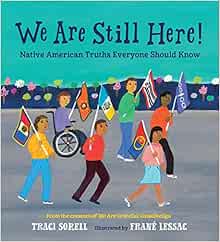
We Are Still Here! Native American Truths Everyone Should Know by Traci Sorell, illustrated by Frané Lissac (released April 20)

Published by Charlesbridge

Amazon.com: We Are Still Here!: Native American Truths Everyone Should Know  (9781623541927): Sorell, Traci, Lessac, Frane: Books
We Are Still Here! – Charlesbridge

Summary: From the team that brought you We Are Grateful: Otsaliheliga comes this introduction to important terms in Native American history.  A group of kids from the Native Nations Community School puts together a series of presentations for Indigenous People’s Day.  There are a dozen reports on such topics as assimilation, relocation, tribal activism, and language revival.  Each presentation is a paragraph with bullet points that introduce the topic, and each one ends with Native Nations saying, “We are still here!”   Includes additional information on each presentation, including the locale and event shown in each illustration; a 5-page timeline covering 1870-2007; a glossary of terms and a list of sources; and an author’s note giving more information about the book and her personal connection to Native history (she’s a dual citizen of the Cherokee Nation and the United States).  40 pages; grades 2-5.

Pros:  This is an amazing starting place for kids to learn Native American history.  Any one of the topics could be researched further and expanded upon.  The back matter, especially the timeline, really beefs up the historical information.  I love the folk art style illustrations.

Cons:  There are no dates given in any of the reports, so it’s a bit difficult to put the events into historical context without flipping back to the timeline.

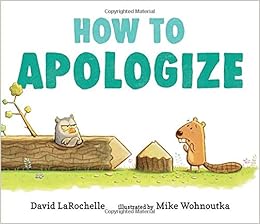
How to Apologize by David LaRochelle, illustrated by Mike Wohnoutka (released May 4)

Published by Candlewick

How to Apologize: LaRochelle, David, Wohnoutka, Mike: 9781536209440: Amazon.com:  Books

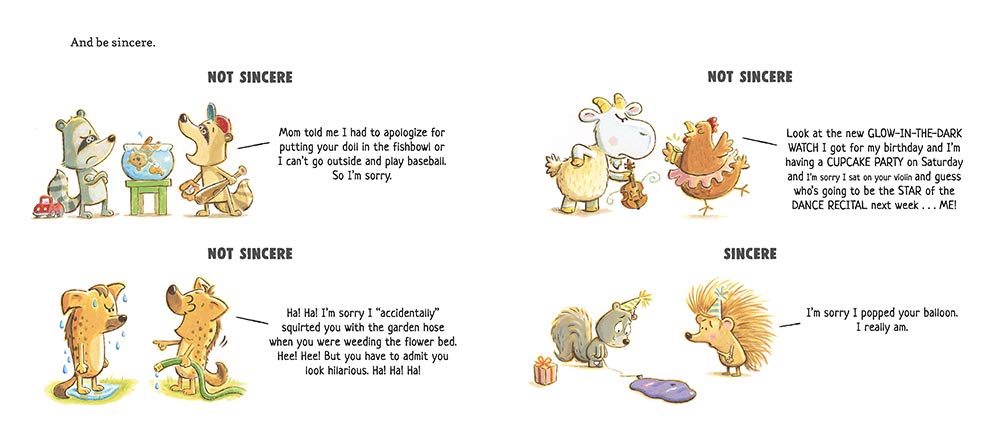
Summary:  Everyone makes mistakes, but what’s the best way to handle them?  From a parachuting bird crashing through a bathroom roof to an elephant driver rear-ending a mouse’s car, these animals show the good and not-so-good methods for saying you’re sorry.  It can be difficult, especially if you have to apologize to someone you don’t like, but a straightforward approach works best.  Don’t make excuses.  Be sincere.  A note can work.  And it’s never too late to apologize for something from the past.  Try to fix the situation if you can, but if you can’t, work to avoid making the same mistake in the future.  In the ideal apology situation, you will feel better, and so will the recipient of your apology.  32 pages; ages 4-8.

Pros:  The brilliance here is in the simplicity.  Apologizing can be difficult for all ages, and there’s nothing I dislike more than hearing a mumbled “sorry” from a kid who’s forced to apologize.  This really lays out the whole process in a way a human being of any age can understand, and lightens things up with the funny animal illustrations.

Cons:  It’s hard to believe this concept has not been better covered in children’s literature.

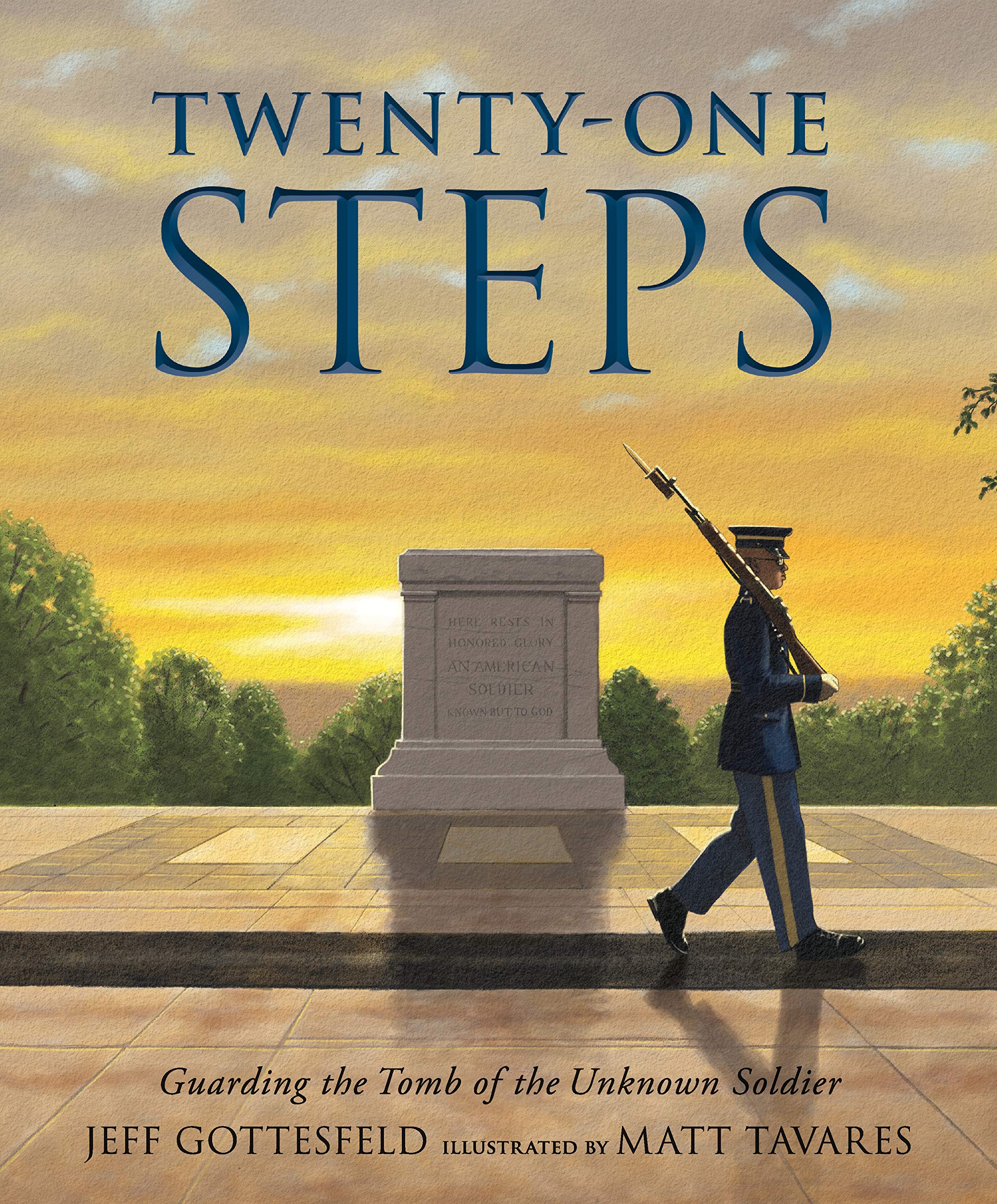
Twenty-One Steps: Guarding the Tomb of the Unknown Soldier by Jeff Gottesfeld, illustrated by Matt Tavares (released March 2)

Published by Candlewick

Twenty-One Steps: Guarding the Tomb of the Unknown Soldier: Gottesfeld,  Jeff, Tavares, Matt: 9781536201482: Amazon.com: Books

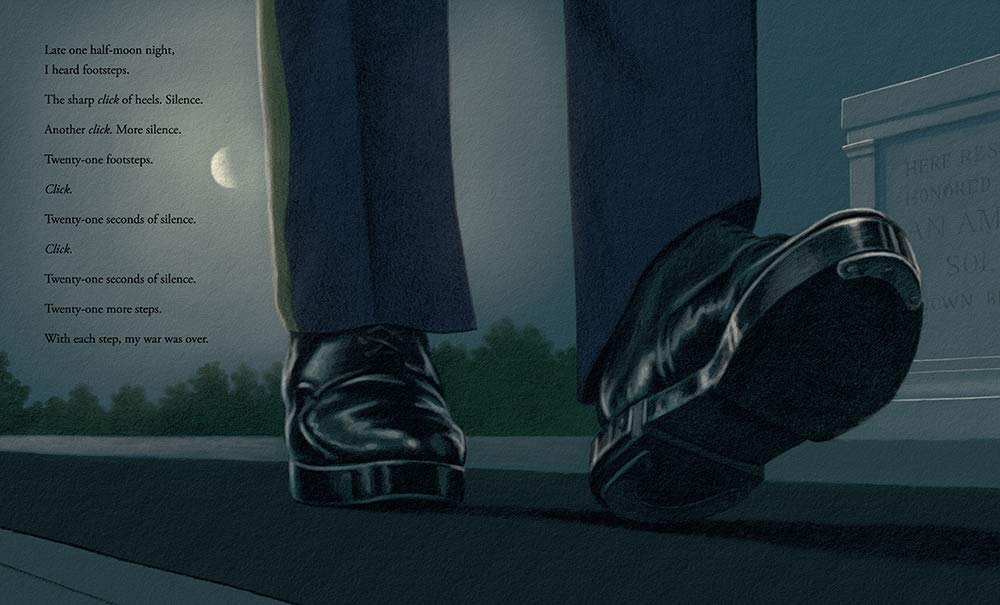
Summary:  “The Sentinel’s Creed” appears before the title page, showing the promise made by those who guard the tomb of the unknown soldier.  The narrative is in the first person voice of the unknown soldier, telling the history of the tomb beginning with the soldier’s ultimate sacrifice made in World War I.  In 1921, an unknown was chosen to represent all those who had died in the war and could not be identified.  Over the years, crowds came to see this monument, not always respectfully, so on July 2, 1937, a sentinel began guarding it.  Each guard takes 21 steps south, turns to face east for 21 seconds, turns to face north for 21 seconds, then takes another 21 steps.  The Tomb Guard is one of the most difficult positions to attain in the military, and each sentinel strives for perfection in carrying out his or her duty.  Includes an afterword with a bit more additional information about the Tomb of the Unknown Soldier.  32 pages; grades 2-5.

Pros:  File this one away for Memorial Day.  It’s a solemn acknowledgement of all the many anonymous soldiers whose lives have tragically been lost to war.  As always, Matt Tavares has created exceptional illustrations to capture the sober topic and the seriousness of purpose of the sentinels.

Cons:  While I appreciated the afterword, I could have enjoyed a lot more backmatter, including photos and information about other monuments to the unknown soldier, both in the U.S. and abroad.

Another list of six: favorite nonfiction books

Your Place in the Universe by Jason Chin

Published by Neal Porter Books

Your Place in the Universe: Chin, Jason: 9780823446230: Amazon.com: Books

I notice that Jason Chin has made it onto three of my last five favorite nonfiction book lists, so guess I’m a bit of a fan. His illustrations are awe-inspiring, and I loved the comparisons in this book that made enormous numbers and sizes a little more understandable.

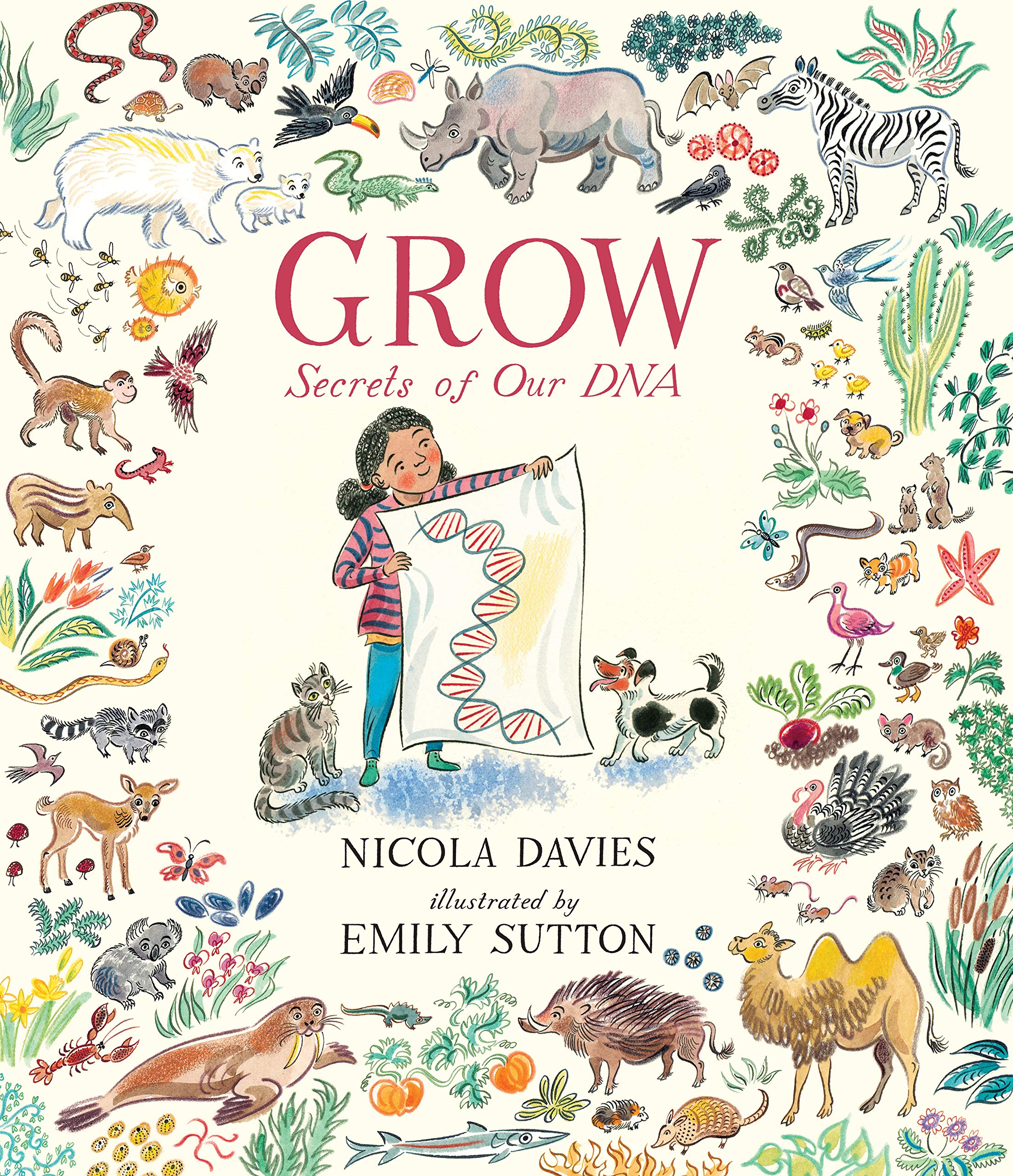
Grow: Secrets of Our DNA by Nicola Davies, illustrated by Emily Sutton

Published by Candlewick

Grow: Secrets of Our DNA: Davies, Nicola, Sutton, Emily: 9781536212723:  Amazon.com: Books

Explaining DNA and genetics in a way that’s accessible to readers as young as kindergarten is no easy feat, but Nicola Davies and Emily Sutton pulled it off. Watson and Crick would be proud.

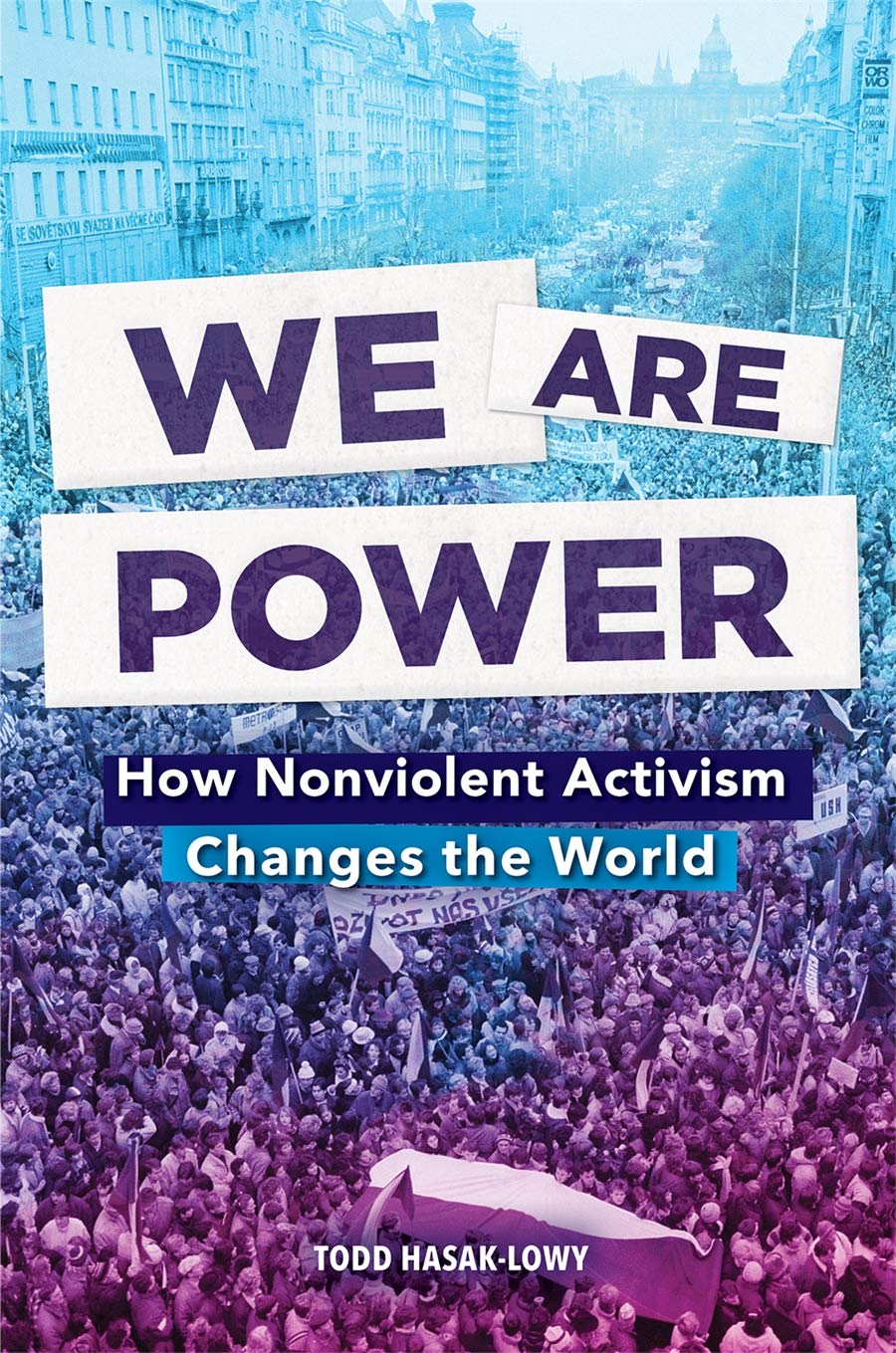
We Are Power: How Nonviolent Activism Changes the World by Todd Hasak-Lowy

Published by Abrams Books for Young Readers

We Are Power: How Nonviolent Activism Changes the World: Hasak-Lowy, Todd:  9781419741111: Amazon.com: Books

I thought I knew a fair amount about nonviolent activism–I’m a Quaker, for Pete’s sake–but I learned so much from reading this book. 2020 had its share of activism and books about activism, but this was the one I found most inspiring.

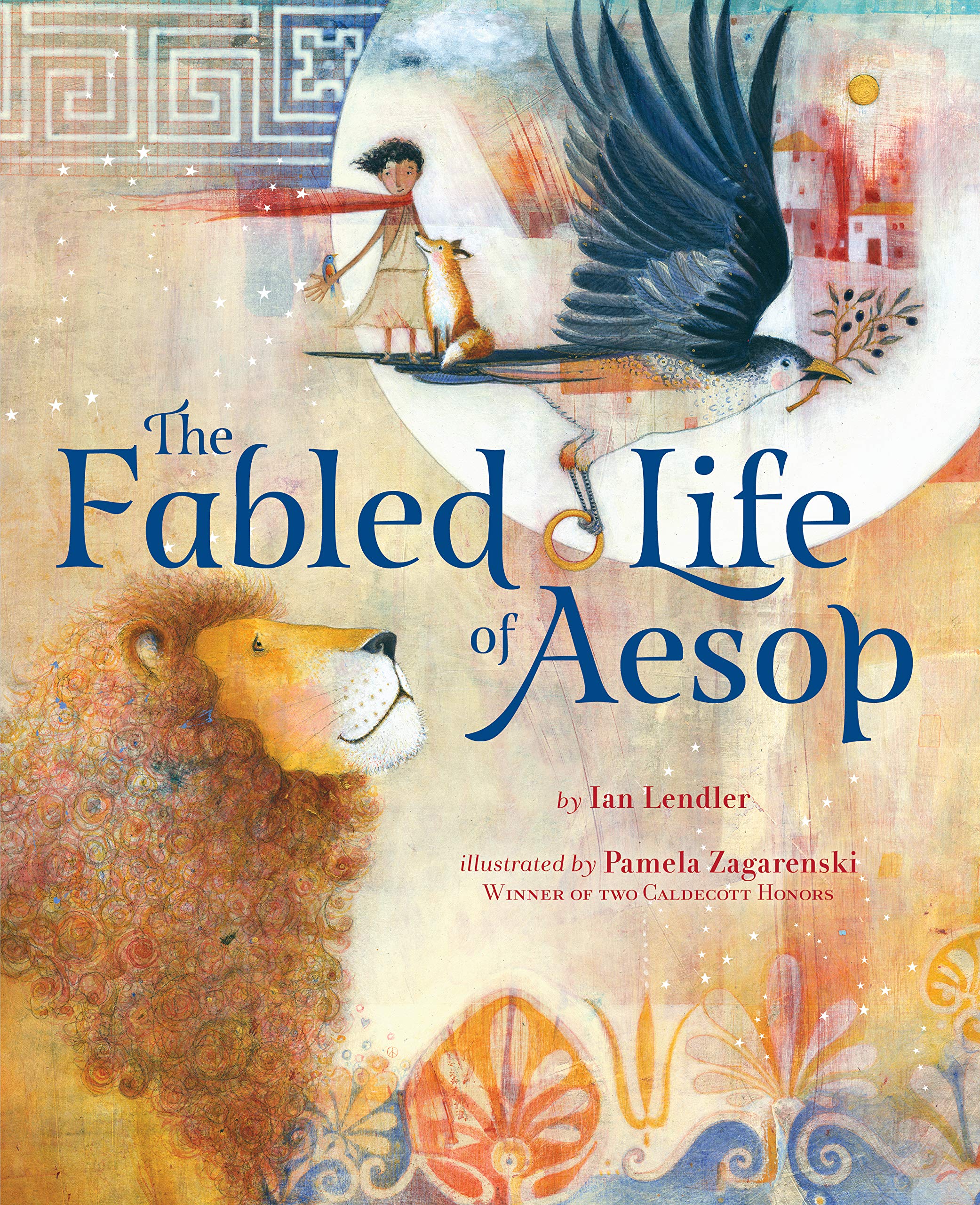
The Fabled Life of Aesop by Ian Lendler, illustrated by Pamela Zagarenski

Published by HMH Books for Young Readers

The Fabled Life of Aesop: The extraordinary journey and collected tales of  the world's greatest storyteller: Lendler, Ian, Zagarenski, Pamela:  9781328585523: Amazon.com: Books

I’m sure Aesop never imagined he’d be part of the Common Core, but there he is. As a school librarian, I am grateful for this comprehensive introduction to his life and fables, and I also appreciated the sly observations on what it means to have power. Pamela Zagarenski has a couple of Caldecott honors to her name, so don’t count her out this year.

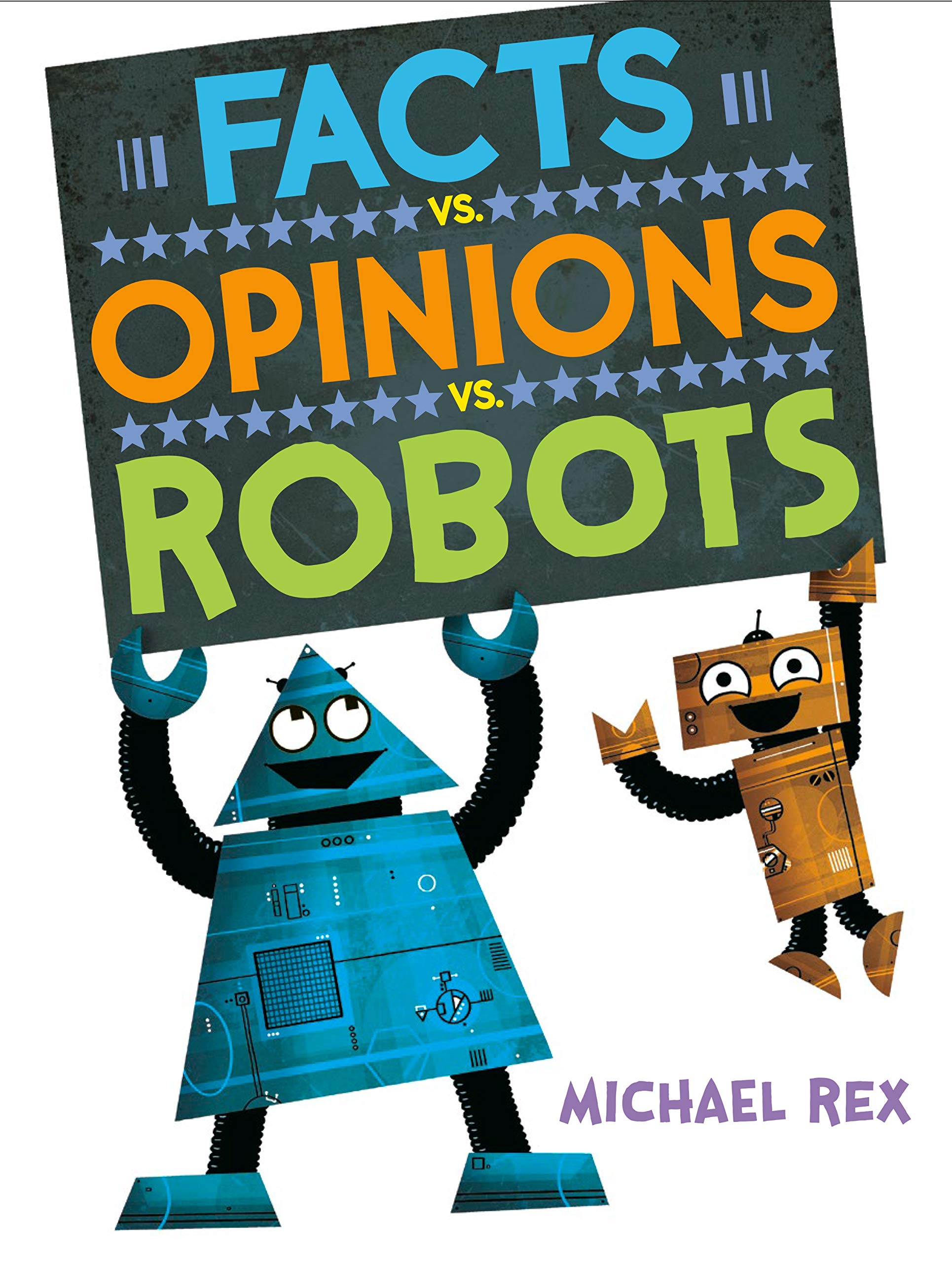
Facts vs. Opinions vs. Robots by Michael Rex

Published by Nancy Paulsen Books

Amazon.com: Facts vs. Opinions vs. Robots (9781984816269): Rex, Michael,  Rex, Michael: Books

Who knew that when I was playing Kick the Can with Michael Rex and the rest of our neighbors in 1970’s suburban New Jersey that in 2020 I’d be reviewing his book? Well done, Michael, I loved your take on facts vs. opinions. Librarians everywhere should thank you for this book.

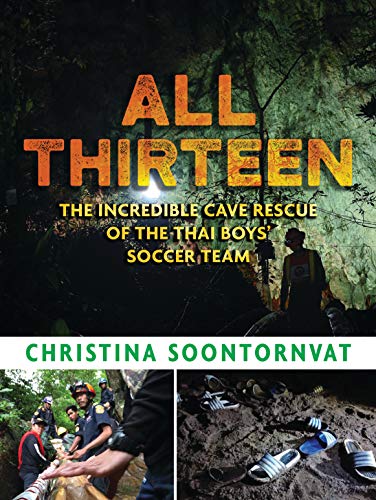
All Thirteen: The Incredible Cave Rescue of the Thai Boys’ Soccer Team by Christina Soontornvat

Published by Candlewick Press

All Thirteen: The Incredible Cave Rescue of the Thai Boys' Soccer Team -  Kindle edition by Soontornvat, Christina. Children Kindle eBooks @ Amazon .com.

I guess none of us should be surprised that this drama we watched unfold a couple of years ago would be made into a gripping nonfiction tale. Christina Soontornvat added so much context with her sidebars on Thailand, caves, and Buddhism, as well as her personal connection to the story that readers get much more than just a survival story.

12 books of Christmas

Starting the day after Christmas, I’ll be posting my year-end lists of Caldecott and Newbery predictions and my favorite books in different categories. I found myself with an higher-than-usual number of books at the end of the year that I had wanted to review, but didn’t get to before time ran out. That number turned out to be twelve, so as a little Christmas gift, here is a list of my final dozen books for 2020.

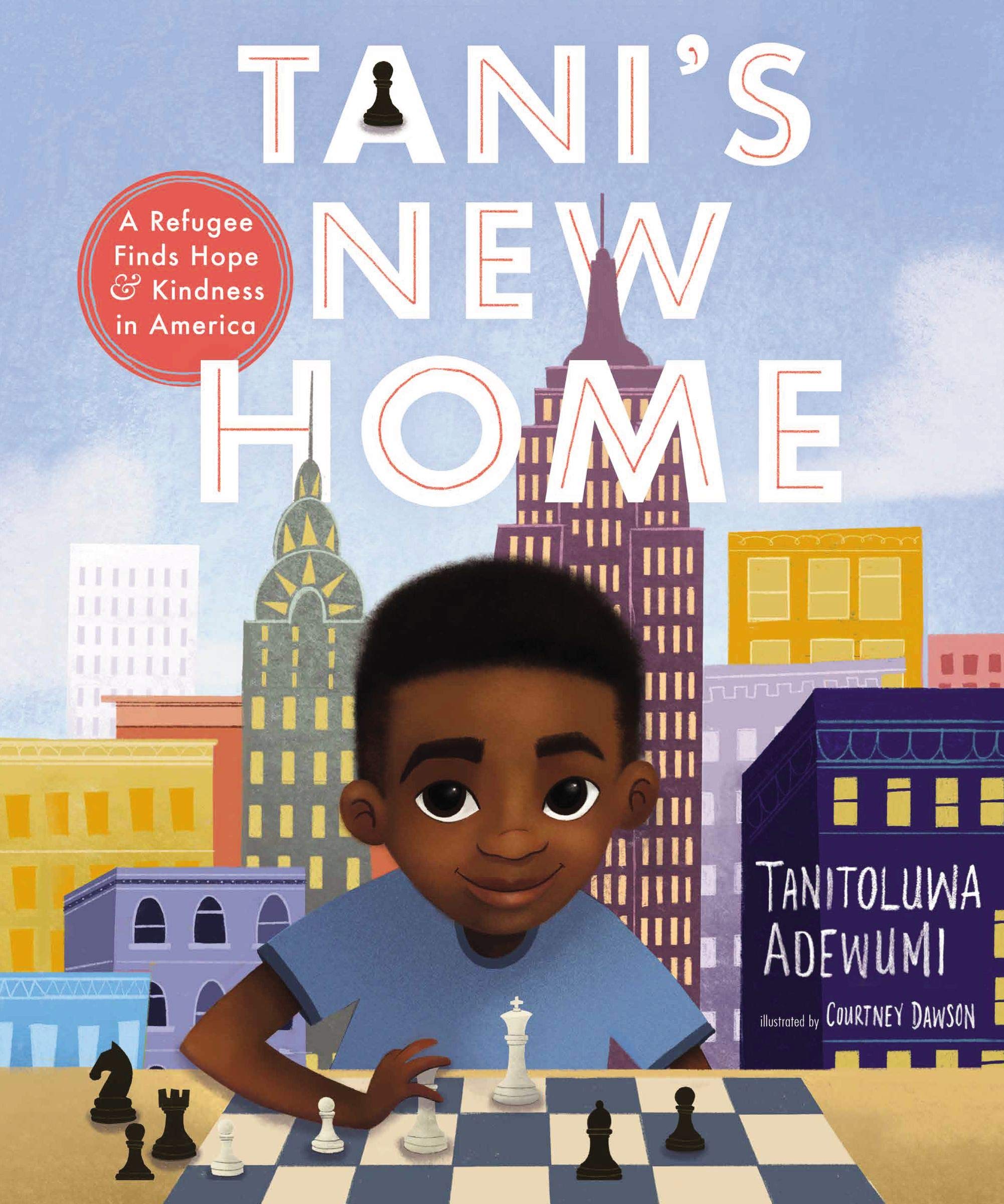
Tani’s New Home: A Refugee Finds Hope and Kindness in America by Tanitoluwa Adewumi, illustrated by Courtney Dawson

Published by Thomas Nelson

Tani's New Home: A Refugee Finds Hope and Kindness in America: Adewumi,  Tanitoluwa, Dawson, Courtney: 9781400218288: Amazon.com: Books

The true story of Tani Adewumi, who moved to New York City as a Nigerian refugee at the age of 6. He discovered chess, and practiced it for hours in a homeless shelter. In less than a year, he was the New York State Chess Champion. I haven’t had a chance to see this book. The publisher, Thomas Nelson, is a Christian publisher, so I’m not sure if there is any religious content to the story. 32 pages; grades K-3.

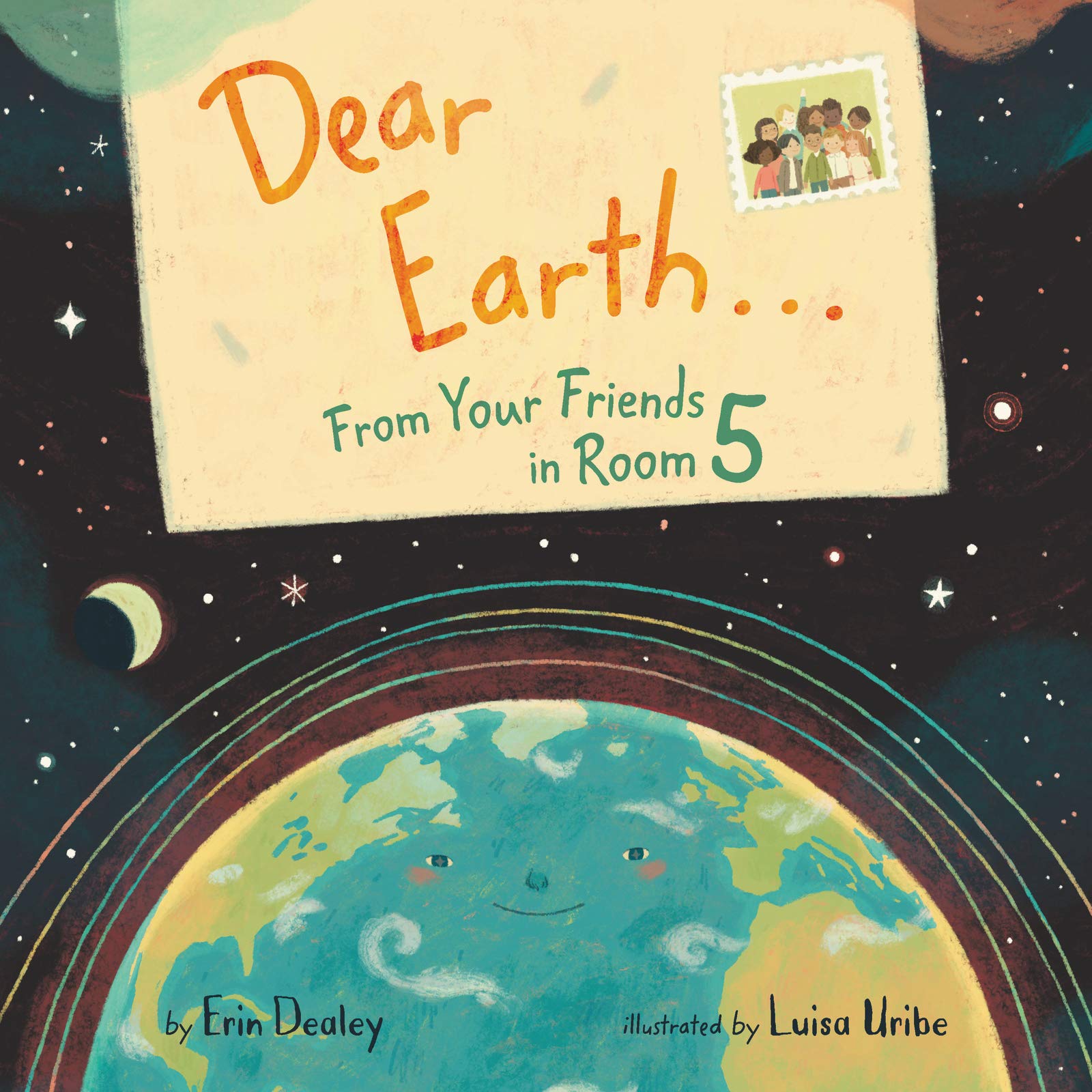
Dear Earth…From Your Friends in Room 5 by Erin Dealey, illustrated by Louisa Uribe

Published by HarperCollins

Dear Earth…From Your Friends in Room 5: Dealey, Erin, Uribe, Luisa:  9780062915320: Amazon.com: Books

The kids in room 5 begin a correspondence with Earth, learning different ways to help the planet like recycling and energy conservation. Rhyming text, letter writing, and environmental tips make this an appealing choice for Earth Day or any time of year. 32 pages; grades K-3.

Saving Stella: A Dog’s Dramatic Escape from War by Bassel Abou Fakher and Deborah Blumenthal, illustrated by Nadine Kaadan

Published by Bloomsbury Children’s Books

Saving Stella: A Dog's Dramatic Escape from War: Fakher, Bassel Abou,  Blumenthal, Deborah, Kaadan, Nadine: 9781547601332: Amazon.com: Books

When Bassel was forced to flee Syria, he had to leave his beloved dog Stella behind. After settling in a new home in Belgium, he worked with friends back in Syria to create a daring plan to rescue Stella. 40 pages; grades K-5.

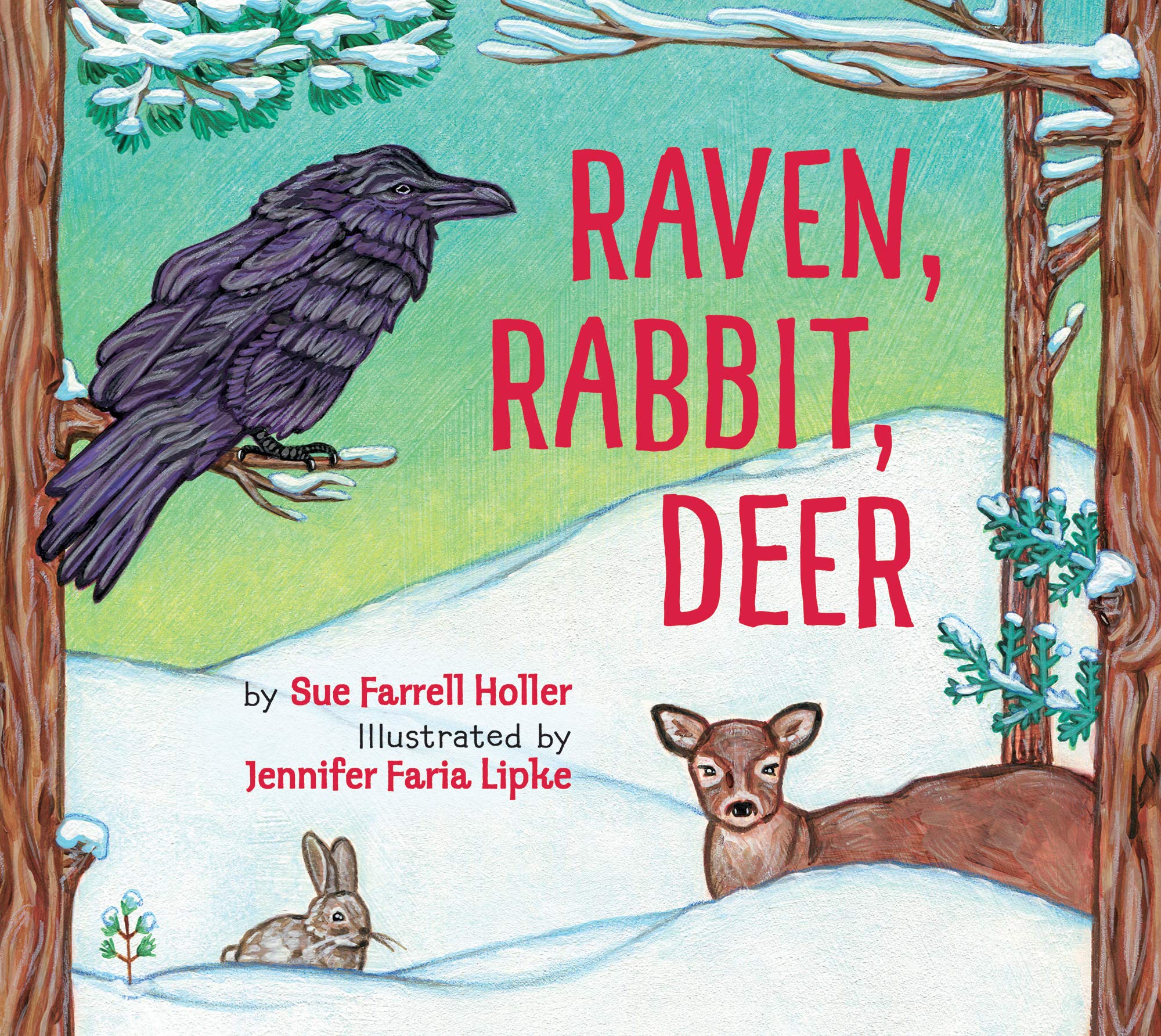
Rabbit, Raven, Deer by Sue Farrell Holler, illustrated by Jennifer Faria

Published by Pajama Press

Raven, Rabbit, Deer: Farrell Holler, Sue, Faria, Jennifer: 9781772781366:  Amazon.com: Books

There’s a copy of this book traveling to my library right now, but I haven’t gotten a chance to see it. A boy and his grandfather enjoy a winter’s day together, finding animal tracks and identifying the animals in both English and Ojibwemowin. Sounds like a cozy winter choice. 32 pages; ages 4-8.

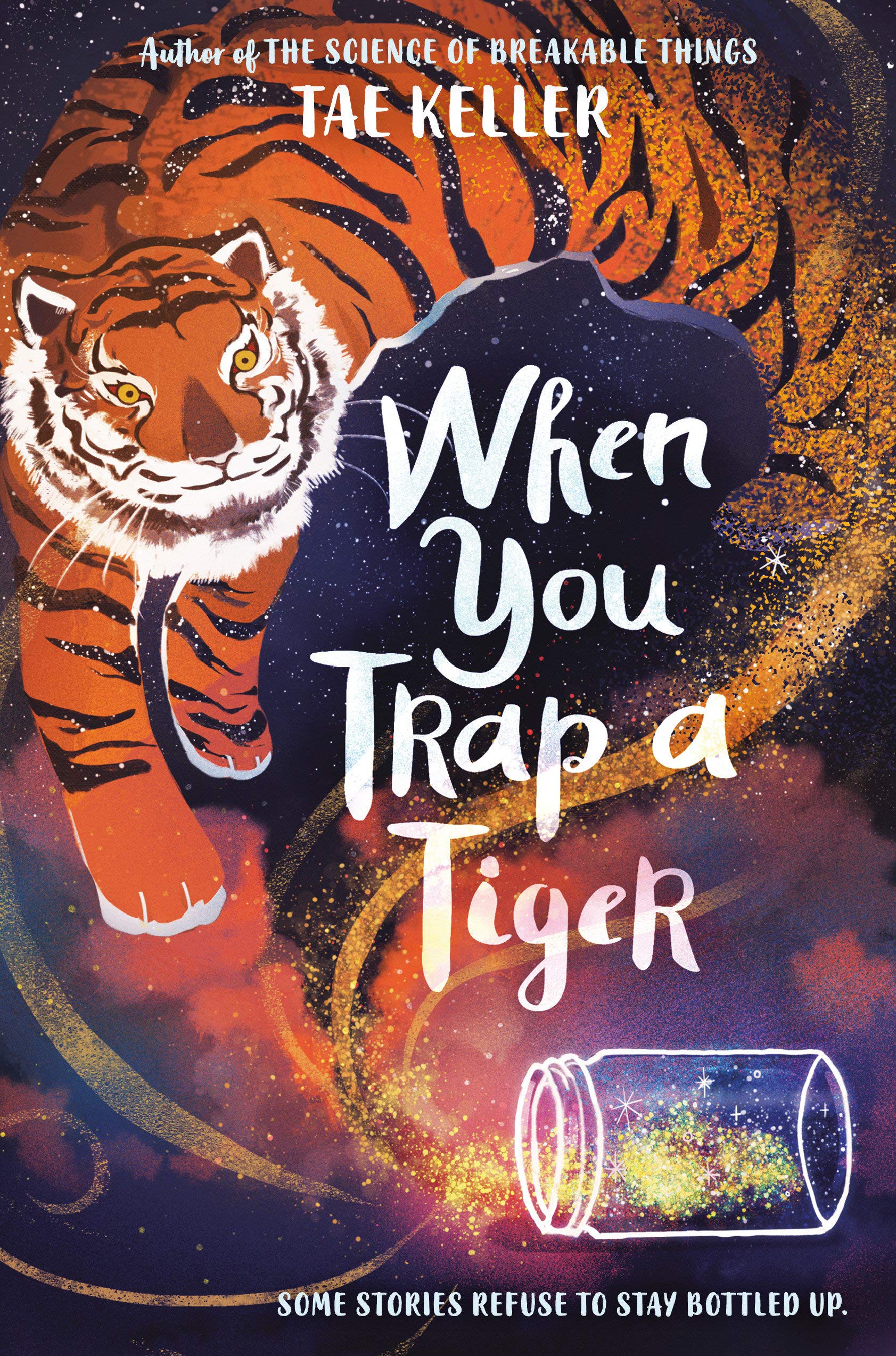
When You Trap a Tiger by Tae Keller

Published by Random House Books for Young Readers

When You Trap a Tiger: Keller, Tae: 9781524715717: Amazon.com: Books

When Lily and her family move in with her sick grandmother, Lily meets a tiger straight out of the Korean folklore she’s grown up on. This book won a Boston Globe/Horn Book honor and received five starred reviews. Personally, I couldn’t really get into it and only read about the first third back in the beginning of the year. Everyone else loved it, though, and it could definitely be a contender for more awards. 304 pages; grades 4-7.

Antiracist Baby by Ibram X. Kendi, illustrations by Ashley Lukashevsky

Published by Kokila

Antiracist Baby Board Book: Kendi, Ibram X., Lukashevsky, Ashley:  9780593110416: Amazon.com: Books

Ibram X. Kendi’s book How to Be an Antiracist is #15 on Amazon’s list of 2020’s bestsellers. Here he offers nine tips for being (or raising) an antiracist baby, with a note to parents and teachers at the end. Available as both a board book and a regular picture book. 32 pages; ages 0-4.

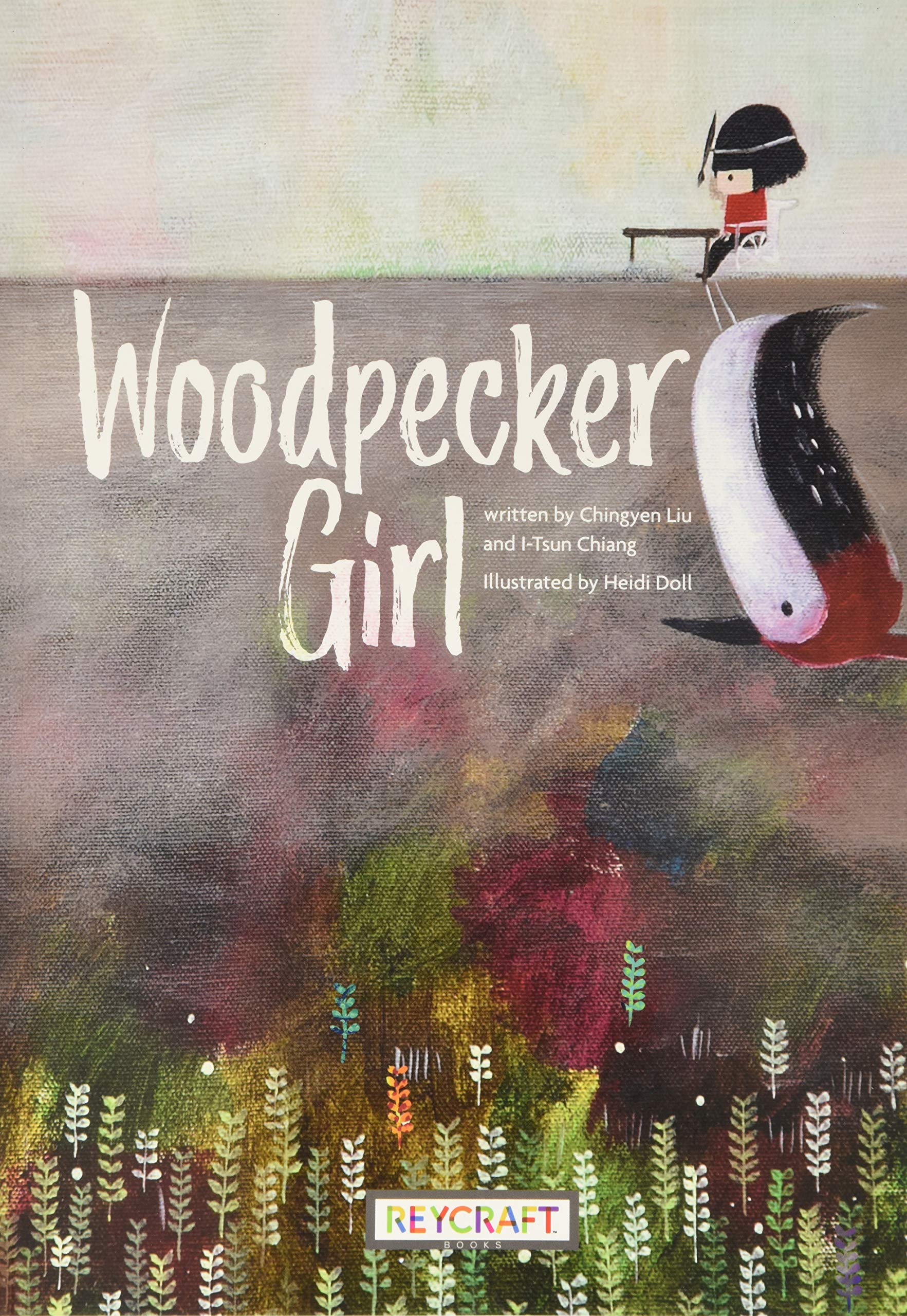
Woodpecker Girl by Chingyen Liu and I-Tsun Chiang, illustrated by Heidi Doll

Published by Reycraft Books

Woodpecker Girl: Chiang, I-Tsun, Liu, Chingyen: 9781478869559: Amazon.com:  Books

A girl with cerebral palsy tells how she learned to paint with a brush strapped to her forehead. An amazing gallery of her work is included. Told in the first person, the story doesn’t shy away from the challenges she faces and the discouragement she feels, but also expresses her joy at sharing with others through her art. 40 pages; grades K-4.

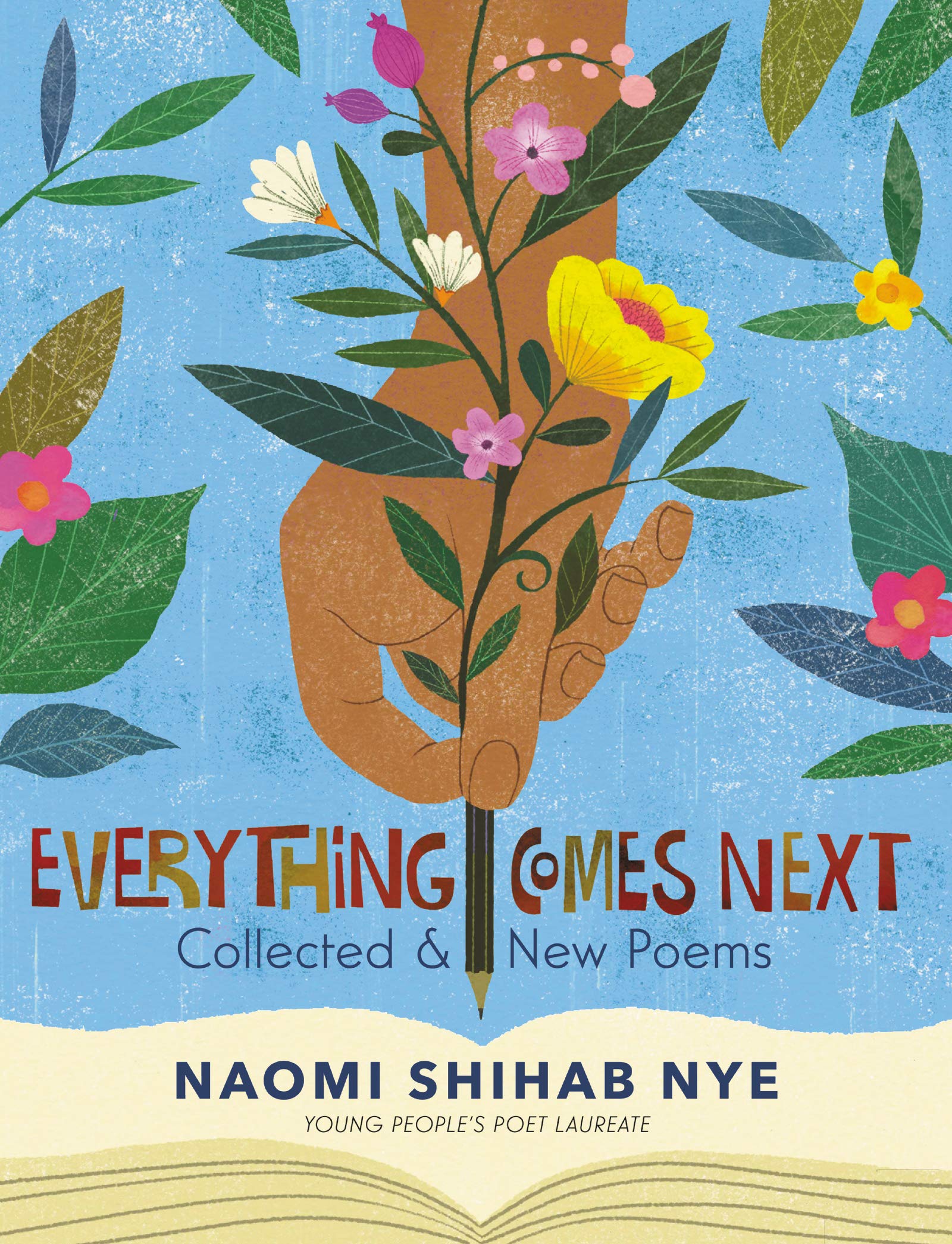
Everything Comes Next: Collected and New Poems by Naomi Shihab Nye

Published by Greenwillow Books

Everything Comes Next: Collected and New Poems: Nye, Naomi Shihab:  9780063013452: Amazon.com: Books

I just got this book on December 23, so haven’t had a chance to read it. These 100 poems by Young People’s Poet Laureate Nye start with a section of poems on childhood, both her own and others. She also explores her Palestinian heritage and the need for peace, as well as an appreciation for the diversity of people in the world. 256 pages; grades 3-7.

Unstoppable by Adam Rex, illustrated by Laura Park

Published by Chronicle Books

Unstoppable: (Family Read-Aloud book, Silly Book About Cooperation) -  Kindle edition by Rex, Adam, Park, Laura. Children Kindle eBooks @ Amazon .com.

A crow being pursued by a hungry cat and a crab who dreams of flying work together to help one another. When they add a turtle and a bear, they become UNSTOPPABLE! At least until they see a bulldozer digging up the lakefront to build a mall. Then it’s off to see the President of the United States…and Congress…and things really get zany as only Adam Rex can imagine them. 56 pages; ages 4-8.

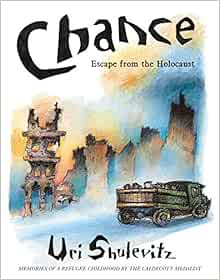
Chance: Escape from the Holocaust by Uri Shulevitz

Published by Farrar, Straus and Giroux

Chance: Escape from the Holocaust: Memories of a Refugee Childhood  (9780374313715): Shulevitz, Uri: Books - Amazon.com

Caldecott Medalist Uri Shulevitz’s memoir covers his childhood from his days in Warsaw at the start of World War II to his family’s harrowing experiences in the Soviet Union during the war and their postwar years in Paris before emigrating to Paris when he was 14. Although it’s a thick book, the print is large and filled with Shulevitz’s illustrations, making it a quick and engaging read. 336 pages; grades 4-8.

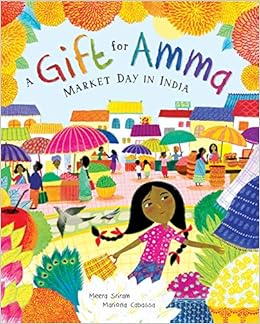
A Gift for Amma: Market Day in India by Meera Sriram, illustrated by Mariona Cabassa

Published by Barefoot Books

A Gift for Amma: Market Day in India: Sriram, Meera, Cabassa, Mariona:  9781646860616: Amazon.com: Books

Another one I haven’t gotten to see, but I love the brilliant colors of the cover (and pictures I’ve seen of the illustrations). A girl shops in an Indian market to find the perfect gift for her mother. 32 pages; ages 4-7.

Desert Diary: Japanese American Kids Behind Barbed Wire by Michael O. Tunnell

Published by Charlesbridge

Desert Diary: Japanese American Kids Behind Barbed Wire: Tunnell, Michael  O.: 9781580897891: Amazon.com: Books

When Mae Yanagi was eight years old, she and her family were forced to move to Topaz Camp in Utah for the duration of World War II. She and her third-grade classmates created a diary of their daily lives in camp, filled with mundane details about school and family life, as well as descriptions of the difficulties of camp life. Michael Tunnell tells their story with plenty of photographs and excerpts from the diary. 144 pages; grades 4-7.
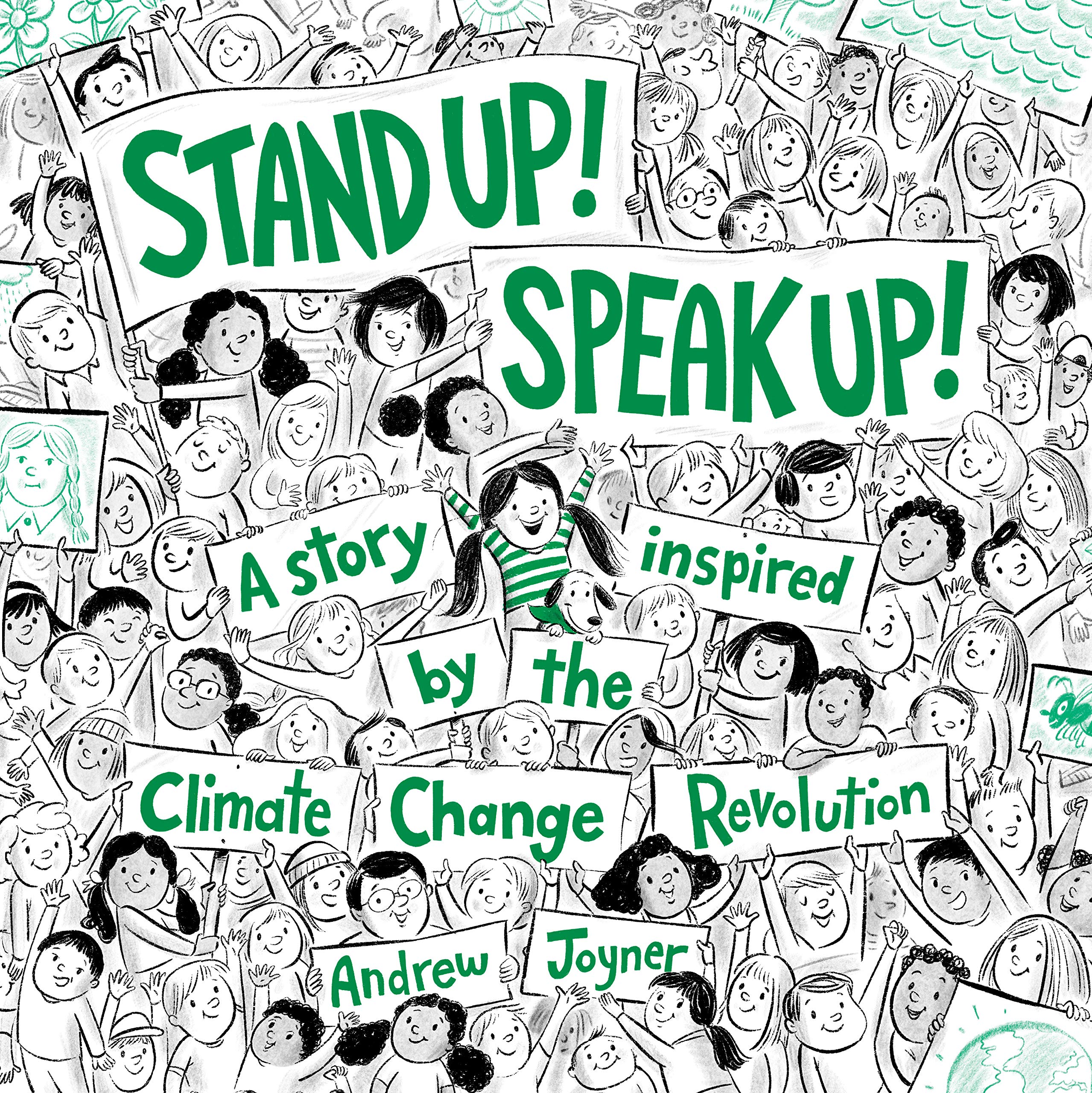
Stand Up! Speak Up! A Story Inspired by the Climate Change Revolution by Andrew Joyner

Published by Schwartz and Wade

Stand Up! Speak Up!: A Story Inspired by the Climate Change Revolution:  Joyner, Andrew: 9780593301586: Amazon.com: Books

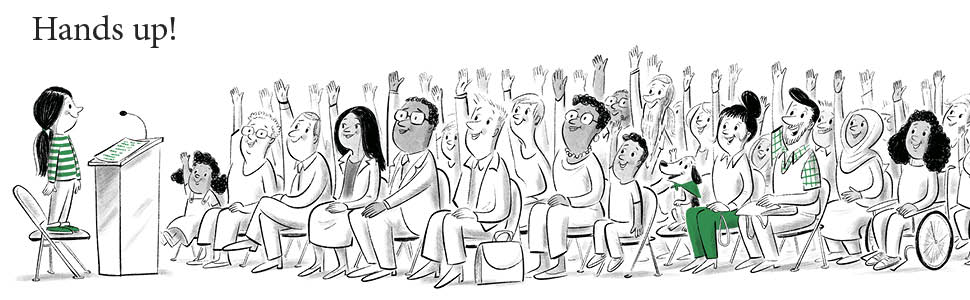
Summary:  Each sentence in this book has just two words: Wake up. Dress up.  Meet up.  The girl in the story is on her way to a rally about climate change.  She’s excited to hold a sign, listen to speakers, and cheer, and that evening she sees the rally on the news.  But the stories after hers are reporting on wildfires, floods, and hurricanes, and she goes to bed feeling discouraged.  Lying awake, she has some new ideas, and the next morning sets about putting them into action.  The final gatefold spread shows her working at a table with information, surrounded by other environmental activists.  Includes drawings and brief profiles of 14 young climate activists from around the world.  40 pages; ages 4-9.

Pros:  An inspiring book for young activists (the dust jacket is printed on the back to be used as a protest sign) with lots to look at.  The busy illustrations tell the story effectively with minimal words, and convey the message that making social change isn’t a one-day event.

Cons:  I was hoping that the real-life activists were hidden somewhere in the crowd scenes, but I couldn’t find any of them.

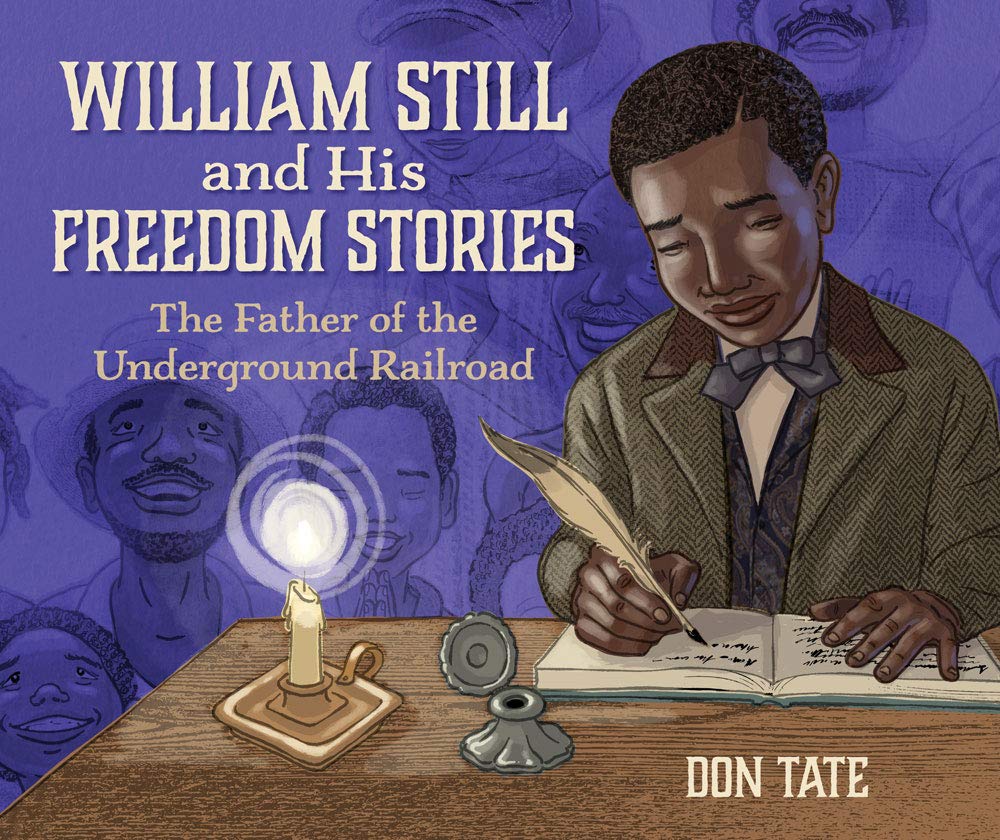
William Still and His Freedom Stories: The Father of the Underground Railroad by Don Tate

Published by Peachtree Publishing Company

William Still and His Freedom Stories: The Father of the Underground  Railroad: Tate, Don, Tate, Don: 9781561459353: Amazon.com: Books
Review: William Still and His Freedom Stories - Mr. Alex's Bookshelf

Summary:  When William Still’s mother escaped from slavery, she was forced to leave her two sons behind.  She and her husband reunited in New Jersey, and they went on to have fifteen children, including William, the youngest, born in 1821.  When William was 23, he moved to Philadelphia, where he got a job as an office clerk at the Pennsylvania Anti-Slavery Society.  He worked his way up to manager, and helped freedom-seekers by making his home a stop on the Underground Railroad.  One day a middle-aged man came to the office.  When William heard his story, he realized the man was his long-lost brother, Peter.  This inspired William to start recording the stories of every person who came through the office, thinking these records might help reunite other families.  When the Fugitive Slave Act was passed, William’s stories became evidence of crimes, and he was forced to hide them in a cemetery vault.  After the Civil War, he published many of the stories in his book, The Under Ground Rail Road.  Includes a timeline, author’s note, and bibliography.  40 pages; grades 2-5.

Pros:  According to the author’s note, when white writers told the story of the Underground Railroad, they often made themselves heroes and left out the work of many of the black people.  This book does a fabulous job of rectifying that for William Still, who was a tireless worker for many years.  Don Tate has been a busy man this year, creating both the text and beautiful illustrations for this book, as well as the pictures for Swish!, the recent book about the Harlem Globetrotters.

Cons:  I was curious as to what happened to all the papers Sill was forced to hide in the cemetery vault.  Did they survive?  Are they still around today?  There didn’t seem to be an answer in either the story or the author’s note.

On the Horizon by Lois Lowry, illustrated by Kenard Pak

Published by HMH Books for Young Readers

On the Horizon: Lowry, Lois, Pak, Kenard: 9780358129400: Amazon.com: Books

Summary:  Lois Lowry lived in both Hawaii and Japan as a child, and her poems here reflect some of her experiences in those two countries during World War II.  The bulk of the poetry, though, relates personal stories, both of people aboard the Arizona and those living in Hiroshima.  The poems are written in a variety of styles, and most are accompanied by an illustration.  Includes an author’s note telling of her experiences that influenced this book.  Most remarkable is her interaction with a Japanese boy named Koichi Seii, who moved to the U.S. as an adult and changed his name to Allen Say, becoming an award-winning illustrator and Lowry’s friend.  Aso includes a bibliography.  80 pages; grades 5-8.

Pros:  By focusing on individuals (many of them children or young adults), Lowry really personalizes the tragedy of war.  The details may be too sad or disturbing for younger kids, but middle school students will find a lot to discuss in these poems.

Cons:  I wish there had been some information about the different forms of poetry used.

The Challenger Disaster: Tragedy in the Skies by Pranas T. Naujokaitis

Published by First Second

Amazon.com: History Comics: The Challenger Disaster: Tragedy in the Skies  (9781250174307): Naujokaitis, Pranas T.: Books
History Comics: The Challenger Disaster | Pranas T. Naujokaitis | Macmillan

Summary:  A group of kids going to school on board a 24th century spacecraft has an assignment to research the Challenger disaster.  Each presents one aspect of the event, including the history of the space shuttle, the crew, the launch, and the investigation of what went wrong.  The kids are all certain that Carmen, the slacker among them, hasn’t done her research, and when it comes time for her to present, it turns out they’re right.  But she’s been so moved by what she’s learned that she makes an emotional case for continuing to explore the universe, even though tragedies sometimes happen as part of those explorations.  The day ends with A plus grades for everyone, and the teacher musing to herself that she believes the future is in good hands.  Includes an author’s afterword and a list of additional Challenger facts.  128 pages; grades 4-6.

Pros:  A moving look at many different aspects of the Challenger explosion that includes holographic images of each crew member giving an introduction to his or her life and career.  This is part of a new series called History Comics that will undoubtedly have wide appeal, particularly for fans of books like Nathan Hale’s Hazardous Tales.

Cons:  The detailed descriptions of the space shuttle in the first third of the book may lose a few readers.

If you would like to buy this book on Amazon, click here.

I Am the Storm by Jane Yolen and Heidi E. Y. Stemple, illustrated by Kristen and Kevin Howdeshell

Published by Rise x Penguin Workshop

I Am the Storm: Yolen, Jane, Stemple, Heidi E. Y., Howdeshell, Kristen,  Howdeshell, Kevin: 9780593222751: Amazon.com: Books

Summary:  Four children tell of their experiences surviving a tornado, blizzard, wildfire, and hurricane.  While the danger is present, they either hunker down at home or are evacuated to a safe place where they enjoy time with their families: playing cards in the basement until the tornado passes, cooking over the fireplace through the blizzard, camping while the wildfire burns, and staying with cousins during a hurricane.  Afterward, they help clean up and get back to their lives.  “Nature is strong and powerful. But, I am strong and powerful, too…And when the storm passes, as it always does, I am the calm, too.”  Includes additional information about the four types of events. 32 pages; ages 4-8.

Pros:  A reassuring book for kids who have faced or are about to face a natural disaster, focusing on resilience and offering child-friendly information about each event.

Cons:  Makes surviving a catastrophic event look fun and cozy, and only portrays families with nice houses and cars who have the financial means to be this resilient.

If you would like to buy this book on Amazon, click here.

Remember, Black Friday shoppers: I get a portion of sales on Amazon if you click on one of my links to order anything on Amazon!