Torpedoed: The True Story of the World War II Sinking of the “The Children’s Ship” by Deborah Heiligman

Published by Henry Holt and Co.

Image result for torpedoed heiligman"

Summary:  On September, 1940, the ship SS City of Benares left England, bound for Canada.  On board were 90 children traveling as part of the Children’s Overseas Reception Board (CORB) program, which evacuated British children to safer countries.  A few days into their journey, the ship was torpedoed by a German submarine, and sank in about half an hour. Of the 90 children, only 17 survived. Most were picked up the next day, but due to a miscalculation, Lifeboat 12 was missed by the rescuers and was adrift for eight days before finally being spotted by a plane (a story told in verse by Susan Hood in 2018’s Lifeboat 12).  The survivors returned to England, and CORB suspended operations after this tragedy.  Includes a list of all those who died, as well as a lengthy bibliography and index. 304 pages; grades 5-8.

Pros:  I started reading this with trepidation, as I’m not crazy about reading about disasters at sea (no more Titanic books, please).  I kept flipping between the narrative and the list of those who died, and I could tell the outlook for most was not good.  Once the torpedoes hit, though, I couldn’t put the book down. The storytelling is masterful, following the narratives of so many different children and the adults who traveled with them.  I saw this on a Newbery prediction list.  I’d be surprised if it got a Newbery, but I could definitely see a Sibert award.

Cons:  As mentioned above, reading about the drowning deaths of 73 children isn’t really my favorite pastime.

If you would like to buy this book on Amazon, click here.

 

Fever Year: The Killer Flu of 1918 by Don Brown

Published by HMH Books for Young Readers

Image result for fever year don brown

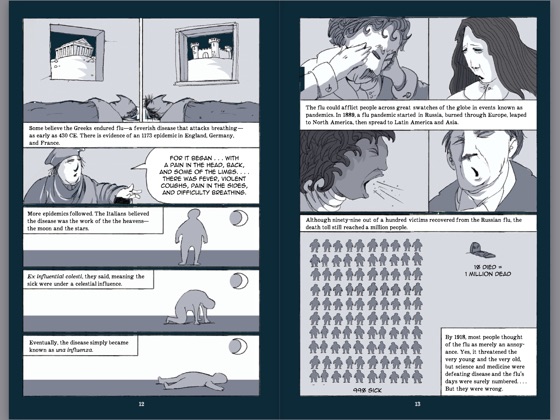
Image result for fever year don brown

Summary:  Using a graphic novel format, Don Brown tells the story of the flu epidemic of 1918 and how it spread across the United States and around the globe.  The tale is told in three acts: January-July 1918 when the epidemic began; August-December 1918 when it raged full force; and 1919 when it came back to life, sickening, among others, President Woodrow Wilson at an important peace conference in Paris.  The text is brief, but covers many different aspects of the epidemic, including the spread and death toll, the importance and shortage of nurses, how different cities reacted when the flu hit them, and scientists’ attempts to figure out what was causing the disease.  The book concludes with recent scientists’ experiments that lead to the revival of the virus which had been preserved in the lung tissues of one of its victims, and questions as to the ethics of such work. Includes a five-page bibliography. 96 pages; grades 5-8.

Pros:  Don Brown packs a lot of information into fewer than 100 pages, in a format that will appeal to many readers.  Fans of Nathan Hale’s Hazardous Tales may enjoy this, as well as other graphic history books by Brown.

Cons:  All the reviews I saw recommended this for grades 7 and up, but I feel like there’s no reason not to suggest it to fifth and sixth grade history buffs.  True, it’s a story of disease, pestilence, and death, but nothing that I would consider inappropriate for kids 10 and up.

If you would like to buy this book on Amazon, click here.
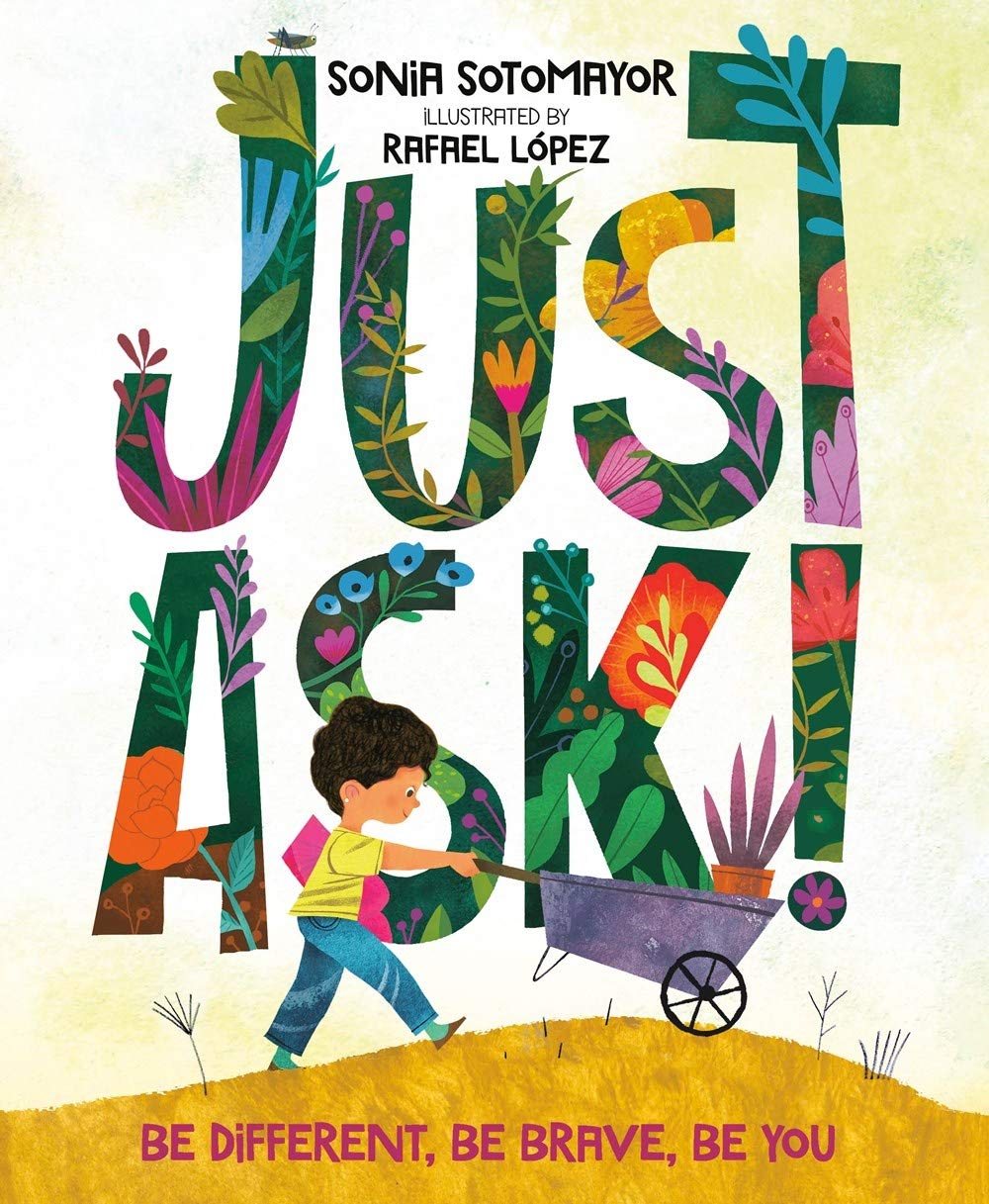
Just Ask! Be Different, Be Brave, Be You by Sonia Sotomayor, illustrated by Rafael López

Published by Philomel Books

Image result for just ask be different be brave be you

Image result for just ask be different be brave be you

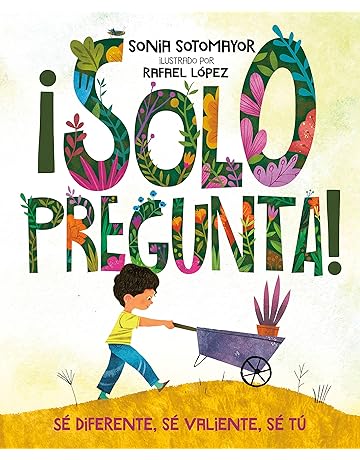
Summary:  Supreme Court Justice Sonia Sotomayor begins the book by telling her own story, how she was diagnosed with juvenile diabetes at the age of 7.  She sometimes felt self-conscious when she had to give herself insulin injections around others. Although she felt like other kids were curious, no one ever asked her about what she was doing.  She encourages readers to ask questions if they want to know about something they don’t understand. The book then looks at kids planting a garden; just like the plants in the garden, each child is different in some way: one is blind, one is in a wheelchair, two have different forms of autism, and so on.  Each child tells a little about himself or herself, then asks a question like, “Do you ever take medicine to be healthy?” or “How do you use your senses?” Sonia finishes up by celebrating everyone’s abilities, and how all the differences make the world a more interesting place. Her final question is, “What will you do with your powers?”  Also available in a Spanish-language edition, ¡Solo Pregunta! 32 pages; ages 4-8.

Pros:  This is a great introduction to a wide range of conditions that affect many different kids.  The tone is accepting and celebrating, and it’s a nice way to encourage children to talk to each other about differences in a respectful way.  The illustrations are gorgeous, showing a diverse group of children frolicking around a beautiful garden.

Cons:  I wish there had been more specifics about how a child (or adult) should ask someone about a physical difference.

Image result for solo pregunta sotomayor

If you would like to buy the English edition on Amazon, click here.

If you would like to buy the Spanish edition on Amazon, click here.

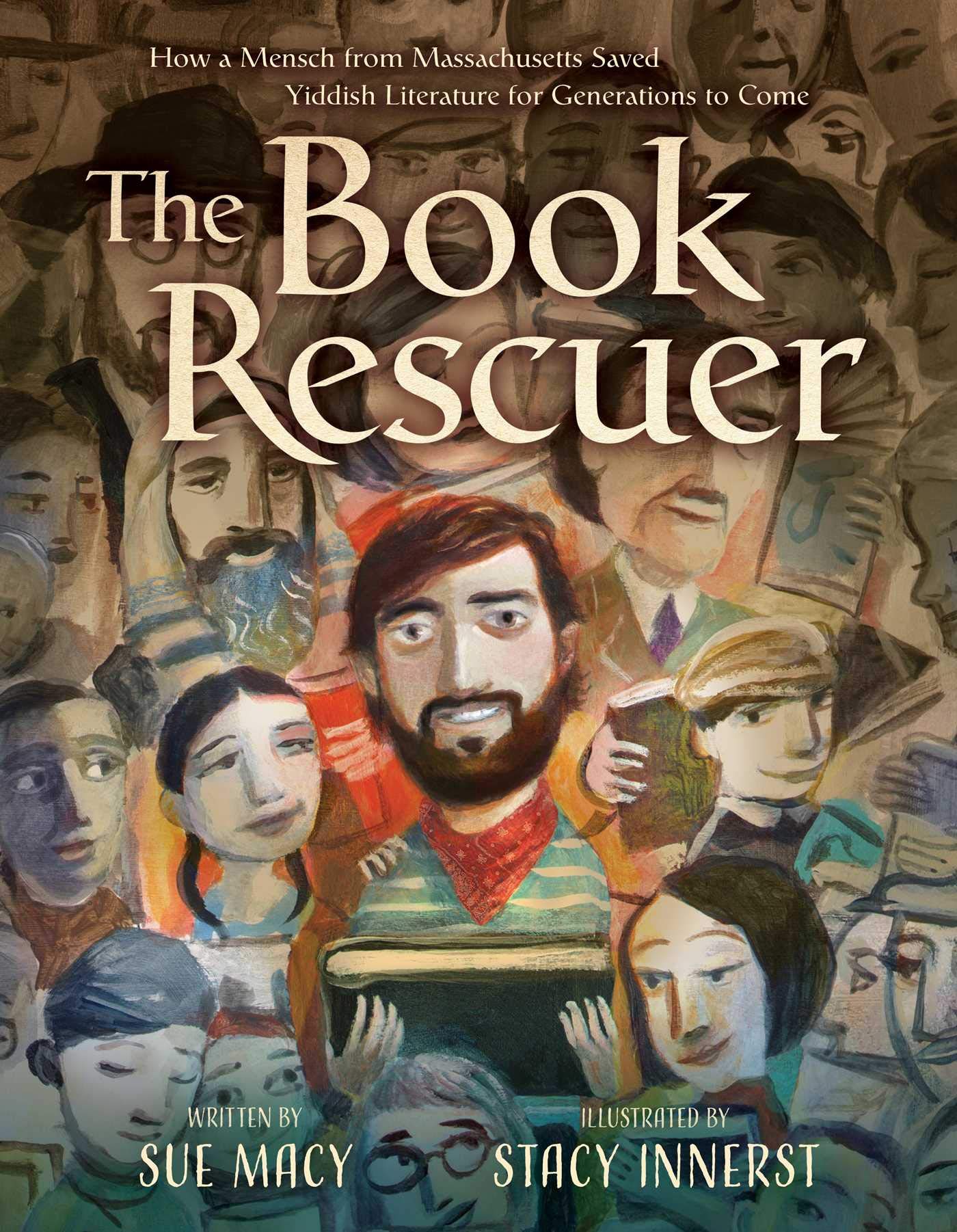
The Book Rescuer: How a Mensch from Massachusetts Saved Yiddish Literature for Generations to Come by Sue Macy, illustrated by Stacy Innerst

Published by Simon and Schuster/Paula Wiseman Books

Image result for book rescuer sue macy

Image result for book rescuer sue macy

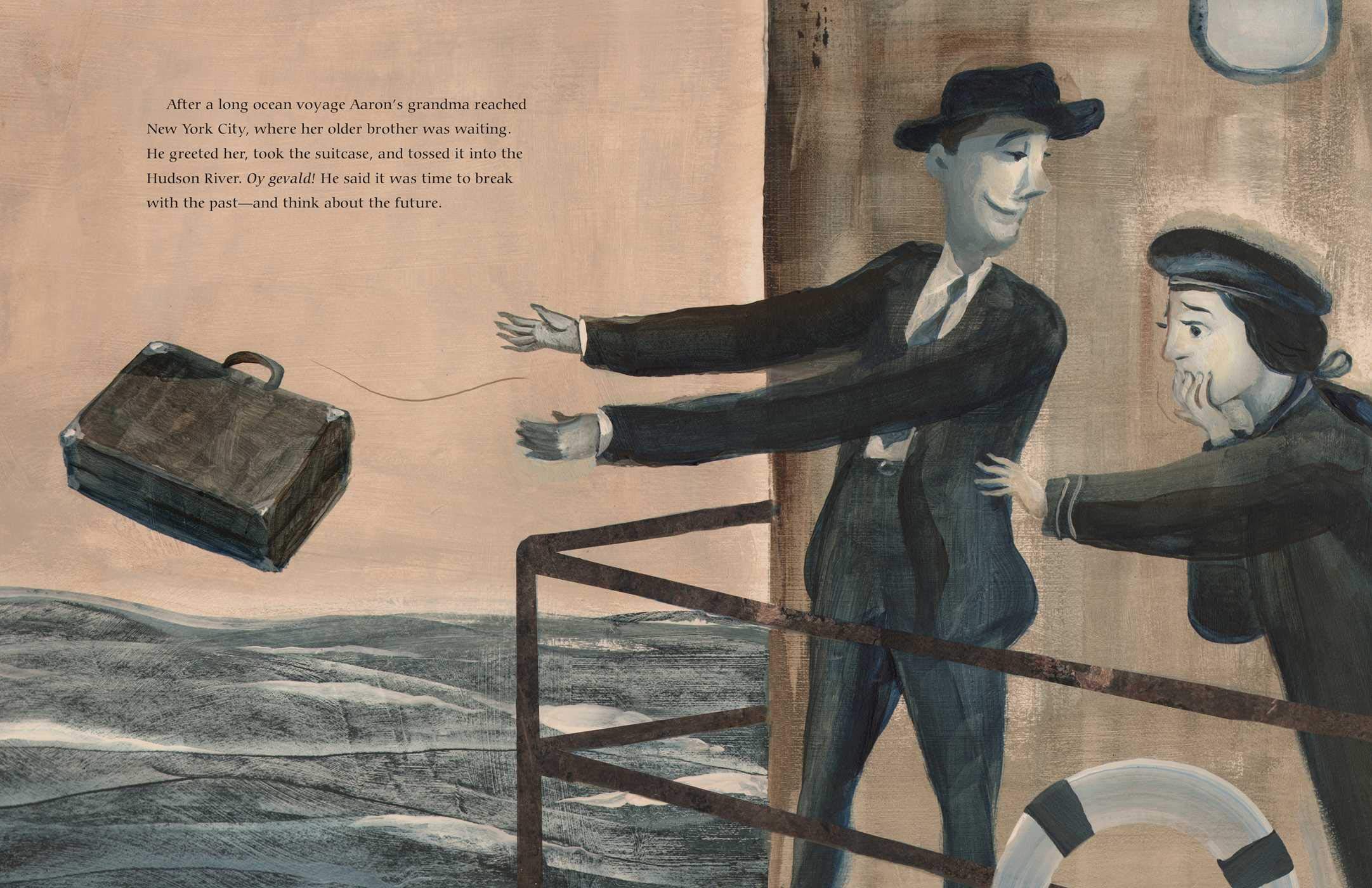
Summary:  When Aaron Lansky was growing up, he heard the story of his grandmother, who immigrated to America when she was 16.  Her older brother greeted her by throwing her suitcase into the Hudson River, telling her it was time to break with the past.  Aaron has spent his adult life working tirelessly to find and preserve that past. As a college student interested in learning Jewish history through Yiddish novels, he discovered a passion for Yiddish books, and began traveling around the country to rescue them.  In 1980, he founded the Yiddish Book Center in Amherst, Massachusetts. A MacArthur grant in 1989 recognized his work, which he continues today, having collected 1.5 million books in Yiddish that he shares with people all over the world. Includes an afterword by Aaron Lansky, an author’s note, illustrator’s note, glossary of yiddish words, and a couple sources of additional information.  48 pages; grades 1-5.

Pros:  What could have been a dry, uninteresting topic comes to life in Sue Macy’s capable hands, aided by the Marc Chagall-inspired artwork.  The back matter fleshes out the story even further, and includes information for visiting the Yiddish Book Center, which turns out to be less than 30 miles from my house.

Cons:  I started to feel some pangs of guilt about my enthusiasm for weeding my libraries.

If you would like to buy this book on Amazon, click here.

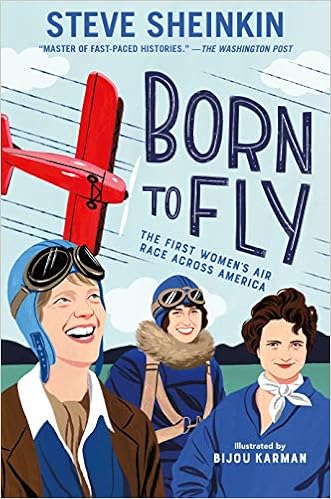
Born to Fly: The First Women’s Air Race Across America by Steve Sheinkin, illustrated by Bijou Karmans

Published by Roaring Brook Press

Image result for born to fly sheinkin

Summary:  In 1929, women pilots competed in the Air Derby, the first all-female cross-country race, to see who could be the first to fly from Santa Monica, California to Cleveland, Ohio.  The most famous was Amelia Earhart, but all the women had broken multiple barriers to learn how to fly, and many held records for speed, height, endurance, and long-distance flights.  Starting with a childhood frequently spent jumping off roofs or other high places, Steve Sheinkin traces how each of the women got to the race, then follows the pilots on their nine-day journey.  There were suspicions of sabotage as planes were wrecked and one pilot died, but all the women were determined to see it through. “They started by jumping off roofs. They wound up kicking down doors–for themselves, and everyone else.”  Includes extensive source notes, works cited, and index. 288 pages (60 pages is notes, citations, and index); grades 5-8.

Pros:  Steve Sheinkin does it again, writing a nonfiction book that reads like a novel.  I wasn’t all that excited about starting this book, but once I did, I couldn’t put it down.  Readers will learn that there were many women–not just Amelia Earhart–who defied the social norms to follow their passion for flying.  Lots of illustrations and photos enhance the text.

Cons:  There were so many different pilots to keep track of, some with the same first name, that I sometimes had trouble keeping everyone straight.

If you would like to buy this book on Amazon, click here.
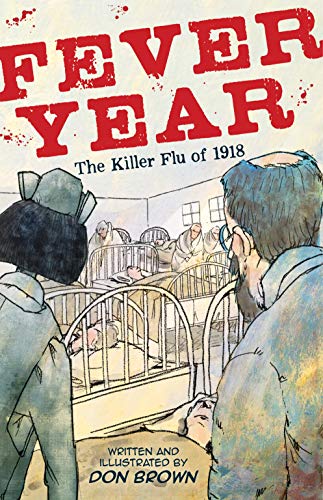
Image result for air derby 1929

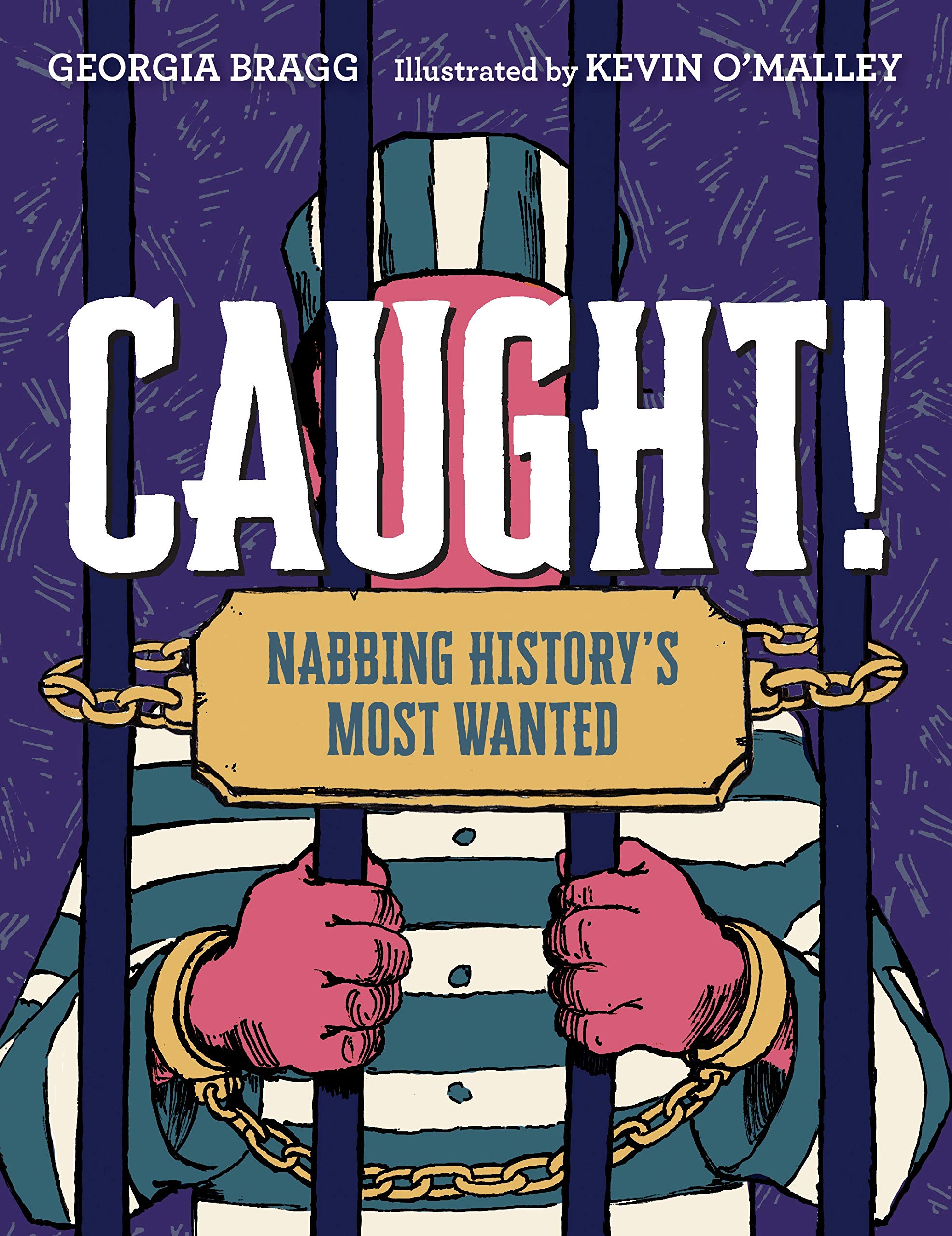
Caught! Nabbing History’s Most Wanted by Georgia Bragg, illustrated by Kevin O’Malley

Published by Crown Books for Young Readers

Image result for caught nabbing history's most wanted

Summary:  From the team that brought you How They Croaked: The Awful Ends of the Awfully Famous and How They Choked: Failures, Flops, and Flaws of the Awfully Famous comes this collection of 14 profiles of interesting criminals.  Some will be known by just about everyone (John Wilkes Booth, Joan of Arc), while others are less famous…or infamous (Vincenzo Peruggia, Bernard Otto Kuehn).  Each profile is several pages long, with two additional pages of “Facts and Stats”. Black and white illustrations throughout match the humorous, irreverent tone of the text.  Includes separate bibliographies of print and online sources for each person as well as an index. 224 pages; grades 4-8.

Pros:  History buffs and reluctant readers alike will enjoy these funny, breezy profiles of notorious criminals from all ages.  The author does a good job of adding some historical context which often makes the dastardly deeds a bit more understandable.  The extensive back matter could lead to a lot more research on any one of them.

Cons:  The most recent subject is Al Capone, born in 1899.  We can hope that a sequel is in the works for more recent criminals.  

If you would like to buy this book on Amazon, click here.
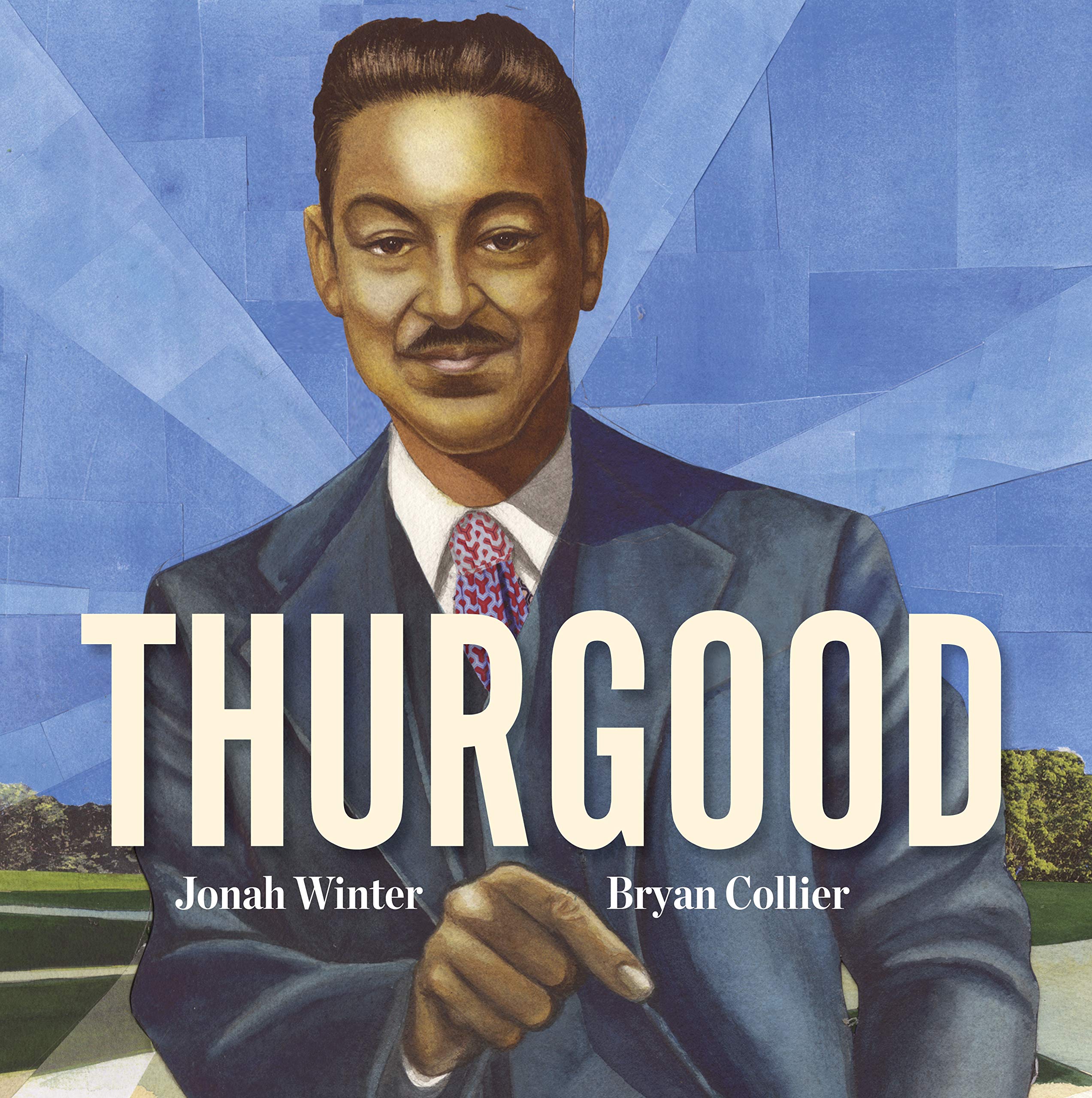
Thurgood by Jonah Winter, illustrated by Bryan Collier

Published by Schwartz and Wade

Image result for thurgood jonah winter

Image result for thurgood jonah winter

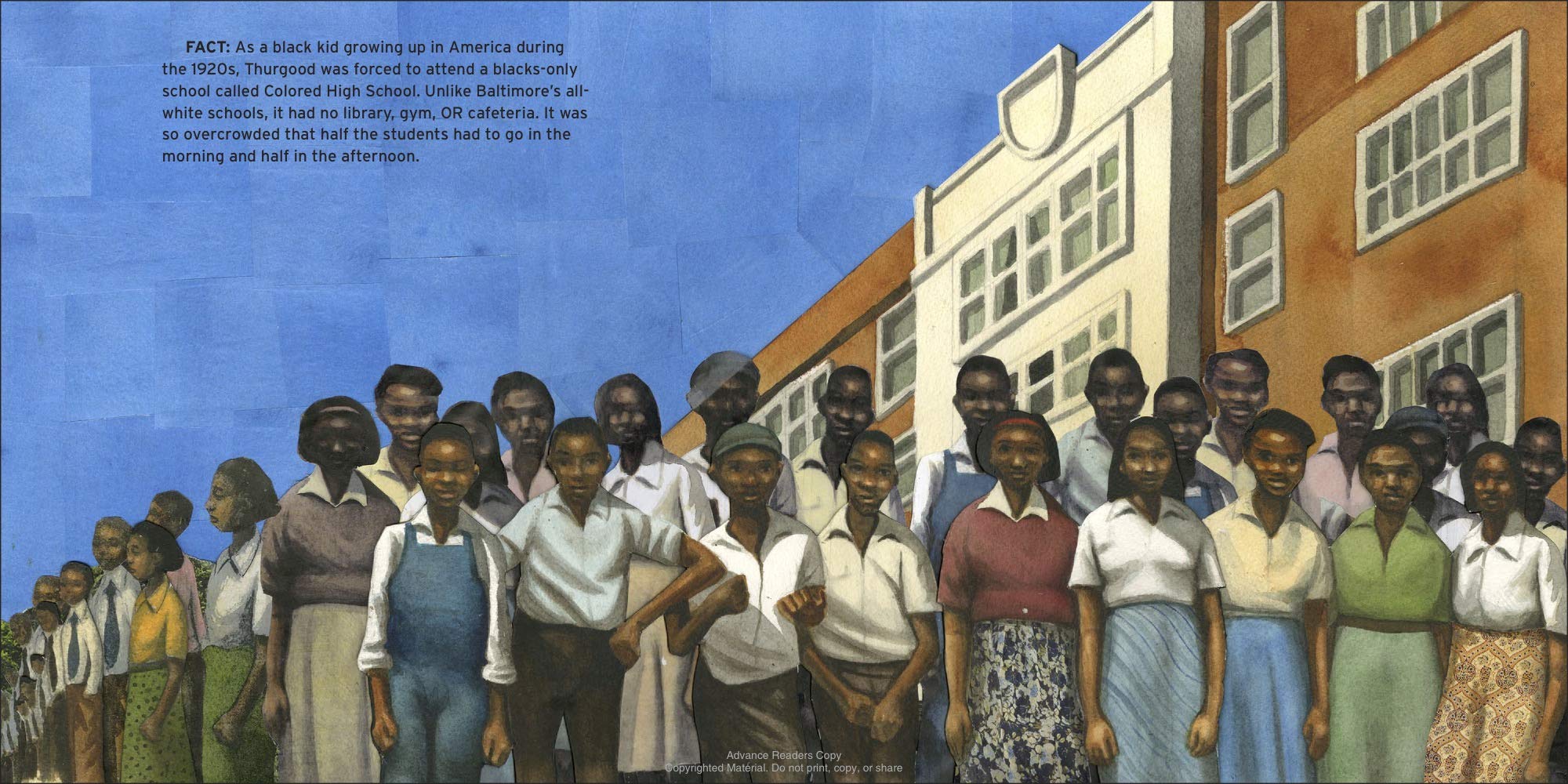
Summary:  Thurgood Marshall’s path to legal greatness began at the age of six, when he convinced his parents to legally change his name from Thoroughgood to Thurgood.  Growing up in 1920’s Baltimore, he saw injustice on a daily basis; at home, he learned from his father to back up his statements with factual evidence. After leading his high school debate team, Thurgood went on to college and then to law school at Howard University.  He became a lawyer for the NAACP, and argued 29 cases before the Supreme Court, including Brown v. Board of Education.  The book ends with that decision, simply mentioning on the last page that Marshall became the first black Supreme Court justice in U.S. history.  Includes an author’s note with more information about Thurgood Marshall’s Supreme Court appointment and career. 40 pages; grades 1-5.

Pros:  A powerful narrative about Thurgood Marshall’s life, presenting much of the information in legal terms (“Fact:”; “Verdict:”; “Injustice:”).  Bryan Collier’s illustrations boldly bring to life many dramatic scenes from Marshall’s life, in the courtroom and in unjust, sometimes dangerous settings growing up in Baltimore and traveling through the South.  

Cons:  The author’s note states, “A forty-page picture book such as this cannot possibly convey the magnitude of his legacy”, yet there are no resources for additional research.

If you would like to buy this book on Amazon, click here.
Manhattan: Mapping the Story of an Island by Jennifer Thermes

Published by Harry N. Abrams

Image result for manhattan jennifer thermes

Image result for manhattan jennifer thermes

Summary:  From Henry Hudson’s discovery in 1609 to Hurricane Sandy in 2012, this history looks at the changes made to the island of Manhattan.  Before the arrival of the Europeans, the island was inhabited by the Lenape who called it Mannahatta, meaning “islands of many hills”.  That landscape changed in the early 19th century, when city planners created a grid of roads that flattened hills and straightened curves.  When life in the grid became too congested, Central Park was created to bring some green space to the city. Blizzards, fires, skyscrapers, and bridges have all changed the look of the city over the years, and with close to 4 million people living or working in New York City every week, you can be sure that those changes will continue.  Includes an afterword; an extensive timeline crammed onto a single page; and a list of books, websites, and museums with more information. 64 pages; grades 3-7.

Pros:  As she did in Grandma Gatewood Hikes the Appalachian Trail, Jennifer Thermes has created a picture book featuring beautiful maps that show a changing landscape.  There are plenty of other interesting illustrations as well, but the maps of Manhattan, all with the same shape, but gradually evolving over time, really tell the story of the city’s history.  Plan on putting aside a substantial chunk of time to enjoy this book in its entirety.

Cons:  I was surprised there was no mention of 9/11, except as an entry in the timeline.

If you would like to buy this book on Amazon, click here.

Miep and the Most Famous Diary: The Woman Who Rescued Anne Frank’s Diary by Meeg Pincus, illustrated by Jordi Solano

Published by Sleeping Bear Press

Image result for miep and the most famous diary

Image result for miep and the most famous diary

Summary:  Beginning on August 4, 1944, when the eight occupants of the Secret Annex under Miep Gies’s care were arrested and taken away, the narrative follows Miep’s story of how she saved Anne Frank’s diary.  Facing arrest for keeping any of the group’s belongings from the Nazis, Miep snuck back into the annex before their return, taking Anne’s diary and a combing shawl with some of Anne’s hair still on it. She kept these, hoping that Anne would return one day to claim them, but it was only Anne’s father, Otto Frank, who survived.  After he received the devastating news of his daughters’ deaths, Miep gave him Anne’s things. Even after the diary was published, it was many years before Miep could bring herself to read it. Reading it in one sitting at last, she felt a measure of peace, knowing that Anne would live on, thanks to her efforts. Includes an author’s note and a timeline of Miep’s life.  40 pages; grades 2-6.   

Pros:  Even with so many books about Anne Frank, this one is unique for its perspective from Miep’s point of view.  Her courage in standing up to the Nazis on numerous occasions is inspiring, as is her role in preserving Anne’s words.

Cons:  The illustrations were just okay.

If you would like to buy this book on Amazon, click here.
A Place to Land: Martin Luther King Jr. and the Speech That Inspired a Nation by Barry Wittenstein, illustrated by Jerry Pinkney

Published by Neal Porter Books

Image result for place to land martin

Summary:  Martin Luther King Jr.’s “I Have a Dream” speech is such an integral part of American history, it’s difficult to believe that it almost didn’t happen.  This book starts the night before the speech, when King sat down with his closest advisors to hash out what he was going to say the next day.  The focus was on jobs and economic justice, and one friend even advised, “Don’t use the line about ‘I have a dream.’ You have used it too many times already.”  King then retired to his room to meditate and pray about what he was going to say. Shortly after 3:00 the next afternoon, he delivered his speech. It went well, but didn’t seem quite powerful enough to him.  So when singer Mahalia Jackson called to him, “Tell them about the dream, Martin!”, he put his notes aside and spoke from his heart. Back at the hotel, he and his friends celebrated the speech, knowing that it was just the beginning of a long struggle ahead. Includes notes from the author and artist; thumbnail sketches of who was in the hotel that night; a list of who spoke at the March on Washington; and a bibliography.  48 pages; grades 2-6.

Pros:  So many picture books have been written about Martin Luther King, Jr. and “I Have a Dream”, but this one adds to the narrative, giving background to the speech and placing it in the context of the Civil Rights Movement.  Jerry Pinkney’s illustrations not only add beauty and color to the story, but label the different people that were there and who inspired King while writing his speech.

Cons:  There’s no additional information about some of the people labeled in the illustrations.

If you would like to buy this book on Amazon, click here.