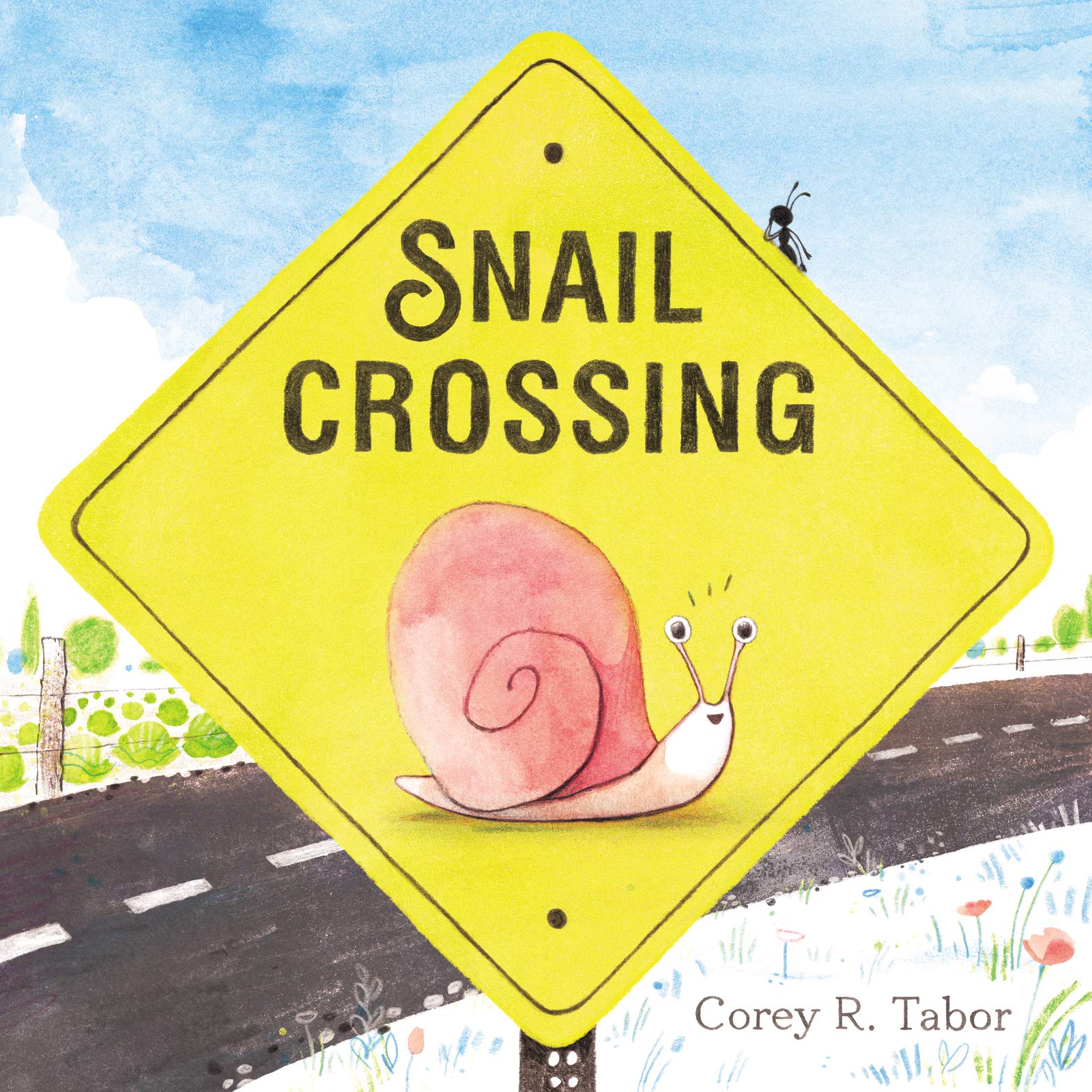
Snail Crossing by Corey R. Tabor

Published by Balzer + Bray

Image result for snail crossing tabor

Summary:  When Snail sees some delectable cabbage on the other side of the road, he’s determined to make the perilous journey to get to it.  He slowly moves into the path of an oncoming car, but that proves less of a deterrent than a bunch of impatient ants who yell at Snail to get out of the way.  When rain starts falling, Snail invites them all into his shell for tea, and they become friends. Continuing the journey, Snail is dismayed to discover that he’s turned himself around and is right back where he started.  His new friends save the day, though, and on the last page, everyone gathers for cabbage soup inside the shell.

Pros:  A cute story of friendship and the benefits of being kind to others–even those who may not be so nice initially.

Cons:  That shell seems like it’s a lot bigger on the inside than the outside.

If you would like to buy this book on Amazon, click here.

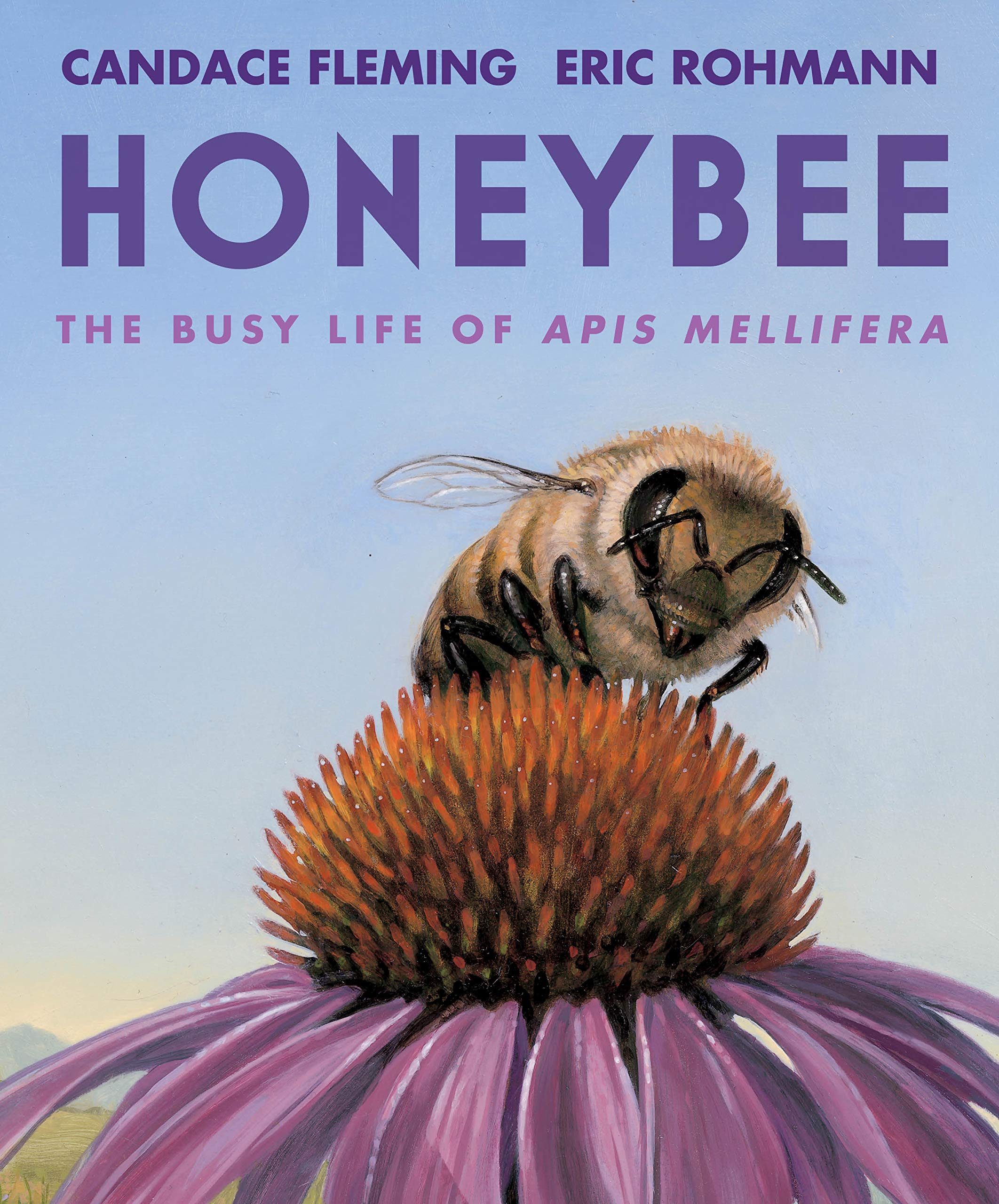
Honeybee: The Busy Life of Apis Mellifera by Candace Fleming, illustrated by Eric Rohmann

Published by Neal Porter Books

Image result for honeybee candace fleming amazon

Summary:  A new worker bee pushes her way out of her cell on the pages before the title page.  Apis Mellifera, or Apis for short, she gives new meaning to the phrase “busy as a bee” as she cleans up the hive, feeds the larvae, cares for the queen, and builds and protects the hive.  Finally, on day 25 of her life, she is ready to fly to the fields, where she spends the next ten days collecting nectar from 30,000 flowers before her life is over.  As she falls to the ground, back in the next, a new Apis Mellifera emerges from a cell.  Includes a detailed diagram of a bee’s anatomy; additional information about bees and how to help them; and additional books and websites for further research.  40 pages; grades 1-5.

Pros:  The award-winning team that brought you Giant Squid has created another marvelous nonfiction book.  The poetic text, amazingly lifelike illustrations, and extensive back matter make this an outstanding resource for research or reading for enjoyment.

Cons:  I started getting impatient for Apis to fly already.

If you would like to buy this book on Amazon, click here.

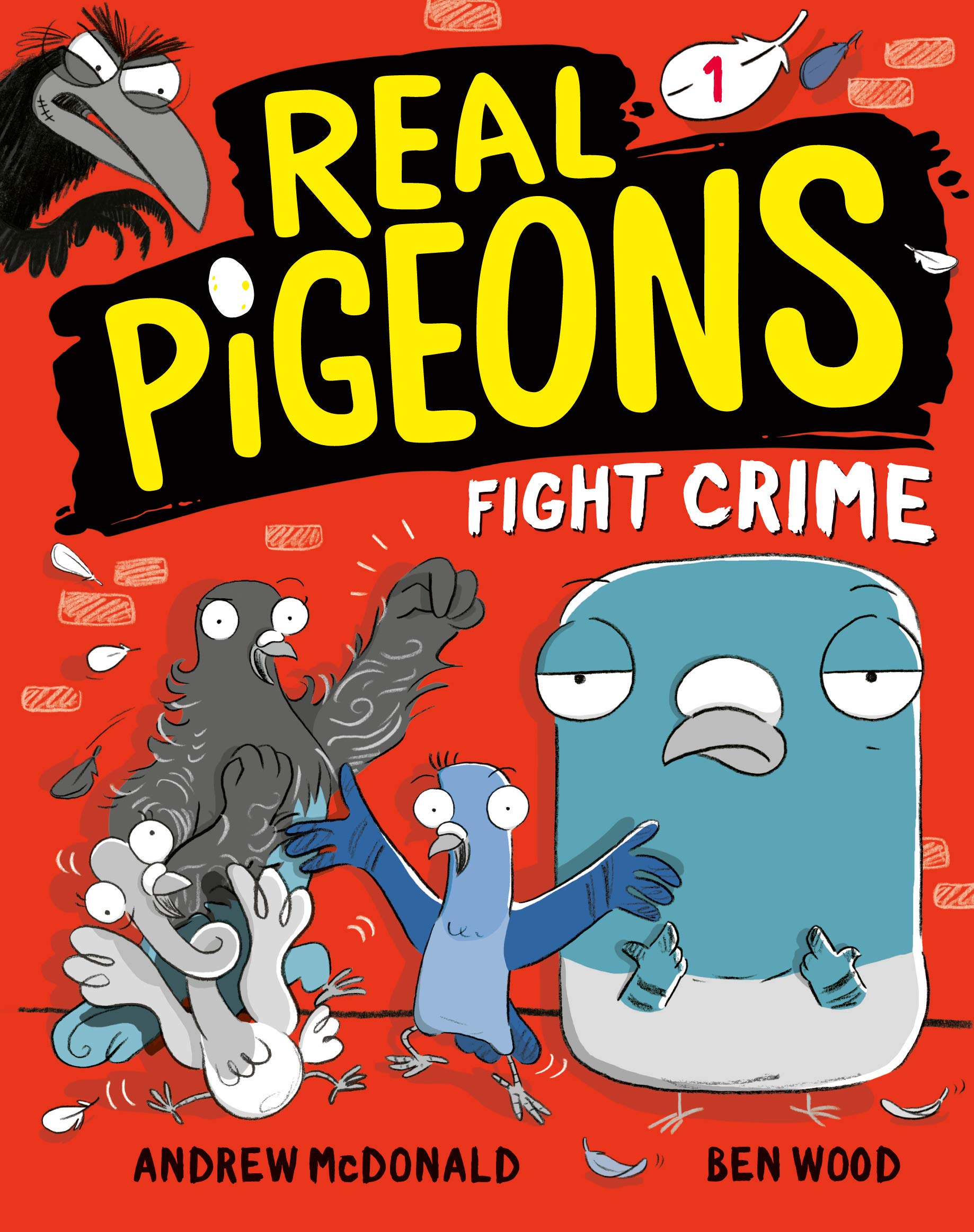
Real Pigeons Fight Crime by Andrew McDonald, illustrated by Ben Wood

Published by Random House Books for Young Readers

Image result for real pigeons fight crime amazon

Image result for real pigeons fight crime ben wood

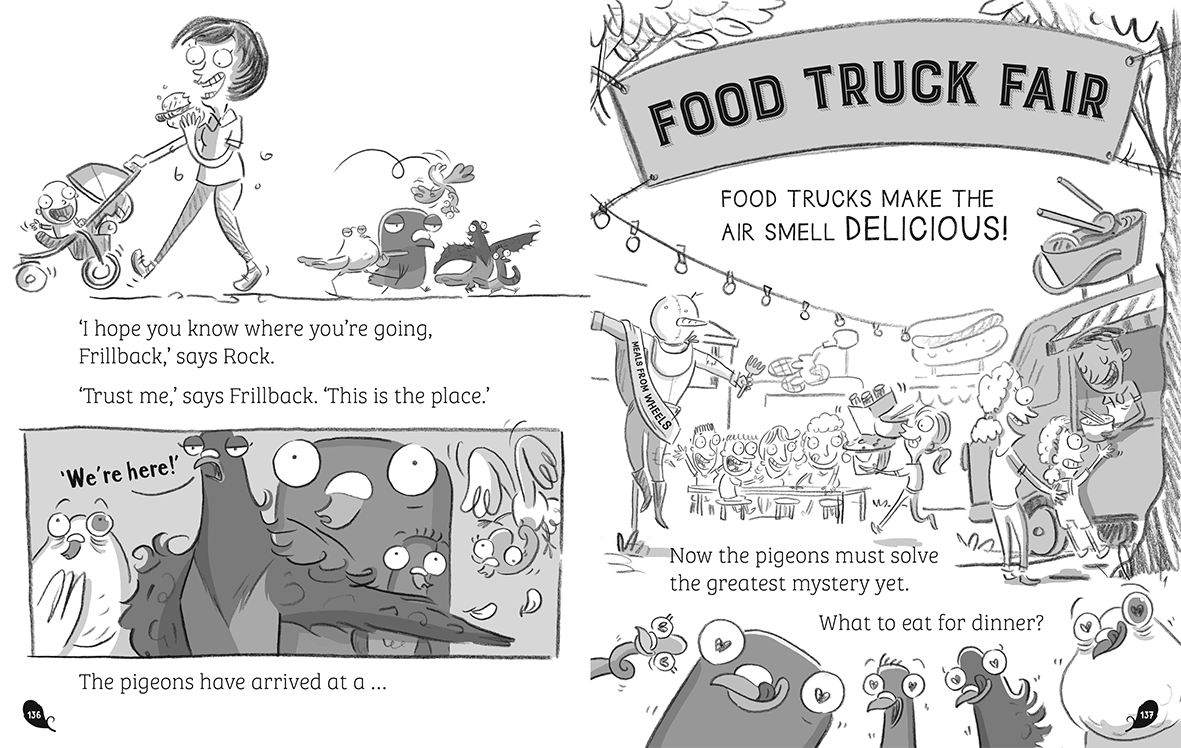
Summary:  Rock Pigeon lives on a farm, where he loves disguising himself as various plants and animals.  One day an old pigeon named Grandpouter comes for a visit. Turns out he’s starting a squad of crime-fighting pigeons and is looking for a master of disguise.  Rock’s not sure he wants to go live in the city, but Grandpouter convinces him to try it out for one case. In the city, Rock meets the rest of the squad, and they get to work solving the mystery of why all the breadcrumbs have disappeared from the local park.  Cracking that case convinces Rock that he belongs with the Real Pigeons, and the squad successfully solves two more mysteries by the end of the book. Includes a page of facts about real-life pigeons and a promotion for the next two books in the series. 202 pages; grades 2-5.

Pros:  Fans of series like The Bad Guys, Inspector Flytrap, and, of course, Dog Man will enjoy this new graphic series that uses the same goofy sense of humor in both the story and the illustrations.  

Cons:  I had a bit of trouble keeping the different pigeons straight.  Guess I prefer the different species featured in The Bad Guys.

If you would like to buy this book on Amazon, click here.

Leave It to Abigail! The Revolutionary Life of Abigail Adams by Barb Rosenstock, illustrated by Elizabeth Baddeley

Published by Little, Brown Books for Young Readers

Image result for leave it to abigail goodreads

Summary:  “Leave it to Abigail!” is the repeating refrain of this book, as Abigail Adams defied expectations, beginning with her survival from a sickly baby to a rambunctious, inquisitive young girl.  She married John Adams at the age of 19, and continued to live life on her own terms, running a farm and raising a family when John was away for long periods of time. Their correspondence has become famous, as she offered insights and opinions from the home front while he traveled abroad.  When their children were grown, she boarded a schooner and sailed to Europe, where she lived the life of an ambassador’s wife, throwing parties and attending balls and concerts while maintaining a thrifty New England lifestyle. The Adams returned home to the presidency, and Abigail continued to influence politics through her writing and her conversations of John.  The two finally retired to their farm, but Abigail continued writing letters to the end of her life. Includes portraits of twelve American women influenced by Abigail Adams; author’s and illustrator’s notes; and source notes. 40 pages; grades K-4.

Pros:  It’s research project season at my schools, and with assignments on early American history and famous Massachusetts people, demand is outpacing supply.  So I’m delighted to find a new biography of Abigail Adams, particularly one that is written and illustrated so engagingly, really making Abigail come to life as a smart, courageous woman of her time.

Cons:  With research in mind, I would have liked to have seen a list of additional books and/or websites to help kids fill out Adams’ story.

If you would like to buy this book on Amazon, click here.
Fly High, John Glenn: The Story of an American Hero by Kathleen Krull, illustrated by Maurizio A. C. Quarello

Published by HarperCollins

Image result for fly high john glenn

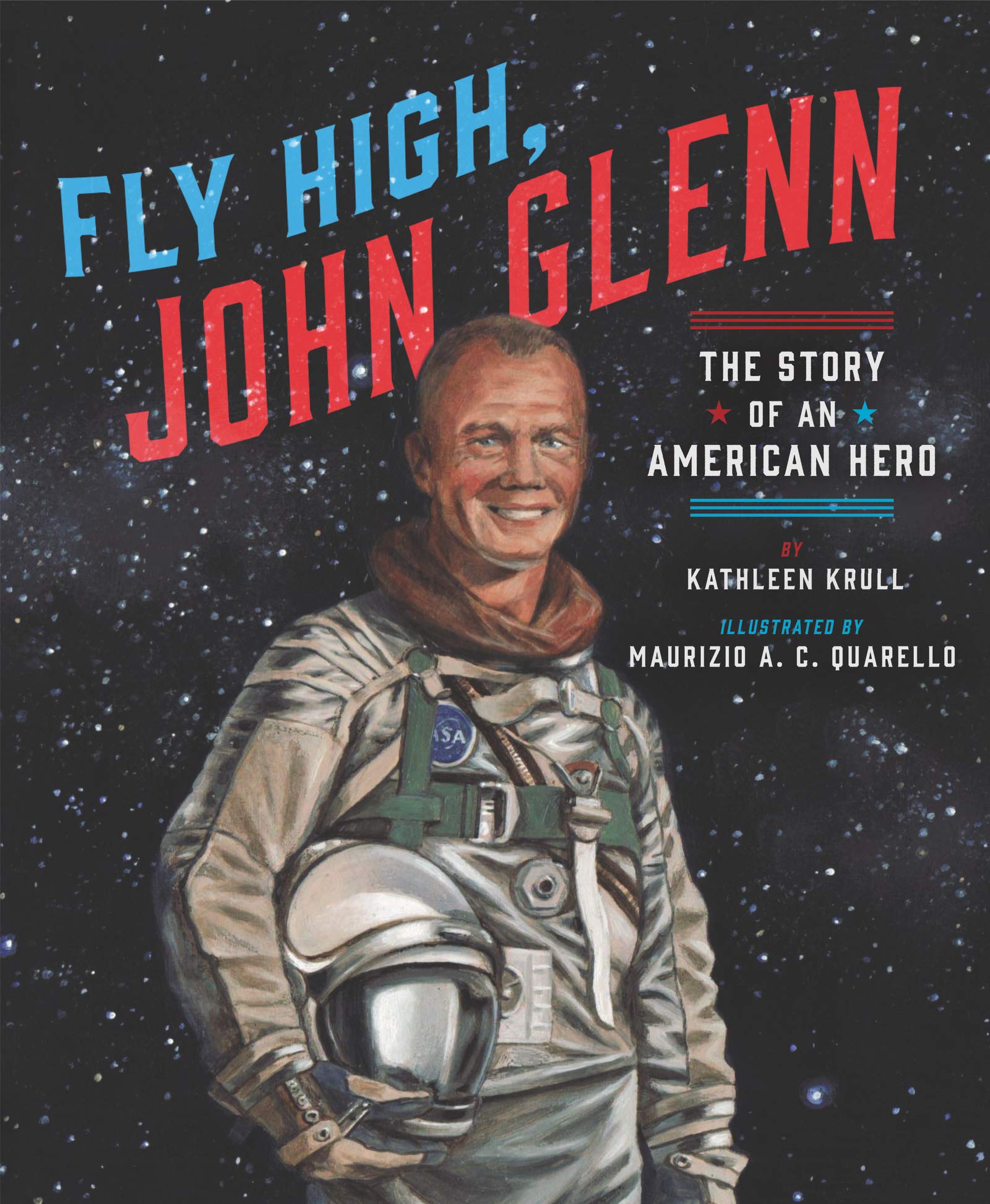
Summary:  John Glenn dreamed of flying from his early days growing up in Ohio.  He earned his pilot’s license at age 20, becoming a fighter pilot during World War II.  He kept flying after the war, flying the first supersonic flight across the United States. When NASA announced Project Mercury, a mission to launch a man into orbit around the Earth, candidates were selected from the country’s 508 test pilots.  Glenn was one of the seven chosen, and on February 20, 1962, he became the first man to orbit the Earth aboard his space capsule Friendship 7.  Despite a few glitches, the mission went well, and Glenn returned to a hero’s welcome.  He continued to serve his country as a U.S. senator, and in 1998, became the oldest person to fly in space at age 77.  Includes additional information, a timeline, and a bibliography. 48 pages; grades 2-5.

Pros:  This is quite a complete biography for a picture book, including plenty of information on John’s career and family.  The realistic paintings are beautiful, particularly the ones of outer space.

Cons:  Due to the length, primary-grade audiences might get a bit antsy before the last page.

If you would like to buy this book on Amazon, click here.
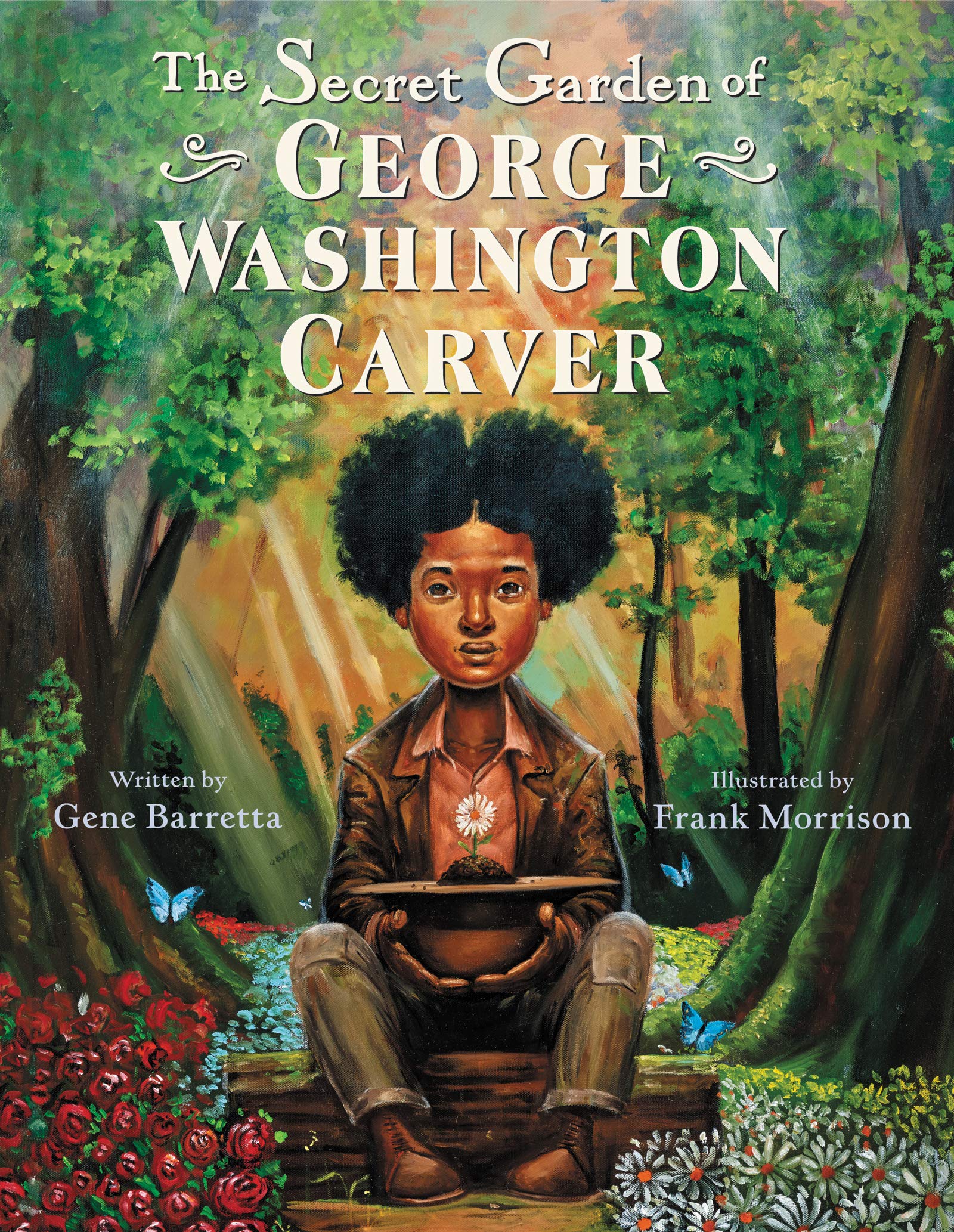
The Secret Garden of George Washington Carver by Gene Barretta, illustrated by Frank Morrison

Published by Katherine Tegen Books

Image result for secret garden of george washington carver

Summary:  Born into slavery in 1864 (his father died before he was born; he and his mother were kidnapped when he was a baby, and she was never seen again), George Washington Carver showed an early love of plants and nature.  Unable to go to school, he decided to teach himself all he could from the woods. He started a secret garden to study plants and soon developed a reputation for his ability to grow things and restore sickly plants to health.  Later, he was able to go to school and became the first black graduate of Iowa Agricultural College. He was hired by Booker T. Washington to teach agriculture at Tuskegee Institute, and became well-known for his work with peanuts as a crop to replace cotton.  He also traveled to farms to teach people how to improve their crops and their own health. Carver preached the lessons he had learned in his garden as a child: “Regard nature. Revere nature. Respect nature.” Includes a timeline, a bibliography, and a list of books for further reading.  40 pages; grades 1-5.

Pros:  This beautifully-illustrated biography of George Washington Carver opens in 1921 with him testifying to U.S. Congress on the many uses of the peanut, then goes back to show his amazing journey to reach that point.  There’s a fair amount of detail for a picture book, making this an engaging story as well as a good tool for elementary research.

Cons:  I would have liked to see a few photos included at the end.

If you would like to buy this book on Amazon, click here.
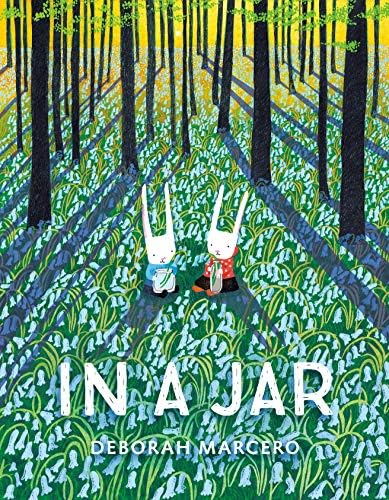
In a Jar by Deborah Marcero

Published by G. P. Putnam’s Sons Books for Young Readers

In a Jar: Marcero, Deborah, Marcero, Deborah: 9780525514596: Amazon.com:  Books

Image result for in a jar deborah marcero

Summary:  “Llewelyn was a collector.  He collected things in jars.”  This young rabbit collects flowers, stones, feathers, and more, keeping them in jars to remind him of “all the wonderful things he had seen and done.”  One night, Llewelyn goes to the beach at sunset, scooping up several jars filled with red water. He gives one to Evelyn, a girl bunny who happens to be there at the same time, and the two become friends.  They collect together, moving to collect “things you might not think would even fit in a jar” like rainbows and the sound of the ocean. Then one day, Evelyn moves away. Llewelyn is terribly lonely, until one night, unable to sleep, he collects a meteor shower in a jar.  He sends it to Evelyn, who reciprocates with her own filled jars. As Llewelyn ventures outside to fill some more jars, he finds a little boy named Max who is eager to help him. 40 pages; ages 4-8.

Pros:  A lovely meditation on memory, friendship, and finding ways to keep in touch across the miles.  The illustrations seem worthy of Caldecott consideration.

Cons:  Being something of a minimalist, it makes me shiver to think of having all those jars around, gathering dust.

If you would like to buy this book on Amazon, click here.
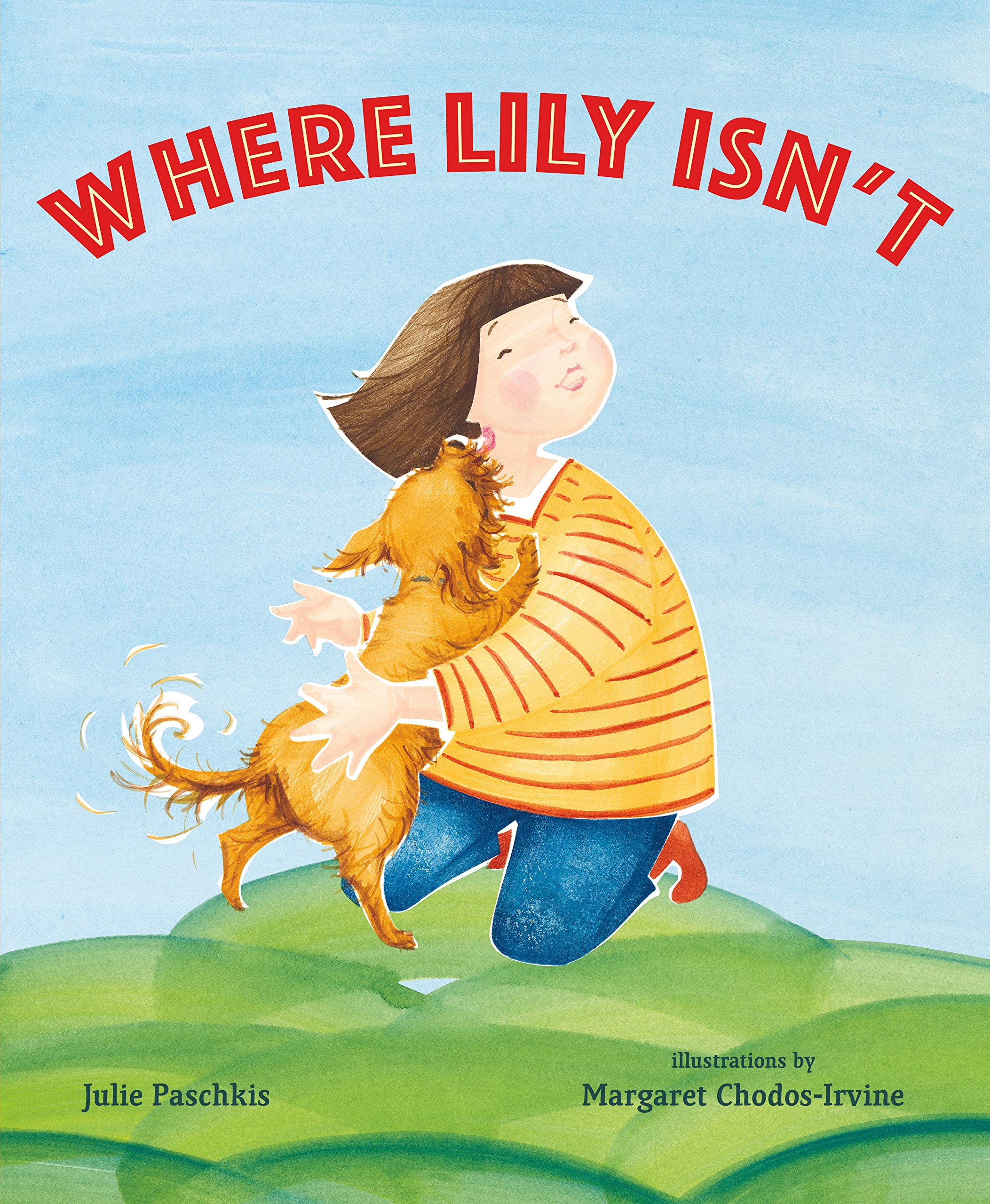
Where Lily Isn’t by Julie Paschkis, illustrations by Margaret Chodos-Irvine

Published by Henry Holt and Co.

Image result for where lily isn't amazon

Image result for where lily isn't chodos-irvine

Summary:  “Lily ran and jumped and barked and whimpered and growled and wiggled and wagged and licked and snuggled.  But not now.” A young girl deals with the empty places of losing her dog. Lily’s no longer at the side of her bed when she wakes up.  She’s not at the table, waiting for food to fall on the floor, or at the door, barking at the mailman. She’s not begging to go outside when the girl goes to the park, or waiting eagerly at the door when the girl returns from school.  “The house is full of all the places where Lily isn’t. But here inside me–that’s where Lily is and where she always will be,” the girl concludes, surrounded by the pictures she has drawn of herself and her dog. 32 pages; ages 3-8.

Pros:  Anyone who has ever lost a pet will recognize the emptiness in the house that is left behind.  A perfect choice for a young child experiencing that loss.

Cons:  I seem to have forgotten to write any cons, and now I have returned the book to the library.  So Lily gets a pass.

If you would like to buy this book on Amazon, click here.
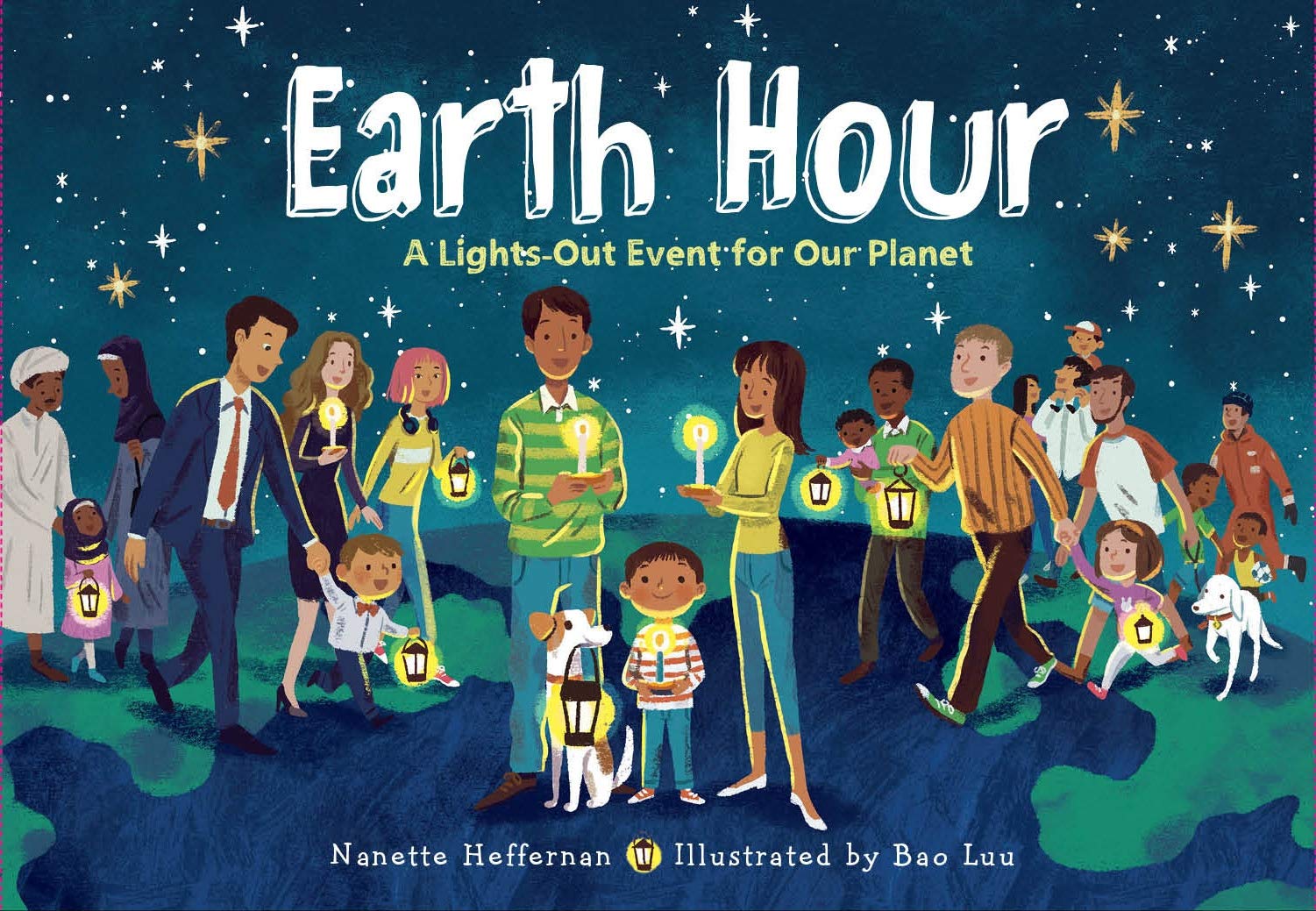
Earth Hour: A Lights-Out Event for Our Planet by Nanette Heffernan, illustrated by Bao Luu

Published by Charlesbridge

Image result for earth hour nanette heffernan

Image result for earth hour nanette heffernan

Summary:  All over the world, people use energy to light up the nighttime.  Kids and their families are shown enjoying this illumination at the Sydney Opera House, the Eiffel Tower, the pyramids of Egypt, and other places around the globe.  “Energy is a wonderful resource from Earth–a gift from nature we respect and conserve.” To honor this, people around the world observe Earth Hour at 8:30 p.m. in late March, when they turn off their lights for 60 minutes.  “Alone we are one…but together we have power. United, we are Earth Hour.” Includes additional information about Earth Hour, and how our energy use is leading to climate change; also, an author’s note about how she came to write this book.  32 pages; ages 3-7.

Pros:  A simple but effective introduction to an event I was not aware of.  I like how the illustrations portray kids and their families at famous landmarks around the world to show that Earth Hour and energy conservation are global concerns.

Cons:  There were no additional resources listed or websites to find out when Earth Hour is this year (it’s March 28, 2020).


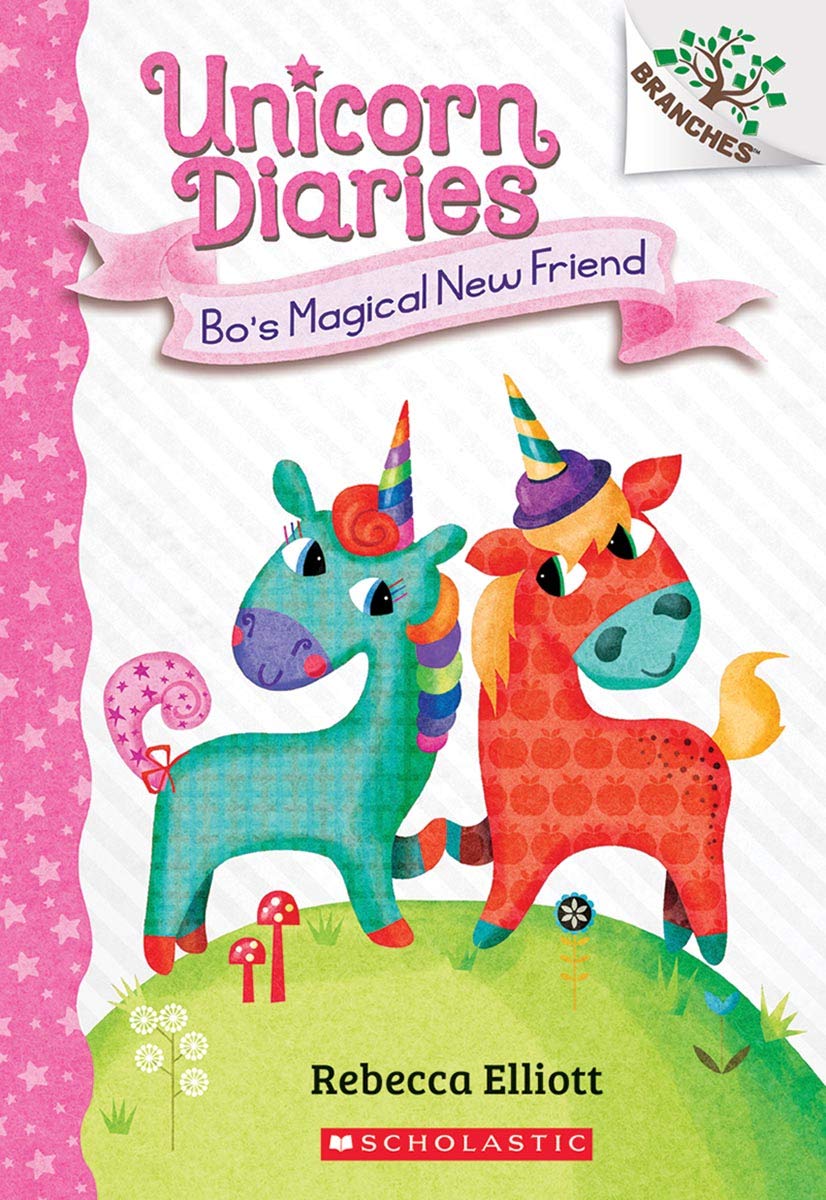
Bo’s Magical New Friend (Unicorn Diaries book 1) by Rebecca Elliott

Published by Scholastic 

Image result for bo's magical new friend amazon

Summary:  Meet Rainbow Tinseltail (better known as Bo) of Sparklegrove Forest, a unicorn who sports a rainbow mane and sneezes glitter.  Bo’s a wishing unicorn, which means they (Bo’s gender is never revealed) can grant one wish a week. When new unicorn Sunny pops into existence (that’s how it is with unicorns), Bo’s hoping he’ll become a new best friend (Sunny seems to be a boy).  The unicorns get a challenge to use their special magical powers, but Sunny doesn’t know what his is. Bo wants Sunny to make a wish to learn his power, so that Bo can grant the wish and win Sunny’s friendship. But that’s against the rules, and before long Bo and Sunny have gotten into a fight.  Fear not, there’s a happy ending for all, and a second book coming out in early March. 80 pages; grades 2-3.

Pros:  A new diary series about unicorns written and illustrated by the author of Owl Diaries? Better stock up on extra copies…this is sure to be a hit with the early-reading crowd.

Cons:  Keep a dose of insulin handy for this super-sweet dose of unicorn magic.

If you would like to buy this book on Amazon, click here.