The Gift of Ramadan by Rabiah York Lumbard, illustrated by Laura K. Horton

Published by Albert Whitman and Co.
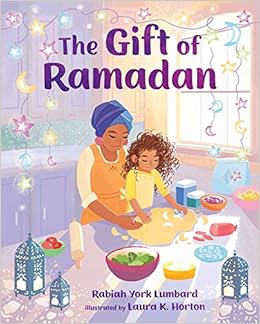
Image result for gift of ramadan amazon

Summary:  When Sophie’s grandmother tells her that the heart of a person who fasts during Ramadan is “pretty and sparkly” like Sophie’s new ring, Sophie decides she wants to fast.  Waking up before sunrise is tough, though, and Sophie falls asleep at breakfast, and again during morning prayers. By lunchtime, she is famished, and her little brother is tempting her with his delicious cookie.  Grandma finds her eating cookies, and reassures her that her sparkles are growing, and that there are other ways to celebrate the holiday. She and Grandma spend the afternoon preparing a pizza dinner, which the whole family enjoys after sunset.  Includes an author’s note about Ramadan. 32 pages; ages 4-9.

Pros:  Children of all faiths will connect with this story, and those who don’t know about Ramadan will learn about it through the eyes of another child who is a lot like them.  

Cons:  The reasons for fasting during Ramadan aren’t explained in either the story or the author’s note.
If you would like to buy this book on Amazon, click here.

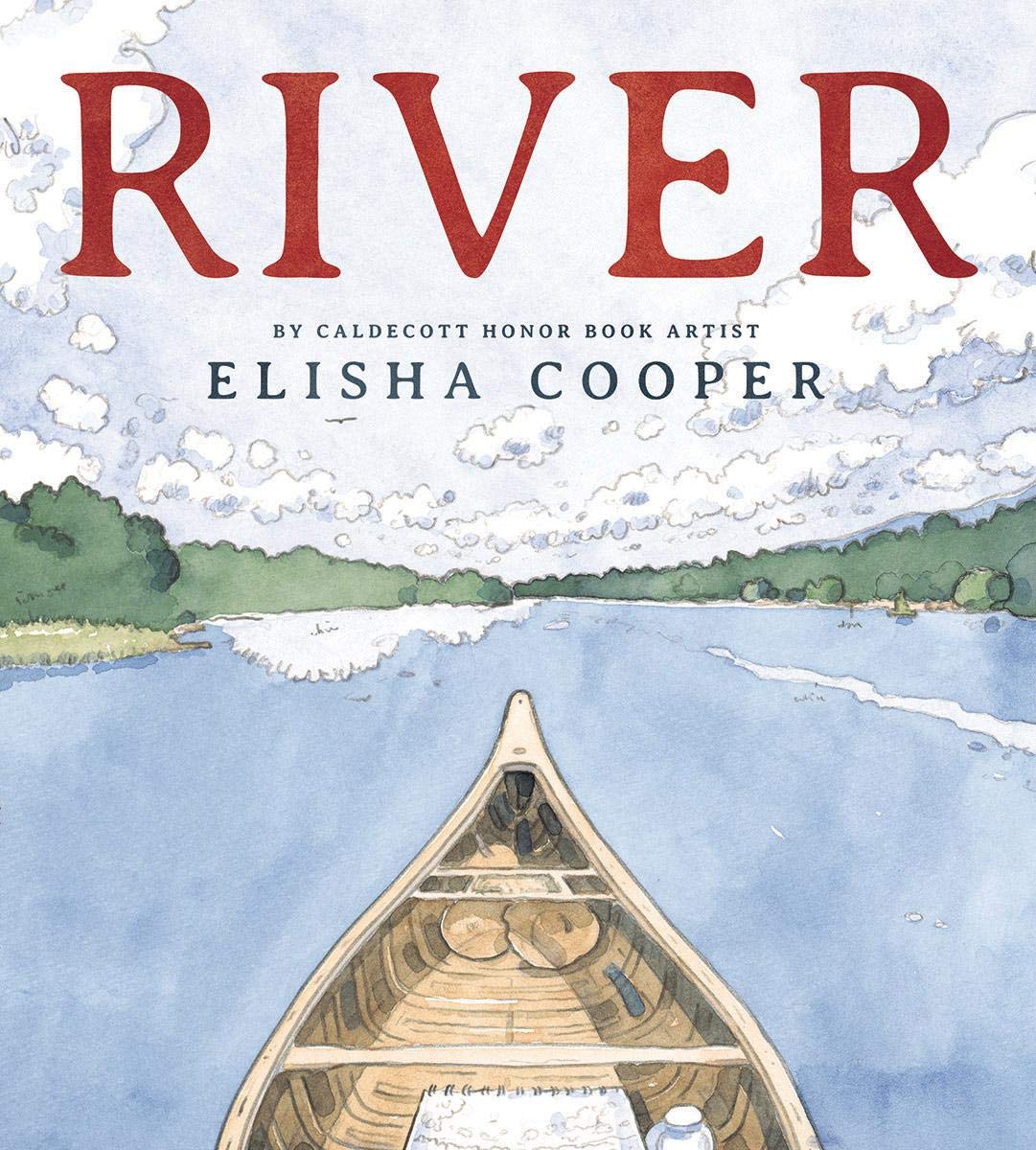
River by Elisha Cooper

Published by Orchard Books

Image result for river elisha cooper

Summary:  The illustration facing the title page shows a woman tracing a route on a map with her finger while her two children look on.  Outside the window, her husband is loading a canoe on the top of her car. We never learn the woman’s name, but we follow her journey as she travels the length of the Hudson River in a canoe.  We learn what she eats, how she camps, and what animals she sees along the way. We watch as she struggles through rapids, narrowly avoids a tugboat collision, and capsizes in a storm before finally reaching her destination: New York City.  After paddling the length of the city, she dreams of other adventures, but knows that right now she belongs back with the family who is greeting her on the shore. Includes an author’s note (that begins “I did not canoe down the Hudson River.”), a note on the Hudson River, and a list of additional resources.  48 pages; grades K-5.

Pros:  Here’s one more for the pile of Caldecott contenders I’m gathering up to share with my students.  Readers will be inspired to try an adventure of their own after reading the details of this one and seeing the gorgeous landscapes.  

Cons:  There’s a fair amount of text, written in a quiet style with plenty of details; while this is certainly not a bad thing, it may not grab readers right away.

If you would like to buy this book on Amazon, click here.

Birdsong by Julie Flett

Published by Greystone Kids

Image result for birdsong julie flett

Image result for birdsong julie flett

Summary:  A girl narrator tells of her move from the city to the country.  At first, she’s sad and misses all the people and things she’s left behind.  Her mother encourages her to visit their neighbor Agnes, and soon a friendship forms between the older woman and younger girl.  Both of them are artists–the girl loves drawing and Agnes makes things out of clay. As the seasons of the first year go by, Agnes gets sick and can’t get outside any more.  In the spring, a year after the move, the girl creates dozens of pictures of birds and hangs them in Agnes’s room to help her feel like she is outside. Walking home and, later, in bed, the girl thinks about her friend and how grateful she is for their friendship.  48 pages; ages 4-8.

Pros:  A quiet story celebrating intergenerational friendships and the passing of time in the natural world.  I don’t think Agnes dies at the end, but it’s not clear; either way, the story celebrates life and friendship. Julie Flett is Cree-Mêtis and deftly inserts some Cree words and imagery into the text.

Cons:  One review I read said there was a glossary of Cree words at the end of the book, but this was not the case with the book I saw.

If you would like to buy this book on Amazon, click here.

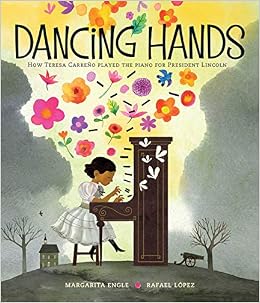
Dancing Hands: How Teresa Carreño Played the Piano for President Lincoln by Margarita Engle, illustrated by Rafael López

Published by Atheneum Books for Young Readers 

Image result for dancing hands how teresa carreño played the piano for president lincoln

Image result for dancing hands how teresa carreño played the piano for president lincoln

Summary:  Teresa Carreño had a gift for piano from the time she was a little girl in Venezuela.  War drove her family from their home and to the United States, where another war was raging–the Civil War.  Teresa found that music offered her a refuge from the sadness and suffering, and by the time she was ten years old, she was known as Piano Girl, performing all over the country.  She was amazed to get an invitation from President Abraham LIncoln to play at the White House, and nervous about accepting it. When the big day arrived, she found that the White House piano was poorly tuned, and didn’t know if she’d be able to perform.  But Lincoln asked her to play his favorite song, “Listen to the Mockingbird”, and once again music provided magical healing powers. An author’s note gives a bit more information about Carreño and her later musical career. 40 pages; grades K-4.  

Pros:  Acclaimed poet Margarita Engle and illustrator Rafael Lopez team up once again to create a beautiful story about a little-known episode in musical history.  Kids will be inspired to learn of the hard work and fame of this 10-year-old girl.

Cons:  I was expecting something bigger from the final scene in the White House.

If you would like to buy this book on Amazon, click here.

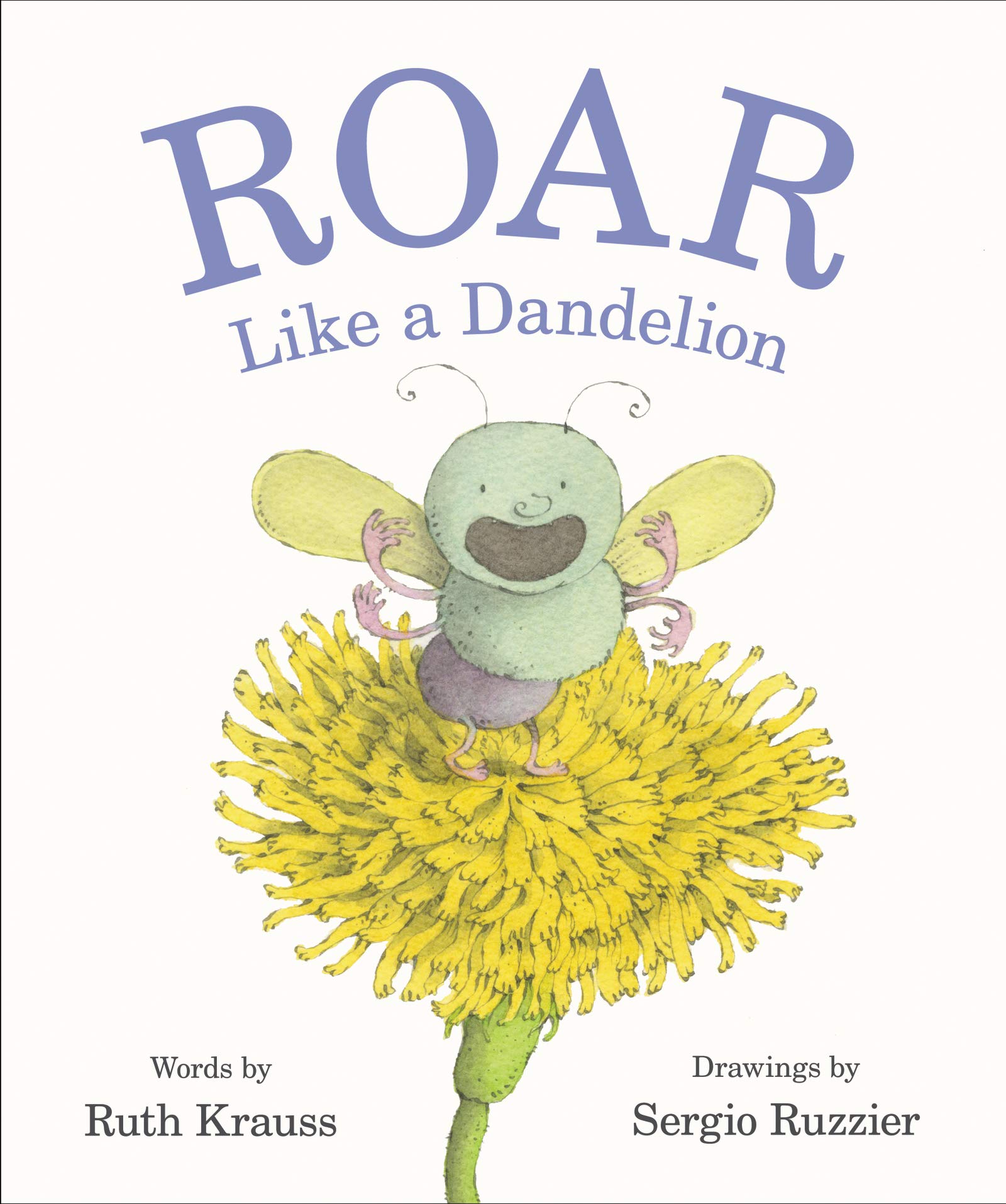
Roar Like a Dandelion by Ruth Krauss, illustrated by Sergio Ruzzier

Published by HarperCollins

Image result for roar like a dandelion amazon

Image result for roar like a dandelion

Summary:  This action-filled ABC uses verbs in unusual settings: “Act like a sprinkler in summer/Butt like a billy goat/Crow like a rooster, make the sun come up.”  Each has an animal illustration to accompany it, as the text goes all the way through to “X out all the bad stuff/Yell, ‘Good morning, big fat world!’/Zip, zip, zip, zip, zip”.  48 pages; ages 3-6.

Pros:  Sergio Ruzzier’s cute animal illustrations enliven this text written by the late Ruth Krauss, the beloved author of A Hole Is To Dig and The Carrot Seed among others.  Kids will get a kick out of the falling elephants for “Fall like rain” (who appear a few pages later in “Jump like raindrops”), the mice walking along a winding snake for “Go like a road”, and other whimsical illustrations.

Cons:  As I’ve said before, sometimes there’s a reason those manuscripts discovered posthumously didn’t get published (looking at you, Dr. Seuss’s executors).  This book is cute, but I was kind of underwhelmed, and surprised that it got four starred reviews.

If you would like to buy this book on Amazon, click here.

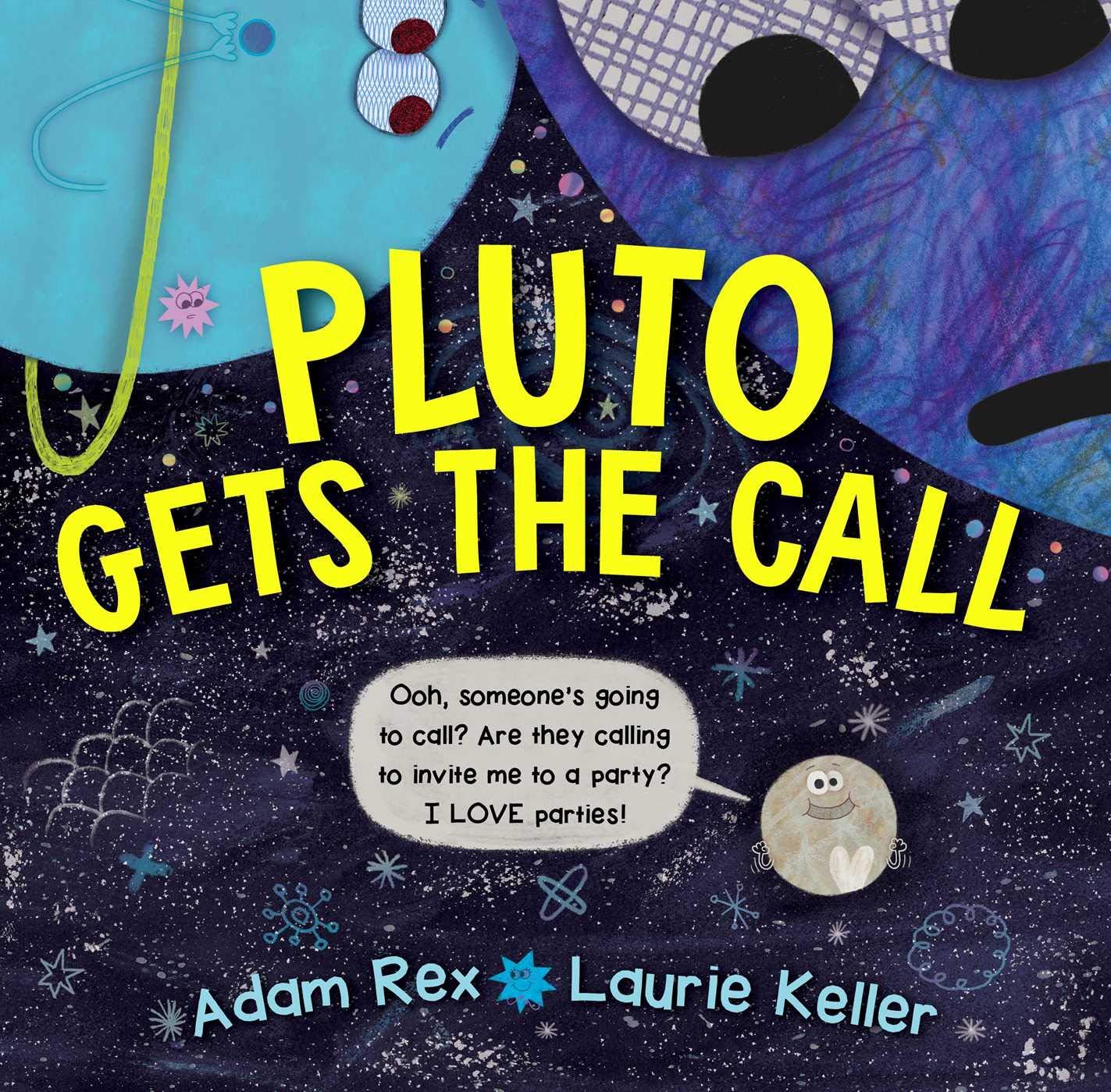
Pluto Gets the Call by Adam Rex, illustrated by Laurie Keller

Published by Beach Lane Books 

Image result for pluto gets the call

Image result for pluto gets the call

Summary:  On the title page, three scientists are seen arguing about who will call Pluto; we then travel to the outskirts of the solar system to meet Pluto, a friendly fellow, who introduces himself as the ninth planet.  While he’s giving a tour of his part of the universe, he gets the call. He is no longer a planet. Devastated, he seeks out advice from other planets, who turn out to have their own distinctive personalities.  Neptune is a bit slow on the uptake; Saturn is gushing with charm and just might have a crush on Pluto; Jupiter is a big bully. Finally, Pluto heads for the big guy–the Sun–who tells Pluto to enjoy being himself.  “You’re still a planet to everyone who was too short to ride the Ferris wheel…to all the people picked last for kickball.” Besides, scientists are still debating. At one point in history, they said there were 23 planets. Two pages of planetary facts round out this wacky tour of the solar system.  48 pages; grades K-4.

Pros:  I laughed out loud more than once, enjoying the planets’ personalities (“People talk about Uranus for reasons I don’t really want to get into.”  “Aww, shucks, you must mean my charming personality.”) There’s plenty of information tucked into the text and illustrations; kids will be having so much fun, they won’t even notice that they’re getting educated.

Cons:  48 pages seemed a little long and rambling to me.

If you would like to order this book on Amazon, click here.

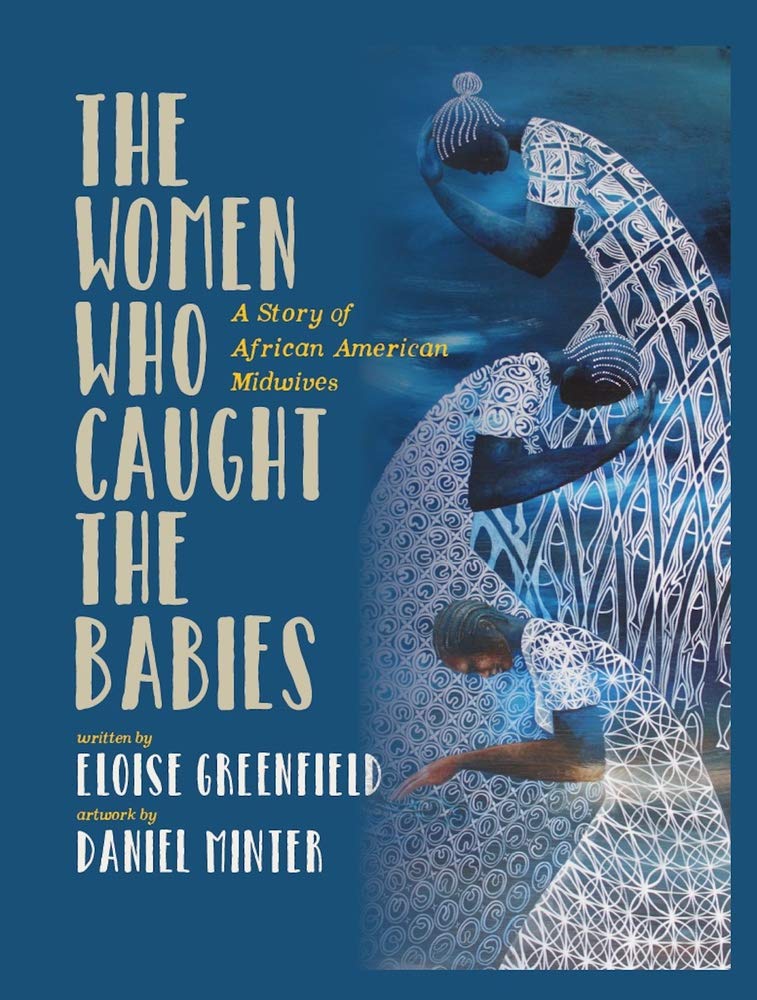
The Women Who Caught the Babies:  A Story of African American Midwives by Eloise Greenfield, illustrated by Daniel Minter

Published by Alazar Press

Image result for women who caught the babies minter

Summary:  Eloise Greenfield kicks things off with a five-page introduction giving a brief history of midwives, starting in Africa a few hundred years ago, traveling to slavery in America, and finishing up with midwives today.  This section is illustrated with black and white photographs. The rest of the book is her poetry, celebrating midwives of the past and present. There are seven poems altogether, from “Africa to America” to “After Emancipation, 1863” to “The Early 2000s”.  The final piece, “Miss Rovenia Mayo” is about the midwife who “caught” Eloise Greenfield on May 17, 1929. Includes a bibliography. 32 pages; grades 3-7.

Pros:  We should all hope to be producing works of art like this at the age of 90.  The poetry is lyrical and the illustrations are unique and fascinating. The Caldecott committee can add this to its list of works to consider, along with another Daniel Minter book, Going Down Home With Daddy.

Cons:  This doesn’t seem like a book most kids will pick up on their own. 

If you would like to buy this book on Amazon, click here.

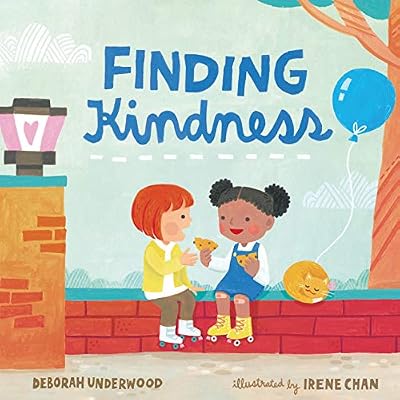
Finding Kindness by Deborah Underwood, illustrated by Irene Chan

Published by Henry Holt and Co.

Image result for finding kindness deborah underwood

Summary:  “Kindness is sometimes a cup and a card/or a ladder, a truck, and a tree;/a scritch and a cuddle, a rake and a yard,/a cookie, a carrot, a key.”  The rhyming text goes on to list all sorts of ways to be kind. Sometimes being kind just involves taking a break or sitting with someone who is sad.  There’s also being kind to yourself, forgiving yourself when you’ve made a mistake. The book goes through a day, ending with reading a bedtime story and wishing on a star.  32 pages; ages 3-7.

Pros:  The catchy rhymes and busy, diverse illustrations will engage even the youngest readers and get them thinking about everyday kindnesses they can give to others.  A good springboard for discussion and brainstorming about how to help friends and family.

Cons:  There’s no real action, just a list of ways to be kind.  Kids’ attention might start to wander before the last page.

If you would like to buy this book on Amazon, click here.


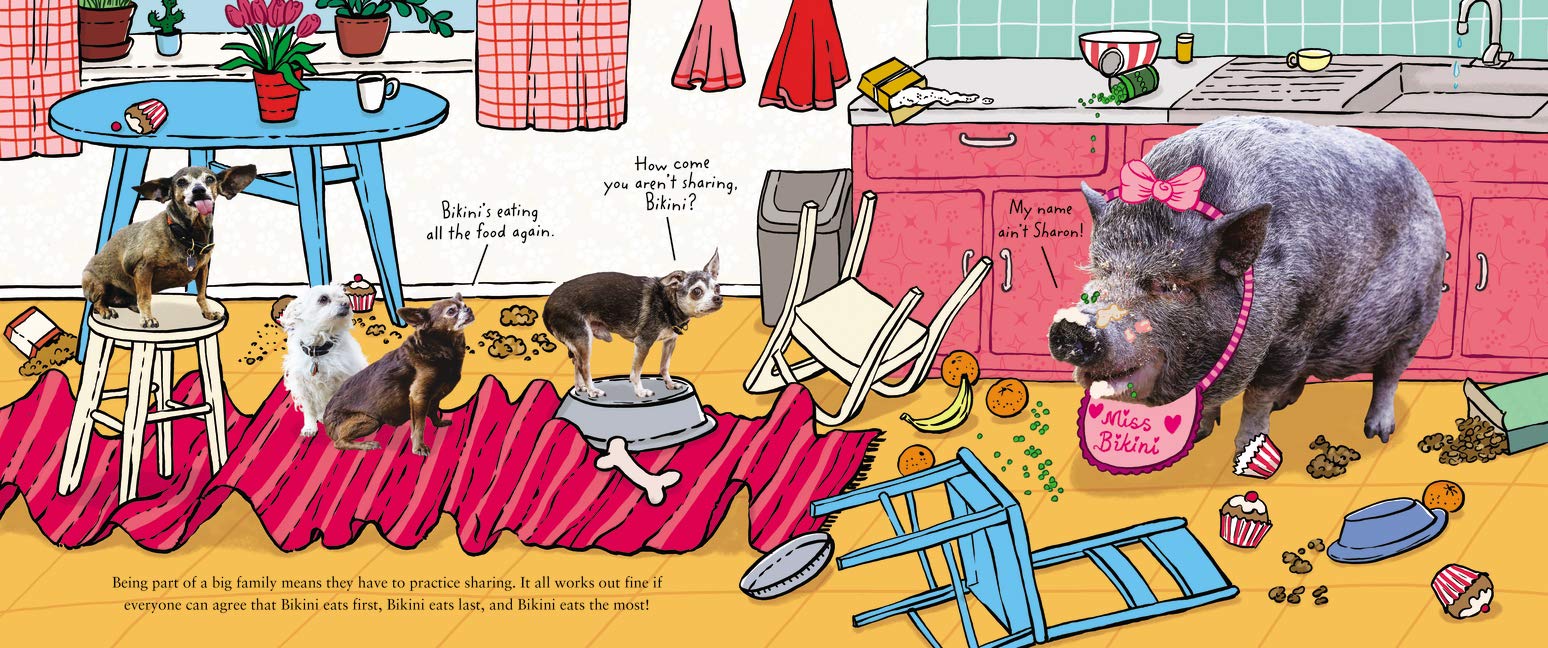
The One and Only Wolfgang: From Pet Rescue to One Big Happy Family by Steve Greig and Mary Rand Hess, illustrated by Nadja Sarell

Published by Zonderkidz

Image result for one and only wolfgang grieg

Image result for one and only wolfgang nadja sarell

Summary:  Steve Grieg’s Instagram account, wolfgang2242, is the inspiration for this story of a family of rescued animals that includes nine dogs, a rabbit, a chicken, and a pig.  Each one has its own distinctive personality, likes/dislikes, and quirks, but they all help each other and enjoy spending time together. The illustrations are photographs of the animals superimposed on cartoon-style artwork.  One of the dogs is blind, one has no teeth, one has bad hair days six days a week, but no matter. All are loved and happy to be part of the family. Includes an afterword by best-selling author Jodi Picoult about her own love of animals and enjoyment of Steve’s Instagram.  32 pages; ages 4-8.

Pros:  What’s not to like about this motley crew of lovable animals?  Kids will get a good laugh out of all their antics, and also appreciate the message of a family’s unconditional love.  I had never heard of Steve Grieg, but apparently, he has become quite an advocate for older pet adoption through his Instagram.

Cons:  Not being familiar with Steve Grieg or Wolfgang, I was a bit mystified by the title and premise of this book until I read the reviews and afterword.

If you would like to buy this book on Amazon, click here.

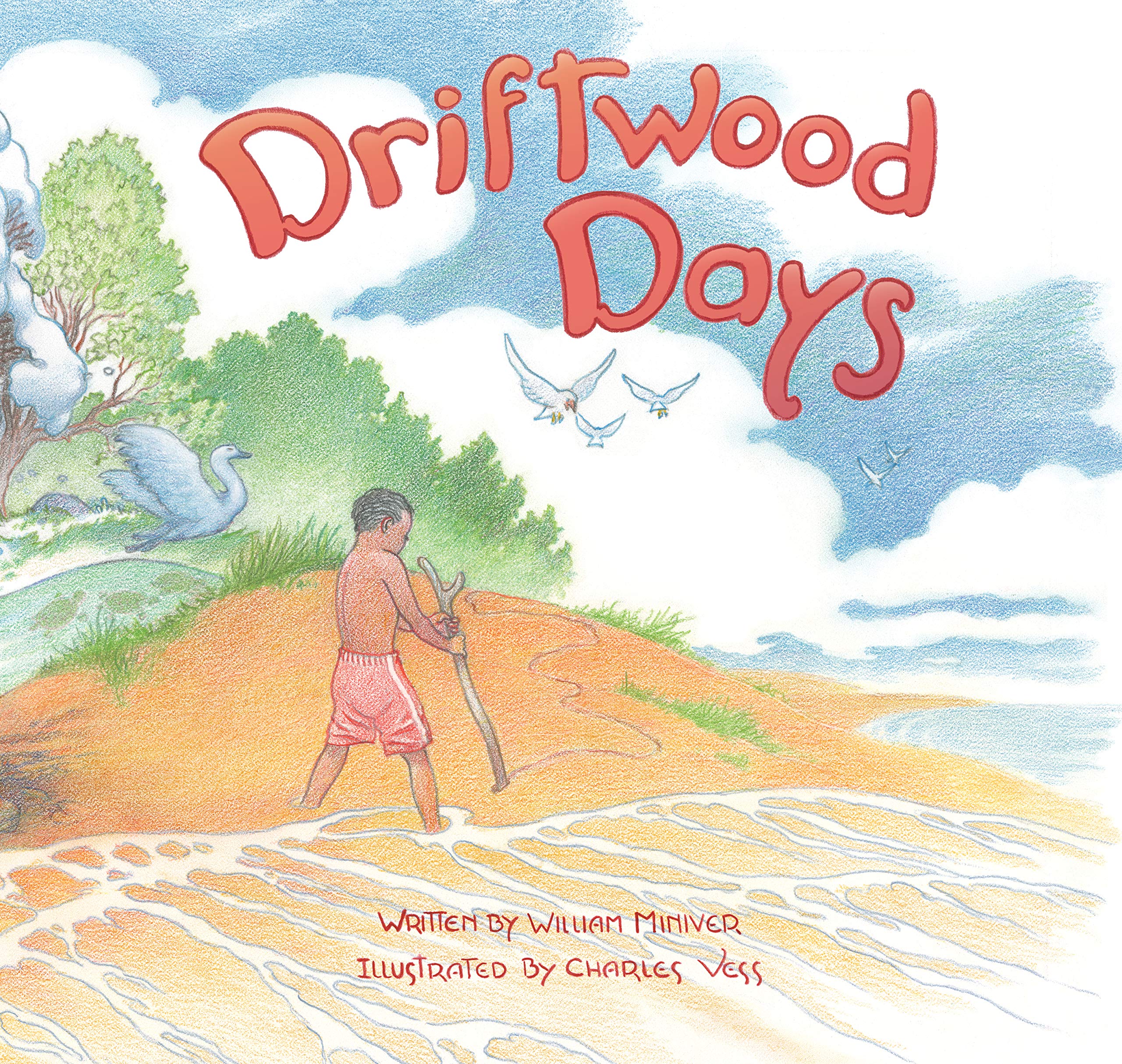
Driftwood Days by William Miniver, illustrated by Charles Vess

Published by Eerdmans Books for Young Readers

Image result for driftwood days charles vess"

Image result for driftwood days charles vess"

Summary:  As a boy watches a beaver build a lodge, a stick breaks away and floats down the river.  It gets stuck against a boulder for the winter, but when spring comes, it continues along the river to the ocean.  After getting tangled in fishing nets, the stick washes up on shore, where it is discovered by the same boy, now on vacation at the beach.  He takes the stick–now a piece of driftwood–back with him to his home by the river. The last page shows him sitting in a tree with his driftwood, watching the beaver once again. Includes a two-page author’s note with additional information on driftwood.  48 pages; ages 4-8.

Pros:  This gorgeous science book tells the stick’s journey in the context of the changing seasons, showing the cyclical nature by ending the story where it began.  The colored pencil illustrations realistically and beautifully portray the different landscapes.

Cons:  Humans do it again: as per usual, the author’s note mentions how humans have messed up the production of driftwood, which plays an important part in beach ecosystems.

If you would like to buy this book on Amazon, click here.