Caught! Nabbing History’s Most Wanted by Georgia Bragg, illustrated by Kevin O’Malley

Published by Crown Books for Young Readers
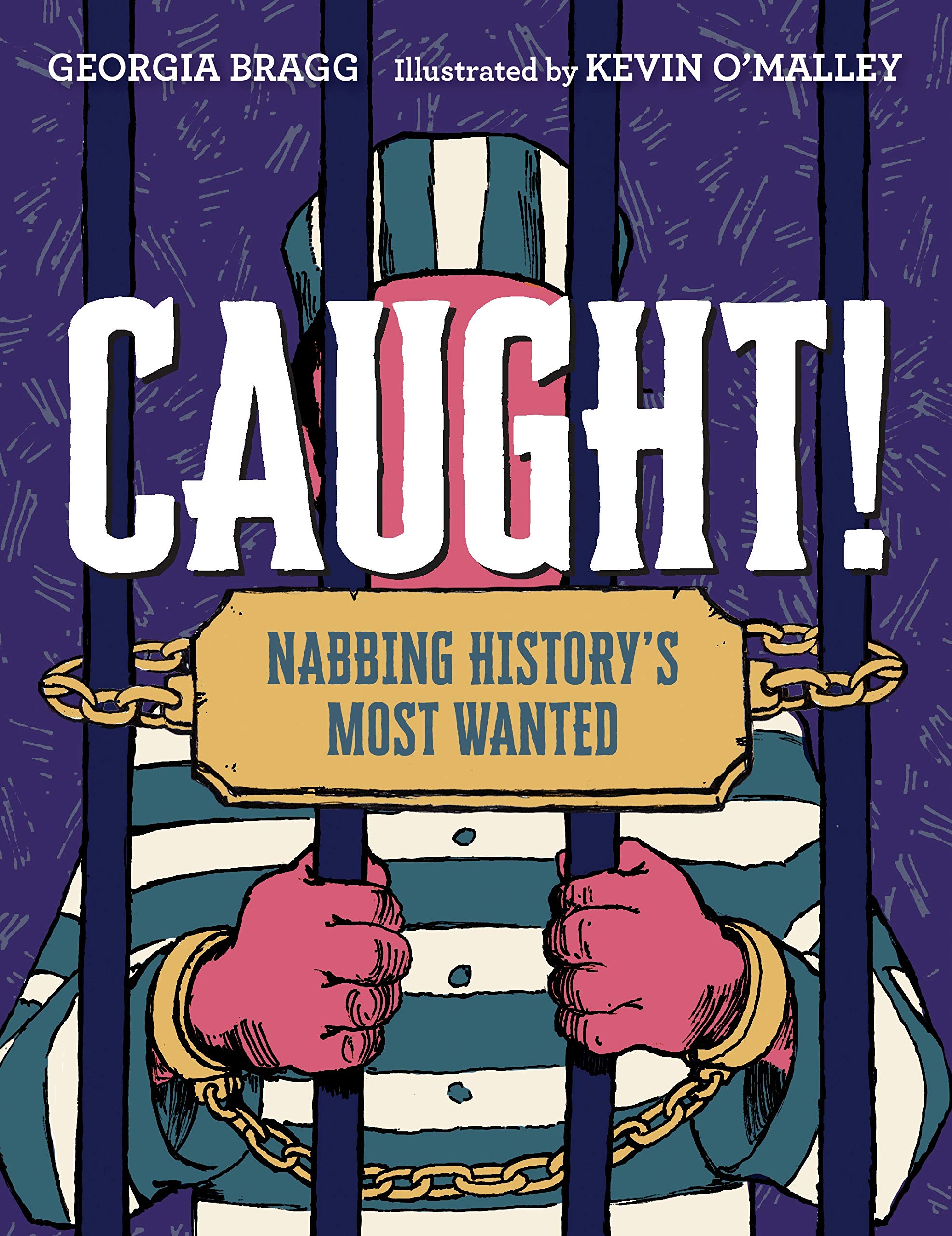
Image result for caught nabbing history's most wanted

Summary:  From the team that brought you How They Croaked: The Awful Ends of the Awfully Famous and How They Choked: Failures, Flops, and Flaws of the Awfully Famous comes this collection of 14 profiles of interesting criminals.  Some will be known by just about everyone (John Wilkes Booth, Joan of Arc), while others are less famous…or infamous (Vincenzo Peruggia, Bernard Otto Kuehn).  Each profile is several pages long, with two additional pages of “Facts and Stats”. Black and white illustrations throughout match the humorous, irreverent tone of the text.  Includes separate bibliographies of print and online sources for each person as well as an index. 224 pages; grades 4-8.

Pros:  History buffs and reluctant readers alike will enjoy these funny, breezy profiles of notorious criminals from all ages.  The author does a good job of adding some historical context which often makes the dastardly deeds a bit more understandable.  The extensive back matter could lead to a lot more research on any one of them.

Cons:  The most recent subject is Al Capone, born in 1899.  We can hope that a sequel is in the works for more recent criminals.  
If you would like to buy this book on Amazon, click here.

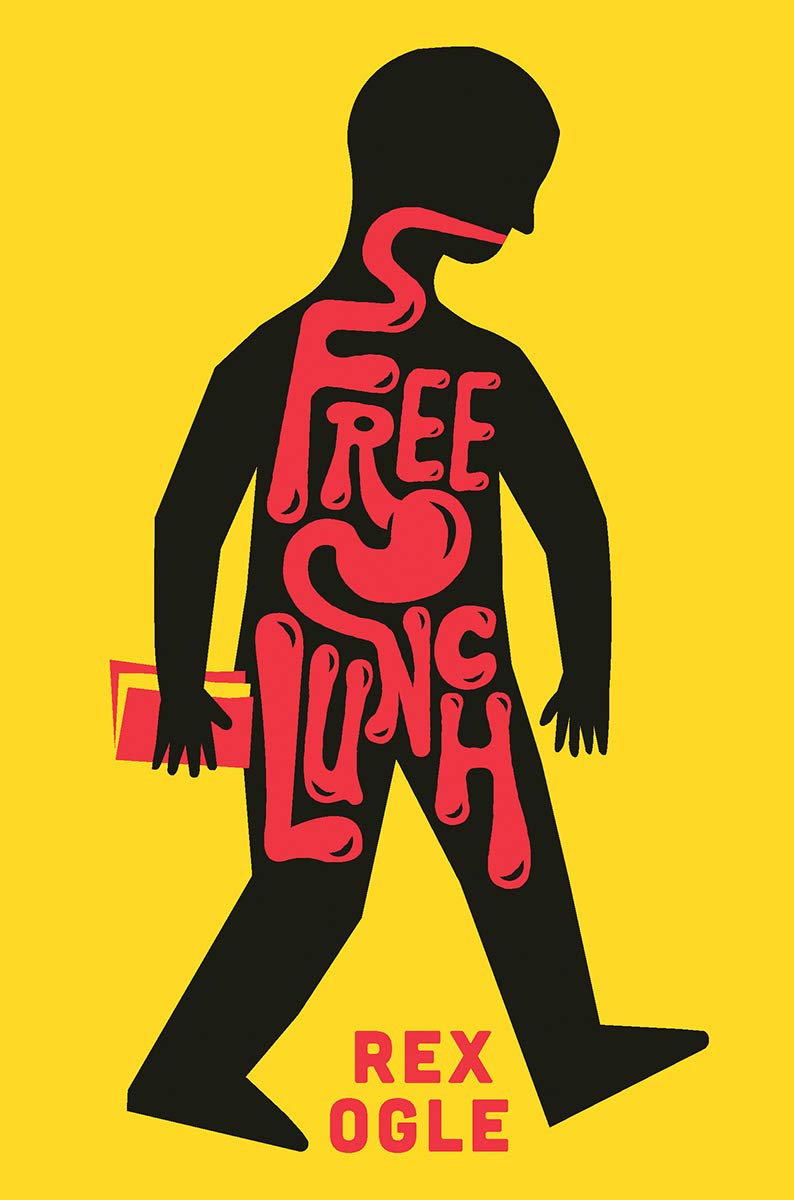
Free Lunch by Rex Ogle

Published by Norton Young Readers

Image result for free lunch rex ogle

Summary:  Rex Ogle’s memoir recounts the first half of his sixth grade year.  The problems of the average middle schooler–mean teachers, lockers, changing friendships–are dwarfed by his problems at home.  Both his mother and stepfather are out of work, debts are mounting, and they tend to take out their frustrations on Rex and his two-year-old brother.  The greatest burden falls on Rex, who tries to help out by cooking, babysitting, and balancing the family checkbook, but somehow it’s never enough for his parents, who regularly beat and verbally abuse him.  Rex is afraid of his own anger, but tries to see the good in those around him. A caring grandmother and a new friend help him, but ultimately he has to find his own way. He often feels alone, surrounded by kids who appear to be better off than he is, and ashamed when he has to tell the lunch lady each day that he’s on the free lunch program.  By the time the holidays roll around, both parents have found work, and Rex is feeling optimistic about the second half of sixth grade–even though the reader suspects he still has a lot of difficult years ahead. Includes an author’s note encouraging kids in similar situations to be strong and not feel ashamed of their circumstances. 208 pages; grades 6-9.

Pros:  This is a powerful and disturbing memoir that will open many eyes to what kids may be going through when they come to school each day.  Kudos to Rex Ogle for so honestly sharing what couldn’t have been an easy story to write. Many kids will benefit from reading this, including those who may be going through experiences similar to Rex’s.

Cons:  The scenes of abuse make this more of a middle school book, although I’m sure there are elementary kids who would benefit from reading it.

If you would like to buy this book on Amazon, click here.


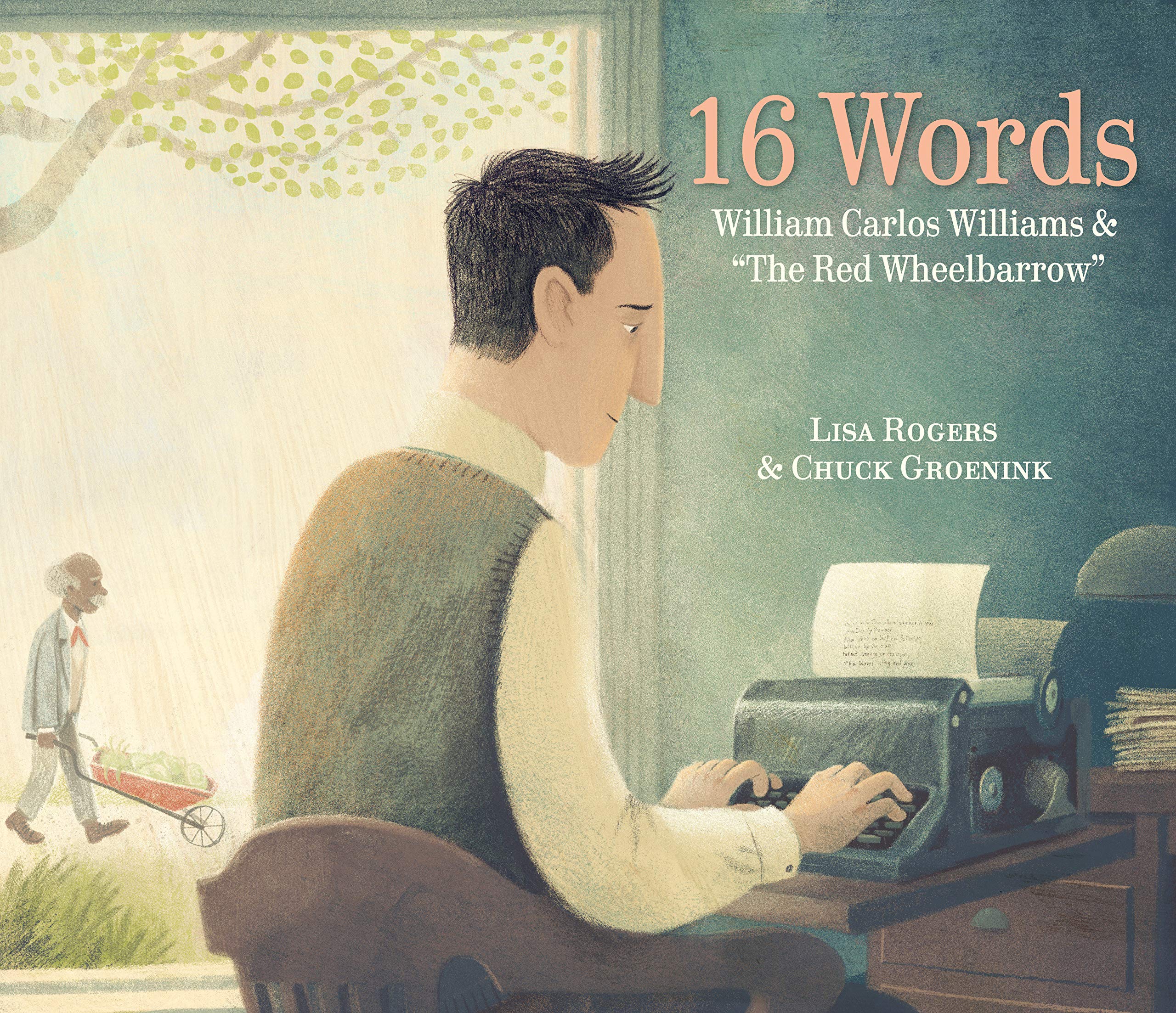
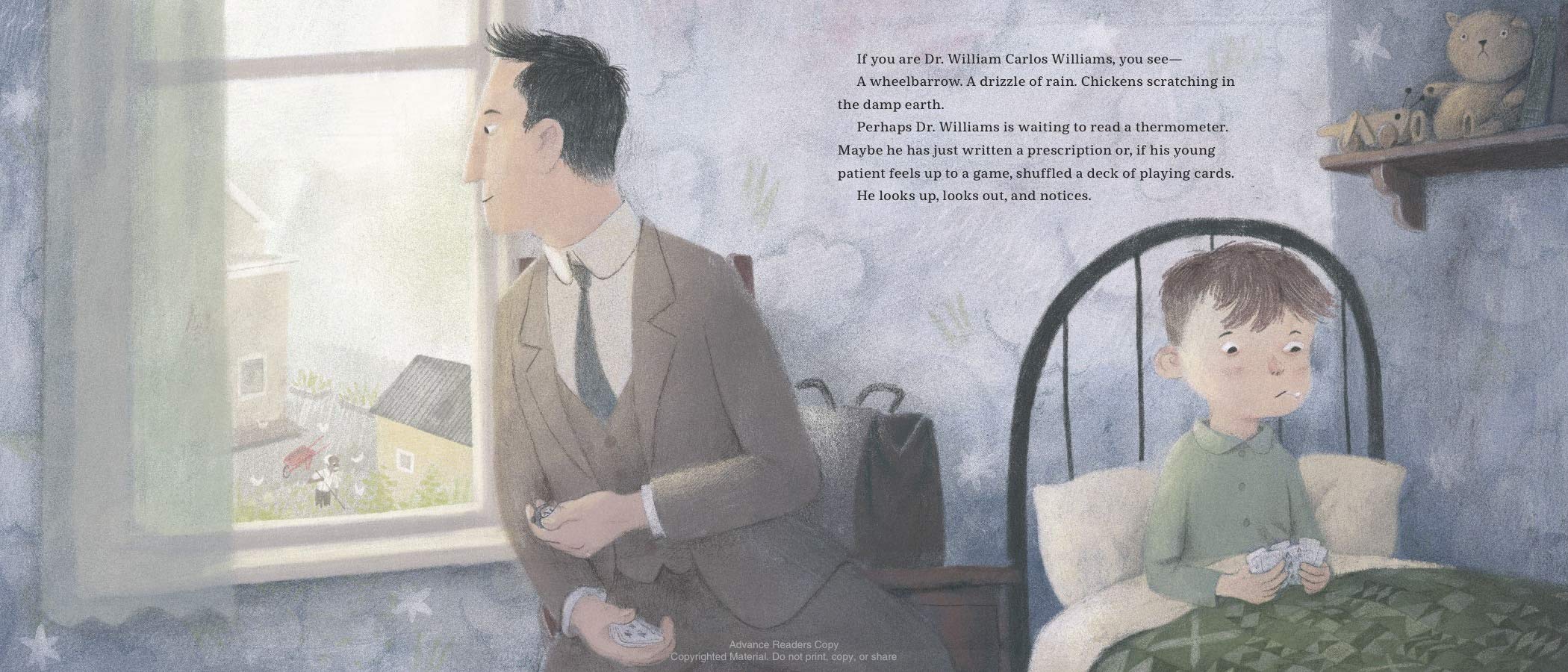
16 Words: William Carlos Williams and “The Red Wheelbarrow” by Lisa Rogers, illustrated by Chuck Groenink

Published by Schwartz and Wade

Image result for 16 words william carlos williams and the red wheelbarrow

Image result for 16 words william carlos williams and the red wheelbarrow

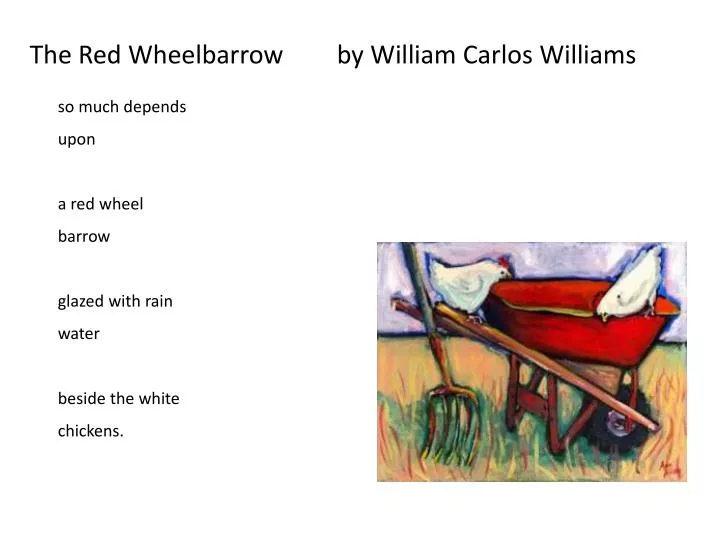
Summary:  “Look out the window. What do you see?” After this invitation to the reader, the author tells the story of Dr. William Carlos Williams, a physician who enjoyed scribbling poems on his prescription pad or as notes to his wife.  When he looked out the window of his New Jersey office, he saw his neighbor, Thaddeus Marshall, working in his garden or carrying his vegetables to market in a red wheelbarrow. Williams wrote about what he saw in the poem “The Red Wheelbarrow”.  “Those sixteen words do not describe Mr. Marshall’s chicken coop, or the train rattling nearby. They do not describe Mr. Marshall hefting that wheelbarrow, or the aches and pains he suffers from stooping to care for his plants. They do not describe Mr. Marshall’s life of work or caring or love.  But somehow they say just that.” Includes an author’s note, bibliography, and a list of six other poems by Williams. 40 pages; grades 2-6.

Pros:  I wasn’t super excited at the prospect of reading a picture book about William Carlos Williams, but this tells a gentle, beautiful (and beautifully illustrated) story that also shows how an ordinary man fit poetry into his everyday life.  It makes his poetry accessible to even early elementary students. This would be a perfect read-aloud in conjunction with Sharon Creech’s Love That Dog, which includes “The Red Wheelbarrow” as one of the poems the class studies.

Cons:  No photos of either Williams or Marshall. 

If you would like to buy this book on Amazon, click here.

Image result for red wheelbarrow william carlos williams

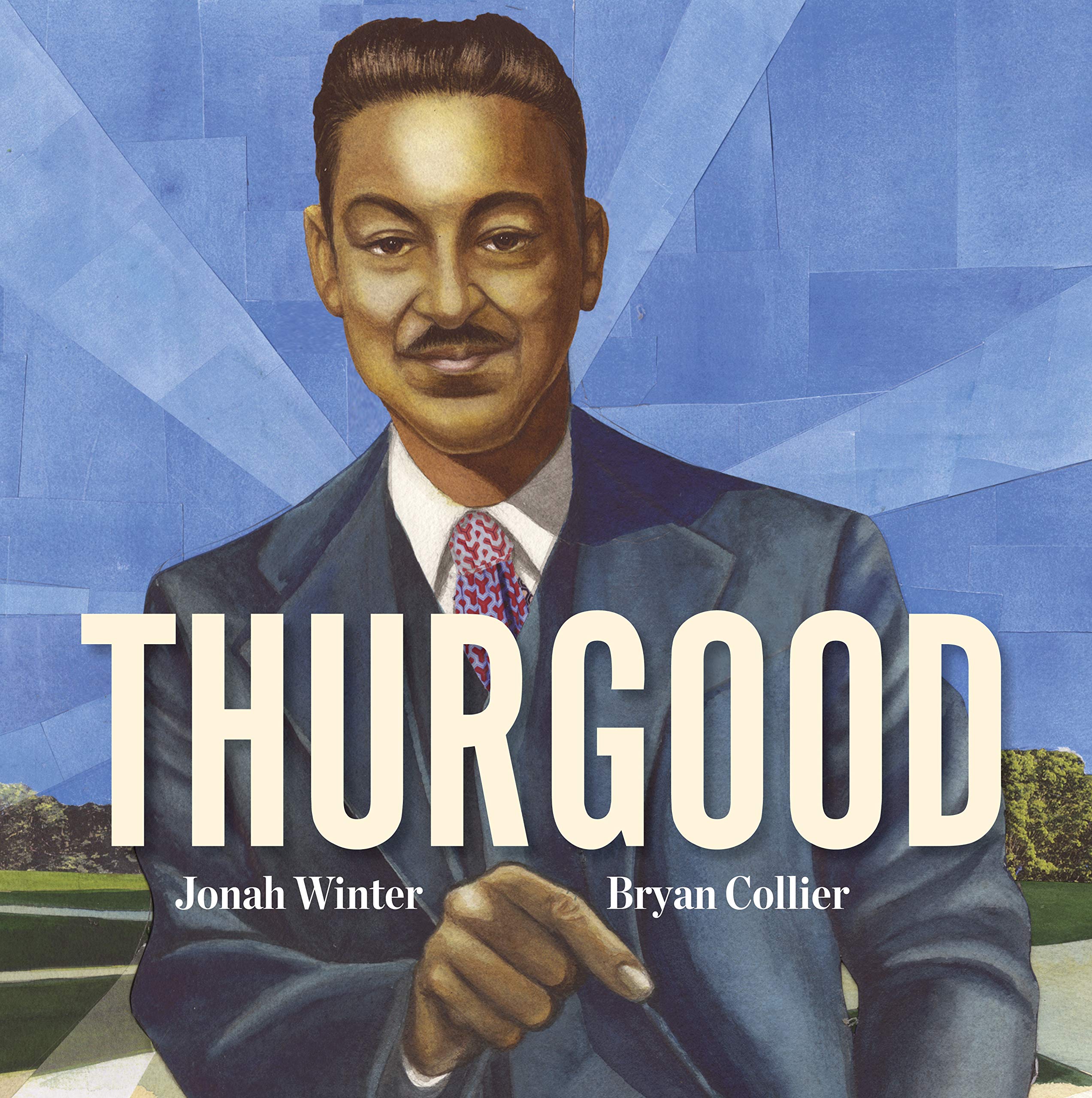
Thurgood by Jonah Winter, illustrated by Bryan Collier

Published by Schwartz and Wade

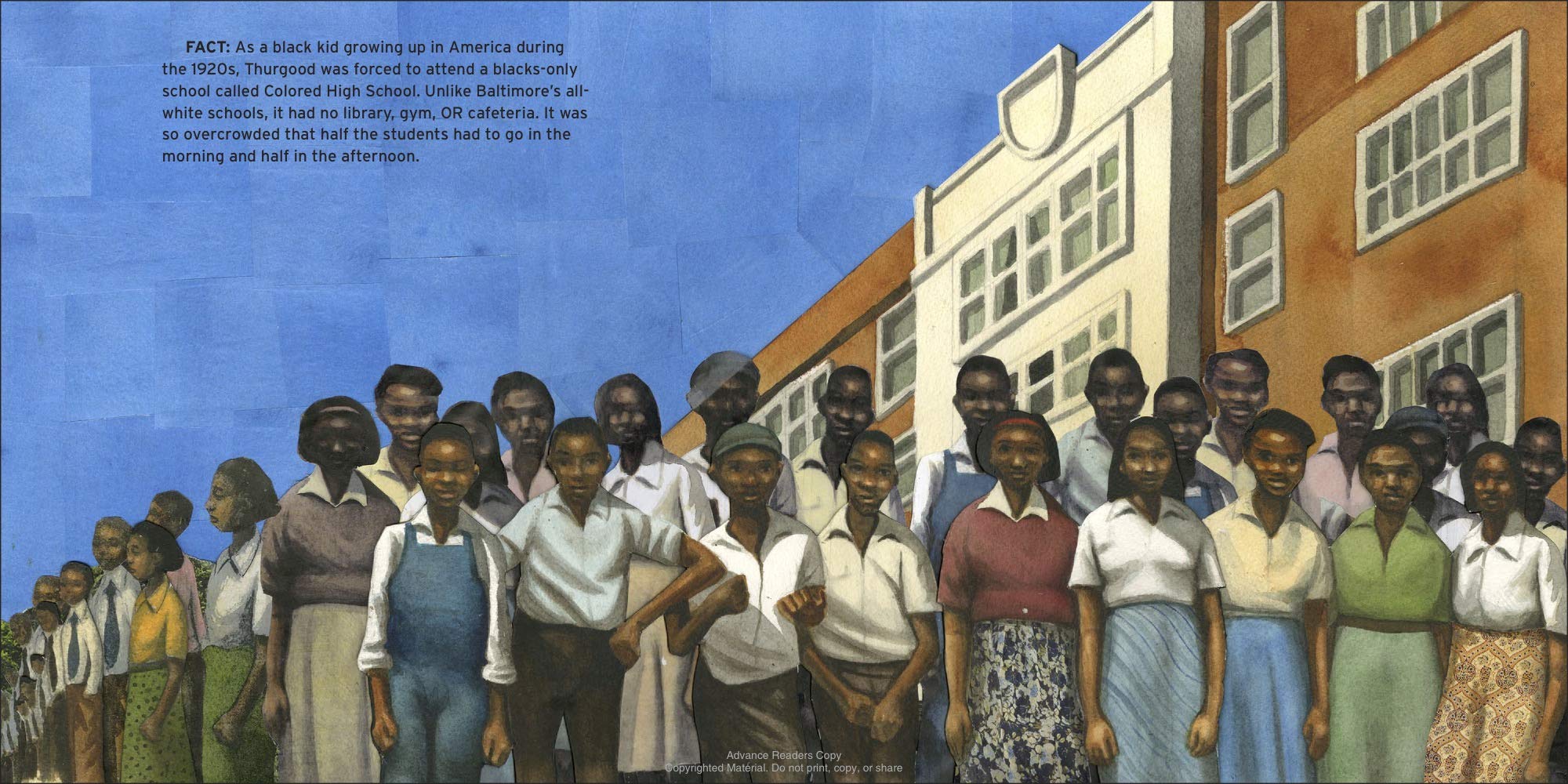
Image result for thurgood jonah winter

Image result for thurgood jonah winter

Summary:  Thurgood Marshall’s path to legal greatness began at the age of six, when he convinced his parents to legally change his name from Thoroughgood to Thurgood.  Growing up in 1920’s Baltimore, he saw injustice on a daily basis; at home, he learned from his father to back up his statements with factual evidence. After leading his high school debate team, Thurgood went on to college and then to law school at Howard University.  He became a lawyer for the NAACP, and argued 29 cases before the Supreme Court, including Brown v. Board of Education.  The book ends with that decision, simply mentioning on the last page that Marshall became the first black Supreme Court justice in U.S. history.  Includes an author’s note with more information about Thurgood Marshall’s Supreme Court appointment and career. 40 pages; grades 1-5.

Pros:  A powerful narrative about Thurgood Marshall’s life, presenting much of the information in legal terms (“Fact:”; “Verdict:”; “Injustice:”).  Bryan Collier’s illustrations boldly bring to life many dramatic scenes from Marshall’s life, in the courtroom and in unjust, sometimes dangerous settings growing up in Baltimore and traveling through the South.  

Cons:  The author’s note states, “A forty-page picture book such as this cannot possibly convey the magnitude of his legacy”, yet there are no resources for additional research.

If you would like to buy this book on Amazon, click here.

Miep and the Most Famous Diary: The Woman Who Rescued Anne Frank’s Diary by Meeg Pincus, illustrated by Jordi Solano

Published by Sleeping Bear Press

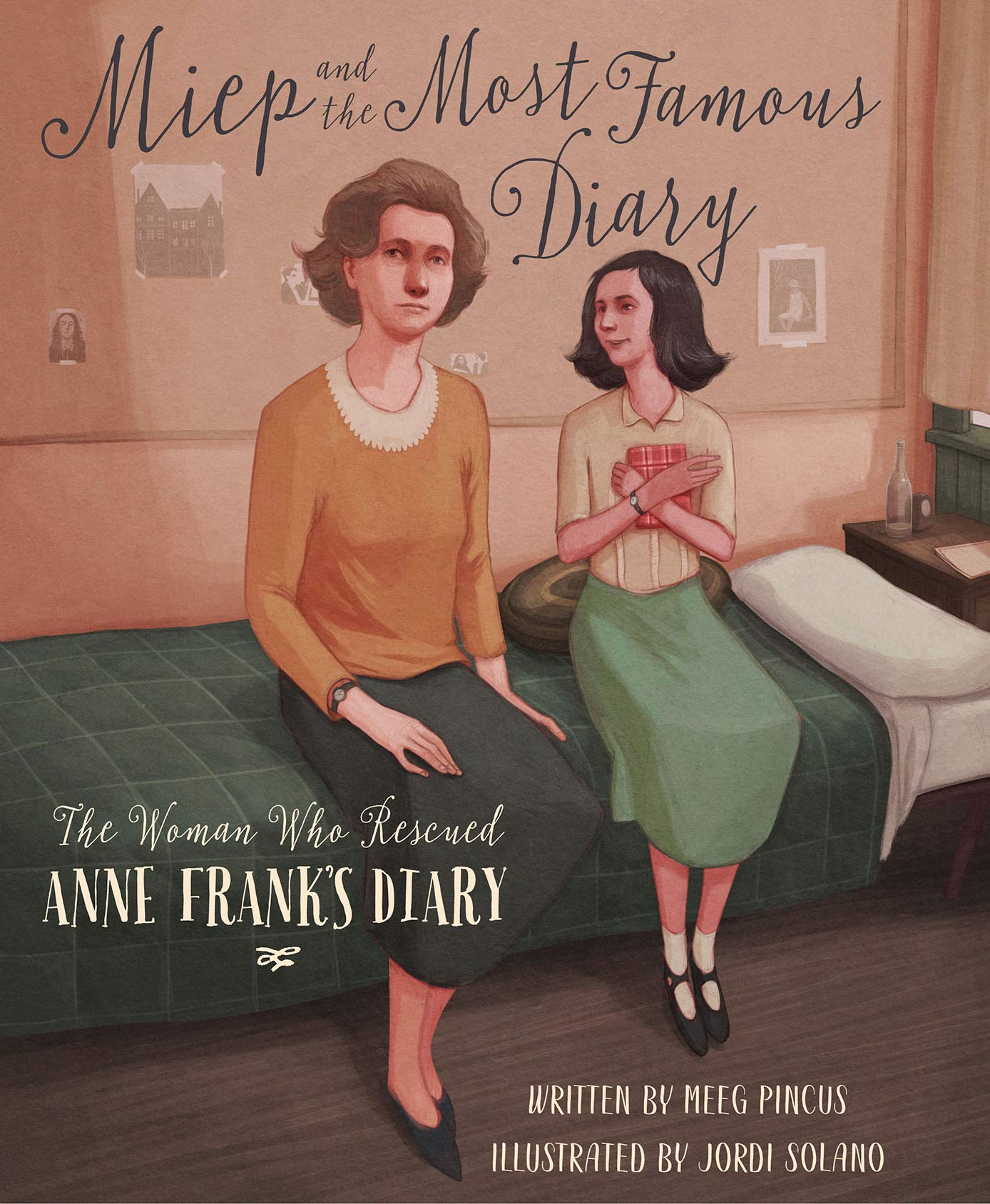
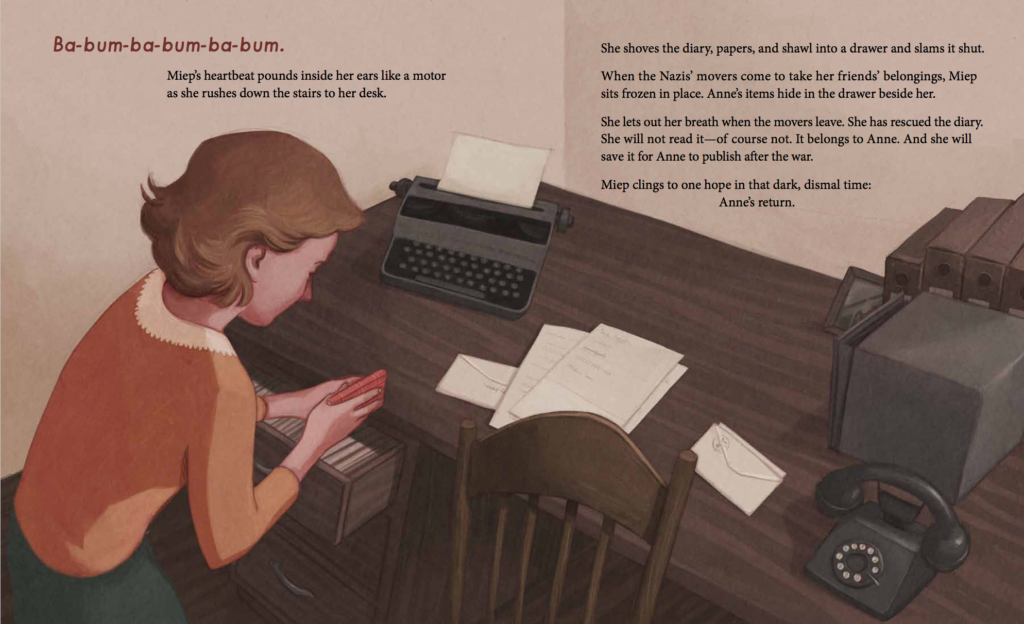
Image result for miep and the most famous diary

Image result for miep and the most famous diary

Summary:  Beginning on August 4, 1944, when the eight occupants of the Secret Annex under Miep Gies’s care were arrested and taken away, the narrative follows Miep’s story of how she saved Anne Frank’s diary.  Facing arrest for keeping any of the group’s belongings from the Nazis, Miep snuck back into the annex before their return, taking Anne’s diary and a combing shawl with some of Anne’s hair still on it. She kept these, hoping that Anne would return one day to claim them, but it was only Anne’s father, Otto Frank, who survived.  After he received the devastating news of his daughters’ deaths, Miep gave him Anne’s things. Even after the diary was published, it was many years before Miep could bring herself to read it. Reading it in one sitting at last, she felt a measure of peace, knowing that Anne would live on, thanks to her efforts. Includes an author’s note and a timeline of Miep’s life.  40 pages; grades 2-6.   

Pros:  Even with so many books about Anne Frank, this one is unique for its perspective from Miep’s point of view.  Her courage in standing up to the Nazis on numerous occasions is inspiring, as is her role in preserving Anne’s words.

Cons:  The illustrations were just okay.

If you would like to buy this book on Amazon, click here.

Billie Jean! How Tennis Star Billie Jean King Changed Women’s Sports by Mara Rockliff, illustrated by Elizabeth Baddeley

Published by G. P. Putnam’s Sons Books for Young Readers

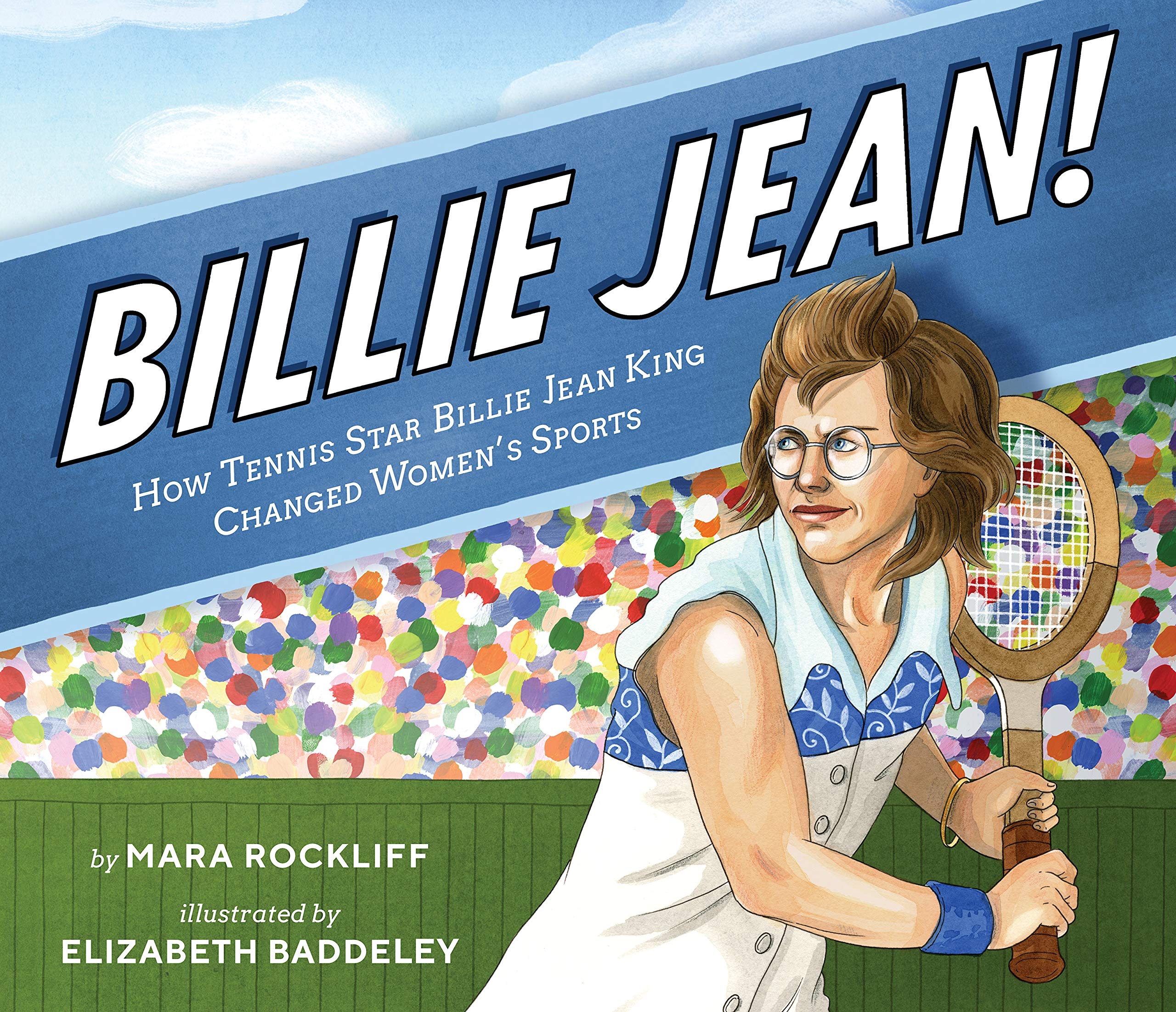
Image result for billie jean mara rockliff amazon

Image result for billie jean mara rockliff amazon

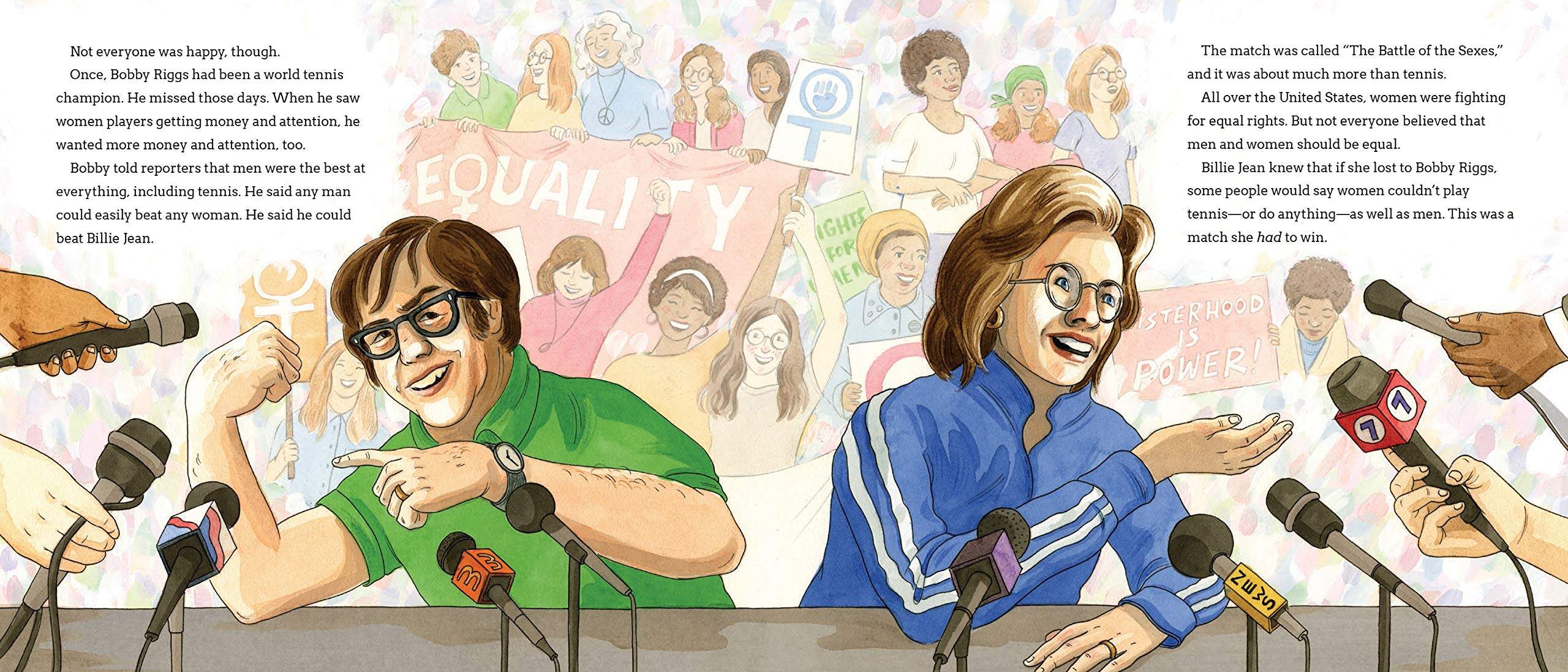
Summary:  From the time she was a child, Billie Jean King gave her all in whatever she was doing.  Seeing her dismay when she learned that there were no women in major league baseball, her parents suggested she try tennis.  She proved to be a natural, and slowly rose to break into the national rankings. After playing at Wimbledon just after high school graduation, she found herself working two jobs to get through college while the boy tennis players enjoyed full scholarships.  Her professional career continued to flourish, but Billie Jean was dissatisfied with the unequal prize money for men and women. She created an all-women’s tennis tour, and later helped form the Women’s Tennis Association. Probably her most celebrated moment came, though, during the “Battle of the Sexes”, her famous match with Bobby Riggs in which she decisively beat him, proving that men could be defeated by women in the world of sports.  An author’s note gives further information on Billie Jean King’s work to end gender discrimination in sports and as an LGBQT activist. 40 pages; grades 1-5.

Pros:  It’s hard not to be inspired by Billie Jean King’s hard work and determination, both on and off the tennis court.  Kids who have seen the 2017 movie Battle of the Sexes will enjoy learning more about King; as near as I can tell, this is one of the only picture books about her.

Cons:  While the illustrations are serviceable, they aren’t as unique and memorable as some of Mara Rockliff’s other recent books like Lights, Camera, Alice! and Anything But Ordinary Addie.

If you would like to buy this book on Amazon, click here.

A Place to Land: Martin Luther King Jr. and the Speech That Inspired a Nation by Barry Wittenstein, illustrated by Jerry Pinkney

Published by Neal Porter Books

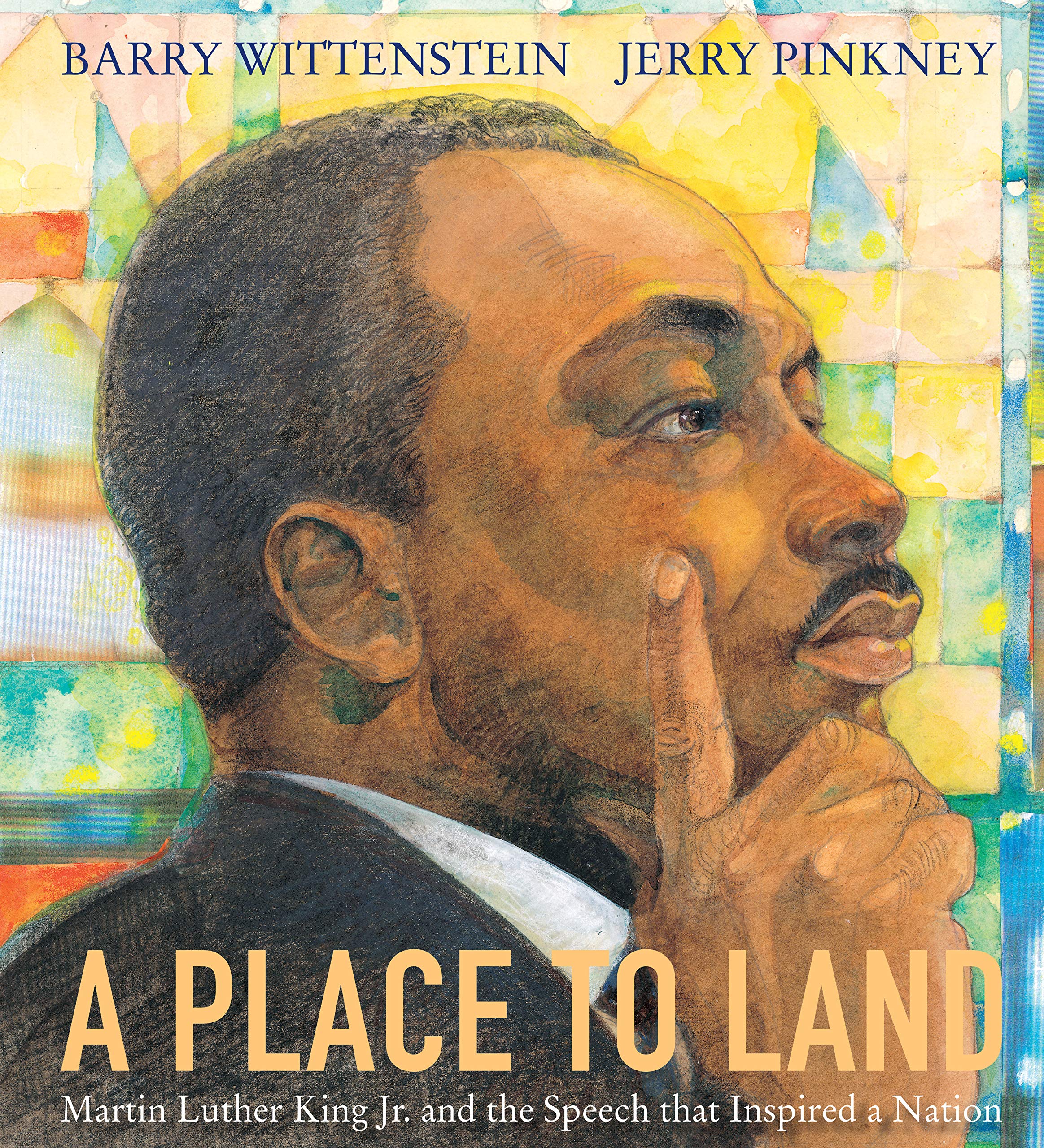
Image result for place to land martin

Summary:  Martin Luther King Jr.’s “I Have a Dream” speech is such an integral part of American history, it’s difficult to believe that it almost didn’t happen.  This book starts the night before the speech, when King sat down with his closest advisors to hash out what he was going to say the next day.  The focus was on jobs and economic justice, and one friend even advised, “Don’t use the line about ‘I have a dream.’ You have used it too many times already.”  King then retired to his room to meditate and pray about what he was going to say. Shortly after 3:00 the next afternoon, he delivered his speech. It went well, but didn’t seem quite powerful enough to him.  So when singer Mahalia Jackson called to him, “Tell them about the dream, Martin!”, he put his notes aside and spoke from his heart. Back at the hotel, he and his friends celebrated the speech, knowing that it was just the beginning of a long struggle ahead. Includes notes from the author and artist; thumbnail sketches of who was in the hotel that night; a list of who spoke at the March on Washington; and a bibliography.  48 pages; grades 2-6.

Pros:  So many picture books have been written about Martin Luther King, Jr. and “I Have a Dream”, but this one adds to the narrative, giving background to the speech and placing it in the context of the Civil Rights Movement.  Jerry Pinkney’s illustrations not only add beauty and color to the story, but label the different people that were there and who inspired King while writing his speech.

Cons:  There’s no additional information about some of the people labeled in the illustrations.

If you would like to buy this book on Amazon, click here.

Rise! From Caged Bird to Poet of the People by Bethany Hegedus, foreword by Colin Johnson, illustrations by Tonya Engel

Published by Lee and Low Books

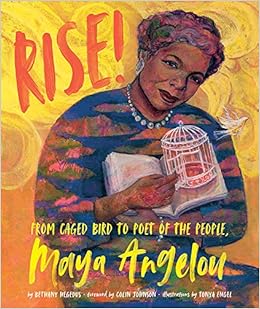
Image result for rise from caged

Image result for rise from caged

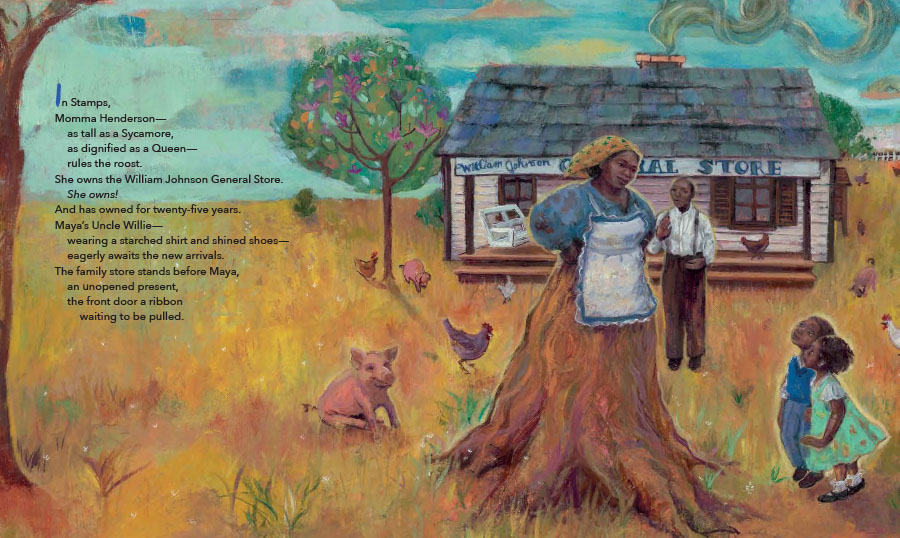
Summary:  Beginning with young Maya’s journey south to live with her grandmother in Arkansas, the narrative describes her early experiences of blatant racism in the deep south, and continues as she and her brother went to live with their mother in St. Louis.  Her rape by her mother’s boyfriend is described indirectly: “One day, Maya, left alone with Mr. Freeman, is anything but free. After a visit to the hospital, Maya calls out Mr. Freeman’s name as the one who hurt her.” Soon after, he was murdered, and Maya stopped speaking for several years, burying herself in books until she slowly emerged to become a dancer, actress, cable car driver, mother, and finally, a writer and activist. Ending with her death at age 86, the author assures readers that Maya’s words will “always rise rise rise”.  Includes a foreword by Angelou’s grandson; a timeline; resources for children who have been sexually abused; and a bibliography. 48 pages; grades 1-5.

Pros:  Gorgeous acrylic illustrations and poetic text detail the many different aspects of Maya Angelou’s incredible life.  Due to the horrific events of her childhood, it can be tricky to share her story with children, but Hegedus does a good job not shying away from Maya’s rape and its aftermath in a way that’s appropriate for the intended audience.  

Cons:  I had no idea Maya Angelou did so many different interesting things in her life.  It’s hard to cram it all into one picture book.

If you would like to buy this book on Amazon, click here.

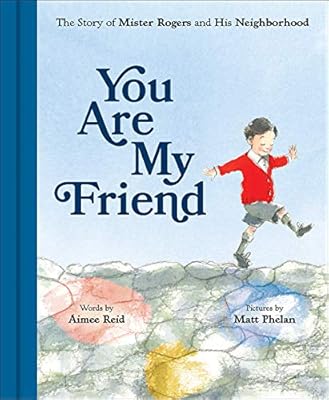
You Are My Friend: The Story of Mister Rogers and His Neighborhood by Aimee Reid, illustrated by Matt Phelan

Published by Harry N. Abrams

Image result for you are my friend phelan amazon

Summary:  For those familiar with Mister Rogers’ Neighborhood, this book explains how Freddie Rogers’ childhood created the adult Fred Rogers that millions loved to watch on his TV show.  Freddie was a sickly child who had to learn to entertain himself during long periods indoors. He loved surrounding himself with puppets and telling them how he was feeling.  Bullied at school, Freddie appreciated the love and safety of his Grandfather McFeeley, who assured him he was special just being himself. When Fred grew up, he saw people fighting on TV and wanted to create a program that showed people helping each other.  The result was his own neighborhood where both people and puppets could express their feelings and learn how to care for one another. Includes additional biographical information, notes from both the author and the illustrator, and a bibliography. 40 pages; grades K-3.

Pros:  With the new Tom Hanks movie coming out this fall, this provides an excellent introduction to Fred Rogers and all he stood for, and will serve to introduce a new generation to the neighborhood.  Matt Phelan’s gently muted illustrations provide a perfect complement to the text.

Cons:  I’m pretty sure it’s a federal offense to say anything negative about Mister Rogers.

If you would like to buy this book on Amazon, click here.

Image result for you are my friend matt phelan

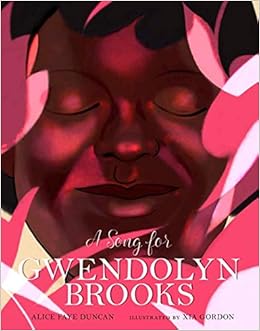
A Song for Gwendolyn Brooks by Alice Faye Duncan, illustrated by Xia Gordon

Published by Sterling Children’s Books

Image result for song for gwendolyn brooks

Image result for song for gwendolyn brooks

Summary:  From an early age, Gwendolyn loved words and poetry.  Fortunately, her parents were supportive of her interests and allowed her to opt out of chores if they knew she was working on a poem  When a teacher accused her daughter of plagiarism, Gwendolyn’s mother marched to the school and had Gwendolyn write a poem on the spot to prove her talent.  As an adult living on the South Side of Chicago, Brooks didn’t let marriage and family stop her from writing, and in 1950 she won a Pulitzer Prize for her poetry collection Annie Allen.  Includes an author’s note with additional information about Gwendolyn Brooks; a timeline; a list of some of her poetry books; and a bibliography.  48 pages; grades 2-6.

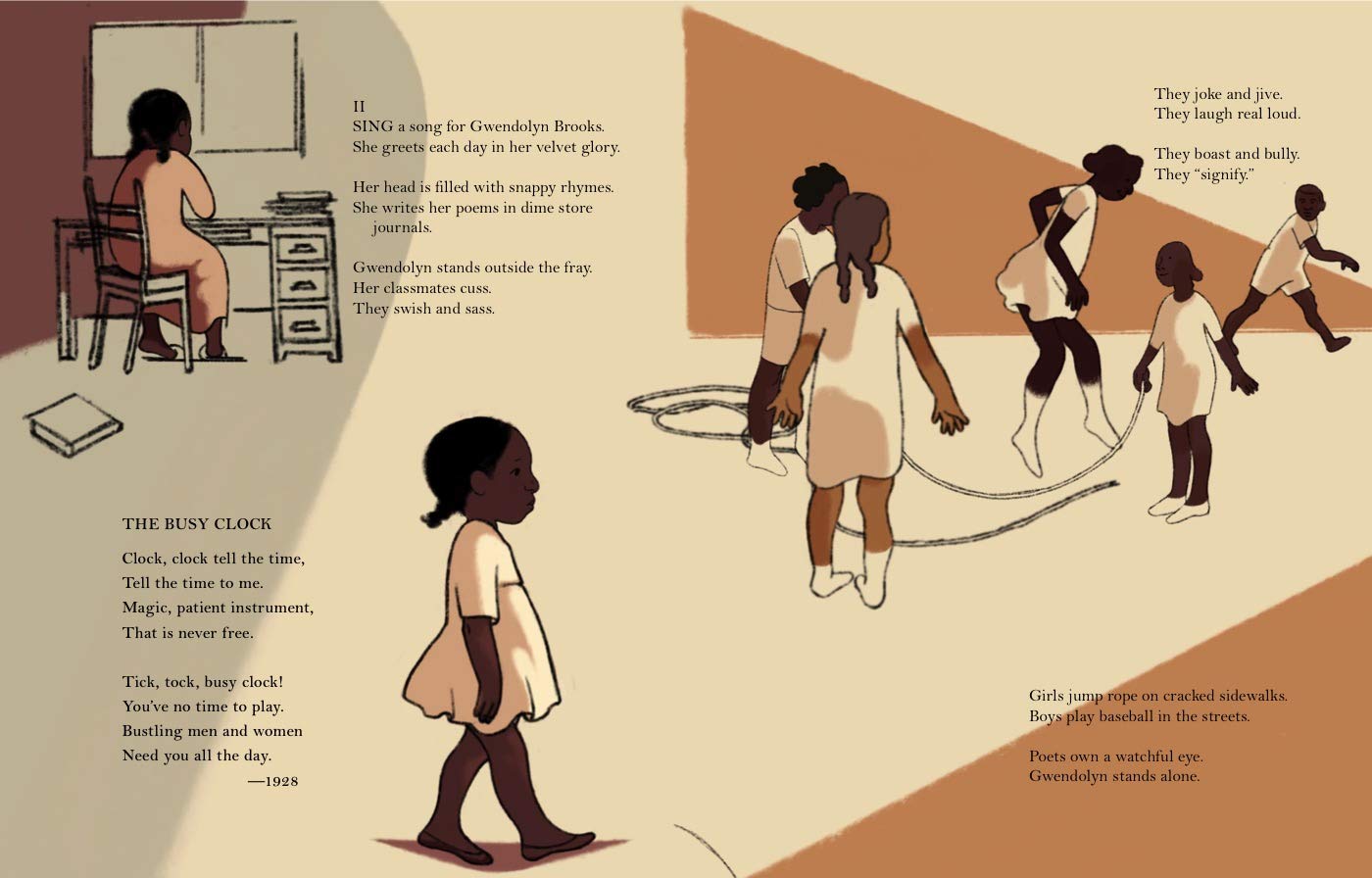
Pros:  Although this beautifully illustrated book is suggested for elementary ages, it would also make an excellent text to use in a middle school introduction to poetry.  Brooks’ poems are sprinkled throughout the story, and older kids might resonate with the poet’s more introverted nature.

Cons:  The fonts used for the main text and the poems were so similar, it was sometimes difficult to distinguish the difference between the two.

If you would like to buy this book on Amazon, click here.